The 10 Signs of Strength: How to Know Your Factory Can Weather Any Storm
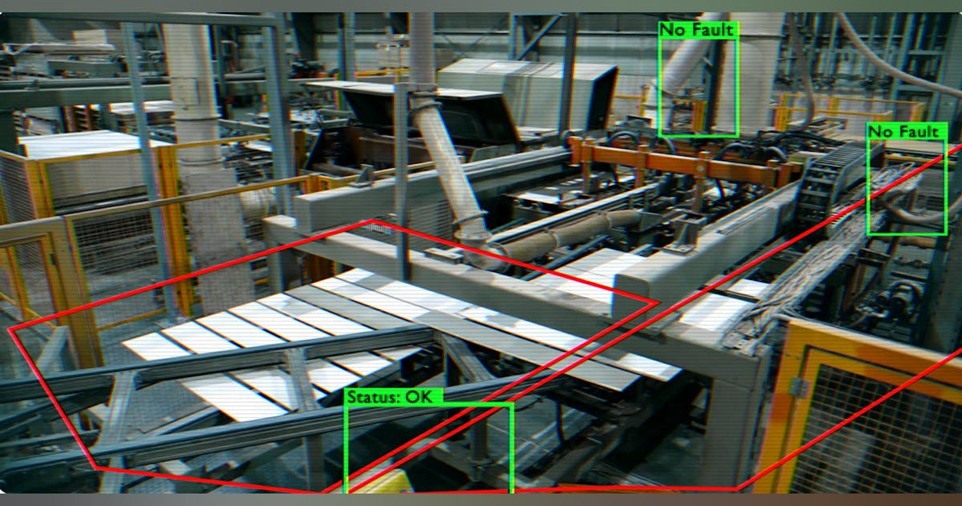
“Everything is OK!”
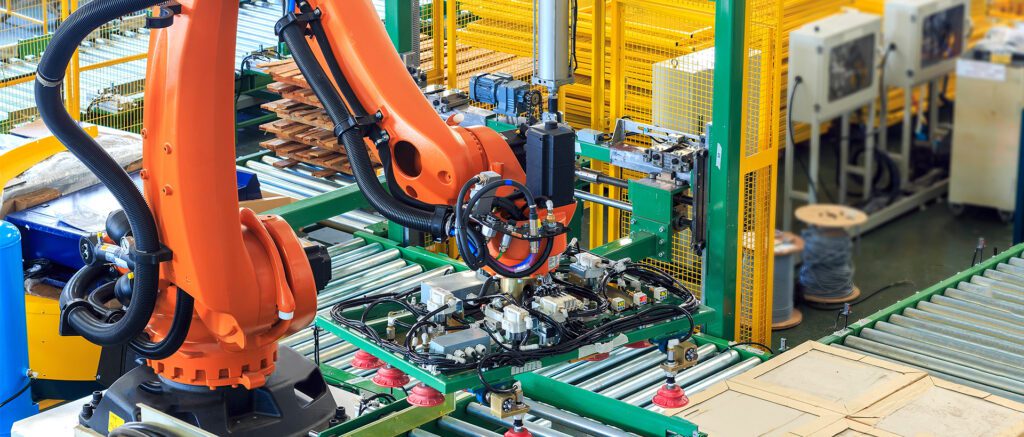
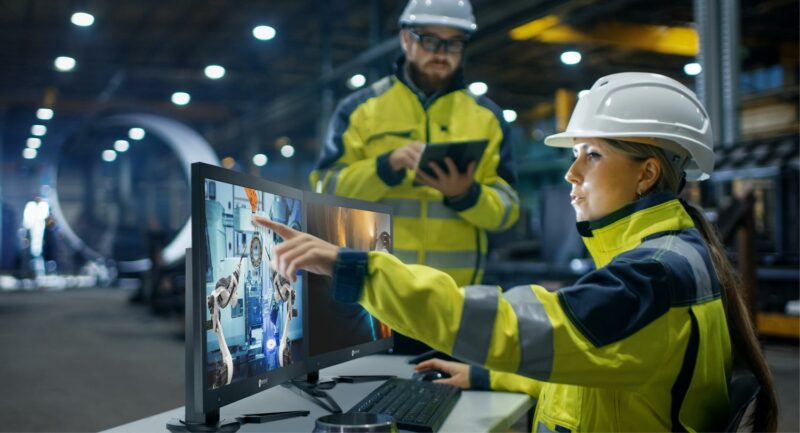
Two German powerhouses — automation leader KUKA and modular construction expert Kleusberg — have teamed up to transform how buildings are made. Their new partnership is more than a business deal; it’s a glimpse into what construction will look like for the next generation of entrepreneurs. At Kleusberg’s plant near Halle (Saale), KUKA is installing a fully automated, robot-driven production line that will weld, assemble, and inspect modular components with speed and precision that humans alone can’t match. The idea isn’t to replace people — it’s to make factories smarter, safer, and far more efficient.
Automation That Adapts, Not Replaces
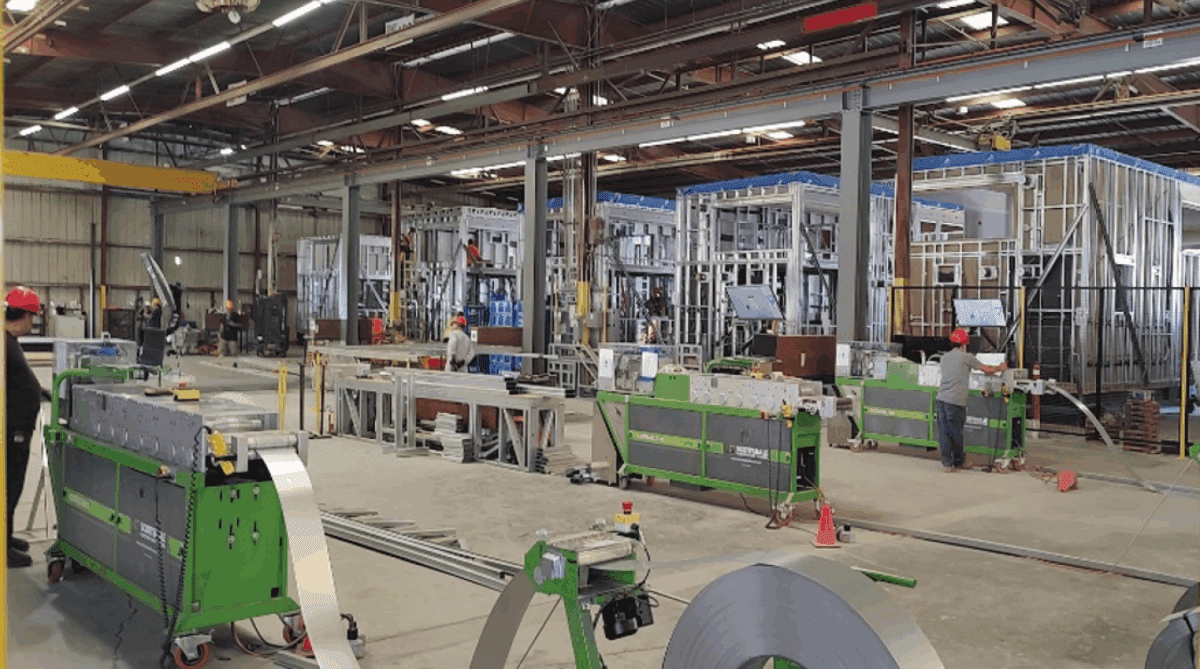
Set to launch in 2027, the system features five industrial robots working together across a production area of more than 3,200 square feet. These robots will create over 6,500 feet of floor and ceiling frames each week, but what really makes the setup special is its flexibility. Each robot can adapt to different frame designs without a complete reprogramming, which means the factory can take on custom modular projects without losing time or precision. This blend of digital engineering and real-world manufacturing allows Kleusberg to shift seamlessly between projects — a model that young entrepreneurs should study if they want to build scalable, resilient companies.

Smart Systems, Safer Jobs
Beyond the obvious productivity gains, the partnership also highlights something deeper: how technology can make work better for people. Automated welding and material handling reduce physical strain, minimize errors, and give workers opportunities to move into higher-skill roles in programming, maintenance, and digital process control. For young founders watching the convergence of robotics and construction, this is a powerful signal — the companies that thrive will be those that blend innovation with empathy for their workforce.
Lessons for the Next Generation of Builders
What KUKA and Kleusberg are proving is that the future of modular construction isn’t just about speed or cost — it’s about integration. Robots, sensors, and software working in harmony with human creativity and problem-solving. For aspiring entrepreneurs in offsite construction, the takeaway is clear: automation is no longer optional; it’s the new competitive edge. But success will depend on mindset — being flexible in tactics yet stubborn in vision. Whether you’re dreaming of your own modular startup or looking to modernize an existing factory, the revolution unfolding in Germany offers a roadmap for how to build smarter, faster, and better.
CLICK HERE to read the entire Robotics and Automation News
In my last article, I wrapped up with a simple truth: factories don’t fail because they can’t build. They fail because they can’t see. Without systems that reveal the real numbers—the actual cost of what’s being built, when, and by whom—most plants are flying blind.
That problem doesn’t stop at costing. The absence of systems touches every corner of a factory floor—from scheduling and inventory to quality control and delivery. It’s a silent threat that often doesn’t show itself until the damage is done. By then, it’s too late to “tighten up the process.” The process was never really measured in the first place.
I’ve seen this pattern play out time and again. A startup offsite factory launches with enthusiasm, strong design talent, and a few key hires who “know production.” But there’s no defined structure—no consistent way to measure material flow, production rates, or true job costing. When the first large project hits, chaos follows. Units fall behind schedule, cost overruns appear, and management begins chasing symptoms instead of causes.

That’s when most realize they’ve built a factory without building the system to run it.
The good news? This doesn’t have to happen anymore.
Offsite and modular construction have reached a stage where data-driven systems are no longer “nice to have.” They’re essential. And that’s where companies like 4WardConsult.com are making a difference.
While I won’t dive into the technical details (my partner recently did a great job of that in his article on “ERP vs. MES — Why Offsite Factories Need Both to Win”), it’s worth emphasizing what that piece made clear: you can’t improve what you don’t measure.
4Ward has developed software designed specifically for offsite and modular factories—tools that don’t just track what’s happening but translate it into actionable information. When properly implemented, these systems bridge the gap between what management thinks is happening and what’s actually taking place on the floor.
It’s the difference between running your business based on memory and running it based on metrics.
Now, to be clear—this level of sophistication isn’t for everyone. Enterprise-grade MES and ERP platforms, like those from 4Ward, are an investment. They’re built with larger operations or those start-ups planning on controlled growth in mind. But that doesn’t mean smaller factories get a pass. The lesson applies across the board: whether your plant produces 20 modules a month or 200, you still need a system. It might be simpler, more manual, or tailored to your scale—but the discipline of tracking, measuring, and analyzing remains the same. Without it, you’re still flying blind, just on a smaller budget.
I’ve watched too many plants spend months trying to “get by” with spreadsheets or outdated ERP systems not designed for the modular world. It works—until it doesn’t. And when it doesn’t, the fallout is expensive. Missed deadlines, blown budgets, lost credibility with developers and GCs—it’s all avoidable if the factory invests early in the right systems.
That’s the lesson here: in this business, systems are not overhead. They’re infrastructure. Just like cranes, carriers, or production jigs, they are the framework that holds everything else in place.
If your factory is struggling to find the bottlenecks, to understand why profit margins don’t match your expectations, or to keep production schedules on track—don’t wait for the next crisis to expose the problem.

Start building visibility now.
And if you’re not sure where to begin, take a few minutes to learn what 4WardConsult.com offers. Their approach was designed around offsite realities—not retrofitted from some other industry. In my view, that alone sets them apart.
Because at the end of the day, what saves a factory isn’t luck, or even experience. It’s knowing—in real time—what’s really happening inside your walls.
If you’d like to explore this further, connect with me today.
Bill Murray, Co-Founder of Offsite Innovators
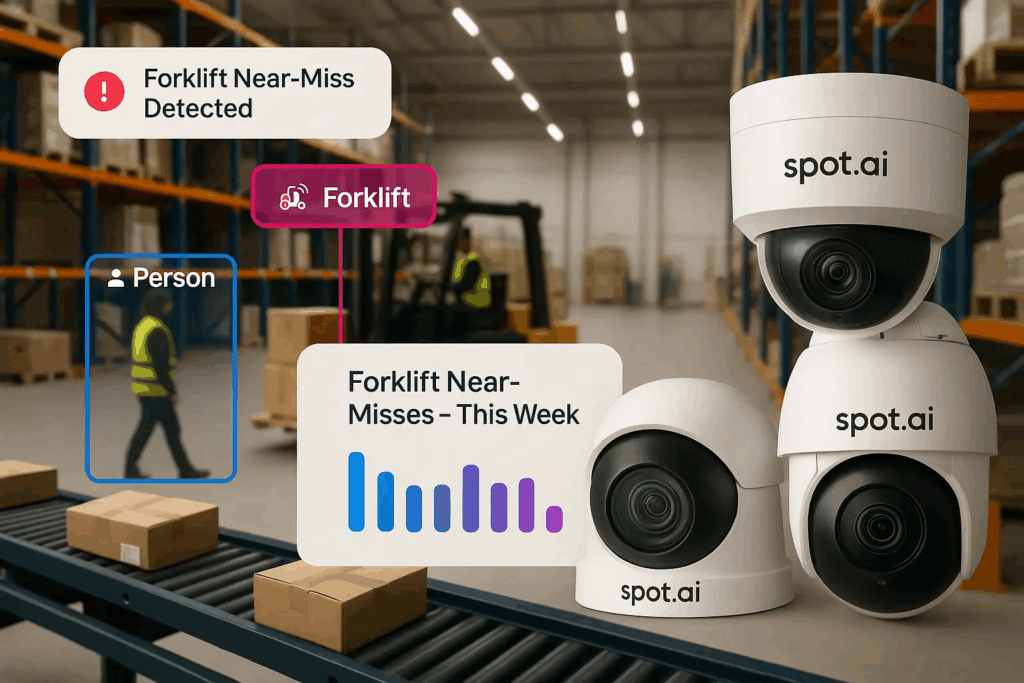
There’s a quiet revolution happening inside offsite construction factories. It doesn’t roar like a CNC saw or glow like a welding torch — it watches. AI mini-cameras, some no larger than a sugar cube, are being tested in factories from Oregon to Ontario. These aren’t ordinary security cameras. They’re self-contained, AI-powered observers capable of interpreting what they see, in real time, without needing a bulky server or a human monitor.
They’re called AI RF cameras because many of them also use radio-frequency (RF) sensing — a cousin of radar — to “see” movement even in dust, smoke, or poor lighting. Combined with onboard artificial intelligence, these cameras are fast becoming the digital eyes and nervous system of the modern modular factory.

And if their adoption continues, the phrase “factory floor supervision” may take on a whole new meaning.
At first, most modular and offsite firms install cameras for the obvious reasons — security, site monitoring, and loss prevention. But that’s just the beginning. The new generation of AI mini-cameras comes with onboard processing units, meaning they can analyze visual data at the source instead of sending endless video to a central computer.
That single design change transforms the role of cameras from passive observers into active assistants.
Inside a framing or wall-panel line, these cameras can now:
It’s not surveillance — it’s situational awareness.
Factories that have tested AI cameras report up to 20% productivity gains when used for workflow timing, and even greater savings by catching small mistakes before they become expensive rework.
What makes AI RF cameras especially intriguing for modular and offsite applications is their ability to use radio frequency to “see” through obstacles like fog, dust, or temporary partitions.
Unlike visual light, RF waves can detect movement behind objects or under dim lighting. When fused with AI image interpretation, the result is a camera that doesn’t just record — it perceives.

In a panel-assembly area, for example, an RF-enhanced AI camera could detect the location and speed of workers without relying on perfect lighting or line-of-sight. During installation, the same camera could verify that wall sections are lifted and placed in the correct order, even during a night set when visibility is limited.
This technology has already proven itself in logistics, defense, and autonomous vehicles, but its potential for construction safety and automation is just beginning to surface.
Today’s best AI cameras can tell the difference between a person, a forklift, or a bundle of studs. More advanced models can even identify individual workers, components, or tools — but that’s where privacy and ethics enter the picture.
One large modular manufacturer that experimented with AI cameras last year trained them to recognize specific assembly stages. When a worker completed a task, the system automatically advanced the digital work order to the next stage. The results were impressive: near-perfect traceability and smoother communication between production, logistics, and quality control.
But some line workers expressed concern: “Are we being tracked, or are our mistakes being tallied?”
Factory managers had to draw clear boundaries. The cameras monitored processes, not people. They were programmed to detect the presence of a component, not to evaluate performance. That’s a delicate but essential distinction if AI cameras are going to find acceptance across the industry.
The benefits don’t stop at the factory doors. For modular installation crews, AI mini-cameras can provide a new layer of safety and accountability.
Mounted on cranes or helmets, they can track lifting angles, distance between crew members, and even weather visibility. Paired with RF data, they can map the position of every module in real time, verifying that sections are aligned to within fractions of an inch.
In one pilot project, an AI camera system flagged a misalignment of just two inches before a heavy set crew lowered a unit. That alert prevented hours of rework and a potential safety incident.
Because these cameras can be powered by a simple USB port and transmit wirelessly, they can be placed virtually anywhere — including temporary pop-up factories, onsite staging areas, or transport trailers.
An AI mini-camera differs from a typical webcam in three major ways:
This self-contained intelligence means factories no longer need massive bandwidth or dedicated operators to extract insights. A single dashboard can display alerts, analytics, and video clips, helping supervisors monitor dozens of stations at once.
While the technology excites innovators, it also raises uncomfortable questions.
In some regions, data privacy laws limit how and when images of workers can be recorded. AI cameras blur that line further by turning visual data into analytics — sometimes automatically. Who owns that data? The worker? The employer? The software provider?
A few unions and workforce advocates are already pushing for clear consent protocols before deployment. Transparency is key. Workers must understand that these systems are designed for process optimization and safety, not personal evaluation.
Experts recommend anonymizing data at the source. Instead of storing video, the AI camera should convert it to statistical outputs — “three wall panels completed,” or “forklift in zone three” — erasing the human element before the footage ever leaves the device.
Offsite and modular factories are far more controlled than traditional jobsites. Everything — lighting, layout, timing, material flow — follows predictable paths. That predictability makes them ideal environments to train AI systems.
Unlike chaotic outdoor construction, a modular plant can gather consistent visual data, allowing algorithms to improve faster. Within weeks, an AI mini-camera can learn to recognize a wall section, detect if it’s missing a component, and even estimate assembly time.
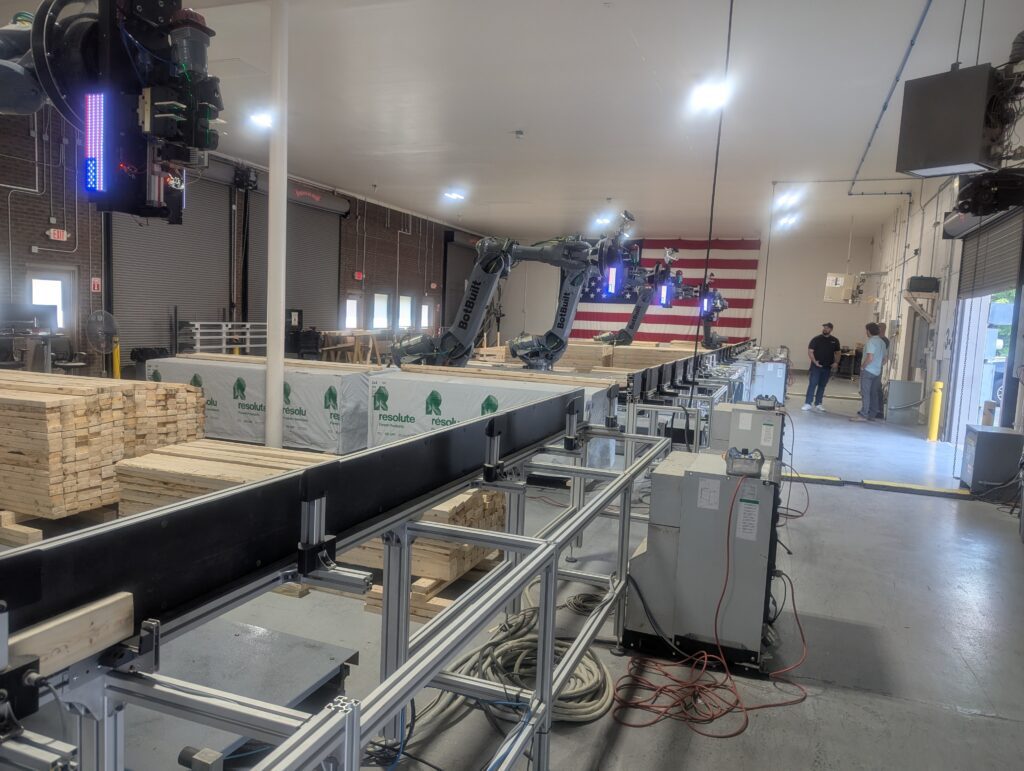
Companies like Framebotix, BotBuilt, and several European automation startups are rumored to be experimenting with such embedded camera systems to feed real-time performance data into their digital twins. That combination — AI eyes and digital brains — could become the foundation of fully autonomous modular manufacturing.
Five years ago, such technology would have been out of reach for small to mid-sized factories. Today, however, AI mini-cameras start under $200 each, depending on resolution and processing power. More advanced models cost $500–$1,000 but can replace multiple fixed cameras and sensors.
Their biggest savings come from what they prevent — delays, rework, accidents, and material waste. In a factory producing $10 million of output annually, reducing waste by even 1% offsets the cost of deploying a dozen AI cameras.
As one plant manager put it, “It’s like adding a dozen supervisors who never sleep, never complain, and never miss a detail.”
Skeptics worry that AI cameras could depersonalize work — replacing intuition with data. But the early evidence suggests the opposite. In factories where they’ve been carefully introduced, these systems have made workers safer, supervisors better informed, and production smoother.
When properly used, AI RF cameras don’t replace judgment — they support it. They let humans focus on higher-value decisions instead of constant oversight.
The offsite industry has always been about seeing what others miss — the efficiencies hidden in repetition, the power of standardization, the beauty of precision. With AI mini-cameras now part of the toolkit, we’re simply learning to see even more.
There’s no going back to the days of clipboards and blind corners. Factories that fail to integrate vision-based intelligence risk losing ground to those that do.
For modular builders and offsite innovators, AI RF cameras represent the next leap in accountability, quality control, and operational visibility. The question isn’t whether they’ll become standard equipment — it’s how soon your factory will install its first one.
Because in the future of construction, those who see more will build more.
How Moducore and 4Ward Solutions keep your business and factory in sync
Walk into any offsite construction factory and you’ll see two very different worlds. Up front, the business office is quoting jobs, managing finances, ordering materials, and scheduling deliveries. Out on the floor, saws are humming, stations are building walls or modules, and supervisors are racing to hit daily goals.
Both sides have one thing in common: they need accurate, real-time information. That’s where ERP and MES systems come in — and understanding the difference between them is key to building a factory that runs on time, on budget, and with no surprises.
An Enterprise Resource Planning (ERP) system is the strategic planner. It’s built to manage everything that keeps your business alive and profitable — quoting, purchasing, payroll, job costing, and project tracking.

In the offsite world, Moducore is the only ERP platform purpose-built for modular and component construction that unifies estimating, procurement, production planning, lifecycle BOMs, MRP, shipping, and customer handoff — in a single platform. Unlike generic ERPs, Moducore connects directly to floor activity through integrated production cards, material requisitions, and WBS-driven scheduling.
With an ERP like Moducore, you can answer questions like:
Think of ERP as your executive command center. It sees the big picture and makes sure every project aligns with your financial goals.
While ERP looks at the horizon, the Manufacturing Execution System (MES) focuses on what’s happening right now on the factory floor.

That’s where 4Ward Solutions Group’s FactoryOS MES shines. It’s built by people who’ve worked in modular factories and understand the chaos that can unfold when information lags behind the work.
4Ward’s MES monitors every step of production — which stations are active, where delays are forming, what materials are missing, and how each module or panel is performing against the plan. It also tracks cycle times, downtime, quality checks, and rework — giving managers instant visibility into bottlenecks.
With MES in place, you’ll know:
It’s like having eyes on every square foot of the shop — without running around trying to find answers.
Some factory owners ask, “Can’t I just use one system?” The truth is, ERP and MES speak two different languages — and together, they create a powerful feedback loop.
Then Moducore’s ERP updates project timelines, recalculates cost projections, and automatically alerts purchasing through MRP-driven triggers — giving your team immediate insights into what to do next. The result is not just tighter control, but a real-time response loop between financial planning and factory execution.
When these two systems talk to each other — as Moducore and 4Ward Solutions can — your business operates with real-time clarity from quote to completion.
Imagine you’re building 40 modules for a new apartment project. Moducore schedules the job, orders the materials, and builds a timeline that fits your client’s delivery date.
As work begins, 4Ward’s MES tracks every module through the factory. If one station falls behind or a material runs short, you get notified instantly. The MES feeds this data back into Moducore, which updates the schedule, flags the cost variance, and prompts a purchase order.
No paper travelers. No guessing. No missed deadlines.
Factories that run only on ERP may plan well but stumble in execution. Those running only MES may build efficiently but lose control of profitability. The real winners are those that combine both, linking the boardroom to the shop floor with live data and clear accountability.
With Moducore guiding your business strategy and 4Ward Solutions powering your factory execution, you’re not just building homes — you’re building a smarter, leaner, more predictable company.
In offsite construction, success comes from integration. ERP gives you the plan. MES delivers the performance. Together, they create the visibility and confidence every factory owner needs to sleep well at night — knowing the numbers match the reality.
Every homebuilder knows the importance of a solid foundation. You can have the best plans, the finest materials, and the most skilled trades—but if the foundation is weak, everything above the sill plate is at risk.
Factories are no different. Culture is the foundation. It doesn’t guarantee a flawless product or a smooth sailing every day, but without it, the chances of long-term success shrink dramatically. Over the years, I’ve walked into plants where the machinery was top shelf, there was over 200,000 square feet under roof and the numbers presented were optimistic. But what struck me more than the spreadsheets or production targets was the foundation—the culture I could sense in the people, both on the floor and in the office.

The floor speaks volumes. Within a short period of time, you can sense the signals:
– Workstations, breakrooms, or entire plants that are orderly—or in disarray.
– Crews working together—or in isolation. Some hustling others waiting.
– Supervisors guiding—or working online and simply pushing.
Factories also have a sound. Some hum with steady, focused energy. The steady rhythm of nail guns, and line roll announcements over the loudspeakers. Others echo with pleas for materials coming over the loudspeakers, finger-pointing shouting matches, or even silence that says more than words. These signals tell you whether the foundation is strong or cracking beneath the weight of poor communications and expectations.
On more than one occasion I walked into plants that had obvious signs of a suspicious culture that would not facilitate the production of superior products being offered to the marketplace. Check out the parking lot. Is it a mudhole? Is there ample space for all employees? Next look at the timekeeping system provided as employees clock in for the day. Is it manual and time consuming? Can one employee clock in for others? Is it digital and confidential? What is your very first impression as you step into the factory? Cleanliness isn’t only next to godliness it is essential and a precursor to a quality work environment and a quality product. I’ve seen both extremes and clean well-organized beats the alternative hands down. It’s amazing how many in upper management don’t grasp the importance or significance and its reflection of the culture of the company.
Culture isn’t confined to the production line. It shows up just as clearly in the office and among support staff:
– Are people engaged and approachable, or distracted and going through the motions?
– Do you see pride in their demeanor, or a sense of indifference?
– Is the office clean and welcoming, or cluttered and neglected?
– Are there visible signs of communication—like schedules, quality goals, or even simple signage—or is it vague and disorganized?

Even something as simple as a restroom or a break room tells a story. I’ve walked into plants where those spaces reflected respect for employees, and others where they revealed the opposite. These details matter, because they reflect the tone set at the top.
No receptionist, no one to welcome a visitor, you wait in a small confined “lobby” until someone shows up and asks how they can help? I’ve seen that, and it’s the first sign of a culture that that is oblivious to proper customer relations….uh oh!
I’ve always believed that a company’s greatest—and really, its only renewable—asset is its people. You can finance equipment, upgrade facilities, and refine processes, but none of it works without a management team and workforce that knows they matter.
As a GM, I never had a reserved parking spot, because I didn’t want barriers—literal or symbolic—between myself, managers, and the people building the product. I’ve learned that your people don’t care what you know until they know that you care. When they feel that, something changes. The pride shows up on the line, in the office, and in the product itself.
That kind of culture doesn’t just happen. It must be set intentionally, from the top down and reinforced every day.

I’ve several times talked with the GM/Owner at a plant and heard him espouse his respect for his people. I had no reason to question that until I had a conversation with those in the trenches. In one instance, I was in the plant and noticed what appeared to be a heated discussion taking place near the tool room. I waited until the discussion ended, and at some point, was able to talk to one of the people I had seen being very animated (that’s putting it kindly). He was exasperated, as his crew (he was a supervisor) was at a standstill due to the hoist on the overhead crane being down and no replacement available. I was an observer, and he didn’t know me from Adam, but I was able to learn that he had reported the potential for this problem to occur to his boss, several times. I expressed my understanding and simply suggested that maybe he should talk to the GM. His reply (which I later found credible) was that he never see’s the GM, and if he did, he felt certain it wouldn’t really matter. Further observations gave some credence to the fact that the GM/Owner talked the right talk but didn’t actually walk the walk.
Culture often reveals itself in subtle ways:
– How a line lead speaks to a crew member.
– How openly problems are acknowledged—or ignored.
– Whether an office staffer greets a visitor with genuine interest or a perfunctory nod.
These moments, small as they seem, are cracks or reinforcements in the foundation.
A solid foundation doesn’t guarantee a perfect house. Likewise, a healthy culture doesn’t guarantee every project will go smoothly. But without it, the risks compound. In modular construction—where timing, precision, and coordination matter more than in almost any other part of the industry—culture is the quiet but decisive force that shapes outcomes.
Every plant I’ve visited has its own story. But whether it’s a startup, a turnaround, or a supplier under review, the signals are remarkably consistent. Pay attention to them, and you can see the trajectory before it’s obvious to anyone else. Ignore them, and you’re left surprised when the cracks widen.
Culture isn’t a buzzword. It’s the foundation that holds the factory—floor and office alike—together. And like a foundation in homebuilding, if it’s poorly set, everything above it becomes more fragile.
At Offsite Innovators, our advisory work is about spotting these patterns early and helping companies strengthen the foundation. If you’d like to explore what these signals might mean for your factory or if you’re thinking of using Offsite products for your next project, connect with us here: [link to questionnaire/contact form].
We very much welcome your comments. Share your thoughts……the industry needs that!
If you’d like to explore this further, connect with us today.
Over the years, and especially the last several years of active advisory work, I’ve consistently been asked the same question: What makes one modular factory thrive while another stumbles?
People generally expect the usual ubiquitous answers: poor planning, capitalization, sales and marketing, lack of backlog, poor quality, etc. And while those are important, they don’t tell the whole story or get to the root cause of a successful company. In my years as a GM on the floor, and later as an advisor, I’ve noticed something else—a pattern you won’t find in spreadsheets, business plans, or equipment lists. It’s harder to measure, but it shows up in every plant I’ve visited. And more often than not, it’s the pattern that determines where that factory is headed.

I’ve walked into plants with the latest machinery and ambitious schedules. On paper, everything looked strong. But within minutes on the floor, it was obvious whether the foundation was solid—or shaky. The way crews interacted, how leadership set the tone, the sounds of the plant, whether people believed in what they were building…these were signals you couldn’t miss.
As the oft used idiom states, “You can’t often see the forest for the trees.” Many in management or those vetting manufacturers are so consumed with being engrossed in the specifics that they don’t see or consider the foundational aspects of a thriving business. Those signals were manifested in varying ways, many of which weren’t so obvious to the un-informed or to those with self-imposed blinders.
This foundation is essential and applies equally to start-ups, turnarounds, or established manufacturers. New equipment and fresh capital only go so far if the ingrained behaviors on the floor tell a different story. Simple observations, short conversations with office staff, and those working on the line will reveal a company’s true foundation.

When developers/builders visit manufacturers to vet potential suppliers, I often tell them: don’t just look at the product, backlog or the marketing materials. Spend 30 minutes on the floor. What you’ll see and hopefully learn there will tell you far more about the factory’s future than any spreadsheet or fancy brochures. I provide a formal written list of what to look for or have in some instances, accompanied them on factory visits… It’s that important!
This pattern is captured in conventional parlance by the term “Culture”. This term seems to represent an aversion that many assume in not considering its importance or in even considering its ramifications. Culture isn’t about production numbers, slogans on the wall, or polished presentations. It’s about the underlying force that shapes day-to-day decisions and attitudes. It’s subtle, but it’s powerful. And once it takes hold—good or bad—it influences everything that follows.
Every plant has it. Some harness it, and grow stronger because of it. Others ignore it, and pay the price. Culture is what differentiates an organization and what often separates winners from loosers.
Factories don’t succeed or fail overnight. Their trajectory is set early, in ways that most people overlook. That’s why I believe paying attention to a company’s culture is essential in determining and understanding where a plant is presently and where they are headed.
I feel so strongly about this oft-overlooked aspect that I will be devoting several articles on this website to explain and expand upon its significance. No preaching, just practical experience-based observations.
At Offsite Innovators, my mission is to share what I’ve learned from years on the floor and years advising others—so that whether you’re starting up, turning around, or choosing a supplier, you can make informed decisions.
👉 If you’d like to explore this further, connect with us today.
If you’ve ever heard the term carbon-neutral construction tossed around at a conference or slipped into a sales pitch, you may have nodded politely while wondering what it actually means. It sounds like one of those trendy buzzwords consultants and marketers love to throw into presentations. But for offsite construction, carbon-neutral isn’t just another industry fad—it’s quickly becoming a line in the sand for owners, investors, and regulators. And the truth is, it’s not nearly as complicated as some would have you believe. Let’s pick up the “big crayons” and draw it out clearly.

Every time a factory builds a module, a wall panel, or even a truss, carbon dioxide (CO₂) is released somewhere along the way. Cement plants, steel mills, lumber drying kilns, diesel-powered trucks, and even the electricity running saws and nail guns all contribute to the carbon “footprint” of a project.
Carbon-neutral means two simple things:
The idea is that when you tally it all up, the CO₂ your project put into the air has been canceled out by CO₂ taken out somewhere else. Net impact: zero.
For decades, offsite manufacturers have fought the uphill battle of convincing the world that factory-built doesn’t mean flimsy or cheap. In fact, the industry has made enormous strides in quality, safety, and speed. Now comes another opportunity: showing that offsite construction can lead the way in sustainable building.

Why does this matter? Because the biggest buyers of housing, commercial spaces, and even government-funded projects are demanding it. Developers want carbon-friendly buildings to attract investors. Cities are passing green building codes. Lenders are tying financing rates to sustainability goals. And perhaps most importantly, the next generation of homebuyers—Millennials and Gen Z—are far more likely to value eco-conscious construction than their parents ever were.
For offsite, this is a chance to stand out. Factories already run on repeatable, controlled processes. They waste less material than job sites. They use precision that site-built crews often can’t match. Leaning into carbon-neutral practices allows offsite companies to take what they’re already doing right and prove they’re miles ahead of traditional construction.
Let’s be honest: yes, it adds cost. But maybe not as much as you think.
And here’s the kicker: carbon-neutral buildings save money in the long run. Factories that optimize for energy efficiency spend less on power. Finished homes that are designed for low energy use cut utility bills for the buyer, making them more marketable. In the big picture, the return on investment often outpaces the upfront cost.
This is the part where people start to squirm. Measuring carbon emissions sounds like a fuzzy science experiment. But the reality is, it’s surprisingly trackable.
Add it up and you get a pretty clear picture of how much CO₂ your project produced. Where it gets trickier is the offsets—like planting trees. A sapling today may not absorb significant carbon for years, and there’s always the risk it doesn’t survive. That’s why serious offset providers are held to certification standards to make sure the “clean-up” is real.

So yes, it’s measurable. Not perfect, but close enough to make it a serious tool rather than just a feel-good idea.
Carbon-neutral isn’t just a cost or a box to check; it’s a chance for offsite construction to redefine itself. While site-built contractors are still wrestling with mountains of waste, inefficiency, and inconsistent building practices, offsite has the chance to say: We’re not only faster and more precise—we’re cleaner too.

Imagine a factory marketing its product as “the first carbon-neutral homes in the state.” Imagine developers pitching investors a multifamily project that’s net-zero impact from day one. Imagine local governments awarding contracts based not only on cost and timeline, but on carbon performance. Those scenarios aren’t futuristic—they’re already happening in pockets across North America and Europe.
Carbon-neutral construction doesn’t mean building with hemp rope and fairy dust. It means building smarter, reducing waste, and being accountable for the footprint we leave behind. Yes, it costs a little more today, but it’s quickly becoming the standard that owners, regulators, and buyers expect.
For the offsite industry, the message is clear: step up and lead, or risk being seen as just another old-school builder hiding in a factory.
Carbon-neutral is coming. The question is—will offsite construction be the one holding the crayon and drawing the path forward?
The conversation about powering the future isn’t just about how many EV chargers we need—it’s about where the power will come from. With millions of electric vehicles expected to plug in over the next decade and AI data centers multiplying like mushrooms after a rainstorm, it’s fair to ask: can solar panels and wind turbines keep up? And will the U.S. grid be able to handle it all without leaning harder on backup fossil power?
Let’s break it down.
It sounds simple: put up a few solar panels or a windmill and plug in your car. But the math is sobering.

“It only takes ~18 solar panels to match a home charger’s power at noon… but nearly 375 panels for a single 150 kW fast charger. Covering real-world annual usage? Closer to 750 panels. Ultra-fast chargers jump into the thousands.”
For wind, the story isn’t much better at the small scale. A 5 kW turbine produces about 8,700 kWh a year, so you’d need dozens of them to offset just a single busy charging plaza. A single modern utility-scale wind turbine (2.5 MW) can cover the annual energy for a site with several fast chargers—but no one’s putting a 400-foot rotor in the gas station parking lot.
The reality is that most “solar EV stations” are hybrids: they build a canopy with as much PV as the lot allows, add a battery bank for smoothing, and stay tied to the grid for reliability.
If EVs were the only new load coming, utilities could probably manage with steady renewable expansion. But add AI data centers—which chew through power 24/7—and things get trickier.

“After a flat decade, U.S. demand is climbing again. By 2030, EVs could add ~100–185 TWh, while AI data centers are on track to double or triple their draw by 2028. We’re entering a new ‘load growth decade.’”
Together, these two growth curves end a decade-long era of flat electricity demand in America. We are moving into a “load growth decade” where building out generation and transmission is once again front-page news.

“Unmanaged EV charging spikes the grid right when everyone comes home. Managed charging can shift 98% of that load to overnight, avoiding billions in new peaker plants.”
Not entirely—but the amount matters. Here’s how the U.S. can cover these new loads without a big fossil rebound:
A single EV charging station can be “solar powered” in marketing terms, but without the grid, batteries, or firm generation, it’s a sunny-day-only solution. On a national scale, the wave of EVs and AI data centers will demand serious investment—but not necessarily a surge in fossil generation hours.
The U.S. grid of the 2030s will look different: more renewable capacity, more storage, more transmission, more nuclear, and smarter demand. Fossil plants will still exist, but running fewer hours—used as true backup instead of everyday workhorses.So the next time you see a solar canopy over a charger, think of it as a symbol: not of total independence from the grid, but of the direction the grid itself is moving—toward a cleaner, smarter, and more resilient backbone that can handle both your Tesla and the servers training the next GPT model.