Highlighting the thinkers and their ideas driving the evolution of Offsite Construction. 
Be inspired, be informed, be innovative!

What If We Could Build Hope as Fast as We Build Homes?

When it comes to business—any business—the term “What if…” has always been the spark. It’s the match that lights new ventures, revives established companies, and inspires business models no one saw coming. For generations, almost all of those “What ifs” circled back to the same point: How do we make a profit?

But something refreshing is happening. Today’s entrepreneurs still know the bottom line matters—it has to, or the business won’t last—but they’re not stopping there. They’re pairing financial sustainability with social purpose, and they’re doing it in ways that feel bigger, bolder, and riskier than the generations before them ever imagined. And nowhere is that more exciting than in the offsite construction industry.

The Next Generation’s “What If”

These entrepreneurs are not just looking at balance sheets—they’re asking questions that come with moral weight. What if we could house people faster than the streets can claim them? What if modular housing could be built for accessibility from the ground up, not retrofitted after the fact? What if we could design homes that heal, empower, and restore dignity?

They are moving beyond the safe bets. They’re willing to test unproven materials, integrate emerging technologies, and partner with organizations that are less about quarterly earnings and more about measurable human impact. The payoff? They’re showing that you can have both—a healthy profit and a meaningful legacy.

Partnering with NGOs for Lasting Impact

One of the most promising shifts in this new wave of entrepreneurship is the embrace of partnerships with NGOs. In the past, the private sector and nonprofit sector often circled each other warily. But today’s offsite innovators see NGOs not as charity cases, but as strategic allies. NGOs bring deep community knowledge, access to funding streams earmarked for social impact, and the credibility to enter underserved markets. Entrepreneurs bring speed, efficiency, and the ability to scale solutions once they’ve been proven.

Together, they’re tackling challenges like homelessness, housing for people with disabilities, disaster recovery housing, and even temporary-to-permanent solutions for people emerging from institutional care. Offsite construction, with its ability to deliver high-quality, repeatable housing units quickly and affordably, has become the go-to toolkit for making these “What ifs” happen.

Why This Moment Matters

Boomers built the foundation of the offsite industry, but it’s the next generation—Millennials, Gen Z, and even the first wave of Gen Alpha dreamers—who are asking the questions that will define its future. They’re turning the idea of profit on its head, treating it as the engine that powers the mission rather than the mission itself. And when that mission is to address poverty, homelessness, and mental instability through smart, fast, sustainable housing, the “What if” becomes something worth betting on.

Because at the end of the day, the best kind of profit is measured in both dollars and lives changed. And in the offsite construction industry, the people daring to ask the hard “What if” questions are building more than houses—they’re building hope.

The Rise of Hybrid Building Systems: Why Mixing Materials May Be the Future of Offsite Construction

There was a time when modular meant one thing: a rectangular wood-framed box built in a factory. If you were lucky, it showed up on time. If you were even luckier, it didn’t crack in half when it was craned onto the foundation. The materials were familiar, the process was routine, and the formula—while effective—was rarely questioned. But that’s changing fast.

Offsite construction is no longer tied to a single material type. In fact, the innovators quietly rewriting the rulebook aren’t pushing for full CLT, all-steel, or concrete everything—they’re combining them. These hybrid systems are beginning to address some of the most significant challenges in modular and panelized construction. And surprisingly, the results don’t look like Frankenstein’s monster. They look like efficiency, speed, and profit.

The Death of “One-Size-Fits-All” Modularity

Ask any factory owner why they chose wood, steel, or concrete, and you’ll get a simple answer: that’s what we’ve always done. But as offsite builders move into new markets, new climate zones, and new types of housing (mid-rise apartments, ADUs, even schools), that old thinking just doesn’t hold up. What works in Arizona doesn’t always work in Vermont. What’s affordable in Detroit may be a disaster in San Francisco.

Instead of trying to make wood do what it wasn’t designed to do, smart builders are now combining materials like CLT (Cross-Laminated Timber) for shear strengthlight-gauge steel for precise framing, and modular MEP pods for plug-and-play efficiency. It’s not about what you’re used to—it’s about what the building needs.

The Factory of the Future Isn’t Married to a Material

In hybrid systems, the factory line becomes more flexible. One part of the shop might be cutting CLT panels, another might be bending steel, while a third assembles fully wired MEP pods that can slide into a wall panel or volumetric module like a cartridge. This mix-and-match approach has two major benefits: it allows the factory to bid on a wider variety of projects, and it opens the door to optimizing cost and performance on every job.

Some factories are now building the bottom floor of a mid-rise in concrete, the middle floors in steel-framed modular boxes, and the top floor in lightweight timber to stay under height limits. It’s not magic—it’s logistics. And it’s made possible by digital coordination and better integration with the design team from day one.

The Hidden Advantage: Localized Code Compliance

One unexpected bonus of hybrid systems? They can make code compliance easier. Some cities are more accepting of certain materials than others. For instance, jurisdictions that are hesitant to approve fully steel modular frames may be fine with steel used for just the floor joists, if the walls are timber. And CLT is increasingly being written into fire and seismic codes where traditional framing struggles.

A hybrid approach gives builders the flexibility to meet local regulations without having to redesign the entire product line. That means fewer headaches, faster approvals, and a smoother path from permit to project closeout.

Will It Cost More? Maybe Not.

Some skeptics argue that hybrid systems must be more expensive—after all, you’re sourcing more materials, more connections, and more manufacturing methods. But the opposite is often true. By matching each material to its most efficient use case, many builders report lower total installed cost per square foot. And with labor being one of the most expensive and unpredictable parts of construction, anything that reduces on-site time is money in the bank.

The Modular Mutts Are Winning

Offsite is moving into a new era—one where dogma takes a backseat to practicality. The winners will be the ones who understand that modular isn’t about the material. It’s about the method. And if that method means using CLT, steel, wood, and MEP pods all in the same project, so be it.
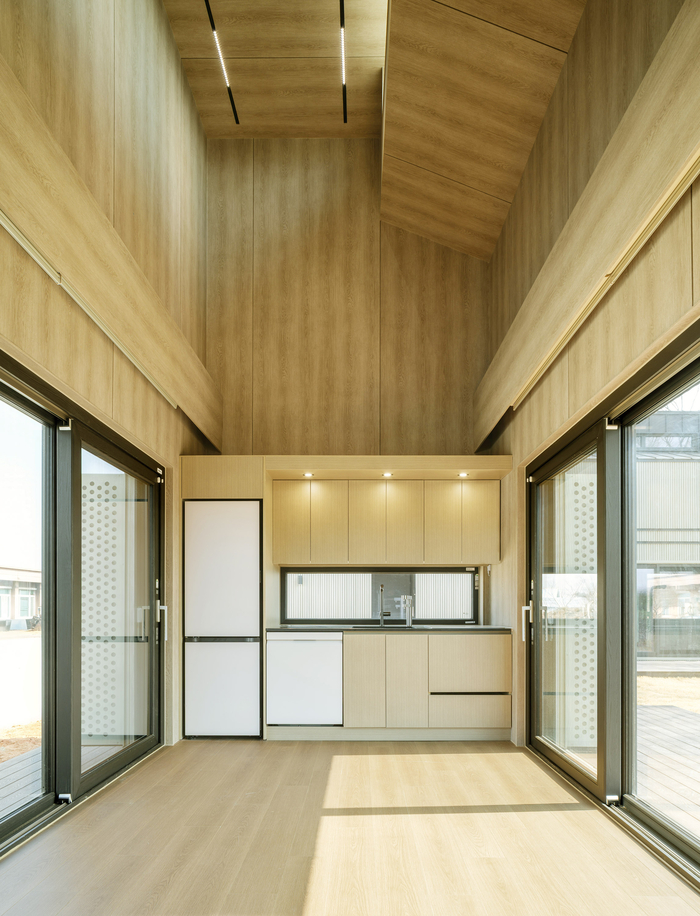
Hybrid systems may not be the sexiest innovation. They’re not robots. They’re not 3D printers. But they are solving real problems. And in an industry starved for reliability and flexibility, that may be the most revolutionary thing of all.

Designing the Future: Where Architects Go to Master New‑Age Skills

For Architects, staying still is the fastest way to fall behind. The built environment is no longer shaped solely by pencils and paper but by code, computation, and creativity that blends tradition with cutting‑edge innovation. Today’s successful architect must navigate a world where the timeless principles of form and function intersect with rapid advancements in Building Information Modeling (BIM), artificial intelligence, and parametric design.

All photos – The Arch Daily

Learning in this dynamic context isn’t just important—it’s essential. A strong and continuously evolving educational foundation becomes the bedrock of a career capable of expressing the language of modernity, honoring traditional wisdom, and envisioning structures that speak to the aspirations of the future.

Thanks to the digital age, architects now have unprecedented access to a worldwide digital classroom. No longer confined to lecture halls or textbooks, these curated platforms expand creativity, sharpen intelligence, and empower professionals at every stage of their journey.

This curated list was compiled and adapted from research conducted by The Arch Insider, ensuring a high-quality resource tailored to architects who aspire to expand their creative and technical horizons.

1. ArchiStar Academy

Specializing in on‑demand, self‑paced learning, ArchiStar offers in‑depth training on tools like Rhino, Grasshopper, Dynamo, Revit, AutoCAD, Python, Adobe CC, V‑Ray, and SketchUp. Their platform supports practice-ready architects and university students, pairing software skills with parametric workflows.

2. LinkedIn Learning (Architecture Track)

With hundreds of courses—from Revit Essential Training 2024/2025 to SketchUp, BIM 360, Architectural Families, and Space Planning—LinkedIn Learning provides authoritative, continually updated content taught by industry experts LinkedIn. Popular options include:

  • Revit 2024/2025 Essentials (20+ hours)
  • Understanding the Architectural Design Process
  • SketchUp Free
  • Archicad Architectural Design Techniques

3. ArchAdemia

Dubbed the “all‑in‑one” architecture platform, ArchAdemia offers a rich mix of software tutorials, project‑based courses, podcasts, and community forums. With over 35 curated lessons—from Revit to parametric design—and downloadable resources like CAD blocks, CGI textures, and Excel templates, it’s ideal for transitioning students and busy professionals alike.

4. ThinkParametric

Kick‑starting a niche for subscription‑based parametric design training, ThinkParametric packages expertly organized videos and project‑based courses focused on Rhino, Grasshopper, and Revit. Their structured modules are perfect for diving into computational design workflows.

5. The Revit Kid

Led by Jeffrey Pinhiero, this blog offers a treasure trove of video tutorials and written guides specifically for Revit. With a mix of free and paid content, it dives into real‑world tips and family creation—great for BIM aficionados.

6. The Grasshopper Website

An official resource backed by the makers of Grasshopper. It includes beginner video tutorials and links to external tools, plus the free 157‑page Grasshopper Primer—perfect for mastering computational design.

7. Digital Toolbox

Created by Scott Leinweber and Tam Tran, this platform guides learners through Rhino and Grasshopper workflows via practical tutorial videos—helpful from basic to advanced levels.

8. Autodesk’s YouTube Channel

An official source for “Getting Started” tutorials, feature demos, and software tips across AutoCAD, Revit, BIM 360, and more—ideal for reliable, directly endorsed learning.

9. Plethora Project

A deep dive into non‑standard tools—Unity3D, Maya, C#, Python, and JavaScript—as well as Rhino and Grasshopper. Great for architects seeking to integrate visualization, programming, or game‑engine workflows.

10. NYCCTfab (Vimeo Channel)

From NYC College of Tech’s Fabrication Lab, this channel offers valuable tutorials on Revit, Rhino, and Grasshopper—focusing on real‑world application in fabrication and digital modeling.

These platforms offer more than technical skill—they cultivate new ways of thinking: systems-driven, data-informed, parametric, and AI-enhanced. Whether you’re brushing up on Revit families, coding Grasshopper scripts, or exploring visualization pipelines, each platform equips you with the tools to lead in the future of architecture.

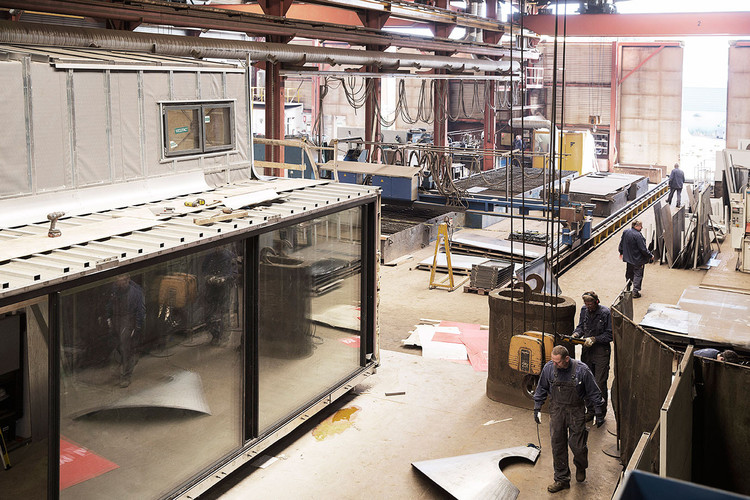
From Washing Machines to Wall Panels—Can LG Turn Their Smart Cottage Into a Trusted Modular Home

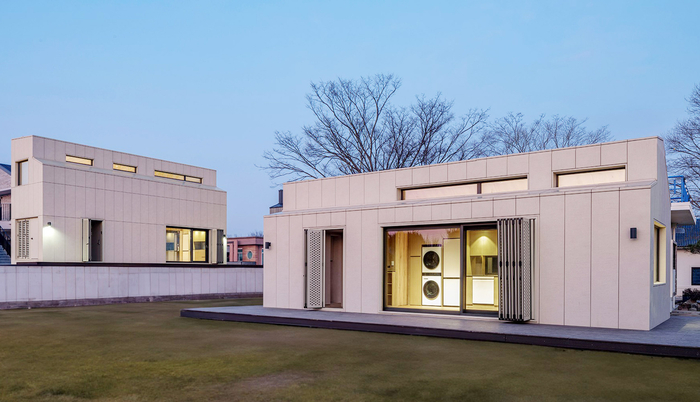
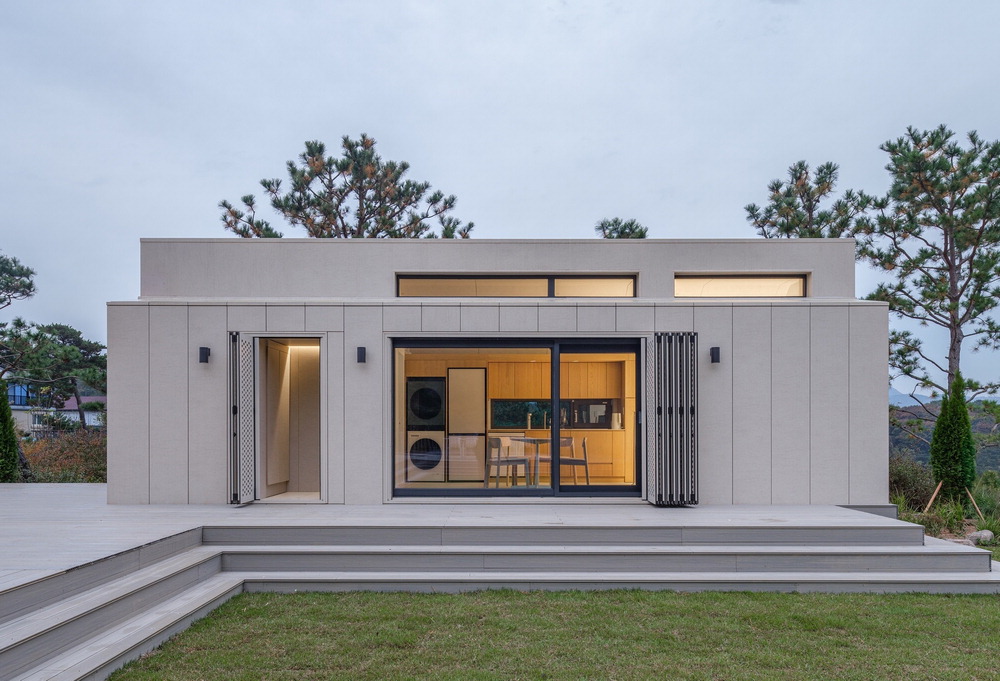
LG is already a household name—literally. But now the brand is on a mission to bring that same trust into the realm of modular homes with its clever Smart Cottage. Think of it as the ultimate synergy: your favorite ThinQ-enabled laundry paired with a roof that produces its own energy. Dreamy, right?

LG introduced the Smart Cottage at IFA 2023 and has since officially launched it to both B2B and B2C customers. The line-up includes the compact Mono—a cozy single-story layout—and the double-decker Duo, complete with a loft bedroom. Full prefab design means 70% is built off-site, cutting construction time by over half compared to traditional methods.

This isn’t just a fancy shed. The Smart Cottage packs impressive eco-features like 4 kW solar panels, energy storage, and an air-to-water heat pump that meets net-zero energy goals. With energy usage per year down to just 40% of a conventional home, it’s about as green as a cottage can get—without actual thatch.

Inside, it showcases LG’s full smart-appliances lineup: WashTower Compact, QuadWash dishwasher, induction range, water purifier, and even ThinQ-controlled blinds, smart locks, and cameras . Some models can even sync with your phone’s GPS to preheat the cottage or turn on lights just as you’re pulling up.

Originally demoed in Europe and Korea, it’s making inroads fast. LG already delivered units to SM Entertainment’s training center in Korea for use as pop-up offices or living labs and preliminary interest isn’t limited to celebrity campuses—Europeans and even Aussies are reportedly eyeing it as either a primary or a countryside getaway .

Of course, LG faces challenges. Home-buyers are used to old-school construction and long warranties, not tech integrations that could go glitch. But if you’ve already welcomed LG TVs and fridges into your life, why not open the door to a whole cottage?

With turnkey prefab, solar juice, and ThinQ smarts all rolled into one neat package, LG is aiming to earn its stripes in modular living—one cubic meter of confidence at a time.

It might feel quirky to think of a cottage coming from a TV-maker, but LG’s Smart Cottage has substance. If you’re ready to trust more of your daily life to ThinQ—heating, lighting, home security, the works—this tiny modular marvel could be the start of something beautifully smart.

Built in the factory. Blocked in the permit office.

In modular and manufactured housing, staying compliant with an ever-growing list of codes, standards, and certifications isn’t just important—it’s essential. That’s where third-party inspection agencies like PFS TECO come in, ensuring quality and compliance at every step of the building process.

To gain a deeper understanding of what these inspections entail and how they impact the offsite construction industry, I sat down with Bob Gorleski, a nationally respected expert on building code compliance and inspection protocols.

Robert Gorleski

With over 35 years of experience and a résumé that spans nearly every major facet of code enforcement—plan review, QA, field inspections, and engineering—Bob is the guy you want in your corner when navigating the complexities of state, national, and industrialized building regulations. His unique perspective comes not only from his hands-on work, but also from his service with respected organizations such as the Manufactured Housing Institute, the Modular Building Institute, and the Wisconsin Housing Alliance.

Bob Gorleski, Vice President of the Manufactured Structures Division at PFS TECO: PFS Corporation d.b.a. PFS TECO is a third-party agency providing independent oversight for off-site construction and manufacturing. Our responsibilities include plan review, quality assurance monitoring, and in-plant inspections to verify that production aligns with approved designs and complies with applicable codes. Since local jurisdictions don’t inspect work performed in a factory setting, PFS TECO ensures that units are built to code before they leave the plant. They manage label control and serve as the point of contact with state or federal regulators. Our role is essential to maintain accountability, ensuring code compliance, and supporting consistent quality in a production-driven environment.

Bob: From our perspective, current building codes were developed for site-built construction and often don’t translate well to the factory floor. They assume field inspections, on-site sequencing, and installation methods that don’t reflect how off-site construction operates. This creates gaps, forces workarounds, and adds unnecessary steps that disrupt production without improving outcomes. For example, codes often require inspections “before cover,” but in a factory, components like floor framing and mechanical runs are typically enclosed within hours, long before an inspector could review them under a traditional model. While HUD and some state modular programs have adapted portions of the code to fit the factory environment, there’s still a lack of consistency and clarity. We see a clear need for better alignment between code requirements and how work is actually performed in off-site manufacturing.

Bob: HUD Code and modular programs differ in key areas. HUD is federally preemptive, streamlining approval and limiting local interference—once labeled, a unit can be shipped and installed in any state without additional plan review. Modular programs follow state-adopted versions of the IRC or IBC, which means added complexity, varying requirements, and local Authority-Having-Jurisdiction involvement. Modular offers more design flexibility, including multi-story and custom layouts, but at a higher cost due to engineering, state reviews, and permitting fees. HUD, while more limited in design, benefits from standardized construction and lower regulatory and production costs.

Bob: Most code officials still lean toward traditional site-built construction. While exceptions exist, many remain unfamiliar with off-site processes and are skeptical of third-party inspections and factory-based compliance. As a result, local Authorities Having Jurisdiction often impose redundant inspections or apply site-built assumptions to factory-built units—even when those units have already been approved at the state level. The issue isn’t outright resistance to innovation but a lack of exposure to how off-site construction actually works. That said, the mindset is beginning to shift as more jurisdictions gain experience with modular and HUD Code homes, and as education efforts around offsite methods improve.

Bob: A HUD Code home was installed on a permanent foundation in a state that typically sees manufactured homes placed on piers. The local inspector, unfamiliar with HUD’s guidelines for foundation systems, delayed the final inspection, questioning the anchoring method, even though it followed an approved engineered design. The confusion over HUD’s preemptive authority and foundation alternatives led to weeks of delay while documentation was resubmitted and the inspector was educated on the applicable standards.

Bob: Several national organizations are actively working to improve how building codes address off-site construction. The Modular Building Institute (MBI) advocates modular construction by collaborating with the International Code Council (ICC) and educating code officials to remove unnecessary barriers in plan approvals and inspections. The Manufactured Housing Institute (MHI) represents HUD Code manufacturers. It works with HUD, state agencies, and lawmakers to update federal regulations and ensure local officials do not impose extra requirements that conflict with HUD’s federal authority. The ICC Off-Site and MBI also develop specific standards that reflect factory-built processes rather than traditional site-built assumptions. Together, these organizations are driving changes that better align codes, standards, and enforcement with the unique workflows and efficiencies of off-site construction.

Bob: PFS TECO plays a key role in modernizing the regulatory framework for off-site construction. As an independent third-party inspection agency, we verify that factory-built units comply with code requirements before leaving the plant. This reduces the need for duplicated local inspections and increases AHJ confidence in off-site methods. We actively engage in code development and industry groups, providing practical insights from factory inspections to help shape regulations that align with off-site construction realities. PFS TECO supports streamlined, risk-based enforcement that promotes innovation without compromising safety or quality by connecting manufacturers, regulators, and local inspectors.

Bob: The industry is moving forward, but challenges persist. Awareness and acceptance of offsite construction are improving, driven by groups like MBI, MHI, and third-party agencies like PFS TECO. Still, many codes and local enforcement practices remain rooted in site-built assumptions that don’t fit factory-built methods. If regulatory updates don’t keep pace, offsite construction risks are being held back by codes that stifle innovation and efficiency. Ongoing education, advocacy, and collaboration are critical to maintain progress and prevent being left behind.

Bob: Consistent acceptance of third-party inspections and plan reviews is essential to eliminating redundant inspections and plan reviews, reducing delays, and accelerating off-site construction adoption.

Bob: Builder-developers can promote code changes by working with industry groups, sharing examples that show off-site construction works, talking directly with code officials, and pushing for rules that fit factory-built methods. Their experience and influence help drive practical updates that support faster, more efficient building.

Throughout our interview, Bob made one thing clear: third-party inspections aren’t a bureaucratic hurdle—they’re a safeguard. They help protect homeowners, support manufacturers, and maintain the integrity of the entire offsite construction industry. His passion for building better, safer, and more inclusive spaces (as seen in his work on modular classroom accessibility) is evident in every project he touches.

We’re grateful to Bob Gorleski for sharing his time, insight, and years of expertise. His commitment to regulatory clarity and code compliance continues to benefit not only the clients of PFS TECO but also the entire modular building community. For further information or questions, Bob can be reached directly at [email protected].

Floating Futures: Rotterdam’s Bold Leap into Waterborne Living

In the heart of Rotterdam, a transformative vision is taking shape—one that reimagines urban living by embracing the city’s most abundant resource: water. Danish maritime architecture firm MAST, in collaboration with local contractor BIK bouw, has unveiled plans for Europe’s largest floating housing development in the Spoorweghaven district. This ambitious project aims to convert a disused dock into a vibrant, modular neighborhood featuring over 100 prefabricated apartments, green public spaces, commercial zones, and recreational harbors.

The Netherlands faces a pressing housing crisis, with a need for one million new homes over the next decade. However, limited available land has prompted innovative solutions. MAST’s floating community addresses this challenge by utilizing underused harbor spaces, offering a sustainable alternative to traditional land-based development. The design not only provides much-needed housing but also preserves Rotterdam’s maritime heritage by integrating seamlessly with the existing harbor landscape.

Central to the project’s sustainability is the use of prefabricated cross-laminated timber (CLT) modules, constructed off-site and floated into position. This method minimizes construction noise, traffic, and material waste, while allowing for flexibility and adaptability in response to changing urban needs. Additionally, the incorporation of over 900 square meters of floating reedbeds, in partnership with Biomatrix, enhances water quality and biodiversity, contributing to a healthier urban ecosystem.

MAST’s vision for the Spoorweghaven district exemplifies a forward-thinking approach to urban development, where architecture harmonizes with the environment. By embracing water as a living part of the city, this floating neighborhood sets a precedent for resilient, adaptable, and sustainable urban living in the face of climate change and urbanization pressures.

CLICK HERE to read the entire Interesting Engineering article

A Village for Our Heroes: Colorado Springs Builds Tiny Home Community to Honor and House Its Teachers – with video

In the heart of Colorado Springs, a beacon of hope and innovation is rising—one that addresses the pressing challenges faced by educators today. Harrison School District 2, in collaboration with the nonprofit organization We Fortify, is pioneering a transformative initiative: building affordable, dignified housing for teachers right on school grounds.

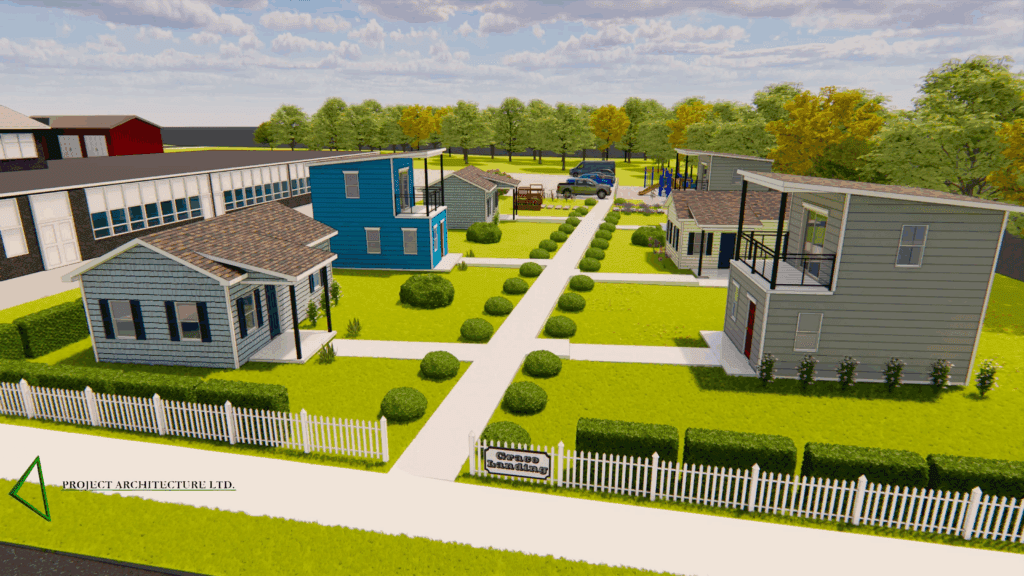
This visionary project, known as Wendy’s Village, is named in honor of Superintendent Dr. Wendy Birhanzel, whose unwavering commitment to educators has inspired a community-wide movement. Comprising 40 energy-efficient tiny homes, each 352 square feet, the village is set to occupy the former soccer field of Mountain Vista Community School. These homes are thoughtfully designed, featuring full kitchens, bathrooms, living areas, and bedrooms, all powered by electric energy. A central community center will serve as a hub for residents, offering a galley kitchen, event space, and raised garden beds.

The initiative addresses a critical issue: the affordability crisis that has made it increasingly difficult for teachers to live in the communities they serve. With starting salaries around $47,545, many educators struggle to afford housing in Colorado Springs, where the average rent is approximately $1,720 per month . Wendy’s Village offers these homes at a significantly reduced rent of $800 per month, providing a sustainable solution that allows teachers to focus on their vital work without the burden of financial strain.

Complementing Wendy’s Village is Prospect Village, a neighboring community designed for young adults aged 18-25. This development will offer 18 units at $600 per month and aims to provide long-term transitional housing, educational programming, and job opportunities for young people emerging from poverty .

The collaboration between Harrison School District 2 and We Fortify exemplifies the power of community partnerships in addressing systemic challenges. By leveraging district-owned land and the expertise of a nonprofit developer, the project minimizes costs and maximizes impact. Funding for the $6.5 million initiative is being sourced entirely through private, public, corporate, and foundation donations, ensuring that no taxpayer money is used.

This model of integrating affordable housing within educational environments not only supports teachers but also strengthens the fabric of the community. As Dr. Birhanzel aptly stated, “This project reflects our shared commitment to supporting educators and strengthening the future of our schools and neighborhoods”.

Wendy’s Village stands as a testament to what is possible when innovation, compassion, and collaboration converge. It offers a replicable blueprint for other districts grappling with similar challenges, demonstrating that with bold vision and collective effort, we can create communities where educators are valued, supported, and empowered to thrive.

As we look to the future, initiatives like Wendy’s Village inspire hope and reaffirm our commitment to those who dedicate their lives to educating the next generation.

Hempcrete Rising — The Eco-Friendly Material Paving the Way for Sustainable Construction

Amid the environmental impact of traditional construction, a humble, plant-based material is beginning to make waves—one block at a time. Hempcrete, a biocomposite made from the stalks of the industrial hemp plant, is turning heads not just for its sustainability, but for its strength, insulation value, carbon-storing capabilities, and surprising design flexibility.

Long relegated to the margins of building innovation, hempcrete is now experiencing a renaissance, with forward-thinking architects, builders, and factory operators exploring its potential for everything from residential homes to public infrastructure. Let’s explore how hempcrete is made, where it’s produced, how it’s being used in modern construction, and why its future looks more than promising.

Hempcrete is not a substitute for concrete in structural applications—but it’s not trying to be. Instead, it excels as a natural, breathable, insulating material used in wall assemblies, floors, and roof infills. It’s made from three ingredients:

  • Hemp hurds (the woody core of the hemp stalk),
  • A lime-based binder (often a mixture of lime, clay, and pozzolans), and
  • Water.

When mixed together and packed into forms around a structural frame, hempcrete cures into a firm, yet flexible matrix that insulates, resists fire and pests, regulates indoor humidity, and—most importantly—sequesters carbon throughout its life. Unlike concrete, it doesn’t off-gas harmful chemicals or require energy-intensive production.

For every cubic meter of hempcrete produced, approximately 110 kilograms of CO₂ are absorbed and locked away. It’s one of the few materials that make a building greener the more you build with it.

While many startups and regional manufacturers are entering the hempcrete space, a few major players are helping drive large-scale adoption:

IsoHemp (Belgium)

Founded in 2012, IsoHemp has grown into one of Europe’s largest producers of hempcrete blocks. Its automated factory near Namur, Belgium, produces thousands of units per day, which are used in residential and commercial buildings across Europe. Their standardized blocks are designed for speed and performance in wall construction and are available in multiple thicknesses for varying climate zones.

Hempitecture (United States)

Based in Idaho, Hempitecture is the first U.S.-based company to build a large-scale hemp insulation factory. Partnering with domestic hemp growers, they are scaling up the production of HempWool (loose fiber insulation) and cast-in-place hempcrete materials. Their materials are already being used in schools, wellness centers, and even prefab modular housing.

HempFlax (Netherlands)

One of the pioneers in European hemp processing, HempFlax has diversified its business across industrial applications, including construction. With operations in the Netherlands, Germany, and Romania, they supply hemp fibers and hurd to companies developing insulation panels, hempcrete, and green packaging materials.

As more countries legalize and regulate industrial hemp production, these types of facilities are expected to proliferate—especially in North America, where climate-conscious building codes are being rewritten to allow for low-carbon materials.

Hempcrete’s greatest strength lies in its versatility. Here are a few ways it’s already transforming modern building practices:

Wall Insulation and Infill Panels

Hempcrete is most commonly used to form non-load-bearing walls around timber or steel framing. It can be poured into formwork on-site or used in pre-cast panels for modular builds. In both cases, it provides exceptional thermal resistance (R-values of R-2 to R-3 per inch), reducing the need for additional HVAC equipment.

Floor and Roof Insulation

In addition to walls, hempcrete is being used as a subfloor insulation layer and for flat roof insulation, particularly in eco-homes and Passive House designs. Its moisture-buffering properties help prevent mold and mildew—an attractive feature for allergy-sensitive occupants.

Modular and Prefabricated Housing

Prefabricated wall panels filled with hempcrete are gaining traction in the offsite construction world. By combining the sustainability of hemp with the speed of prefab, companies are creating zero-energy and low-impact homes at competitive cost points. Hempitecture and a handful of startups in Canada and Australia are already experimenting with full-panelized hemp-based modular units.

Renovations and Retrofits

Because of its breathability and low weight, hempcrete is ideal for restoring older buildings—especially stone or masonry structures. It allows historic walls to maintain their natural moisture balance while adding insulation and fire resistance.

Hempcrete isn’t a fringe experiment anymore—it’s on track to become a central player in the global push toward sustainable building materials. Here’s why:

Carbon-Negative by Design

In an era of climate urgency, materials that draw down carbon are worth their weight in gold. Hempcrete not only stores carbon from the hemp plant but also benefits from lime’s long-term carbonation process—absorbing more CO₂ over time.

Healthier Indoor Environments

As the world embraces wellness architecture, materials like hempcrete offer a clear advantage. They’re VOC-free, resist mold and pests, and regulate humidity—making them perfect for schools, healthcare facilities, and homes alike.

Regulatory Acceptance Is Growing

In 2022, the U.S. International Code Council accepted a proposal to include hemp-lime construction in the 2024 International Residential Code (IRC). This is a major milestone for builders hoping to use hempcrete without jumping through code interpretation hoops.

A Boon to Rural Economies

Hempcrete encourages local, regenerative agriculture. The hemp plant matures in 90–120 days, requires minimal pesticides, and improves soil health. For rural areas looking to revitalize through green industry, hempcrete manufacturing offers a compelling model.


Despite its promise, hempcrete faces hurdles. Scaling up requires consistent hemp supply chains, better-trained builders, and public awareness. In some markets, cement and synthetic insulation still dominate because of perceived cost advantages. But as hempcrete technologies become more automated—and as climate regulations stiffen—those advantages may quickly reverse.


In the rush to find climate-resilient, low-impact solutions for the built environment, hempcrete checks nearly every box: renewable, breathable, healthy, and beautiful. What was once a niche green building trend is now evolving into a global movement—one bale, block, and panel at a time.

The future of construction won’t just be smarter—it will be greener, lighter, and, quite possibly, full of hemp.

CHECK OUT HempBuild Magazine

Elevation Construction Is Working on Utah’s Housing Crisis in a Unique Way

In the heart of Utah’s housing affordability crisis, Elevation Construction is pioneering a transformative approach to homebuilding. By embracing modular construction and innovative design, the Sandy-based company is delivering high-quality, affordable homes that challenge traditional industry norms.

Building the Future: Modular Innovation

Elevation Construction, led by CEO Brody Lambert, utilizes prefabricated wall panels from Livio, which come equipped with integrated plumbing and wiring. These cold-formed steel structures are both fire-resistant and energy-efficient. Remarkably, a complete home can be assembled in just 12.5 hours, allowing homeowners to walk through their new residence the very next day.

Complementing this rapid construction is an innovative foundation system from Provo-based SimplyBilt. This foam-insulated foundation requires only 12 inches of excavation, significantly reducing labor costs and enhancing energy performance.

Elevation Construction’s Leadership

The Flex Home: Affordable and Adaptable

At the core of Elevation’s offerings is the “Flex Home”—a 1,250 sq. ft., 3-bedroom, 1.5-bath single-family home priced at $299,000. Designed with future growth in mind, these homes feature expandable foundations, allowing for additions such as garages, master suites, or accessory dwelling units (ADUs). This flexibility enables homeowners to adapt their living spaces as their needs evolve.

Moreover, new lending policies permit buyers to include potential ADU rental income when qualifying for a mortgage, making these homes accessible to households earning between $70,000 and $120,000 annually.

Challenging the Status Quo

Elevation Construction’s commitment to affordability has not gone unnoticed. By intentionally leaving $30 to $40 per square foot of equity on the table for buyers, the company diverges from traditional homebuilding models that prioritize higher margins. This approach has led to collaborations with like-minded partners, including landowners willing to defer lot payments and municipalities open to approving smaller lots.

The city of Ephraim was the first to embrace this model, paving the way for additional projects in Grantsville, Nephi, Helper, and Hurricane. Elevation is also in discussions with state officials about utilizing Trust Lands to expand affordable housing developments.

A Vision for Sustainable Growth

Elevation Construction’s innovative approach offers a compelling solution to Utah’s housing challenges. By integrating modular technology, efficient construction methods, and adaptable designs, the company is redefining what affordable housing can look like—without compromising on quality or livability.

As Utah continues to grapple with housing affordability, Elevation Construction’s model presents a scalable and sustainable path forward, demonstrating that innovation and compassion can coexist in the pursuit of the American Dream.


Credit: This blog post is based on the article “Modular, Flexible, Affordable: How Elevation Construction is Quietly Reinventing Housing in Utah” by Mark Tullis, published on May 8, 2025, on TechBuzz News. Read the full article here: TechBuzz News.

Breaking the Mold: Smarter Codes Can Unlock Smarter Housing

Unblocking the Blueprint: Zoning Reform and the Future of Affordable Housing. You can’t innovate your way into affordable housing if the rulebook won’t let you.

At Offsite Innovators, we feature breakthrough thinking in building. But innovation doesn’t just happen in factories—it happens in city halls too. Zoning reform might not sound exciting, but when cities like Austin and Dallas start scrapping outdated codes, they make room for the kind of housing innovation the country sorely needs.

If you work in housing—especially offsite construction—you know the roadblocks all too well: overly prescriptive zoning, building codes rooted in 20th-century assumptions, and neighborhood resistance to anything that doesn’t look like the house next door. The result? Fewer homes, longer build times, and higher prices. It’s a perfect storm that’s been quietly undermining affordability for decades.

But some cities are beginning to realize that if we want more housing, and especially more affordable housing, we have to fix the rulebook first.

Zoning codes and building regulations were created to keep people safe, protect property values, and shape communities. And in many cases, they’ve done exactly that. But over time, they’ve also created unintended consequences.

Single-family zoning—the default in much of the country—limits most neighborhoods to just one house per lot. It sounds harmless, even quaint. But when land prices soar and construction costs rise, this low-density mandate becomes a luxury we can’t afford. Duplexes, triplexes, and other “missing middle” housing types are essentially banned in huge swaths of American cities.

Then there’s the complexity layered on by national standards like the International Building Code (IBC) and National Residential Code (NRC). While these standards serve critical safety functions, they can also stifle innovation, particularly in the modular and offsite sectors. Building a high-quality home in a factory is often more efficient and sustainable, but good luck if your local code official isn’t on board with that approach—or if the code itself doesn’t allow for it without time-consuming variances and appeals.

We’re not saying throw out the rulebook. But it’s long past time to revise it—and that’s exactly what Austin and Dallas are trying to do.

Let’s start with Austin. In 2019, the city passed its “Affordability Unlocked” ordinance—a name that pretty much says it all. The idea was simple: if a developer includes enough affordable housing in their project, the city will waive or relax zoning requirements like minimum parking, height restrictions, and setbacks.

It worked.

Developers responded quickly, and projects that once would’ve been economically impossible started to pencil out. Hundreds of units have been approved under the program, many using modular or prefab construction to save time and cost.

And in late 2023, Austin took it a step further. The city council voted to allow up to three units on any residential lot, effectively eliminating single-family zoning altogether. This move, controversial in some circles, was aimed squarely at boosting density, especially in areas with good infrastructure and access to transit.

Is it perfect? No. But it’s bold. And it shows that a major U.S. city is willing to get serious about affordability by rethinking the rules—something many housing advocates have long called for.

Just a few hours north, Dallas is tackling the problem from a different angle. The city launched an affordable housing plan with an ambitious goal: 20,000 new or preserved affordable units in three years.

Rather than a one-size-fits-all approach, Dallas split its strategy across three key zones:

  • Stabilization Areas, where displacement is a concern and preservation is the focus
  • Redevelopment Areas, where large-scale infill can create mixed-income neighborhoods
  • Emerging Market Areas, where incentives can encourage development in underbuilt pockets

In all three cases, zoning flexibility is key. The city is exploring upzoning, reducing minimum lot sizes, and simplifying the permitting process—all critical steps for bringing in modular and innovative building methods.

Dallas is also working to align its local regulations with federal fair housing obligations, recognizing that outdated zoning has often reinforced patterns of racial and economic segregation.

The approach is methodical, but promising. It reflects a growing consensus that supply-side solutions matter—and that regulation needs to evolve with the times.

If you’re in the offsite construction world, this shift should have your full attention. We often talk about factory-built housing as a silver bullet for affordability, but the truth is: we can’t innovate our way out of the housing crisis without cooperation from city governments.

Factory efficiency means nothing if you can’t get zoning approval. Smart design and sustainable materials won’t matter if your units can’t pass code without a special exception. The best ideas stall out when the regulatory climate punishes anything that deviates from the norm.

Austin and Dallas are showing what it looks like when cities start to clear the runway for new housing solutions. And that creates real opportunity—for builders, developers, and the communities they serve.

Housing affordability is a complex challenge. But that doesn’t mean we have to accept gridlock. Reforming zoning and updating building codes isn’t easy, and it won’t solve everything overnight—but it’s a critical step toward allowing innovation to flourish.

The cities leading the way—Austin, Dallas, and a handful of others—are offering more than policy tweaks. They’re offering permission to rethink how we build and who we build for.

At Offsite Innovators, we’ll keep spotlighting the policies and practices that support smarter, faster, and more equitable ways to create housing. Because solving the affordability crisis isn’t just about cost. It’s about clearing the path for ideas that work.