
Highlighting the thinkers and their ideas driving the evolution of Offsite Construction. 
Be inspired, be informed, be innovative!

What My Father Taught Me About the Offsite Industry

My father was a man of simple wisdom, the kind of person who could solve a business problem with a cup of coffee and a sentence that didn’t appear in any MBA textbook. Some fathers quote Churchill or Sun Tzu. Mine quoted wildlife.

He’d look at me over the dinner table, usually while slicing his meatloaf with the precision of a surgeon, and say:

“Rabbits and squirrels will always be prey.”

Now, when you’re twelve years old, this sounds less like business advice and more like the opening line of a National Geographic documentary. But as the years passed — and as I spent decades watching modular factories rise, fall, reopen, rebrand, collapse again, and blame it on the weather — his line started to make perfect sense.

And eventually I realized he wasn’t talking about animals.

He was talking about factory owners, developers, general managers, and sales reps.

Which honestly explains a lot.

So, in honor of my father — and the entire offsite construction ecosystem that behaves exactly like a forest filled with caffeine-addicted woodland creatures — here is your field guide to survival.

Bring binoculars.

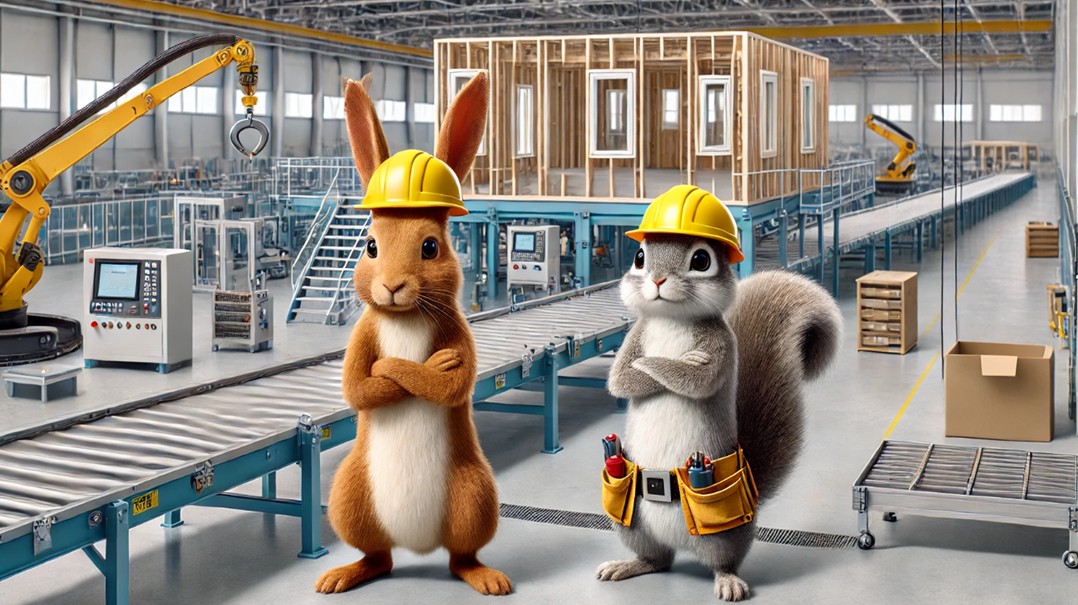
Ah yes, the rabbits — the most common species in the offsite forest. They hop into the industry full of optimism and high speed, certain they’ll revolutionize everything with their innovative floor plan, their “unique” marketing phrase, or their belief that builders love paying more for modules if you just explain it slowly.

Rabbits:

  • sign contracts before calculating costs
  • quote projects during full moons
  • panic whenever interest rates move
  • adopt new software every 90 days
  • make major decisions before breakfast

They don’t build reserves. They don’t build systems. They don’t build predictable quoting. They build excitement.

Rabbits are the folks who say, “We’re going to triple production this year” and then six months later whisper, “We’re taking a little break while we reorganize.”

Rabbits don’t die because the market kills them.
Rabbits die because they trip over their own enthusiasm.

I’ve met hundreds of them. I’ve eaten donuts in their conference rooms. They bounce around like they’re powered by solar panels and anxiety. They move fast but have no idea where they’re going.

Cute? Absolutely.
Predators? Not a chance.
Snack-sized? Definitely
.

Squirrels are more cautious than rabbits. They hide their acorns, protect their acorns, inventory their acorns, count their acorns every quarter, and then discuss at the annual meeting whether they might buy one more acorn if the economy stabilizes.

A squirrel factory:

  • hasn’t raised its base price since 2008
  • still uses the same employee handbook from 2005
  • thinks automation is “too risky”
  • believes growth is suspicious
  • views innovation the way a squirrel views a German Shepherd

Squirrels survive, but only because no one can find them long enough to kill them. They’ve mastered the art of being in business without standing out in business.

Squirrels attend conferences but sit in the back.
Squirrels listen to presentations about AI and robotics and mutter, “Not for us.”
Squirrels store cash but never deploy it.

They are competent. They are safe. They are consistent.

And Squirrels will absolutely be prey forever.

Now we’re finally getting somewhere.

Hawks are rare — which is why they thrive. They don’t try to build everything. They don’t chase every customer. They don’t reorganize their production line every Tuesday after watching a YouTube video about Toyota.

Hawks know who they are.

Maybe they’re the townhouse specialist.
Maybe they’re the ADU whisperer.
Maybe they’re the school-building savant.
Maybe they’ve mastered the art of building 14 different versions of the same 28×48 ranch without losing their mind.

Hawks fly higher than rabbits, meaning they can see trouble coming. They can also see opportunity forming before anyone else hears a rustle in the bushes.

Hawks do not panic.
Hawks do not hoard.
Hawks do not chase.

Hawks hunt.

Which means they are the natural predator of rabbits, squirrels, and — occasionally — undercapitalized bears.

If hawks are the specialists, wolves are the professional operators.

A wolf company doesn’t operate on hope, caffeine, or whatever inspirational quote was circulating on LinkedIn that week. Wolves operate on:

  • systems
  • training
  • leadership
  • process control
  • actual job costing
  • schedulers who enjoy color-coded spreadsheets

A wolf is a GM who knows exactly where every project stands, and when he doesn’t know, he actually asks — instead of hiding in his office until the crisis magically resolves itself.

I have walked into wolf factories. You can tell immediately.

No yelling.
No chaos.
No fires to put out.
No “Hank didn’t show up again, so we’re short.”

Wolves move in packs.
Sales, production, engineering, accounting, and leadership all move in the same direction.
You never see one wolf sprinting ahead while the rest claw at the ground trying to catch up.

The wolves are the ones who will quietly buy a struggling rabbit factory, keep the best employees, close the side door that’s been open since 2011, and turn the whole thing into a functional operation inside six months.

Wolves don’t brag.
They don’t make noise.
They don’t post in ALL CAPS on LinkedIn.

Wolves simply dominate.

Every few years, a massive new bear wanders into the modular forest wearing a hard hat, carrying a billion dollars, and announcing that they’re going to disrupt the entire industry by doing exactly what the industry has always done — but louder. Think Katerra, L&G, and Entekra.

Bears are impressive.
They attract headlines.
They attract investors.
They attract half the construction journalists on earth.

The problem is that bears also attract gravity.

And gravity has taken down more giant modular startups than any hawk or wolf ever has.

A bear can do enormous good.
A bear can also collapse in a spectacular pile of debt, ambition, and unused robotics.

The tricky part is that when a bear falls, it falls on everyone.

But that’s nature.
The woodland creatures scatter, and the survivors carry on with slightly more skepticism than before.

My father didn’t say his line as a threat. He said it as a reminder:

If you behave like prey, you will live like prey.
If you behave like a predator, you will survive.

And that’s the offsite industry in a nutshell.

Some factories run like twitchy rabbits.
Some operate like nervous, hoarding squirrels.
Some soar like hawks.
Some coordinate like wolves.
Some lumber in like bears who haven’t read the instruction manual.

And somehow, all of them show up at industry conferences, sit at round tables, and nod politely while speakers talk about “transformation,” “innovation,” and “scaling responsibly.”

I sometimes wish a hawk, a squirrel, and a wolf would all sit on a panel and just explain their business models in wildlife terms. It might be the most honest session we’d ever have.

After all these years, I can still hear my father’s voice whenever I talk to a factory, walk a production line, or get pulled into another discussion about why a startup needs $38 million before building its first prototype.

He’d say:

“Rabbits and squirrels will always be prey.”

He was right then.
He’s right now.
And if I had to guess, he’ll be right long after AI is managing factories, drones are delivering modules, and wolves are still shaking their heads at the rabbits who never learned.

The forest doesn’t lie. It just teaches.

We’ve Trained a Generation to Swing Hammers—Now Let’s Teach Them to Build Companies

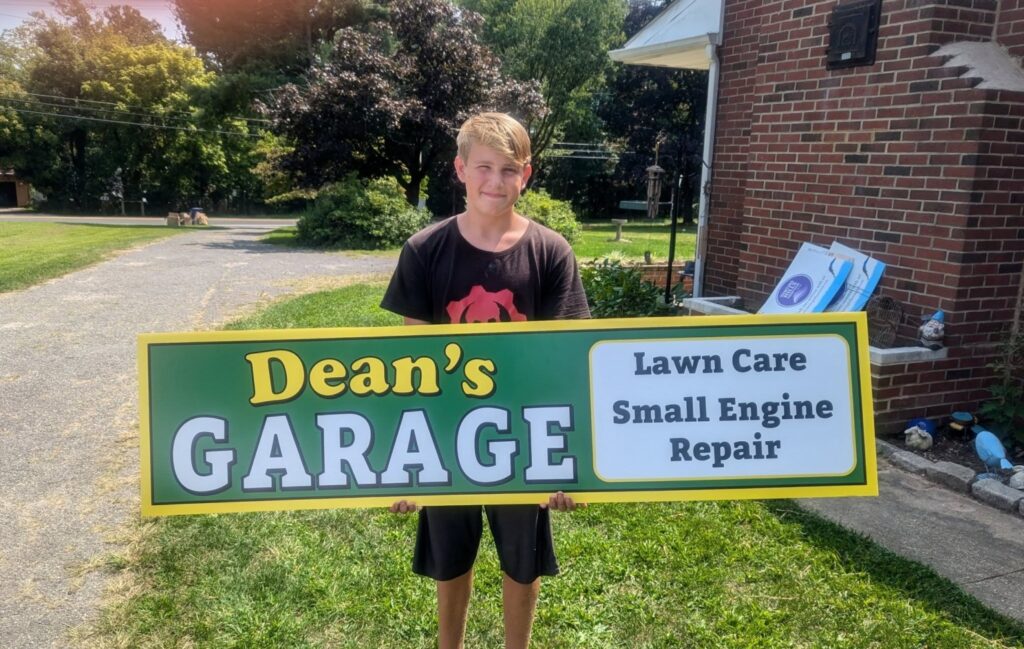
Watching my 14-year-old grandson — a Gen Alpha kid who somehow squeezes four lifetimes into one — has completely changed the way I look at the future of our industry. This is a young man who taught himself to weld in his garage, sketches plans and builds backyard structures for fun, repairs small engines for neighbors, runs a lawn care business he started at age 10, and still pulls off good grades in high school.

Not because someone told him to. Not because there’s a curriculum for it. But because he wants to understand how things work — and how to make them better.

And watching him led me to one question that our entire industry needs to start asking:

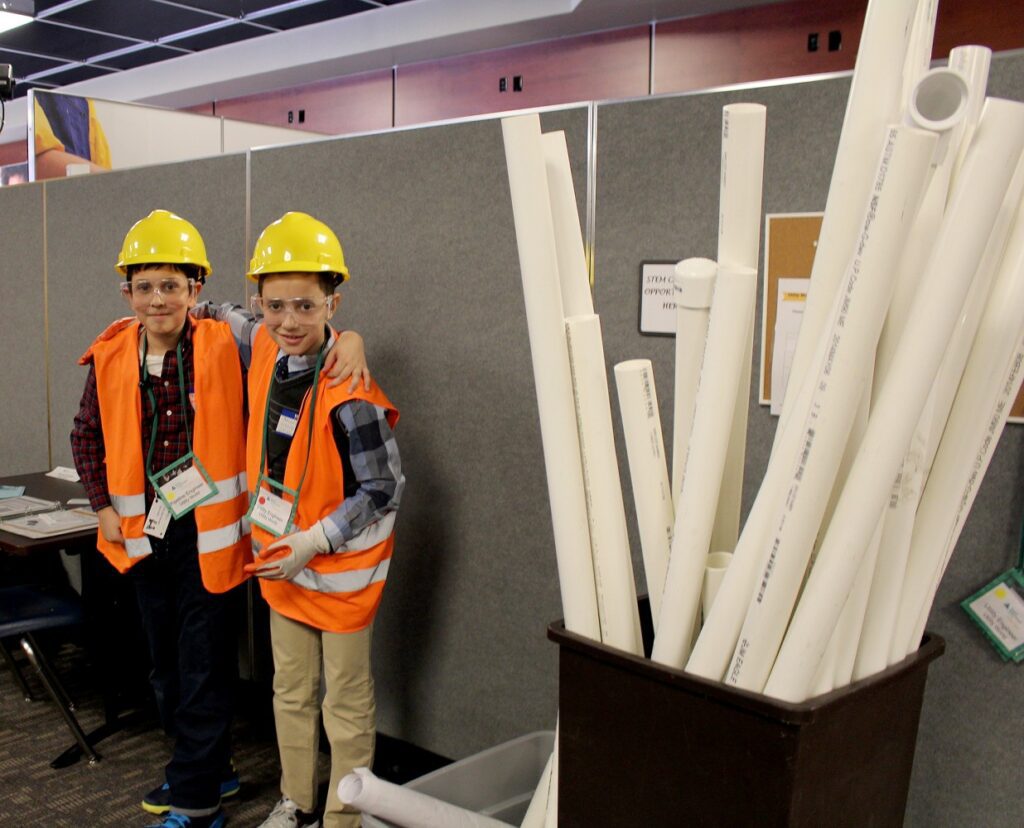
How do we bring more young people into construction and offsite manufacturing, not just as skilled workers… but as skilled entrepreneurs?

Because this is a different segment of labor — a desperately needed one. Factories need line workers, yes. But they also need doers who become thinkers, and thinkers who become founders. They need the next generation of subcontractors, installers, innovators, factory owners, and problem-solvers who look at inefficiency and say, “I can fix that.”

If we fail to develop that side of the workforce, we won’t just be short on talent — we’ll be short on leadership.

So let’s talk about how we grow that entrepreneurial spark from the ground up.

Here are my suggested “7 Steps to Entrepreneurship”

You can’t learn ownership by watching someone else clock in. Ownership has to be experienced, and it should start long before a young person steps onto a jobsite.

Trade programs still teach people to work for a boss, not be one. Every construction tech program should build in a mini-business pitch, a pricing exercise, or a project that requires estimating, scheduling, and customer communication.

Entrepreneurship doesn’t begin with a loan application — it begins with a mindset. And the earlier we cultivate it, the stronger it grows.

Step Two: Apprentice in Business, Not Just a Trade

Traditional apprenticeships teach skills; entrepreneurial apprenticeships teach systems. Pair every apprentice with an owner, estimator, or operations lead once a month. Let them see the business side — the bids, the budgets, the surprises, the stress, the strategy.

If you want someone to eventually run a company, they need to understand far more than how to build the product. They need to understand how to keep the doors open.

Gen Z and Gen Alpha don’t want to wait a decade for responsibility — they want it now, and they thrive when they get it.

Factories could create “Own Your Crew” starter programs. Trade schools could host small-business building competitions. Communities could support student-run micro-crews doing repairs, ADU prep work, yard structures, and real paid projects.

Small opportunities build real confidence — and confidence builds founders.

The best entrepreneurship teachers aren’t professors — they’re people who survived mistakes. Retired builders, former GMs, and veteran factory managers should be the backbone of a new mentorship movement.

If you’ve made payroll in a slow month or rebuilt a business after a bad year, you can teach more than any textbook ever will. And young people want real talk. They want the truth, not the brochure.

Young people think innovation means robotics, AI, or 3D printing. Sure — those matter. But innovation in our industry also looks like shaving a day off a schedule, redesigning the flow in a factory, improving logistics, or managing installs smarter.

Show them that entrepreneurship in construction is often about improving a process — not inventing a gadget. When they understand that, they start looking for opportunity everywhere.

The future entrepreneur in our industry will use AI as casually as a tape measure. BIM won’t be “specialized software.” CRMs won’t be “nice to have.”

If we want tomorrow’s builders to run successful companies, we must train them to think digitally. Not because tech replaces knowledge — but because tech multiplies it.

When a young builder understands both construction and digital tools, they become unstoppable.

We highlight machines, robots, and giant factories — but not the 19-year-old who launched a small CAD studio or the 22-year-old who started a framing crew with two friends.

If we want more entrepreneurs, we need to show entrepreneurs. Every story of a young builder-founder is a spark. And sparks create momentum.

We cannot solve the labor crisis by training workers alone. We also need to train owners, leaders, creators, problem-solvers, and risk-takers.

Factories will always need line workers. But the industry will collapse without the innovators who hire those workers, refine the processes, and build the companies that move offsite construction forward.

The future belongs to the young people who don’t just want jobs — they want ownership. They want autonomy. They want to build something that’s theirs.

Our job is to give them the blueprint — and then get out of their way.

Confessions Over Coffee: Two Factory Friends Discuss the Useless Conference Circuit

I recently had lunch with a retired GM from one of the big modular factories—the kind that had more powernailers than employees and still called it progress. We met to catch up on life after his retirement, that sweet chapter where you finally stop pretending to care about production schedules.

He knew what I was up to—blogging my way into offsite industry infamy—so I asked what he’d been doing. With a twinkle in his eye, he confessed that after four years away, he missed it all so much he started attending small industry conferences… not to learn, mind you, but “so people don’t forget my name.”

It’s hard to argue with that. Nostalgia’s cheaper than therapy.

We both agreed that, in theory, these gatherings are supposed to be the beating heart of the offsite and modular industry—grand platforms where professionals network, share knowledge, and discover new opportunities.

But somewhere between the third panel discussion and the fifth coffee refill, that noble mission dies quietly—smothered by buzzwords, vague insights, and PowerPoint slides that look suspiciously like last year’s.

Is it our age, we wondered (ha!), or has the content at these conferences become so flavorless it dissolves in memory before you even check out of the hotel? I’d say it’s a bit of both. Once upon a time, the sessions had substance. Now, you can learn more from a LinkedIn scroll or a late-night Google rabbit hole than from any keynote speaker with “synergy” in their title.

The networking, however, remains pure gold. It’s the one part that still feels real. You can’t beat bumping into people who speak your language—“lead time,” “backlog,” “code approval”—and seeing the look of exhaustion that says, Yes, my factory’s on fire too.

photo – BuilderTrend

There’s comfort in that shared misery, the kind you just can’t get through a Zoom screen. The handshakes, the laughs, the whispered gossip about who’s expanding and who’s imploding—worth every penny of the overpriced conference badge.

And then comes the part that’s supposed to make it all worthwhile: discovering new opportunities.

I don’t know what conferences the marketing teams are attending, but at the ones I go to, “new opportunities” usually means getting cornered by a tech startup selling factory management software that promises to “revolutionize” your production line—if only you’d give them your email.

It’s been years since I’ve seen something truly original on a conference stage. Most of what’s presented could be found in a three-minute Google search or, better yet, overheard at the hotel bar from someone who actually works in the field.

By the end of our two-hour lunch, we came to the same conclusion: conferences are, in essence, gloriously useless—but they beat sitting at home yelling at the media.

Pay your hundreds (or thousands) of dollars. Book the hotel room with decent Wi-Fi and questionable carpet. Sit through the sessions politely, collect the swag bag, and when you get home—forget every word that came from the stage.

Just remember the people you met. They’re the only part that matters.

Keep your eye on Offsite Innovators for news about an entirely different type of conference coming in early 2026. It will be worth every modest penny spent…

When Everyone’s an Expert: The Hidden Danger of Role Confusion in Offsite Construction

There’s a quiet epidemic spreading through the offsite construction industry — and it’s not supply chain issues, labor shortages, or the latest round of code changes. It’s role confusion. Everyone’s suddenly an “advisor,” a “consultant,” or a “partner.” But too often, they’re none of those things.

The result? Startups that stall, factories that overpay, and projects that go sideways because the people giving advice aren’t sure which hat they’re wearing — or worse, they’re wearing someone else’s entirely.

The Sales Rep Who Thinks He’s a Consultant

This one’s the most common — and the most dangerous. A vendor rep shows up with “free consulting” and an eager smile. They promise to help “optimize your process,” “improve efficiency,” and “reduce cost.” Sounds great… until every path they draw somehow leads back to one place — their own product line.

If you’ve ever walked through a factory and noticed brand stickers plastered on everything from nailers to software dashboards, you’ve probably met this character. The problem isn’t that they’re selling — it’s that they’re pretending not to.

When a sales rep acts like a consultant, their advice isn’t about what you need. It’s about what they need to sell before the quarter ends. And that’s how a factory ends up with the wrong technology, wrong tools, and wrong expectations.

The Consultant Who Thinks He’s an Advisor

Consultants are problem-solvers. They’re supposed to fix what’s broken and then step back. But some can’t resist offering advice that stretches beyond their assignment. Suddenly, they’re not just recommending how to streamline a wall panel line — they’re redesigning your management structure and your investor pitch.

The danger here isn’t malice; it’s overreach. When a consultant crosses into strategic advising, they start making calls that belong to ownership. A consultant can tell you how to make your factory more efficient. Only an advisor — one with deep industry insight and no bias — should tell you whether to expand or partner.

Good consultants know when to stop. Great ones tell you when they’re not the right person for that next decision.

The Advisor Who Thinks He’s a Consultant

Advisors are supposed to see the big picture, not pick up the wrench. But occasionally, they slide into hands-on mode — dictating software choices, vendor deals, and even production scheduling. That’s when wisdom turns into interference.

A seasoned advisor can save a company years of mistakes, but when they start micromanaging, their credibility takes a hit. They stop being the calm voice of reason and become the backseat driver with too many opinions and too little accountability.

If an advisor says, “Trust me, I know which system to buy,” without data or testing — that’s your cue to tap the brakes.

When Everyone Pretends to Be Everyone

Now picture a startup offsite factory trying to scale up. They’ve got:

  • A “consultant” selling software,
  • A “sales rep” giving strategic guidance,
  • And an “advisor” directing line operations.

No one’s clear who’s responsible for what. Decisions overlap, trust evaporates, and the owner ends up holding the bag for everyone’s best intentions.

This is how good ideas die and promising factories go broke. It’s not bad luck — it’s blurred boundaries.

If you’re running an offsite factory, a startup, or even just exploring automation, here’s the truth:

  • A consultant gets paid for what they do.
  • An advisor gets paid for what they know.
  • A vendor sales rep gets paid for what they sell.

When those lines blur, the only one who loses is you.

Ask hard questions. Demand clarity. And never forget — real professionals know their lane and respect yours.

If you’d like to explore this further, connect with me today.

Bill Murray, Co-Founder of Offsite Innovators

How Two Offsite German Companies Are Building the Future of Robotic Modular Construction

Two German powerhouses — automation leader KUKA and modular construction expert Kleusberg — have teamed up to transform how buildings are made. Their new partnership is more than a business deal; it’s a glimpse into what construction will look like for the next generation of entrepreneurs. At Kleusberg’s plant near Halle (Saale), KUKA is installing a fully automated, robot-driven production line that will weld, assemble, and inspect modular components with speed and precision that humans alone can’t match. The idea isn’t to replace people — it’s to make factories smarter, safer, and far more efficient.

Automation That Adapts, Not Replaces

Set to launch in 2027, the system features five industrial robots working together across a production area of more than 3,200 square feet. These robots will create over 6,500 feet of floor and ceiling frames each week, but what really makes the setup special is its flexibility. Each robot can adapt to different frame designs without a complete reprogramming, which means the factory can take on custom modular projects without losing time or precision. This blend of digital engineering and real-world manufacturing allows Kleusberg to shift seamlessly between projects — a model that young entrepreneurs should study if they want to build scalable, resilient companies.

Kleusberg Factory

Smart Systems, Safer Jobs

Beyond the obvious productivity gains, the partnership also highlights something deeper: how technology can make work better for people. Automated welding and material handling reduce physical strain, minimize errors, and give workers opportunities to move into higher-skill roles in programming, maintenance, and digital process control. For young founders watching the convergence of robotics and construction, this is a powerful signal — the companies that thrive will be those that blend innovation with empathy for their workforce.

Lessons for the Next Generation of Builders

What KUKA and Kleusberg are proving is that the future of modular construction isn’t just about speed or cost — it’s about integration. Robots, sensors, and software working in harmony with human creativity and problem-solving. For aspiring entrepreneurs in offsite construction, the takeaway is clear: automation is no longer optional; it’s the new competitive edge. But success will depend on mindset — being flexible in tactics yet stubborn in vision. Whether you’re dreaming of your own modular startup or looking to modernize an existing factory, the revolution unfolding in Germany offers a roadmap for how to build smarter, faster, and better.

CLICK HERE to read the entire Robotics and Automation News

The Rise of Bioclimatic Design in Prefabricated Homes

Why climate-smart design is the next big shift for modular and tract builders

For decades, homebuilding has followed a simple pattern: design the house, then make it comfortable by adding heating, cooling, and insulation. But today’s builders — especially in modular and prefabricated housing — are flipping that logic upside down. Instead of forcing comfort onto a design after the fact, they’re starting with the climate itself.

Welcome to the growing world of bioclimatic design — an approach that makes a home work with its environment instead of fighting against it. It’s one of the most promising movements in construction, and it’s finding a natural home in prefabricated housing, where precision and efficiency already lead the way.

At its core, bioclimatic design means shaping a home around the conditions of its specific location. It’s not about fancy technology or high-priced materials — it’s about common sense, refined by science.

A bioclimatic house takes into account the sun, wind, temperature, humidity, and even local vegetation. The goal is to reduce the need for artificial heating and cooling by designing a structure that naturally stays comfortable all year long.

Think about it this way: a home in Phoenix shouldn’t be designed the same way as one in Portland. In the desert, you want deep overhangs, light-colored walls, and narrow windows that limit direct sunlight. In a cooler climate, you want the opposite — broad south-facing windows that let the sun pour in during winter, with trees or shading devices to block it during summer.

By understanding these basic principles, a designer can make a home that consumes 30 to 60 percent less energy without relying on expensive mechanical systems. That’s bioclimatic design at work.

Prefabricated and modular homes are built in controlled environments, where precision is everything. That makes them ideal for bioclimatic strategies.

Factory-built homes can be oriented on the lot exactly as designed — with windows, shading, and insulation tailored for the region before they ever leave the production line. Walls can be built with airtight seams, triple-glazed windows can be fitted perfectly, and roof overhangs can be manufactured to precise angles that optimize solar gain.

Unlike site-built homes that depend on varying craftsmanship, prefabricated homes ensure that each energy-saving detail is executed exactly as planned. The repeatability and quality control of the factory environment give bioclimatic design a powerful advantage.

Even small changes at the design stage — like window placement or the choice of exterior materials — can make a big difference when applied consistently across dozens or hundreds of homes.

Here’s where things get even more interesting. Bioclimatic design isn’t just for custom eco-homes or experimental green projects. It’s starting to show up in mainstream housing developments, where efficiency now meets profitability.

Large tract builders are learning that climate-sensitive designs can lower construction costs and boost buyer appeal at the same time. By aligning floorplans, rooflines, and window placements to suit regional climates, builders can create entire neighborhoods that stay cooler in summer and warmer in winter — using less energy and fewer mechanical systems.

For example, a tract builder in Texas might orient homes to capture prevailing breezes, while one in Colorado might design south-facing windows with longer roof overhangs to provide winter warmth and summer shade. These are small tweaks with big payoffs.

The result? Lower monthly utility bills for homeowners and higher long-term satisfaction — two selling points every builder wants to advertise.

Many modular home factories are beginning to integrate bioclimatic design into their product lines. Some are hiring sustainability consultants to model how their standard floorplans perform in different regions. Others are offering “climate packages” that adapt wall thickness, insulation type, and glazing for specific climates — the same way car manufacturers offer packages for cold-weather or desert driving.

A factory that understands bioclimatic principles can pre-engineer homes that perform exceptionally well across climate zones, giving them an edge in both residential and commercial projects.

For example, modular factories in the Southeast are using deep eaves, reflective roof coatings, and vented cross-breezes to handle humidity, while factories in the North are focusing on passive solar design and high R-value wall systems. The shift is subtle but significant: modular construction is no longer just about speed and cost — it’s becoming about climate performance.

The homebuilding industry has spent the past decade chasing “smart home” technology — thermostats that learn, lights that adjust, and appliances that sync with your phone. But bioclimatic design is smart in a different way.

It doesn’t depend on software updates or electricity. Instead, it uses timeless principles that have worked for centuries: sun paths, wind direction, and thermal mass. Ancient builders understood these things instinctively — from adobe homes in the Southwest to stone cottages in Europe — and we’re finally rediscovering their wisdom.

The modern twist is precision. With today’s digital design tools, offsite builders can simulate how sunlight will strike a wall on any day of the year, or how a breeze will pass through a courtyard. That information turns into measurable savings when the home is built.

There’s also a clear economic argument. Energy-efficient homes don’t just reduce bills — they sell faster and hold value longer. Buyers today are increasingly aware of energy costs and environmental impact. When builders can show that a home’s comfort and efficiency come from its design, not just its equipment, it builds trust and distinction in a crowded market.

In fact, many major homebuilders are already rebranding their developments around “climate-smart living” or “naturally efficient design.” The message resonates because it’s practical, not political. It’s about comfort, savings, and good design — values that appeal across demographics.

As more states update their energy codes and municipalities push for lower-carbon building methods, bioclimatic design will move from an optional feature to an industry standard. For modular factories and tract builders, it’s a rare win-win: a design philosophy that improves both environmental performance and customer satisfaction.

The housing of the future won’t rely solely on bigger HVAC systems or high-tech gadgets. It will rely on smart design that responds to nature — and prefabrication is the perfect vehicle to deliver it.

Bioclimatic design isn’t a trend; it’s a return to common sense. It’s about learning from the sun, the wind, and the land beneath our feet. And in a world where every kilowatt and every dollar matters, the smartest homebuilders — whether they’re running massive tract operations or modular factories — are realizing that the best way to fight the climate is to build with it.

When the Offsite Factory Ends and Reality Begins: Why Costs Keep Slipping Away

A few weeks ago, an investor-developer called me after reading one of my articles about “New to Modular” builders. He was frustrated—actually, exasperated might be a better word. He had decided to try modular construction for a housing project and couldn’t understand why the cost between the factory and the finished, move-in-ready home was so unpredictable.

As he put it, “It’s like pulling teeth to get an answer. Everyone tells me modular is more efficient, faster, and less expensive, but the numbers keep slipping away the closer I get to the finish line.”

The Gap Between Factory and Front Door

His frustration highlights one of modular construction’s greatest communication failures: the gap between the factory gate and the final occupancy permit. Inside the factory, everything seems measurable. Costs are itemized. Production schedules are tracked. Materials and labor are controlled.

But once those modules are loaded onto a truck, the process becomes fragmented. Site work, foundations, transportation, set crews, mechanical hookups, finish work, landscaping, permits—it’s a long list of moving parts, often involving people who have never worked together before.

For a newcomer to modular construction, that’s where confusion sets in. The “factory price” often covers only what’s built inside the plant, while everything outside those walls is considered “site scope.” If the builder, developer, or GC hasn’t coordinated both sides of that equation, the result is a project where costs and schedules unravel.

Why the Final Cost Is So Elusive

There are three main reasons why that “finished cost” seems to keep moving:

1. Undefined Responsibilities. Factories typically sell what they build. They don’t pour foundations, handle zoning issues, or coordinate site crews unless they offer turn-key solutions. Developers often assume the factory will “manage” these steps—but that’s rarely included unless it’s spelled out in writing.

2. Subcontractor Chaos. Our investor hit the nail on the head: most subcontractors will offer either a good price or a good timeline, but rarely both. Many have limited experience finishing modular projects and don’t realize how much coordination is required to align with delivery and set schedules.

3. The Unknowns Between Delivery and Occupancy. Weather delays, transportation permits, crane availability, and inspection timelines all play roles. Even small holdups—like missing trim pieces or incorrect site measurements—can snowball into weeks of delay, turning cost estimates into educated guesses.

The Investor’s Expectation vs. the Industry’s Reality

The caller made one more point that deserves attention: he believes modular factories should take on more of the process. And honestly, he’s not entirely wrong.

For modular construction to expand its market share, factories need to evolve beyond “box builders” into integrated solution providers. That doesn’t necessarily mean they have to become full developers, but offering more design, logistics, and finish coordination could bridge the trust gap that new investors experience.

This is exactly what some successful modular firms have already done. They act as designer, contractor, and manufacturer under one umbrella, eliminating the costly communication breakdowns that plague traditional modular projects.

What Needs to Change

If the modular industry wants to continue attracting serious investors and developers, three changes are essential:

  • Transparency: Factories must clearly define what’s included—and excluded—in their base price. A “factory-to-finish” roadmap should be standard.
  • Integration: Developers and factories must work as partners from the start, not as separate entities meeting halfway through.
  • Education: The industry needs to train new-to-modular builders and investors in how the process really works, not just how it looks on a glossy brochure.

My Final Thoughts

The investor’s experience is not unusual—it’s a rite of passage for anyone entering modular construction for the first time. He didn’t want a free consultation; he wanted reassurance that the system works. But until factories, developers, and site crews operate as a unified team, that reassurance will remain as elusive as a locked-in cost.

In modular construction, the real work begins not in the factory—but the moment the first module rolls out of it.

AI RF Cameras: The New Eyes of the Offsite Factory

A New Kind of Vision

There’s a quiet revolution happening inside offsite construction factories. It doesn’t roar like a CNC saw or glow like a welding torch — it watches. AI mini-cameras, some no larger than a sugar cube, are being tested in factories from Oregon to Ontario. These aren’t ordinary security cameras. They’re self-contained, AI-powered observers capable of interpreting what they see, in real time, without needing a bulky server or a human monitor.

They’re called AI RF cameras because many of them also use radio-frequency (RF) sensing — a cousin of radar — to “see” movement even in dust, smoke, or poor lighting. Combined with onboard artificial intelligence, these cameras are fast becoming the digital eyes and nervous system of the modern modular factory.

And if their adoption continues, the phrase “factory floor supervision” may take on a whole new meaning.

Beyond Security: Watching for Productivity, Safety, and Waste

At first, most modular and offsite firms install cameras for the obvious reasons — security, site monitoring, and loss prevention. But that’s just the beginning. The new generation of AI mini-cameras comes with onboard processing units, meaning they can analyze visual data at the source instead of sending endless video to a central computer.

That single design change transforms the role of cameras from passive observers into active assistants.

Inside a framing or wall-panel line, these cameras can now:

  • Count materials in real time and alert supervisors when inventory runs low.
  • Track worker motion and tool usage, helping identify process bottlenecks without invading privacy.
  • Recognize safety violations like missing helmets, unauthorized zones, or unsafe lifting postures.
  • Monitor curing rooms or paint booths for temperature anomalies or contamination.
  • Send alerts only when something abnormal occurs, filtering out harmless movement like shadows, forklifts, or birds.

It’s not surveillance — it’s situational awareness.

Factories that have tested AI cameras report up to 20% productivity gains when used for workflow timing, and even greater savings by catching small mistakes before they become expensive rework.

RF Sensing: Seeing What the Eye Can’t

What makes AI RF cameras especially intriguing for modular and offsite applications is their ability to use radio frequency to “see” through obstacles like fog, dust, or temporary partitions.

Unlike visual light, RF waves can detect movement behind objects or under dim lighting. When fused with AI image interpretation, the result is a camera that doesn’t just record — it perceives.

In a panel-assembly area, for example, an RF-enhanced AI camera could detect the location and speed of workers without relying on perfect lighting or line-of-sight. During installation, the same camera could verify that wall sections are lifted and placed in the correct order, even during a night set when visibility is limited.

This technology has already proven itself in logistics, defense, and autonomous vehicles, but its potential for construction safety and automation is just beginning to surface.

From Object Detection to Intelligent Factory Feedback

Today’s best AI cameras can tell the difference between a person, a forklift, or a bundle of studs. More advanced models can even identify individual workers, components, or tools — but that’s where privacy and ethics enter the picture.

One large modular manufacturer that experimented with AI cameras last year trained them to recognize specific assembly stages. When a worker completed a task, the system automatically advanced the digital work order to the next stage. The results were impressive: near-perfect traceability and smoother communication between production, logistics, and quality control.

But some line workers expressed concern: “Are we being tracked, or are our mistakes being tallied?”

Factory managers had to draw clear boundaries. The cameras monitored processes, not people. They were programmed to detect the presence of a component, not to evaluate performance. That’s a delicate but essential distinction if AI cameras are going to find acceptance across the industry.

AI Mini-Cameras on the Jobsite

The benefits don’t stop at the factory doors. For modular installation crews, AI mini-cameras can provide a new layer of safety and accountability.

Mounted on cranes or helmets, they can track lifting angles, distance between crew members, and even weather visibility. Paired with RF data, they can map the position of every module in real time, verifying that sections are aligned to within fractions of an inch.

In one pilot project, an AI camera system flagged a misalignment of just two inches before a heavy set crew lowered a unit. That alert prevented hours of rework and a potential safety incident.

Because these cameras can be powered by a simple USB port and transmit wirelessly, they can be placed virtually anywhere — including temporary pop-up factories, onsite staging areas, or transport trailers.

How They Work

An AI mini-camera differs from a typical webcam in three major ways:

  1. Onboard Processing:
    Instead of sending raw video to a central computer, it uses an internal AI chip (often an ARM or NVIDIA Jetson module) to process video on the spot.
  2. Real-Time Learning:
    The camera doesn’t just record — it interprets. It can be trained to detect people, vehicles, machinery, or specific products like floor cassettes or truss bundles.
  3. RF and Vision Fusion:
    Advanced models integrate radio-frequency signals, allowing depth perception or through-obstacle detection even in poor lighting.

This self-contained intelligence means factories no longer need massive bandwidth or dedicated operators to extract insights. A single dashboard can display alerts, analytics, and video clips, helping supervisors monitor dozens of stations at once.

Ethical Lines and Legal Boundaries

While the technology excites innovators, it also raises uncomfortable questions.

In some regions, data privacy laws limit how and when images of workers can be recorded. AI cameras blur that line further by turning visual data into analytics — sometimes automatically. Who owns that data? The worker? The employer? The software provider?

A few unions and workforce advocates are already pushing for clear consent protocols before deployment. Transparency is key. Workers must understand that these systems are designed for process optimization and safety, not personal evaluation.

Experts recommend anonymizing data at the source. Instead of storing video, the AI camera should convert it to statistical outputs — “three wall panels completed,” or “forklift in zone three” — erasing the human element before the footage ever leaves the device.


Why Modular Factories Are Perfect Testbeds

Offsite and modular factories are far more controlled than traditional jobsites. Everything — lighting, layout, timing, material flow — follows predictable paths. That predictability makes them ideal environments to train AI systems.

Unlike chaotic outdoor construction, a modular plant can gather consistent visual data, allowing algorithms to improve faster. Within weeks, an AI mini-camera can learn to recognize a wall section, detect if it’s missing a component, and even estimate assembly time.

Companies like Framebotix, BotBuilt, and several European automation startups are rumored to be experimenting with such embedded camera systems to feed real-time performance data into their digital twins. That combination — AI eyes and digital brains — could become the foundation of fully autonomous modular manufacturing.

The Cost Equation

Five years ago, such technology would have been out of reach for small to mid-sized factories. Today, however, AI mini-cameras start under $200 each, depending on resolution and processing power. More advanced models cost $500–$1,000 but can replace multiple fixed cameras and sensors.

Their biggest savings come from what they prevent — delays, rework, accidents, and material waste. In a factory producing $10 million of output annually, reducing waste by even 1% offsets the cost of deploying a dozen AI cameras.

As one plant manager put it, “It’s like adding a dozen supervisors who never sleep, never complain, and never miss a detail.”


A Future of Smarter Factories, Not Colder Ones

Skeptics worry that AI cameras could depersonalize work — replacing intuition with data. But the early evidence suggests the opposite. In factories where they’ve been carefully introduced, these systems have made workers safer, supervisors better informed, and production smoother.

When properly used, AI RF cameras don’t replace judgment — they support it. They let humans focus on higher-value decisions instead of constant oversight.

The offsite industry has always been about seeing what others miss — the efficiencies hidden in repetition, the power of standardization, the beauty of precision. With AI mini-cameras now part of the toolkit, we’re simply learning to see even more.

The Final Frame

There’s no going back to the days of clipboards and blind corners. Factories that fail to integrate vision-based intelligence risk losing ground to those that do.

For modular builders and offsite innovators, AI RF cameras represent the next leap in accountability, quality control, and operational visibility. The question isn’t whether they’ll become standard equipment — it’s how soon your factory will install its first one.

Because in the future of construction, those who see more will build more.