
Highlighting the thinkers and their ideas driving the evolution of Offsite Construction. 
Be inspired, be informed, be innovative!

2026: The Year Offsite Construction Finally Begins to Change

It’s a strange contradiction. Walk into any robotics-driven micro-factory, watch a crane set a modular box in minutes, or see a digital model render a building before it’s even built — and you’d think construction is racing into the future. Yet, the truth is hard to deny: in a world where industries rewrite themselves every five years, construction — including modular and offsite — remains stubbornly slow to change. Many factories still run on spreadsheets, whiteboards, and operators who carry institutional knowledge in their heads instead of in software systems.

But 2026 may be the inflection point. For the first time, forces outside the industry and forces within it are converging — younger entrepreneurs entering the field, investors hungry for efficiency, and the radically lowered barrier of entry to AI-powered technology. What once required millions of dollars and enterprise platforms is now being delivered through purpose-built, modular tools that fit even the smallest factory. The question is not “Will offsite change?” but “Who will lead it?”

For decades, modular factories were built and run by experienced construction lifers — strong, smart, seasoned, and often relying on instinct more than dashboards. That generation built the industry. But 2026 is bringing a new wave: Millennials and Gen Z founders raised on software, automation, analytics, and speed. They are not afraid of “disrupting” a system — because in many cases, they were never taught the old one.

What’s remarkable is their mindset. Their instinct is not to ask “Should AI be involved?” but “How quickly can AI take over the tasks that drain time and margin?” These are entrepreneurs who expect every system — estimating, scheduling, permitting, inspections, resource allocation — to eventually operate with minimal human input. And they’re entering an industry where that thinking is almost revolutionary.

Industrial AI is already quietly creeping into factories. In 2026, it becomes loud.

Predictive maintenance — once something only automotive plants could afford — will become factory-ready for offsite. Imagine nail guns, saws, compressors, forklifts, and framing stations monitored by sensors and software predicting failures five days before downtime hits. No more “we lost today because the truss jig broke.”

AI-driven schedule engines will adjust crews by skill, weather, absenteeism, crane availability, and transport windows in real time. Instead of a GM gut-checking production every morning, dashboards will recommend — or even execute — operational calls.

Material AI will map waste patterns on the floor, calculate “lost profit per linear foot,” and suggest cut optimization methods. Suddenly, every inch of lumber could equal dollars saved or lost — visible in a way no spreadsheet could ever reveal.

These are not dreams — they are already being built. 2026 is simply when the price and accessibility drop low enough for even a 20-person shop to participate.

The industry is slowly learning the lesson software already knows: small and scalable beats large and fragile.

2026 may be the year micro-factories stop being theory and start being reality. Think:

  • 20,000 sq. ft. facilities popping up closer to demand instead of 250,000 sq. ft. bets in rural zip codes
  • Distributed networks of factories tied together by shared AI-based digital twins
  • Developers and municipalities funding their own factories to guarantee affordable units

BotBuilt, for example, isn’t just automating wall panels — they’re re-thinking the factory model itself. Expect others to follow.

Many offsite factories today still rely on something irreplaceable — but dangerous: the knowledge of three or four people nearing retirement. In 2026, that becomes unsustainable. The average age of factory-side leadership is approaching 60. As they step out, either systems capture their wisdom… or factories stall.

That alone may push owners — even the stubborn ones — to finally adopt digital operating systems. Not for innovation, but for survival.

When knowledge becomes data, and data becomes training, and training becomes automation — the cycle of improvement can finally begin.

If we’re right, the year won’t be marked by one big innovation — but thousands of tiny ones.

A forklift is rerouted because AI notices wasted footsteps.
A new GM is onboarded in 30 days instead of 18 months because digital twins teach the job.
A shipment arrives just-in-time because forecasting software flagged demand.
And owners begin asking questions like:

If the factory is profitable at 60% utilization… why scale to 100?
If we can deliver more margin with fewer bodies… why stay addicted to hiring?
If AI can analyze 10,000 decisions per hour… why are we still debating on whiteboards?

Some will say “We’ve heard this before.” And they’re right — Katerra, Blu Homes, and others promised revolution and collapsed under the weight of trying to do everything at once. 2026 won’t belong to the giant “chubby unicorns.” It will belong to the practical innovators — the ones who solve one pain point, execute small, and win slowly.

Factories that believe change is optional will be surprised how quickly their competitors — often younger, smaller, and hungrier — start passing them.

The offsite and modular industry is standing at the edge of a once-in-a-generation shift. It won’t happen because a big conference says it will. It will happen because:

  • younger founders demand it
  • margin pressure requires it
  • data finally enables it
  • and AI removes the excuses

2026 could be the first year construction stops being the industry “technology forgot” — and starts becoming the industry technology transforms.

The only question left is:
Will your factory watch this shift happen… or help lead it?

Written by Gary Fleisher, widely known as The Modcoach—industry writer, consultant, and longtime voice of offsite and modular construction.

Five Moves Every Offsite Production GM Must Make for 2026

Every B2B offsite production GM I talk to is busy. Busy fixing yesterday’s problem. Busy calming today’s customer. Busy worrying about tomorrow’s labor, margins, and schedules.

But 2026 isn’t going to reward busyness. It’s going to reward preparation.

Here are five actions every offsite production GM should already be planning for—quietly, deliberately, and without buzzwords.

Production predictability beats production speed

Your customers don’t really want faster factories. They want factories they can trust. In 2026, predictability will matter more than peak output. Developers and institutional buyers are building tighter pro formas and less tolerance for schedule drift.

The winning GM will be able to say, without hesitation, what the factory can produce every month—without overtime miracles or last-minute favors. That means fewer custom exceptions, realistic capacity planning, and repeatable production rhythms.

Your buyers are getting smarter—plan accordingly

B2B buyers are no longer dazzled by factory tours and shiny equipment. They’re asking tougher questions about quality systems, documentation, scalability, and risk.

If sales is still promising what production hasn’t agreed to, that gap will show up painfully fast. GMs need tighter alignment between what’s sold and what can actually be built—on time, every time.

Use AI quietly, where it actually saves money

2026 won’t be about “AI factories.” It will be about fewer breakdowns, fewer surprises, and better daily decisions. The smartest GMs will use AI in boring places: predictive maintenance, automated reporting, early warnings when production drifts off plan.

No announcements. No press releases. Just fewer fires to put out on a Tuesday morning.

Turn quality into a system, not a personality

If your quality depends on who’s working a station, you don’t have quality—you have luck. As volume grows, that model breaks.

Successful factories will move quality checks into the process, document them clearly, and make pass/fail decisions objective instead of tribal. Consistency will matter more than craftsmanship when you’re selling B2B at scale.

Prepare for leadership fatigue—including your own

This is the quiet problem no one wants to admit: many GMs are worn down. The phone never stops. Every issue feels urgent. And too many factories still depend on one person to hold everything together.

By 2026, the strongest GMs will be the ones who build depth, delegate earlier, and remove themselves as the daily bottleneck. A factory that can’t run without you isn’t resilient—it’s fragile.

My Final thought

2026 won’t reward radical reinvention. It will reward discipline.

Factories that say no more often, promise less, and deliver consistently will win the B2B market. The rest will stay busy—wondering why it still feels so hard.

Culture Is Simpler Than We Make It: Why KISS Works Better Than Any Program

I may be beating a dead horse, but I feel so strongly about this particular aspect of leadership that I feel compelled to beat the drum touting the significance of culture, not only in the Offsite world but across the entire spectrum.  It is without doubt the keystone of successful companies AND it doesn’t have to be an arduous complicated process.

After decades running modular factories, and more recently being exposed to many companies through advisory work, I’ve come to believe something that takes many leaders years to understand:

Culture isn’t complicated — we just make it complicated. And the more complicated it gets, the faster it falls apart.

We chase programs, slogans, consultants, and initiatives. We build binders nobody reads. We roll out systems that collapse the moment the first deadline hits. We often fall for the flavor of the day in attempts to establish the proper company culture.

Meanwhile, the teams that actually perform at a high level all have one thing in common:

They recognize the extreme importance of culture and they keep culture simple.

This isn’t theory. It’s not management jargon. It’s the practical version of what Patrick Lencioni talks about in The Advantage: healthy organizations outperform smart ones when people know exactly what matters.

And in modular manufacturing, clarity beats complexity every time.

Here’s what a KISS culture actually looks like inside a factory.

If you can’t explain what you expect in a sentence or two, nobody is going to follow it.

Lencioni calls this organizational clarity. On the factory floor, it sounds like:

– “This is what done looks like.”

– “This is your role.”

– “This is how we succeed today.”

Simple, direct, and impossible to misinterpret.

Confusion is costly — in time, quality, and morale. Clarity is free.

You don’t build culture with speeches. You build it with repetition.

The team watches what you do, not what you say. A KISS culture is built on small, predictable habits:

– leaders walking the floor

– the same expectations every day

– the same follow-through every time

– feedback delivered simply and respectfully

Consistency creates safety. Safety creates performance. Involvement of your people creates commitment.

Nothing kills culture faster than personal criticism disguised as “accountability.”

Attacking all problems by addressing the manpower instead of methods is the oft used approach to problem solving…..it is the first kiss of death.

A KISS culture separates people from problems:

– “Where did the process break?”

– “What step wasn’t clear?”

– “What do you need to do this right next time?”

This doesn’t let anyone off the hook — it actually holds people more accountable because the expectations are simple, visible, and fair.

Every factory claims it “respects” its people. Few show it.

Respect isn’t a poster. It’s:

– listening

– giving clear instructions

– providing the right tools

– treating problems as shared challenges

– assuming positive intent unless proven otherwise

It’s amazingly simple — and sadly rare.

This is KISS at its best.

Every healthy factory I’ve ever led or visited had leadership that did the small things right:

– saying thank you

– correcting privately, not publicly

– answering questions without irritation

– showing up when the line was struggling

– acknowledging mistakes — their own included

These aren’t dramatic acts. They’re simple behaviors repeated every day.

And they become culture.

You don’t need a new program, a new acronym, or a consultant to build a strong culture.

You need simple clarity.

Simple consistency.

Simple respect.

Simple accountability.

Modular factories fail for many reasons — but culture often fails first. And almost always because it got too complicated.

KISS works. It always has. And in this industry, it might be the most underrated advantage any leader can create.

Our ultimate goal at Offsite Innovators is to grow our industry…we need your help.

If you’d like to explore this further, connect with me today.

Bill Murray, Co-Founder of Offsite Innovators

“We’re Still Homeway — Only Bigger, Stronger, and Built for the Nation”: A Conversation with Bob Schieler

When a modular company announces new partners and fresh capital, the industry’s first reaction is usually, “So… what really changed?” In Homeway’s case, the answer is everything that matters and nothing that shouldn’t. The Schieler family is still leading the company, the name is still Homeway Commercial, and the product range is as wide as ever — but now they’ve added a powerhouse housing developer and a solid investment group to fuel a steady pipeline, national expansion, and a level of sustainability most factories only dream about.

To clear the air and share what this new chapter truly means for builders, developers, and GCs across the country, I sat down with Bob Schieler for a candid conversation about the “new but still very familiar” Homeway.

Modcoach:

Bob, when people hear that Homeway entered into a partnership with a housing developer and a new investment group, the first question they ask is, “What does this actually mean?” So let’s start there. What changed — and what didn’t?

Bob Schieler:

What didn’t change is probably the best place to begin. We’re still Homeway Commercial. The Schielers are still here, still involved every day, still managing the company the way builders, developers, and GCs have known us for years. Our name isn’t changing. Our values aren’t changing. And we’re still building everything we’ve always built — single-family developments, townhomes, apartments, hotels, dorms — the whole spectrum of modular construction.

What did change is the level of support behind us. We partnered with a strong housing developer and a solid investment group, which gives us something most modular factories struggle to maintain: a sustainable pipeline and the resources to grow at a whole new level.

Modcoach:

A lot of factories claim they’re “recapitalized” — then they go right back to trying to find 100% of their own work with the same struggles as before. You’re saying this is different?

Bob:

Exactly. This isn’t like we got a cash infusion and crossed our fingers. What we have now is a permanent, strategic partnership. Instead of waking up every morning hoping the phone rings, we wake up with real, ongoing opportunities already in motion.

We have work coming to the factory because of our new partners, and we have the independence to continue selling to builders, developers, general contractors, and owners across the country. We’re not locked into building only for our partner’s projects. In fact, we’re pursuing outside sales aggressively because we want to keep doing what Homeway does best: serving the broader market.

CLICK HERE for the Complete Story Behind Homeway Commercials’ Holiday Inn Express build

Modcoach:

That’s something I wanted to dig into. People will wonder: Is the new Homeway just focused on the developer you partnered with? Or are you still open to outside clients nationwide?

Bob:

We’re absolutely open — and actively selling nationwide. Our goal now is to do both: support our partner’s pipeline and expand our footprint by working with developers, GCs, architects, builders, and owners from coast to coast.

If you’re a builder or developer looking for a long-term modular partner, we want to talk. We’re not “internal-only.” We’re not boxed into one region or one client. We’re Homeway — and that means we’re here to build for the entire country.

CLICK HERE to take a 3D tour of the Homeway Commercial Factory

Modcoach:

So this expansion isn’t narrowing your focus. If anything, it’s widening it.

Bob:

Exactly. The best way to put it is:
We’re the same Homeway — we just have more horsepower under the hood.

We have the capital, the partners, the pipeline, and the production capacity to take on more work than we ever could before. And we’re building the same wide range of projects: single-family communities, multifamily, hospitality, student housing — you name it.

Modcoach:

Let’s address another common industry question: Are the Schielers still running the show?

Bob:

Yes. The Schielers are still here. We’re involved in every decision. We’re managing operations. We’re guiding the strategy. Anyone who’s worked with us before will recognize the same leadership and the same family commitment. The partnership didn’t replace us — it empowered us.

Modcoach:

Builders and developers want stability. They want predictability. They want to know the factory they partner with will be around next year — and five years after that. How does the new structure provide that?

Bob:

I won’t sugarcoat it: most factories are forced into a feast-or-famine cycle. We lived that reality like everyone else. The partnership ends that cycle for us.

We now have a reliable pipeline through our developer partner and the financial strength of our investor group. That stability allows us to grow capacity, invest in technology, hire strategically, and deliver at a scale that helps everyone: us, our partners, and every builder or developer who works with us.

Modcoach:

For someone hearing this for the first time, how would you summarize what the “new” Homeway really is?

Bob:

Simple:

  1. Same name
  2. Same Schieler family leadership
  3. Same product range — from homes to hotels to multifamily
  4. Same national service area
  5. But now with the backing, pipeline, and support to grow like never before

We didn’t lose our identity. We strengthened it.

Modcoach:

Last question. What do you want builders, developers, and GCs across the country to know right now?

Bob:

That we’re ready. Ready to partner. Ready to build. Ready to take on projects of any scale. And ready to help bring modular solutions to markets that desperately need them.

Homeway has always been a trusted name in modular construction. Now we have the partnerships and resources to take that trust — and our clients’ projects — even further.

CONTACT Bob Schieler to share your next project or new home[email protected]

Why Quality Homes’ Customizable Bungalows Are Becoming Canada’s New “Forever Home” Standard

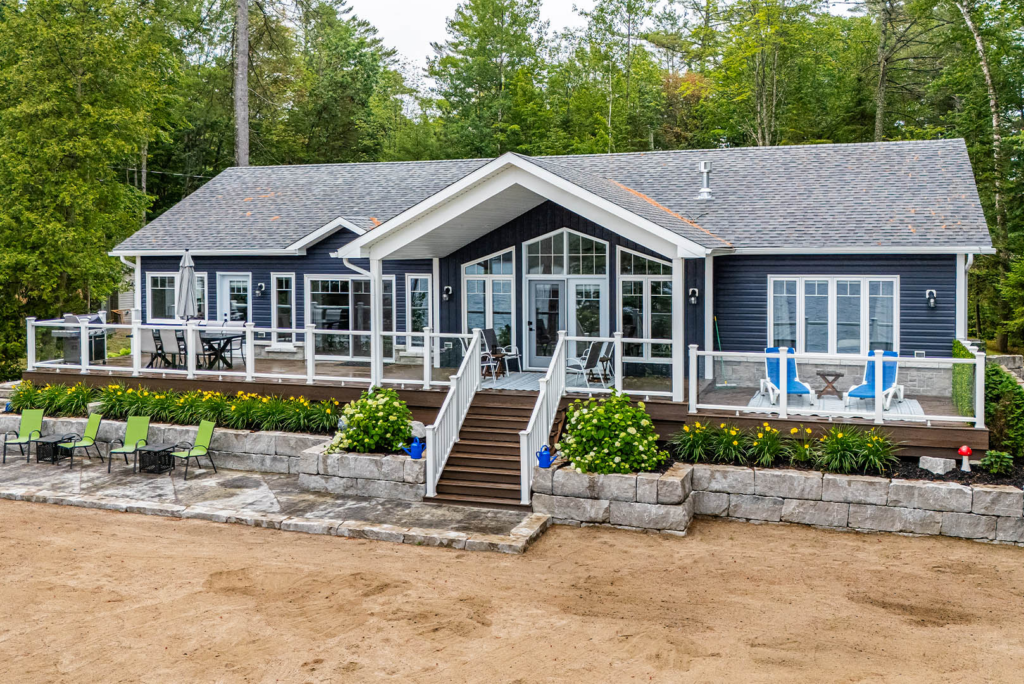
More Canadians are choosing to age in place rather than move into retirement facilities. Here’s how Quality Homes’ customizable modular bungalows — like the popular Riverstone — are redefining the forever home for retirees.

QUALITY HOMES RIVERSTONE DESIGN

For decades, retirement in North America followed a familiar script: sell the family home, move into a retirement community, and settle into a downsized life with more rules than rewards. But today a different trend is taking hold — one that puts independence, dignity, and comfort back in the hands of homeowners.

“It’s a forever home built on your terms — not someone else’s timeline.”

Why Aging in Place Is Surging

Walk into any Quality Homes model center and you’ll notice a shift: fewer young families browsing builds and more empty nesters, newly retired couples, and folks who’ve spent decades dreaming about their ideal final home.

They’re not running from age — they’re preparing for it.

Aging in place offers what retirement facilities often can’t:

  • Control over your routines, space, and lifestyle
  • Emotional comfort of staying near friends and community
  • Financial sanity compared to $6,000–$12,000 monthly retirement fees
  • A home that grows with your changing needs, not against them

At its heart, aging in place is about dignity, familiarity, and the freedom to stay yourself.

Why Bungalows Are the New Retirement Home

The resurgence of the Canadian bungalow is no accident — it’s practicality meeting comfort.

Quality Homes’ modular bungalows provide:

One-floor living that removes risk and hassle

No stairs. No compromises. Everything you need is always a safe, level step away.

Wide hallways, accessible bathrooms, and mobility-friendly layouts

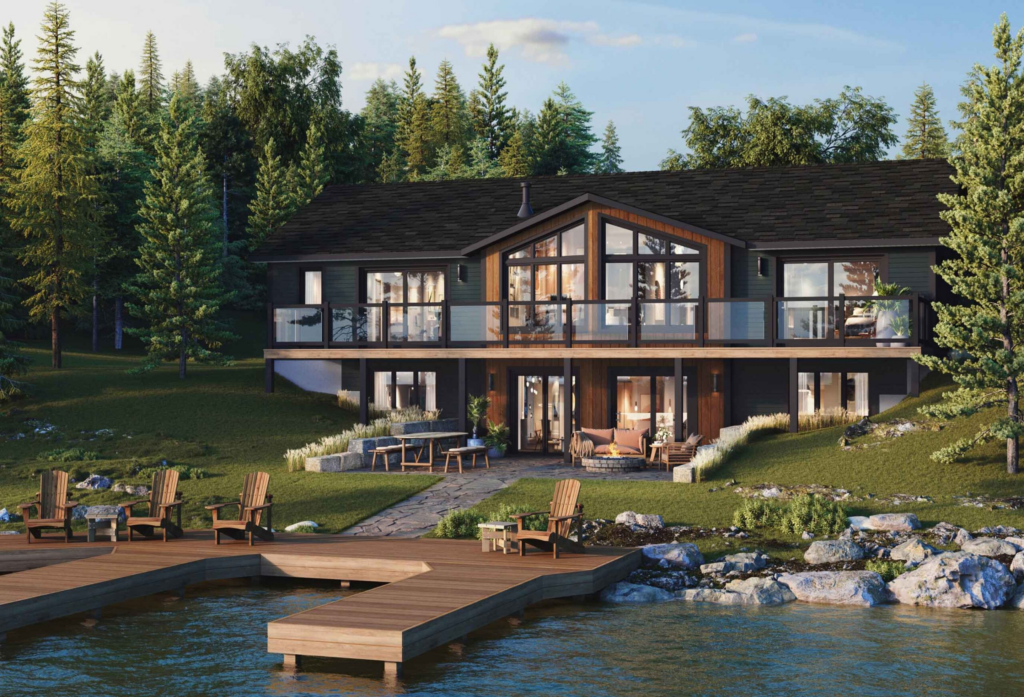
Quality Homes’ Whitestone Bungalow

These aren’t afterthoughts; they’re designed in from day one.

Future-ready options

Walk-in showers
Grab bars
Raised toilets
Accessible tubs
Main-floor laundry
Low-maintenance materials

Less space to maintain, more life to enjoy

Retirement should feel lighter — and so should your home.

The benefits of modular consistency and speed

Building indoors means fewer weather delays, fewer unknowns, and a clean, predictable build from layout to move-in.


“These aren’t old-fashioned bungalows. These are future-proof, modular-built sanctuaries intentionally shaped around comfort, and independence.”

Case Study: A Homeowners’ Forever Riverstone

One of the most compelling examples of this trend comes from two homeowners who knew exactly what they wanted — and what they no longer needed.

They chose the Riverstone, one of Quality Homes’ best-selling bungalow designs, and worked hand-in-hand with the design team to shape it around their future.

Their Customizations Included:

  • Bedrooms on opposite ends for privacy
  • A bright, open-concept kitchen/living space
  • Cathedral ceilings for airy volume
  • A generous covered porch
  • Built-in accessibility considerations for future needs

And thanks to modular efficiency, they were living in their new home in just five months — while stick-built projects in the same region faced months of delays.

“Better to plan our future on our terms, instead of waiting until our health forced an unplanned move.”

Their home wasn’t just built.
It was designed — thoughtfully, intentionally, beautifully — for every chapter ahead.

The Bigger Trend Behind the Story

The success of these bungalow models isn’t a fluke. It’s a demographic wave.

Baby Boomers and Gen-Xers are choosing:

  • Ownership over monthly fees
  • Privacy over communal living
  • Comfort over compromise
  • Homes that evolve with them, not ones they’ll need to leave

They want a house that never stops working for them.
A home that gives independence and identity.
A place worth waking up in — at 60, 70, 80, and beyond.

Quality Homes understands this better than most, and their bungalow lineup is proof.

Retirement Living Is Being Redefined — and Quality Homes Is Leading That Shift

Quality Homes – The Laurel Suite 

If there’s one message every future retiree should hear, it’s this:

Your home does not have to define your age.
The right home can redefine your future.

  • Aging in place reduces financial pressure on retirees
  • Modular construction enables consistency and predictable timelines
  • Customizable bungalows solve long-term accessibility needs
  • Demand for senior-ready homes is becoming one of the fastest-growing segments in the offsite industry

With customizable modular bungalows designed for lifelong comfort, Quality Homes is offering homeowners the freedom to stay in control — and stay at home — for as long as they choose.

This isn’t just a trend.
It’s a new blueprint for retirement.
And Quality Homes is building it, one beautifully crafted bungalow at a time.

In the end, what Quality Homes delivers is far more than a beautifully crafted bungalow. They offer something deeper—the promise of a life lived on your own terms, surrounded by comfort, dignity, and the small everyday freedoms that matter more as the years pass.

Whether it’s a Riverstone design tailored for aging in place or a fully customized plan built for the next chapter, Quality Homes proves that the right home doesn’t just shelter you; it supports you, adapts to you, and grows with you. For countless homeowners, that is the true definition of security. And for anyone dreaming of a forever home that blends thoughtful design with lasting peace of mind, Quality Homes continues to stand exactly where they always have—at the intersection of craftsmanship, compassion, and a future you can feel good about.

How Modular Companies Can Break the Seven-Stage Cycle Before It Breaks Them

After watching too many respected modular factories walk the Seven Stages of Slow Suffocation, you’d think someone would have invented a cure by now. But here we are—2025—and the pattern keeps claiming victims. Katerra isn’t the first, and it won’t be the last.

Half the factories that look “fine” today are mostly being held together with Excel spreadsheets, duct tape, and hope.

The good news?
The industry can break the cycle.
The bad news?
It requires doing a few things that modular owners hate more than paperwork.

Here’s how to stay off the insolvency list.

The modular industry has a chronic disease: Yes-itis.

A big-name client comes calling, flashes a complex project, and suddenly the factory is agreeing to things it can’t actually afford to deliver. The press release always looks great, but the first invoice doesn’t.

Factories need a new rule:
If the cashflow model doesn’t work, the project doesn’t happen.

Yes, it’s hard to say no.
Yes, it feels like leaving money on the table.
But saying yes to the wrong project is how companies end up filing Notices of Intention while insisting they’re “just in a temporary crunch.”

You want to break the cycle?
Start with the bravery to walk away.

Modular factories don’t die from lack of work; they die from lack of cash.

The biggest myth in modular is that backlog equals safety. No—liquidity equals safety.

There are three cashflow rules modular companies must adopt:

  • Get deposits, not promises.
    “We’ll pay on delivery” should be a red flag, not a selling point.
  • Never accept payment terms longer than your supplier terms.
    If your client pays in 60 days and your supplier wants 30, congratulations—you’re the bank.
  • Model cashflow weekly, not monthly.
    Modular companies suffocate in the gaps.

Breaking the cycle starts with knowing exactly when the oxygen runs low—and fixing it before the alarms go off.

Because it does.

A modular project without change orders is like a Monday without coffee: impossible.

The problem is not the changes—it’s the tracking. When a factory doesn’t price, approve, document, and collect on changes properly, it bleeds to death by a thousand cuts.

Better rule:
No approved change order, no change.
And yes, that includes small ones. Especially small ones.

Banks don’t like surprises.
Lenders don’t like friction.
And both lose their patience the moment covenants get close to tripping.

The factories that avoid collapse are the ones that communicate early, even when the news is bad.

Call it a preemptive strike.
Call it a courtesy.
Call it survival.

Because when lenders trust management, they give breathing room. When they don’t, they accelerate the fall.

Most modular collapses have nothing to do with production.

They start months earlier—during quoting, estimating, scheduling, and engineering.
Get those wrong, and the production line becomes a very expensive theatre where you perform mistakes in real time.

Factories need to tighten:

  • estimating accuracy
  • contract reviews
  • design freeze discipline
  • project launch procedures

You break the cycle by getting the front of the business right—not by hoping the back can save you.

Modular companies often assume that if they grow fast enough, the problems will magically shrink behind them.

History says otherwise.

Growth multiplies problems.
Growth magnifies mistakes.
Growth accelerates the suffocation.

Before adding capacity, headcount, or square footage, every modular company needs to answer one question honestly:

Is our current system profitable at today’s volume?
If the answer is no, doubling that volume won’t fix it.

Consultants, advisors, turnaround experts, fractional CFOs, outside estimators—call them what you want. But factories that survive rough cycles aren’t too proud to bring in someone who’s already seen the warning signs.

No one ever regrets calling before the collapse.
Everyone regrets calling after.

Breaking the Cycle Begins With Admitting It Exists

The modular industry has a pattern.
A deadly one.
But it isn’t inevitable.

You break the Seven-Stage Cycle by being more disciplined, more selective, more honest—and more prepared—than the companies that followed the pattern before you.

If the industry keeps treating insolvencies like lightning strikes, we’ll keep getting hit.

But if we finally admit the storm is predictable…
We might actually learn how to avoid it.

Our ultimate goal at Offsite Innovators is to grow our industry…we need your help.

If you’d like to explore this further, connect with Bill today.

Bill Murray, Co-Founder of Offsite Innovators

Hope Is Not a Market — The Last (and Most Avoidable) Reason Factories Fail

Enough negativity — this will probably be the last time I write about why factories fail. Not because the reasons have all been covered, but because I’ve spent enough time talking about the negative side of an industry I still believe has enormous promise.

That said, one more needs to be addressed, because it’s so common — and the most avoidable: building a factory before you’ve confirmed that anyone actually wants what you plan to produce.

Looking Back

In earlier articles, I talked about factories that launched without a clear understanding of their true costs — and how that single mistake can take down even a well-funded operation. I also touched on the lack of systems: how plants run on assumptions rather than data, how owners try to manage by memory, and how small errors multiply into major losses.

Both of those are killers. But even if you fix both — if you have accurate costing and strong systems — it won’t matter if you misread the market, or worse, never try to read it at all.

The Most Dangerous Assumption

They assume there’s demand because someone said so — a developer, an investor, a local official. They assume they’ll be competitive because “nobody else is doing this here.” They assume the market will come to them once the first walls go up. The old “build it and they will come” routine.

That’s not a plan. That’s hope. And hope, as I’ve learned more than once, is not a market. As Coach Lou Holtz said, “Hope doesn’t win ball games.”

This applies to startups and established factories alike. Startups are often led by enthusiasm and a good concept. Existing factories get comfortable with “what’s worked before.” Both can miss what’s happening right in front of them: a market that’s shifted, a product that’s lost relevance, or a price point that no longer works.

What Market Analysis Shouldn’t Be

When people hear “market analysis,” they picture expensive reports, focus groups, or consultants producing thick binders of data that nobody reads twice. That’s not what I’m talking about.

I’m talking about common-sense due diligence — the kind that can be done with a phone, a truck, and a notebook. You don’t need a professional research firm to understand whether there’s real demand. You just need to ask the right questions of the right people — and listen to the answers without bias.

What Market Analysis Should Be

Here’s what a practical, no-nonsense approach to market validation looks like — the kind I recommend to every client before they start pouring concrete or signing equipment leases:

– Talk to realtors. Not corporate ones — local realtors who actually sell in the market. Ask what’s moving, what’s sitting, and what price points get traction.

– Visit sales lots or model centers. See what’s being offered and what’s collecting dust. Talk to sales staff — they’ll tell you what buyers are asking for that they don’t have.

– Ask developers and builders. Find out what they can’t get right now. Is it affordable units, higher-end finishes, or production capacity? What makes them hesitate about modular or offsite?

– Call local lenders and appraisers. Ask whether they’ll finance modular in the target market, and under what conditions. If the local bank won’t fund it, that’s a red flag that can’t be ignored.

– Talk to building inspectors and zoning staff. Ask what’s being submitted and what’s getting built. They’ll tell you what’s “hot” long before the market data catches up.

– Identify who’s actually writing the check. In some markets it’s the homeowner, in others the developer or the investor. Each sees value differently.

– Define your market. Is it urban infill, workforce housing, coastal rebuilds, resort cabins? Each requires a different factory setup, design approach, and pricing structure.

I was absolutely amazed — and frankly flabbergasted — when I arrived at a $60 million plant a few years ago and learned that they had absolutely no idea what they were going to offer to the marketplace, let alone what they were going to build. They had done zero analysis… none! An extreme example for sure, but similar stories are all too common.

The Cost of Skipping This Step

The factories that skip this step often don’t realize their mistake until production begins. They have staff, systems, and materials in place — but no buyers lined up. So they pivot, discount, or chase new product lines midstream. That’s when panic sets in.

Suddenly the factory’s biggest challenge isn’t production — it’s sales. And that’s the hardest problem to fix when you’ve already built the plant and burned through capital.

Due Diligence Is Not a Luxury

For startups especially, feasibility studies too often focus on building design, logistics, and capital costs. Those matter — but the real feasibility question is: Who’s your customer, what do they need, and how do you know?

A factory that doesn’t answer that before breaking ground is a factory gambling with investor money, employee livelihoods, and its own future.

Market due diligence isn’t about expensive analysis — it’s about discipline. It’s about asking enough questions, in enough places, until the answers start to align. And if they don’t align, maybe it’s not the right market — or not the right time.

Moving On

This will be the last piece I write on factory failures. I’ve said what I need to say. The purpose of these articles was never to criticize, but to help prevent avoidable mistakes — the kind that have closed too many good operations.

The future of this industry doesn’t depend on more factories — it depends on smarter ones. Those that know their costs, measure their performance, and most importantly, understand their market before they start building.

Because in this business — as in most — hope is not a market.

If you’d like to explore this further, connect with me today.

Bill Murray, Co-Founder of Offsite Innovators

When Everyone’s an Expert: The Hidden Danger of Role Confusion in Offsite Construction

There’s a quiet epidemic spreading through the offsite construction industry — and it’s not supply chain issues, labor shortages, or the latest round of code changes. It’s role confusion. Everyone’s suddenly an “advisor,” a “consultant,” or a “partner.” But too often, they’re none of those things.

The result? Startups that stall, factories that overpay, and projects that go sideways because the people giving advice aren’t sure which hat they’re wearing — or worse, they’re wearing someone else’s entirely.

The Sales Rep Who Thinks He’s a Consultant

This one’s the most common — and the most dangerous. A vendor rep shows up with “free consulting” and an eager smile. They promise to help “optimize your process,” “improve efficiency,” and “reduce cost.” Sounds great… until every path they draw somehow leads back to one place — their own product line.

If you’ve ever walked through a factory and noticed brand stickers plastered on everything from nailers to software dashboards, you’ve probably met this character. The problem isn’t that they’re selling — it’s that they’re pretending not to.

When a sales rep acts like a consultant, their advice isn’t about what you need. It’s about what they need to sell before the quarter ends. And that’s how a factory ends up with the wrong technology, wrong tools, and wrong expectations.

The Consultant Who Thinks He’s an Advisor

Consultants are problem-solvers. They’re supposed to fix what’s broken and then step back. But some can’t resist offering advice that stretches beyond their assignment. Suddenly, they’re not just recommending how to streamline a wall panel line — they’re redesigning your management structure and your investor pitch.

The danger here isn’t malice; it’s overreach. When a consultant crosses into strategic advising, they start making calls that belong to ownership. A consultant can tell you how to make your factory more efficient. Only an advisor — one with deep industry insight and no bias — should tell you whether to expand or partner.

Good consultants know when to stop. Great ones tell you when they’re not the right person for that next decision.

The Advisor Who Thinks He’s a Consultant

Advisors are supposed to see the big picture, not pick up the wrench. But occasionally, they slide into hands-on mode — dictating software choices, vendor deals, and even production scheduling. That’s when wisdom turns into interference.

A seasoned advisor can save a company years of mistakes, but when they start micromanaging, their credibility takes a hit. They stop being the calm voice of reason and become the backseat driver with too many opinions and too little accountability.

If an advisor says, “Trust me, I know which system to buy,” without data or testing — that’s your cue to tap the brakes.

When Everyone Pretends to Be Everyone

Now picture a startup offsite factory trying to scale up. They’ve got:

  • A “consultant” selling software,
  • A “sales rep” giving strategic guidance,
  • And an “advisor” directing line operations.

No one’s clear who’s responsible for what. Decisions overlap, trust evaporates, and the owner ends up holding the bag for everyone’s best intentions.

This is how good ideas die and promising factories go broke. It’s not bad luck — it’s blurred boundaries.

If you’re running an offsite factory, a startup, or even just exploring automation, here’s the truth:

  • A consultant gets paid for what they do.
  • An advisor gets paid for what they know.
  • A vendor sales rep gets paid for what they sell.

When those lines blur, the only one who loses is you.

Ask hard questions. Demand clarity. And never forget — real professionals know their lane and respect yours.

If you’d like to explore this further, connect with me today.

Bill Murray, Co-Founder of Offsite Innovators

Why Some Factories Falter — and What Their Numbers Reveal

A new “Cause and Effect Series” by Bill Murray

I’ve been asked many times, “Why do some modular factories make it while others don’t?” There isn’t one single answer—there are patterns.

Over the next few articles, I’m taking a closer look at some of the most common causes I’ve seen firsthand, (both in my own company plus those of others witnessed through advisory assignments)—but, more importantly, the systems that separate the successes from the failures.

This first article tackles one of those quiet but costly causes: the absence of accurate, current costing and estimating systems. The effects often prove devastating.

The False Comfort of “We Know Our Costs”

In almost every struggling factory I’ve walked through, leadership believed they did know their costs. Spreadsheets existed. Estimating programs produced clean reports. Prices were set to be competitive.  (In one case the sales price was actually set exclusively on the competition’s price!  Think about that one.)

But when we dug in, two serious gaps appeared—both rooted in missing systems, not missing intelligence.

First, their estimating data wasn’t tied to current realities. Material pricing, labor rates, and production assumptions hadn’t been updated regularly—or at all. In a volatile environment like construction, that lag can be devastating. I’ve seen estimating models six months out of date that were already thousands of dollars off per module because of incremental cost increases that went unnoticed.

Second, very few factories “audit” their own results once the job is finished let alone during the manufacturing process. The actual material, labor, and overhead costs are rarely compared to the original estimate. That feedback loop—the one that validates or corrects assumptions—is often missing entirely.

So estimates remain unverified. They look professional and consistent, but they drift further from reality with every job. The plant keeps pricing future work on untested numbers, not realizing the gap between estimated and actual costs has widened to dangerous levels.

I’ve seen that gap quietly erase entire profit margins before anyone even noticed, or until it was history.

The System That Was Missing

When estimating and production operate in separate silos, numbers stop meaning anything. That’s the real issue I’ve seen over and over again—not that people don’t care about costs, but that they don’t have a system to keep those costs synchronized with reality.

A good system creates a closed loop between estimating, production, and feedback.

1. Estimating sets the baseline. Each bid starts with defined assumptions for material, labor, and overhead.
2. Production records the reality. As the job runs, actual costs are captured—not just material invoices, but man-hours, waste, and rework.
3. Feedback closes the loop. When the job finishes, someone compares what was expected to what actually happened—and documents the variance.

Without that loop, there’s no mechanism to catch drift. Estimators continue pricing work based on outdated standards; production teams fight fires without understanding the root cause; management thinks the margins look fine because no one has verified otherwise.

The good factories, after every project, the proper team members sat down with a one-page variance report—simple, color-coded, and brutally honest. If labor hours were exceeded, if material costs were exceeded, sometimes heated discussions took place.  If framing costs dropped because of a process improvement, that update went straight into the estimating database. The excellent factories performed weekly and in one instance even daily assessments and variance reports.

There is excellent software out there to steer proper costing and auditing, but it is useless, as is often the case, if the culture doesn’t demand essential disciplines to allow the data to drive results.

The Cost of Not Knowing

When a factory doesn’t know its real costs, the damage builds slowly and quietly. Jobs that look profitable on paper often aren’t—but no one discovers that until the cash runs thin.

Without verified data, every project becomes a guess. Some hit the mark, some don’t, and over time the misses outweigh the wins. By the time a P&L exposes the truth, the company has already spent the profit it thought it earned.


I’ve seen plants lose margin one assumption at a time: a few underestimated labor hours here, a small material overage there, a little overtime that never made it back into the estimating model. Nothing catastrophic—just a slow erosion that no one measured.

And when leadership finally starts asking why the numbers don’t match, the answers are all symptoms: “materials went up,” “labor is short,” “sales discounted too deep.” The real problem isn’t the conditions—it’s the missing visibility.

Once you put a feedback system in place—tracking actuals, auditing assumptions, updating estimates—those excuses disappear. The numbers stop surprising you, because they finally mean something.

The Takeaway

Factories rarely fail from lack of effort or intelligence. They fail from lack of clarity—and in manufacturing, clarity comes from systems.

When you don’t have a structured way to capture and verify your true costs, every bid is a gamble. When you do, you gain control—not just of your numbers, but of your future.

At one point in my career, I became a GM for a factory that was part of a privately held corporation.   The owners decided to offer for sale their entire company.  They had hired a consultant to guide the sale process.  One of the very first things he addressed was this:  Prioritize all systems and processes.  Show proof that they are in place and used.  Document all systems and processes, reduce them to writing.  It was the single biggest piece of advice we received.  It made a lasting impression on me as a GM.  It took us almost a year to get our act together.  It paid big dividends.  Ultimately sales, production, and finance finally start speaking the same language—one built on facts, not assumptions.

I’ve watched that shift happen firsthand. My team used this systems-based philosophy in a turnaround.  Once real costing systems are in place, confidence replaces guesswork.

That’s when a company stops reacting and starts managing.

At Offsite Innovators, we welcome your thoughts and comments.  We also welcome the opportunity to assist.  Don’t hesitate to contact us at:

If you’d like to explore this further, connect with me today.

Bill Murray, Co-Founder of Offsite Innovators