
Highlighting the thinkers and their ideas driving the evolution of Offsite Construction. 
Be inspired, be informed, be innovative!

Revolutionizing Construction Through Robotics and Regional Manufacturing

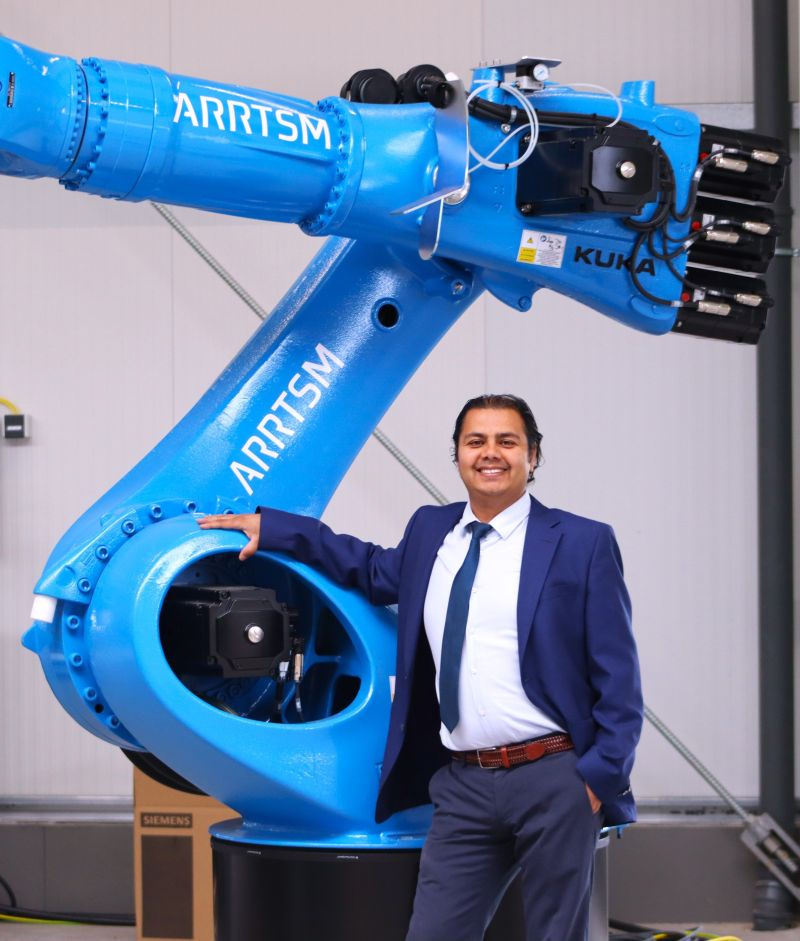
Gary Fleisher, Offsite Innovators, interviews Yudhisthir Gauli, Founder & CEO of Framebotix

When it comes to transforming the way the world builds, few are thinking as boldly—or as practically—as Yudhisthir Gauli, Founder and CEO of Framebotix. With a background in German CNC machine design and a deep passion for humanitarian impact, Gauli has spent over a decade developing robotics systems that don’t just mimic human work—they revolutionize it. His latest venture, Framebotix, isn’t just automating construction—it’s reshaping the entire ecosystem, from how homes are built to who gets to build them.
.

In this exclusive interview with Gary Fleisher of Offsite Innovators, Gauli shares the journey from concept to implementation, explaining how Framebotix’s 8th-generation robotics platform brings mass customization, affordability, and regional resilience to housing production. Whether it’s enabling small developers with a pay-as-you-manufacture model or redeploying retired systems to developing nations, Framebotix is proving that technology can be both scalable and socially impactful.

Gary Fleisher:
Yudhisthir, I’d love to start with the origin story—what sparked the idea for Framebotix? How did your experience with German CNC machine design shape the vision behind your autonomous robotics platform? And as we dig into that, I’m especially curious—how does this platform actually come into play when it comes to building homes? What does that real-world application look like?

Yudhisthir Gauli:
Honestly, Framebotix started with a pretty personal spark for me. The idea for Framebotix didn’t start in a boardroom, it started with a deep desire to serve humanity through technology.

Back in 2011, I was working on a complex robotics project, incredibly exciting, but also incredibly manual. The programming was intricate, time-consuming, and expensive. That’s when a vision struck me: what if a robot could move like the human hand, intelligent, adaptive, and precise, without needing to be programmed every single time?

That idea became my obsession.

In the years that followed, I worked on some of the most advanced CNC machines on Earth, not just programming them, but working on everything from control systems to mechanics to final commissioning. I wasn’t just designing machines, I was living inside the complexity of manufacturing. And I saw the bottleneck: no matter how good the hardware, the reliance on human programming was slowing everything down and making it expensive to scale.

That’s when I realized: if we could remove the need for manual programming, we could massively reduce the cost of manufacturing. We could make automation accessible, not just for billion-dollar corporations, but for builders, fabricators, communities, and families. That’s when my vision became clear: to create an autonomous robotics platform that works like a human, thinks like an engineer, and manufactures like a factory — without the need for programmers.

In 2015, ARRTSM Engineering was founded, and in 2016, ARRTSM GmbH in Germany. We solved incredibly advanced problems for aerospace, automotive, and high-tech manufacturers. But in my heart, I knew that all of this innovation needed to serve something bigger—people.

That mission came full circle in Q1 2024, when I launched Framebotix, fully focused on the housing industry, because the world doesn’t need another robot. It needs a way to build better, faster, and more affordably. That’s where we come in.

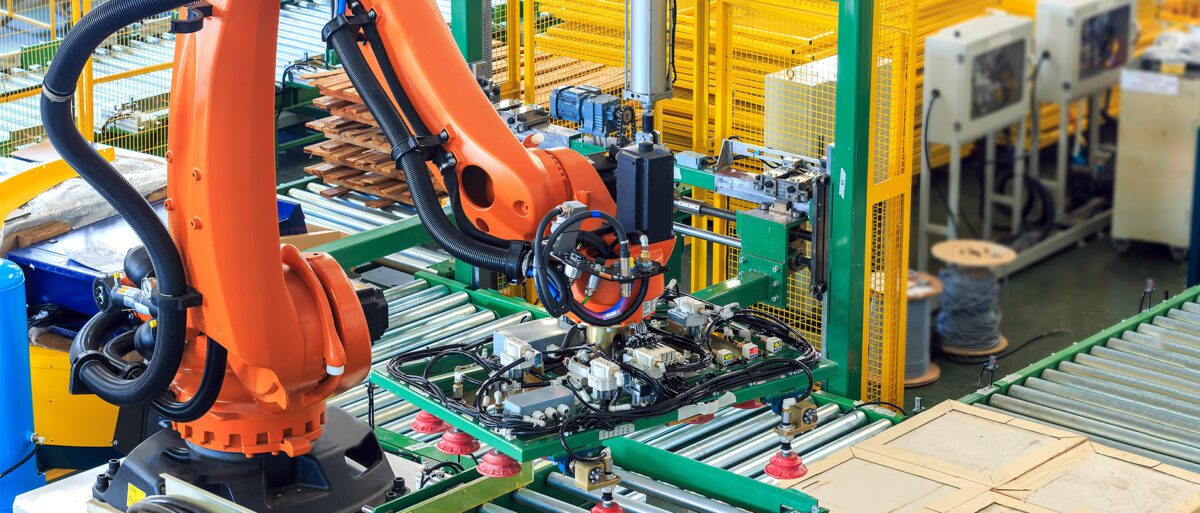
Framebotix uses the latest generation of autonomous, AI-guided robots that can process materials like wood, metal, and composites with no manual intervention. These robots build like humans but with machine-level precision and consistency. You don’t need to reprogram them every time your design changes, the system adapts automatically. This unlocks true mass customization, which is the future of affordable housing.

And this isn’t theory, we’ve been doing it for years.

For me, this is more than just automation, it’s a humanitarian mission. We’re transforming how the world builds, not with more labor, but with smarter tools, and by putting technology in the hands of the people who need it most.

So, when I say Framebotix is here to build homes, build factories, and build futures, I mean it. Because in the end, we’re not just solving a housing crisis. We’re changing the way humanity manufactures what it needs to survive and thrive.

Gary:
Your tagline—’No large Upfront Investment. Pay-As-We-Manufacture’—really piques my interest. How exactly does this risk-free model work in practice for builders and developers? And I’m especially curious—when does the payment process actually begin for them?

Yudhisthir:
That’s a great question, and honestly, it goes right to the heart of what makes Framebotix so transformative.

Our tagline, “No large upfront investment. Pay-As-We-Manufacture,” is built around one simple but powerful idea: we want to remove the financial barrier that stops builders and developers from scaling. Traditional construction requires heavy capital investment up front, factories, equipment, skilled labor, and logistics, which locks out a lot of great builders who have demand but not access to that kind of funding.

At Framebotix, we flipped the model. Instead of selling factories or expensive automation equipment, we offer Factory as a Service, which means we build and operate high-tech, autonomous manufacturing facilities where builders can simply bring their designs and materials… and we take care of the rest.

Now here’s how the model works in practice:

  • No large upfront payment for the factory itself. Builders don’t need to invest in land, robots, or machines.
  • They only pay as we manufacture their homes or components — square foot by square foot, or panel by panel.
  • We handle the automation, robotics, assembly, quality control, and delivery — and they get predictable pricing, speed, and precision.

This approach significantly reduces their risk. There’s no need to finance a million-dollar factory or hire an entire workforce before seeing revenue.

That allows even small to mid-sized developers to access cutting-edge automation without huge capital burden, and large-scale builders to scale quickly and cost-effectively without having to build out internal manufacturing capabilities.

In short: we manufacture, they grow. It’s risk-free, fast, and built to serve the modern builder. And, most importantly, to provide more affordable housing to meet today’s demands.

Gary:
Regional manufacturing is a major part of your strategy. Why is decentralization so crucial to the future of construction?

Yudhisthir:
Absolutely, regional manufacturing isn’t just a strategy for us at Framebotix, it’s a necessity. The future of construction depends on decentralization, and here’s why:

First, the traditional centralized model, where materials are shipped cross-country and labor is pulled from shrinking pools, is slow, expensive, and environmentally damaging. In an era where speed, cost, and carbon impact all matter, that model simply doesn’t scale.

By placing automated, data-driven factories in smaller regions, closer to where the homes are actually being built, we solve several critical issues at once:

  1. Speed – Homes and components are manufactured locally, so delivery times shrink from weeks to days. That’s huge for builders working on tight schedules.
  2. Cost – We cut transportation costs, reduce supply chain delays, and eliminate a lot of waste. That means lower costs for the builder and ultimately for the homebuyer.
  3. Sustainability – Local manufacturing means fewer trucks, fewer emissions, and more efficient use of materials. We can even optimize for local resources and building codes.
  4. Resilience – In times of crisis — like pandemics, climate events, or geopolitical disruption, centralized systems collapse. A regional network of smart factories ensures that housing development doesn’t stop when the world gets shaky.

But perhaps most importantly, regional manufacturing empowers communities. We’re not just automating production, we’re enabling local builders, developers, and even cities to take control of their own housing supply, without needing to rely on massive corporations or foreign supply chains.

So, for us, decentralization isn’t just about efficiency, it’s about accessibility, independence, and building resilient communities across America. It’s a new industrial model for construction, and it’s long overdue.

Gary:
I’m really intrigued by your 8th-generation robotics system—can you walk us through what makes it stand out from other automation platforms in the offsite and modular space? I’m especially curious about how it handles customization from one project to the next. And how does its autonomous approach compare to more traditionally programmed robotics in terms of flexibility and overall benefits?

Yudhisthir:

I’m glad you brought that up. I get excited every time someone asks about our 8th-generation robotics system, because this isn’t just another machine. It’s the result of more than a decade of hands-on experience in real factories, solving real problems for real builders.

We’ve worked in aerospace, automotive, and advanced manufacturing, and we took everything we learned, the precision, the efficiency, the reliability — and built a platform specifically for the construction industry. And what we created is truly something new: a system that doesn’t just automate part of the job, but completely transforms how homes are built.

What makes it different? Simple: It works for you.

Most builders have been burned by tech that’s expensive, rigid, and doesn’t adapt. Our system is the opposite. It’s built to serve your projects, not the other way around. You don’t need to redesign your home just to fit the robot. Our robots adapt to your design — whatever you want to build, we can manufacture it efficiently, affordably, and at scale.

Whether it’s a one-of-a-kind custom home or 500 panels for a large community, the robots handle it all — seamlessly, autonomously, and with zero downtime for setup. There’s no complicated reprogramming. You just upload the design, and we take care of the rest.

And the best part? This is not an idea. It’s not a prototype. It’s already working, right now, in different factories. Builders using our system are saving time, reducing cost, and scaling faster than ever — all without the massive investment of setting up their own facility.

We’ve poured years of innovation into this so you don’t have to. And now, for the first time, you can access advanced robotics without owning the robots, just pay as we manufacture. No capital risk. No headaches. Just results.

So if you’re ready to build smarter, faster, and with more freedom, Framebotix is ready for you.

Gary:
You’ve worked on projects from drones to furniture to homes. How does Framebotix’s technology adapt across so many materials and sectors?

Yudhisthir:
That’s a great question, and honestly, the versatility of Framebotix is one of our biggest strengths.

Yes, we’ve worked on everything from high-precision drones and aerospace components, to custom furniture, and now entire homes, and that’s not by accident. It’s because we didn’t build Framebotix for just one market. We built it to solve a universal problem that shows up across every industry: the shortage of skilled labor, inefficiency in production, and the high cost of customization.

What makes our technology adaptable across so many sectors is the foundation it’s built on, over a decade of deep experience in robotics, automation, and material behavior. We designed our platform from the ground up to handle different materials like wood, metal, composites, drywall, stone, and more — and we didn’t build static machines. We built intelligent robotic systems that can recognize, handle, and work with each of those materials in real-world conditions.

In other words, the system isn’t locked into one application. It learns. It adapts. It evolves.

So whether we’re cutting carbon fiber for drones, machining hardwood for furniture, or assembling entire walls and floors for custom homes, the platform stays the same. Only the tools and files change. That’s the magic: we don’t need to reinvent the wheel for every new customer, we’ve already built a flexible foundation that’s ready for anything.

And here’s why that matters for builders and manufacturers: you’re not buying into a single-purpose machine. You’re gaining access to a platform that can evolve with your business. Start with panels, scale into countertops, cabinets, stairs, full modules — even other industries. It’s all possible with Framebotix.

In the end, we’re not in the robot business — we’re in the problem-solving business. And no matter the sector, the real problem is the same: how do we build faster, better, and more affordably in a world that’s constantly changing?

That’s what we solve. Across materials. Across industries. Across borders.

Gary:
I noticed your plan to redeploy older robotic systems to developing countries to help with affordable housing after their initial use. What motivated this humanitarian mission?

Yudhisthir:
That’s a question very close to my heart — thank you for asking.

Framebotix has always been about more than robotics. It’s about serving humanity through technology, and there’s no greater expression of that mission than our commitment to redeploy older robotic systems to developing countries.

While our latest 8th-generation systems are transforming the Global construction industry, we realized early on that even our earlier platforms, still incredibly capable, could bring massive value elsewhere. Instead of letting them sit idle, we chose to put them to work where they’re needed most.

Since 2023, we’ve been working with a company in Cameroon to do exactly that, using our robotics technology to process Class 5 woods (highly durable, fire-resistant, and naturally rot-resistant hardwoods found in the region). The goal is to build net-zero, fire-retardant homes that are durable, sustainable, and affordable, using local materials and local labor.

This project is especially meaningful because it does three things at once:

  1. Creates local jobs by training and employing workers to operate and maintain robotic systems.
  2. Brings advanced technology to areas where traditional construction methods are slow, inefficient, or unsafe.
  3. Empowers communities to build homes that are not only affordable, but long-lasting and environmentally responsible.

We’re not just dropping off machines, we’re building local capacity. We’re transferring knowledge, creating opportunity, and giving people the tools to shape their own future.

Because in the end, we believe technology should make the world a better place, not just for the few, but for everyone.

This is what drives us at Framebotix. Whether it’s cutting-edge factories in America or local partnerships in Africa, we’re committed to using what we’ve built to build something bigger than ourselves, a world where innovation lifts people up, instead of leaving them behind.

Gary:
Looking ahead, how do you see the vision for Framebotix evolving over time? I’d love to hear how you’re breaking that down into short-term goals for the next one to three years versus the longer-term ambitions further down the road.

Yudhisthir:
Looking ahead, our vision for Framebotix is bold, but deeply focused: we want to fundamentally change how the world builds. That starts with solving America’s housing crisis, and eventually scales to helping millions of people globally live in safe, sustainable homes.

We’re not here to just build a robotic system, we’re building an entirely new construction ecosystem: intelligent, autonomous, localized, and human-centered.

Short-Term (1–3 Years):

Our short-term focus is all about scaling with precision and impact:

  1. Deploying Regional Factories:
    We’re rolling out a network of high-performance factories across key U.S. states. Each one is powered by our 8th-generation robotics system and built on our Factory-as-a-Service model, no large upfront cost for builders, just pay-as-you-manufacture.
  2. Serving Builders & Developers at Scale:
    We’re rapidly onboarding builders who need speed, precision, and affordability — delivering panels, cabinets, stairs, and other components custom-built, with zero delays and no labor bottlenecks.
  3. Expanding the Platform:
    We’re enhancing our software, materials intelligence, and quality control systems, so every Framebotix factory delivers unmatched consistency and customization, from single homes to multi-unit developments.

 Long-Term Vision (3–10+ Years):

Our long-term ambition is nothing short of transformational:

  1. Global Expansion:
    We aim to establish Framebotix-powered factories worldwide, especially in regions hit hardest by housing shortages, leveraging our redeployment model for robotics to create jobs and uplift communities.
  2. Autonomous Housing Ecosystems:
    We envision fully autonomous housing production and assembly, from design to final inspection, where AI handles layout, robots build it, and quality is digitally verified in real-time. Think: housing made as efficiently as cars.
  3. Human-Centered Robotics for Humanity:
    We will keep pushing to ensure robotics doesn’t just serve industry, it serves people. That means smart, sustainable homes; lower environmental impact; and localized economic development.
  4. Framebotix as Infrastructure:
    Ultimately, we don’t just want to build homes — we want to be part of the infrastructure behind nations. Whether it’s disaster recovery housing, defense applications, or smart city expansion — our system will adapt and scale.

What keeps me going is the belief that we can use the power of robotics, automation, and intelligent systems to build not just structures, but dignity and opportunity. The next decade for Framebotix is about building millions of homes, but it’s also about building hope.

That’s the legacy we’re working toward, day by day, panel by panel, and factory by factory.

Gary:

As Framebotix moves into its next phase—deploying regional factories, expanding internationally, and refining its autonomous housing ecosystem—the mission remains clear: use advanced robotics not just to build faster and cheaper, but to build smarter and more humanely. Yudhisthir Gauli’s vision is bold, but it’s grounded in real-world results, and his company stands at the intersection of innovation and empathy. For those watching the future of offsite construction unfold, Framebotix is one name that won’t just be part of the conversation—it’s helping redefine it.

Gary Fleisher

Contact Gary

Gary Fleisher is the Leading Observer of the Offsite Housing Construction Industries. He has been actively involved in researching and writing about the latest trends and developments in the industry for over a decade now.

With his extensive knowledge and experience, Gary has emerged as a go-to expert for businesses looking to stay ahead of the curve in the modular construction industry. In addition to his work as an editor, he is also a sought-after speaker and consultant who has helped numerous companies achieve strategic and operational success.


Confessions of a Seasoned Blogger: It’s Time I Start Listening to the Next Generation of Builders

After 18 years of writing blog posts and 17 years of sending out weekly newsletters—over 8,000 articles later—I’ve come to a surprising realization:

I’ve been speaking to my own generation almost the entire time.

I’m getting ready for a trip to another factory

Most of my articles have been geared toward people in senior management—factory owners, founders, developers, and executives who’ve been in the offsite construction industry for a while. We speak a common language, shaped by decades of lessons learned the hard way.

But here’s the confession:
I’ve been looking at the younger generation—the new entrepreneurs, engineers, marketers, and thinkers—through a lens I never realized I was using.

As my wife gently pointed out, I often see these younger leaders the way I look at my own kids. Not in a patronizing way, but with a kind of protective instinct. The problem is, that perspective may be keeping me from truly hearing them—or writing for them.

That ends now.

Helping with a factory tour

Offsite construction is changing. Fast. And the people driving that change are often under 40, armed with bold ideas, powerful tech, and a determination to break the cycle of “this is how we’ve always done it.” I want to learn from them. I want to write with them in mind. And I want to share whatever wisdom I have in a way that actually helps, rather than lectures.

So I’m opening the door.

👉 If you’re under 40 and working in offsite construction—whether you’re a founder, a sales rep, a designer, a fabricator, or a disruptor—I want to hear from you.


👉 If you’ve got something to say about what this industry gets wrong, where it’s headed, or how we can do better—I’d love to feature your voice.


👉 If you’ve ever read something I’ve written and thought, “This guy doesn’t get what it’s like for us,”—well, now’s your chance to help me get it.

Let’s build something better together, one story at a time.

You can DM me here or email me directly at [your email] if you want to talk or contribute. And if you’re not ready to write, no problem—just follow along. I’ll be interviewing younger innovators, spotlighting their work, and doing my best to shut up and listen.

Thanks for sticking with me all these years. Now, let’s see where the next generation takes us.

—Gary

4Ward Design & Labor Announces Acquisition of All-IN Design

Strategic Expansion Strengthens 4Ward Design Solutions’ Capabilities and Leadership Team

Allen Washburn, Director of Component Design for 4Ward Design Solutions

4Ward Design & Labor, LLC is excited to announce the acquisition of All-IN Design, LLC, a respected leader in component design founded and led by Allen Washburn. This strategic move further reinforces 4Ward’s commitment to delivering industry-leading design solutions and expanding its innovative offerings.

As part of the acquisition, Allen Washburn joins the 4Ward team as the new Director of Component Design for 4Ward Design Solutions. Allen brings with him years of experience, deep industry knowledge, and a passion for excellence, making him an invaluable addition to the organization.

“I’m incredibly excited to join the 4Ward team,” said Allen Washburn. “This opportunity allows us to combine the strengths of All-IN Design with the forward-thinking approach of 4Ward Design Solutions. Together, we’re positioned to deliver even greater value to our clients while continuing to innovate andelevate component design across the industry.”

In addition to Allen’s new role, 4Ward is proud to announce the promotion of Roger Wagner, who previously served as Design Manager, to the position of Director of Design Training and Development. Roger will spearhead the growth and mentorship of 4Ward’s design team, ensuring the highest level of training, innovation, and consistency across all projects.

“These moves reflect 4Ward’s unwavering dedication to investing in both people and process,” said Ben Hershey, CEO at 4Ward Design & Labor. “We’re thrilled to bring Allen’s leadership and expertise into the fold, and to elevate Roger to a role where he can help shape the next generation of top-tier designers. Together, they will play a critical role in advancing our mission to provide comprehensive, forward-thinking design solutions to our clients.”

The integration of All-IN Design’s operations and leadership is effective immediately.

The Future of Housing: What the Next Generation Wants vs. What They Will Have to Accept

In just two decades, the latest Gen Z and earliest Gen Alpha will enter their 30s, looking for homes, stability, and the fulfillment of the American Dream—or at least, whatever version of it remains. But the housing landscape they will encounter will be vastly different from what previous generations have experienced.

No matter how many policies we enact today, how much innovation we throw at the problem, or how many think tanks try to predict solutions, one reality is emerging: they will want one kind of housing, but they will have to accept another.

The forces shaping this future—economic trends, technology, climate change, and shifting societal values—are already in motion, making many of these outcomes inevitable. This is what we predict they will desire, and the stark compromises they will likely be forced to make.

If Gen Z and Gen Alpha could design their perfect housing future, it would likely look something like this:

Homes That Are Sustainable and Energy-Independent

By the time they reach their 30s, climate change won’t be a distant threat—it will be a daily reality. Rising sea levels, heatwaves, and frequent disasters will make energy-efficient homes a necessity, not a luxury. The dream home of 2045 will be:

  • Carbon-neutral or energy-positive, generating more power than it consumes.
  • Built with sustainable materials like cross-laminated timber (CLT), bio-concrete, or 3D-printed recycled composites.
  • Designed for climate resilience, with hurricane-proof structures, self-cooling walls, and flood-resistant foundations.

Hyper-Connected Smart Homes

The next generation won’t just want smart homes; they will expect homes that think for them. AI will manage temperature, lighting, security, and even grocery stocking. Workspaces will blend augmented reality (AR) with real-life functionality, and personalized digital assistants will be as crucial as electricity.

Adaptable, Modular, and Flexible Living Spaces

Rigid homeownership models will feel outdated. Future housing will be designed to expand and contract based on life stages, moving away from the static idea of a single home for life. Prefabricated, modular units will allow homes to be reshaped, relocated, or repurposed as jobs and family needs evolve.

Affordable, Shared, and Subscription-Based Housing

For many, the dream will be flexible housing-as-a-service rather than outright ownership. Monthly subscriptions to housing platforms will replace mortgages, offering the ability to move between furnished, networked communities without financial burden. Co-living models will be more accepted as a way to reduce costs and build community.

Urban Convenience Without the Chaos

Gen Alpha will push for 15-minute cities, where everything—jobs, groceries, entertainment, and healthcare—is within walking or biking distance. Public transportation will be dominant, and car ownership will fade, replaced by automated mobility services.

But this is only one side of the coin. Despite these expectations, here’s what they will likely have to accept.

Economic and environmental forces will dictate a much harsher reality despite their preferences.

Homeownership Will Be Out of Reach for Most

By 2045, homeownership will be more unattainable than ever. Rising costs, stagnant wages, and dwindling land availability will push traditional homeownership into the realm of the elite.

  • Many will never own property, instead navigating an endless cycle of renting from corporate landlords.
  • Real estate monopolization by hedge funds and tech-driven landlords will dominate the market, making affordability even more difficult.
  • AI-driven pricing models will make rent unpredictable, fluctuating based on demand and algorithms, much like airline tickets.

Smaller, Denser Living Spaces

Micro-apartments (under 400 sq ft) will become the norm in high-demand urban areas. Even in suburban developments, space will be minimized as zoning laws and land scarcity make large homes infeasible.

  • Multi-generational co-housing may become an economic necessity rather than a choice.
  • Tiny homes will not be a fad—they will be a necessity.
  • Furniture and walls will need to be collapsible, automated, and multi-use to maximize space efficiency.

Climate-Forced Migration and Resilience Measures

Many of today’s most desirable places to live may not be habitable in 2045. Wildfires, flooding, and extreme weather will force mass migration from coastal cities and heat-stricken regions.

  • Floating cities and storm-proof homes will become necessary for some regions.
  • Zoning laws will favor vertical living, with high-rise eco-communities replacing sprawling suburban neighborhoods.
  • Water rationing, rolling blackouts, and disaster-resistant architecture will become standard in climate-sensitive zones.

AI-Driven Housing Markets with Less Human Control

The traditional human real estate agent may be extinct by 2045, replaced by AI-managed housing transactions. Everything—from rental applications to pricing and maintenance—will be algorithmically controlled.

  • Dynamic pricing for rent will fluctuate based on demand, wealth profiling, and credit scoring.
  • Corporate landlords will dominate, reducing the power of individuals to negotiate terms.
  • AI-driven mortgage approval systems could either streamline or entirely block access to home loans for many.

Work and Home Will Be Indistinguishable

The future workforce will rely almost entirely on remote and AI-assisted labor, meaning homes must double as full-time workspaces.

  • The separation between work and home life will blur even further, increasing stress and burnout.
  • Virtual workspaces will be necessary in every home, making dedicated office space a requirement, not a luxury.
  • Expect neighborhood co-working hubs instead of large corporate office buildings.

While we can still shape housing policies, land-use regulations, and technological innovation, the fundamental challenges ahead make this reality nearly unavoidable. Economic forces, climate change, and the increasing corporatization of housing are moving faster than most policymakers or urban planners can react.

Gen Z and Gen Alpha will have to redefine success in housing, shifting from ownership-based aspirations to a more flexible, communal, and technology-driven approach. For some, this will mean innovative living solutions and greater adaptability. For others, it will mean forced compromise, less privacy, and fewer personal assets.

This is not speculation. It’s a forecast based on current trajectories—one that policymakers, developers, and industry leaders must confront now if they want to soften the blow.

.

Gary Fleisher

Contact Gary

Gary Fleisher is the Leading Observer of the Offsite Housing Construction Industries. He has been actively involved in researching and writing about the latest trends and developments in the industry for over a decade now.

With his extensive knowledge and experience, Gary has emerged as a go-to expert for businesses looking to stay ahead of the curve in the modular construction industry. In addition to his work as an editor, he is also a sought-after speaker and consultant who has helped numerous companies achieve strategic and operational success.
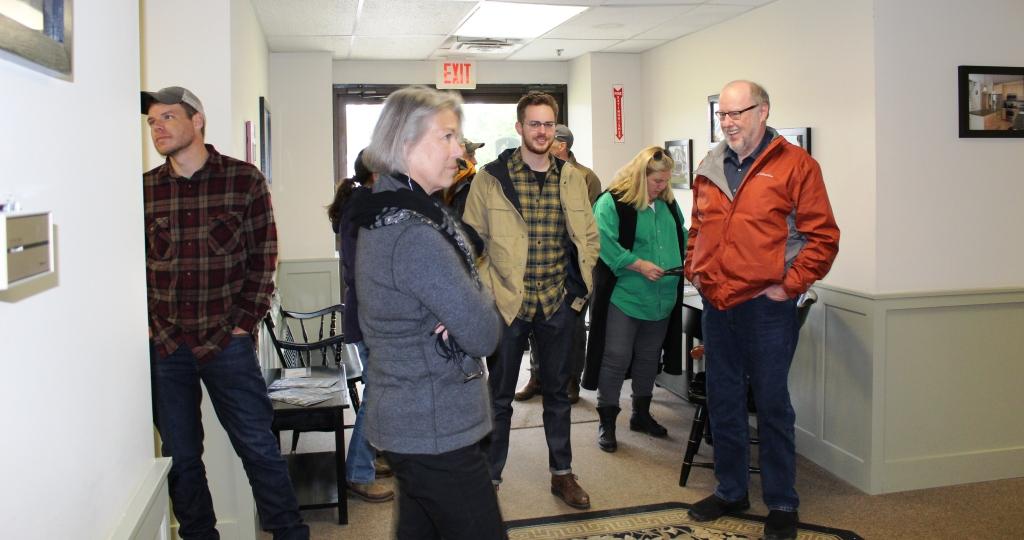
Lessons from History: Innovations That Took Decades to Gain Traction

Despite the industry’s slow adoption, many innovations have eventually become mainstream—often after years or even decades of resistance. Here are a few notable examples:

The idea of prefabrication isn’t new—kit homes from Sears Roebuck in the early 1900s were a form of modular construction. However, despite its promise of efficiency and quality control, modular construction has struggled to gain mainstream acceptance for over a century. Even today, many developers still view it as a niche solution, despite its ability to speed up timelines and reduce labor costs.

CLT was first developed in Austria in the 1990s and was hailed as a sustainable alternative to concrete and steel. Yet, it took nearly 30 years to gain widespread adoption in North America, primarily due to fire code concerns and skepticism from traditional builders. Today, CLT is finally being embraced, but the battle for acceptance was long and costly.

3D printing in construction has been around for over a decade, but despite the hype, it has yet to see large-scale adoption. Builders question the durability, cost-effectiveness, and practicality of printed structures. It may take another decade before it proves itself as more than just an eye-catching experiment.

BIM is now considered a standard in many large-scale construction projects, but its adoption was anything but smooth. Early resistance came from contractors and architects who saw it as unnecessary, complex, and expensive. It took years of proving its value in efficiency and coordination before it became widely accepted.

While skepticism is a necessary filter to avoid costly mistakes, it can also lead to missed opportunities. Many in the industry rejected modular construction, CLT, and BIM when they first emerged, only to later realize their potential.

The key is balance—constructive skepticism that asks the right questions without shutting the door entirely. The industry needs critical thinking, not knee-jerk rejection.

So how can innovators navigate this environment and gain acceptance for their ideas?

If you’re an entrepreneur, engineer, or company introducing a new product or process to the offsite construction industry, here’s how to improve your chances of success:

1. Prove It Works—With Real-World Data

Nothing wins over skeptical builders like numbers. Hard data, performance metrics, and case studies showing cost savings, durability, and code compliance are critical.

2. Find Early Adopters and Champions

Instead of convincing the entire industry at once, focus on forward-thinking developers or factories willing to test new ideas. Their success stories will build momentum for broader acceptance.

3. Speak the Industry’s Language

Many innovators make the mistake of pitching their ideas in technical jargon. Instead, frame your innovation in terms of what builders care about: cost savings, efficiency, and risk reduction.

4. Address Code Compliance Early

If your innovation isn’t code-compliant, it’s dead on arrival. Work with regulatory bodies and industry organizations to ensure your product can be legally adopted before trying to sell it.

5. Be Patient and Play the Long Game

Many successful innovations took decades to gain mainstream acceptance. If your idea is truly game-changing, persistence and strategic execution will pay off over time.

While construction remains a conservative industry, the pressures of labor shortages, rising costs, and sustainability concerns are forcing change. AI, automation, robotics, and new materials will continue to challenge the status quo, and those who embrace innovation wisely will be ahead of the curve.

For innovators, the lesson is clear: skepticism is not an enemy, but an obstacle to be overcome with proof, persistence, and strategic execution. The industry may be slow to change, but history shows that when innovations finally prove their worth, they become unstoppable.

The question is: Will you be the one pushing the change, or the one struggling to catch up?

cid_F65BB783-3048-463D-A8C9-678A698E30CE

Bill Murray

Contact Bill

Bill Murray has over 40 years of operational management experience in the Modular industry.  Bill began his Offsite career as a contractor/builder.  He then entered the manufacturing side quickly advancing through the sales ranks to become a General Manager/COO of multi plant operations.  Bill provides professional advisory service to owners, prospective owners and builder developers considering Offsite construction.  He has consulted throughout the U.S., and Mexico, as well as overseas assignments.

Tiny Spaces, Big Innovative Ideas: How Kubikle is Redefining Cozy Modular Living

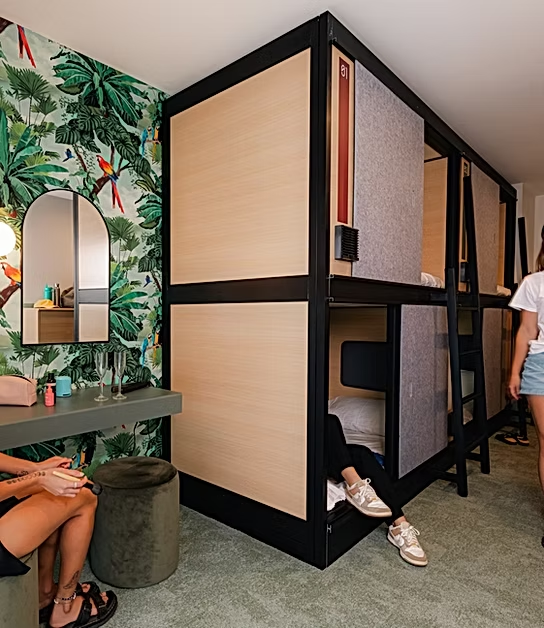
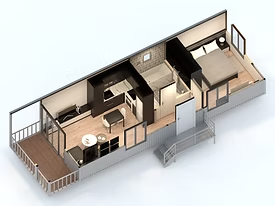
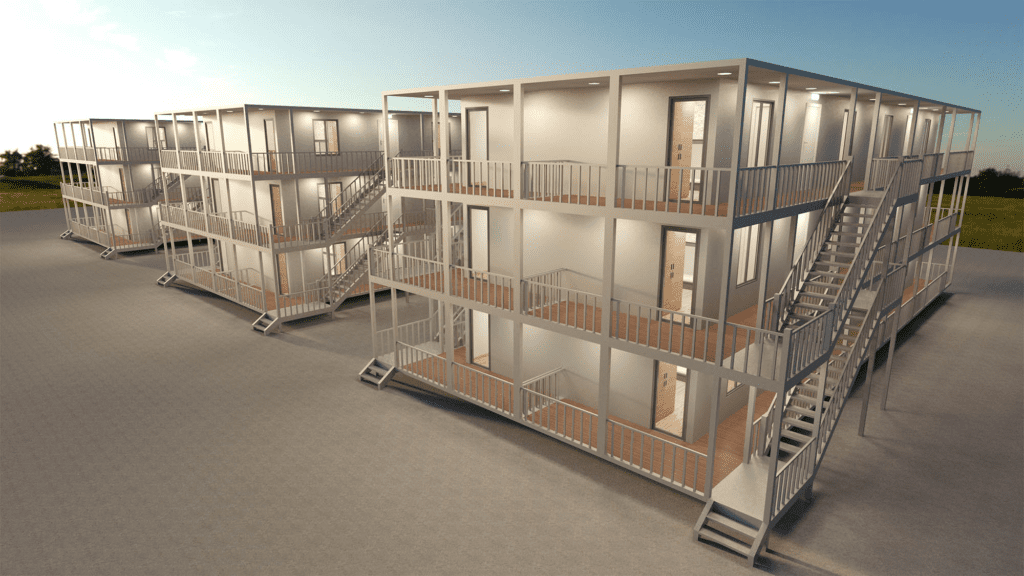
Have you ever wondered what it would be like to have your dream home arrive in a sleek, compact package, unfold IKEA-like as a well-orchestrated performance, and seamlessly adapt to your lifestyle? That’s the vision of Kubikle, a Danish-owned company making waves in the modular housing industry with its latest innovation in space-efficient, customizable living spaces. While tiny homes and prefabricated units are nothing new, Kubikle is taking the concept to the next level by blending Scandinavian design principles with cutting-edge engineering, offering a plug-and-play housing solution that redefines flexibility.

photos – Kubikle Sleep Pods

At a time when urban density is skyrocketing and homeowners are craving more adaptable spaces, Kubikle’s approach feels like a breath of fresh air. Unlike conventional prefab homes, these units aren’t just stackable boxes—they are carefully designed to expand, contract, and evolve based on the needs of the occupant. Whether it’s a student in need of a compact yet stylish dormitory, a homeowner adding an extra living space in the backyard, or a company looking for an instant on-site office, Kubikle’s system offers a tailored solution for every scenario.

Beyond functionality, Kubikle’s innovation speaks to a growing demand for sustainability. By reducing waste in production, optimizing materials, and focusing on energy-efficient designs, the company ensures that each unit leaves a smaller footprint without sacrificing quality or comfort. With this game-changing approach, Kubikle isn’t just offering a modular housing option—it’s presenting a new way to think about living spaces, proving that size doesn’t dictate comfort, and small doesn’t mean compromising on big ideas.

So, what makes Kubikle’s rollout different from the countless modular solutions vying for attention? The answer lies in its fusion of aesthetic appeal, adaptability, and sustainability—a winning formula that’s catching the eye of forward-thinking developers, urban planners, and homeowners alike. As cities continue to wrestle with space constraints and affordability challenges, Kubikle’s smart living revolution is arriving just in time.

CLICK HERE to read the entire ScandAsia article

Gary Fleisher

Contact Gary

Gary Fleisher is the Leading Observer of the Offsite Housing Construction Industries. He has been actively researching and writing about the latest trends and developments in the industry for almost two decades.

With his extensive knowledge and experience, Gary has emerged as a go-to expert for businesses looking to stay ahead of the curve in the modular construction industry. In addition to his work as an editor, he is a sought-after speaker and consultant who has helped numerous companies achieve strategic and operational success.
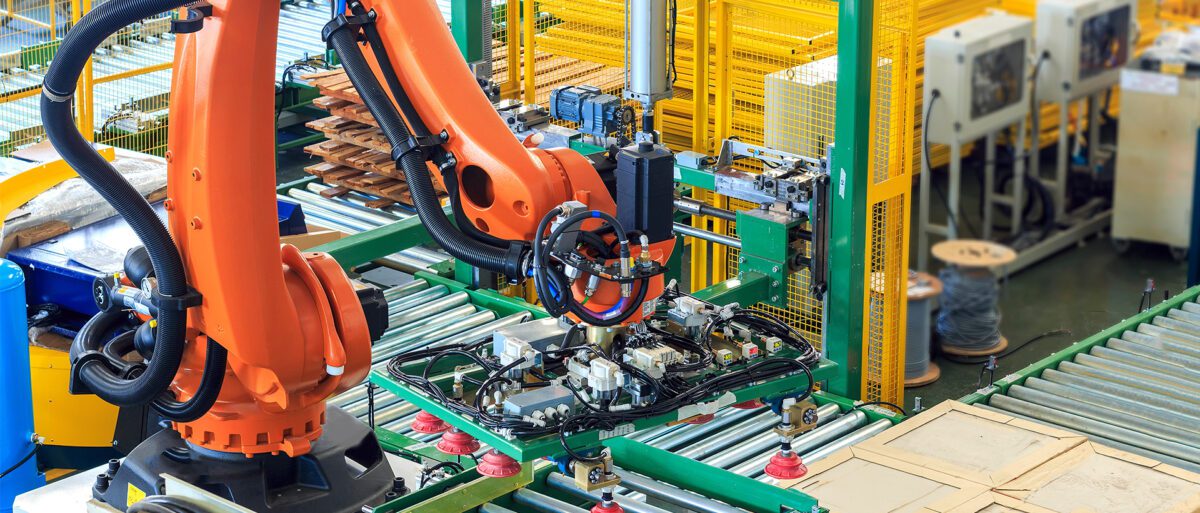
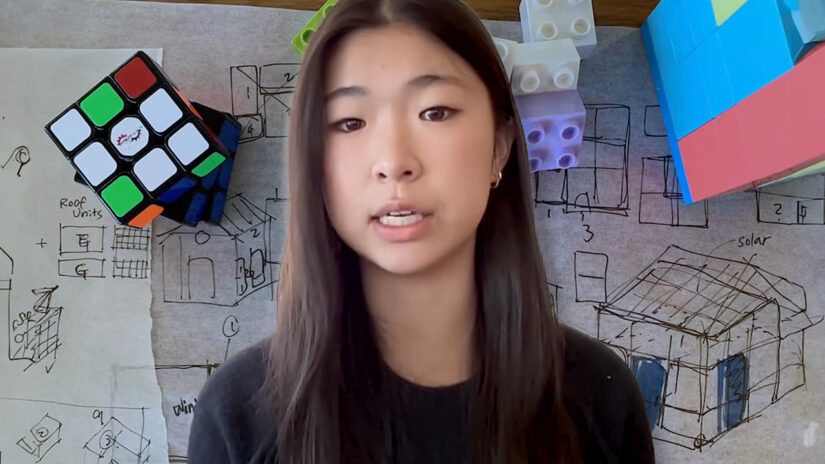
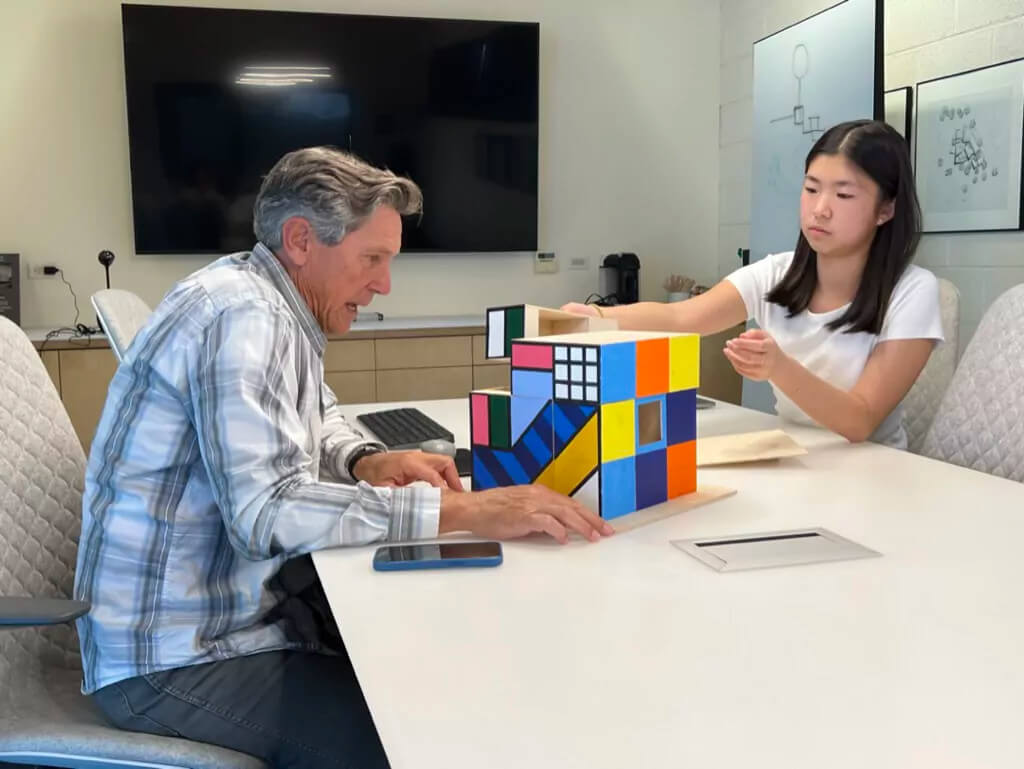
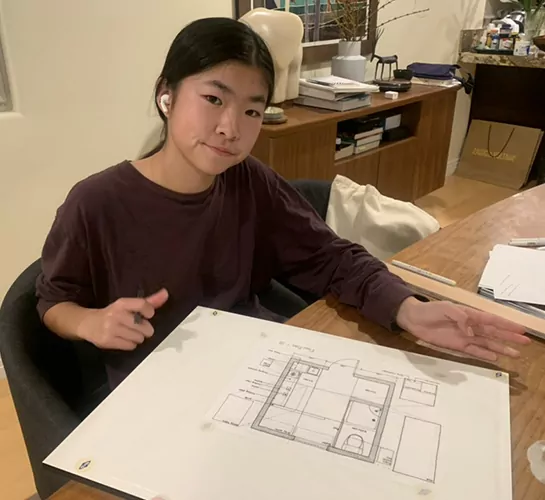
The Future of Modular Housing: Sixteen-Year-Old Renee Wang’s Rubix Design

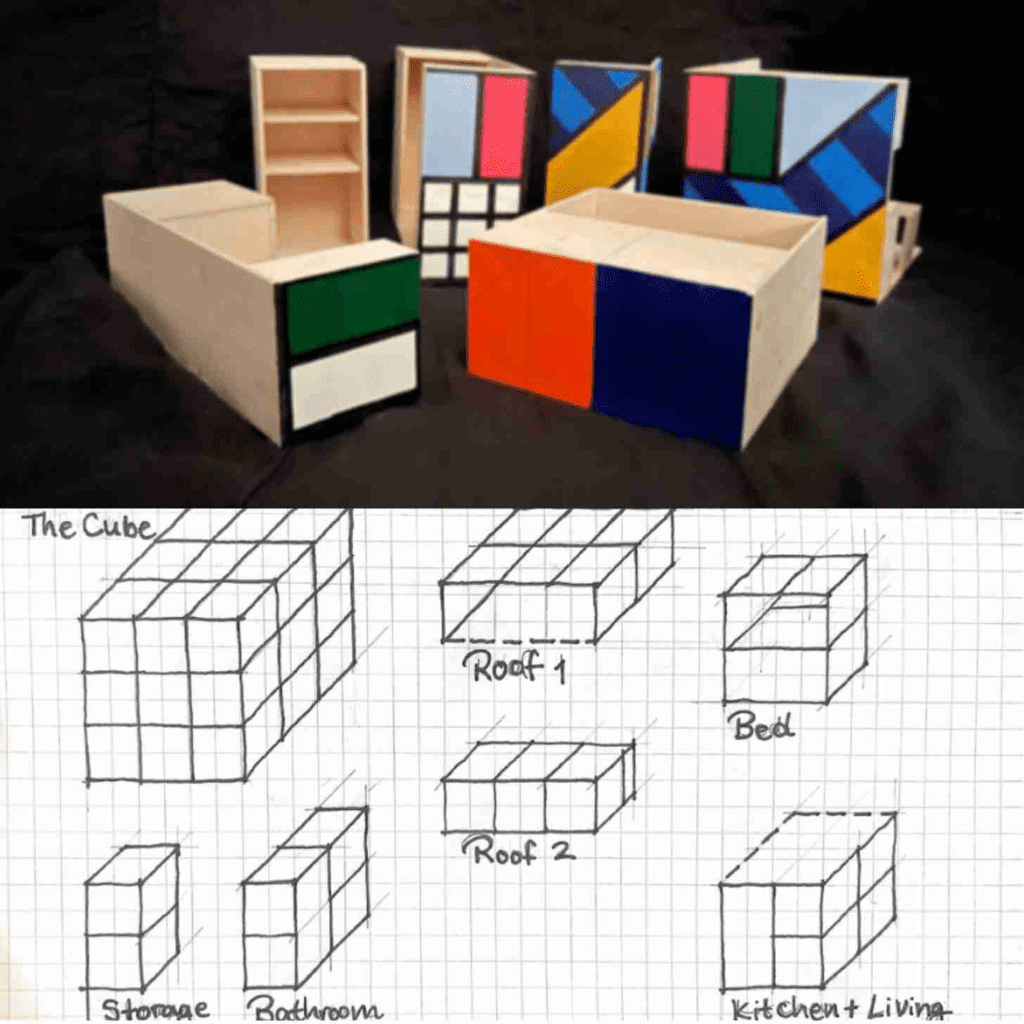
At just sixteen years old, Renee Wang is challenging the modular housing industry with an innovative concept inspired by two childhood classics: Lego bricks and the Rubik’s cube. Her creation, Rubix, is a modular home model designed for rapid, cost-effective, and efficient assembly. Unlike traditional homes, Rubix allows for flexible, stackable configurations that cater to diverse living needs, offering a glimpse into the future of affordable and scalable housing solutions.

.

A New Take on Modular Construction

Modular housing has long been hailed as a promising solution to the global housing crisis, providing a faster and often more sustainable alternative to conventional stick-built homes. Factories produce modules in a controlled environment before shipping them to a site for final assembly, reducing waste and labor costs. While modular construction has traditionally been dominated by industry veterans and large-scale manufacturers, Wang’s Rubix model introduces fresh, youthful ingenuity to the field.

.

Her design takes the core principles of modular construction—efficiency, sustainability, and adaptability—and amplifies them with a unique interlocking system. Much like Lego bricks, Rubix modules can be connected in different configurations, allowing homeowners to expand or reconfigure their living spaces over time. Whether used for single-unit tiny homes or multi-unit dwellings, Rubix introduces a level of flexibility rarely seen in modular housing.

Fast, Affordable, and Efficient

The affordability crisis in housing has left millions searching for alternative solutions. Traditional construction methods are often slow and costly, with supply chain disruptions and labor shortages exacerbating the problem. Rubix offers a potential solution by prioritizing efficiency at every stage of the building process. Its modular components are designed for easy transport and rapid on-site assembly, reducing both construction time and expenses.

.

Because of its simplicity, Rubix could also be an effective option for emergency housing or disaster relief efforts, where speed and efficiency are crucial. The ability to quickly deploy modular units to areas in need could make a significant difference in addressing temporary housing shortages.

Innovation from the Next Generation

It’s not often that a high school student makes waves in the construction industry, but Renee Wang’s approach demonstrates the power of fresh ideas. As a young innovator, she bridges the gap between technology, creativity, and real-world problem-solving. Her commitment to designing practical, sustainable housing solutions reflects a growing trend among Gen Z entrepreneurs, who are tackling global challenges with fresh perspectives and digital-age thinking.

Her work is already gaining recognition, and she has shared insights into her design process and vision on her website:

As more industry leaders take notice, it’s possible that Rubix, or a similar concept, could become a widely adopted model for the future of housing.

The Road Ahead

Modular housing continues to evolve, and projects like Rubix prove that there is still room for creativity and innovation in the industry. Whether through increased affordability, faster construction times, or sustainable design, modular homes are shaping the future of residential development. With young minds like Renee Wang leading the charge, the next wave of housing solutions may look very different from the homes we know today.

While Rubix is still in the early stages, the potential for it to disrupt the modular construction market is undeniable. If Wang’s concept gains traction, it could inspire a new generation of modular home designs, proving that innovation isn’t just for industry veterans—it’s for anyone willing to think outside the box (or in this case, inside the cube).

Are You Looking for Innovative Ideas to Help Get Your Offsite Factory Started?

If you’re looking to launch a new modular construction startup or bring an innovative product to market, you know the road ahead isn’t easy. The process is full of unknowns—how to set up production, design the right workflow, and ensure your product is both efficient and cost-effective. That’s where 4Ward Solutions Group comes in.

I’ve seen plenty of companies struggle to turn great ideas into profitable businesses because they lacked the right guidance. 4Ward Solutions Group is built to help people like you avoid the pitfalls—whether you’re setting up a factory from scratch or refining an existing process. Their Factory-In-A-Box approach means they don’t just offer advice; they provide real, actionable solutions to get your operation up and running.

Think of it like this: Instead of trying to build a house without a blueprint, you’re getting a team of experts who’ve already designed, built, and optimized dozens of factories and production lines. They take your vision and guide you step by step, from planning and sourcing materials to full-scale production.

Their team has over 250 years of combined industry experience, and it shows. Companies they’ve worked with, like ABC Millwork and Builder First Source, rave about the accuracy of their 3D design services and the strategic guidance they received. They also specialize in robotics and automation, so if you’re looking to modernize and improve efficiency, they can help you integrate cutting-edge technology into your operation.

If you’re serious about getting your startup or new product off the ground, why go through the trial and error alone? Let 4Ward Solutions Group help you fast-track your success. Reach out to them today and see how they can make your vision a reality.
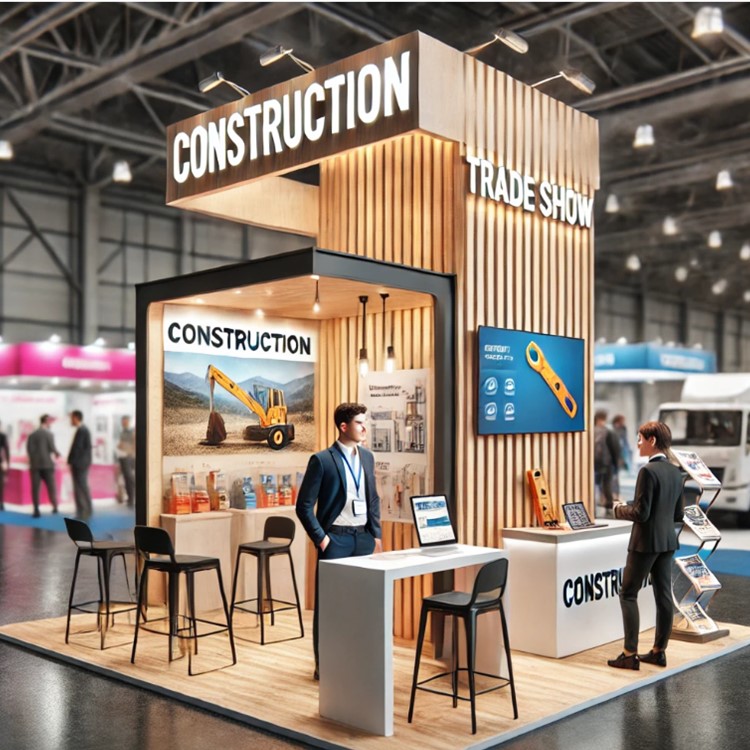
The Booth or the Buzz: Is Your Marketing Budget Better Spent at a Trade Show or on LinkedIn?

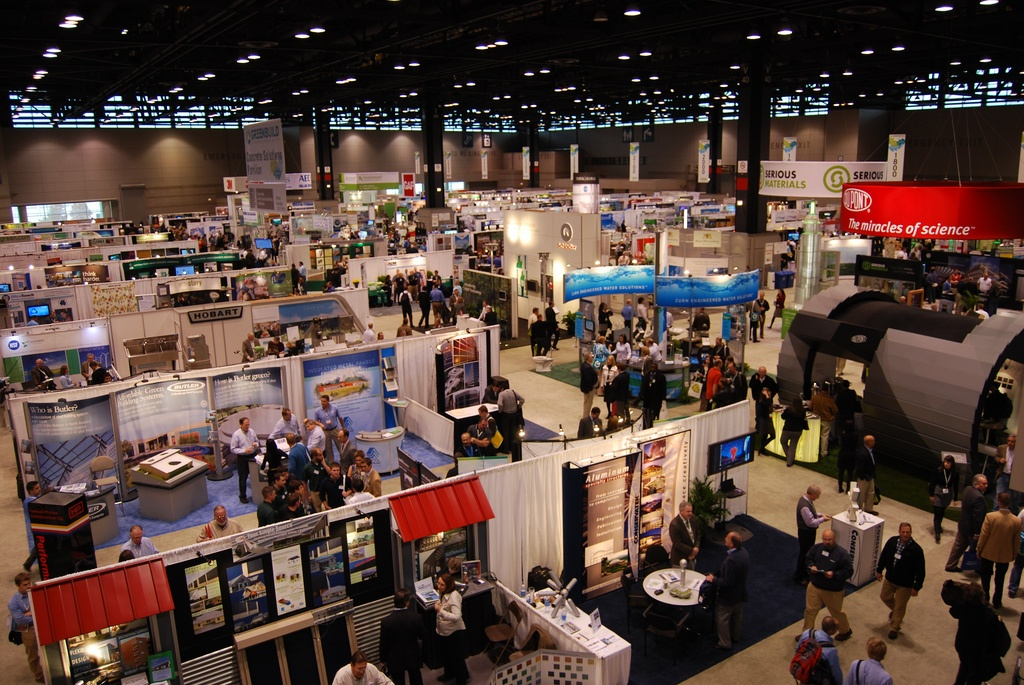
One of the best ways to meet potential B2B contacts and showcase your new product or service is by renting a booth at a large regional or national conference or convention. If you’re thinking about dipping your toes into the world of trade shows, two major events immediately come to mind: the International Builders Show (IBS) and World of Modular (WoM). These events provide an opportunity to meet industry leaders, scan attendee badges, and build your “warm call” list for post-event follow-ups.

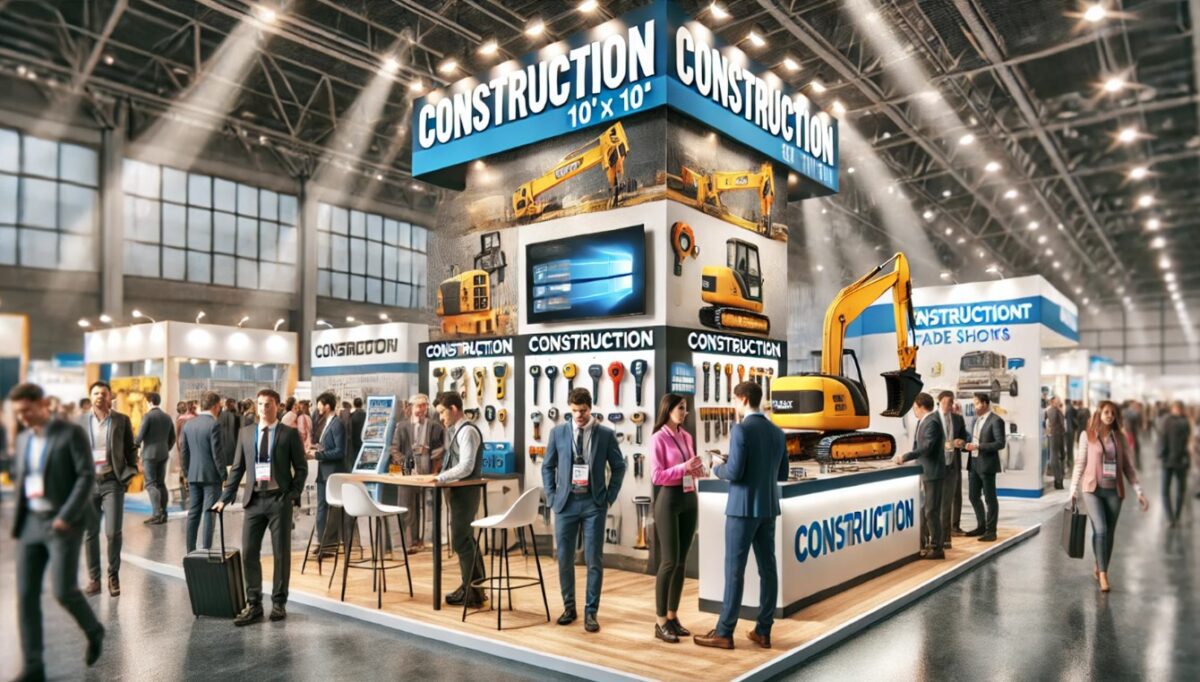
But what really happens when you’re manning that 10’ x 10’ booth? Let’s break it down.

.

Picture this: you’re standing at your shiny, well-decorated booth at IBS, ready to make connections. Someone strolls up, you scan their badge, and the fun begins. What happens next is a game of chance:

The Browsers – These attendees glance at your setup, smile politely, and walk away.

The Curious – They stop, ask a few serious questions, and might genuinely want to know how your product fits into their business.

The Challengers – These are the ones who want to test your knowledge, keeping you on your toes. We all know who they are within a couple of seconds and want to grab a baseball bat and hit them out of the park!

The Chatty – They’re not interested in your product but are happy to chat your ear off about anything and everything. They are a total waste of your time and they actually keep you from talking to true prospects.

    Every interaction is unique, but the real challenge comes after the event.

    When you’re back at the office, the booth excitement fades, replaced by the task of organizing business cards and scanned leads—sometimes thousands of them. Questions swirl:

    • Who genuinely wanted to hear from you?
    • Do you still have the right contact details?
    • How do you sift through 3,000 scanned leads to find the golden opportunities?

    Then comes the financial reckoning. You crunch the numbers and realize the cost of the booth, giveaways, travel, accommodations, and team expenses easily hit $10,000—or more. Suddenly, those free pens and fridge magnets don’t seem like the best investment.

    Here’s where things get interesting. For the same $10,000 spent on a trade show booth, you could have launched a robust LinkedIn marketing campaign. LinkedIn is the world’s top B2B social site, offering targeted ads, direct messaging, and engagement tools to connect with your audience. Unlike standing at a booth, hoping someone wanders by, LinkedIn lets you take a proactive approach, building connections and generating qualified leads in a much more cost-effective way.

    While trade shows have their place and can deliver value, it’s worth asking yourself if that investment would stretch further on LinkedIn.

    A Rare and Innovative Opportunity: The Modular Factory That Could Redefine Industry Success

    The modular construction industry has always been a magnet for visionaries and risk-takers. The allure of creating efficient, scalable, and cost-effective housing solutions is undeniable. Yet, for every factory that thrives, many falter. Industry data suggests that less than half of brand-new modular construction factories survive beyond their third year. The reasons for failure are as varied as the industry itself: poor planning, inexperienced management, and the inability to adapt to market fluctuations are chief among them. But what if there was a proven path to success—a factory with a strong management team and established systems—that was now on the market?

    .

    This isn’t just theoretical. Right now, a modular construction factory with a solid track record is up for sale, offering an unprecedented opportunity for an investor or entrepreneur to step into a turnkey operation. What makes this offering so rare, and why is it a viable option even for an inexperienced buyer? Let’s explore.

    Unlike startups or distressed factories often sold on the cheap, this factory boasts a history of operational effectiveness and employee-centric culture. Its management team has spent years refining production processes, implementing cutting-edge ERP systems, and cultivating a skilled workforce. These elements form the backbone of its success, allowing the factory to consistently meet delivery timelines, maintain quality standards, and adapt to market demands.

    “Our team has spent the last decade perfecting our operations,” says the current owner. “The systems we have in place allow us to scale production without compromising on quality. This isn’t just a factory; it’s a well-oiled machine.”

    .

    Factories that hit the market typically fall into one of two categories: new ventures in search of funding or distressed operations in need of a turnaround. Both scenarios require a high tolerance for risk and significant expertise. This factory, however, represents a third and much rarer category: a mature business with an established market presence.

    For an inexperienced buyer, the prospect of acquiring a factory with a proven track record can be intimidating. But here’s the differentiating factor: the current management team is willing to stay on board. This continuity ensures that the operational expertise and institutional knowledge that have driven the factory’s success remain intact.

    Another critical advantage lies in the factory’s sophisticated ERP (Enterprise Resource Planning) systems. These systems seamlessly integrate all facets of the operation—from design and production to inventory and delivery—allowing for real-time decision-making and efficiency gains. For an incoming owner, especially one without industry experience, these systems can provide a safety net, ensuring that the factory runs smoothly while they get up to speed.

    Could this be considered innovative? In a sense, yes. The modular construction industry rarely sees opportunities like this—a chance to acquire a mature operation without the steep learning curve typically associated with factory ownership. It’s a model that could inspire a new wave of investment in modular construction, encouraging more strategic acquisitions of operational solid factories rather than risky new ventures.

    For the right buyer, this factory represents a unique chance to make an impact in modular construction without starting from scratch. The current owner’s commitment to ensuring a smooth transition, coupled with the strong foundation already in place, sets this opportunity apart.

    “We’re looking for someone who shares our vision and commitment to excellence,” the owner explains. “This isn’t just about selling a business; it’s about passing the torch to someone who can take it to the next level.”

    For potential investors, builders, or entrepreneurs eyeing the modular construction space, this rare opportunity could be the key to success in an industry where the stakes are high but the rewards can be even higher. The combination of a strong management team, proven ERP systems, and a history of employee-centric culture makes this factory not just an acquisition but a blueprint for sustainable growth in modular construction.

    For serious inquiry response, contact Bill Murray at [email protected]