A Look at Field Applications Using Eco-Panels
Builders today are being asked to operate in a very different environment than they were even five years ago. Labor availability is inconsistent, energy codes are tightening, and buyer expectations around comfort and efficiency continue to rise. At the same time, weather events and building performance are under greater scrutiny than ever before.
What we are seeing, quietly but consistently, is a shift in how some builders are approaching the building envelope—not as a collection of materials, but as a system decision.
After reviewing a range of real-world projects using Eco-Panels—from custom homes to coastal builds and additions—a few clear patterns begin to emerge.
Speed Is No Longer Optional
One of the first things that stands out across multiple projects is speed of installation.



Panels arrive pre-cut, pre-framed, and ready to assemble. Builders are able to move more quickly from foundation to dried-in structure, reducing exposure to weather delays and compressing overall schedules.
“My framing crew was very pleased with how fast and easy the panels went up.”
(Builder comment from Eco-Panels website)
This is not simply a convenience—it directly impacts carrying costs, scheduling certainty, and jobsite efficiency.
Reducing Dependence on Skilled Labor
Another consistent takeaway is the reduced reliance on highly skilled framing labor.
Traditional construction requires multiple trades working in sequence, with field interpretation of plans and constant adjustments. What we see in these projects is a shift toward simplified assembly, where more of the work is completed in the factory and less is left to field execution.
In some cases, builders report installation times significantly shorter than traditional methods—while still improving margins.
In today’s labor environment, that is a meaningful shift. It’s not just about saving time—it’s about reducing risk tied to labor availability and variability.
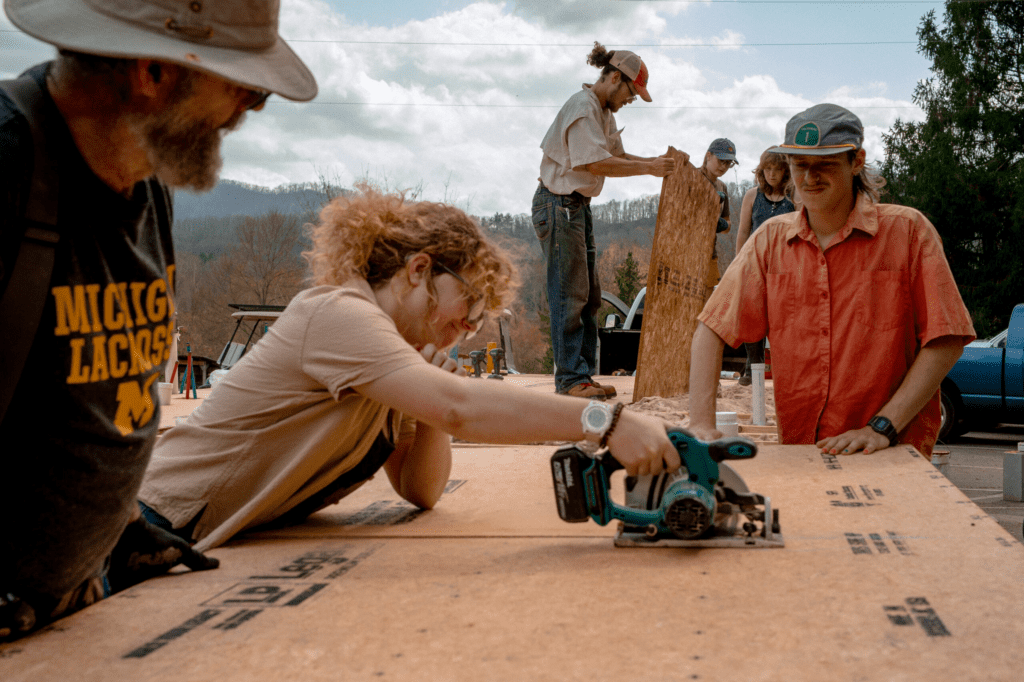
Warren Wilson College Students Complete Tiny Home for Storm-Displaced Family
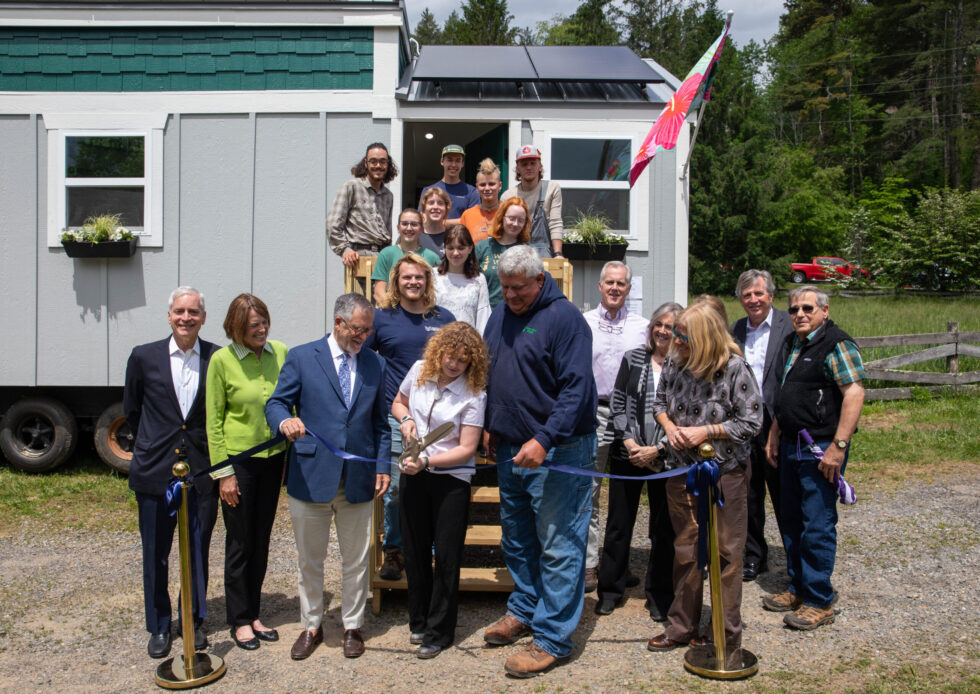
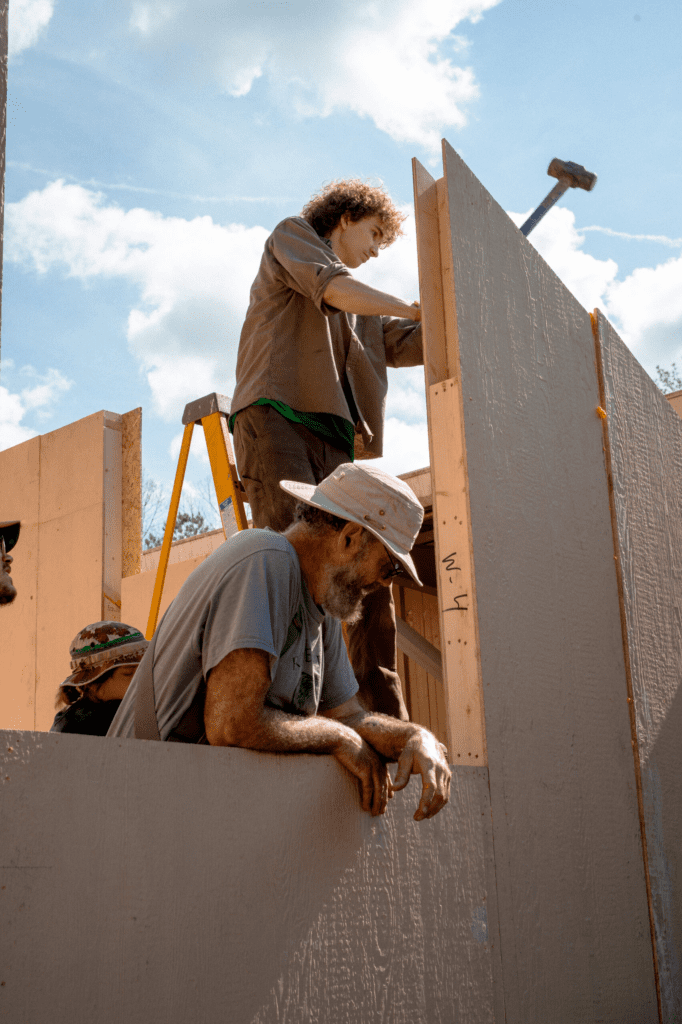
Photos – Warren Wilson College
The Envelope Is Becoming a System Decision
What’s becoming increasingly clear is that builders are starting to think differently about the building envelope.
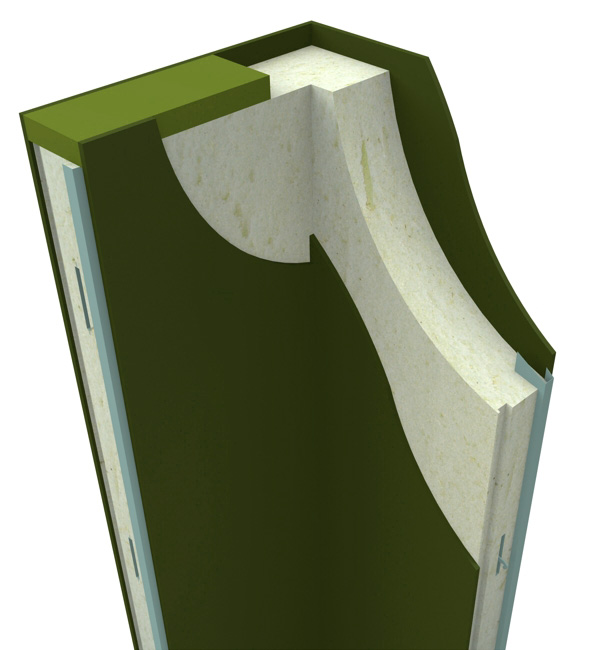
Instead of assembling walls from multiple components—framing, insulation, air sealing, and sheathing—we’re seeing a move toward integrated systems that handle these functions in a single step.
Eco-Panels, for example, combine framing and insulation into one process, reducing both the number of steps and the number of potential failure points.
This shift is less about innovation for its own sake and more about predictability—something builders are placing increasing value on.
Consistency Is Replacing Craftsmanship
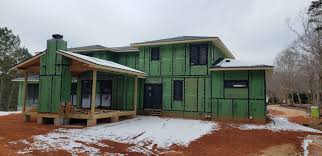
Photos across these projects tell a consistent story: clean alignments, repeatable assemblies, and fewer field adjustments.
By moving more work into the factory environment, variability is reduced. Installation becomes more consistent, and outcomes are more predictable.
In a labor-constrained environment, that consistency may be more valuable than incremental performance gains.
Planning Up Front Is Replacing Jobsite Problem Solving
Perhaps the most overlooked pattern is the shift toward upfront planning.
Builders using systems like Eco-Panels are often required to think through details earlier in the process. While that can feel unfamiliar at first, it tends to reduce downstream issues—misalignments, rework, and jobsite improvisation.
Many builders are used to managing chaos and reacting to conditions in the field. What these projects suggest is a different approach: fewer surprises, fewer corrections, and greater control over outcomes.
Bill’s Closing Perspective
None of these observations are about a single product.
They reflect a broader shift in the industry:
- Speed and schedule certainty are becoming priorities
- Labor risk is influencing construction decisions
- Builders are moving toward systems, not assemblies
- The building envelope is becoming a strategic choice, not a detail
Eco-Panels is one example of how builders are responding to these pressures.
The larger question is not whether these changes are happening.
It’s whether builders are prepared to adapt as they do.
If you’d like to explore this further, connect with me today.
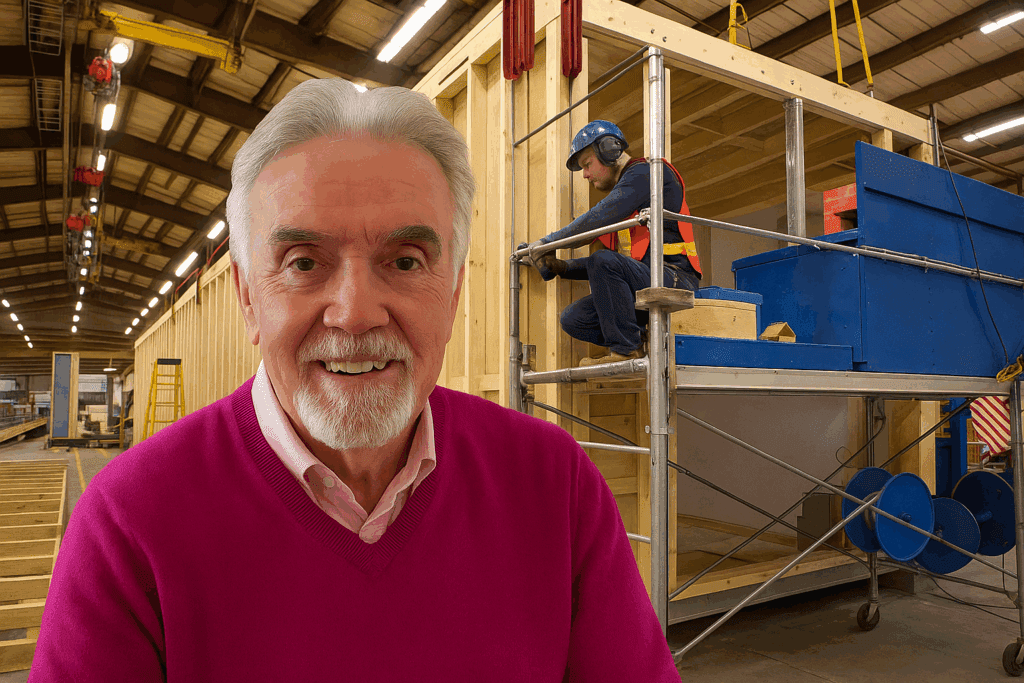
Bill Murray, Co-Founder of Offsite Innovators