Highlighting the thinkers and their ideas driving the evolution of Offsite Construction. 
Be inspired, be informed, be innovative!

Leading the Way in Sustainable Innovation: A Conversation with Rory Rubin of S.I. Container Builds

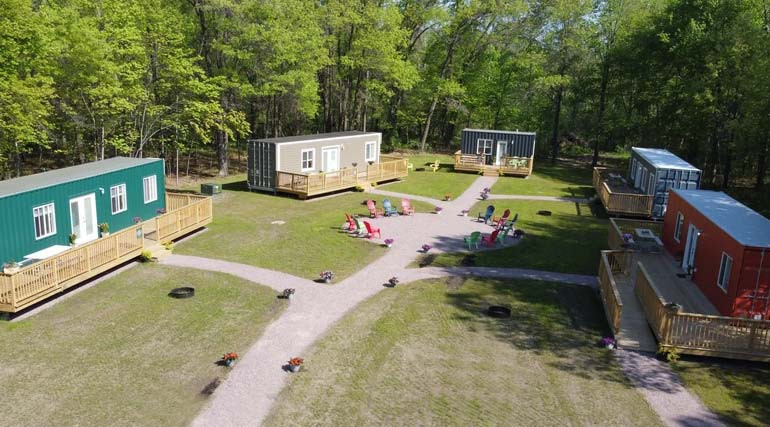
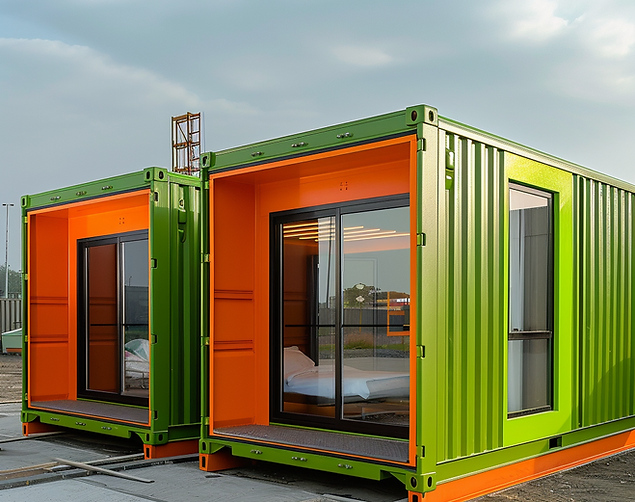
As the founder and CEO of S.I. Container Builds, Rory Rubin is at the forefront of transforming shipping containers into innovative modular solutions that go far beyond single-family homes and Auxilliary Dwelling Units (ADU). Her company’s approach exemplifies creativity and sustainability, finding versatile applications for repurposed containers in industries such as education, healthcare, and commercial spaces. 

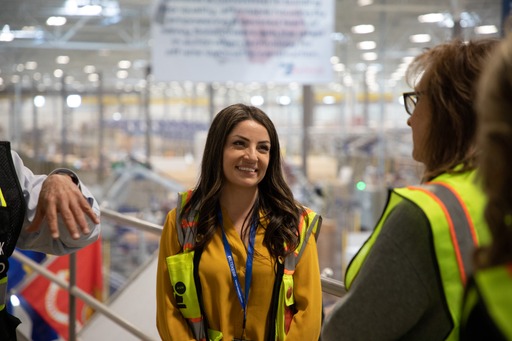
Rory Rubin, on the right talking with factory visitors

Rory Rubin’s passion for innovation and social impact is evident in the projects she leads at S.I. Container Builds. From creating safe spaces for young girls in need to developing commercial solutions for businesses, her company is changing the narrative around what can be achieved with single-use shipping containers. 

S.I. Container Builds is not just a company that repurposes shipping containers—it’s a brand driven by innovation, social responsibility, and a commitment to quality. Under Rory Rubin’s leadership, the company has pioneered new applications for container-based construction, addressing community needs while setting new standards in modular building.
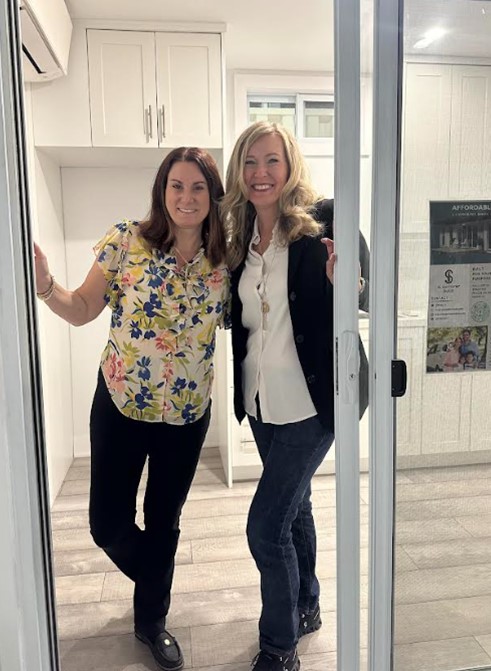
Rory Rubin, founder of S.I.Containers (left) and Audree Grubesic, founder of Offsite Dirt

In this discussion with Gary Fleisher, Rory shares insights into her work, highlights groundbreaking projects, and offers a glimpse into what’s next for S.I. Container Builds as it continues to lead the way in sustainable construction.

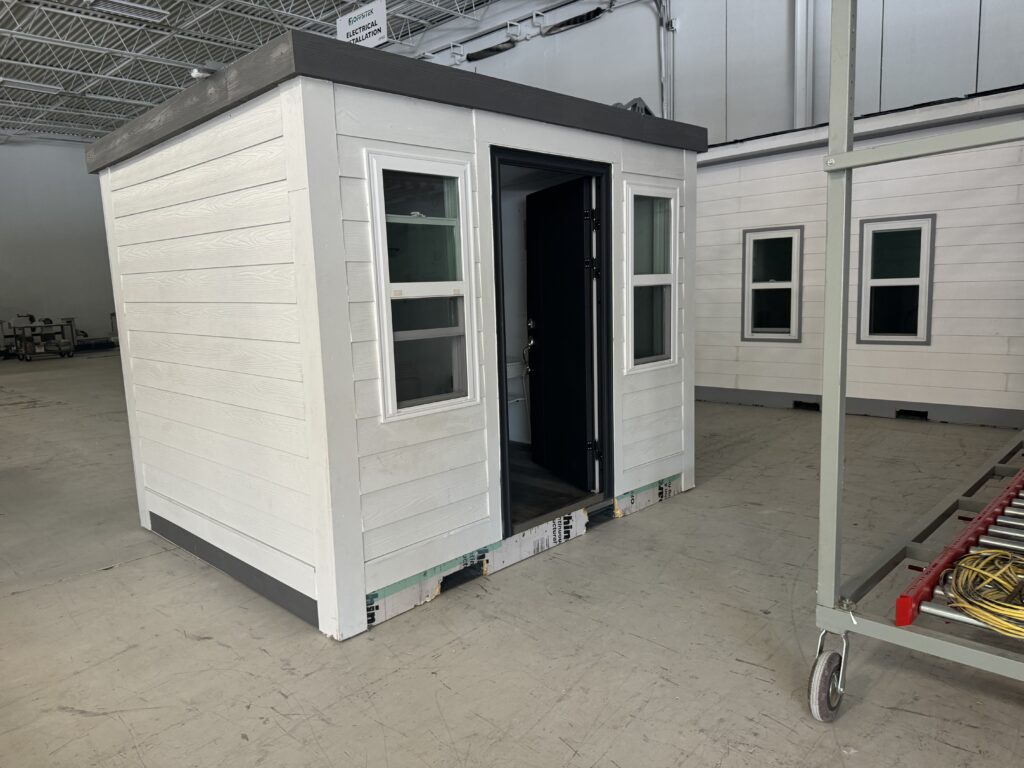
Rory Rubin, Founder/CEO S.I. Container Builds: Yes, we are driven by our passion projects.  Projects such as our collaboration with Taraji Henson’s foundation Boris L. Henson and Kate Spade NY to place wellness and therapy pods on HBCU campuses. Supporting the mental wellness of young women of color. Our collaboration with Housing Opportunity Development Corporation and Shelter Inc. to build the very first safe home for girls who have been trafficked in IL and others in the works.
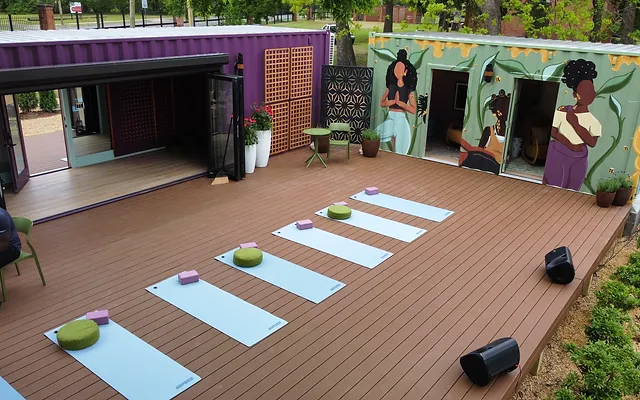
Rory: My little-known trivia is that I started as a clinical social worker. To be able to align my “first life” in the building world is not so strange.  SI Container Builds is focused on recycling a structure that will outlive our wood frame structures for causes that are truly needed—housing, commercial spaces etc.

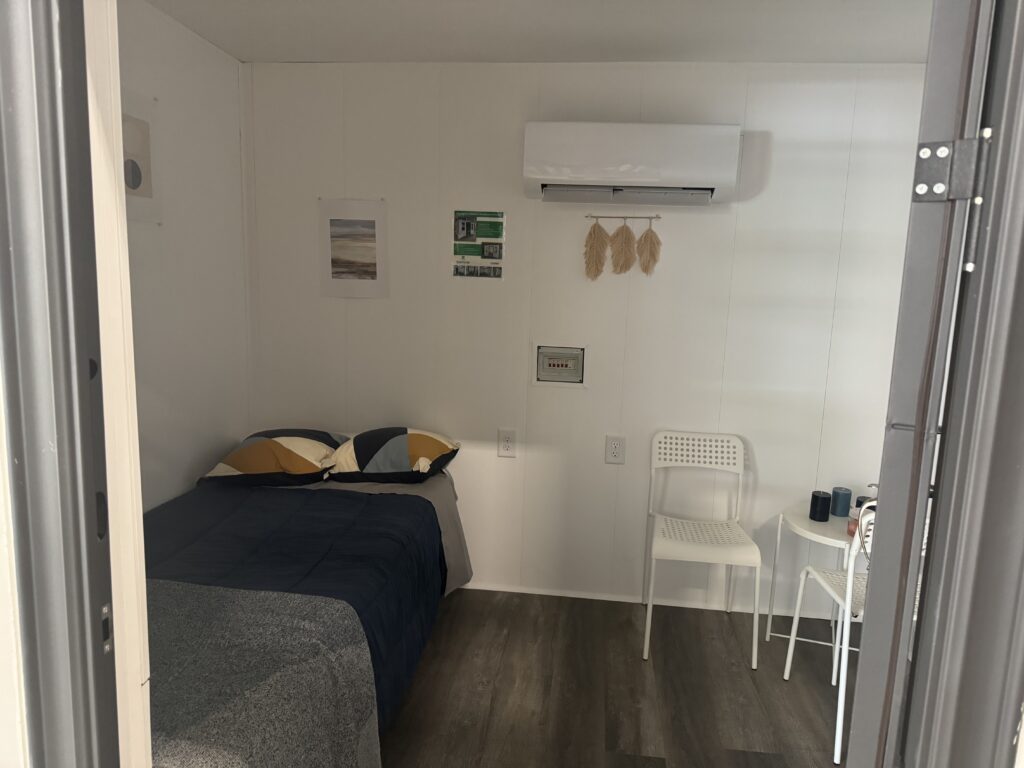
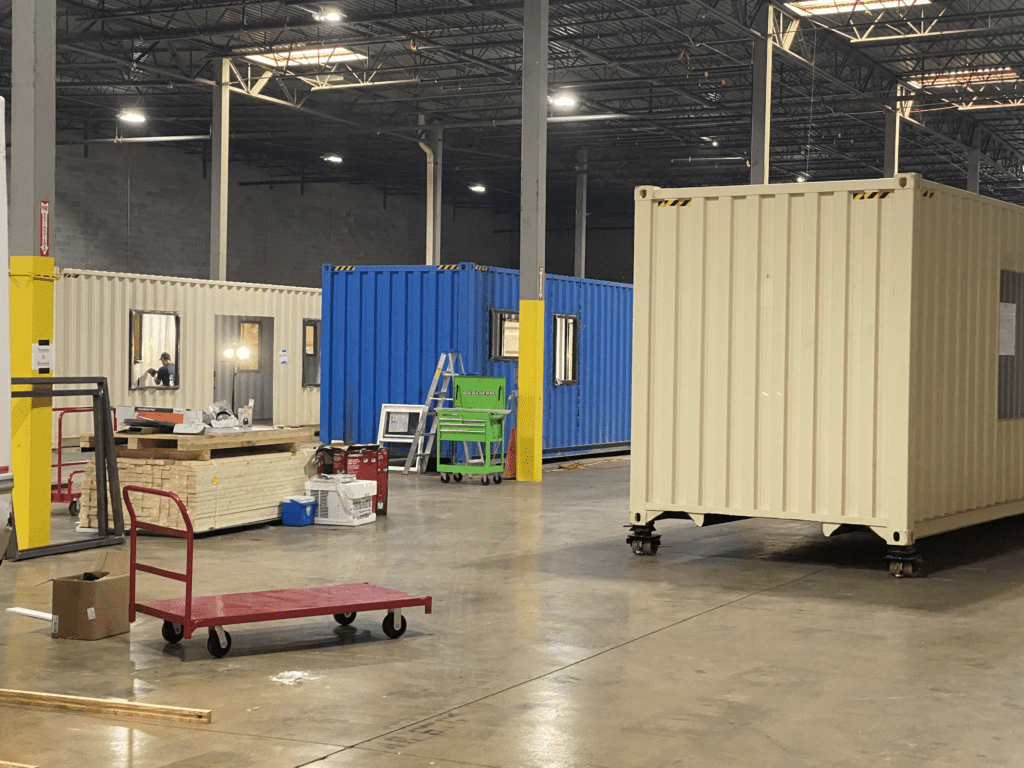
Rory: I spend 80% of my time around education.  There still is a misconception that the shipping container is a too cold or too hot –a rusty old box. We repurpose only one-tripped containers so we can guarantee their quality and what was transported in them and we strictly follow all building codes so when you enter our units you feel like you do when you enter any other home or room.  The advantage that we have is that we are working with steel.  This steel is the way we build, and engineered to far outlast other builds against things like fires, hurricanes etc. We are also licensed, certified and supervised by a third-party entity owned by the ICC.

.

Rory:   We are currently engaged in a couple of very cool local projects for Chicago, that we cannot talk about quite yet..but stay tuned!
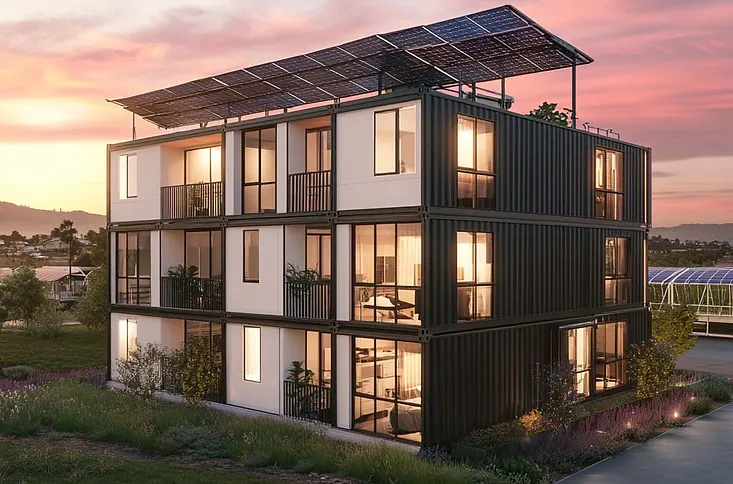
Rory:  Containers are made to stack 9+ high. We are looking at multifamily apartments because we are just so perfect in design.  It is another way for us to support the ever-growing housing crisis.
Rory: We just launched our new P3 line. They are builds made to be transported for onsite worker housing.  Now developers can own units including bedrooms and bathhouses to support workers in more remote locations. They no longer must rent out motels several hours away or rent run-down RV’s. Our units are made to fit on a trailer and be used anywhere.

Rory: I am still amazed that eco-friendly isn’t always less expensive, but we know that this is not true yet.  We at least can say we start from a place of recycling something that would just go to waste—stacked in a “container graveyard”.  We hope as we scale, we will be able to provide things like standard solar etc.  It is coming!
Rory:  Make sure not to jump too far ahead before you perfect what you can do now.  We are in such a desperate need for housing that there is room for many, many strong companies.  It is also nice to collaborate and work together so that we don’t have to reinvent the wheel.  

Gary: I want to extend my heartfelt thanks to Rory Rubin for taking the time to share her insights and experiences with us. As the founder and CEO of S.I. Container Builds, Rory is truly at the forefront of transforming the way we think about modular construction. Her passion for innovation, coupled with her commitment to social impact, is not only inspiring but also setting new benchmarks in the industry.

Through projects that range from supporting the mental wellness of young women to pioneering worker housing solutions, Rory and her team at S.I. Container Builds are proving that sustainable, container-based construction can be both versatile and impactful. It’s been a pleasure to learn more about the incredible work her company is doing, and I’m excited to see what the future holds for S.I. Container Builds as they continue to lead the charge in sustainable construction. Thank you, Rory, for your dedication to innovation and for sharing your journey with us.

CLICK HERE if you would like to be interviewed about something innovative you have designed or are currently using.

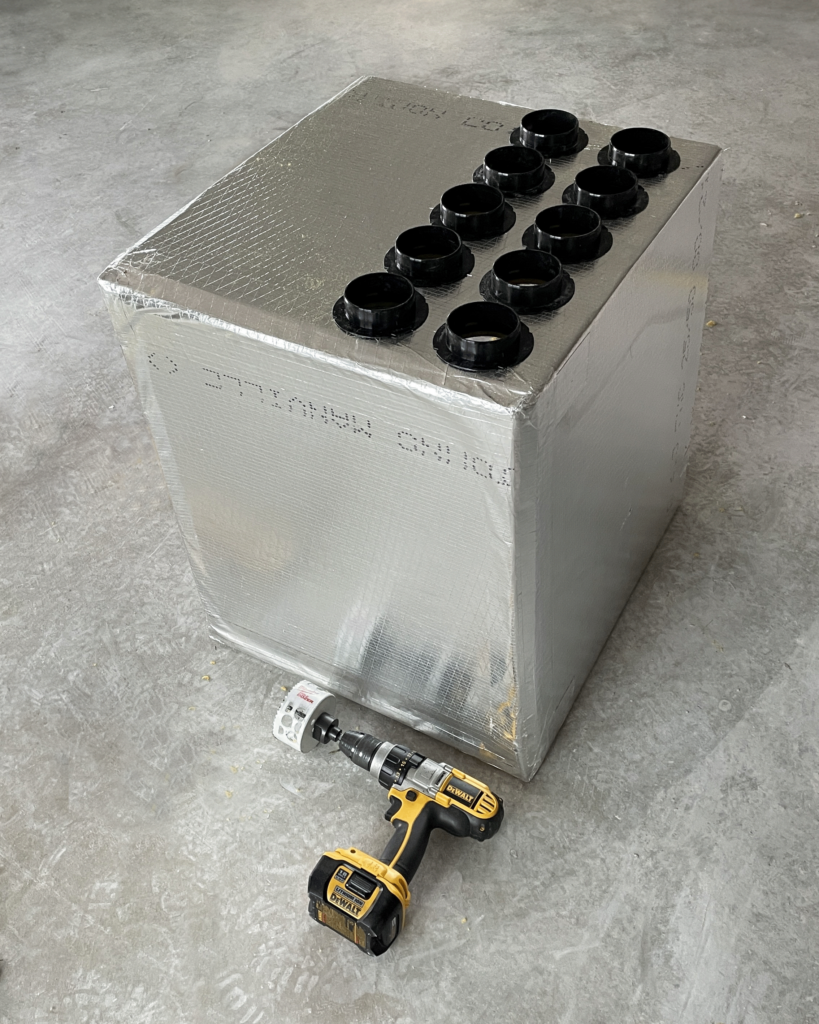
Innovative HVAC system that dramatically reduces installation labor and design constraints, while increasing efficiency.

In talking recently with an Offsite modular manufacturer I was impressed with their interest in a relatively new innovative air distribution system that appears to have many distinct advantages not only for modular manufacturers but also for site built multilevel projects. After contacting Rheia and talking with Nigel Watts VP at Rheia, their product does have all the earmarks of an innovative approach that bears further exploration.

Nigel Watts,VP Rheia HVAC Stystems: Rheia’s journey began in 2019 after nearly a decade of research, development, and rigorous testing of an innovative HVAC air distribution system designed for optimal efficiency and enhanced comfort. Backed by capital from seven of the nation’s largest homebuilders, leading industry manufacturers, and numerous individual investors, Rheia assembled a team of seasoned manufacturing, supply chain, and software development experts dedicated to redefining comfort and efficiency in homebuilding. In the spring of 2020, Rheia launched our first pilot home, marking the beginning of a new era in HVAC technology. Rheia is currently active in most major homebuilding markets in the US and is installed in over 20,000 homes in the US and Canada.

Nigel Watts: Rheia is a home-run, small-diameter air distribution system installed within the home’s conditioned space, designed to reduce energy use and improve HERS scores. The system features durable, uninsulated ducts and engineered thermoplastic fittings that quickly assemble to create sealed connections without the need for imprecise, messy duct mastic. Rheia is engineered for easy installation, boosting productivity for HVAC contractors in an industry facing labor shortages. Paired with the industry-first Rheia Verify balancing app, the system enhances thermal comfort and minimizes the costly callbacks commonly seen with conventional duct systems.

Balancing a traditional HVAC system is another headache—it’s labor-intensive, error-prone, and often leads to uneven temperatures and higher energy bills. Many systems fail to consider the home’s orientation, leading to inefficiencies that require multiple site visits, increasing costs and frustrating customers.

Rheia tackles these problems with its Verify App, a powerful tool that simplifies the complex balancing process into just 10 straightforward steps, taking only 30 to 45 minutes to complete. The app guides technicians through each stage, from verifying equipment settings to adjusting blower speeds and entering room airflows. This ensures that the system operates as intended, reducing the risk of costly errors and ensuring customer satisfaction.

In short, Rheia’s air distribution system and Verify App streamline the installation and balancing of HVAC systems, improving performance, reducing costs, and addressing labor challenges. This innovative approach ensures that HVAC systems work efficiently and effectively, leading to happier customers and more successful projects.

Nigel Watts: While solutions like conditioned attics and deeply buried ducts can help reduce heating and cooling costs, Rheia takes a more efficient approach by installing ductwork within the home’s thermal envelope. This method is faster, easier, and more cost-effective. Recent code changes, upgraded tax rebates, and energy incentives are pressuring builders to improve the energy performance of their homes.

The most cost-effective way to meet these new requirements is to move ductwork inside the home’s conditioned space. The challenge they face, however, is that it is costly to make this change. Due to the complexities of rerouting bulky, insulated ducts or creating conditioned attic spaces, Rheia’s compact system is the only cost-effective way to bring ducts into conditioned space. Beyond the financial benefits, builders can also realize improved HERS scores with this approach, improving the marketability of their homes.

Nigel Watts: The Rheia system is a highly engineered solution designed for efficiency and precision. Its high-performance components snap together seamlessly, eliminating the need for time-consuming post-operations such as air sealing after assembly. This approach is perfectly aligned with the volumetric homebuilding approach, which emphasizes a systems-based method of manufacturing that thrives on consistent, repeatable processes.

Rheia’s straightforward design allows installation crews to be trained in just minutes, a significant advantage in an industry facing skilled labor shortages. This combination of simplicity, speed, and reliability makes Rheia an ideal choice for modern homebuilding, where efficiency and consistency are paramount.

Nigel Watts: Rheia takes a hands-on approach to guide a contractor through the change management process providing on-site training and easy-access resources. We pride ourselves in our dedication to supporting contractors as they transition to Rheia.

How has your product been accepted in an industry that often resists change?  What are your plans and goals short term as well as long term?

At Rheia, LLC, we’ve observed a wide variety of reactions from builders and contractors as they encounter our system. The homebuilding industry, with its deeply ingrained practices and reliance on traditional methods, can be resistant to change. This resistance is understandable; altering established processes can disrupt workflow retraining, have the potential to impact financial results, and initially seem risky.

However, we’ve found success when partnering with companies that are open to exploring new solutions and willing to embrace the benefits that come with innovation. These forward-thinking builders and contractors recognize that while the transition may pose challenges, the long-term gains—such as improved energy efficiency, reduced installation time, and enhanced system performance—are well worth the effort.

Above all, we’ve learned that patience is essential when introducing new products to the market. Change management in this industry requires time, persistence, and a deep understanding of the challenges builders and contractors face. We are committed to working closely with our partners, providing the necessary tools, training, and support to ensure a smooth transition and, ultimately, a successful integration of Rheia’s advanced air distribution systems into their projects.

The future is bright for Rheia, and for the industry. Gradually, we are having an impact n and refining our business processes and understand of how to make change as painless as possible for our customers. Looking forward, Rheia will be expanding into new segments of the residential homebuilding market, and we have a range of exciting new products already in the works.

Bill Murray: Thanks to Nigel Watts, VP at Rheia for the introduction to an innovative approach to hvac distribution systems. In talking with several modular manufacturers they have expressed a keen interest in this system. Be innovative……check it out.

Offsite LGS panel manufacturer and Innovator, focuses on supporting GC’s and owner/developers.

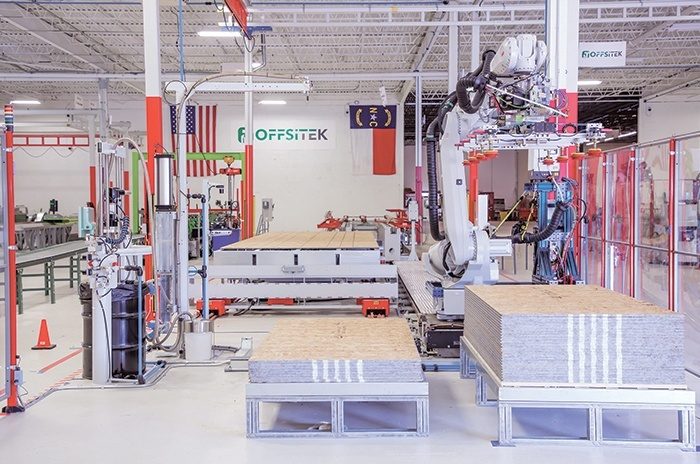
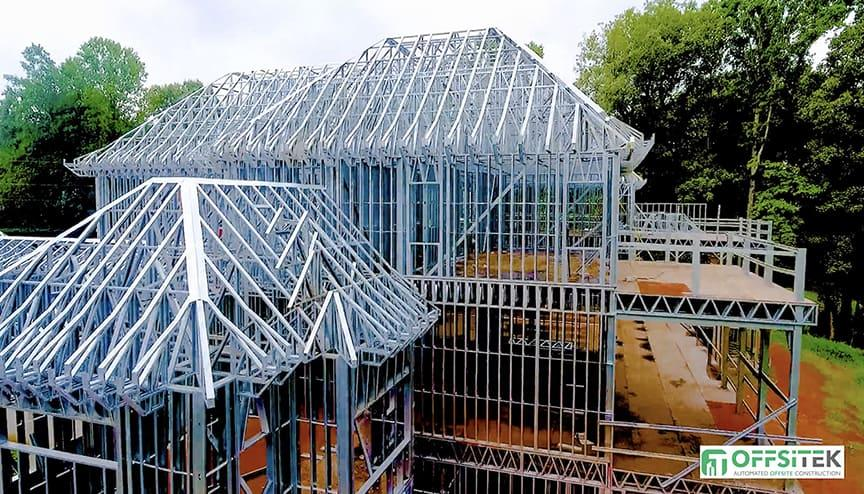
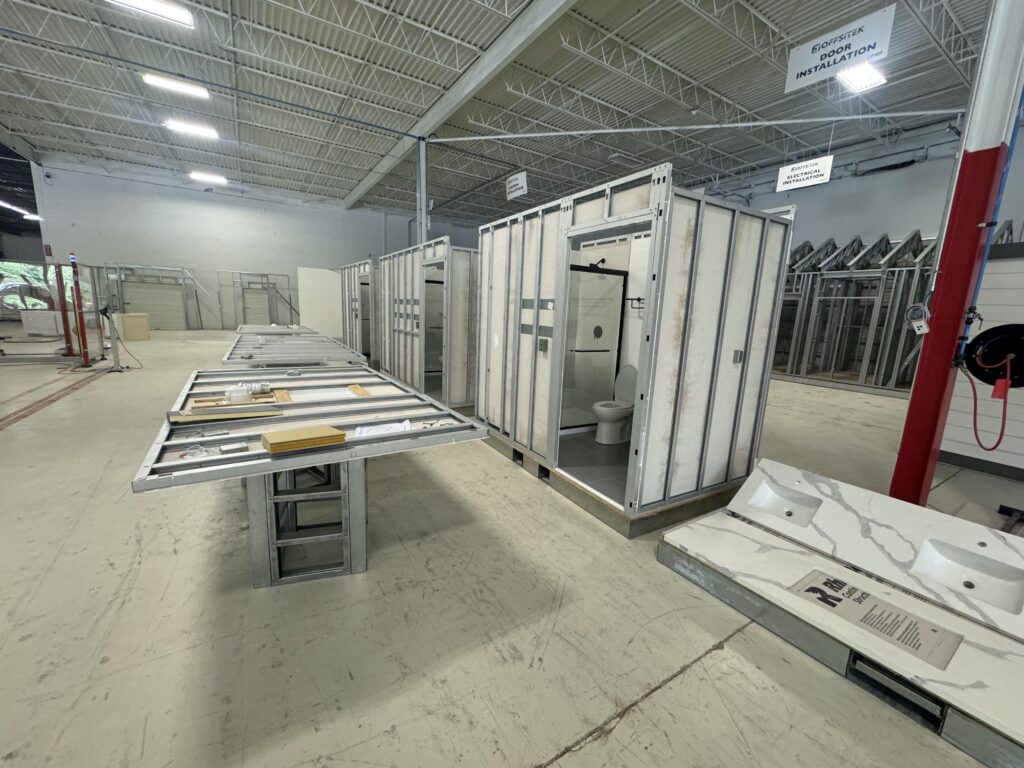
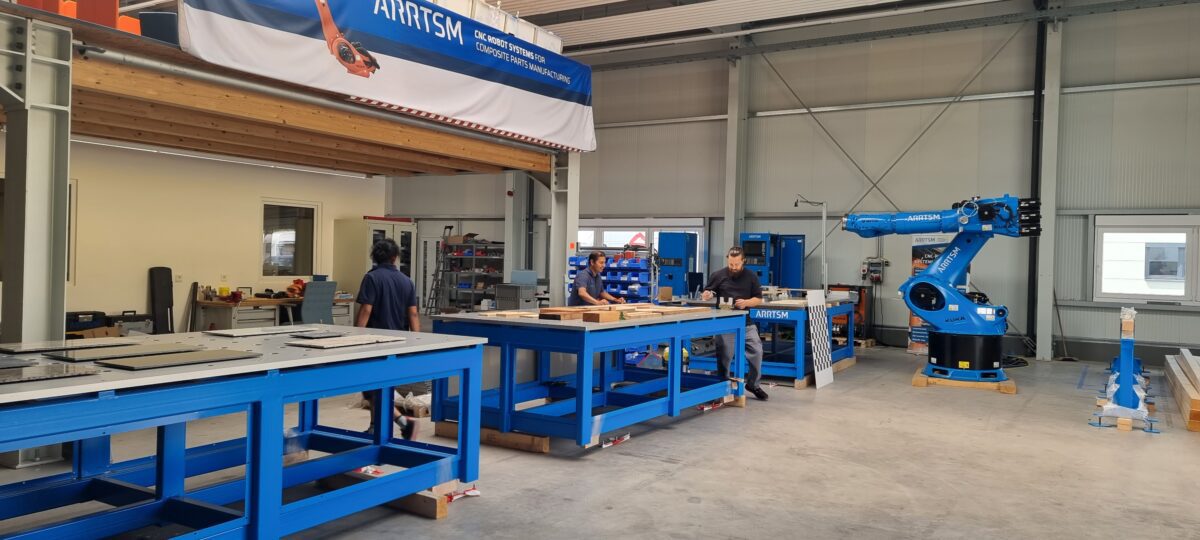
OFFSITEK is rapidly becoming a leader in automated offsite industrialized construction. Offsitek provides extensive services to support GC’s and owner developers. Their robotic based manufacturing plant produces light gauge steel framing panels, but there is so much more to their vertically integrated approach to offsite construction.

Learn more about this Charlotte, NC based company as Dwight Morgan, Chief Manufacturing Officer & Co-Founder of Offsitek, talks about the role of light gauge steel modular panels coupled with their unique marketing of complete on site support and services.

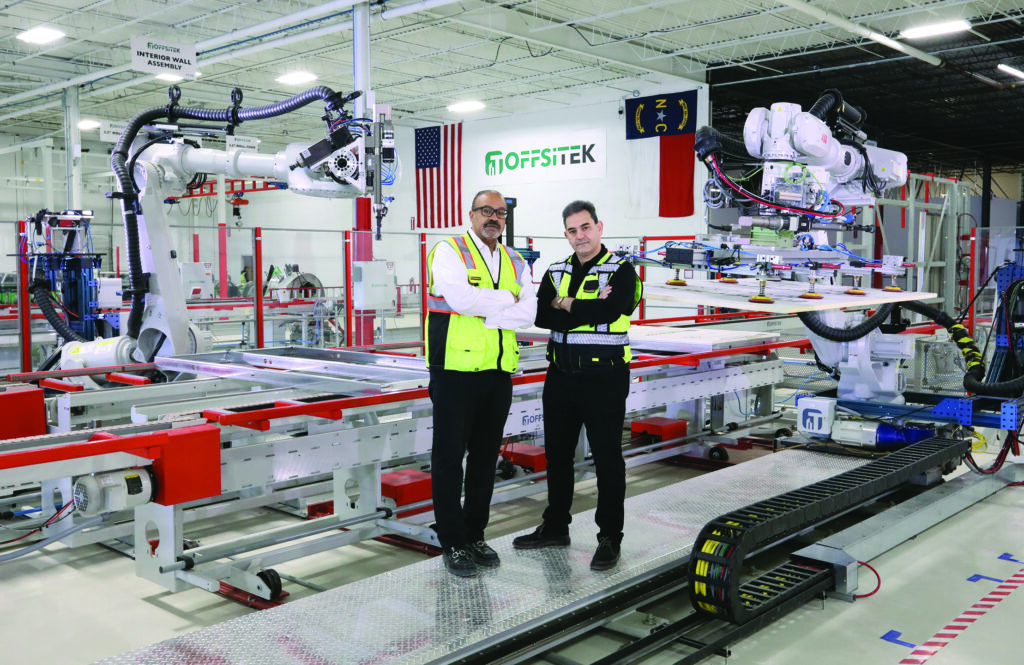
Co-founders Rick Admani (left) and Dwight Morgan (right)

Dwight thanks for taking the time to share Offsitek’s current efforts as well as your company’s plans for future expansion. Let’s talk not only about light gauge steel products but also your offerings in total support packages to GC’s and owner/developers.

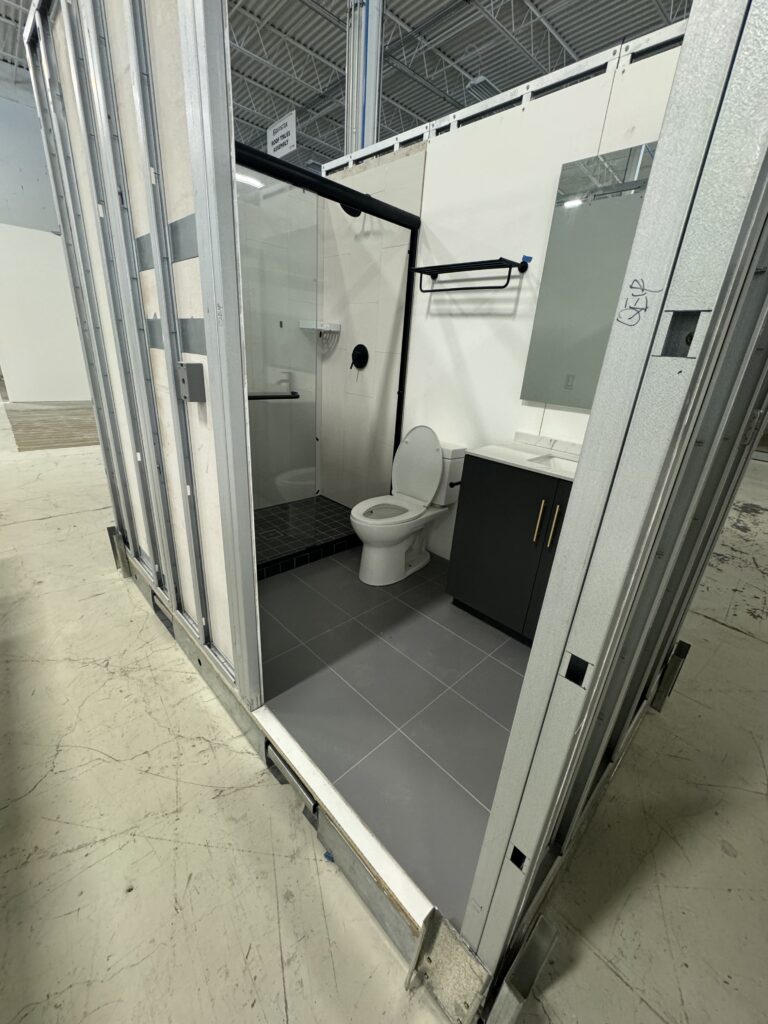
Dwight Morgan Chief Manufacturing Officer and Co-Founder : OFFSITEK is an automated, offsite, industrialized construction company. We provide light gauge steel framed panelized systems to the commercial and multi-family residential new construction market. We fabricate these lgs panels in our state of the art manufacturing facility just outside Charlotte, NC. Our fully integrated panelized systems are energy efficient, disaster-durable, sustainable, and fire resistant. We offer complete end to end solutions in addition to our manufacturing capabilities. We sell to GC’s who have their own self-perform teams to erect the panels. Our concentration is on providing wall systems, floor cassettes, stairwells, elevator shafts, bathroom, kitchen, and laundry mechanical pods. Our focus is on supporting GC’s and owners.

Dwight: The inspiration behind the formation of Offsitek was driven by two key issues: 1) the fact that the construction industry is one of the largest industries in the U.S., representing over 13% of our GDP, and 2) that the industry has a historic record of very poor productivity.

Offsitek was inspired by the stark reality that the US construction industry was underperforming and unable to meet the needs of a growing market. We were inspired by the fact that over 500,000 US citizens are homeless every night due to lack of supply of shelters and affordable housing solutions. Our challenge was to introduce prefabrication elements to make construction resemble that of modern day, industry 4.0 manufacturing.

Dwight: Our extensive research indicates that the construction industry will need almost 1 million additional workers to meet the demand for labor through 2025. Offsite construction reduces the need for skilled labor that traditional on site construction demands. Offsite construction appeals to a workforce that does not wish to move from one construction site to another, but that takes place in a controlled setting not subject to weather extremes and other variables. Other advantages include condensed predictable schedules, curtails rework and waste, dramatically increases productivity and reduces costs.

.

Dwight: Offsitek has pioneered many industry-first innovations in its pilot factory in Charlotte NC. 1) We have developed a “kit of parts’ featuring Design-Lead Architecture, 2) Digitalization of Design for Error Proofing of MEP Integration, 3) Building Science for Passive Energy Buildings 4) Automation of construction–lgs panelization of walls, floors, and roofs. 5) Prefabricated lgs volumetric bathroom and kitchen pods, 6) collaboration of workers alongside automation, 7) Adoption of steel vs wood panels and pods in multifamily, multi-level residential projects.

.

Dwight: Offsitek integrates four key computer technologies in its construction process, We combine VDC, BIM, Cad to Steel CNC machine file production and Cad to Steel Robotic Motion creation. All four systems comprise our unique “Cad-to-part prefabrication processes.

All construction projects are fully digitalized using 3D modeling. We rely upon certain systems from our technology partner, Autodesk, and upon their plug in developer partner Graitec/Stucsoft. We rely on Autodesk as well as MWF, Onyx, and ABB Robot Studio to create all digital workflows.

.

Dwight: Offsitek’s reliance upon steel framing plays a critical role in our focus on sustainability. Besides water, steel is the most recycled material on the planet. As such, our steel based framing solutions are based upon using steel, which is 98% recyclable, and in itself consists of approximately 75% recycled content in all new steel that we use in our process. Our focus on supply chain management results in decreased materials costs which contribute to making our products increasingly affordable.

Dwight: Our forward-looking 5 year outlook, known as our Next Level Strategy, is to expand the reach of our innovative process to other markets in the US. We are also in the planning phase of expanding within NC.

We have already begun in this Next Level Strategy through our recent joint venture with Visions Manufacturing of Canton, MS where our second state of the art automated prefabrication facility will open in late 2025.

.

Offsitek will be focusing on manufacturing critical building components and systems especially applicable to the volumetric manufacturers. Modular elevator shafts, modular stairwells, kitchen and bath pods, will be manufactured for delivery and integration into onsite construction processes.

Again thanks to Dwight Morgan for sharing the innovative approach to using light gauge steel manufacturing of modular panels and extensive support systems available to GC’s and owner/developers. Innovation is the key to the growth of the offsite construction industry and Offsitek exemplifies the possibilities.

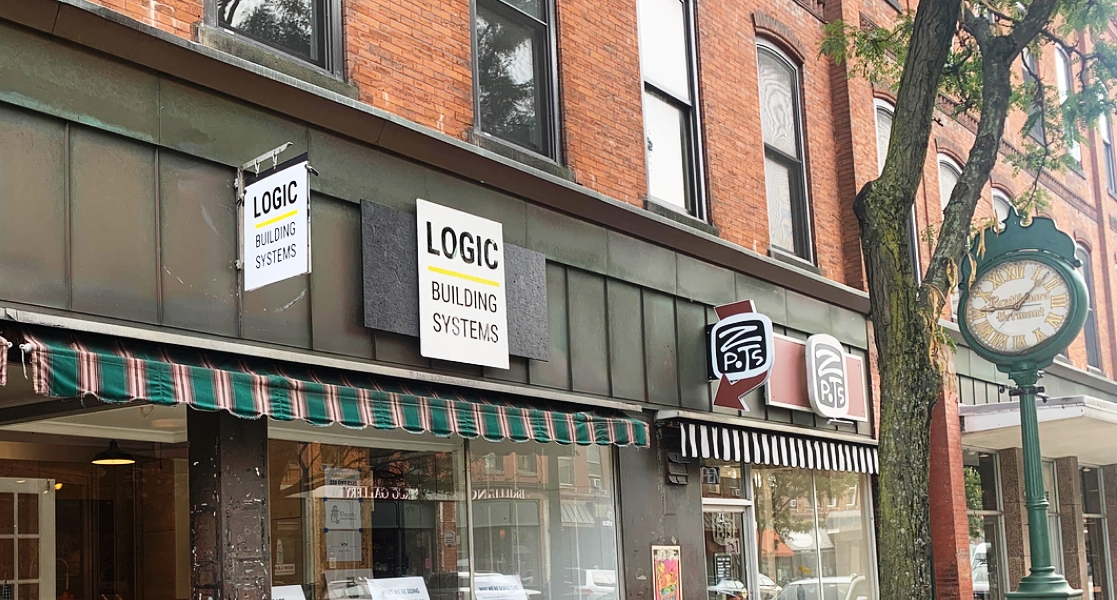
A Game-Changer in Offsite Construction: Exploring Logic Building Systems with Jason Van Nest

I traveled to beautiful New Hampshire in April to visit Jason Van Nest and his Logic Building Systems studio. I had a great conversation with Jason and learned why his new company could bring needed change to the offsite construction industry.

Jason Van Nest

When it comes to innovation in architectural design and offsite construction, few names stand out as prominently as Jason Van Nest. With a keen eye for blending cutting-edge technology with sustainable building practices, Jason has carved out a niche in the industry that’s both forward-thinking and deeply rooted in practical application. His work not only pushes the boundaries of what’s possible but also challenges conventional norms, making him a leading voice in the conversation about the future of construction.

In this interview, I delve into Jason’s innovative Logic Building Systems. From his early days of architectural exploration to his current role as a thought leader in offsite construction, Jason shares insights that are as inspiring as they are informative. Whether you’re a seasoned professional or new to the field, his perspective offers valuable takeaways for anyone interested in the evolving landscape of modern construction.

Jason Van Nest: Logic exists to commercialize years of research done at New York Tech’s Center for Offsite Construction.

I had been a consultant to the US modular industry for years, and seen smart friends and colleagues struggle to remain profitable using the techniques we call “Modular 1.0.” Unfortunately, our colleagues were forced to use a lot of “indoor construction” techniques to advance offsite construction, and the core benefits of manufacturing were still elusive.

Logic brings the practices of “Modular 2.0” to the US construction industry. We’re collaborating with the Center to introduce a standardized “coupler” that converts any dwelling unit into a home that can accept modular kitchens, bathrooms, and utility rooms. We are offer the industry’s first modules that plug-and-play with that coupler. Developers can buy a kitchen from a website, enjoy price transparency with an MSRP, and have tenants cooking dinner minutes after delivery! 

We know others will bring their own modules to interface with the standardized coupler – interoperability is the point! The US faces a worsening affordable housing crisis and evolving the industry to Modular 2.0 is how everyone can get more productive and build our way out of this challenge! 

.

Jason: In an industry where it takes an average of 23 subcontractors to deliver a home, the answer is always “collaboration.”

Here is a general industry and a company-specific challenge, there are many more we’re still working on!

The biggest general-industry challenge is the relative wariness toward offsite construction with the billion-dollar failures of Katerra, Veev, etc. Before 2021, more developers had the experimental stance of early adopters. Since then, everyone wants to be a second customer. Who can blame them?! 

Developers have grown more comfortable when they learn about Logic’s alliance-building stance — requiring us to partner, where these firms used to hire. We explain how developers can still tap all their same GCs and subs, not abandon whole project delivery models. Empowering all the customer’s own skills and relationships makes the difference.

A company-specific challenge was responding to customer’s request for price transparency. Developers are tired of bid surprises, change orders, and widening contingencies. We asked “Why cant we put an MSRP on our website, like car companies do?!” (By the way, today, every module now has one at the top of its project page.)

Again, the answer was collaboration. The products with an MSRP easily interface with other products. Early smartphones interface with power/data with a USB plug. US Toasters have a standard 3-prong cord. All today’s pod manufactures design this interface per project. We’re working with the Center to standardize an interface, which gives Logic the ability to skip most of the re-design, and offer unprecedented price transparency.

.

Jason: Logic’s core technology is working with people who are energetic, curious and engaged. Such smart people are always the engine that make innovation work, regardless of the industry.

I’m old enough to have put forward YCombinator and TechStars applications together for my teams’ software in the aughts. It look a lot of exploration to realize that software couldn’t cure the 100-year old means of production that hampers US construction.

I also hold US and international patents for construction assemblies. In design and construction, patents are easy to navigate around, and hard to enforce.

The key evolving our industry will be building company and customer relationships that make everyone more productive and profitable. 

That takes and open mind, energy to do exploratory work, and the willingness to keep showing up. 

Jason: Like good all startups, Logic started as a long feasibility study. 

It took 18 months of interviews, research, reading, and re-starts. It wasn’t enough to ask, “What is holding US offsite construction back?” We need to know the answer to, “How have other industries addressed these challenges?” to know if we were on to something.

The first Senior Research Fellows at the Center for Offsite Construction were naturally the folks who had been heavily engaged in the study. They helped found the Center, define its charter projects, and fund the open-source efforts.

In many ways, starting Logic was “step six” after all that other groundwork had matured. 

We’re finalizing Logic’s functional and manufacturing prototypes in Q3 and Q4 of 2024, simply to complete the go-to market strategy we mapped a year ago. We’re having advanced first-customer talks now. 

Logic’s goal is to drive down the cost of US affordable housing nationwide. 

In the short term, we are refining our supply chain, and module assembly processes, to quickly partner with other manufacturers and reach markets nationwide.

On the 5-10-year timescale, Logic will implement the entire scope and vision of the Center for Offsite Constructions “Modular 2.0” vision. We’ll offer interface products that empower builders with unimaginable interoperability. We’ll offer modular products that establish a new normal of price transparency. In doing so, we’ll help other modular companies offer whole product platforms, not just design services.

That effort lays the groundwork for Logic software to bring it all together. Designers will easily connect large-scale building products into a single site-specific building. Then order it with a fixed price, reliable timeline, reliable installers, and with the click of a button. 

We wake up every day to make this future happen ASAP. Anyone interested in joining the project should contact me at the Center or Logic

CLICK HERE if you would like to be interviewed about something innovative you have designed or are currently using.

The Future of Robotics – An Interview with the President of Framebotix

I am genuinely excited to have this opportunity to interview Yudhisthir Gauli, a true pioneer in the field of autonomous industrial robotics. His extensive experience, innovative mindset, and remarkable contributions to the manufacturing sector make him an inspiring figure. I look forward to learning more about his groundbreaking work at Framebotix.

Yudhisthir Gauli

Yudhisthir Gauli, the founder and President of Framebotix, is a visionary in the world of autonomous industrial robotics. With several decades of experience in manufacturing and a portfolio of multiple patents, Gauli is recognized as a trailblazer in transforming how modern factories operate. His career has been dedicated to pioneering advancements that integrate cutting-edge efficiency and innovative practices into the manufacturing process, fundamentally reshaping the industry.

As a full-blood robotic entrepreneur, Gauli’s contributions have had a profound impact on the evolution of autonomous industrial robotics. His work focuses on optimizing manufacturing environments, allowing factories to operate with unprecedented levels of precision, speed, and flexibility. By developing and implementing autonomous solutions, Gauli has enabled the manufacturing sector to leap forward, enhancing productivity while reducing costs and errors.

Under his leadership, Framebotix has become a leader in integrating robotics into manufacturing, helping companies around the world adopt state-of-the-art automated systems. Gauli’s journey, marked by his relentless pursuit of innovation, offers invaluable insights into the future of manufacturing and the role of robotics in driving the next generation of industrial efficiency.

Thanks, Yudhisthir, for talking with me about all innovative ways you are working on with robotics.

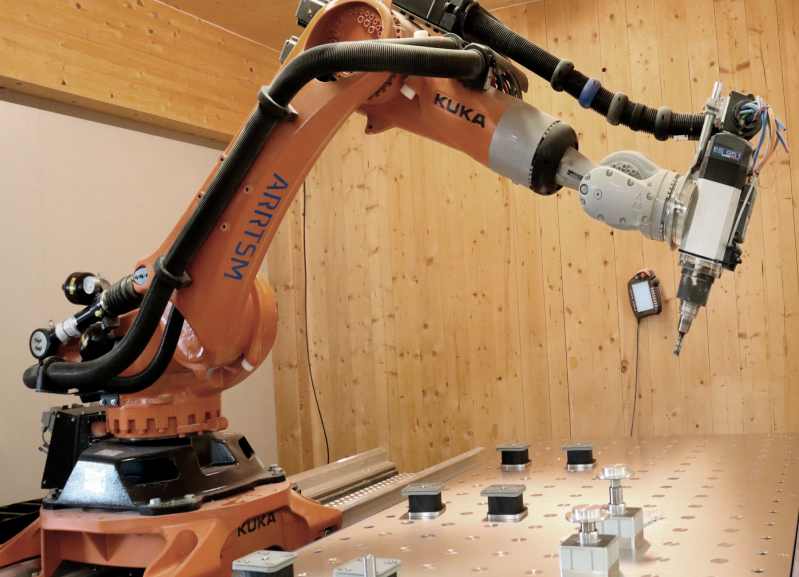
Yudhisthir Gauli, Founder/President: My journey at Framebotix as both CEO and CTO has been driven by a commitment to innovation and solving challenges in the offsite construction industry. Leveraging our decade-long experience in autonomous robots and factories, We have focused on revolutionizing home manufacturing to make custom homes both affordable and durable.

Our expertise in autonomous robotics supports various offsite applications, helping our customers achieve greater efficiency and precision. My vision has shaped Framebotix’s direction, driving us to create sustainable, high-quality manufacturing processes. By emphasizing natural materials and regional manufacturing, we’ve reduced costs, increased efficiency, and minimized environmental impact.

Yudhisthir: At Framebotix, we’re utilizing cutting-edge technologies that are revolutionizing offsite construction. Our AI-powered autonomous robots handle all machining, assembly, and handling applications, capable of operating 24/7 to reduce cycle times, lower costs, and ensure precise quality.

We also use a data-driven High-Performance Volumetric Manufacturing management system that optimizes manufacturing in real-time, minimizing downtime and ensuring every part meets exact specifications. Additionally, we incorporate advanced materials like cold-formed steel and sustainably sourced wood to create durable, eco-friendly components.

These innovations streamline manufacturing, boost efficiency, and enhance productivity, resulting in faster project turnarounds and superior quality outcomes for our clients.

Yudhisthir: At Framebotix, we’re excited to be developing our 8th generation autonomous robotic systems, which we plan to complete by the end of this year. These cutting-edge systems are designed to further enhance precision and adaptability in offsite construction, handling complex tasks like advanced machining, intricate assembly, and seamless material handling with even greater efficiency and accuracy.

One of the standout features of this new generation is the integration of AI-driven decision-making capabilities. This allows our robots to learn and adapt to various construction environments, optimizing processes in real-time and minimizing the need for manual intervention.

We believe these advancements will significantly transform the offsite construction landscape. By enabling greater customization and faster production times, our 8th generation robots will help construct high-quality, affordable homes more efficiently, while also reducing waste and environmental impact. This will move us closer to fully automated, smart construction sites, meeting the growing demand for sustainable housing.

Yudhisthir: I believe robotics and automation are set to revolutionize the offsite construction industry by dramatically improving efficiency, precision, and scalability. These technologies will streamline the entire construction process, from machining and assembly to material handling, allowing for faster production times and reduced costs. One of the most significant impacts will be the ability to produce custom homes at scale, something that has been challenging with traditional methods.

Specific challenges that robotics and automation will address most effectively include the skilled labor shortage, which has been a major bottleneck in the industry. With autonomous robots, we can maintain high productivity levels 24/7, reducing the reliance on manual labor and minimizing delays. Additionally, these technologies will greatly enhance quality control, ensuring that every component is manufactured to exact specifications, which reduces waste and rework.

Robotics and automation will also help tackle sustainability challenges by optimizing resource use and reducing carbon emissions through more efficient processes and the use of eco-friendly materials. In summary, these advancements will make offsite construction more efficient, cost-effective, and sustainable, ultimately transforming how we build homes and other structures.

Yudhisthir: Looking ahead, I see robotics igniting a revolution in offsite construction over the next decade. Rather than a gradual evolution, we are on the brink of a transformative leap where AI-driven robotic systems will redefine how we build. These robots won’t just be more autonomous—they will be capable of learning and adapting to diverse construction environments in real-time, bringing unprecedented levels of customization, speed, and precision to the industry.

This revolution will lead to fully automated, smart construction sites where robots handle nearly every aspect of the process—from design implementation to final assembly—with minimal human intervention. This shift will drastically reduce costs, enhance quality, and make sustainable practices the industry norm.

At Framebotix, we are positioning ourselves at the forefront of this revolution. Our development of 8th-generation autonomous robotic systems, set to be completed by the end of this year, is a prime example of how we’re leading the charge. These advanced systems are engineered to tackle complex tasks with even greater precision and efficiency, directly addressing critical challenges like labor shortages, cost control, and sustainability.

In addition, our forward-looking manufacturing technology, incorporating closed-loop systems and comprehensive traceability, will further revolutionize the industry. These innovations will ensure that every aspect of production is monitored, optimized, and documented, delivering unparalleled quality and accountability.

By staying ahead of technological advancements and maintaining a sharp focus on customer needs, Framebotix is poised to lead the next wave of innovation in offsite construction, helping to shape a bold and transformative future for the industry.

Contact Yudhisthir Gauli: [email protected]

Framebotix website: https://framebotix.com/

CLICK HERE if you would like to be interviewed about something innovative you have designed or are currently using.

Talking with Autovol’s Innovative Chief Culture Officer Merrick Macomber

Offsite Innovators is launching our website with a truly innovative topic and a leading innovator. Merrick Macomber, wears many hats one of which of which is Chief Culture Officer at Autovol Volumetric Modular in Nampa, ID. Her innovative approaches however transcend her work at offsite innovator Autovol.

Learn more about this Innovator as I interview Merrick Macomber. Thank you Merrick for taking the time to share.

Merrick is Chief Culture Officer, an innovative title to say the least, at Autovol Volumetric Modular in Nampa, ID.

Bill Murray: Can you share your background and how it inspired you to work in the offsite construction industry, particularly with Autovol?


Merrick Macomber: I started my modular career at another local off-site builder over a decade ago. I always knew the construction sector was a good industry where a person could put in hard work and effort and make a decent income with or without a pedigree. At the time, this innovative company was building the Yellowstone Lodges using volumetric modular methods. I found this work fascinating. During my time there, I had the opportunity to take on many different roles, from the front desk to accounting, HR, and Safety Manager. I was also their self-appointed Director of Employee Happiness. One of the Founders and COO of that company was Rick Murdock, Autovol’s Co-Founder & CEO, and Prefab Logic’s Co-Founder and Chairman. In 2015, he sold his portion of that company and moved on to what we’re doing today. On his last day, he tapped on my desk as he walked out the door and said: “Hey, Sunshine, you’re coming with me.” And the rest is history. I was there at Prefab Logic’s beginning days, helping create the brand, values, and culture they have today, and I was there at Autovol’s conception, too. I was honored to give Autovol its name, design our logo, and drive culture. I am Solutioneer number two, after Rick. I collaborated with the first eight Solutioneers to determine what we stood for, how we appeared, and what we wanted to become through our vision, mission and values. Today, we are known for being a destination employer full of proud Americans innovating in construction in ways that haven’t been seen before. It’s been an incredible journey in this space.

Bill: How would you characterize your overall philosophy with respect to a company’s culture?

Merrick: The way you feel at work can ripple out into society in a positive way. A workplace culture can actually spread more light and love to the world, helping the battle against good and evil. That might seem like a lofty philosophy on culture, but we should aim high. A good or bad culture genuinely impacts people’s lives. We spend so much time in the workplace. People should be happy and fulfilled at work and feel like they fit in as the individuals they are.

Bill: In your opinion what makes an employee (or Solutioneer) as you have named them, want to go to work every day and sometimes even Saturday and Sunday?

Merrick: The people who surround us and the purpose of their work are significant factors in a person’s desire to work. Work-life balance matters, too. At Autovol, we intentionally designed the workweek to support family life, even providing Fridays off and three-day weekends as the norm. You might be more excited to go to work knowing you will have plenty of free time to recharge. There’s “light at the end of the tunnel every week.”

Bill: What has happened innovatively at Autovol, in the realm of employee engagement, because of your focus on the crucial role of building the proper culture?

Merrick: We have a “Solutioneer Intel Form” that tells us much about each Solutioneer. That helps us get to know them and celebrate who they are from day one. Another innovation I thought turned out pretty cool was the term “Solutioneer” I came up with. It allowed everyone to have freedom of thought, expecting them to innovate as Solutioneers. It’s a term of endearment and a name that lets everyone know they are part of a pioneering, innovating, and problem-solving team. I am proud to be a Solutioneer. It’s an innovation and movement that has a high level of belonging. It also empowers everyone at the point of use to bring forward ideas that will improve the things they know better than anyone else.

Bill: What was your biggest challenge at Autovol in terms of building a culture?

Merrick: Unwinding the ingrained habits that people previously experienced in other cultures. People get trained to stay in their lane and believe in limitations or “the way it’s always been done.” We must help them not fall into their old ways and take for granted that the old ways will work at Autovol. This can include the way we do work, as well as the way we treat and talk to each other. Also, our philosophy is to help people be leaders in every role…not just management roles.

Bill: What do you think the biggest mistake(s) offsite manufacturers make in terms of their company culture?

Merrick: Most manufacturers are looking for workers. We’re looking for a family member. That means they need to meet our existing family, and our family needs to meet them. That’s why our hiring process includes three phases to give everyone a chance to ensure it’s a comfortable, enjoyable fit. Culture is not a thing you do. It’s the way all of us behave and the company’s character. You can’t just grill some hotdogs and hamburgers and call it culture. It must be nourished by being genuine and appreciating the people you work with for who they are, minute by minute and day by day. Although having a cultural leader is beneficial, maintaining the culture is not one person’s job. It’s a team sport.

Bill: What is your approach to building a company culture that is true to the company’s mission?

Merrick: Everyone must align on the mission and the values we share. There needs to be a clear and inspiring vision that will make people want to band together and be passionate and proud about their work daily.

Bill: Tell us about your other interests and efforts currently outside your role as Chief Culture Officer at Autovol.

Merrick: I’m a full-time working Mom of a sweet and smart 13-year-old girl, and we have two adorable puppies. I enjoy traveling, extreme sports, and live music. I’m engaged in the community in many ways to evangelize our industry—locally in our community and nationwide at industry events. Besides Autovol, I lead culture efforts at Prefab Logic, Waypaver International, and my culture consulting company, Modular Maven.

I spend significant time working with youth throughout our valley, with a focus on building programs for off-site construction. Throughout the school year, I give many Autovol and Prefab Logic tours to 5th -12th grade students. Doing these things to help youth and grow our industry is something I’m proud to be part of. In 2015, I founded a non-profit, Dragonflybrary, that supports mental health awareness and suicide prevention, which I’m also very passionate about. Thanks for asking! 😊

Bill: What gives you the most satisfaction as you build a company culture?

Merrick: Knowing that we can positively impact someone’s life. By doing that, we often see that making a difference can ripple through our company, but just as important, it can spread far beyond our walls. We see it every day as people visit our company and leave inspired. I genuinely believe that the only way to build our industry is to remove the stigma many people have about working in a factory environment. We do this by giving people a mission, purpose, and career path. But more than that, we are creating a repeatable climate that is so attractive that it is a model for how to be a “destination employer.” A place that people want to work in and a place where people want to stay. By doing so, I believe our growing construction sector will appeal to younger generations, who will be enticed to want to be part of the movement. It’s satisfying to be helping drive the off-site industry mainstream. It’s also satisfying to have a hand in bringing people and robots together as a team in the construction industry, and see how exciting and empowering that is for our Solutioneers.

. 😉

Bill: In a few sentences, what advice would you give to any offsite manufacturing company or even other companies in other industries?

Merrick: Open your heart and genuinely care about the people building your company. Get to know them—their hopes, dreams, desires, and struggles. Do your best to support the whole human you’ve employed. It will affect you if you’re not taking action to ensure employees are engaged and satisfied. You’ll gain a reputation for being an excellent workplace by showing genuine care for those you employ. It’s hard to put a dollar amount into that type of recruiting.

Innovation isn’t restricted to manufacturing methods and materials. As Merrick exemplifies, innovation can and must be integrated into a company’s approach to establishing their organizational health. A final thank you to Merrick for helping spread the word.

Bill Murray, co-founder of Offsite Innovators, is a 40-year veteran in the Offsite industry. His goal is to assist in the growth of the industry by presenting and sharing innovation.

CLICK HERE if you would like to be interviewed about something innovative you have designed or are currently using.

Sustainability, through the use of readily available Ponderosa Pine, redefined by Timber Age Systems

Several weeks ago I had an opportunity to learn about a panelized start-up in Durango, CO. I was immediately struck by their innovative approach to maximizing sustainability through the use of readily available underharvested Ponderosa Pine. Timber Age and their use of cross-laminated timber (CLT) which is composed of sustainable Ponderosa Pine, epitomize true sustainability.

I talked with Kyle Hanson, co-founder of Timber Age Systems about his team’s approach and work at this innovative panel manufacturer in the heart of sustainable timber country. Thank you Kyle for leading the charge on providing innovation through sustainability in Offsite manufacturing.

Kyle and Charlie. Kyle is the one on the left!

Bill Murray, Offsite Innovators: Would you summarize your current business model?

Kyle Hanson, Cofounder of Timber Age : First and foremost, Timber Age™ makes durable, attainable, high-performance homes in an off-site modular factory. The homes are produced from locally and sustainably harvested Ponderosa Pine.

Our business model leverages a local value chain and community partnerships supplying design, engineering and installation support. This focus on circular economics allows Timber Age™ the chance to address forest health, housing constraints and job creation while significantly improving the built environment in terms of embodied and operational carbon content.

Secondly, Timber Age™ is continually refining a replicable production model in preparation for widespread expansion over the coming decade. This production model prioritizes shared ownership, a short amortization of investment capital and a flexible and adaptive learning environment supplied through the Timber Age Operating System (TAOS).

.

Bill: What inspired you to found Timber Age Systems?

Kyle: After spending four years as the Business Unit Leader for a local wood products manufacturer working closely with the US Forest Service, I developed a curiosity to better understand how to create a use for the overabundance of Ponderosa Pine in our region.

In addition to unhealthy forests, many teachers of my two daughters struggled to establish stable local housing. An inability to establish an “anchored” existence in our community frequently ended in job openings. This damaging pattern of churn repeats across public servant roles resulting in instability for schools and local government.

Last, but not least, many in our community maintain seasonal and overlapping jobs in an attempt to achieve sustainable adjusted median income (AMI) levels. My background studying and implementing Lean Operating Systems to achieve world-class manufacturing operations illustrates how the creation of predictable, safe and rewarding skilled labor jobs could help create more anchored community members.

A 2018 USFS Wood Innovation Grant award catalyzed an amazing group of individuals collaborating around the key market definition and challenges. This group problem solving process eventually allowed our co-founder Andy Hawk to enter the fray as team member number two.

Most of the idea development has followed the ideas inherent in the world of Lean (Operational Excellence, TPS, etc). These themes surrounding rapid experimentation and improvement have been codified in the excellent book “The Lean Startup” by Eric Ries. Our team is continually working to clearly identify a problem and its causes and then establish an experiment where we can test a hypothesis to address the problem. When we do this in a disciplined and continuous manner, Timber Age™ gets better and we all get smarter and more connected as a team.

.

Bill: How would you describe some of the most innovative solutions Timber Age Systems has developed for offsite construction?

Kyle: Our approach to vertical integration and small scale manufacturing of Cross-Laminated Timber (CLT) seems to be a differentiating factor in the worlds of mass timber and off-site manufacturing. We don’t have a huge factory with giant cranes, and yet we create beautiful enclosures which are easily installed.

In the long-term, we believe our integrated approach to helping create housing, fulfilling jobs and healthy forests will provide a powerful model for sustainable community development around the world.

.

Bill: In what way does Timber Age prioritize sustainability in its innovative approaches to construction?

Kyle: Timber Age™ is intensely focused on both the embodied carbon and operational carbon of buildings. A key mission metric for our team is miles traveled/ pound. In this way, we can look at the many components in one of our assemblies and create a weighted average of the total waste associated with transportation. In addition, our assemblies are almost completely foam-free.

Our CLT is constructed from trees which would have otherwise released carbon dioxide into the air due to overcrowding, fire and disease.

This approach to using a carbon-sequestering structural material (CLT) combined with recycled cellulose insulation (also carbon-sequestering) means an enclosure with net-zero embodied carbon and a home with super low operational carbon emissions due to the passive house building science behind our system design.

The Timber Age™ Modular Building System (TAMBS) incorporates low-carbon materials and is designed to meet the Passive House building standard.

.

Bill: What are some of the biggest challenges you have faced in gaining an acceptance of your innovative approach both locally and regionally?

Kyle: Since the Timber Age Modular Building System (TAMBS) contains many unique innovations, our biggest challenge was proving out the ability to manufacture the system at a hyper-local scale. After proving out the system, our biggest challenge has been builder uptake of our approach. Introducing an innovative building system into a marketplace where demand for the status quo is still outstripping the capacity of local builders doesn’t incentivize builders to seek out or make time for learning a new system even if many of the builders understand and appreciate the inherent value proposition.

Matt Betts, Value Stream Manager

The world of building, much like the world of healthcare, encompasses multiple customers with varying definitions of value. We are working hard to collaborate with as many stakeholders as possible to ensure the highest level of value is created for each step off the value chain. We believe our system is easy for designers to implement, very quick and effective to install for the builders and beautiful, durable and very energy efficient to help enforce the inherent value for the end users.

.

Bill: How important are collaborations and partnerships as you seek to grow your business?

Kyle: Timber Age™ would not exist without the help of our local forest collaboratives, fellow building scientists, collaborating designers and contractors and especially the funding and support of the US Forest Service and our incredible mission-driven shareholders.

.

Bill: What are you short- and long-term goals for Timber Age Systems and what philosophy did you use in developing these?

Kyle: Short-term: Get our new interim factory running to produce our current backlog of projects and hire another ten great team members.

Long-term: Construct our new prototype factory and housing models in Mancos and then replicate this model across all viable markets to help create 1000+ fulfilling jobs and hundreds of thousands of durable, beautiful high-performance housing units around the world.

Our philosophy around planning, Hoshin Kanri, follows the teaching and examples of Toyota and other world-class companies.

Tens of thousands of acres of sustainable pine being put to use by this innovative panelizer in Durango, CO. Sustainability is more than a buzzword at Timber Age Systems, its a way of doing business and a way of life.

.

Bill: I want to thank you , Kyle, for a very insightful, behind the scenes look at what you and Timber Age Systems are currently doing and what you have planned for the future.

Bill Murray, co-founder of Offsite Innovators, is a 40-year veteran in the Offsite industry. His goal is to assist in the growth of the industry by presenting and sharing innovation.

CLICK HERE if you would like to be interviewed about something innovative you have designed or are currently using.