There are some lessons you don’t learn from books, seminars, or consultants. They come from watching someone live them out—day after day, deal after deal, success after failure. I was 30 when my father passed, before he ever got to meet my children. That’s a loss that never quite fades. But what stays with me, and grows more valuable each year, are the words he repeated to my brother and me as we grew up around his businesses.
He wasn’t a perfect businessman. Some ventures failed outright. Most did well enough to sell at just the right time. And the last one we built together—a chain of convenience stores back in the 1960s and 70s—gave me a front-row seat to how he thought, how he planned, and how he made decisions when the future wasn’t clear.
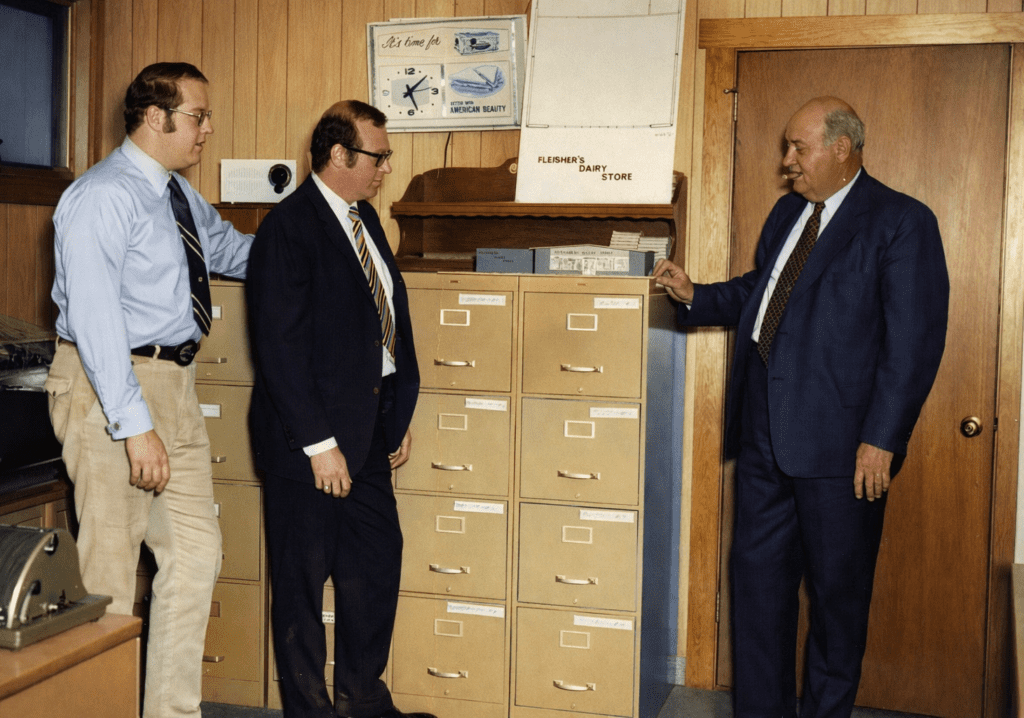
Gary (The Modcoach), my brother Neil, and my father, Harold (HB) Fleisher
Looking back now, two of his sayings feel like they were written specifically for today’s offsite construction industry.
“Don’t Build Walls Around Your Imagination”
My father said this so often that it became background noise—until I got older and realized what he really meant. He wasn’t talking about dreaming for the sake of dreaming. He was talking about refusing to limit possibilities before they even had a chance to breathe.



In offsite construction today, we see “walls” everywhere. They show up in phrases like, “That’s not how we’ve always done it,” or “Our customers wouldn’t accept that,” or my personal favorite, “We tried something like that once.”
Factories build walls when they refuse to consider new product types like ADUs, modular multifamily, or hybrid panelized systems. Developers build walls when they assume modular can’t meet design expectations. Suppliers build walls when they don’t adapt their products to factory environments.
And perhaps the biggest wall of all? The belief that innovation must be disruptive, expensive, and risky to be worthwhile.
The truth is, imagination in this industry doesn’t have to mean reinventing the wheel. Sometimes it means asking a better question. What if we redesigned our production line for flow instead of tradition? What if we partnered differently with developers? What if we trained our workforce to think like problem-solvers instead of task-completers?
The factories and companies that are quietly succeeding today aren’t always the ones with the flashiest technology. They’re the ones that refused to build walls around what could be possible.
“Planning for Tomorrow Is Failure”
That one used to confuse me. Planning for tomorrow sounds responsible, doesn’t it? But my father would shake his head and say that if you’re only planning for tomorrow, you’re already behind.
In the offsite world, “tomorrow planning” shows up as short-term thinking disguised as strategy. It’s filling the production line for the next few months without knowing what comes after. It’s reacting to labor shortages instead of building a workforce pipeline. It’s chasing whatever project comes in the door rather than defining the kind of work you want to become known for.
Planning for tomorrow keeps the lights on. But it rarely builds a future.
Planning Three Years Out Is Your Path to Success
What my father really believed was that success comes from having a clear picture of where you want to be—not next week, not next quarter, but several years down the road—and then making decisions today that move you in that direction.
For offsite factories, that kind of thinking changes everything.
It changes how you invest in equipment. Instead of asking, “Can we afford this now?” you start asking, “Will this position us where we want to be in three years?”
It changes how you approach customers. Instead of taking every project, you begin to shape a pipeline that aligns with your long-term strengths—whether that’s affordable housing, workforce housing, or high-end custom modular.
It changes how you think about people. Instead of filling positions, you start building leaders. You train for where the company is going, not just where it is.
And maybe most importantly, it changes how you handle risk. Because when you have a three-year vision, you’re less likely to panic when things don’t go exactly as planned in the short term.
The Intersection of Imagination and Planning
These two sayings—don’t build walls around your imagination, and plan three years out—aren’t separate ideas. They depend on each other.
Imagination without planning becomes scattered and unfocused. Planning without imagination becomes rigid and outdated.
But when you combine them, something powerful happens.
You begin to imagine what your factory, your company, and even the industry itself could look like three years from now. And then you reverse-engineer your decisions to make that future possible.
That’s where real progress happens. Not in reacting to today’s problems, but in building toward tomorrow’s opportunities with intention.
What I Learned Too Late to Tell Him
If I had the chance to sit down with my father today, I’d tell him that his words didn’t just stick—they evolved. They’ve taken on new meaning in an industry that’s still trying to figure out what it wants to be when it grows up.
Offsite construction has all the tools it needs to reshape housing. Faster build times. Better quality control. Safer working environments. The ability to scale.
What it struggles with isn’t capability. It’s mindset.
Too many walls. Not enough imagination. Too much focus on tomorrow. Not enough vision for what comes next.
My father never saw a modular factory. He never walked a production line or sat in on a design coordination meeting. But I have no doubt he would have recognized the same patterns he dealt with decades ago.
Because industries change. Technology changes. But the way people think about opportunity, risk, and the future? That stays remarkably consistent.
Modcoach Observation
The factories and leaders who will define the next chapter of offsite construction won’t be the ones waiting for the market to tell them what to do next. They’ll be the ones willing to tear down the invisible walls they’ve built around their own thinking and commit to a vision that stretches beyond the next project or production cycle. If you’re only planning for what’s coming through your doors today, you’re already falling behind someone who’s quietly building what their business will look like three years from now.