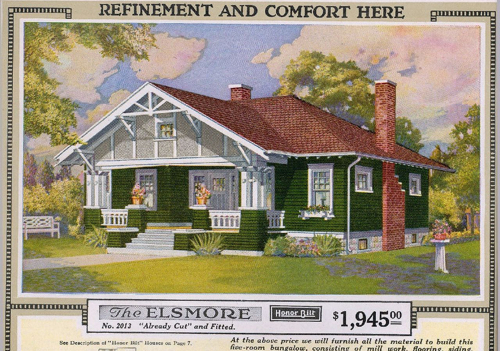
A Time Capsule from Offsite Construction’s Past Around 2005, just a few years before the housing collapse of 2008 changed the trajectory of our industry,
The first article in the “In the Beginning” series from Offsite Innovators There are moments in every industry’s history when someone proposes an idea so
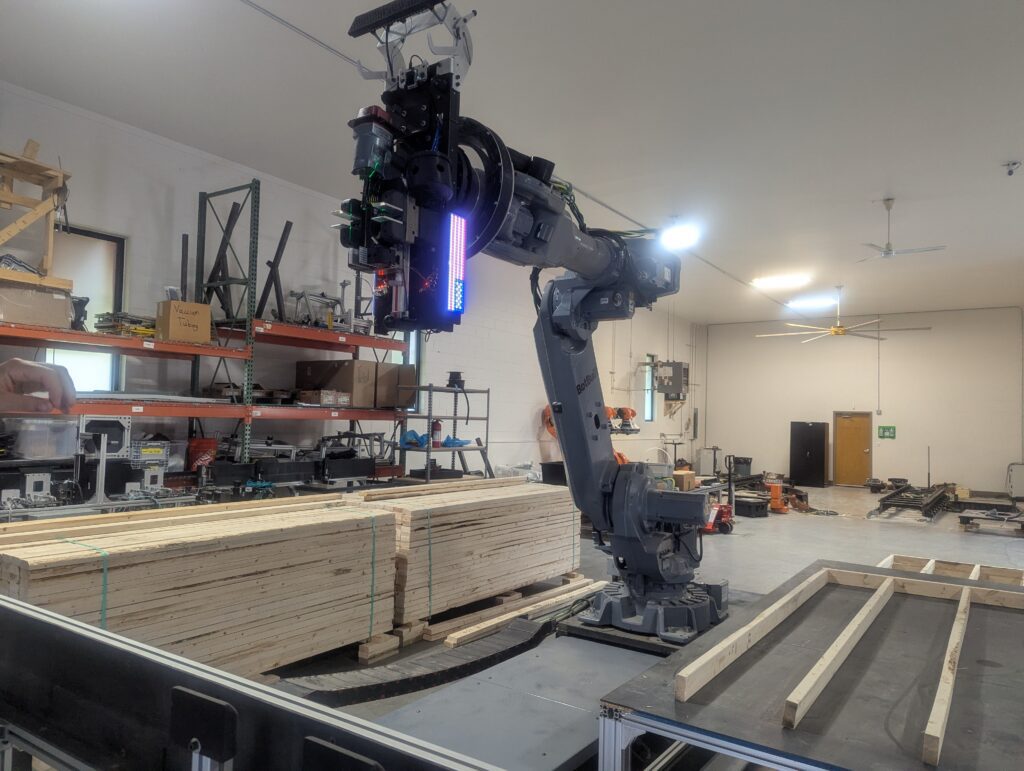
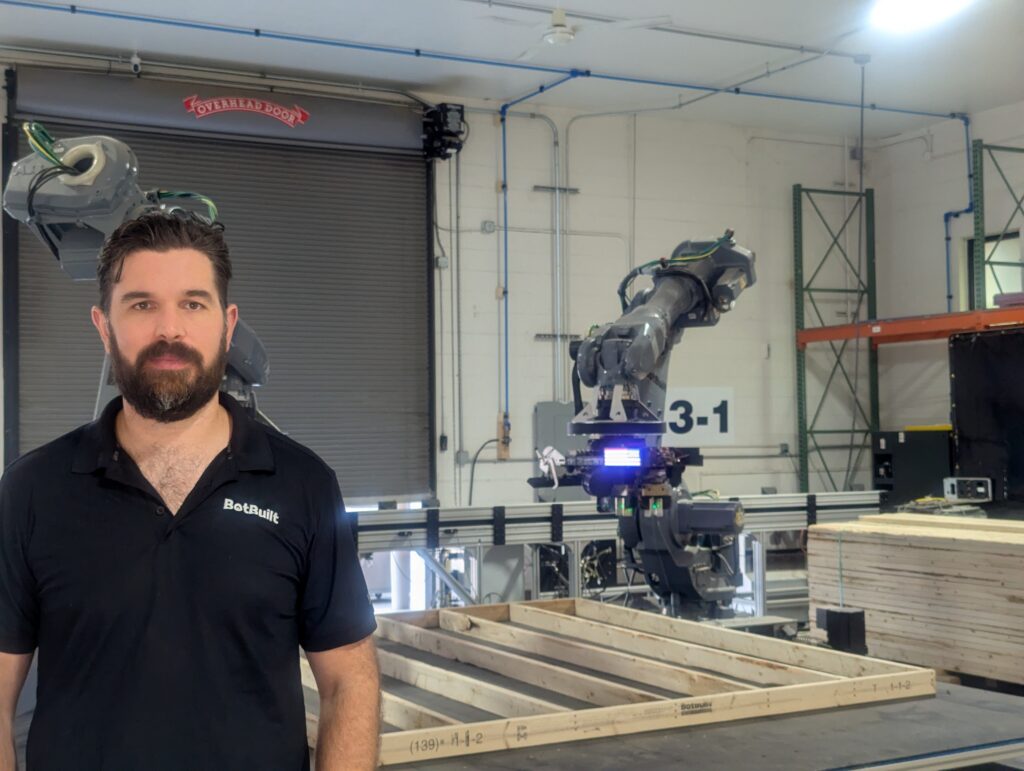
In a quiet corner of Durham, North Carolina, a small team of engineers is quietly working on something that could reshape the future of homebuilding. The company is called BotBuilt, and their mission is simple—but far from easy: use AI-powered robotics to solve one of the biggest problems in construction today—how to build more homes, faster, with fewer skilled laborers, and at a price people can actually afford.
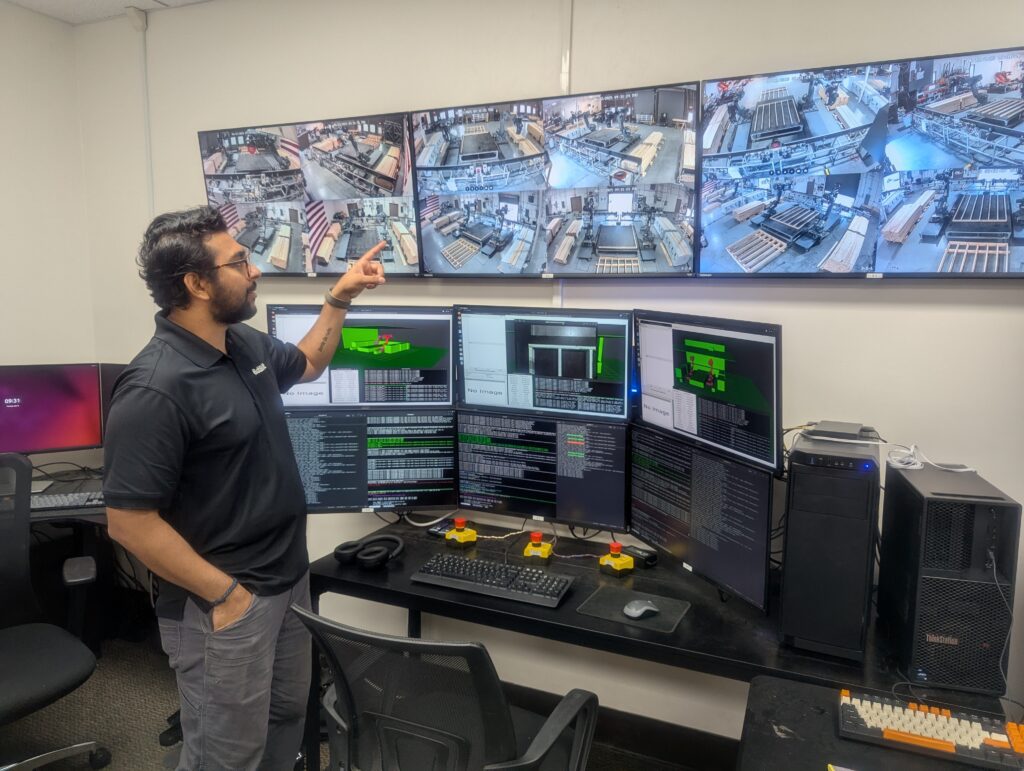
Founded in 2020 by Brent Wadas, Barrett Ames, and Colin Devine, BotBuilt sits at the intersection of advanced robotics and offsite construction. While many startups in the offsite space are tweaking existing systems or trying to reinvent the wheel, BotBuilt is doing something far more radical: it’s building a flexible, intelligent framing system that can adapt to almost any residential home design. And it’s doing it with industrial robots, AI, and a software platform that turns architectural plans into reality.
A New Kind of Framing System
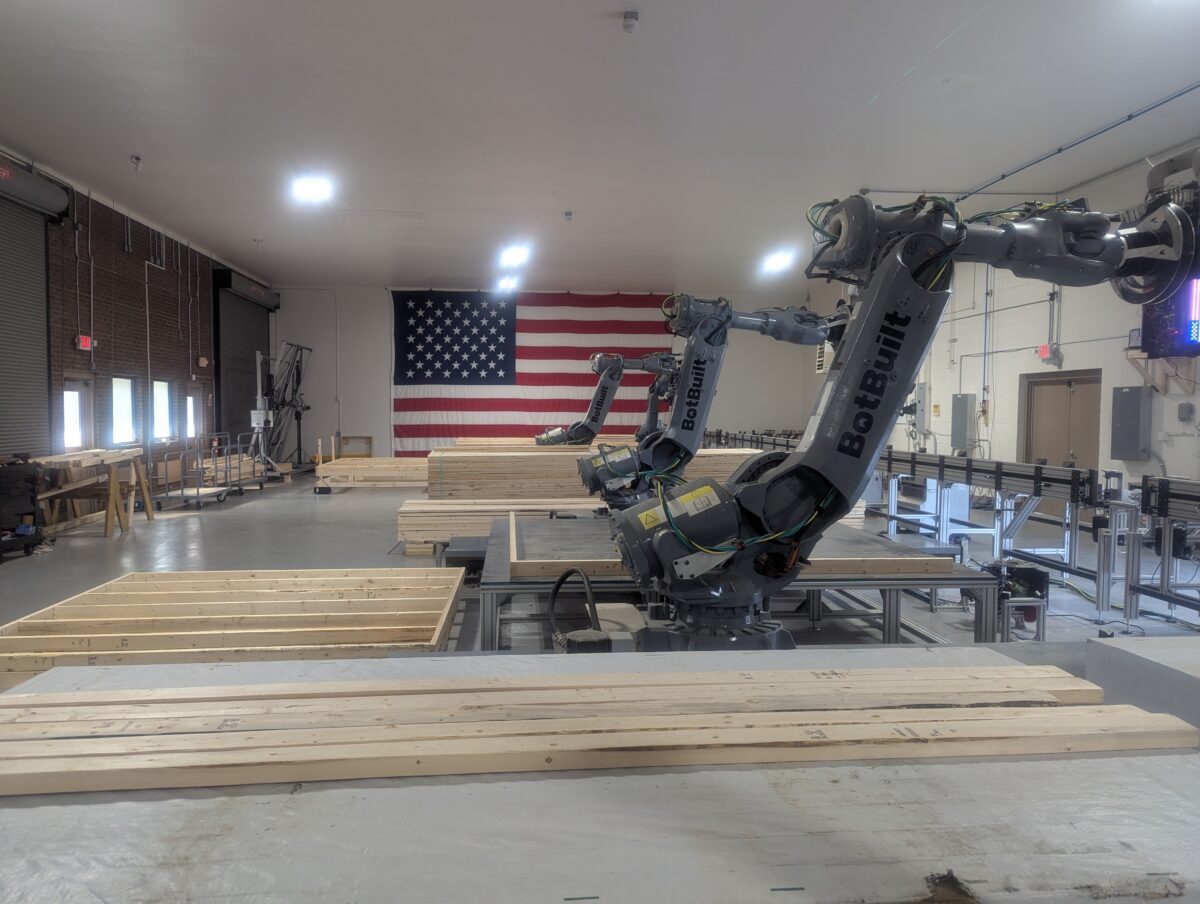
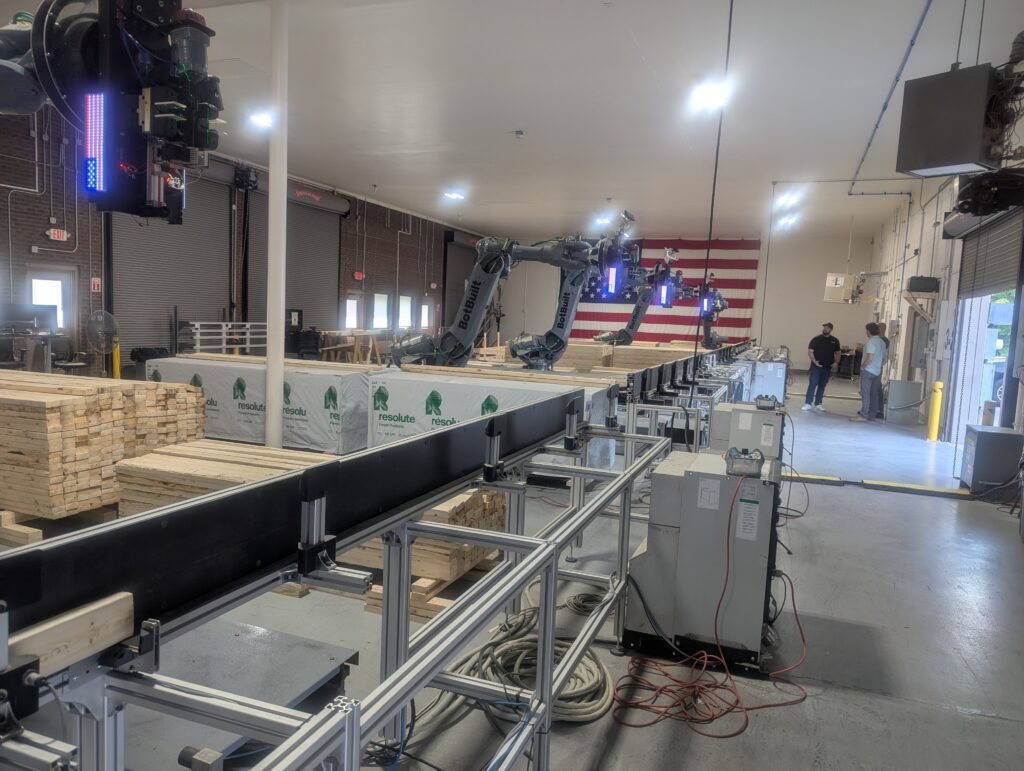
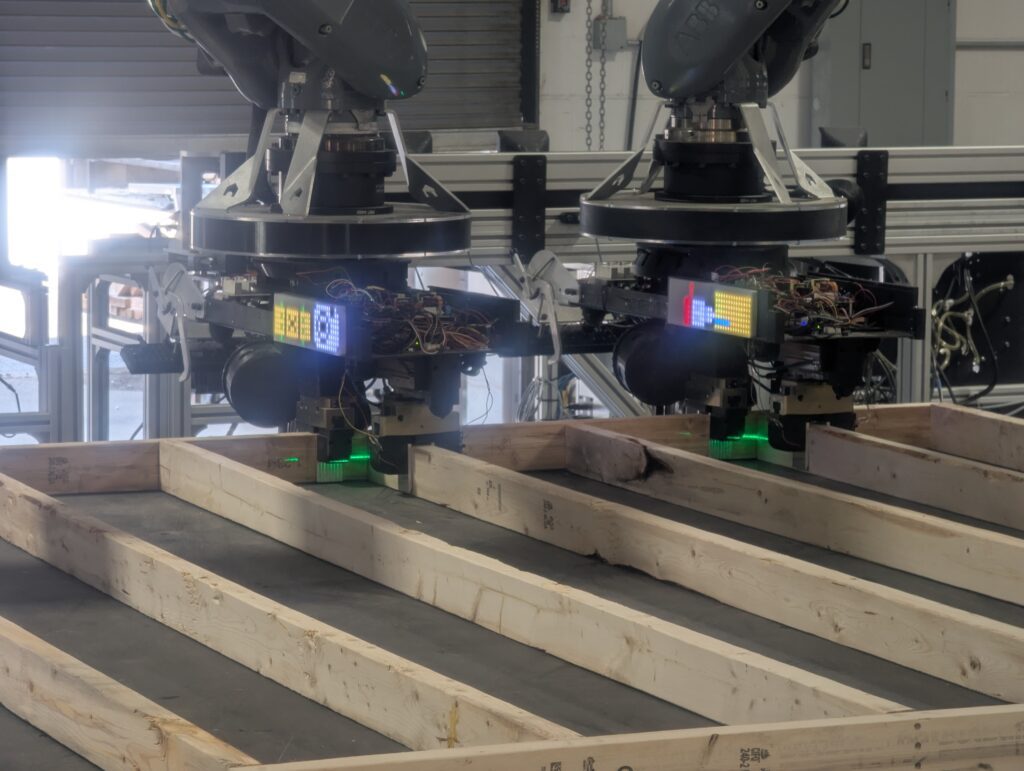
BotBuilt isn’t a component factory in the traditional sense. Builders don’t order from a catalog of panel designs—they send over their house plans. From there, BotBuilt’s software analyzes the plans, converts them into 3D models, and generates instructions for robotic arms. These robots then frame out the home’s walls, floors, and trusses with speed and precision, adapting in real time to the quirks and flaws of real-world lumber.
The company has already completed framing for forty homes and has over 2,000 homes in the pipeline through partnerships with builders. The framing components are created in BotBuilt’s Durham-area facility and shipped to job sites, where on-site crews can quickly assemble them. What would normally take weeks of manual labor can now be completed in just a few hours.
According to co-founder Brent Wadas, the key to BotBuilt’s speed and flexibility is its combination of computer vision and AI. Unlike traditional prefab systems that require perfectly milled lumber or complex, custom jigs, BotBuilt’s robots use AI to adapt to imperfections in materials. That means less waste, fewer stoppages, and significantly lower cost.
Built for Builders, Not Just Techies
At its core, BotBuilt is a service company—not a product manufacturer. Builders don’t need to change their workflow, software, or design preferences. They just send over the plans and get back ready-to-install framing systems. That’s a key difference in a world where many offsite construction technologies require the builder to adapt to the system, not the other way around.
In fact, the founders say they designed the platform specifically to accommodate the variability of the real world. Barrett Ames, one of the founders and a Duke-trained roboticist, first came up with the idea while building his own home and realizing how repetitive—and dangerously inefficient—framing could be. That insight became BotBuilt’s foundation: create a smarter way to do what framers already do, but with robots that can handle more volume, more accurately, and without calling in sick.
Funding, Factories, and the Future
BotBuilt has raised $12.4 million in seed funding from an impressive list of investors, including Y Combinator, Ambassador Supply, Owens Corning, and Shadow Ventures. With that capital, they’ve already opened two factory operations in North Carolina and are expanding their workforce. The team is still small—fewer than 20 full-time employees—but the impact they’re targeting is massive.
Their technology is built to scale. The team envisions a future where BotBuilt-powered micro-factories could exist across the U.S., serving regional markets with customized, just-in-time framing systems. They’re also in early conversations with international partners, including groups in Japan, where space and labor are even more constrained.
Perhaps most important is the promise of cost savings. Traditional framing can cost $4 to $10 per square foot and take weeks—delayed by weather, inspections, or labor shortages. BotBuilt’s system? Roughly $1 per robot-hour and immune to most of the challenges that plague traditional jobsites.
A Solution for Offsite’s Growing Pains
The offsite construction industry has spent years trying to solve its identity crisis: how to balance the scalability of manufacturing with the flexibility that developers and homeowners demand. BotBuilt might just have found a third way—combining the predictability of automation with the adaptability of software-driven design.
Joel Bell, Director
What they’re offering isn’t just a new tool; it’s a whole new framing philosophy. One that turns traditional bottlenecks into programmable tasks. One that removes friction between design and production. And one that gives offsite construction a chance to scale at a pace that meets today’s housing needs—without sacrificing quality or affordability.
As the company continues to grow, the founders say their goal isn’t to replace framers—it’s to empower builders. In a labor market where fewer young workers are entering the trades, BotBuilt’s robots don’t compete with people. They complement them, doing the hard, repetitive work so that human crews can focus on installation, coordination, and quality control.
Our Thoughts
Offsite Innovators will be keeping a close eye on BotBuilt as they continue to scale operations and refine their systems. In an industry often slow to adopt radical change, BotBuilt is a rare example of what happens when vision, technology, and construction experience collide.
If their current trajectory holds, we may one day look back on this small team in Durham as the ones who didn’t just build a robot—but built the future of offsite housing.
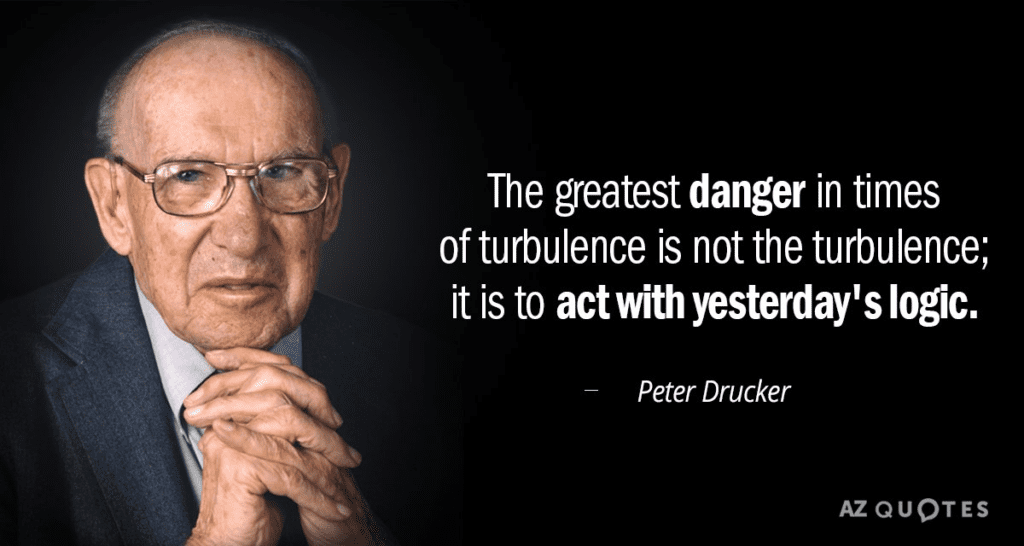
In the words of Peter Drucker, “The greatest danger in times of turbulence is not the turbulence—it is to act with yesterday’s logic.” Never has that statement rung more true than in the current crisis gripping housing markets across North America. We are living in a time of turbulence: high interest rates, construction labor shortages, bureaucratic delays, NIMBY resistance, and rising material costs. Yet the industry’s response—more of the same—shows a stubborn reliance on outdated systems and thinking that continue to fail us.
Affordable housing isn’t just a buzzword anymore—it’s become an emergency. Cities, developers, and governments agree that something must be done, yet many still try to solve the problem with the same stick-built timelines, zoning restrictions, and approval processes that helped create the crisis in the first place. The result? More reports, more meetings, and more time lost. Meanwhile, working families are being priced out, young professionals are stuck in rental limbo, and entire generations have given up hope of owning a home.
Offsite construction should be the logical answer. Faster, leaner, and more efficient, modular and panelized building methods have already proven they can deliver homes in half the time with fewer on-site delays. But entrenched thinking—yesterday’s logic—keeps this solution on the fringe. City planning offices still don’t know how to permit modular builds without confusion. Financing institutions struggle to understand how to underwrite factories instead of foundations. And builders themselves often hesitate to break from the “we’ve always done it this way” mindset, even as their backlogs grow and their profits shrink.
Here’s the hard truth: sticking with yesterday’s logic is not only slowing down innovation, it’s costing us lives and livelihoods. Homelessness is rising, housing starts are down, and the industry’s skilled labor force is aging out faster than we can replace them. What worked in 1995 doesn’t work in 2025. Drucker’s warning wasn’t about change being dangerous—it was about failing to change when the world demands it.
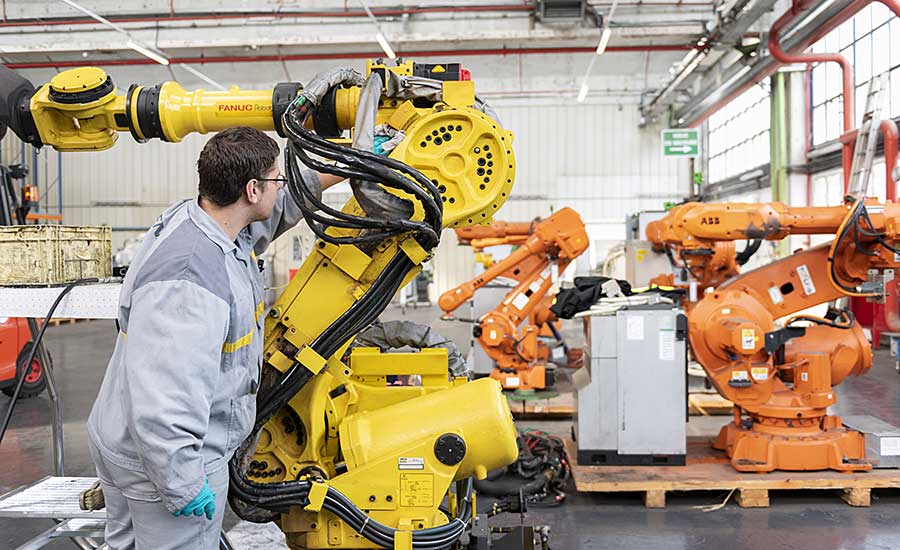
So what’s next? Embracing today’s logic means training tomorrow’s workforce in factories instead of on scaffolding. It means designing homes for precision manufacturing, not field improvisation. It means aligning public policy with industrialized construction methods, allowing offsite factories to compete on a level playing field. And most of all, it means leaders at every level—from city halls to construction firms—need to stop romanticizing traditional building and start thinking like innovators.
The turbulence is here, and it’s not going away anytime soon. But as Drucker reminds us, turbulence alone doesn’t sink a ship—refusing to change course does.
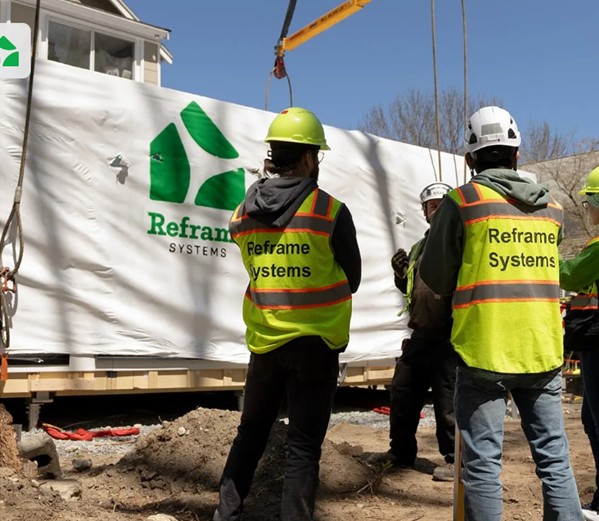
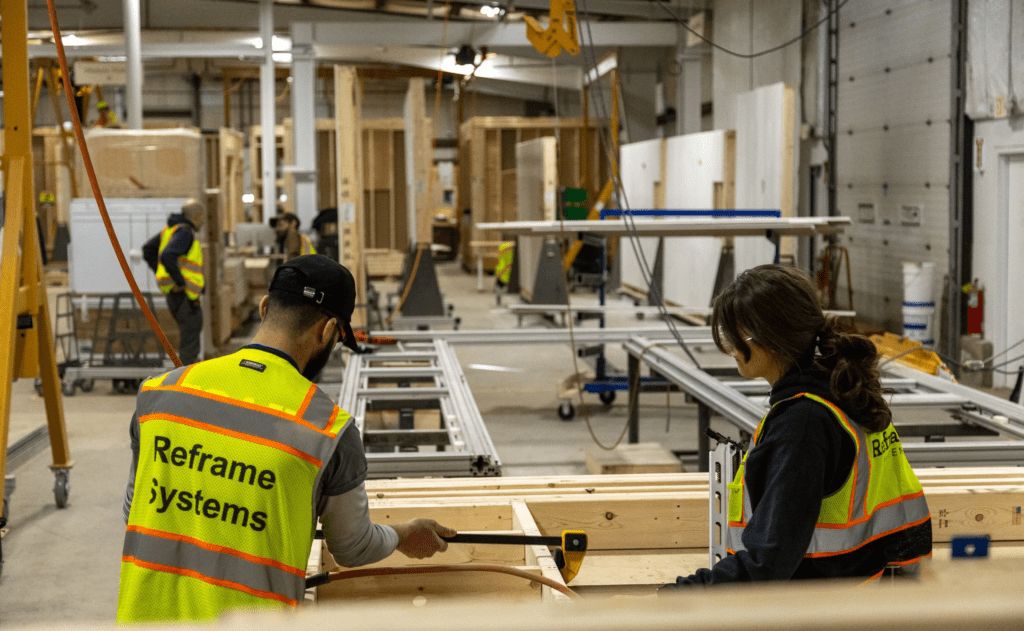
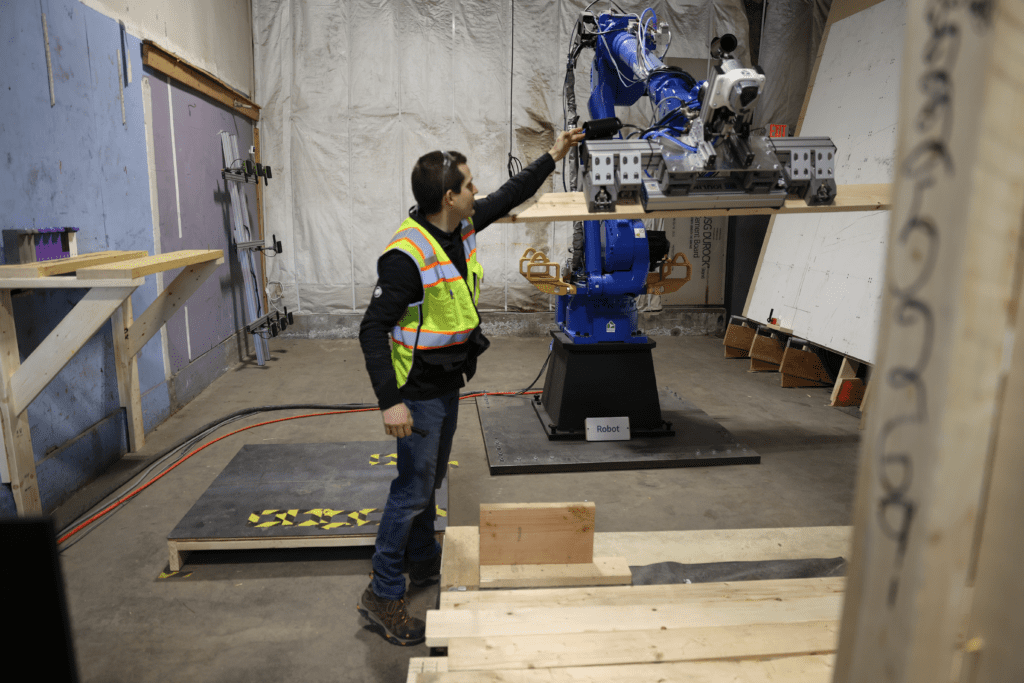
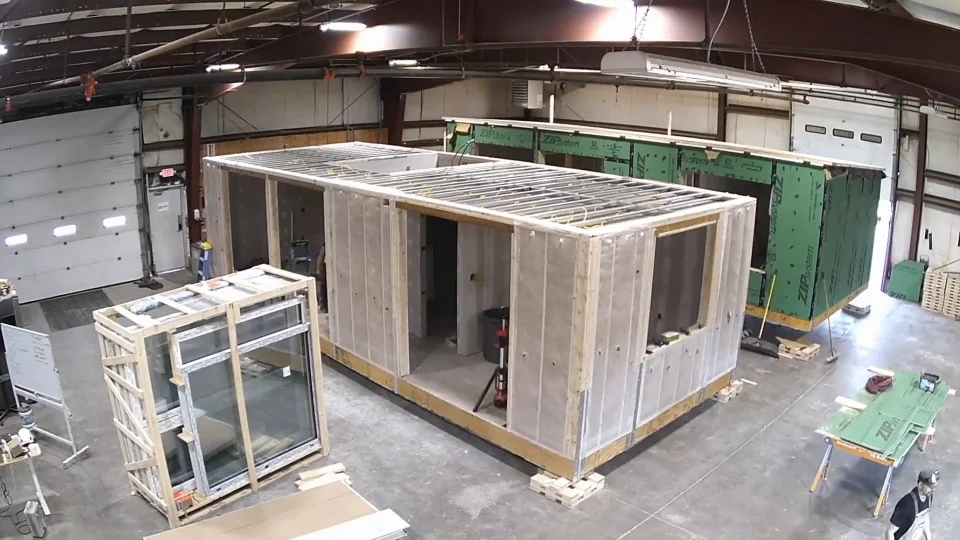
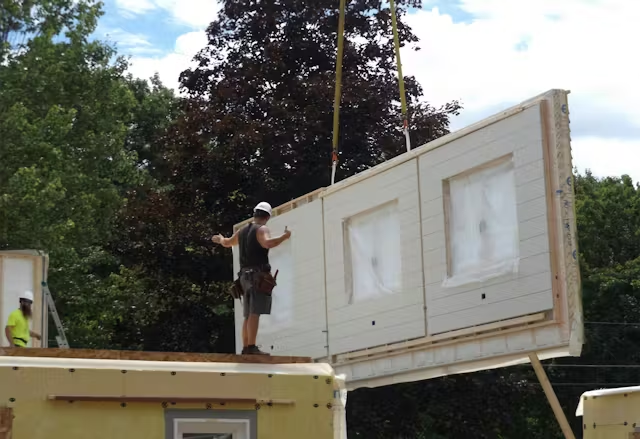
The construction industry often resists change, but one startup is proving that with vision, engineering, and perseverance, the system can be reimagined—quite literally. San Leandro-based Reframe Systems just won the prestigious 2025 House Building Prize from the Centre for Natural Material Innovation at the University of Cambridge, recognizing their groundbreaking robotic and offsite construction platform. The prize isn’t just a trophy—it’s an acknowledgment that the industry’s old ways are under review, and Reframe’s new approach could be the blueprint for what’s next.
all photos -Reframe Systems
So what makes this company different? The name says it all: Reframe. They’re not tweaking the edges of conventional construction—they’re flipping the entire framing process on its head.
At the Core: A Robotic-First, Offsite-Ready System
Reframe’s approach is built around a modular panelized wall system that’s designed to work seamlessly with both robotic manufacturing and on-site assembly. Unlike traditional prefab systems that rely on lumber-framed panels or heavy volumetric boxes, Reframe’s solution uses robotically produced steel frames that are precise, scalable, and environmentally considerate.
Each panel is a complete building block—pre-fitted with wiring chases, plumbing paths, and insulation compartments. Their innovative connector system makes field installation as easy as snapping components into place. Think IKEA-meets-industrial-engineering—with a focus on high-performance housing.
The result? Buildings that go up faster, with far less labor, tighter tolerances, and improved energy efficiency. And in an industry currently suffering from a global skilled labor shortage, that’s more than innovation—it’s a lifeline.
Designed for Robots, Built for People
Founded in 2022 by a team of software engineers, roboticists, and sustainability advocates, Reframe Systems understood early on that automation had to serve more than just profit margins. Their guiding principle was simple: make housing faster, cheaper, and more sustainable—without sacrificing quality or design.
They began by developing a production system that could combine industrial robotics, AI-driven design software, and advanced materials to streamline every phase of the construction process—from design to delivery. Their factories are essentially smart workshops, where robots build walls that are ready to ship, stack, and install within hours of arriving on-site.
But automation is just the tool. The real value comes from how adaptable the Reframe system is. The panel designs can be configured for multifamily housing, townhomes, ADUs, and even disaster-relief shelters. The platform is scalable, and the technology is open enough to be licensed by other builders—making it possible for developers and general contractors to build more, faster, and with less capital investment than a traditional modular factory.
A Clear Message to the Industry: It’s Time to Catch Up
Winning the House Building Prize from a globally respected institution like the University of Cambridge sends a clear message: Reframe is no longer a “what if”—they’re a “what’s next.”
The Centre for Natural Material Innovation praised Reframe’s “holistic” approach, particularly their use of sustainable materials, efficient structural systems, and their dedication to closing the loop between digital design and physical delivery. The award committee also highlighted the potential impact of the Reframe System on underserved housing markets and its compatibility with low-carbon building goals.
For an industry often mired in regulatory red tape, outdated practices, and fragmented supply chains, Reframe Systems represents a breath of fresh air—and a technological leap forward.
What Comes Next
With their first pilot projects completed and several partnerships in the works, Reframe Systems is scaling up production and actively seeking collaborators. Whether you’re a developer, housing nonprofit, modular factory owner, or investor looking for the next big thing in offsite innovation—this is a company to watch.
As we continue to explore the innovators shaping tomorrow’s built environment, Reframe Systems reminds us that the future of construction doesn’t need to be built from the ground up—it can be snapped together, robotically manufactured, and radically reimagined.
Offsite Innovators is dedicated to spotlighting the people, products, and platforms redefining how we build. Want your innovation featured? Contact us.
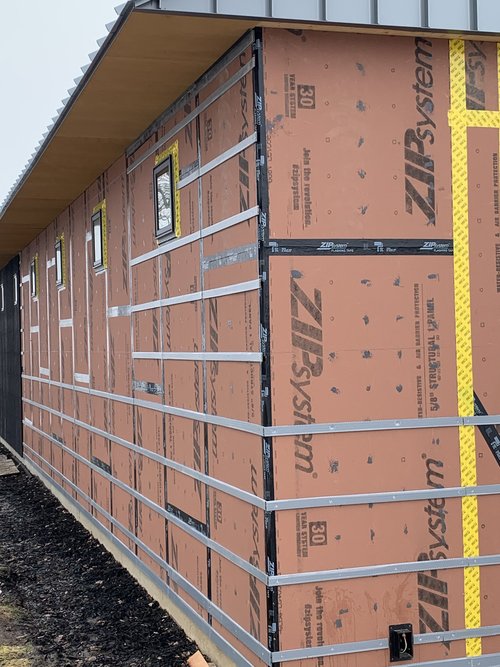
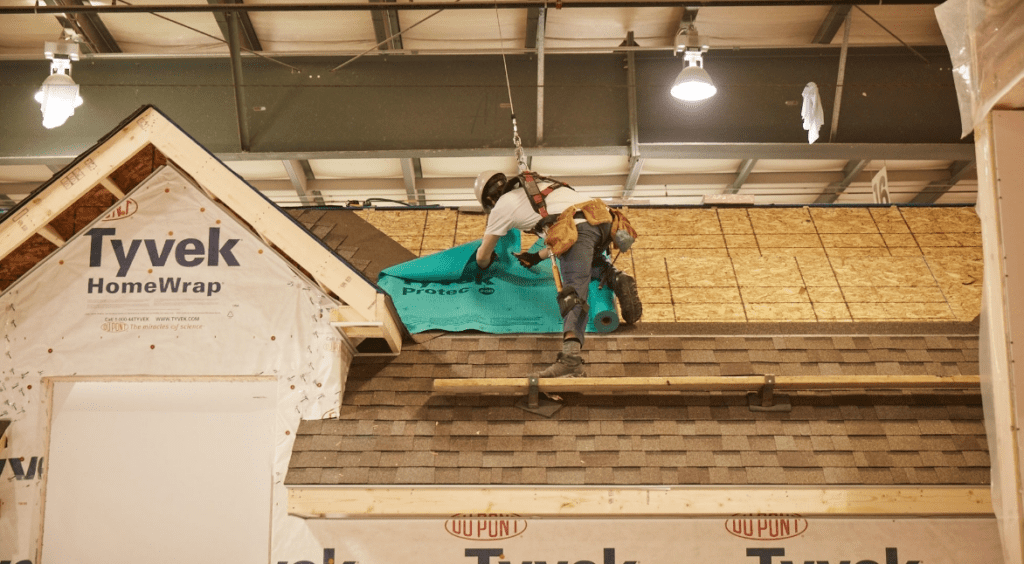
CertainTeed stands out as a pioneer, especially with its innovative ONE PRECISION ASSEMBLIES™ (OPA™) system. This cutting-edge approach to building is redefining efficiency, quality, and sustainability in residential construction.
Introduced in March 2023, the OPA™ system offers fully constructed wall, floor, ceiling, and roof panels that are prefabricated in a controlled environment. These panels are tailored to meet specific design requirements and local building codes, ensuring a seamless fit and compliance with regulations.
Key Features and Benefits of ONE PRECISION ASSEMBLIES™
1. Speed and Efficiency: Build Faster, Smarter
Traditional construction is often a game of waiting—waiting for subcontractors, waiting for materials, waiting for good weather. ONE PRECISION ASSEMBLIES™ flips the script. Because the components are built in a factory-controlled environment, multiple stages of construction happen simultaneously instead of sequentially. While a builder is preparing the site or pouring a foundation, the wall, roof, floor, and ceiling panels are being manufactured with precision.
.
Once delivered to the site, the real magic happens: panels are craned into place and connected, allowing a home to be dried in within just 1–3 days. This rapid assembly process drastically reduces construction schedules, slashes labor costs, and gets homes to market faster—a big win in today’s competitive housing environment.
2. Quality and Precision: Built in a Factory, Not in the Mud
Building on-site always comes with a margin of error. Weather can affect material quality, subcontractor turnover can lead to inconsistent workmanship, and site conditions are rarely perfect. With OPA™, every component is built indoors using digital plans, automated tools, and trained technicians. That means tighter tolerances, better quality control, and fewer on-site surprises.
Each panel arrives straight, dry, and ready to install—no warped studs, no waiting for inspections before you can move to the next phase. This also helps eliminate time-consuming rework, which is one of the most expensive and frustrating aspects of traditional construction.
3. Energy Efficiency and Sustainability: Designed for Performance
One of the standout features of ONE PRECISION ASSEMBLIES™ is its built-in energy performance. Each panel comes with a “Performance Core” designed to meet or exceed energy codes in your region. This includes advanced insulation, moisture barriers, and air sealing—components that are difficult to install correctly on-site but easy to control in a factory.
For homeowners, this means lower energy bills, improved indoor air quality, and reduced maintenance from moisture-related damage. For builders, it simplifies the path to energy-efficient certifications such as ENERGY STAR, LEED, or local green building codes. It also aligns with broader sustainability goals, cutting job site waste and reducing the carbon footprint of each project.
4. Design Flexibility: Not One-Size-Fits-All
One of the misconceptions about panelized construction is that it limits architectural creativity. Not so with CertainTeed’s OPA™. These panels can be customized to fit a wide range of designs—from single-family homes to multifamily buildings and everything in between.
The exterior finishes are also flexible. Builders can choose from CertainTeed’s extensive catalog of siding and roofing products, including Monogram® vinyl siding for a classic look or Landmark® shingles for durability and curb appeal. This allows builders to maintain their brand identity and deliver on customer expectations—while still reaping the benefits of prefabrication.
5. Risk Mitigation: Fewer Surprises, More Control
Construction risk often comes from two places: unpredictable weather and unpredictable people. When you build outdoors with dozens of moving parts, it’s easy for timelines to stretch and budgets to swell. With OPA™, risk is significantly reduced.
Factory-made assemblies mean consistent timelines and reliable quality. Fewer trades are needed on-site, which reduces coordination challenges and liability exposure. Plus, since much of the building envelope is constructed in advance, there’s less opportunity for design drift, miscommunication, or scope creep. Developers and general contractors appreciate the predictability, and lenders and investors love the reduced financial uncertainty.
A Holistic Solution for Modern Builders
What makes CertainTeed’s ONE PRECISION ASSEMBLIES™ truly stand out is that it isn’t just a product—it’s a complete building solution. From the design phase to delivery and installation, the OPA™ system is engineered to bring together speed, accuracy, performance, and style in a single streamlined process. It takes the best of offsite construction—efficiency, precision, and innovation—and applies it to real-world building challenges without asking the builder to compromise on design or function.
In a time when skilled labor is scarce, housing demand is high, and environmental performance is more important than ever, solutions like OPA™ offer a path forward that makes sense for the industry—and for the planet.
Industry Recognition
The National Association of Home Builders (NAHB) recognized the innovative nature of OPA™ by awarding it the Offsite Construction Award for Innovative Product or Service in 2023. This accolade underscores CertainTeed’s commitment to advancing construction methodologies and delivering value to builders and homeowners alike. CertainTeed+2CertainTeed+2National Association of Home Builders+2
CertainTeed’s ONE PRECISION ASSEMBLIES™ system represents a significant advancement in residential construction. By integrating speed, precision, energy efficiency, and design flexibility, OPA™ offers a comprehensive solution that addresses many of the challenges faced by builders today. As the industry continues to evolve, innovations like OPA™ pave the way for more efficient, sustainable, and high-quality homebuilding practices.
About CertainTeed
Founded in 1904, CertainTeed is a leading North American manufacturer of building materials for both residential and commercial construction. With a commitment to innovation, sustainability, and performance, CertainTeed offers a comprehensive portfolio of products including roofing, siding, insulation, ceilings, and drywall. As a subsidiary of Saint-Gobain—one of the world’s largest and oldest building materials companies—CertainTeed continues to push the boundaries of what’s possible in modern construction, helping builders and homeowners create high-performing, comfortable, and sustainable spaces. Learn more at www.certainteed.com.
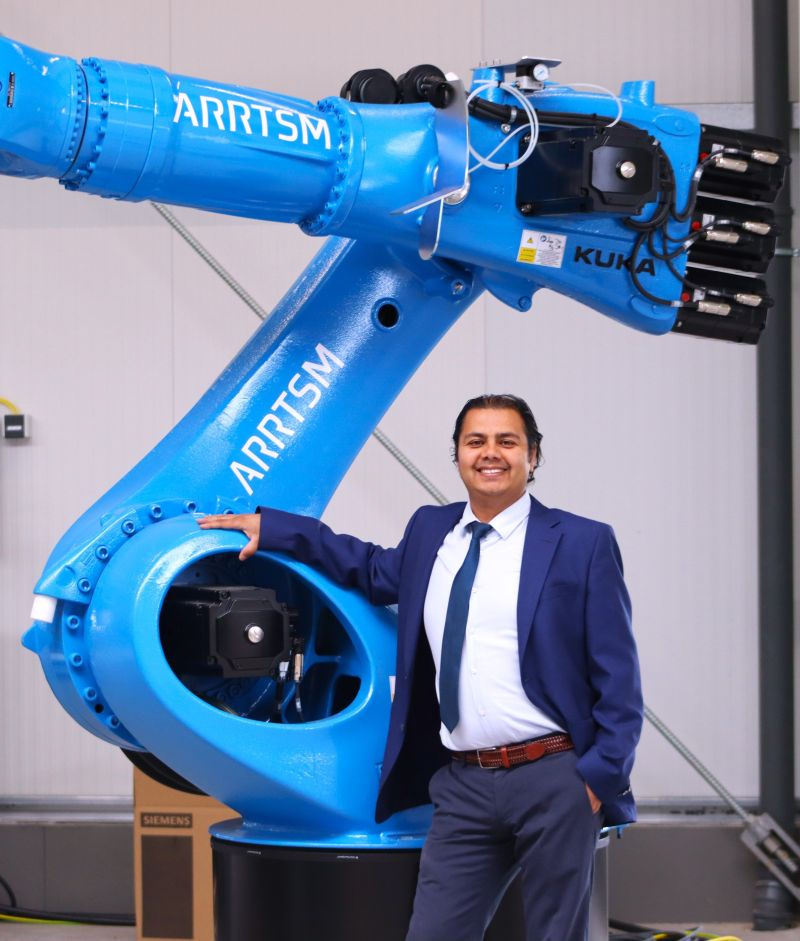
Gary Fleisher, Offsite Innovators, interviews Yudhisthir Gauli, Founder & CEO of Framebotix
When it comes to transforming the way the world builds, few are thinking as boldly—or as practically—as Yudhisthir Gauli, Founder and CEO of Framebotix. With a background in German CNC machine design and a deep passion for humanitarian impact, Gauli has spent over a decade developing robotics systems that don’t just mimic human work—they revolutionize it. His latest venture, Framebotix, isn’t just automating construction—it’s reshaping the entire ecosystem, from how homes are built to who gets to build them.
.
In this exclusive interview with Gary Fleisher of Offsite Innovators, Gauli shares the journey from concept to implementation, explaining how Framebotix’s 8th-generation robotics platform brings mass customization, affordability, and regional resilience to housing production. Whether it’s enabling small developers with a pay-as-you-manufacture model or redeploying retired systems to developing nations, Framebotix is proving that technology can be both scalable and socially impactful.
Gary Fleisher: Yudhisthir, I’d love to start with the origin story—what sparked the idea for Framebotix? How did your experience with German CNC machine design shape the vision behind your autonomous robotics platform? And as we dig into that, I’m especially curious—how does this platform actually come into play when it comes to building homes? What does that real-world application look like?
Yudhisthir Gauli: Honestly, Framebotix started with a pretty personal spark for me. The idea for Framebotix didn’t start in a boardroom, it started with a deep desire to serve humanity through technology.
Back in 2011, I was working on a complex robotics project, incredibly exciting, but also incredibly manual. The programming was intricate, time-consuming, and expensive. That’s when a vision struck me: what if a robot could move like the human hand, intelligent, adaptive, and precise, without needing to be programmed every single time?
That idea became my obsession.
In the years that followed, I worked on some of the most advanced CNC machines on Earth, not just programming them, but working on everything from control systems to mechanics to final commissioning. I wasn’t just designing machines, I was living inside the complexity of manufacturing. And I saw the bottleneck: no matter how good the hardware, the reliance on human programming was slowing everything down and making it expensive to scale.
That’s when I realized: if we could remove the need for manual programming, we could massively reduce the cost of manufacturing. We could make automation accessible, not just for billion-dollar corporations, but for builders, fabricators, communities, and families. That’s when my vision became clear: to create an autonomous robotics platform that works like a human, thinks like an engineer, and manufactures like a factory — without the need for programmers.
In 2015, ARRTSM Engineering was founded, and in 2016, ARRTSM GmbH in Germany. We solved incredibly advanced problems for aerospace, automotive, and high-tech manufacturers. But in my heart, I knew that all of this innovation needed to serve something bigger—people.
That mission came full circle in Q1 2024, when I launched Framebotix, fully focused on the housing industry, because the world doesn’t need another robot. It needs a way to build better, faster, and more affordably. That’s where we come in.
Framebotix uses the latest generation of autonomous, AI-guided robots that can process materials like wood, metal, and composites with no manual intervention. These robots build like humans but with machine-level precision and consistency. You don’t need to reprogram them every time your design changes, the system adapts automatically. This unlocks true mass customization, which is the future of affordable housing.
And this isn’t theory, we’ve been doing it for years.
For me, this is more than just automation, it’s a humanitarian mission. We’re transforming how the world builds, not with more labor, but with smarter tools, and by putting technology in the hands of the people who need it most.
So, when I say Framebotix is here to build homes, build factories, and build futures, I mean it. Because in the end, we’re not just solving a housing crisis. We’re changing the way humanity manufactures what it needs to survive and thrive.
Gary: Your tagline—’No large Upfront Investment. Pay-As-We-Manufacture’—really piques my interest. How exactly does this risk-free model work in practice for builders and developers? And I’m especially curious—when does the payment process actually begin for them?
Yudhisthir: That’s a great question, and honestly, it goes right to the heart of what makes Framebotix so transformative.
Our tagline, “No large upfront investment. Pay-As-We-Manufacture,” is built around one simple but powerful idea: we want to remove the financial barrier that stops builders and developers from scaling. Traditional construction requires heavy capital investment up front, factories, equipment, skilled labor, and logistics, which locks out a lot of great builders who have demand but not access to that kind of funding.
At Framebotix, we flipped the model. Instead of selling factories or expensive automation equipment, we offer Factory as a Service, which means we build and operate high-tech, autonomous manufacturing facilities where builders can simply bring their designs and materials… and we take care of the rest.
Now here’s how the model works in practice:
No large upfront payment for the factory itself. Builders don’t need to invest in land, robots, or machines.
They only pay as we manufacture their homes or components — square foot by square foot, or panel by panel.
We handle the automation, robotics, assembly, quality control, and delivery — and they get predictable pricing, speed, and precision.
This approach significantly reduces their risk. There’s no need to finance a million-dollar factory or hire an entire workforce before seeing revenue.
That allows even small to mid-sized developers to access cutting-edge automation without huge capital burden, and large-scale builders to scale quickly and cost-effectively without having to build out internal manufacturing capabilities.
In short: we manufacture, they grow. It’s risk-free, fast, and built to serve the modern builder. And, most importantly, to provide more affordable housing to meet today’s demands.
Gary: Regional manufacturing is a major part of your strategy. Why is decentralization so crucial to the future of construction?
Yudhisthir: Absolutely, regional manufacturing isn’t just a strategy for us at Framebotix, it’s a necessity. The future of construction depends on decentralization, and here’s why:
First, the traditional centralized model, where materials are shipped cross-country and labor is pulled from shrinking pools, is slow, expensive, and environmentally damaging. In an era where speed, cost, and carbon impact all matter, that model simply doesn’t scale.
By placing automated, data-driven factories in smaller regions, closer to where the homes are actually being built, we solve several critical issues at once:
Speed – Homes and components are manufactured locally, so delivery times shrink from weeks to days. That’s huge for builders working on tight schedules.
Cost – We cut transportation costs, reduce supply chain delays, and eliminate a lot of waste. That means lower costs for the builder and ultimately for the homebuyer.
Sustainability – Local manufacturing means fewer trucks, fewer emissions, and more efficient use of materials. We can even optimize for local resources and building codes.
Resilience – In times of crisis — like pandemics, climate events, or geopolitical disruption, centralized systems collapse. A regional network of smart factories ensures that housing development doesn’t stop when the world gets shaky.
But perhaps most importantly, regional manufacturing empowers communities. We’re not just automating production, we’re enabling local builders, developers, and even cities to take control of their own housing supply, without needing to rely on massive corporations or foreign supply chains.
So, for us, decentralization isn’t just about efficiency, it’s about accessibility, independence, and building resilient communities across America. It’s a new industrial model for construction, and it’s long overdue.
Gary: I’m really intrigued by your 8th-generation robotics system—can you walk us through what makes it stand out from other automation platforms in the offsite and modular space? I’m especially curious about how it handles customization from one project to the next. And how does its autonomous approach compare to more traditionally programmed robotics in terms of flexibility and overall benefits?
Yudhisthir:
I’m glad you brought that up. I get excited every time someone asks about our 8th-generation robotics system, because this isn’t just another machine. It’s the result of more than a decade of hands-on experience in real factories, solving real problems for real builders.
We’ve worked in aerospace, automotive, and advanced manufacturing, and we took everything we learned, the precision, the efficiency, the reliability — and built a platform specifically for the construction industry. And what we created is truly something new: a system that doesn’t just automate part of the job, but completely transforms how homes are built.
What makes it different? Simple: It works for you.
Most builders have been burned by tech that’s expensive, rigid, and doesn’t adapt. Our system is the opposite. It’s built to serve your projects, not the other way around. You don’t need to redesign your home just to fit the robot. Our robots adapt to your design — whatever you want to build, we can manufacture it efficiently, affordably, and at scale.
Whether it’s a one-of-a-kind custom home or 500 panels for a large community, the robots handle it all — seamlessly, autonomously, and with zero downtime for setup. There’s no complicated reprogramming. You just upload the design, and we take care of the rest.
And the best part? This is not an idea. It’s not a prototype. It’s already working, right now, in different factories. Builders using our system are saving time, reducing cost, and scaling faster than ever — all without the massive investment of setting up their own facility.
We’ve poured years of innovation into this so you don’t have to. And now, for the first time, you can access advanced robotics without owning the robots, just pay as we manufacture. No capital risk. No headaches. Just results.
So if you’re ready to build smarter, faster, and with more freedom, Framebotix is ready for you.
Gary: You’ve worked on projects from drones to furniture to homes. How does Framebotix’s technology adapt across so many materials and sectors?
Yudhisthir: That’s a great question, and honestly, the versatility of Framebotix is one of our biggest strengths.
Yes, we’ve worked on everything from high-precision drones and aerospace components, to custom furniture, and now entire homes, and that’s not by accident. It’s because we didn’t build Framebotix for just one market. We built it to solve a universal problem that shows up across every industry: the shortage of skilled labor, inefficiency in production, and the high cost of customization.
What makes our technology adaptable across so many sectors is the foundation it’s built on, over a decade of deep experience in robotics, automation, and material behavior. We designed our platform from the ground up to handle different materials like wood, metal, composites, drywall, stone, and more — and we didn’t build static machines. We built intelligent robotic systems that can recognize, handle, and work with each of those materials in real-world conditions.
In other words, the system isn’t locked into one application. It learns. It adapts. It evolves.
So whether we’re cutting carbon fiber for drones, machining hardwood for furniture, or assembling entire walls and floors for custom homes, the platform stays the same. Only the tools and files change. That’s the magic: we don’t need to reinvent the wheel for every new customer, we’ve already built a flexible foundation that’s ready for anything.
And here’s why that matters for builders and manufacturers: you’re not buying into a single-purpose machine. You’re gaining access to a platform that can evolve with your business. Start with panels, scale into countertops, cabinets, stairs, full modules — even other industries. It’s all possible with Framebotix.
In the end, we’re not in the robot business — we’re in the problem-solving business. And no matter the sector, the real problem is the same: how do we build faster, better, and more affordably in a world that’s constantly changing?
That’s what we solve. Across materials. Across industries. Across borders.
Gary: I noticed your plan to redeploy older robotic systems to developing countries to help with affordable housing after their initial use. What motivated this humanitarian mission?
Yudhisthir: That’s a question very close to my heart — thank you for asking.
Framebotix has always been about more than robotics. It’s about serving humanity through technology, and there’s no greater expression of that mission than our commitment to redeploy older robotic systems to developing countries.
While our latest 8th-generation systems are transforming the Global construction industry, we realized early on that even our earlier platforms, still incredibly capable, could bring massive value elsewhere. Instead of letting them sit idle, we chose to put them to work where they’re needed most.
Since 2023, we’ve been working with a company in Cameroon to do exactly that, using our robotics technology to process Class 5 woods (highly durable, fire-resistant, and naturally rot-resistant hardwoods found in the region). The goal is to build net-zero, fire-retardant homes that are durable, sustainable, and affordable, using local materials and local labor.
This project is especially meaningful because it does three things at once:
Creates local jobs by training and employing workers to operate and maintain robotic systems.
Brings advanced technology to areas where traditional construction methods are slow, inefficient, or unsafe.
Empowers communities to build homes that are not only affordable, but long-lasting and environmentally responsible.
We’re not just dropping off machines, we’re building local capacity. We’re transferring knowledge, creating opportunity, and giving people the tools to shape their own future.
Because in the end, we believe technology should make the world a better place, not just for the few, but for everyone.
This is what drives us at Framebotix. Whether it’s cutting-edge factories in America or local partnerships in Africa, we’re committed to using what we’ve built to build something bigger than ourselves, a world where innovation lifts people up, instead of leaving them behind.
Gary: Looking ahead, how do you see the vision for Framebotix evolving over time? I’d love to hear how you’re breaking that down into short-term goals for the next one to three years versus the longer-term ambitions further down the road.
Yudhisthir: Looking ahead, our vision for Framebotix is bold, but deeply focused: we want to fundamentally change how the world builds. That starts with solving America’s housing crisis, and eventually scales to helping millions of people globally live in safe, sustainable homes.
We’re not here to just build a robotic system, we’re building an entirely new construction ecosystem: intelligent, autonomous, localized, and human-centered.
Short-Term (1–3 Years):
Our short-term focus is all about scaling with precision and impact:
Deploying Regional Factories: We’re rolling out a network of high-performance factories across key U.S. states. Each one is powered by our 8th-generation robotics system and built on our Factory-as-a-Service model, no large upfront cost for builders, just pay-as-you-manufacture.
Serving Builders & Developers at Scale: We’re rapidly onboarding builders who need speed, precision, and affordability — delivering panels, cabinets, stairs, and other components custom-built, with zero delays and no labor bottlenecks.
Expanding the Platform: We’re enhancing our software, materials intelligence, and quality control systems, so every Framebotix factory delivers unmatched consistency and customization, from single homes to multi-unit developments.
Long-Term Vision (3–10+ Years):
Our long-term ambition is nothing short of transformational:
Global Expansion: We aim to establish Framebotix-powered factories worldwide, especially in regions hit hardest by housing shortages, leveraging our redeployment model for robotics to create jobs and uplift communities.
Autonomous Housing Ecosystems: We envision fully autonomous housing production and assembly, from design to final inspection, where AI handles layout, robots build it, and quality is digitally verified in real-time. Think: housing made as efficiently as cars.
Human-Centered Robotics for Humanity: We will keep pushing to ensure robotics doesn’t just serve industry, it serves people. That means smart, sustainable homes; lower environmental impact; and localized economic development.
Framebotix as Infrastructure: Ultimately, we don’t just want to build homes — we want to be part of the infrastructure behind nations. Whether it’s disaster recovery housing, defense applications, or smart city expansion — our system will adapt and scale.
What keeps me going is the belief that we can use the power of robotics, automation, and intelligent systems to build not just structures, but dignity and opportunity. The next decade for Framebotix is about building millions of homes, but it’s also about building hope.
That’s the legacy we’re working toward, day by day, panel by panel, and factory by factory.
Gary:
As Framebotix moves into its next phase—deploying regional factories, expanding internationally, and refining its autonomous housing ecosystem—the mission remains clear: use advanced robotics not just to build faster and cheaper, but to build smarter and more humanely. Yudhisthir Gauli’s vision is bold, but it’s grounded in real-world results, and his company stands at the intersection of innovation and empathy. For those watching the future of offsite construction unfold, Framebotix is one name that won’t just be part of the conversation—it’s helping redefine it.
Gary Fleisher is the Leading Observer of the Offsite Housing Construction Industries. He has been actively involved in researching and writing about the latest trends and developments in the industry for over a decade now.
With his extensive knowledge and experience, Gary has emerged as a go-to expert for businesses looking to stay ahead of the curve in the modular construction industry. In addition to his work as an editor, he is also a sought-after speaker and consultant who has helped numerous companies achieve strategic and operational success.
Offsite construction as a segment of the homebuilding industry, often times suffers from a common bafflement, lack of an understanding coupled with an appreciation for Building Science. In a recent conversation with Mark Eckard,President of Restoration North he attempts to cut to the chase. Mark is a veteran builder as well as the owner President of a material supply firm known for their progressive and passionate approach to the homebuilding industry.
Mark Eckard, President of Restoration North
Bill Murray, Offsite Innovators: Would you describe in layman’s terms what Building Science is and is not? What comprises Building Science?
Mark Eckard, owner president of Restoration North: Building Science is learning ways to create better structures through learned experiences, innovation, and testing. It is not the act of doing things the way we have always done them.
Bill: In your opinion why does Building Science matter?
Mark: It matters because just like same way technology advancements matter. One should always want to strive to learn, grow, and to be better across everything we do. We spend the majority of time in our homes, offices, structures, and buildings. It is imperative to make them efficient, while increasing longevity and reducing maintenance. It is the prudent, responsible approach.
Photo – Energy Vanguard
Bill: Does Building Science apply any more or any less to offsite construction? Is it applicable across all building types and job sites?
Mark: There is more of a controlled atmosphere to build better in offsite construction, but also immense room to integrate offsite with onsite into a high performance hybrid solution.
Bill: What role does Building Science play when considering the plea for affordability?
Mark: When affordability comes into play, one must look at the cost of goods, as well as the cost of insurance, energy, repairs, replacement, and the inflationary environment. The longer a building is in service with high performance materials, and building tactics in place, the more value the owner receives as it ages. The inverse is to build it cheap and junky then replace things all the time, contribute to waste and all the factors that go into new materials, and having work done, it is wasteful, and it does not promote a better world for future generations.
Bill: You have stated that “the system is broken”. Would you explain what the “system” is and how you believe it is broken?
Mark: I say that because it is true based on many years of experience across various verticals. I am a builder, and have been, for decades. I also run a material supply firm that carries proprietary goods and high-performance solutions. That was born from the broken construct of how materials were being procured, I wanted better, faster, and cheaper.
I supply directly to builders, capital groups, developers, modular factories, hoteliers, and even end users. The number one headwind I face is when I present people with solutions, then they just stare at the cost of goods versus performance, and the totality of operations and benefits. They all think they have a better way, and it’s purely just false, admitted to me by others who have tried and failed. Even when presented with high performance solutions, people cannot make the appropriate decisions. I have concluded that it is because most lack broad spectrum experience, everything is segregated knowledge. Business owners aren’t builders, and builders aren’t business owners. Decision paralysis gallops through the industry, perpetuating the failures that happen in construction. Factoring in that people lack the time and/or desire to continue education to learn about new materials and ways of building, coupled with the cost of inefficiency and low-quality relationships, you have perpetual failure which keeps costs on the rise. Nobody wins that game.
Bill: What has to change?
Mark: Many things have to change, regulations, policy, zoning, permitting, education, the labor force, and the individual mindset about how trades are viewed as second-rate citizen fields.
Bill: How is Restoration North addressing the role of Building Science and the changes that you feel must be made?
Mark: We aim to educate the people we work with and keep driving our ecosystem into the lives and operations of the industry, as it provides bankable change and ultimately helps everyone do better.
Thanks to Mark for his provocative and compelling summarized take on Building Science. I have learned through several conversations with Mark that he is passionate about the homebuilding industry in general and specifically about Building Science. Building Science is far more than a buzz word for Mark and his appreciation for its importance is contagious. We need more of his attitude in our industry, to foster innovation which will consequently lead to much needed growth.
Bill Murray has over 40 years of operational management experience in the Modular industry. Bill began his Offsite career as a contractor/builder. He then entered the manufacturing side quickly advancing through the sales ranks to become a General Manager/COO of multi plant operations. Bill provides professional advisory service to owners, prospective owners and builder developers considering Offsite construction. He has consulted throughout the U.S., and Mexico, as well as overseas assignments.
Gary’s viewpoint is for informational purposes only…and a few chuckles!
Starting a modular home factory is easy! All you need is a building, some equipment, a few workers, a design, a sales team, a delivery system, a set crew, a finishing crew… oh, and a small fortune. Simple, right?
Today, I sit down with Karen, one of two enthusiastic imaginary entrepreneurs, who’s convinced she can build a better, cheaper, and more affordable modular home than anyone else. Let’s see how her dream is coming along.
Gary: Karen, welcome! You’re diving into modular construction with no experience. What could possibly go wrong?
Karen: Oh, nothing at all! I mean, how hard can it be? It’s just a big LEGO set, right?
Gary: Ah yes, the famous “LEGO Theory of Modular Construction.” Just don’t forget that those LEGO blocks need permits, structural engineering, transportation logistics, and a highly trained workforce. Have you hired anyone with actual modular experience?
Karen: Not yet, but my cousin’s friend built a shed once.
Gary: Perfect. He can run quality control.
Gary: Let’s talk about funding. What’s your budget?
Karen: Well, I’ve got some savings, and I might ask my friends and family. Also, I heard there’s money in crowdfunding!
Gary: Right, because nothing says “trustworthy investment” like a GoFundMe page titled Help Me Build a Factory! Have you looked into actual investors or industry-specific funding sources?
Karen: Oh. There’s industry funding?
Gary: There is, but investors tend to like things like, oh, I don’t know… business plans.
Gary: Instead of starting from scratch, why not buy an existing factory?
Karen: But I want mine to be new!
Gary: So does every factory that has ever gone bankrupt. An existing facility has the equipment, production line, and maybe even workers who know what they’re doing. You’d be saving years of work and millions of dollars.
Karen: But then I wouldn’t get to design the factory floor plan in my college colors.
Karen: Like realizing halfway through that I need a transportation plan?
Gary: Exactly. Or that the modules don’t magically set themselves on a foundation.
Gary: Last question—what’s your backup plan if this doesn’t work out?
Karen: Oh, I don’t need one. This is definitely happening.
Gary: Famous last words. But hey, I love the enthusiasm! Now, let’s get you a consultant before this dream turns into a very expensive nightmare.
And there you have it, folks. A little humor, a little wisdom, and a whole lot of reality for anyone thinking about starting a modular home factory. If you’ve got a dream like Karen’s and Seth’s, make sure you get the right people on board—before your bank account learns the hard way!
Gary Fleisher is the Leading Observer of the Offsite Housing Construction Industries. He has been actively involved in researching and writing about the latest trends and developments in the industry for over a decade now.
With his extensive knowledge and experience, Gary has emerged as a go-to expert for businesses looking to stay ahead of the curve in the modular construction industry. In addition to his work as an editor, he is also a sought-after speaker and consultant who has helped numerous companies achieve strategic and operational success.
For centuries, builders have relied on natural ventilation to keep buildings cool and dry. Before the era of modern air conditioning, homes featured elevated roofs, ventilated attics, and airflow gaps behind exterior materials to regulate temperature and moisture. These passive cooling techniques not only enhanced comfort but also preserved the longevity of structures.
.
However, as modern construction methods evolved, these time-tested solutions were largely abandoned. The result? Buildings that trap heat, accumulate moisture, and suffer from premature material degradation—all while increasing energy costs. But what if there was a way to bring passive cooling back into modern modular and offsite construction?
Enter DrainStrip™, an innovative ventilation and drainage solution that reintegrates these essential building science principles, delivering a simple, cost-effective way to enhance durability and energy efficiency in offsite-built structures.
What is DrainStrip™?
DrainStrip™ is a built-in rainscreen and ventilation system seamlessly integrated into TSUPS™ (Thermal Studs Ultimate Panel System) wall, roof, and floor panels. It introduces a continuous ventilation and drainage gap behind cladding, siding, and roofing materials, preventing moisture buildup and thermal stress.
Another plus is DrainStrip™ can be used in any wall or roof assembly!
.
This groundbreaking approach offers a host of benefits, including:
✔ Enhanced Energy Efficiency – Improves airflow and reduces heat retention, lowering cooling costs. ✔ Moisture Protection – Prevents trapped condensation, eliminating mold, rot, and siding failures. ✔ Material Longevity – Extends the lifespan of exterior finishes by reducing expansion, contraction, and water damage.
How DrainStrip™ Works on Walls
In conventional construction, cladding and siding are directly attached to sheathing, leaving no space for airflow or moisture drainage. This leads to excessive heat buildup, material warping, and trapped moisture—problems that contribute to premature siding failure and structural damage.
By incorporating DrainStrip™ within TSUPS™ panels, a natural ventilation gap is created behind exterior cladding, allowing:
✔ Passive cooling to reduce thermal stress on siding. ✔ A continuous drainage plane to channel moisture away. ✔ Improved air circulation, which dries materials faster and prevents mold growth.
This built-in rainscreen system eliminates the need for additional furring strips or labor-intensive drainage layers, making it a hassle-free solution for both builders and factory-produced modular structures.
How DrainStrip™ Works on Roofs
Heat buildup under roofing materials is one of the biggest contributors to high cooling costs, especially in prefabricated and modular homes. Roofs act like thermal batteries, absorbing and radiating heat into attics and living spaces. Without proper ventilation, various roofing materials suffer:
✔ Steel roofs trap heat, turning attics into ovens. ✔ Cedar shake roofs accumulate moisture, leading to accelerated rot. ✔ Clay tile roofs retain water, causing long-term material degradation.
DrainStrip™ eliminates these problems by creating a breathable air gap between the roofing material and TSUPS™ panels. This passive ventilation system allows hot air to escape, preventing excessive heat transfer into the structure. The result?
✔ Cooler roof surfaces that reduce AC demand. ✔ Efficient moisture drainage, stopping rot and mold before they start. ✔ Extended lifespan for all roofing materials.
A Smarter Way to Build: DrainStrip™ and the Return of Passive Cooling
Historically, homes were designed to breathe. Tall ceilings, shaded porches, ventilated attics, and strategic airflow gaps all worked together to keep homes cool and dry without artificial climate control. As modern construction methods emphasized airtight designs, we inadvertently suffocated our buildings—leading to higher energy consumption and costly material failures.
DrainStrip™ and TSUPS™ panels offer a smarter alternative, reintroducing passive cooling into offsite construction without the added cost of extra materials or labor. By integrating built-in ventilation and drainage, modular builders can deliver:
✔ More durable, energy-efficient homes that require less maintenance. ✔ Reduced heating and cooling loads, cutting down on operational costs. ✔ A more sustainable construction approach that aligns with net-zero and high-performance building standards.
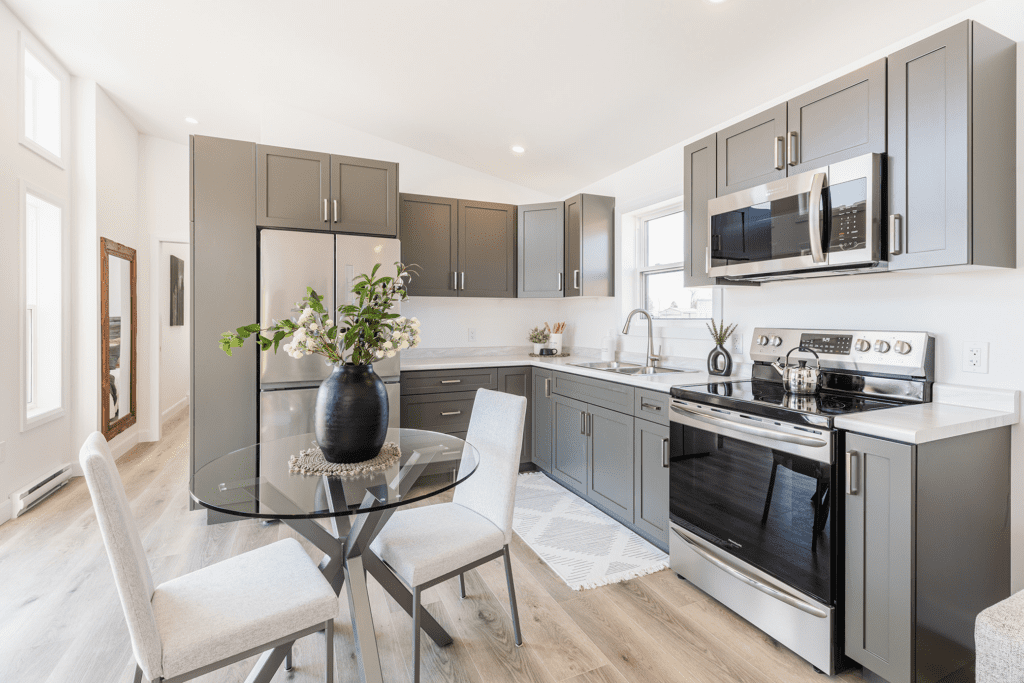
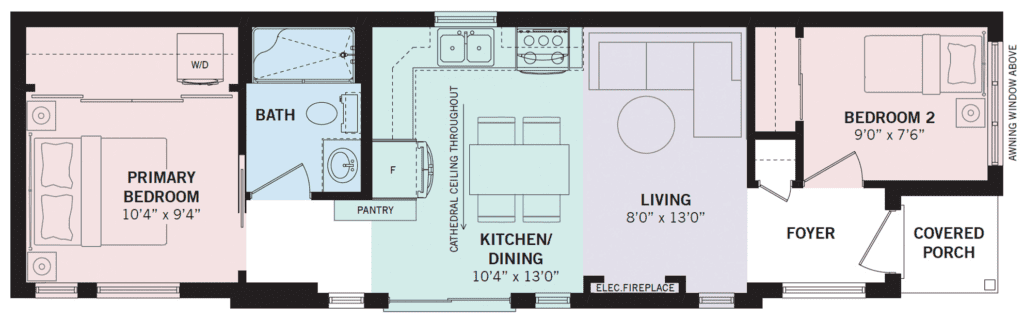
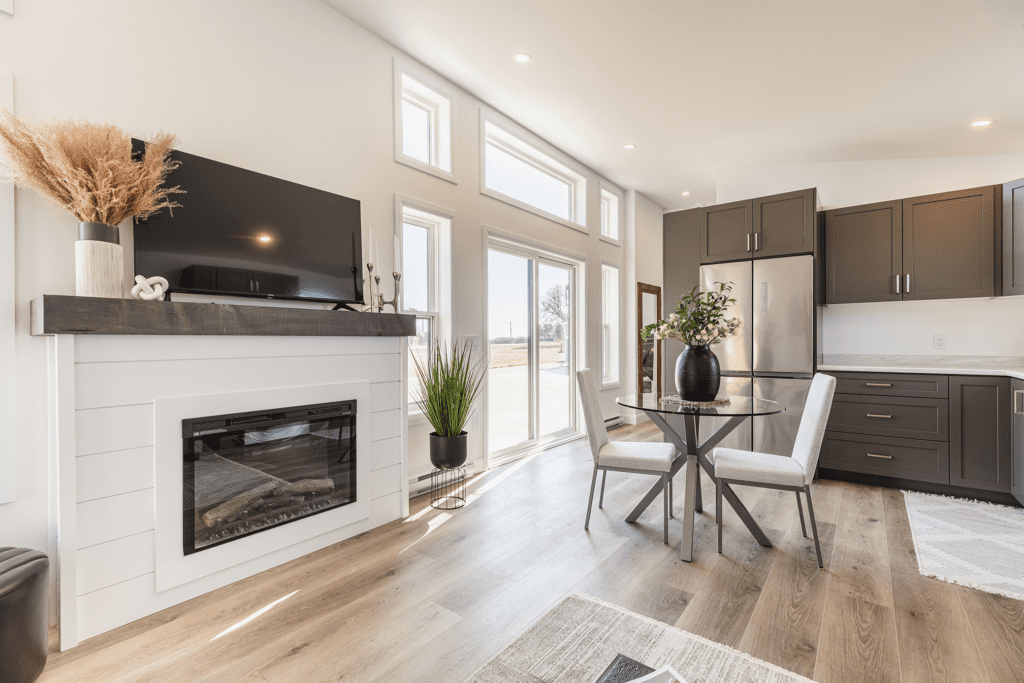
When it comes to modern modular homes that balance functionality with style, the Foxboro Model by Quality Homes stands out. Designed with both aesthetic appeal and practical living in mind, this home offers a thoughtfully crafted floor plan that caters to a variety of lifestyles.
Whether you’re a growing family or a couple looking to downsize without compromising on quality, the Foxboro provides a welcoming space that feels like home from the moment you step inside.
Photos – Quality Homes
The spacious open-concept layout seamlessly connects the kitchen, dining, and living areas, making it perfect for entertaining or simply enjoying everyday life. Large windows flood the home with natural light, enhancing its warm and inviting atmosphere. With well-appointed bedrooms, modern finishes, and energy-efficient features, the Foxboro model showcases the benefits of modular home construction without sacrificing the charm of a traditionally built house. While the layouts in the Suite Collections are not customizable, the finishes are, which gives your Foxboro your own personal decorating touch.
.
.
Built by Quality Homes, a company known for its commitment to craftsmanship and customer satisfaction, the Foxboro, part of the company’s Suite Collection, is more than just a house—it’s a home tailored to your needs. With the flexibility to customize finishes, homeowners can create a space that truly reflects their style and preferences. If you’re searching for a home that combines elegance, efficiency, and affordability, the Foxboro is a model worth exploring.
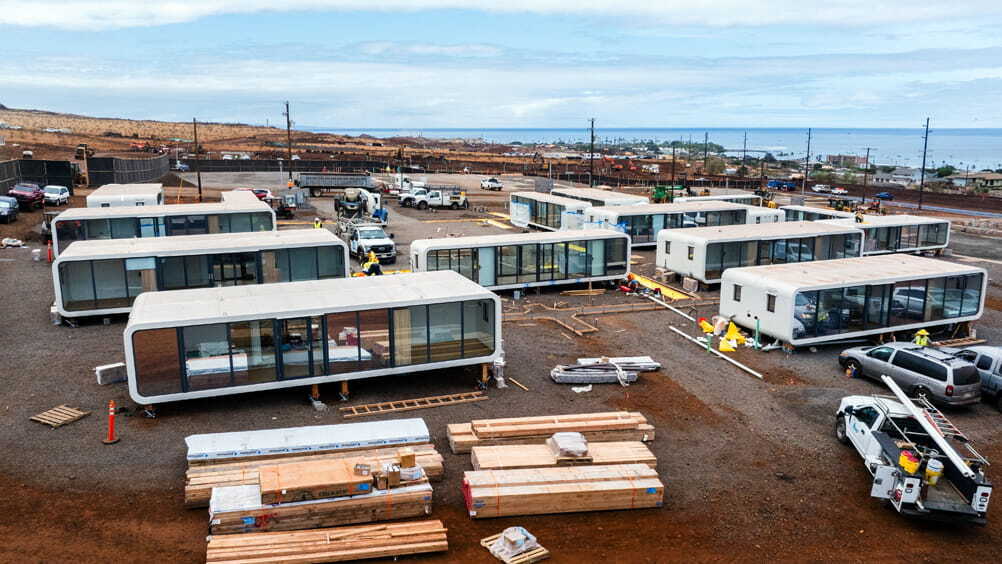
Bureaucratic delays, logistical challenges, and high costs have long marked the journey of disaster relief housing. But now, a pioneering solution is rolling down the highways, offering wildfire survivors not just a roof over their heads but a renewed sense of stability. Nano Nest, a modular housing innovator, is changing the landscape of emergency shelter solutions, one home at a time.
photo – Maui Now
A Bold Vision for Modular Disaster Relief
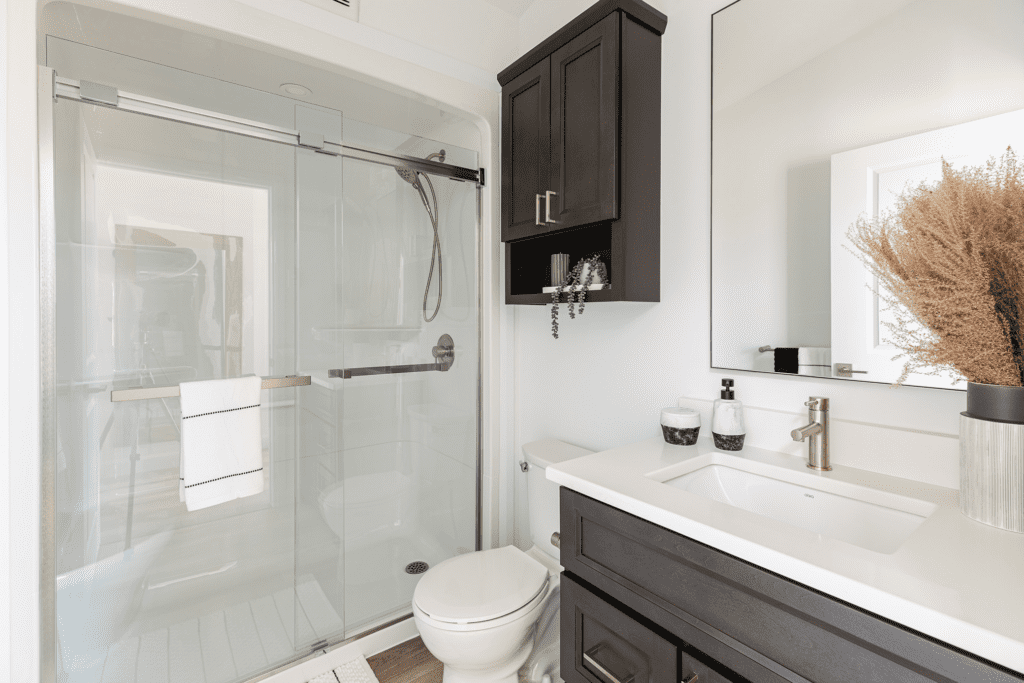
Nano Nest, a company dedicated to building sustainable, efficient, and transportable housing, has stepped up in the wake of the devastating Maui wildfires. With their compact yet functional designs, these units serve as both short-term emergency shelters and long-term affordable housing solutions. Unlike traditional FEMA trailers or hastily built shelters, Nano Nest homes are designed with durability, efficiency, and sustainability in mind, making them a viable permanent solution for displaced residents.
Built with high-quality, energy-efficient materials, Nano Nest homes incorporate modern insulation techniques and sustainable energy options like solar panels. Their innovative design allows for rapid manufacturing and deployment, enabling relief agencies and government organizations to provide swift housing solutions without sacrificing quality.
The Road to Recovery: Transporting Hope
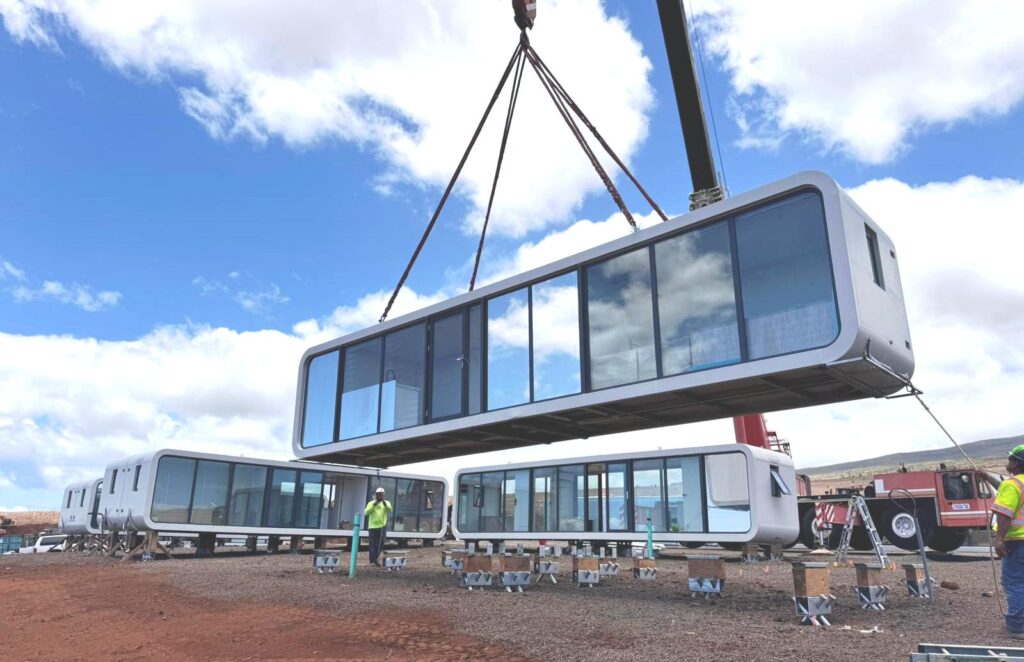
The delivery of these modular homes is no small feat. Between February 26-28, a fleet of transport vehicles will be hauling Nano Nest homes across the island of Maui, delivering much-needed housing for wildfire survivors. The logistical operation involves careful coordination between local authorities, housing agencies, and the Nano Nest team to ensure smooth transport and on-site assembly.
photo – Nano Nest
Each unit is precision-engineered to be transported efficiently, making use of specialized hauling equipment that navigates the island’s challenging terrain. Unlike traditional home construction, which can take months or even years to complete, these modular units can be fully installed and move-in ready within a matter of days. This efficiency is a game-changer for residents who have been living in uncertainty since the fires upended their lives.
Designed for Resilience and Comfort
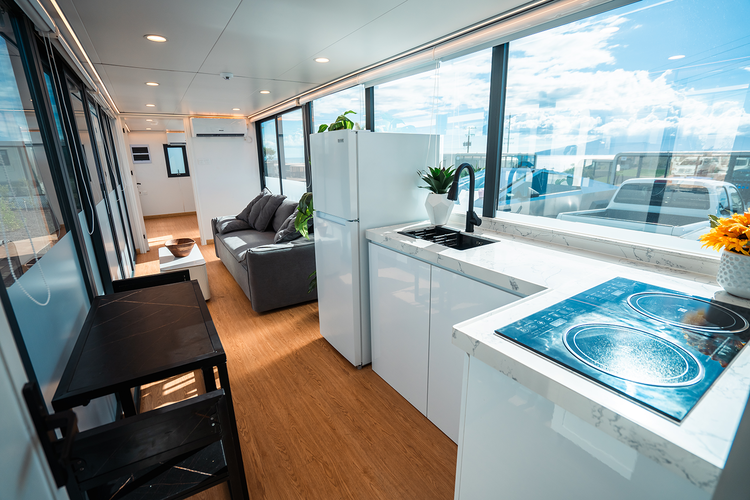
Nano Nest homes are not just about speed and efficiency; they prioritize livability. Each unit is thoughtfully designed to maximize space, featuring modern amenities that provide comfort and dignity to their residents. Smart storage solutions, energy-efficient appliances, and climate-adaptive materials ensure that each home can withstand varying environmental conditions while maintaining a comfortable indoor climate.
For wildfire survivors, the psychological impact of displacement is profound. Providing a stable, private, and dignified living space is crucial in the recovery process. Unlike mass shelters or temporary camps, Nano Nest homes offer a sense of ownership and normalcy, crucial elements in helping survivors rebuild their lives.
The Future of Disaster Housing?
As natural disasters become more frequent and severe, the demand for fast, sustainable, and cost-effective housing solutions is higher than ever. Nano Nest’s model presents a scalable blueprint that could be replicated across the country, addressing not just emergency housing needs but also the broader affordable housing crisis.
With innovative companies like Nano Nest leading the way, disaster relief housing is no longer about temporary fixes but sustainable futures. As these modular homes make their way to survivors in Maui, they bring more than just shelter—they bring hope, resilience, and the promise of a fresh start.
Gary Fleisher is the Leading Observer of the Offsite Housing Construction Industries. He has been actively involved in researching and writing about the latest trends and developments in the industry for over a decade now.
With his extensive knowledge and experience, Gary has emerged as a go-to expert for businesses looking to stay ahead of the curve in the modular construction industry. In addition to his work as an editor, he is also a sought-after speaker and consultant who has helped numerous companies achieve strategic and operational success.