Cause and Effect: The Factory That Tried to Open WithoutKnowing Its Costs


Cause and Effect Series

I have a sneaking suspicion that if I walked into a room full of twenty- and thirty-something offsite construction startup founders and asked, “What does
Part 2 of Offsite Innovators’ Business Transition Series In the first article in this series, I suggested that the value of an offsite manufacturing business

What’s My Offsite Business Worth? An article by Bill Murray Over the past few years, Gary Fleisher and I have had the opportunity to help
A new “Cause and Effect Series” by Bill Murray
I’ve been asked many times, “Why do some modular factories make it while others don’t?” There isn’t one single answer—there are patterns.
Over the next few articles, I’m taking a closer look at some of the most common causes I’ve seen firsthand, (both in my own company plus those of others witnessed through advisory assignments)—but, more importantly, the systems that separate the successes from the failures.
This first article tackles one of those quiet but costly causes: the absence of accurate, current costing and estimating systems. The effects often prove devastating.

In almost every struggling factory I’ve walked through, leadership believed they did know their costs. Spreadsheets existed. Estimating programs produced clean reports. Prices were set to be competitive. (In one case the sales price was actually set exclusively on the competition’s price! Think about that one.)
But when we dug in, two serious gaps appeared—both rooted in missing systems, not missing intelligence.
First, their estimating data wasn’t tied to current realities. Material pricing, labor rates, and production assumptions hadn’t been updated regularly—or at all. In a volatile environment like construction, that lag can be devastating. I’ve seen estimating models six months out of date that were already thousands of dollars off per module because of incremental cost increases that went unnoticed.
Second, very few factories “audit” their own results once the job is finished let alone during the manufacturing process. The actual material, labor, and overhead costs are rarely compared to the original estimate. That feedback loop—the one that validates or corrects assumptions—is often missing entirely.
So estimates remain unverified. They look professional and consistent, but they drift further from reality with every job. The plant keeps pricing future work on untested numbers, not realizing the gap between estimated and actual costs has widened to dangerous levels.
I’ve seen that gap quietly erase entire profit margins before anyone even noticed, or until it was history.

When estimating and production operate in separate silos, numbers stop meaning anything. That’s the real issue I’ve seen over and over again—not that people don’t care about costs, but that they don’t have a system to keep those costs synchronized with reality.
A good system creates a closed loop between estimating, production, and feedback.
1. Estimating sets the baseline. Each bid starts with defined assumptions for material, labor, and overhead.
2. Production records the reality. As the job runs, actual costs are captured—not just material invoices, but man-hours, waste, and rework.
3. Feedback closes the loop. When the job finishes, someone compares what was expected to what actually happened—and documents the variance.
Without that loop, there’s no mechanism to catch drift. Estimators continue pricing work based on outdated standards; production teams fight fires without understanding the root cause; management thinks the margins look fine because no one has verified otherwise.
The good factories, after every project, the proper team members sat down with a one-page variance report—simple, color-coded, and brutally honest. If labor hours were exceeded, if material costs were exceeded, sometimes heated discussions took place. If framing costs dropped because of a process improvement, that update went straight into the estimating database. The excellent factories performed weekly and in one instance even daily assessments and variance reports.
There is excellent software out there to steer proper costing and auditing, but it is useless, as is often the case, if the culture doesn’t demand essential disciplines to allow the data to drive results.
When a factory doesn’t know its real costs, the damage builds slowly and quietly. Jobs that look profitable on paper often aren’t—but no one discovers that until the cash runs thin.
Without verified data, every project becomes a guess. Some hit the mark, some don’t, and over time the misses outweigh the wins. By the time a P&L exposes the truth, the company has already spent the profit it thought it earned.

I’ve seen plants lose margin one assumption at a time: a few underestimated labor hours here, a small material overage there, a little overtime that never made it back into the estimating model. Nothing catastrophic—just a slow erosion that no one measured.
And when leadership finally starts asking why the numbers don’t match, the answers are all symptoms: “materials went up,” “labor is short,” “sales discounted too deep.” The real problem isn’t the conditions—it’s the missing visibility.
Once you put a feedback system in place—tracking actuals, auditing assumptions, updating estimates—those excuses disappear. The numbers stop surprising you, because they finally mean something.
Factories rarely fail from lack of effort or intelligence. They fail from lack of clarity—and in manufacturing, clarity comes from systems.
When you don’t have a structured way to capture and verify your true costs, every bid is a gamble. When you do, you gain control—not just of your numbers, but of your future.
At one point in my career, I became a GM for a factory that was part of a privately held corporation. The owners decided to offer for sale their entire company. They had hired a consultant to guide the sale process. One of the very first things he addressed was this: Prioritize all systems and processes. Show proof that they are in place and used. Document all systems and processes, reduce them to writing. It was the single biggest piece of advice we received. It made a lasting impression on me as a GM. It took us almost a year to get our act together. It paid big dividends. Ultimately sales, production, and finance finally start speaking the same language—one built on facts, not assumptions.
I’ve watched that shift happen firsthand. My team used this systems-based philosophy in a turnaround. Once real costing systems are in place, confidence replaces guesswork.
That’s when a company stops reacting and starts managing.
At Offsite Innovators, we welcome your thoughts and comments. We also welcome the opportunity to assist. Don’t hesitate to contact us at:
If you’d like to explore this further, connect with me today.
Bill Murray, Co-Founder of Offsite Innovators
Everyone loves numbers. They’re clear, comforting, and easy to display in a meeting. Backlog, labor costs, and inventory utilization—these are the figures that fill spreadsheets and define progress reports. In my experience, they don’t tell the full story. Some of the most successful factories I’ve seen and managed weren’t the ones with the strongest numbers; they were the ones that measured what you can’t easily put on a chart. Measuring per se, is very often what so many simply view as of little to no consequence and not worth the effort. It’s part of that cultural aspect that separates winners from losers and defines the also-rans.
The Usual Metrics
Every plant tracks the obvious: how many units are shipped, how many hours are logged, and how efficiently materials move through the process. Those metrics matter, but they’re lagging indicators. By the time a production number starts to slip, the underlying issue has already been at work for weeks—sometimes months.
When a factory begins to struggle, the problem usually doesn’t start with the output. It started earlier—with something that never made it into a spreadsheet.
The Hidden Indicators
The factories that endure long-term pay attention to a different kind of data. They measure signals that are harder to quantify but far more predictive. More importantly, they take action based on what they are measuring. (Quality Improvement Process in action!)
How often do problems get surfaced instead of being buried?
Do production meetings actually solve things, or just check a box?
Is employee turnover stable, even considered, or quietly rising?
Does information move freely between departments, or get stuck halfway up the org chart?
These are cultural and behavioral indicators, not production metrics. But they’re the ones that decide whether a factory bends or breaks when conditions change.
In one factory I managed, turnover was quietly eating away at both productivity and morale and consequently profits. We decided to treat it as seriously as any operational KPI. We started tracking it, not just as a percentage, but in dollars—how much it really cost to replace, retrain, and reintegrate each new hire. Its effects on quality and service costs. When the numbers became visible, it changed the conversation. We dug into root causes and often discovered the issue wasn’t pay—it was communications or lack therof. Supervisors weren’t giving feedback, and employees didn’t feel heard. Addressing that—training supervisors to lead better, creating real feedback loops, conducting proper exit interviews, among other corrective actions—cut turnover by almost half within a year. The savings realized, transferred to the bottom line.
That single metric, one that rarely shows up on a dashboard, did more to stabilize performance than any new piece of equipment or production system we installed.
Resilience by Design
The strongest factories I’ve worked with aren’t perfect; they’re adaptable. They face the same challenges everyone else does—market swings, supply delays, labor gaps—but they react differently. They listen early, fix problems while they’re small, and empower the people closest to the work to speak up.
That’s what resilience looks like in practice. It’s not about avoiding problems—it’s about recognizing them early and responding before they multiply. Again, it’s all about the culture embedded in the entire company. That foundation is inherent in those companies that succeed.
The Bottom Line
Numbers matter. But they only tell part of the story. The real indicators of a plant’s future are often invisible to the dashboard. They live in how people communicate, how leadership listens, and how quickly a team learns from its mistakes. Seems like a blinding flash of the obvious but taking care of our people remains tantamount to success! It’s part of that culture.
Those are just examples of the metrics that don’t show up on your reports—but they determine who’s still standing a few years from now. They reflect the culture.
At Offsite Innovators, we help companies identify these hidden indicators through experience-based analysis. Share your thoughts, pros, and cons. We’d love to hear from you.
If you’d like to explore this further, connect with us today.
It’s not a someday problem—it’s a now problem. Ford CEO Jim Farley has been warning that the shortage of skilled tradespeople is already choking the nation’s “essential economy.” He’s talking about construction workers, electricians, machinists, and auto techs—the people who physically make and maintain everything that keeps our society running. Without them, no amount of AI or robotics will matter.
Between persistent inflation and this mounting shortage, the United States is heading toward a dangerous collision: fewer workers, slower production, and rising costs on nearly every consumer good.
Inside Ford, the need for skilled workers has turned urgent. Farley says they’re thousands of technicians short across the dealership network. You can’t reshore factories or scale domestic manufacturing if there’s no one left to operate or repair them. He sees a cultural blind spot, too. Society has undervalued hands-on careers, even though many offer strong pay and purpose.
Farley’s own son once worked as a mechanic and came away wondering if college was really necessary—proof that meaningful work is out there if we stop discouraging it.
Technology, in his view, is not the enemy. He calls augmented reality and AI-based tools “game changers” that could make technicians more efficient, safer, and better trained. But without people willing to learn those tools, factories and job sites risk becoming high-tech shells with no one to run them.
Farley’s frustration extends to policy. He argues the nation has underinvested in vocational education for decades, treating it like a side project instead of a strategic necessity. He believes funding workforce development should rank alongside infrastructure and defense, because the cost of inaction is already visible in delays, shortages, and lost competitiveness.
The math is brutal. When fewer skilled people can produce goods, output slows. Slowdowns shrink supply, and when supply drops, prices rise. Layer on inflation that’s already baked into materials, transportation, and energy, and companies have no choice but to pass costs to consumers.
Farley warns that productivity gaps between white-collar and blue-collar sectors are widening. The “essential economy”—the one that welds steel, pours concrete, and repairs trucks—isn’t keeping pace. If we can’t build efficiently at home, we’ll rely more on imports, stacking on logistics fees, tariffs, and foreign labor costs. In plain language: everything from houses and cars to appliances and infrastructure will get pricier.

Farley says we need to treat worker development the same way we treat roads or bridges. That means serious national funding for modern vocational schools, apprenticeships, and tech-integrated training programs that combine coding with machining and robotics with carpentry. He’s pushing for incentives—grants, tax credits, even loan forgiveness—for young people entering trades instead of four-year degrees that leave them buried in debt.
Technology should support, not replace, labor. Deploying AR and AI tools can make learning faster and jobs safer, attracting a generation that’s fluent in digital tech. Farley also calls for slashing red tape around factory expansions and public projects; bureaucracy can’t be allowed to stall progress when labor is already scarce.
Most importantly, he wants a cultural reawakening that restores pride in building things. Skilled trades aren’t second choices—they’re national assets.
America’s dreams of reshoring, AI-powered manufacturing, and modern infrastructure hinge on a workforce we’re failing to replenish. Inflation and the labor gap are converging into a perfect storm that could make high prices and long delays the new normal.
If we want to stay competitive, we must act like makers matter—because they do.
In Albuquerque,New Mexico, a provocative new proposal is stirring up discussions about how cities can reclaim idle land and address housing shortages. Under the plan, modular housing units would be installed on vacant lots across the city—fast, affordable, and with less red tape. What if those modular units were made by a company that folds homes like origami, ships them in a box, and deploys them within hours?
That company is Boxabl—and it just might be the wild card that changes how we think about urban housing.
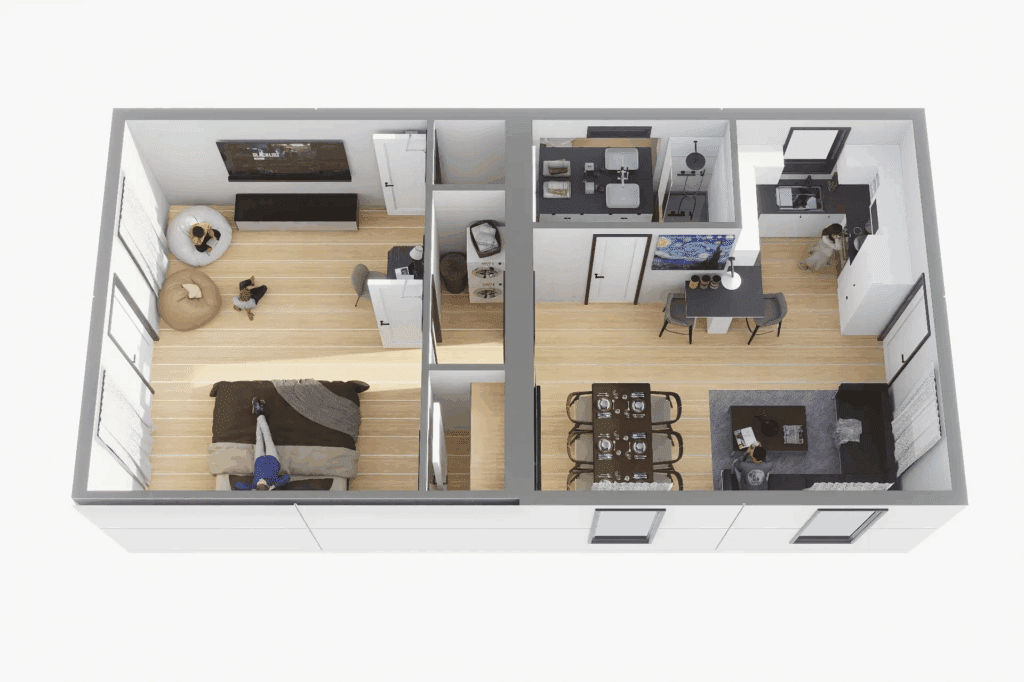
Boxabl began in 2017 with the audacious mission of making housing scalable, affordable, and simple. Its flagship product, the Casita, is a 361-square-foot studio home packed into a box that unfolds into a fully equipped living space. It comes with a kitchen, bathroom, HVAC, and appliances—ready for occupancy as soon as utility hookups are available.

The company’s defining innovation lies in its transport model. Each unit folds down to fit within the dimensions of a standard shipping load. That means fewer oversized deliveries, lower transport costs, and easier logistics compared to traditional modular construction. Once on site, the home can be unfolded and set up in less than an hour, eliminating many of the delays tied to on-site labor.
Beyond the single Casita, Boxabl envisions a system of stackable and connectable modules. These could be arranged to form multi-room homes, duplexes, townhouses, or even small apartment clusters. In essence, the company is not just selling a unit—it is selling a building system that can evolve with the needs of a homeowner or a city.
Regulatory progress has been uneven. While Boxabl has faced resistance in certain jurisdictions, it has achieved approvals in states including New Mexico and California. That’s significant because it means Boxabl’s product could more readily slide into municipal modular housing programs like the one Albuquerque is exploring.
On the financial front, Boxabl is positioning itself for rapid growth. The company announced in 2025 that it would go public via a $3.5 billion SPAC merger with FG Merger II Corp. This move, along with more than $230 million already raised, reflects the scale of its ambitions. Still, as with many disruptors, the road has not been smooth. Critics point to building code battles, zoning hurdles, and questions about whether the company can deliver on the hype at scale.
The proposal reported by KRQE suggests activating vacant lots throughout Albuquerque with modular housing. The plan emphasizes speed, affordability, and turning idle land into livable spaces.
The city’s Metropolitan Redevelopment Agency is working with the Piru Group on the proposal that would install a total of 42 modular housing units throughout vacant lots in the city. The group is calling these one-bedroom homes, ‘the future of housing.’
If Boxabl were to partner with the city, the potential impact could be dramatic. The company’s foldable units could reduce time-to-occupancy to a fraction of traditional construction. A home delivered in a box and unfolded on site could quickly provide relief in a city struggling with housing shortages.

Affordability is another advantage. By building in a controlled factory environment and cutting down transport and labor costs, Boxabl aims to make modular housing more cost-effective. This scalability could allow Albuquerque to roll out housing in increments, matching the pace of demand without requiring massive upfront investment.
Because Boxabl has already secured certification in New Mexico, regulatory approval may be less of a hurdle than for other modular providers. That could allow the city to move more quickly from concept to pilot program.
There are also design considerations. By stacking and connecting units, Boxabl offers flexibility beyond the single Casita. Albuquerque could experiment with different configurations—some resembling traditional neighborhoods, others creating denser urban clusters. The challenge will be integrating these modules into the existing urban fabric, ensuring that aesthetics, green space, and livability are not overlooked.
Finally, there’s the question of long-term durability. Factory-built homes often benefit from tighter quality control and predictable maintenance, but Boxabl’s unique folding design has not yet been proven at large scale over decades of use. Albuquerque would need to balance the immediate appeal of quick solutions with the responsibility of ensuring sustainable housing stock.
Boxabl’s model intersects with three major shifts in the construction world. First is the rise of factory-scale housing, which treats homes more like cars or electronics—products assembled in controlled conditions rather than crafted piece by piece on site. Second is transport-efficient modularity, where the folding design lowers logistical barriers that have long hampered modular expansion. Third is adaptable growth, where homes can expand by simply adding more modules, avoiding the waste and disruption of traditional additions or rebuilds.
These shifts are exciting, but they are not without friction. Building codes remain entrenched in traditional norms, often requiring extensive negotiation before a new modular system is approved. Even with factory-built efficiency, homes need roads, sewers, power lines, and inspections—site readiness can be a bigger bottleneck than the building itself. And while investors are flocking to Boxabl, there’s always the risk that hype gets ahead of delivery.
Yet, the urgency of the housing crisis means cities cannot afford to ignore bold approaches. With affordability slipping further out of reach for many families, with natural disasters displacing thousands, and with vacant land sitting unused in cities across the country, the need for solutions has never been greater. Boxabl is not a silver bullet, but it may be a crucial arrow in the quiver.
Imagine walking through downtown Albuquerque a year from now. Three vacant lots that once sat empty now host compact neighborhoods of Boxabl Casitas. Some are stacked to create duplexes, others linked to form row-style homes. Shared courtyards give residents green space. Solar panels line rooftops. What once was a dead zone of urban land now pulses with life and community.
This vision is ambitious, but it is achievable if Albuquerque embraces modular innovation. By piloting a handful of Boxabl units, the city could become a national model for urban infill. If it succeeds, the experiment could inspire other municipalities to rethink how they use space, manage costs, and deliver housing at speed.
In an era where housing often feels like a locked box, Boxabl is daring to unfold the possibilities. And Albuquerque’s modular housing proposal might be the perfect place to test whether those possibilities can become reality.
A Simple Habit That Can Change Your Entire Factory
Originally, I thought of writing this just for offsite factory owners and general managers, but as the words started to form, I realized something important: this message is for everyone. Everyone in an offsite construction factory. Everyone in any workplace, really. It’s about something so simple it almost sounds silly—and yet, it might just change your entire day.
It’s called: STOP, SMILE, and LISTEN.
Imagine yourself as the owner or GM of an offsite construction factory. You’re building wall panels, components, or full modular homes. It’s 8:00 AM. You pull into your reserved parking space, walk through the front doors without making eye contact with anyone, and head straight to your office. You sit at your desk, take a deep breath, and wonder who or what is going to f**k up your day.
Sound familiar? That’s how far too many people start their morning—closed off, braced for the worst, and already wearing their frustration like armor. It’s not malicious. It’s just habit. But it’s also contagious.
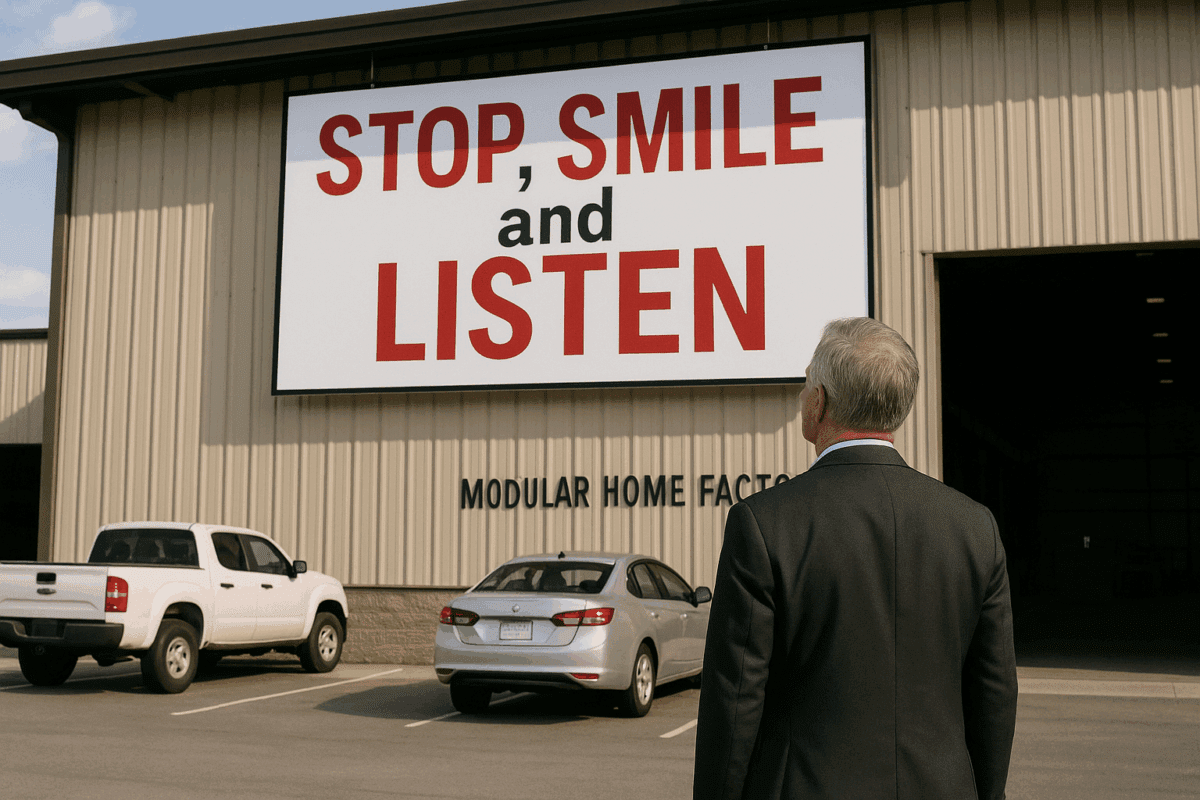
Now let’s imagine something different. As you pull into that parking space, picture a big sign bolted to the wall in front of you: STOP, SMILE, and LISTEN.
So you stop. You look around. The production line is humming, your employees are already inside working, and trailers are lined up outside with modules ready to ship—real homes that someone chose to buy from your company. In the visitor parking area, you spot a couple of unfamiliar cars. Someone is here, right now, hoping to do business with your company.
That’s amazing, isn’t it? You just saw it—and appreciated it—instead of walking past it.
You step through the front door and are greeted by your receptionist. Normally you’d nod and keep walking, but today you stop.
“How are you doing this morning?” you ask.
“OK,” they answer, which these days can mean anything from “fine” to “hanging on by a thread.”
This is where you deliver your first SMILE of the day. “Just OK? It’s a beautiful morning out there.”
And suddenly, something shifts. They either agree and smile back, or maybe they open up about something personal—a sick child who’s finally better, a great dinner they had last night, or just the relief of finishing a tough week.
And you listen.
That simple, sincere moment has power. The person who greets everyone who walks in the door is now carrying a little spark of warmth, and they’ll pass it along to the next person who comes through. You don’t have to do it every day, but do it enough, and it becomes part of the air your team breathes.
Keep doing this. Ask the receptionist who the visitors are meeting with. If someone new is talking with your corporate buyer, knock on the door, step in, shake their hand, and say, “Welcome to our factory.” Then walk out. That’s it. It’s not your job to buy things, but it is your job to build relationships.
A couple of times a week, stroll the production line. Stop for thirty seconds next to someone doing a great job or trying something new. Smile. Listen. Let them know you see them. Do the same with a salesperson you bump into in the hallway. These aren’t interruptions; they’re investments.
Before long, this practice rewires your mornings. The dread of “what’s going to go wrong today” gets replaced by “look at what’s already going right.” Negativity loses its grip.
Even better, you’ll start to really know the people who’ve chosen to work for you—their names, their stories, their talents. You’ll see them as more than job titles or productivity stats, and they’ll see you as more than a signature at the bottom of a paycheck.
And that is how workplaces transform—not with a grand announcement, but with one small decision made every day: STOP, SMILE, and LISTEN.
Walk into any offsite construction event, from IBS to a regional builders’ association meeting, and you’ll hear it. Factory owners swapping stories over coffee, leaning on bar counters, or waiting in line for a shuttle bus. And like clockwork, advice flows freely—everything from how to solve labor shortages to why you should (or shouldn’t) add automation to your production line.
Here’s the curious part: many of those same owners, who have written checks to consultants and advisers to help guide their operations, will hang on the words of complete strangers. A two-minute hallway chat suddenly feels more convincing than a twenty-page paid report. Why does this happen? Let’s dig in.
There’s no denying the pull of “free.” Free advice feels like a gift. It costs nothing to listen, and there’s no obligation to act on it. Owners can take it, twist it, or toss it aside without a second thought. That low-pressure dynamic makes them more receptive in the moment.
By contrast, paying for advice changes the entire psychology. Once an owner has shelled out thousands of dollars for a consultant’s time, the words on the page suddenly become a test. The owner wonders, “Is this really worth what I paid?” That mindset shifts them from open-mindedness into defense mode, hunting for reasons to doubt rather than reasons to implement. Free advice can be welcomed with a smile. Paid advice can feel like a debt that must be justified.
When a stranger casually offers a tip, it feels unbiased—just one professional helping another. The reality is murkier: that “neutral” voice might be a supplier nudging you toward their product line, or a competitor subtly discouraging you from a market they want to protect. But in the moment, it feels genuine. Owners instinctively trust people who appear to have no skin in the game.

On the flip side, paid advisers walk in wearing the badge of “consultant,” and the meter is running. Even though their livelihood depends on delivering useful, actionable advice, owners can’t help but think: “Are they saying this because it’s best for my factory, or because it makes them look smart and keeps the checks coming?” The suspicion, fair or not, makes owners filter their words through a lens of skepticism.
Owning a factory takes confidence. Day after day, these leaders make decisions that affect hundreds of workers, millions of dollars in material, and the trust of developers counting on them. They’re accustomed to being the one giving orders, not receiving them.
Hiring a consultant means admitting—out loud—that there’s something they don’t know, or worse, something they may have been doing wrong. That hits the ego hard. By contrast, listening to a stranger in a casual setting feels like nothing more than trading experiences. There’s no loss of pride, no spotlight on their blind spots, and no written record reminding them of their shortcomings. For many, it’s easier to nod along to a stranger’s advice than to sit across a desk and be “taught” by a paid professional.
Humans love validation. And in the offsite industry, it’s especially comforting when someone else agrees with what you’ve been thinking all along. Strangers often deliver that kind of reinforcement. They’ll echo the common wisdom of the industry: “Don’t overcomplicate your production line,” or “Stick to what you know works.” Owners light up at those words because they already wanted to believe them.
Advisers, however, are paid to disrupt comfortable thinking. Their job isn’t to soothe—it’s to challenge. That often means pointing out inefficiencies, naming the sacred cows that need to go, or suggesting painful restructuring. Nobody likes to hear that their star project manager is actually dragging down productivity, or that their factory layout is costing them 10% in wasted labor. Validation makes you feel right. Truth makes you uncomfortable. Guess which one is easier to swallow at a cocktail reception?
The context of where advice is given matters more than most people admit. A casual chat over a drink or a chance encounter on the trade show floor is informal, low-stakes, and—crucially—forgettable. Owners can hear it, process it, and file it away without the pressure of immediate action. It’s advice without accountability.
The boardroom, however, is a different beast. When a consultant walks in with charts, data, and a slideshow, the weight of responsibility hangs in the air. Every recommendation sounds like a directive. Every suggestion carries an implicit, “If you don’t act on this, you’re ignoring my expertise.” That formality makes owners bristle. It turns advice into a burden. On the barstool, they’re free to listen. In the boardroom, they feel forced to decide.
What makes this phenomenon truly ironic is that the advice itself often overlaps. A consultant might spend weeks analyzing operations to conclude that automation isn’t the right move yet. Then, at the next industry mixer, a stranger shrugs and says, “Robots? Waste of money right now.” Guess which version the owner repeats to their management team the next morning? The casual one-liner.
It’s not that the consultant was wrong—the stranger simply delivered the same advice in a less threatening package. The professional analysis becomes more convincing only after it’s been echoed by a neutral voice. In other words, strangers often get the credit for planting seeds that advisers carefully sowed.
Owners don’t need to stop listening to strangers. Some of the best insights come from casual encounters, and there’s value in the raw honesty of peers. But smart leaders learn to separate advice that feels good from advice that holds up under scrutiny. Strangers can provide sparks. Paid advisers can help build the fire.
The fix is to use both wisely: enjoy the validation of casual conversations, but weigh them against the grounded, data-driven perspective of professionals who have seen dozens of factories succeed—and fail. True advisers don’t just give opinions. They give context, consequences, and accountability. And when the stakes are as high as keeping a factory profitable, accountability is worth a lot more than a free tip at a trade show.
In the end, the choice is simple. The guy at the bar might buy you a drink, but the adviser you paid is the one making sure your business can still afford the next round.
CLICK HERE for a Free 30-minute video chat
For generations, $80,000 a year was the picture of middle-class comfort. Families earning it could buy a house in a decent neighborhood, drive a reliable car, pay the bills, and even set a little aside for vacations and college funds. It was the number that seemed to promise stability. But today, whether $80,000 represents “doing well” or “barely hanging on” depends entirely on where you happen to live.
Let’s take a closer look at how far an $80,000 income goes for a family in different corners of the country—and why in some places it’s still a ticket to the American Dream while in others it won’t even cover the rent.
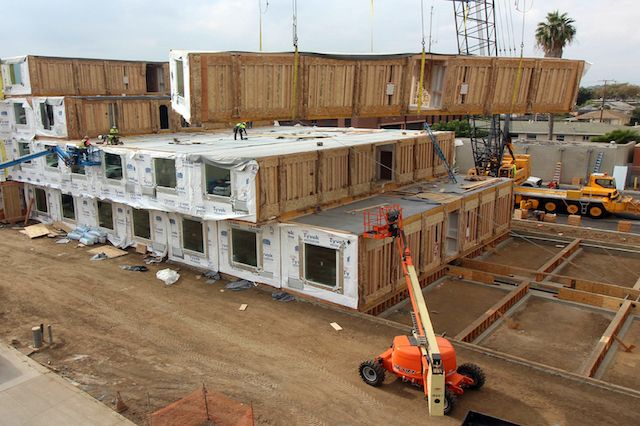
Economists, lenders, and housing advocates all use a simple set of guidelines when it comes to affordability. The rule of thumb is that no more than 30% of gross income should go toward rent and no more than 28% toward a mortgage payment that includes principal, interest, taxes, and insurance.
For a family making $80,000 a year:
That’s the math. And in much of the country, it works. But what happens when those benchmarks collide with the realities of local housing markets?
If you’re living in Minneapolis, Savannah, Phoenix, or Hartford, $80,000 a year still feels like a respectable income. Average rents in these cities range from about $1,500 to $2,000 a month, comfortably under the affordability threshold. Median home prices, which hover between $320,000 and $470,000, also align with what banks would approve for an $80,000 household with a conventional loan.
In cities like these, renting is achievable without financial stress, and buying a modest home—while not cheap—is still realistic. A family can have a backyard, send kids to local schools, and keep up with car payments without needing two high-powered incomes. In short, the math still works.
And if you go further into the Midwest, the South, or smaller metros across the interior West, $80,000 isn’t just workable—it’s comfortable. In many of these regions, families can pay the mortgage, take trips to the lake, and maybe even have enough left over for that new truck or a college savings plan.
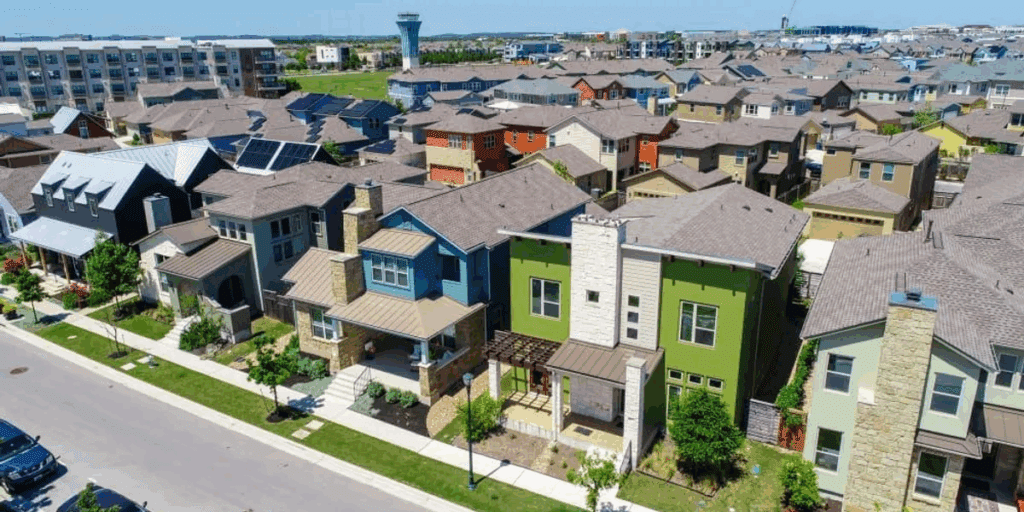
Travel to the coasts, however, and that sense of security evaporates. The very same income that stretches nicely in Minneapolis collapses under the weight of housing costs in California, New York, Boston, Seattle, and Washington, D.C.
In San Francisco and Silicon Valley, median home prices soar well above $1 million. Even average rents push past $3,500 a month—nearly double what an $80k household can afford. In New York City, median rents for a family-sized apartment can easily hit $3,000–$4,000 a month, and buying a home in any borough is nearly impossible without six-figure incomes. In Boston, the average home costs around $750,000 and rents average over $3,000. In Seattle, the median home price is about $850,000, while rents hover in the $2,500–$3,200 range. And in the D.C. metro, both rents and home prices overshoot what an $80k household can reasonably manage, leaving little room for savings or emergencies.
In these markets, $80,000 no longer represents middle-class stability. Instead, it often means trade-offs: smaller apartments, longer commutes, and fewer chances to build wealth through homeownership.
There are also “in-between” metros where $80,000 gets stretched thin but hasn’t yet snapped. Denver, Austin, Portland, and Miami fall into this category.
Denver’s median home price sits around $600,000, with rents averaging $2,200. Austin’s once-affordable housing now averages close to $500,000, with rents over $2,200. Portland homes average $550,000, with rents in the $2,000–$2,500 range. Miami combines rising home costs of about $550,000 with high rents around $2,500, fueled by strong demand from out-of-state buyers and investors.
In these metros, $80,000 can still cover rent, but homeownership often requires two incomes, a hefty down payment, or a willingness to move further from the urban core. It’s a middle ground where families survive but don’t thrive, and the dream of buying a home feels increasingly out of reach.

The reason $80,000 works in one part of the country and fails in another comes down to a mix of supply, wages, and geography. In many coastal cities, job growth has outpaced the supply of housing for decades. Zoning restrictions, geographic constraints, and community resistance have slowed development, leaving families competing for too few homes. At the same time, wages for middle-class households haven’t kept pace with housing costs, even in places like San Francisco or Seattle where higher-paying jobs exist. The result is a lopsided market where an $80,000 household finds itself going head-to-head with families making double or triple that income. Meanwhile, in the Midwest and much of the South, land is abundant and development costs are lower, allowing families earning the same $80,000 to buy into a comfortable lifestyle with far less pressure.
This divide reveals more than just numbers on a spreadsheet—it highlights the widening geography of opportunity in America. A family earning $80,000 in Hartford or Savannah can reasonably expect to rent a decent home, save for the future, and even purchase a house. That same family in Los Angeles or Brooklyn, however, may be stuck in a small apartment with rent swallowing their paycheck and ownership nothing more than a dream. What we’re really seeing is how financial security and the possibility of upward mobility are being defined less by income alone and more by where you happen to live. The American Dream still exists, but it’s not evenly distributed. In many ways, it’s become geographically exclusive.
An $80,000 annual income is still solidly middle class in much of the country. In Minneapolis, Hartford, and hundreds of small- to mid-sized cities, it’s enough to rent comfortably and even buy a modest home. But in America’s most expensive coastal metros—San Francisco, New York, Boston, Seattle, and D.C.—$80,000 barely covers rent and is nowhere near enough to enter the housing market.
The uncomfortable truth is this: the American Dream hasn’t disappeared—it’s just become geographically exclusive. For families earning $80,000, that dream is alive and well in the Midwest and South, and increasingly out of reach on the coasts.
The next time someone says “eighty grand is a great income,” the most accurate response might be: “Depends where you live.”
If you’ve been around the building industry for more than five minutes, you’ve heard the word modular. It’s the golden child of construction right now—hailed as the solution to housing shortages, rising labor costs, and the need for speed. But here’s the problem: too many companies are calling themselves modular builders when, in reality, they’re just one of many branches on the larger offsite construction tree.

The result? A confusing mess of definitions, inflated promises, and disappointed developers who expected Legos but ended up with a complicated jigsaw puzzle. It’s time we unpack what offsite construction really includes, why modular is just one piece, and why accuracy matters more than ever.
When we talk about true modular construction, we’re talking about volumetric building. Entire three-dimensional sections—modules—are fabricated in a factory, complete with walls, floors, ceilings, wiring, plumbing, even finishes. These modules roll out of the plant 70% to 90% complete, then get craned into place onsite and stitched together to form a full structure.
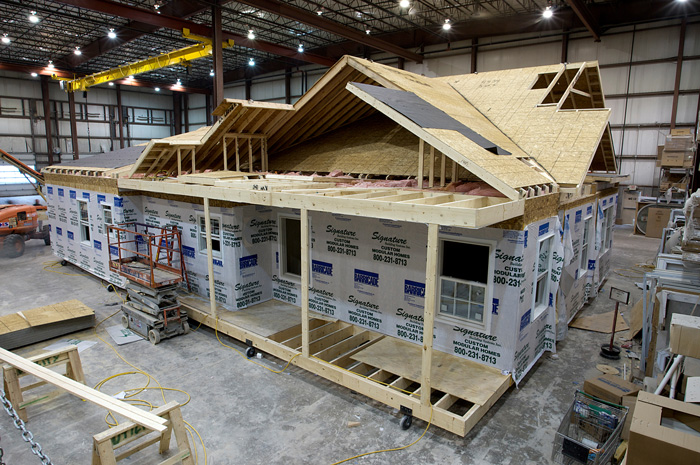
That’s modular. Hotels, multifamily housing, dormitories, schools, healthcare facilities, and single-family homes have all been built this way. The magic lies in the fact that site prep and module fabrication can happen at the same time. What used to take months or years on a muddy jobsite can now be compressed into weeks of installation.
It’s a proven system, backed by decades of real projects. But modular is just one branch of the offsite family tree.
The broader umbrella is called offsite construction. This includes everything built in a factory or controlled environment and then transported to the final site. And under that umbrella are many distinct methods, each with its strengths and weaknesses.
Each of these methods deserves recognition. They’re all legitimate parts of the offsite world. But when you start calling all of them modular, you’re not just oversimplifying—you’re misleading.
Here’s the uncomfortable truth: the word modular sells. It grabs headlines. It opens wallets. It reassures city councils, developers, and lenders that what they’re buying is part of a revolution in construction.
For startups chasing investor dollars, calling themselves modular feels like the fastest way to credibility. For marketing teams, it’s easier to slap the modular label on a process than to explain panelization, hybrid, or precast. Even well-meaning companies fall into the trap because modular has become shorthand for “modern, fast, affordable.”
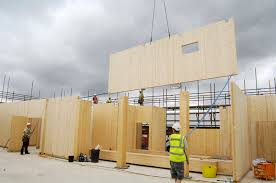
The problem? When panelized factories start calling themselves modular factories, or when 3D printing startups claim to be the future of modular housing, confusion follows. Developers expecting complete volumetric modules are instead handed panels that require significant on-site labor. The timeline stretches. The budget swells. And the reputation of modular construction takes the hit, even though modular wasn’t really at fault.
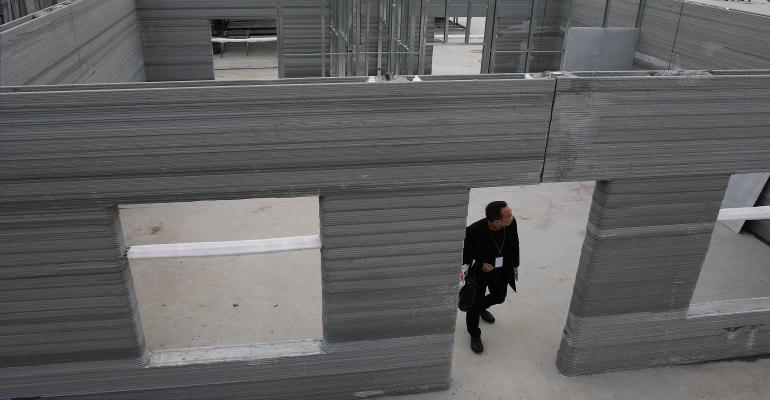
You don’t have to look far to find examples.
Each example chips away at clarity. And each time a project disappoints because the buyer thought they were getting modular, it hurts the whole industry.
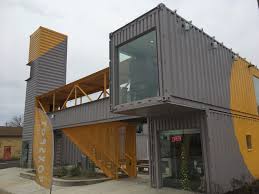
Some might shrug and say, “So what? It’s all offsite anyway.” But accuracy matters for three big reasons:
The industry doesn’t need to fight over labels. Every branch of offsite construction has a role to play in solving the housing crisis and modernizing how we build. Panelization is ideal for custom homes and light commercial work. Pods make perfect sense for repetitive hotel or hospital bathrooms. Precast shines in heavy infrastructure. Mass timber offers sustainability and beauty.
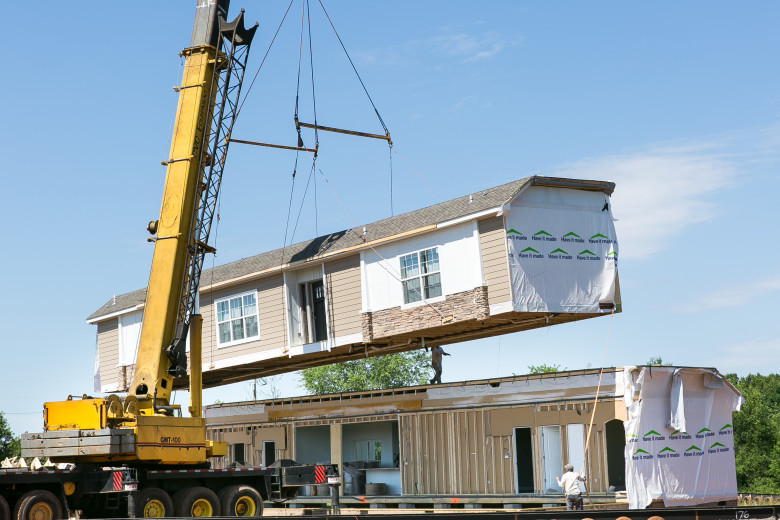
But modular is its own discipline—and it deserves to be recognized as such.
Think of offsite as a family. Modular is one of the children, but it’s not an only child. If we keep calling every cousin and neighbor “modular,” we lose the richness of the family tree.
Here’s my suggestion to the industry: stop hiding behind buzzwords. If you build panels, call them panels. If you print houses, call them printed. If you make pods, call them pods. And if you’re truly modular, don’t be shy about it—but don’t let others misuse the name, either.
The housing crisis is too urgent, and the stakes are too high, to muddy the waters with sloppy definitions. Let’s celebrate every offsite method for what it is, not what it pretends to be.
Because when we call everything modular, nothing really is.
In offsite construction, margins are measured with a microscope. Materials rise and fall in cost like the tides, labor shortages never seem to ease, and project delays chew through profits faster than a dull saw blade through plywood. And yet—despite all the hand-wringing over the economics of building—an astonishing 36% of construction companies are missing out on tax incentives they are eligible for.
That finding, revealed in the 2025 CBIZ Construction Industry Survey, is less a statistic and more a wake-up call. Because in an industry where every penny counts, passing on incentives is the financial equivalent of leaving a pallet of cash sitting in the job trailer.
The natural assumption is that the tax code is simply too complicated. After all, most contractors don’t have time to sift through hundreds of pages of IRS guidelines while trying to finish a hospital wing or an apartment building. But that’s only part of the story.
What really drives the oversight is complacency mixed with overconfidence. Many owners believe tax credits are designed for tech firms in Silicon Valley, not builders in Sioux Falls. Others assume their accountants would have flagged anything relevant—never realizing that most generalist CPAs aren’t familiar with construction-specific incentives. And some simply think the potential savings are too small to bother with.
The truth? Some of these credits are game-changers. A single project can generate tens of thousands of dollars in deductions. Multiply that by dozens of projects a year, and the math becomes downright painful for those firms ignoring them.
To understand the size of the leak, it helps to look at the types of credits most often left on the table:
Mention “R&D,” and most people picture scientists in lab coats tinkering with beakers. In reality, construction firms often qualify when they experiment with new building techniques, prefabrication methods, or unique materials. Designing a more efficient HVAC system, testing a modular assembly approach, or even developing custom software to streamline project scheduling can all fall under R&D. Yet, survey after survey shows contractors rarely file for it.
This one rewards firms that design or retrofit buildings with energy-efficient lighting, HVAC, or building envelope improvements. Architects, engineers, and contractors who lead the work can claim it. With energy codes tightening nationwide, the deduction is practically lying on the table for projects completed every year.
Builders of residential projects—especially multifamily—often qualify if they meet certain efficiency standards. With the housing market desperate for new units, 45L could be a lifeline for builders trying to keep costs competitive while delivering affordable housing.
Every state has its own menu of tax goodies. Some support green building, others workforce training, and still others reward companies that build in distressed areas. Yet many firms never check beyond their federal return.
Taken together, these incentives could cover new equipment purchases, fund apprenticeships, or help a company weather the storm of material cost spikes.
Let’s put numbers to it. Imagine a mid-sized commercial contractor building a $25 million mixed-use project that includes energy-efficient systems. With proper documentation, they could qualify for the 179D deduction of up to $5 per square foot—potentially saving hundreds of thousands in taxes. Add in R&D credits for experimenting with prefabricated bathroom pods, and the tax break grows.
Now picture that same contractor missing those filings entirely. The money goes back to the IRS, while a competitor down the street pockets the savings, reinvests in new robotics for their prefab line, and underbids the next job.
The survey’s 36% isn’t just a number. It represents firms handicapping themselves financially in an industry that already has razor-thin profit margins.
In construction, cash flow is the oxygen that keeps a company alive. When firms ignore incentives, they’re effectively raising their own tax bills—money that could have funded better wages, retention bonuses, or technology investments.
This matters because the industry is in the middle of a transformation. Companies investing in automation, AI-driven project management, and offsite construction methods are gaining ground. If those firms are also claiming every available incentive while their competitors aren’t, the gap widens even faster.
In other words, not claiming credits doesn’t just hurt the bottom line today—it can also mean being outpaced tomorrow.
The solution isn’t rocket science, but it does require a shift in mindset:
Perhaps the biggest hurdle is cultural. Many construction leaders pride themselves on their grit, resourcefulness, and ability to survive on slim margins. There’s almost an unspoken badge of honor in doing more with less. But refusing to pursue incentives doesn’t make a firm tough—it makes it less competitive.
Claiming credits isn’t about cutting corners. It’s about building smarter—using every tool available to create stability, protect jobs, and strengthen profitability.
The CBIZ survey should make every construction leader pause. If over a third of the industry is walking past free money, then the problem isn’t just individual—it’s systemic. Training, awareness, and perhaps even industry-wide advocacy are needed to close the gap.
Because in the end, the IRS isn’t going to send a thank-you note for overpaying. They’ll simply take the money and move on. Meanwhile, those companies that wise up will have a stronger balance sheet, better technology, and more staying power when the next economic downturn hits.
In construction, resilience has always been about more than hammer and nails. It’s about strategy, foresight, and knowing where to find hidden value. Tax incentives are one of the easiest wins available—if companies can muster the discipline to stop leaving them on the table.