
Highlighting the thinkers and their ideas driving the evolution of Offsite Construction. 
Be inspired, be informed, be innovative!

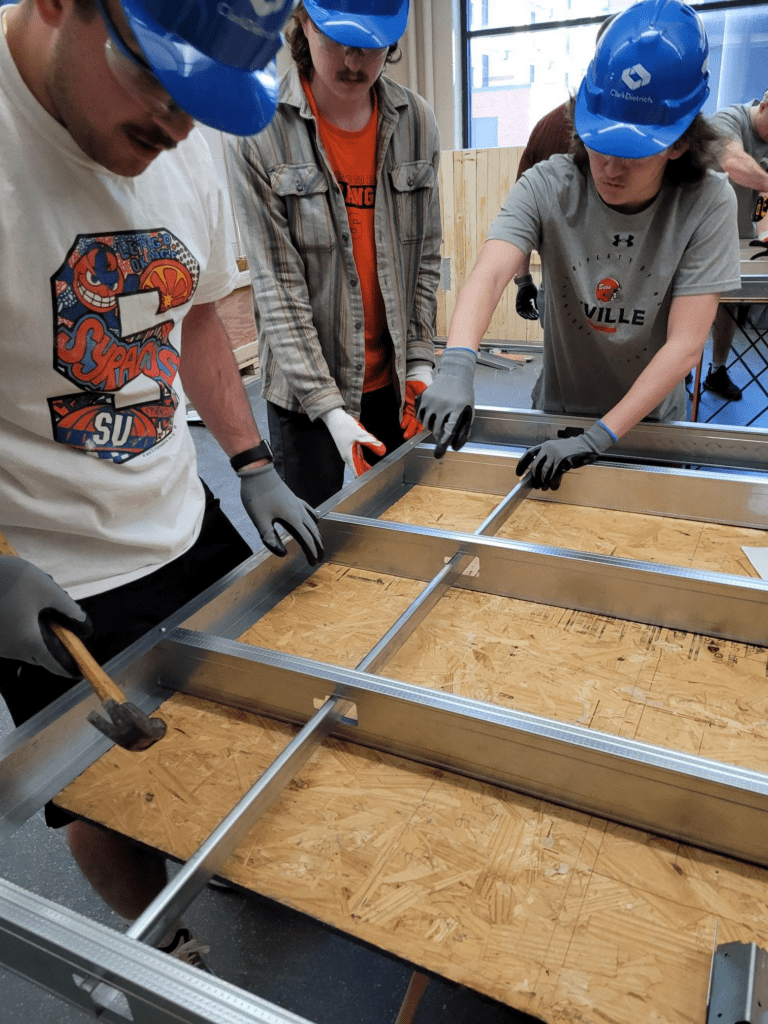
A Case for Innovative Cold-Formed Steel Framing in Off-Site Construction

an article by David Chiles

If you’ve been in the construction industry for any length of time you know that there is a continued and growing focus on product performance and sustainability.  Construction materials have not changed that drastically in the last 50 years.  Whether you are a builder or manufacturer you’re likely going to choose between 3 common building materials, Wood, Concrete or Steel.  

David Chiles

While wood serves as a great balance between efficiency and affordability and concrete excels in strength and versatility.  This article will explore some of the attributes of light gauge cold-formed steel framing (LGS/CFS) and its performance features. 


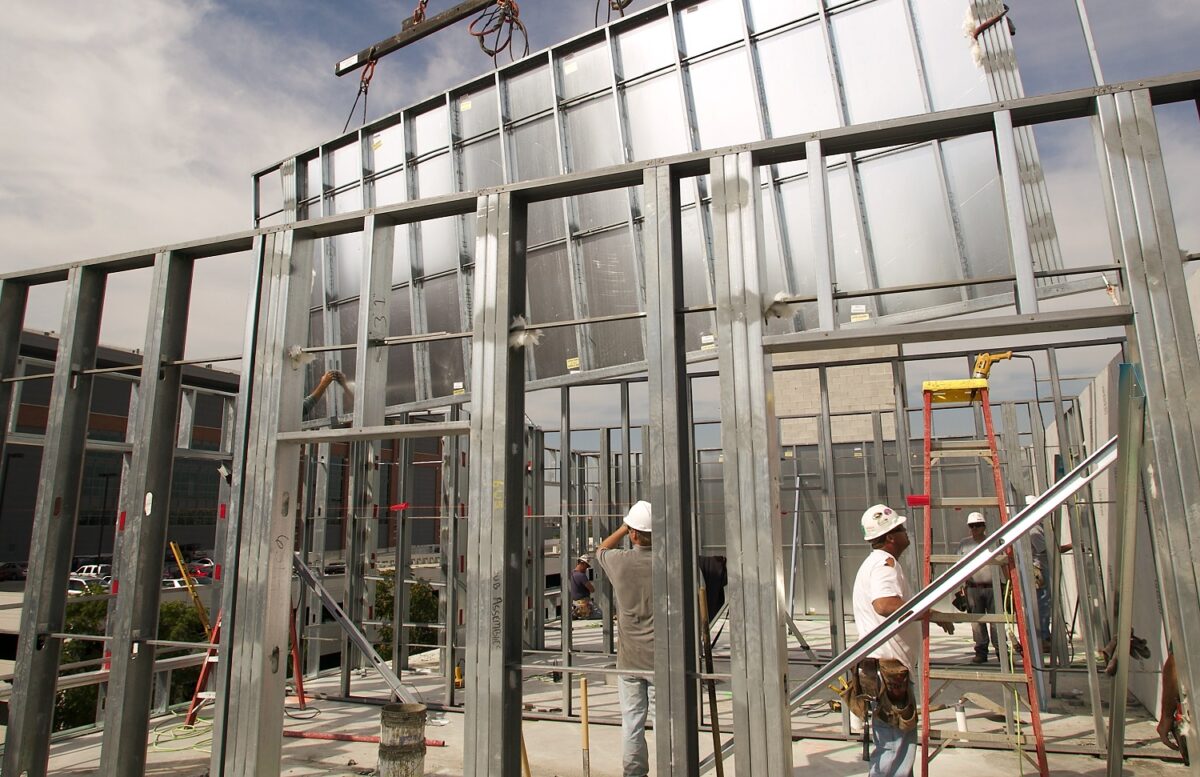
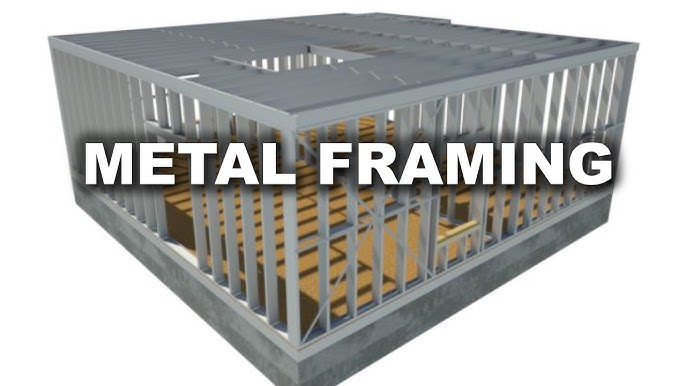
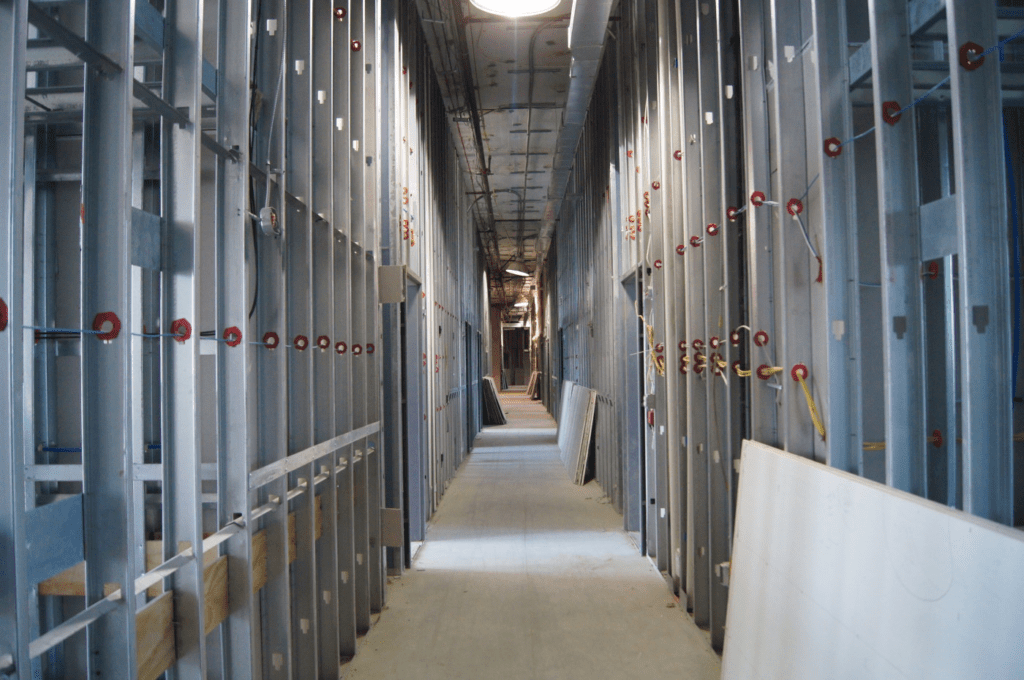
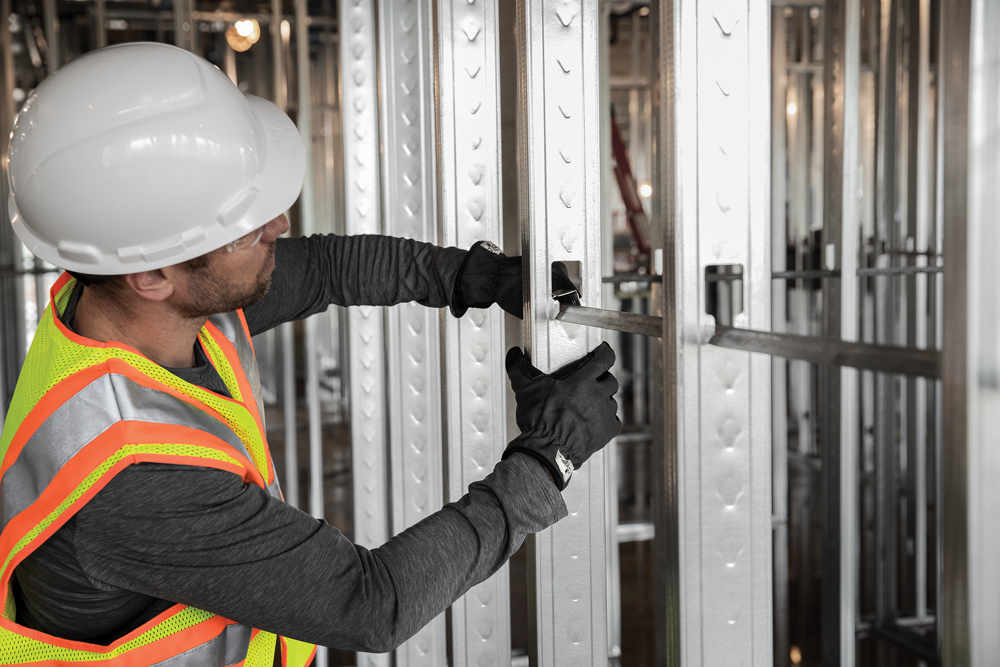
All photos – ClarkDietrich Framing Systems

Sustainability: Reduce, Reuse and Recycle

Cold-formed steel (CFS) framing is a sustainable building solution that embodies the “Reduce, Reuse, Recycle” principles.  It’s precise manufacturing minimizes waste, while its lightweight nature reduces transportation emissions.  CFS can be easily disassembled and reused in new projects, thanks to its durability and non-combustibility.  At the end of its life, CFS is 100% recyclable back into new steel products without quality loss.  Choosing CFS reduces construction waste, conserves resources and contributes to a circular economy in the building industry. (AISC, 2024)  

Much of the industry started its journey to greater sustainability by incorporating or increasing their products recycled content.  However, some materials experience downcycling, a breaking down of material integrity and performance after each recycling iteration.  This downcycling can often times affect the structural performance of the original product manufactured from virgin materials.  The best example is the case of wood products.  Wood framing members can be downcycled into paper products, and those paper products are then downcycle one or maybe two more times before they must go to a landfill.  

Steel, on the other hand, is infinitely recyclable and does not experience downcycling.  In fact, when you buy steel, you are always buying a recycled product.  80 million tons of steel scrap are recycled each year – more than paper, aluminum, glass and plastic combined.  

Did you know that the average 2,000sqft home, built with wood, requires 40-50 trees or one acre of deforestation? If you were to construct that same size house out of CFS it would contribute to the recycling of four automobiles.  

According to an EPA estimate, 600 million tons of construction and demolition debris were generated in the United States in 2018, (EPA, 2018).  Furthermore, recycling one ton of steel scrap saves 1.5 tons of CO2 and almost 2 tons of raw materials. (worldsteel.org 2024)

Strength and Versatility

Steel is roughly half the weight to its wood counterparts.   A reduction in weight of framing materials helps reduce the requirements for your project’s foundation.  If your project incorporates off-site construction practices, then less weight allows for more material to be shipped per truck load and possibly less overall deliveries.  Furthermore, the reduced weight of CFS is advantageous for seismic design, where the weight of a completed structure is a crucial consideration.  

Steel’s strength also lends itself well to mid-rise construction.  The sweet spot is 6-9 stories over a one level podium.  An increased project height allows for smaller project footprint and greater efficiency in site development.  Small considerations like these, directly contribute to reducing a carbon footprint for a project, while increasing the value of the project long term.  

Steel is dimensionally stable and manufactured to exact lengths and tolerances.  Because CFS is dimensionally stable, it does not warp, shrink or settle over time.  These features lend itself to greater design flexibility in terms of taller wall heights and greater spans.  

CFS’s galvanized coatings provide moisture and humidity resistance.  The galvanized coatings on sheet steel must meet requirements for ASTM standards to qualify for CFS manufacturing.  These ASTM standards test the hardness, malleability, ductility and corrosion resistance of the steel through rigorous testing.  

Fire Safety

Possibly the largest concern and deciding factor for any building material we choose to incorporate in a project.  In a fire or pre-fire condition, steel framing will never directly fuel or contribute to the spread of the fire.  At the risk of stating an obvious point, wood at its core will always be a fuel source for fire.  No matter what chemical you soak or treat it with, it will burn, you can slow the burn or char rates, but it will be significantly weakened structurally and pose a greater life safety risk.  

Lately, the offsite community has looked at mass timber in an effort to mitigate the shortcomings of traditional wood framing.  While mass timber answers the question for mid- and high-rise construction, mass timbers is a resource intensive production process.  The possible environmental impact of their adhesives and machinery having the largest footprint to account for.

Non-combustible materials are still the best and safest choice for any construction project be it traditional or off-site construction.  Many municipalities across the country have conducted studies of the true cost of combustible frame residential buildings and their assessments often lead to changes in the building code.  A fire in a combustible frame project of any kind is a risk unto themselves and surrounding properties.  In that scenario, the total losses comprise of the project, surrounding properties, displaced families and exhausted municipal resources.  

Affordability

If there is one thing that seems to be on the mind of most participants in our industry, it’s the existing and continued demand for affordable housing.  While the task ahead is monumental the demand for affordable housing is a factor that all of us in the industry have a shared goal on impacting.  

In some instances, steel framing might be a higher cost on a stick-by-stick comparison to wood framing and concrete is generally more expensive than wood or steel framing combined when you break it down to a square foot price.  

Steel framing however offers significant savings in terms of risk and liability and lifetime building operation.  Cost studies have revealed that projects constructed in CFS over wood are generally 2-3% higher on a stick for stick basis.  Those same studies often reveal that the property insurance premiums and builders risk insurance are substantially less when constructed in CFS(Costs to Build with Cold-Formed Steel Versus a Wood-Framed Building, SFIA 2024)  

Cold-Formed Steel is an inorganic non-combustible material, it resists mold and mildew and will never be a food source for pests like termites.  These qualities as well as it’s fire resistance properties can reduce insurance premiums as much as 25 to 75 percent.  (SFIA 2024)

A final component to CFS’s affordability is how easily the average participant can source steel framing. There are multiple volumetric roll-forming manufacturers and there are multiple brands of roll forming equipment that allow you to have greater control over your manufacturing process’.

Closing Thoughts

During the course of my travels and visits to many off-site participants in the last couple of years, I’ve seen a healthy mix of different framing materials used in many configurations.  Sadly, for some participants, they simply choose the building product that they know or have experience with regardless of its features or benefits.  I don’t think that any one specific building material is greater than the other, and on any given construction project there is a likely combination of concrete, wood and steel products that make up the whole of the project.   

However, knowing what we know as an industry about green building, renewable resources, climate change and decreasing carbon footprint it begs the question, why isn’t steel a leading choice for more project stakeholders.   Currently, steel makes up less than 1% of all new residential construction starts. (Eye On Housing 2023

There is no denying that wood framing has been the primary choice of builders for millennia.  But in our modern world and the ever-evolving construction industry, regardless of what product we favor, we can all agree that we need to consider the materials we use.  This primary consideration will help guide our industry with a continued focus on the true impact we leave on the built environment and the future of our planet.  

The Growing Role of Sensor Data in Modular Construction: Enhancing Safety, Efficiency, and Quality Control

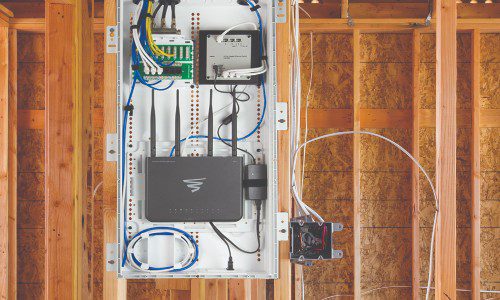
Today, technology is becoming more than just a tool for convenience—it’s an essential part of the process. As modular construction gains traction for its ability to deliver cost-effective, efficient, and environmentally sustainable housing, integrating sensor data into the manufacturing process has become a vital component of success. 

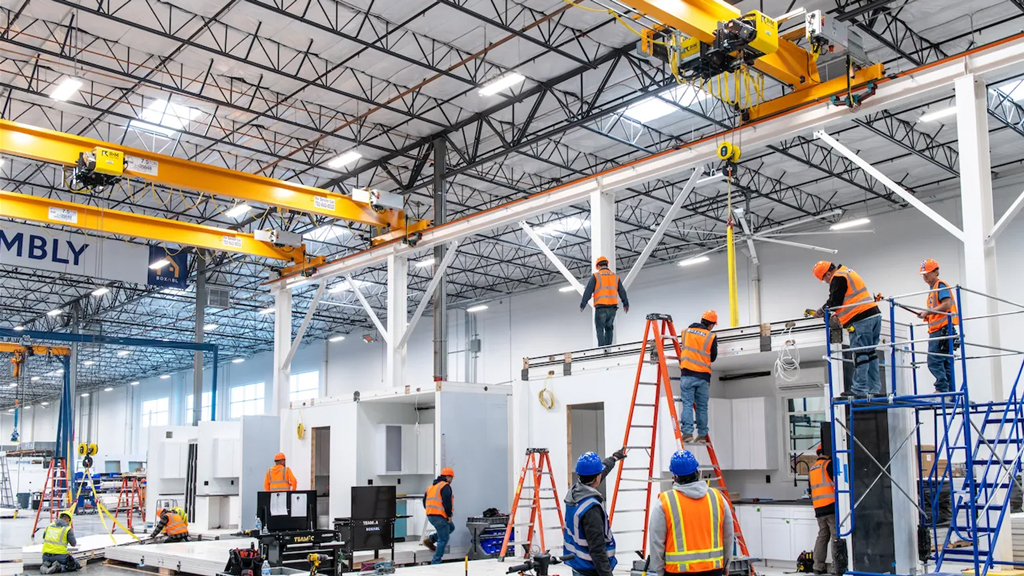
Modular construction, which involves building modules in a factory setting before transporting and assembling them on-site, benefits enormously from using advanced sensor technology. Sensor data not only ensures the safety of workers but also helps monitor the quality and performance of the modules before they are shipped to the construction site.

What is Sensor Data?

Sensor data is generated when a sensor detects input from its surrounding environment. This input could be in the form of light, temperature, motion, humidity, or sound, among others. Sensors process these inputs and provide real-time feedback or alerts based on the readings, enabling swift decision-making. In modular construction, sensor data plays a critical role in monitoring environmental conditions, structural integrity, and safety, both during the fabrication process in the factory and when modules are transported and installed at the construction site.

The integration of wireless connectivity into many sensors has also enhanced the ability to monitor and control these devices remotely, offering a seamless way to ensure the quality and safety of modules even after they leave the factory floor.

The Role of Sensor Data in Modular Construction

Sensor data is essential throughout the entire lifecycle of a modular construction project, from factory assembly to transportation and installation. Various types of sensors help monitor critical factors that impact both the safety of workers and the long-term durability of the buildings. Here are several ways sensor data is being used in modular construction:

Vibration Sensors: Ensuring Structural Stability During and After Construction

Vibration sensors play a crucial role in monitoring the structural stability of modular units. These sensors detect any movement or vibrations that could indicate instability within the structure. During the factory assembly process, vibration sensors can be used to detect structural flaws or weaknesses in connections, allowing manufacturers to address these issues before the modules are shipped to the job site.

Once the modular units are being transported, vibration sensors continue to play a role by monitoring the forces exerted on the structures during transit. Modular units, particularly those transported over long distances, can experience stress due to road conditions or handling. Vibration sensors alert manufacturers to any significant movements that could damage the structure during transport, ensuring that the module arrives on-site in optimal condition.

Humidity Sensors: Protecting Materials During Fabrication and Transport

Humidity is a critical factor in construction, particularly in environments where building materials are sensitive to moisture. In modular construction, humidity sensors are installed in factory settings to monitor moisture levels throughout the production process. Excessive humidity can degrade construction materials like wood, insulation, and drywall, leading to structural issues or material failure later on.

For instance, if humidity levels rise beyond acceptable limits, sensors can alert factory workers to take corrective action, such as adjusting ventilation or activating dehumidifiers. Additionally, humidity sensors can be left in the modular units during transportation to monitor the environment and prevent moisture-related damage en route to the job site. This proactive approach protects materials, ensuring they remain in pristine condition before installation.

Gas Sensors: Monitoring Air Quality for Workers and Future Inhabitants

Construction sites, particularly modular factories, can involve processes that release harmful gases or volatile organic compounds (VOCs). Gas sensors are vital in these environments, detecting unsafe levels of toxic gases such as carbon monoxide, methane, and other chemicals used in adhesives, paints, or insulation materials.

Gas sensors in modular factories protect workers from exposure to dangerous gases during the manufacturing process. These sensors can also be left inside the modular units to monitor air quality during transportation and even after installation on-site. In residential and commercial modular buildings, ensuring clean air is essential for the well-being of occupants, making gas sensors an indispensable tool for long-term safety.

Proximity Sensors: Enhancing Safety and Automation in the Factory

Proximity sensors are used to detect the presence or absence of nearby objects or people. In modular construction factories, these sensors can be installed on machinery and heavy equipment to prevent accidents. For example, proximity sensors on cranes, forklifts, and robotic assembly lines can halt operations if a worker gets too close, reducing the risk of accidents.

Moreover, proximity sensors can also be built into the modular units themselves to enable smart building features, such as automated lighting, heating, or security systems. These systems can be pre-installed and tested in the factory, allowing for seamless integration once the module is set up on-site.

Temperature Sensors: Ensuring Energy Efficiency and Performance

Temperature sensors are particularly useful in monitoring the thermal performance of modular units. In the factory, these sensors help ensure that insulation and heating systems are correctly installed and functioning as intended. By monitoring temperature data, manufacturers can detect potential issues with thermal performance early in the process, allowing them to make adjustments before shipping.

Additionally, temperature sensors can be used to monitor the conditions during transport, ensuring that materials that are sensitive to extreme temperatures, such as certain types of insulation or finishes, remain undamaged. Once installed, these sensors can continue to monitor the building’s energy efficiency, providing valuable data on heating and cooling performance.

Wireless Connectivity and Remote Monitoring in Modular Construction

One of the most transformative aspects of sensor technology is its integration with wireless connectivity and the Internet of Things (IoT). In modular construction, this allows real-time sensor data to be transmitted directly from the factory floor to cloud-based systems, where project managers and engineers can monitor conditions remotely. This capability provides invaluable insights into the production process and allows for immediate action when sensor readings fall outside acceptable parameters.

For example, vibration sensors embedded in a module’s foundation can continuously send data to engineers monitoring the construction remotely. Similarly, humidity sensors can provide updates on the factory environment or transport conditions, ensuring the integrity of the building materials before they arrive on-site. This ability to track data remotely reduces the need for on-site inspections and improves the overall efficiency of the construction process.

Benefits of Using Sensor Data in Modular Construction

Improved Quality Control

In modular construction, consistency and precision are key to delivering high-quality buildings. Sensor data ensures that every module produced meets strict quality standards by providing real-time feedback on critical factors such as structural integrity, environmental conditions, and air quality. This allows for rapid adjustments during the manufacturing process, reducing the likelihood of defects or damage.

Increased Safety

The integration of sensors in the factory enhances worker safety by monitoring hazardous conditions such as gas leaks, proximity to machinery, or excessive vibrations. This is especially important in modular construction, where factory environments often involve automated equipment and heavy machinery.

Additionally, sensors installed within modular units can ensure the safety of future occupants by monitoring air quality, structural stability, and thermal performance over time.

Cost Savings

By detecting potential issues early in the manufacturing process, sensor data helps prevent costly repairs or delays. Monitoring humidity, for instance, can prevent material degradation, while vibration sensors can identify structural weaknesses before shipping. This reduces the risk of damage during transport or installation, leading to fewer delays and lower overall costs.

Remote Monitoring and Real-Time Data

With wireless connectivity, construction teams can remotely monitor sensor data, even during transport and installation. This ability to track real-time conditions helps improve decision-making and ensures that problems are addressed before they become major issues.

Enhanced Sustainability

Sensors contribute to the sustainability of modular construction by ensuring that energy-efficient practices are maintained throughout the production process. Temperature and humidity sensors, for example, ensure that insulation and other energy-saving features are installed correctly, helping the building meet green building standards.

Final Thoughts

Sensor data is revolutionizing the modular construction industry by offering unparalleled insights into every stage of the building process, from factory fabrication to on-site installation. By monitoring environmental conditions, structural stability, air quality, and more, sensors ensure that modular buildings are built to the highest standards of quality and safety.

As wireless connectivity and IoT continue to evolve, the use of sensors in modular construction will only become more widespread, providing even greater opportunities for innovation and efficiency. With real-time data collection and remote monitoring, manufacturers and construction teams can work together to ensure that every module meets stringent safety, performance, and sustainability standards—before it even leaves the factory. In doing so, sensor data is helping to shape the future of modular construction, making it safer, more efficient, and more reliable than ever before.

.

Founder Shares the Innovative Story Behind Boxabl

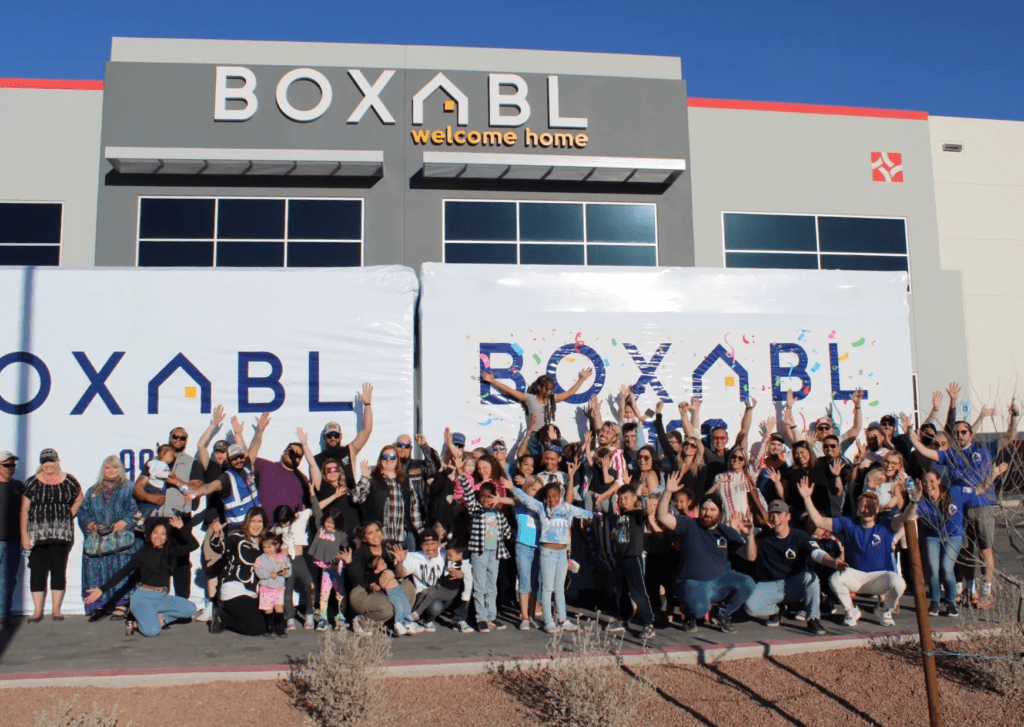
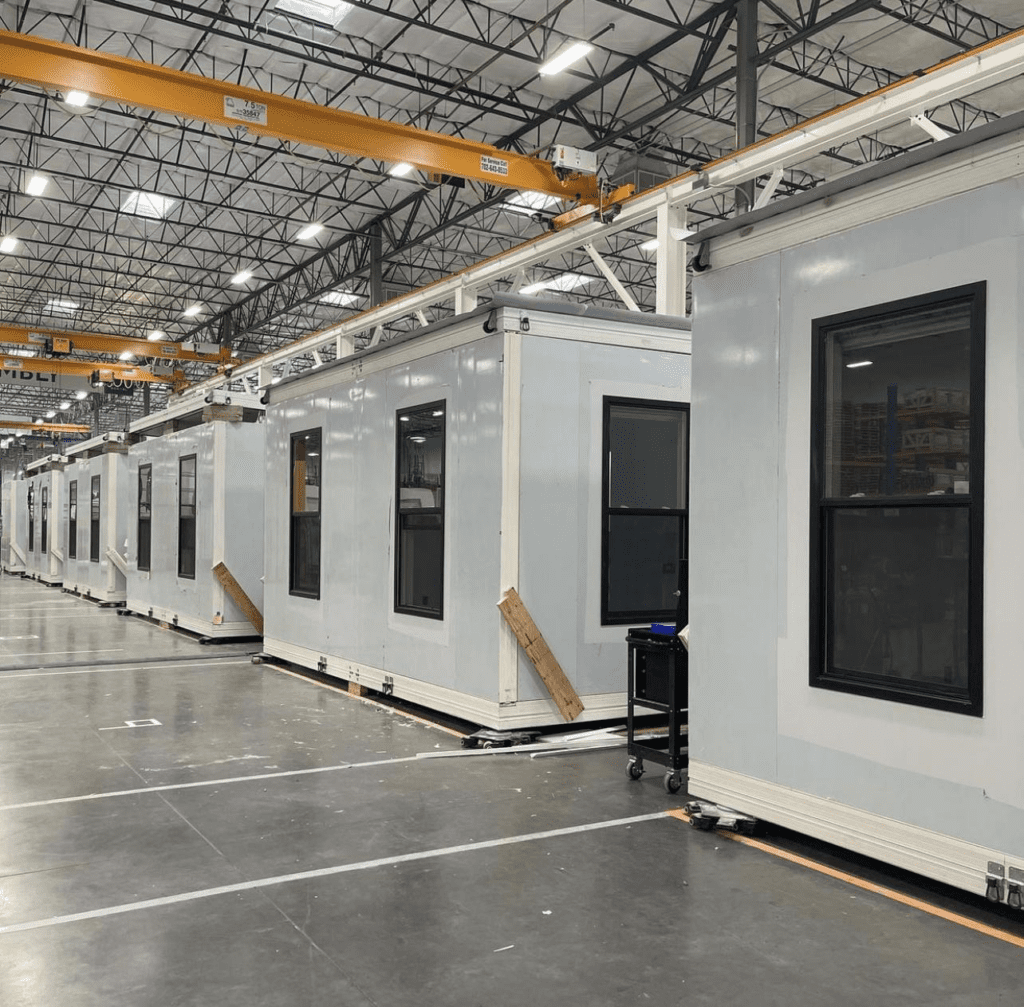
Since its inception in 2017, Boxabl has revolutionized the modular housing industry with its innovative approach to solving one of the most persistent challenges in construction—scaling mass production. Founded by Paolo and Galiano Tiramani with the vision of producing homes in the same way factories churn out cars or electronics, Boxabl seeks to make high-quality, affordable housing accessible to all. The company’s key innovation lies in its ability to fold room modules, drastically reducing shipping costs and paving the way for large-scale production that could reshape the housing landscape.

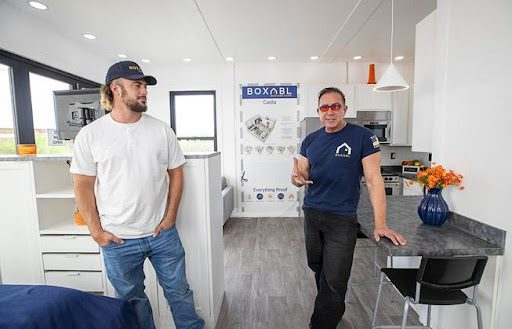
 Galiano (left) and Paolo Tiramanim co-founders of Boxabl

Boxabl’s journey from concept to reality hasn’t been without its hurdles. While the company anticipated manufacturing would be their biggest challenge, it quickly became clear that navigating the complex web of building regulations across different states was a far more significant obstacle. Boxabl’s leadership has been relentless in their pursuit of overcoming these regulatory barriers, advocating for a standardized national building code that could streamline the factory-built housing approval process and accelerate production on a broader scale.

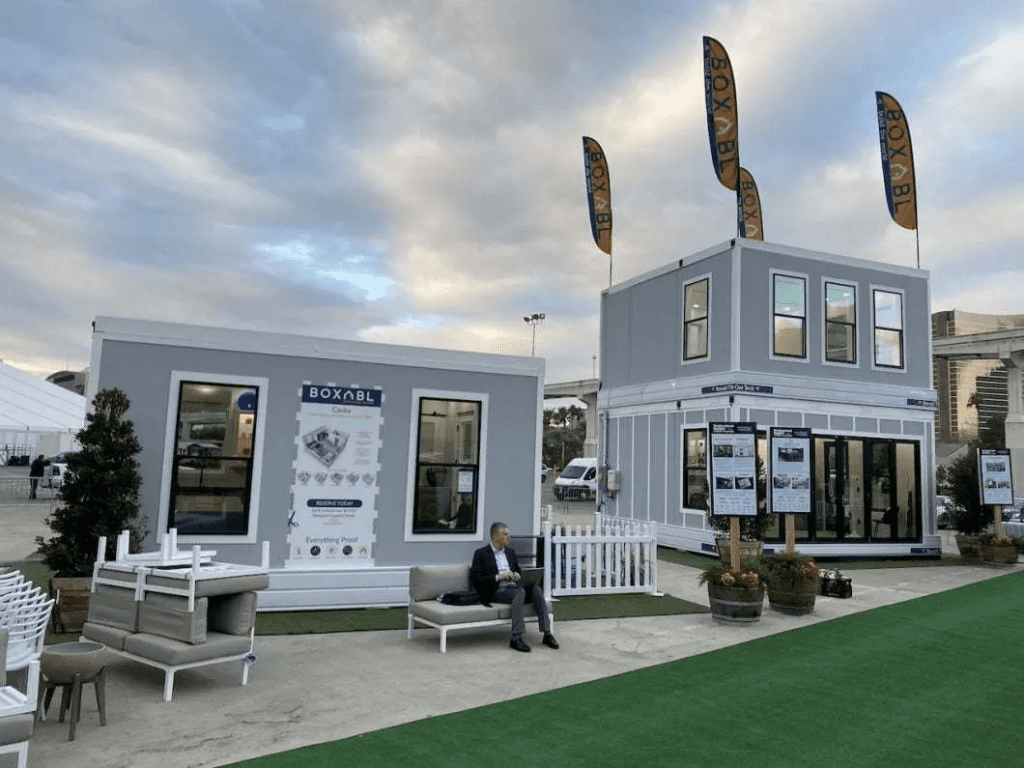
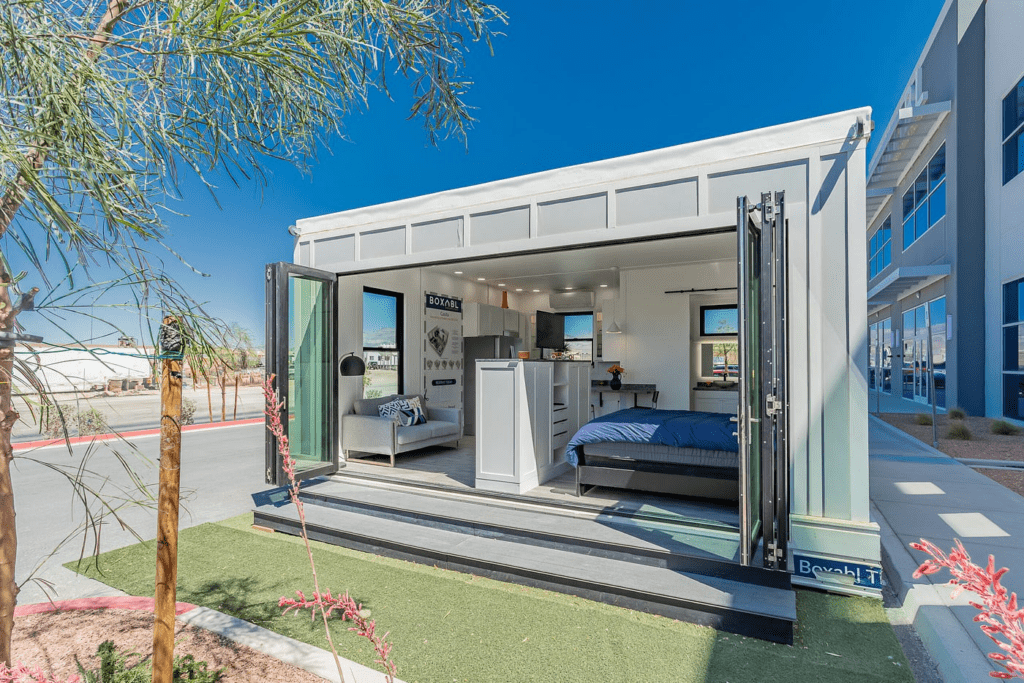
Despite these challenges, Boxabl remains at the forefront of innovation in the modular construction industry. Their flagship product, the Casita, offers a glimpse into the company’s larger ambitions, with plans to expand beyond small, standalone units to interconnected and stackable room modules that could cater to a variety of housing needs. By continuously improving their designs and working closely with regulatory bodies, Boxabl aims to prove that mass-produced homes are not only viable but essential in addressing the growing affordable housing crisis in the U.S. and beyond.

Galiano Tiramani, co-founder of Boxabl: The idea behind Boxabl was to solve housing by mass producing buildings in a factory. Most other modern products (like cars, TVs, iphones and sneakers) take advantage of a factory and an assembly line to make products rapidly at the lowest cost, but about 90% of houses are still built on site. So why is that the case? Our theory was that since houses are so big, they cant be easily shipped long distances from the factory. Most factory built houses are shipped with special wide load permits and follow cars since they dont fit on the road, this increases the shipping costs dramatically.

Galiano: Because if you cant ship far from your factory, you cant have mass production, and this means most house factories are small regional factories that dont take advantage of scale. The first  innovation we needed at Boxabl was to solve the shipping problem so we could mass produce the houses to drive down costs. We achieved this by folding up the empty space in the rooms we manufactured so we could ship them in a cost effective manner. The room modules we make are finished in the factory with windows, electric, plumbing, flooring and more that can ship to site and be setup in a few hours. This innovation is critical because it will allow us to scale up production in an attempt to bring down costs. Most car factories put out one car per minute, our goal at Boxabl is to match that level of efficiency with houses. 

When we started the company we thought that manufacturing would be our biggest challenge. It turned out that wasnt the case. We were able to scale up manufacturing quickly and deliver on our first order of 156 houses to the federal government. Our biggest road block turned out to be… Regulations. Different laws and regulatory agencies exist that slow down and block housing in the USA. Anyone that has ever tried to build a housing development understands that its very difficult and can take several years to achieve… If its even allowed. In most cases, applying for a permit to built something, like an apartment, complex will be met with pushback from neighbors and local government. A builder will be faced with town hall meetings where people try to stop the project, elected government officials trying to stop it, and then later building department officials adding many restrictions added cost and timeline delays to the project. The builder will be required to wait on building inspectors to come visit the project and inspect it at many stages during the building process.

These restrictions exist for regular building construction thats done on site, when you add factory built buildings into the process the situation gets worse. An extra level of regulation exists soley for factory builders. Most states have an additional regulatory agency that adds more restrictions and delays into the process. This includes factory inspections, quality control programs, building plan review and more. All of these extra steps must be completed before a builder even tries to apply for a building permit. They can add years to the process and stop a house factory in its tracks. Did you know that the building code is almost 1000 pages long? And many sections are up for interpretation, building codes also differ by state. So creating one building plan that works in multiple states can be very challenging and introduce further delays. Factory home builders must also apply for each of these state programs and go through the process one by one, so that makes it even more difficult to mass produce a product.

The list of regulatory challenges doesn’t stop here… Many other issues exist that have made it difficult for modular builders to succeed. I would say regulation is one of the biggest reasons why most modular builders have failed over the years. At Boxabl we realize this is a challenge, but also an opportunity to drive down costs if we can solve these issues. We are working hard with state regulators to show them that a standardized mass produced product relives the risks that these regulations are setup to avoid. We want to see a national building code thats the same for every state, and a national process for modular house approval that can reduce the roadblocks we see. I think Boxabls scale and standardized product uniquely positions us to solve these regulatory issues.

Galiano: Affordable housing is a crucial focus for Boxabl. How are your latest initiatives positioning Boxabl as a leader in this space, and what role do your new facilities play in accelerating production to meet growing demand?

Boxabl has big plans, we are trying to prove the concept of mass-produced housing at our first 3 factory buildings here in Las Vegas. We are dialing in our technology, testing the market, improving our manufacturing methods and scaling up fast. The goal right now is to show the market that we can make it work, then continue commanding resources to scale. Housing is a big problem with millions of housing unit shortage here in the USA. We think the only way to fix this is to scale and brute force the problem. 

Galiano: Since we started we have been continually improving our process, our product and our operations. Learning how to navigate regulatory challenges and drive down costs. We are constantly updating our product design to lower cost and increase ratings. We are investing in new automated manufacturing equipment. 

Galiano: At Boxabl we are always looking for competent partners to help push projects to the finish line. Boxabl is a room module manufacturer, we aren’t necessarily interested in developing real estate projects ourselves. We seek developers to be our customers and buy our products hoping that they see the value in speeding up and lowering costs on a project. We have sales team that fields leads from developers everyday to find the best partners who can create amazing projects. We are very happy to have been able to work with Catholic Charities and hope to do more projects after this pilot project is proven a success.

Galiano: We have lots of exciting stuff in the pipeline. For example if you look at chart that shows our material and labor cost to produce our product you can see that it continues to trend down with lower costs. 

You might have heard of the Casita, its our first product, a 361 square ft house thats a studio apartment, bed, couch, kitchen and bathroom. https://www.boxabl.com/casita On important thing to mention is that Boxabl is not just a tiny house company. Our plans extend far beyond the “Casita”. This is our foot in the door, but we plan for a larger building system where different room modules in different sizes can connect and stack to create larger homes. The idea is that Boxabl house might look no different than the house you live in now. 

Although we have lots of exciting stuff planned, unfortunately I cant discuss much detail on new stuff before it has been announced to the public for our SEC compliance.

Galiano: Recently we established a dealer network. This is basically a list of local contractors that can help our individual customers get a Casita installed in their backyard. https://www.boxabl.com/directory We urge anyone that wants to sell Casitas to sign up for our dealer program. This will give them access to our customer pipleline and allow them to sell Casitas.

Gary: I want to thank Galiano Tiramani for taking the time to share his innovative idea turned into a reality. It hasn’t been an easy ride for Boxabl but positive things are happening for Galiano and Paolo, his father, efforts to bring affordable housing to the US,

From Coffee to Concrete: Turning Everyday Waste into Tomorrow’s Building Material

Every morning, millions of people worldwide brew their favorite cup of coffee, seeking that familiar warmth and energy boost to start their day. But once the coffee is enjoyed, the leftover grounds—tons of them—are simply discarded. With billions of pounds of roasted coffee grounds finding their way into landfills each year, their environmental impact has raised growing concern. However, Australian scientists may have found an innovative solution that not only recycles this waste but also contributes to a stronger, more sustainable future: coffee-infused concrete.

The Coffee Waste Problem

Globally, the coffee industry generates around 10 billion kilograms of waste annually. That waste includes both unbrewed husks from green beans and the roasted coffee grounds from our morning cup. While some spent coffee grounds find secondary uses—like composting, as a base for beauty products, or even as biofuel—most of it ends up in landfills, where it contributes to methane emissions, a potent greenhouse gas.

Incorporating coffee waste into construction materials may seem unconventional, but scientists believe this could provide a twofold benefit: reducing waste and enhancing the performance of materials in construction. This research into coffee grounds being repurposed into cement offers a glimpse into a future where everyday materials are reimagined in ways we never thought possible.

.

Stronger Cement, Greener Future

The research, led by a team of scientists in Australia, has focused on utilizing coffee grounds as an additive to cement. The preliminary results are promising, showing that incorporating a small percentage of recycled coffee grounds into cement results in a material that is stronger than regular concrete. This is groundbreaking for an industry constantly searching for innovations that improve performance while reducing its environmental footprint.

The idea is simple yet revolutionary: instead of sending spent coffee grounds to landfills, they are collected, processed, and integrated into cement mixtures. This blend results in a compound that has improved structural integrity without compromising the essential qualities of concrete that make it such a foundational material in construction.

Traditional concrete production relies on cement, which involves the extraction of limestone and other minerals, followed by a highly energy-intensive manufacturing process. This method not only depletes natural resources but also releases significant amounts of carbon dioxide (CO2) into the atmosphere. In fact, the production of one ton of cement results in about one ton of CO2 emissions, accounting for 8% of global emissions. By infusing concrete with coffee waste, the reliance on raw cement can be reduced, lowering its carbon footprint.

The Science Behind the Blend

At the core of this innovation is the process by which coffee grounds are prepared for their new role in construction. Researchers have experimented with drying, heating, and grinding spent coffee grounds before mixing them with the cement. These steps allow the material to retain its structural properties while also maintaining the necessary adhesion within the concrete.

What makes coffee grounds effective as an additive is their organic composition. They contain compounds like cellulose, lignin, and hemicellulose, which have been found to interact with the calcium hydroxide in cement, forming stronger bonds at a microstructural level. This bonding process enhances the overall strength and durability of the concrete, leading to superior performance, particularly in resistance to cracking and wear.

The proportion of coffee grounds added to the mix is key. Research shows that when about 5% of the cement mixture is replaced with treated coffee grounds, the resulting concrete can be up to 30% stronger than traditional concrete. This finding opens the door to practical applications, where the balance between material performance and sustainability is achieved without sacrificing durability.

The Potential Impact on the Construction Industry

Imagine this: The next time you step onto a newly built office building or cross a modern bridge, the foundation of these structures might have been reinforced with the very coffee grounds you discarded after breakfast. The potential of this innovation is not limited to residential or commercial buildings; infrastructure projects like roads, bridges, and tunnels could also benefit from stronger, more eco-friendly concrete.

For construction companies, the introduction of coffee-infused concrete offers an exciting opportunity to participate in the circular economy. By creating partnerships with local cafes and coffee producers, the industry could tap into a steady stream of recycled material that would otherwise go to waste. Such collaborations could lower raw material costs, reduce reliance on resource-heavy cement, and lower the environmental impact of construction projects. This shift aligns with growing consumer and regulatory demands for greener building practices.

Additionally, this approach could become a symbol of sustainability for cities and companies. Imagine a municipality proudly showcasing its environmentally conscious infrastructure made from repurposed coffee grounds, or a building boasting its eco-friendly foundation as part of its green certification. The concept could even evolve into a marketing tool for companies looking to differentiate themselves in the competitive construction market.

Challenges and Considerations

While the early results are promising, it is essential to acknowledge the challenges ahead. First, scaling this solution to a global level will require building a reliable collection and processing system for coffee grounds. Currently, no widespread infrastructure exists to efficiently capture, treat, and distribute used coffee grounds for construction purposes. Establishing these networks would require significant investment and coordination among coffee retailers, recycling facilities, and construction companies.

Moreover, further research is necessary to understand the long-term performance of coffee-infused concrete in various environments. Factors such as weather resistance, freeze-thaw cycles, and exposure to chemicals will need to be rigorously tested to ensure that the material holds up under real-world conditions.

Another critical consideration is public perception. While the idea of coffee-enhanced construction materials may be exciting to some, it will take time for the broader market to accept this innovation as viable and trustworthy. Education and transparent testing will be essential in winning over skeptics and proving the material’s long-term benefits.

A Cup of Coffee for a Better Tomorrow

Despite the challenges, the promise of coffee grounds as a key ingredient in future construction materials is hard to ignore. It’s a reminder of the power of creativity and innovation in tackling global issues like waste and emissions. With the right combination of scientific advancement, industry collaboration, and public awareness, something as simple as coffee could become a building block of the future.

Imagine the day when you can contribute to a sustainable future simply by recycling your morning cup of coffee. It’s a future that’s brewing on the horizon, and with the continued push toward eco-friendly innovations, coffee-infused concrete could be a key ingredient in building a better tomorrow.

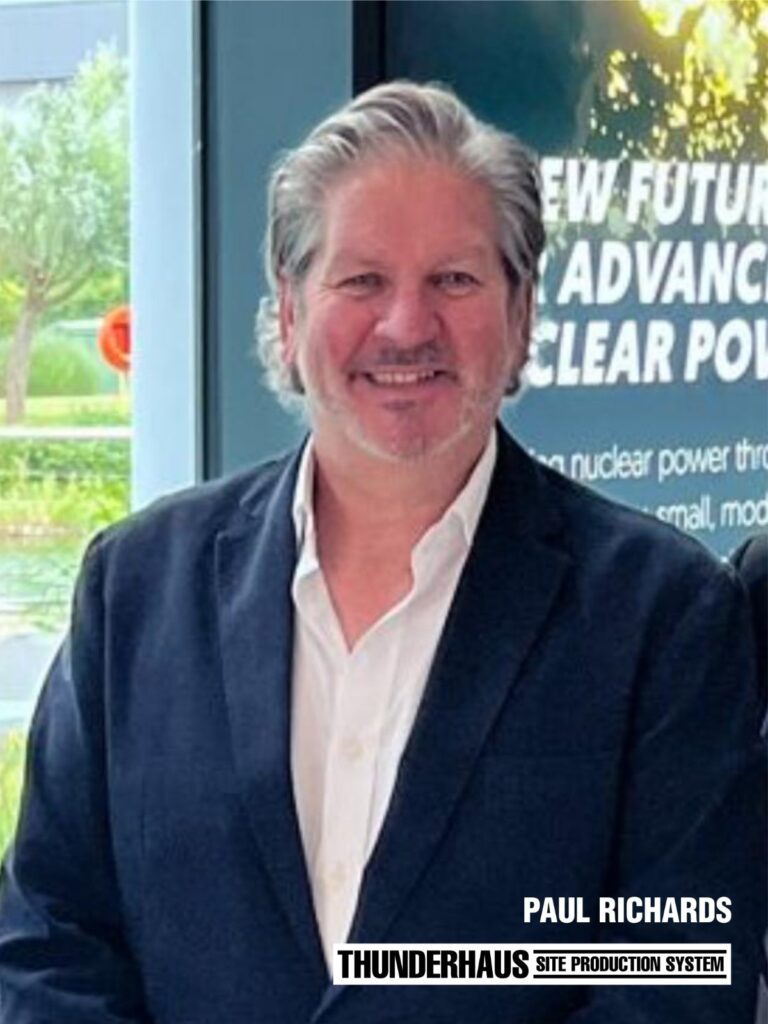
An Amazing In-Depth Interview with Thunderhaus Innovator – Paul Richards

Paul Richards, a dynamic leader and innovator in the offsite construction industry, is
making waves with his latest venture, The Thunderhaus site production system. Known
for his forward-thinking approach and extensive experience in construction, Paul is
pushing boundaries once again with these innovative systems designed to streamline
and enhance the efficiency of building processes in even the most challenging
Environments.

With 40 years of experience in construction, Paul Richards has a multidisciplinary
background that spans 20 years as a factory owner/operator, specializing in DFMA
and delivering thousands of projects. In parallel, he self-financed an R&D facility for
over a decade focusing on ballistic composites for retrofits/newbuild, designing &
building machinery and developing processes for mass production, training
manufacturers globally, and integrating robotic production systems. His advisory roles
include contributions to the UK Government’s Construction Innovation Hub and various
European retrofit/newbuild sustainability programs. Paul is also the developer of the
Thunderhaus site production system, a cutting-edge innovation aimed at improving
onsite life while delivering efficiency and building truly affordable energy energy-efficient
Housing.

I interviewed Paul to learn more about him and his innovative Thunderhaus concept, exploring its impact, potential, and
what it means for the future of offsite construction.

.


Paul Richards, Thunderhaus innovator: well it started out like most innovations as a solution to a simple problem, I can
trace my early attempts back to the 90’s when one of my guys approached me during a
long wet winter, and a very wet start to the new year, they’d had enough, he opened up
to me and I knew I needed to act, so I bult a cover to protect a site and I thought that
could give them a good few weeks dry work, and try to kick start the year, it worked well,
sort of , yeah not perfect but it worked, and then the storms came and it didn’t! but that
was the spark, and the idea was brewing, but I sold that business and left the onsite
world, or at least I thought I had. Only to return years later having worked around the
globe and seeing how everyone else was building, and adopting new methods, but I
thought this would never be allowed in the UK or Would it? And unfortunately for me
that was the start of everything.

But guess what it still rains here in the UK and people can’t work! How dumb, no other
industry would work like this, its time for a shake up!

The penny was starting to drop during my Retrofit for the Future investigations our
Government held a £150million program to retrofit the Uk’s existing housing stock, they
stripped back various existing houses and re built them with every emerging technology
to bring these homes into the future, but I could see a pattern running throughout these
100 test houses, and I could see what was lacking, so again this was only fueling my
Thoughts.

Years later I heard Mark Farmer speak, and it was as if I wrote his message, Modernize
or Die! I heard that and filled in the Blanks, this was it for me, he was effectively saying,
we the industry needed to adopt new technology and solutions within the Built
environment “well that’s what I was hearing” this was my time. I had a housing system in
my head that was formed when I was a teenager on commercial sites, and would be
building huge commercial buildings across the UK while my mates were rolling around
back at home in the mud, still trying to place a brick on a brick in the Rain, my wealthy
friends would pay good money to watch mud wrestling with beautiful ladies showing
their underwear while wrestling with each other in the mud, well you could see this
every day onsite in the winter for free, except the beautiful, and the ladies, but the guys
were as covered in mud, and you could see their underwear, so not so different. But that
type of work wasn’t for me and its certainly not for the youngsters of today. So, another
reason for change. Over the next few years, I had perfected the housing system and
developed it into a Kit of parts, but industry wasn’t interested. They were interested in
large scale factory production, factory built homes were being hailed as the panacea for
the industry hailed by everyone who has probably never paid to set up or operate a
factory for the construction industry out of their own pocket, but I have, when I opened
my first facility, in my early 20,s, I grew my business and needed a bigger factory, and a
bigger one, and a bigger one, you get the picture, but maintaining that model is costly, in
every way imaginable, I used to work “silly o’clock” I’ve always done it 7 days a week,
silly o’clock, but my team was getting fed up, we didn’t know what day of the week it
was, we were just working and working, but I was young and naive.

Again, one of my team approached me and said, “we had to change”! He was right, so
we reached out to the supply chain and I started engaging with effectively my
competition, and it worked, they started to make our components, “subassemblies”
eventually we stopped working 7 days and started taking weekends off, ok they did, it
took a while for me, but the atmosphere was much better, and I started developing ways
to communicate with my supply chain, there were no computers back then that we knew
how to use, and my supply chain were at different levels of understanding technology,
“Sounding familiar”!! so that could lead to costly mistakes.

But our business continued to grow, and we invested in technology, and working with
the supply chain, which freed me up, and it didn’t need me so much, and as we refined
our models, we didn’t need large Factories, so that enabled me to start on a idea I had,
and I started my first R&D facility. I ran that in Parelle with my other business, I learned
so much not all of it good, but that’s crucial to this journey.

I went on to set up other manufacturing facilities one in Wales and a production line in
Canada, so my understanding of factory needs and more importantly, don’t need, come
from lived experiences, and how to simplify how we communicated.
Back to the Thunderhaus, I know I have simplified the system, (the kit of parts), and that
opens the market, for anyone to engage, mixed that with digital technologies making
understanding sharing correct information easier and people start to get interested.
So, do I need a factory? that word “Need” would define my understanding of every
aspect of what “Needs” to happen, and “defining those Needs” are Key to solid fact-
finding solutions.

So, I have a system that can build Homes, now I had to validate it! And inform industry,
I grew up in a cold house! It was a solid structure but cold in winter, during my time in
Vancouver my friends were building a home after they had just sold their business to
Mrs “G”, so money wasn’t a problem. it was December and cold outside, as I walked
into the house it was warm, I asked the builder how you are heating this place? he said
they weren’t! a house at the same stage of construction in the UK would be a very cold
environment and unpleasant working conditions but this was a bright and warm place to
work, and I discovered how! That was my first real experience of Passive Haus
principles. And I was hooked! Eventually this would influence my system, although the
term Passive hadn’t been termed until a few years later, but I just had to design my
system to PHP by default, But I also knew industry won’t pay extra for this, so I
designed the products with the supply chain to enable this by default. That took a while,
but during that time I went out to the market to shout about it, just when they had
announced they were investing hundreds of millions in Volumetric factory production,
and didn’t understand passive Haus or a kit of parts approach, that simply went against
the Grain of their factory investments.

But I carried on and woke up a land broker that had several sites on stop due to funding
constraints and started to bring him up to speed with offsite technology, but we would
need a factory he said, and I pitched The Thunderhaus, he arranged meetings with
bigger and bigger land brokers which lead me to the big table, ok it wasn’t so big, but
the people were or rather the money they represented was. By then the mega Factory
keys had started to lose their luster, and I found myself sat at the table of plenty, and
they had an idea of what I was trying to address with my Thunderhaus, I can’t say that
they were the people behind the funding of the Largest volumetric factory here in the
UK, I’ll leave that for someone else, but they knew something was amiss with large
factory production and they were sat with me.

“The Carrot and the Thunderhaus” I had several meetings driving up to Manchester
from Bristol we met at the same place, and the Carrot was dropped “booom.“ the

People sat at that table represented big money/ in fact the biggest carrot I’ve heard to
date. One had a fund of £12Billion, yeah with a “B” the other had a fund of £28Billion,
yeah BBBB BBB, but they were still stuck with a fixed factory mindset, they wanted to
do the same thing as before but with a different outcome? I thought. I was going
backwards, tell me about your Factory idea! so I did, “The Thunderhaus”, and I went on
to describe its functions, but it sounded to simplistic to be a viable investment they
weren’t getting it. Nor was I really trying to sell it, But I was asked to find a large factory
in the North for me to set up and operate and they saw this as a business model they
could understand, and a starting place to develop the Thunderhaus, but that wasn’t for
me, I had to decline, as my gut wasn’t happy, and I’ve ignored it in the past to my regret,
Yeah, I had to walk away it took a few days to sink in, because of what I was walking
away from, but I’ve had factories and fixed Factories aren’t for me any more, and once
you start them you can’t just change direction. Oh, and I lied about the Days it still
haunts me now years later because I knew these guys were real and so was their
Money.

But when I was describing the Thunderhaus they mentioned their sites were in
Manchester and my idea of the “super tent” as it was then, wasn’t going to prevent
some scallywags from looting the place, so right there I had the idea of steel structurers
as opposed to an all-fabric building. And the dots started connecting, endless
possibilities.

I haven’t gone back to that table but those sorts of funds seem to pop up along the way
so who knows.

.

Paul: Yes, you treat this the same as a fixed factory, but its on site, all the factory kit but
on site. I say if the teams can get to site then they should be able to work protected from
the elements, I’ve worked in Canada and the US and yeah the snow can stop people
getting to site, or even stop work all together, but when I was a kid I got to work by hook
or by crook, but I got there, but the Thunderhaus is effectively a big cover that keeps the
teams dry and warm and protects the build and materials, but that’s the very basic
function of the Thunderhaus, It started out as a building Rig to hold and position
components precisely while they are being assembled, I wanted to de skill this or de risk
the build, using the Rig as the quality and precision enabler by default, I wanted non
skilled people to engage with Housebuilding, ok women, they will make fantastic house
builders, and by using a building Rig with a cover over it derisks the assembly and
enables them to work better than most blokes, I’ve seen it work before and this is the
opportunity for them to thrive. Factory production techniques, we teach people to
specialize is efficiencies, and we advance our subassemblies to enable this, and
develop the support tooling to enable this, but like no other housing site we can
introduce a 3 shift working system, or a much more flexible working environment, that
enable family life to continue while the parents work, I’ve even designed a creche
Thunderhaus, and that will transform the housing industry forever. But it must be
implemented at the earliest stage, it’s a site production system, and everything must be
designed to maximize efficiency of onsite production, and that’s not easy, usually I get
called in when the housing has been designed and the plans been approved but funding
is asking more from the site. This isn’t ideal for the Thunderhaus, although its not
impossible, as I have tried to introduce the Thunderhaus but the benefits were not
enough seeing as they already had a factory and don’t care if everyone and every thing
gets soaked, but that’s changing the teams can still get wet, they aren’t worried about
them, but the warrantee providers are changing the way, if the product isn’t protected
throughout the build stage, they wont be warrantying it, and that applies to Timber
structures more than most.so protecting your product & building in a controlled
environment and making use of factory processes and procedures , what’s not to like?

.

Paul: The Thunderhaus is a production enabler, how many times have people
doublehanded product, built the right thing but in the wrong place, materials damaged or
unfinished or uncompleted tasks lied about the stages of build and that only misinforms
the next trade of their ability to complete their job, this has been the norm for decades
on site, and thousands are lost through in efficiencies. but the Thunderhaus can work
with the builder as a support mechanism, breaking down the tasks and aiding building
efficiencies, it can have & hold parts or tools, but that’s just the basics, decent lighting
and power creating a warm environment and even serve the coffee, this is about
working smarter not harder, let the Rig carry the load, and introduce production
mindsets not builder, pay better because of efficient build processes and advance
subassemblies that can be replicated throughout all your developments, but the
Thunderhaus will prove it worth and will be used In may forms, from subassembly 1
through to multiple riggs traversing on site.

The Thunderhaus will attract the best tradespeople as well as non-trades as builders
are looking to work in a better safer environment and not kill themselves doing so, it will
also open the opportunity for older trades to come back on site in a more respectful
environment,

.

Paul: Oh, this is a big one, over the last 5- 10yrs industry has really ramped up its
efforts to push innovations, but they are Siloed, usually great ideas but disconnected
from the real opportunity, where are they going to come together? and certainly not
accessible or visible to the masses, so take up will de prolonged due to the mindset of
the builder, their no nonsense approach to technology has to be taken into
consideration, they need to try it kick the Tires, and see the benefits in their pockets,
before they will believe the hype. So how can this be addressed? Where can they see
these new advancements being used, and what environment will it need to work
effectively, The Thunderhaus is a hosting system, an onsite environment that enable
Man and Machine to work in a controlled environment, it protects the delicate machinery
from the elements , but enables known innovations to actively work on construction
sites, “BOTDEX” is a site floor matting system, this simple floor mat used by the Military
and festival industry simply creates ground surfaces that enable clean floors suitable for
heavy kit to move onsite without difficulty, this simple solution opens up the possibility to
use off the shelf Robotic carriers that are common place in large warehouse activity, it
also enables the Thunderhaus to work 360 degrees, as the need for set tracks have
been eliminated, BOTDEX can do much more than this, it can assist with setting out as
its perfectly square and can be marked at fixed build positions, again connecting
technologies, the gantry systems can be hydraulically controlled, so setting heights and
projections can be altered to support comfortable build heights and prevent
overreaching, the gantry’s at different levels can be accessed by external lifts never
utilized in housebuilding, this could enable wheelchair access and open up untapped
people to work on site. The main bodies of the Thunderhaus can be kitted out for
manufacturing or as office space, The working body of the Thunderhaus can be fitted
out for bespoke requirements with internal gantry cranes for lifting and positioning, we
can set cameras into the frame of the Thunderhaus for safety and monitoring, but I
believe the Real innovation will be a live feed enabler, opening up the possibility to track
build schedules without having to visit the site, and this opens up JIT production linked
to digital ordering but the new opportunity will be the ability to open up new funding
mechanisms, this real time quantifier will enable new funders that invest at set stages,
smaller funders similar to Crowd funding, opening up Housebuilding like never before.
All because of The Thunderhaus.

.
Paul: so I’ve been asked to design different models of the Thunderhaus, and the Block
Builder is based of a Volumetric assembler and install, it’s a little bit Fantastical for some
but the Guts of the idea are there, but the real value is it’s a cheap factory its yours
kitted out how you want it but more importantly its where you need it, fixed factories can
be hundreds of miles for the build site and this enables everything to go wrong, if it can
it will, but the Thunderhaus can be on site or near site, or both, its not limited, and the
best part , when your finished with it you can pack it away and take it to your next site
and start again, I believe the Thunderhaus will be a rental option with the component’s
being generalized, this will enable proven systems that have been perfected by the
industry to be used across the Globe, and simply installed on the build site following a
set sequence laid out by the Thunderhaus. Or “Thousands of Thunderhaus”!

Paul: well, they still are, The Thunderhaus seems too easy, why hasn’t it been done
before? And then people try and find reasons why it won’t work, they don’t like change,
but that’s nothing New, however, something must change! The need for housing is
greater than ever before, and without trying we aren’t going to know! I can find lots of
reasons why it won’t work, but thousands of reasons why it will, I’ve been around the
Block and construction particularly house building doesn’t appeal to the new generation
of workers and site Life has to change, there are Thousands of young people that will
absolutely thrive onsite and make a fantastic life for them and the people who the Build
for, but they are not thinking construction as their first choice Why? Because getting wet
cold and treated like shit isn’t for them, and its not for me it never has been and it never
will, we need to Respect our young and especially our future trades people, without
them our housing stock will perish and so will our economies, for too long has the
Housing industry been left to stew in a mess created by non-industry pressures and that
has to change. And I believe the Thunderhaus is a great start. But Who’s interested
who’s listening who understands where to start?

Gary: Looking ahead, what future enhancements or additions do you have planned for
the Thunderhaus system, and how do you plan to keep it at the forefront of site
production technology?


Paul: Absolutely, I’ve started the imagination of some very clever people, and they are
onboard, very senior engineers that took a while to get it, have got it, and they are
joining the dots, I’ve been fortunate to work with some clever people, and that’s what
gets me through the negative meetings, these people get it, they know it’s a Catalyst

system in every sense, what the construction industry doesn’t know is these teams have
been looking for solutions for decades but you can have a clever factory somewhere
producing magic, but the magic needs to be seen, and I think the Thunderhaus will be
bringing the magic to your site! Just needs you to be on the stage.
Gary like most innovations we will never know where it will end up or evolve, the World
is full of smarter people than me and I cant wait to see what they can do with the
Thunderhaus!

Gary: I can’t believe all the work and thought you’ve put into this innovative project and want to thank you for a great interview.

Leading the Way in Sustainable Innovation: A Conversation with Rory Rubin of S.I. Container Builds

As the founder and CEO of S.I. Container Builds, Rory Rubin is at the forefront of transforming shipping containers into innovative modular solutions that go far beyond single-family homes and Auxilliary Dwelling Units (ADU). Her company’s approach exemplifies creativity and sustainability, finding versatile applications for repurposed containers in industries such as education, healthcare, and commercial spaces. 

Rory Rubin, on the right talking with factory visitors

Rory Rubin’s passion for innovation and social impact is evident in the projects she leads at S.I. Container Builds. From creating safe spaces for young girls in need to developing commercial solutions for businesses, her company is changing the narrative around what can be achieved with single-use shipping containers. 

S.I. Container Builds is not just a company that repurposes shipping containers—it’s a brand driven by innovation, social responsibility, and a commitment to quality. Under Rory Rubin’s leadership, the company has pioneered new applications for container-based construction, addressing community needs while setting new standards in modular building.

Rory Rubin, founder of S.I.Containers (left) and Audree Grubesic, founder of Offsite Dirt

In this discussion with Gary Fleisher, Rory shares insights into her work, highlights groundbreaking projects, and offers a glimpse into what’s next for S.I. Container Builds as it continues to lead the way in sustainable construction.

Rory Rubin, Founder/CEO S.I. Container Builds: Yes, we are driven by our passion projects.  Projects such as our collaboration with Taraji Henson’s foundation Boris L. Henson and Kate Spade NY to place wellness and therapy pods on HBCU campuses. Supporting the mental wellness of young women of color. Our collaboration with Housing Opportunity Development Corporation and Shelter Inc. to build the very first safe home for girls who have been trafficked in IL and others in the works.

Rory: My little-known trivia is that I started as a clinical social worker. To be able to align my “first life” in the building world is not so strange.  SI Container Builds is focused on recycling a structure that will outlive our wood frame structures for causes that are truly needed—housing, commercial spaces etc.

Rory: I spend 80% of my time around education.  There still is a misconception that the shipping container is a too cold or too hot –a rusty old box. We repurpose only one-tripped containers so we can guarantee their quality and what was transported in them and we strictly follow all building codes so when you enter our units you feel like you do when you enter any other home or room.  The advantage that we have is that we are working with steel.  This steel is the way we build, and engineered to far outlast other builds against things like fires, hurricanes etc. We are also licensed, certified and supervised by a third-party entity owned by the ICC.

.
Rory:   We are currently engaged in a couple of very cool local projects for Chicago, that we cannot talk about quite yet..but stay tuned!

Rory:  Containers are made to stack 9+ high. We are looking at multifamily apartments because we are just so perfect in design.  It is another way for us to support the ever-growing housing crisis.
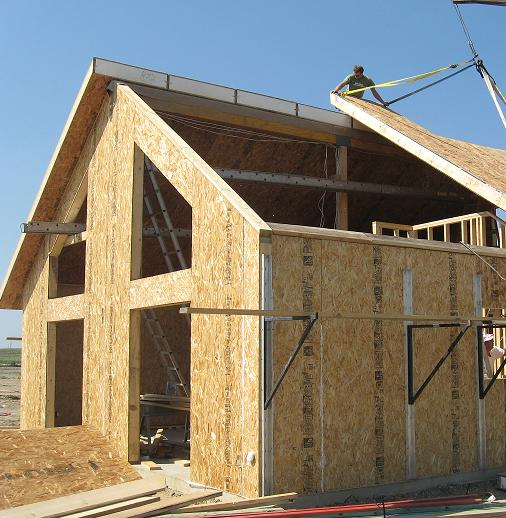
Rory: We just launched our new P3 line. They are builds made to be transported for onsite worker housing.  Now developers can own units including bedrooms and bathhouses to support workers in more remote locations. They no longer must rent out motels several hours away or rent run-down RV’s. Our units are made to fit on a trailer and be used anywhere.

Rory: I am still amazed that eco-friendly isn’t always less expensive, but we know that this is not true yet.  We at least can say we start from a place of recycling something that would just go to waste—stacked in a “container graveyard”.  We hope as we scale, we will be able to provide things like standard solar etc.  It is coming!

Rory:  Make sure not to jump too far ahead before you perfect what you can do now.  We are in such a desperate need for housing that there is room for many, many strong companies.  It is also nice to collaborate and work together so that we don’t have to reinvent the wheel.  

Gary: I want to extend my heartfelt thanks to Rory Rubin for taking the time to share her insights and experiences with us. As the founder and CEO of S.I. Container Builds, Rory is truly at the forefront of transforming the way we think about modular construction. Her passion for innovation, coupled with her commitment to social impact, is not only inspiring but also setting new benchmarks in the industry.

Through projects that range from supporting the mental wellness of young women to pioneering worker housing solutions, Rory and her team at S.I. Container Builds are proving that sustainable, container-based construction can be both versatile and impactful. It’s been a pleasure to learn more about the incredible work her company is doing, and I’m excited to see what the future holds for S.I. Container Builds as they continue to lead the charge in sustainable construction. Thank you, Rory, for your dedication to innovation and for sharing your journey with us.

CLICK HERE if you would like to be interviewed about something innovative you have designed or are currently using.

PERI’s Innovative Formwork Systems for a New Construction

Innovation is not just a buzzword; it’s a necessity in the construction industry. As the industry grapples with challenges such as labor shortages, increasing costs, and the demand for sustainable building practices, companies that push the boundaries of traditional methods are leading the way. 

One such company is PERI, a global leader in formwork and scaffolding systems. With its latest offerings, PERI sets a new standard in construction efficiency, safety, and sustainability.

This article explores PERI’s groundbreaking innovations, focusing on its latest formwork systems, and examines how these advancements are poised to transform the construction industry.

A Legacy of Innovation

Founded in 1969 in Weissenhorn, Germany, PERI has grown into one of the world’s largest manufacturers and suppliers of formwork and scaffolding systems. With a presence in over 90 countries, the company has built a reputation for delivering high-quality products that meet the diverse needs of construction projects worldwide.

PERI’s commitment to innovation is deeply rooted in its history. From the development of the first modular formwork systems to the introduction of digital solutions that enhance project management, PERI has consistently pushed the boundaries of what’s possible in construction. This legacy continues with the company’s latest offerings, which represent a significant leap forward in formwork technology.

The New Formwork System: PERI’s Game-Changing Solution

At the heart of PERI’s recent innovations is its new formwork system, which was unveiled to much acclaim in 2024. This system is designed to address some of the most pressing challenges in construction today, including the need for faster project completion, enhanced safety, and reduced environmental impact.

Speed and Efficiency: Accelerating Project Timelines

One of the standout features of PERI’s new formwork system is its ability to dramatically accelerate construction timelines. Traditional formwork methods can be time-consuming and labor-intensive, often requiring significant manpower and extended periods to assemble and disassemble.

PERI’s new system, however, is engineered for rapid deployment. Its modular design allows for quick assembly, reducing the time needed to prepare formwork for concrete pours. This speed is further enhanced by the system’s lightweight components, which are easy to handle and maneuver, even in challenging conditions.

For example, on a recent high-rise project in Europe, the new formwork system reduced the time required for each floor cycle by nearly 30%. This acceleration not only helped the project stay on schedule but also enabled the construction team to accommodate last-minute design changes without significant delays.

Safety First: Reducing Risks on the Job Site

Construction sites are inherently hazardous environments, with formwork installation and removal posing particular risks. PERI’s new system addresses these safety concerns through several key innovations.

Firstly, the system incorporates advanced locking mechanisms that ensure stability during assembly and disassembly, minimizing the risk of accidents caused by shifting or collapsing formwork. Additionally, the components are designed to be handled with minimal heavy lifting, reducing the physical strain on workers and lowering the likelihood of injuries.

Moreover, PERI has integrated digital monitoring tools into the formwork system, allowing site managers to track the installation process in real-time. This technology provides immediate alerts if any component is improperly installed or if there is a potential safety hazard, enabling swift corrective action.

The emphasis on safety is not just about protecting workers; it also contributes to overall project efficiency. Fewer accidents mean less downtime, fewer delays, and lower costs associated with workplace injuries.

Sustainability: Building a Greener Future

In today’s construction landscape, sustainability is no longer optional—it’s a requirement. PERI’s new formwork system is designed with this imperative in mind, offering several features that reduce the environmental impact of construction projects.

One of the most significant sustainability benefits is the system’s durability and reusability. Traditional formwork often suffers from wear and tear after just a few uses, leading to waste and increased material consumption. PERI’s system, however, is built to last, with components that can be reused multiple times without compromising performance. This longevity not only reduces waste but also lowers the carbon footprint associated with manufacturing and transporting new materials.

Additionally, the system is compatible with eco-friendly concrete mixes, including those that incorporate recycled materials or lower carbon cement. This compatibility allows construction projects to meet stringent environmental standards without sacrificing quality or efficiency.

Furthermore, PERI has taken steps to ensure that its manufacturing processes are as sustainable as possible. The company’s production facilities are equipped with energy-efficient machinery, and PERI actively works to minimize waste and reduce emissions throughout its supply chain.

Case Study: The Impact of PERI’s Formwork System

To illustrate the impact of PERI’s new formwork system, let’s look at a recent project that utilized this innovative technology—a large-scale residential development in North America.

The project, which involved the construction of several multi-story apartment buildings, faced a tight deadline and a challenging site with limited space for material storage. Traditional formwork methods would have struggled to meet these demands, but PERI’s system proved to be the ideal solution.

Thanks to the system’s modular design and quick assembly, the construction team was able to maintain an aggressive schedule, completing each floor cycle faster than initially projected. The lightweight components made it easier to work in confined spaces, and the integrated safety features contributed to an incident-free worksite.

Moreover, the project’s sustainability goals were met by using the reusable formwork system and eco-friendly concrete mixes. The development achieved a LEED certification, underscoring the environmental benefits of PERI’s innovative approach.

The Future of Construction

Looking ahead, PERI is not resting on its laurels. The company is committed to continuing its tradition of innovation, with ongoing research and development aimed at further enhancing its formwork systems. This includes exploring new materials that offer even greater durability and sustainability, as well as integrating more advanced digital technologies to improve project management and safety.

PERI’s vision for the future of construction is one where formwork systems are not just tools but integral components of a smarter, more efficient, and more sustainable building process. As the industry continues to evolve, PERI is poised to lead the way, offering solutions that meet the demands of modern construction while setting new standards for excellence.

PERI’s new formwork system is a testament to the company’s commitment to innovation and its understanding of the challenges facing the construction industry. By focusing on speed, safety, and sustainability, PERI is not only enhancing the efficiency of individual projects but also contributing to the broader goal of building a better, greener future.

As construction companies around the world continue to adopt and implement PERI’s cutting-edge solutions, the impact of these innovations will be felt for years to come, paving the way for a new era of construction that is faster, safer, and more sustainable than ever before.

CLICK HERE if you would like to be interviewed about something innovative you have designed or are currently using.

How Innovative RFID Technology is Transforming Construction from the Factory Floor to the Finished Structure

In offsite construction construction, innovation is often measured by the ability to solve complex problems, enhance productivity, and reduce risk. Among the emerging technologies reshaping this industry, Radio Frequency Identification (RFID) is proving to be a game-changer, especially as it evolves beyond simple tracking to encompass real-time monitoring and proactive maintenance.

From skyscrapers in urban jungles to modular homes built in controlled factories, RFID is weaving a new layer of intelligence into the very fabric of construction. What started as a tool for managing inventory has grown into a sophisticated system that can track, monitor, and report on the health of critical components throughout the lifecycle of a building or infrastructure project. As RFID tags become smarter and more integrated with sensor networks, they are driving the construction industry toward a future where efficiency, precision, and proactive maintenance are the norm.

The Traditional Role of RFID in Construction: From Inventory to Precision Tracking

RFID technology’s early adoption in construction was straightforward: tagging materials and assets to keep track of them. In large projects where materials like steel beams, concrete panels, and prefabricated components are constantly on the move, RFID tags provided an effective way to automate inventory management. By embedding RFID chips in key materials, project managers could instantly know where everything was, whether it was in storage, in transit, or installed on-site. This visibility drastically reduced material loss, cut down delays, and allowed for more precise project planning.

For many companies, this level of tracking was a major leap forward. It enabled better coordination, reduced manual errors, and brought new efficiency to job sites where complex logistics often led to costly delays. However, the real breakthrough has come as RFID technology has evolved to do more than simply track materials—it now provides critical insights into their condition, enabling proactive decision-making that can prevent failures and optimize performance.

.

RFID Beyond Tracking: Integrating Sensors for Proactive Monitoring

As the construction industry grapples with ever-tighter timelines, stricter safety standards, and the need for more sustainable practices, RFID has found new applications in monitoring the health and performance of building components. Companies like Trimble, a leader in construction technology, have been at the forefront of this transformation, pioneering RFID solutions that go beyond logistics to encompass real-time data gathering and analytics.

For instance, consider a scenario in which structural steel beams are embedded with RFID tags equipped with strain sensors. These tags continuously measure stress and load as the building takes shape. Any deviation from expected patterns can trigger an alert, allowing engineers to address potential problems before they escalate into structural failures. This level of monitoring is especially valuable in high-rise buildings and large infrastructure projects, where even minor issues can lead to significant safety concerns if left unchecked.

The potential doesn’t stop at structural monitoring. In many commercial and residential buildings, RFID tags integrated with moisture sensors are being deployed to detect leaks early. Moisture infiltration—whether through faulty plumbing, roofing issues, or poor insulation—can lead to long-term damage that is both costly and difficult to repair. By embedding RFID tags in critical joints, pipes, and seals, companies can monitor moisture levels in real-time and automatically notify maintenance teams if a problem is detected.

InvenSense, a leader in sensor technology, is developing advanced RFID-enabled moisture detection systems that can be discreetly installed in walls, ceilings, and floors. These sensors detect even the slightest presence of moisture, sending alerts before visible damage occurs. For building owners and facility managers, this kind of early warning system translates into significant savings on repairs and extended building lifespans.

While the applications of RFID on construction sites are impressive, the real potential lies in how this technology can be applied at the factory level within the offsite construction industry. Offsite construction, which involves manufacturing components and modules in controlled factory environments before assembling them on-site, is perfectly suited to leverage RFID technology’s full range of capabilities. The controlled nature of factory production allows for greater precision and the integration of sophisticated monitoring systems.

In offsite factories, RFID can be embedded at the very start of the production process, tracking materials from when they enter the facility until they are delivered to the construction site. This visibility extends through every stage of production, ensuring that quality control is maintained and that any deviations from specifications are caught early.

Material Tracking and Inventory Management: In modular construction, where materials are pre-cut, assembled, and prepared for delivery in a factory setting, RFID tags can automate inventory management. As raw materials like lumber, insulation, and fasteners arrive at the factory, they are tagged with RFID chips. From that moment, every movement is tracked. This not only helps prevent shortages but also allows manufacturers to optimize their inventory levels, reducing waste and improving cost efficiency.

Quality Assurance and Production Monitoring: Quality is paramount in offsite construction, where even minor deviations can have significant impacts when components are assembled on-site. RFID tags embedded in critical components can carry information on batch numbers, production dates, and inspection results. As components move through the assembly line, RFID scanners verify that each piece meets the required specifications. If an issue is detected, it can be isolated and corrected before the module is shipped to the construction site. This real-time quality control ensures consistent output and reduces rework, ultimately leading to higher-quality buildings.

Optimized Assembly and Logistics: One of the key advantages of offsite construction is the ability to streamline logistics. RFID tags ensure that every component is correctly labeled and traceable, simplifying storage and delivery. When combined with project management software, RFID data can be used to coordinate just-in-time deliveries, reducing the need for on-site storage and minimizing delays during assembly. For large modular projects, this level of logistical coordination is critical to maintaining project timelines and budgets.

Smart Integration with BIM (Building Information Modeling): In cutting-edge offsite factories, RFID is being integrated with BIM systems to create digital twins of building components. As RFID tags with sensor data are embedded during the manufacturing process, they carry crucial information through the component’s lifecycle. When installed on-site, these RFID-enabled components can be scanned to update the BIM model, ensuring real-time accuracy of the building’s digital blueprint. This seamless integration enhances collaboration among teams and allows for better project management, from factory floor to final assembly.

Proactive Equipment Maintenance in Factories: RFID technology is not limited to tracking materials; it can also monitor the health of factory equipment. By embedding RFID tags with sensors in production machinery, manufacturers can detect signs of wear and tear before they lead to breakdowns. This proactive maintenance approach minimizes downtime and keeps factory operations running smoothly, ensuring consistent production output.

Structural Health Monitoring and Smart Infrastructure

RFID’s benefits extend well beyond traditional building projects. In large-scale infrastructure projects like bridges, tunnels, and highways, RFID technology plays a crucial role in Structural Health Monitoring (SHM). SHM involves embedding sensors in critical components to continuously assess their condition over time. For example, RFID tags with strain gauges embedded in bridge cables can track stress and vibration, providing engineers with data that highlights potential weaknesses long before they pose a risk.

Leading companies like Siemens have developed integrated systems that combine RFID with AI-driven analytics to monitor not only the structural health of bridges and tunnels but also environmental conditions like wind speed, temperature, and seismic activity. These smart infrastructure solutions are setting new standards in safety and reliability, enabling proactive maintenance strategies that extend the lifespan of critical assets.

Challenges and Opportunities in Scaling RFID Technology

Despite the transformative potential of RFID in construction, several challenges remain. The cost of integrating sensor-enabled RFID tags into every key component can be significant, particularly for smaller projects. Additionally, the rugged environments of both construction sites and offsite factories can sometimes interfere with wireless communication, though advances in low-power wide-area networks (LPWAN) and 5G are gradually overcoming these limitations.

Another key challenge is data management. With thousands of RFID tags generating data in real-time, construction managers need robust platforms to collect, analyze, and act on this information. Companies like Autodesk and Bentley Systems are leading the development of software solutions that integrate RFID data into BIM systems, making it easier for managers to visualize and make decisions based on accurate, up-to-date information.

Modcoach Note

The integration of RFID technology into both on-site and offsite construction is poised to revolutionize the industry. As these systems become more sophisticated, the construction process will shift from reactive problem-solving to proactive management. The ability to monitor the real-time health of materials and components, detect leaks, and anticipate failures will not only improve safety and efficiency but also reduce costs and environmental impact.

In a future where every critical component is tagged, tracked, and monitored, buildings and infrastructure projects will be smarter, more reliable, and more sustainable. RFID, once just a tool for tracking inventory, is now a cornerstone of innovation in construction, helping to build a world where every structure is as intelligent as the technology that created it.

As companies like Trimble, InvenSense, and Siemens continue to push the boundaries of RFID technology, we’re entering an era where data-driven decisions will define the success of every construction project, from the factory floor to the finished structure.

CLICK HERE if you would like to be interviewed about something innovative you have designed or are currently using.

A Game-Changer in Offsite Construction: Exploring Logic Building Systems with Jason Van Nest

I traveled to beautiful New Hampshire in April to visit Jason Van Nest and his Logic Building Systems studio. I had a great conversation with Jason and learned why his new company could bring needed change to the offsite construction industry.

Jason Van Nest

When it comes to innovation in architectural design and offsite construction, few names stand out as prominently as Jason Van Nest. With a keen eye for blending cutting-edge technology with sustainable building practices, Jason has carved out a niche in the industry that’s both forward-thinking and deeply rooted in practical application. His work not only pushes the boundaries of what’s possible but also challenges conventional norms, making him a leading voice in the conversation about the future of construction.

In this interview, I delve into Jason’s innovative Logic Building Systems. From his early days of architectural exploration to his current role as a thought leader in offsite construction, Jason shares insights that are as inspiring as they are informative. Whether you’re a seasoned professional or new to the field, his perspective offers valuable takeaways for anyone interested in the evolving landscape of modern construction.

Jason Van Nest: Logic exists to commercialize years of research done at New York Tech’s Center for Offsite Construction.

I had been a consultant to the US modular industry for years, and seen smart friends and colleagues struggle to remain profitable using the techniques we call “Modular 1.0.” Unfortunately, our colleagues were forced to use a lot of “indoor construction” techniques to advance offsite construction, and the core benefits of manufacturing were still elusive.

Logic brings the practices of “Modular 2.0” to the US construction industry. We’re collaborating with the Center to introduce a standardized “coupler” that converts any dwelling unit into a home that can accept modular kitchens, bathrooms, and utility rooms. We are offer the industry’s first modules that plug-and-play with that coupler. Developers can buy a kitchen from a website, enjoy price transparency with an MSRP, and have tenants cooking dinner minutes after delivery! 

We know others will bring their own modules to interface with the standardized coupler – interoperability is the point! The US faces a worsening affordable housing crisis and evolving the industry to Modular 2.0 is how everyone can get more productive and build our way out of this challenge! 

.

Jason: In an industry where it takes an average of 23 subcontractors to deliver a home, the answer is always “collaboration.”

Here is a general industry and a company-specific challenge, there are many more we’re still working on!

The biggest general-industry challenge is the relative wariness toward offsite construction with the billion-dollar failures of Katerra, Veev, etc. Before 2021, more developers had the experimental stance of early adopters. Since then, everyone wants to be a second customer. Who can blame them?! 

Developers have grown more comfortable when they learn about Logic’s alliance-building stance — requiring us to partner, where these firms used to hire. We explain how developers can still tap all their same GCs and subs, not abandon whole project delivery models. Empowering all the customer’s own skills and relationships makes the difference.

A company-specific challenge was responding to customer’s request for price transparency. Developers are tired of bid surprises, change orders, and widening contingencies. We asked “Why cant we put an MSRP on our website, like car companies do?!” (By the way, today, every module now has one at the top of its project page.)

Again, the answer was collaboration. The products with an MSRP easily interface with other products. Early smartphones interface with power/data with a USB plug. US Toasters have a standard 3-prong cord. All today’s pod manufactures design this interface per project. We’re working with the Center to standardize an interface, which gives Logic the ability to skip most of the re-design, and offer unprecedented price transparency.

.

Jason: Logic’s core technology is working with people who are energetic, curious and engaged. Such smart people are always the engine that make innovation work, regardless of the industry.

I’m old enough to have put forward YCombinator and TechStars applications together for my teams’ software in the aughts. It look a lot of exploration to realize that software couldn’t cure the 100-year old means of production that hampers US construction.

I also hold US and international patents for construction assemblies. In design and construction, patents are easy to navigate around, and hard to enforce.

The key evolving our industry will be building company and customer relationships that make everyone more productive and profitable. 

That takes and open mind, energy to do exploratory work, and the willingness to keep showing up. 

Jason: Like good all startups, Logic started as a long feasibility study. 

It took 18 months of interviews, research, reading, and re-starts. It wasn’t enough to ask, “What is holding US offsite construction back?” We need to know the answer to, “How have other industries addressed these challenges?” to know if we were on to something.

The first Senior Research Fellows at the Center for Offsite Construction were naturally the folks who had been heavily engaged in the study. They helped found the Center, define its charter projects, and fund the open-source efforts.

In many ways, starting Logic was “step six” after all that other groundwork had matured. 

We’re finalizing Logic’s functional and manufacturing prototypes in Q3 and Q4 of 2024, simply to complete the go-to market strategy we mapped a year ago. We’re having advanced first-customer talks now. 

Logic’s goal is to drive down the cost of US affordable housing nationwide. 

In the short term, we are refining our supply chain, and module assembly processes, to quickly partner with other manufacturers and reach markets nationwide.

On the 5-10-year timescale, Logic will implement the entire scope and vision of the Center for Offsite Constructions “Modular 2.0” vision. We’ll offer interface products that empower builders with unimaginable interoperability. We’ll offer modular products that establish a new normal of price transparency. In doing so, we’ll help other modular companies offer whole product platforms, not just design services.

That effort lays the groundwork for Logic software to bring it all together. Designers will easily connect large-scale building products into a single site-specific building. Then order it with a fixed price, reliable timeline, reliable installers, and with the click of a button. 

We wake up every day to make this future happen ASAP. Anyone interested in joining the project should contact me at the Center or Logic

CLICK HERE if you would like to be interviewed about something innovative you have designed or are currently using.

The Future of Robotics – An Interview with the President of Framebotix

I am genuinely excited to have this opportunity to interview Yudhisthir Gauli, a true pioneer in the field of autonomous industrial robotics. His extensive experience, innovative mindset, and remarkable contributions to the manufacturing sector make him an inspiring figure. I look forward to learning more about his groundbreaking work at Framebotix.

Yudhisthir Gauli

Yudhisthir Gauli, the founder and President of Framebotix, is a visionary in the world of autonomous industrial robotics. With several decades of experience in manufacturing and a portfolio of multiple patents, Gauli is recognized as a trailblazer in transforming how modern factories operate. His career has been dedicated to pioneering advancements that integrate cutting-edge efficiency and innovative practices into the manufacturing process, fundamentally reshaping the industry.

As a full-blood robotic entrepreneur, Gauli’s contributions have had a profound impact on the evolution of autonomous industrial robotics. His work focuses on optimizing manufacturing environments, allowing factories to operate with unprecedented levels of precision, speed, and flexibility. By developing and implementing autonomous solutions, Gauli has enabled the manufacturing sector to leap forward, enhancing productivity while reducing costs and errors.

Under his leadership, Framebotix has become a leader in integrating robotics into manufacturing, helping companies around the world adopt state-of-the-art automated systems. Gauli’s journey, marked by his relentless pursuit of innovation, offers invaluable insights into the future of manufacturing and the role of robotics in driving the next generation of industrial efficiency.

Thanks, Yudhisthir, for talking with me about all innovative ways you are working on with robotics.

Yudhisthir Gauli, Founder/President: My journey at Framebotix as both CEO and CTO has been driven by a commitment to innovation and solving challenges in the offsite construction industry. Leveraging our decade-long experience in autonomous robots and factories, We have focused on revolutionizing home manufacturing to make custom homes both affordable and durable.

Our expertise in autonomous robotics supports various offsite applications, helping our customers achieve greater efficiency and precision. My vision has shaped Framebotix’s direction, driving us to create sustainable, high-quality manufacturing processes. By emphasizing natural materials and regional manufacturing, we’ve reduced costs, increased efficiency, and minimized environmental impact.

Yudhisthir: At Framebotix, we’re utilizing cutting-edge technologies that are revolutionizing offsite construction. Our AI-powered autonomous robots handle all machining, assembly, and handling applications, capable of operating 24/7 to reduce cycle times, lower costs, and ensure precise quality.

We also use a data-driven High-Performance Volumetric Manufacturing management system that optimizes manufacturing in real-time, minimizing downtime and ensuring every part meets exact specifications. Additionally, we incorporate advanced materials like cold-formed steel and sustainably sourced wood to create durable, eco-friendly components.

These innovations streamline manufacturing, boost efficiency, and enhance productivity, resulting in faster project turnarounds and superior quality outcomes for our clients.

Yudhisthir: At Framebotix, we’re excited to be developing our 8th generation autonomous robotic systems, which we plan to complete by the end of this year. These cutting-edge systems are designed to further enhance precision and adaptability in offsite construction, handling complex tasks like advanced machining, intricate assembly, and seamless material handling with even greater efficiency and accuracy.

One of the standout features of this new generation is the integration of AI-driven decision-making capabilities. This allows our robots to learn and adapt to various construction environments, optimizing processes in real-time and minimizing the need for manual intervention.

We believe these advancements will significantly transform the offsite construction landscape. By enabling greater customization and faster production times, our 8th generation robots will help construct high-quality, affordable homes more efficiently, while also reducing waste and environmental impact. This will move us closer to fully automated, smart construction sites, meeting the growing demand for sustainable housing.

Yudhisthir: I believe robotics and automation are set to revolutionize the offsite construction industry by dramatically improving efficiency, precision, and scalability. These technologies will streamline the entire construction process, from machining and assembly to material handling, allowing for faster production times and reduced costs. One of the most significant impacts will be the ability to produce custom homes at scale, something that has been challenging with traditional methods.

Specific challenges that robotics and automation will address most effectively include the skilled labor shortage, which has been a major bottleneck in the industry. With autonomous robots, we can maintain high productivity levels 24/7, reducing the reliance on manual labor and minimizing delays. Additionally, these technologies will greatly enhance quality control, ensuring that every component is manufactured to exact specifications, which reduces waste and rework.

Robotics and automation will also help tackle sustainability challenges by optimizing resource use and reducing carbon emissions through more efficient processes and the use of eco-friendly materials. In summary, these advancements will make offsite construction more efficient, cost-effective, and sustainable, ultimately transforming how we build homes and other structures.

Yudhisthir: Looking ahead, I see robotics igniting a revolution in offsite construction over the next decade. Rather than a gradual evolution, we are on the brink of a transformative leap where AI-driven robotic systems will redefine how we build. These robots won’t just be more autonomous—they will be capable of learning and adapting to diverse construction environments in real-time, bringing unprecedented levels of customization, speed, and precision to the industry.

This revolution will lead to fully automated, smart construction sites where robots handle nearly every aspect of the process—from design implementation to final assembly—with minimal human intervention. This shift will drastically reduce costs, enhance quality, and make sustainable practices the industry norm.

At Framebotix, we are positioning ourselves at the forefront of this revolution. Our development of 8th-generation autonomous robotic systems, set to be completed by the end of this year, is a prime example of how we’re leading the charge. These advanced systems are engineered to tackle complex tasks with even greater precision and efficiency, directly addressing critical challenges like labor shortages, cost control, and sustainability.

In addition, our forward-looking manufacturing technology, incorporating closed-loop systems and comprehensive traceability, will further revolutionize the industry. These innovations will ensure that every aspect of production is monitored, optimized, and documented, delivering unparalleled quality and accountability.

By staying ahead of technological advancements and maintaining a sharp focus on customer needs, Framebotix is poised to lead the next wave of innovation in offsite construction, helping to shape a bold and transformative future for the industry.

Contact Yudhisthir Gauli: [email protected]

Framebotix website: https://framebotix.com/

CLICK HERE if you would like to be interviewed about something innovative you have designed or are currently using.