Highlighting the thinkers and their ideas driving the evolution of Offsite Construction. 
Be inspired, be informed, be innovative!

Are You Looking for Innovative Ideas to Help Get Your Offsite Factory Started?

If you’re looking to launch a new modular construction startup or bring an innovative product to market, you know the road ahead isn’t easy. The process is full of unknowns—how to set up production, design the right workflow, and ensure your product is both efficient and cost-effective. That’s where 4Ward Solutions Group comes in.

I’ve seen plenty of companies struggle to turn great ideas into profitable businesses because they lacked the right guidance. 4Ward Solutions Group is built to help people like you avoid the pitfalls—whether you’re setting up a factory from scratch or refining an existing process. Their Factory-In-A-Box approach means they don’t just offer advice; they provide real, actionable solutions to get your operation up and running.

Think of it like this: Instead of trying to build a house without a blueprint, you’re getting a team of experts who’ve already designed, built, and optimized dozens of factories and production lines. They take your vision and guide you step by step, from planning and sourcing materials to full-scale production.

Their team has over 250 years of combined industry experience, and it shows. Companies they’ve worked with, like ABC Millwork and Builder First Source, rave about the accuracy of their 3D design services and the strategic guidance they received. They also specialize in robotics and automation, so if you’re looking to modernize and improve efficiency, they can help you integrate cutting-edge technology into your operation.

If you’re serious about getting your startup or new product off the ground, why go through the trial and error alone? Let 4Ward Solutions Group help you fast-track your success. Reach out to them today and see how they can make your vision a reality.

How Innovative AI Could Quietly Revolutionize Offsite Construction

Offsite construction, heralded for its efficiency and precision, is poised to evolve further with the integration of artificial intelligence (AI). While much attention is given to obvious applications like robotics or design automation, AI’s lesser-known capabilities are quietly transforming the industry.

President Donald Trump, from left, speaks as Masayoshi Son, SoftBank Group CEO, Larry Ellison, chairman of Oracle Corporation and chief technology officer, and Sam Altman, OpenAI CEO listen to the announcement about Stargate

President Trump’s recent announcement of the Stargate initiative—a private-sector investment of up to $500 billion in artificial intelligence (AI) infrastructure—​marks a significant opportunity for the offsite and modular construction sectors. The plan includes the construction of 20 data centers, each spanning half a million square feet, with initial projects already underway in Texas. This large-scale development is poised to create over 100,000 jobs in the United States. The demand for rapid, cost-effective, and scalable building solutions inherent in such an extensive project aligns well with the capabilities of offsite and modular construction methods. By leveraging these modern construction techniques, the initiative can achieve faster project completion times and maintain high-quality standards, thereby setting a new precedent for infrastructure development in the AI era.

My article explores five obscure yet transformative applications of AI in offsite construction.

Safety remains a top priority in offsite construction, where heavy machinery and complex processes create a high-risk environment. AI-powered cameras and sensors are now being used to analyze worker behavior, identifying potentially hazardous actions in real-time. These systems can detect subtle patterns—like a worker failing to use proper lifting techniques or moving into restricted zones—and trigger immediate alerts to supervisors or the workers themselves.

The potential goes beyond injury prevention. By analyzing long-term behavioral trends, AI can recommend adjustments to workflows or training programs to reduce repetitive stress injuries and improve overall workplace ergonomics. This proactive approach helps create safer environments and fosters a culture of continuous improvement in factory operations.

Happy workers are productive workers, and AI is stepping in to help offsite construction companies monitor and improve workforce morale. Advanced emotion recognition systems can analyze facial expressions, voice tones, and even wearable device data to gauge stress levels or dissatisfaction among employees. For example, AI might detect signs of frustration in a team struggling with new assembly processes or tighter deadlines.

Armed with this data, managers can intervene early, addressing concerns through targeted communication, workload adjustments, or additional training. Over time, this fosters a supportive workplace culture that improves retention, reduces burnout, and enhances overall productivity.

Energy consumption is a significant cost for offsite construction factories, but AI is unlocking new ways to optimize usage. By analyzing data from lighting, HVAC systems, and machinery operations, AI systems can recommend adjustments to reduce energy waste without compromising productivity. For example, AI might suggest shutting down specific equipment during periods of low activity or adjusting HVAC settings based on real-time occupancy data.

One major advantage is that these systems continuously learn and adapt. Over time, they can fine-tune recommendations as they accumulate data, creating a dynamic energy management system. The result is not only cost savings but also a reduced carbon footprint, aligning with growing demands for sustainable construction practices.

Compliance with building codes is a non-negotiable aspect of construction, yet it’s often a time-consuming and error-prone process. AI is streamlining this task by automating the analysis of building codes at both local and international levels. These systems can quickly review designs and flag potential non-compliance issues before production begins.

For example, AI could identify that a wall assembly doesn’t meet fire resistance requirements in a particular jurisdiction or that a foundation design fails to align with local seismic regulations. This early detection not only saves time and money but also reduces the risk of costly redesigns or legal penalties. As regulations evolve, AI systems can update their databases in real-time, ensuring that factories are always operating with the most current information.

AI excels at analyzing vast amounts of data, making it a powerful tool for identifying and responding to market trends. Offsite construction companies can use AI to scan social media, housing market reports, and consumer preferences, uncovering emerging demands for specific types of housing or features.

For instance, AI might detect a growing interest in sustainable living and suggest design tweaks to incorporate energy-efficient features or recycled materials. Alternatively, it could identify an increasing demand for remote workspaces and recommend modular designs that include home offices. By staying ahead of trends, factories can offer products that resonate with buyers, improving sales and market positioning.

AI’s role in offsite construction is still in its infancy, but its potential to transform the industry is undeniable. By addressing safety, morale, energy efficiency, compliance, and market responsiveness, AI is not only making factories smarter but also more adaptable to the ever-changing demands of construction. As companies continue to explore these innovations, the industry will be better equipped to meet the challenges of the future.

The question is no longer if AI will shape offsite construction but how deeply it will influence every aspect of it. Those who embrace these technologies today will be the leaders of tomorrow.

Rebuilding After Wildfires: Innovative Challenges and Considerations for California’s Communities

The path to rebuilding California’s cities, towns, and villages devastated by recent wildfires is fraught with challenges. While the emotional toll on affected residents is immeasurable, the practical hurdles of reconstruction are just as daunting. Understanding these obstacles is essential for crafting a roadmap to recovery.

Once the fires are fully extinguished, the enormous task of debris removal begins—or does it? Determining where to dispose of the remnants of thousands of homes, businesses, and infrastructure is a logistical and environmental puzzle. California’s strict environmental codes, which were already stringent before these wildfires, will likely prevent the debris from being deposited in local landfills. Finding suitable locations or methods for disposal will be one of the first major decisions facing state and local officials, with Governor Gavin Newsom likely playing a pivotal role in these discussions.

.

Rebuilding the physical infrastructure of fire-ravaged communities presents another significant challenge. Critical decisions need to be made about burying power lines to reduce the risk of future wildfires, widening streets to improve traffic flow, and removing obstacles that hinder emergency response vehicles. These measures, while essential for safety and resilience, could lead to lengthy delays, potentially holding up tens of thousands of homeowners eager to rebuild their lives.

California is known for its rigorous building codes, and the aftermath of these wildfires will likely bring even stricter regulations. State agencies tasked with drafting new building codes will spend months—if not years—discussing, debating, and implementing fire-resistant construction standards. This process mirrors what occurred in the aftermath of Hurricane Sandy in New York and New Jersey, where rebuilding was delayed for years as regulatory bodies worked through similar issues.

For homeowners who lost everything, these delays and regulations could be overwhelming. Many will likely face restrictions on rebuilding until the new codes are finalized. By the time the green light is given, it’s estimated that up to 75% of homeowners may find themselves unable to afford reconstruction, even without additional regulatory costs. This financial strain, coupled with prolonged displacement, could lead many families to abandon their rebuilding plans altogether.

.

The challenges of rebuilding after wildfires are multifaceted, requiring careful planning and collaboration between government officials, environmental agencies, and affected communities. From debris management to infrastructure improvements and regulatory hurdles, each step in the process demands thoughtful consideration. While the road ahead is long and complicated, addressing these issues head-on is crucial to ensuring a more resilient future for California’s wildfire-prone regions.

The lessons learned from past disasters, like Hurricane Sandy, should serve as a guide for policymakers and planners. By prioritizing clear communication, streamlining regulatory processes, and offering financial assistance to homeowners, California can lay the groundwork for a recovery that not only rebuilds homes but also strengthens communities against future catastrophes.

Solving Modular Factory Problems: An Innovative Lesson from a Conference Speaker

A few years ago, I attended a conference on modular construction and its challenges. Among the lineup of experts and thought leaders, one speaker stood out not because of the number of solutions he presented but because of his approach to making the audience reflect on their own problems.

The room was filled with modular factory owners and general managers, many of whom were grappling with issues ranging from production bottlenecks to labor shortages. The speaker began by listing some of the most common problems he had encountered in modular factories. These included department miscommunication, inconsistent quality control, and difficulty retaining skilled workers. He then offered a few practical solutions—streamlining processes, investing in training programs, and leveraging technology to monitor production more effectively. While the suggestions were insightful, they were not groundbreaking.

But then, he pivoted.

He told the audience he could eliminate their single biggest problem before his presentation ended. The room, initially skeptical, grew quiet with intrigue. He asked each person to write down their biggest factory-related problem on a piece of paper, fold it, and hold it in their hand. Once everyone indicated they had completed the task, he asked them to bring their piece of paper to the front of the room and place it on the floor and their problem would disappear.

The room hesitated. People exchanged glances, unsure whether to participate. Finally, one person began to rise, seemingly willing to take the plunge. But before anyone could follow through, the speaker stopped them.

“I forgot to mention,” he said, “when you come up and leave your problem, you have to take someone else’s problem and solve it.”

Laughter rippled through the audience as everyone sat back down. His point was clear: every factory has its unique set of challenges. While it’s tempting to think that someone else’s problem might be easier to solve, the reality is that understanding and addressing your own issues is usually more manageable.

The lesson didn’t stop at acknowledging the universality of problems. The speaker went on to highlight a crucial point: many modular factory owners and general managers tend to keep their problems to themselves, turning to outside consultants for solutions rather than collaborating with peers.

He urged the audience to foster open dialogue within the industry. “You’re not competitors when it comes to solving foundational problems,” he explained. “Sharing experiences and solutions can lift the entire industry.”

This call for collaboration resonated deeply. Modular manufacturing, while innovative, is still navigating growing pains as it becomes more widely adopted. Challenges like supply chain disruptions, regulatory compliance, and maintaining quality at scale are not isolated to a single factory. By creating networks of communication among factory leaders, the industry can develop shared best practices and reduce the reliance on costly outside intervention.

The story underscores a timeless truth about problem-solving: it’s easy to assume that others have it better or that their challenges are more straightforward. In reality, every business faces complexities that are invisible from the outside. Instead of envying or trying to emulate others, focusing on one’s own unique challenges and strengths can be more productive.

Furthermore, the story highlights the importance of humility and mutual support. Modular construction’s future depends on its leaders being willing to share their insights and learn from one another. Peer-to-peer problem-solving groups, industry conferences, and forums can provide the space for such exchanges, fostering a culture of continuous improvement.

Embrace Your Problems: Acknowledge that every factory has challenges. Avoid the trap of thinking someone else’s problems are easier to handle.

Foster Collaboration: Create opportunities to discuss challenges with peers. Consider forming or joining industry-specific groups where factory leaders can share solutions.

Balance Consultants with In-House Expertise: While consultants bring valuable outside perspectives, your team often holds the key to solving your factory’s problems. Engage your employees in brainstorming and decision-making.

Prioritize Open Communication: Within your factory, ensure that all departments communicate effectively. Problems often arise from silos and misunderstandings.

Invest in Leadership Development: Equip your managers with problem-solving skills. Leadership training can empower them to tackle challenges proactively rather than reactively.

    The speaker’s exercise at that conference was a masterclass in reframing perspective. By making the audience confront the reality of problem ownership, he delivered a message that was both humbling and empowering. Solving your own problems isn’t just about finding fixes—it’s about understanding your unique context, leveraging your team’s strengths, and collaborating with others to build a stronger industry. In modular manufacturing, as in life, the first step to solving a problem is owning it.

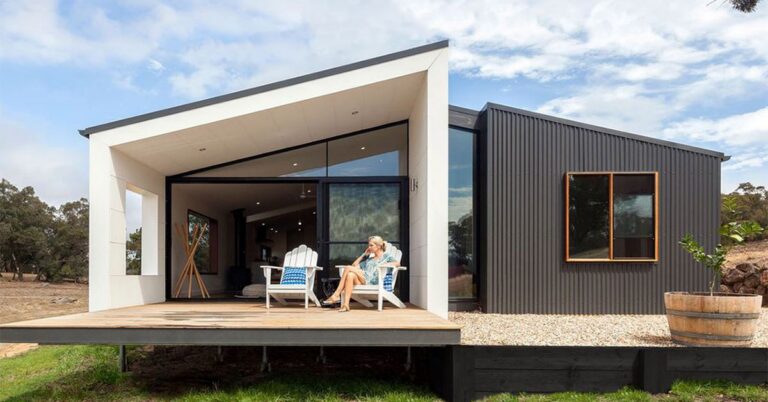
    Tiny Home Dreams Made Simple: An Innovative Luxury Prefab Tiny Home

    For anyone who has ever dreamt of downsizing their life but upsizing their DIY skills, the Norman Luxury Prefabricated Tiny Home offers a tantalizing option. It’s not just a house; it’s a project, an adventure, and maybe even a lifestyle transformation—all delivered to your door.

    all photos – OFFGRID DWELLINGS

    Imagine this: a sleek, modern prefab tiny home that arrives at your location with everything you need to create your own personal slice of heaven. The Norman Luxury Tiny Home is more than just a house in a box—it’s a fully customizable 400-square-foot marvel designed to make every square inch work smarter, not harder. Think of it as the Swiss Army knife of living spaces.

    .

    This isn’t your run-of-the-mill backyard shed. With its clean lines, glass-heavy exterior, and open floor plan, it screams “luxury” louder than your uncle’s grill during the Fourth of July cookout. Whether you’re building a lakeside retreat, a guest house, or a permanent residence, the Norman is designed to turn heads.

    What sets the Norman apart is its DIY-friendly assembly. Unlike those cryptic furniture assembly instructions that turn into an accidental test of your marriage, the Norman comes with clear, easy-to-follow directions. It’s almost as if the creators anticipated your groans and preemptively decided to make the process as stress-free as possible.

    While you don’t need to be a professional contractor to put this beauty together, it helps if you have some basic tools and a can-do attitude. Invite your friends over for a “tiny home raising party” and bribe them with pizza—it’s bound to be more fun than a weekend binge-watching reality TV. Plus, imagine the bragging rights when you can say, “Yeah, I built this.”

    The Norman Luxury Tiny Home doesn’t just stop at functionality; it’s all about personalization. The prefab components provide the perfect blank canvas for you to unleash your inner interior designer. Paint it, furnish it, or even add quirky decorations—this tiny home is yours to make uniquely your own.

    The home includes essential spaces like a cozy kitchen, bathroom, and living area, but it also leaves room for creativity. Want to install a loft bed for that “I’m living in a treehouse” vibe? Go for it. Dreaming of a fold-away dining table that doubles as a desk? The Norman practically dares you to innovate.

    Living in a tiny home like the Norman isn’t just about saving money or reducing your carbon footprint—it’s about embracing a lifestyle where less truly is more. It’s about saying goodbye to clutter and hello to intentional living. Plus, with its sleek design and efficient use of space, it’s a tiny home that doesn’t feel tiny at all.

    So, if you’ve been scrolling Pinterest boards, watching YouTube tours, and dreaming of simplifying your life, the Norman Luxury Prefab Tiny Home might just be your golden ticket. It’s stylish, eco-friendly, and designed to make even the greenest DIYer feel like a seasoned pro.

    Culture Meets Innovation: The Tool Every Modular Manufacturer Needs but Few Have

    What truly sets a modular manufacturing business apart in today’s competitive market? Is it cutting-edge equipment, streamlined processes, or robust financial backing? While these elements are important, there’s an often-overlooked cornerstone of success: culture.

    An engaged and empowered workforce doesn’t just execute tasks—it drives innovation, improves productivity, and builds resilience. At the heart of fostering such a culture lies a commitment to making employees feel valued, supported, and directly connected to the company’s success. For one modular manufacturer, this commitment has not only shaped their workplace but also led to the development of an extraordinary tool—a custom-built app that integrates technology with a people-first philosophy. I saw it first-hand!

    This article explores how innovation and culture come together to form the foundation of a thriving business.

    In the modular manufacturing world, success isn’t just about cutting-edge equipment or perfectly timed processes—it’s about people. A company with an engaged and empowered workforce doesn’t just meet goals; it surpasses them.

    When employees feel valued and supported, they work smarter, stay longer, and collaborate better. The result? A workplace where innovation thrives, productivity soars, and challenges are met with solutions instead of roadblocks.

    For modular manufacturers, creating this kind of culture is more than just good leadership—it’s about building systems that make every employee feel like they’re part of the bigger picture. One company has done just that, and their approach offers lessons for anyone in the industry.

    For one modular manufacturer, building a strong culture wasn’t just a lofty goal—it became a strategy. Over a seven year period, they’ve developed a custom app that’s as integral to their operations as the tools on their production line.

    What makes this app so remarkable isn’t just its features; it’s how it connects every employee to their work and to each other. Installed on every employee’s phone, the app isn’t just a management tool—it’s a daily companion. From tracking individual tasks to accessing one of over 800 training videos, the app empowers employees to take ownership of their roles.

    The results speak for themselves. The company boasts some of the lowest man-hours per floor in the industry, significantly reduced downtime, and turnover rates that are far below industry norms. In fact, the average employee has over seven years of seniority—a rare achievement in any field. Add to that wages that are among the highest in the local market and warranty costs that are well below the competition, and it’s clear this app isn’t just innovative—it’s transformative.

    Unlike off-the-shelf solutions, this app was built entirely in-house, tailored to the company’s specific needs and continually improved based on real-world feedback. Every employee, from the shop floor to the front office, uses it daily—not as an obligation, but as a tool to make their work easier and more meaningful.

    The App is used throughout the factory by everybody

    This combination of technology and trust has turned the app into more than a tool—it’s become the backbone of an employee-centric culture that proves when you invest in people, they invest back in your business.

    In manufacturing, it’s easy to get lost in metrics like square footage produced or units shipped. But this company’s success proves that investing in people—supported by the right tools—pays off in ways that go far beyond the bottom line.

    The numbers don’t lie. This company operates with man-hours per floor among the lowest in the industry. Their downtime is practically negligible, and their employees earn some of the highest wages in the local market—all while turnover remains exceptionally low. These results aren’t just impressive—they’re rare.

    Then there’s the impact on quality. With warranty and service costs significantly below industry averages, it’s clear this company has cracked the code on building smarter, not harder. And the secret ingredient? A culture of accountability and empowerment, with the app acting as both a guide and a motivator.

    But perhaps the most telling proof of their approach is the people themselves. The average employee has over seven years of tenure—a testament to a workplace that values its team and gives them the tools to succeed. In an industry often plagued by high turnover and burnout, this stability sets them apart.

    For modular manufacturers looking for an edge, this is a model worth studying. It’s not just about the app or the culture—it’s about the way those two elements combine to create something greater than the sum of their parts.

    In an industry that’s constantly pushing for faster build times and lower costs, it’s refreshing to see a modular manufacturer thrive by investing in something far less tangible—but infinitely more powerful: its people. By blending a culture of accountability and empowerment with a custom-built app that keeps everyone on the same page, this team has achieved results that speak for themselves.

    .

    If reading about their success has sparked ideas—or curiosity—there may be ways to explore this approach further. Whether you’re an industry veteran looking for fresh insights, or a newcomer eager to jump into a proven model, opportunities like this don’t come along often. For those who want to find out more about how this company’s principles can be applied—or discover details about the broader possibilities they represent through actual ownership—feel free to reach out through OffsiteInnovators.com.

    After all, culture isn’t just a buzzword; it’s the engine that drives real, measurable success.


    How Robotic Micro-Factories Are Revolutionizing Home Construction

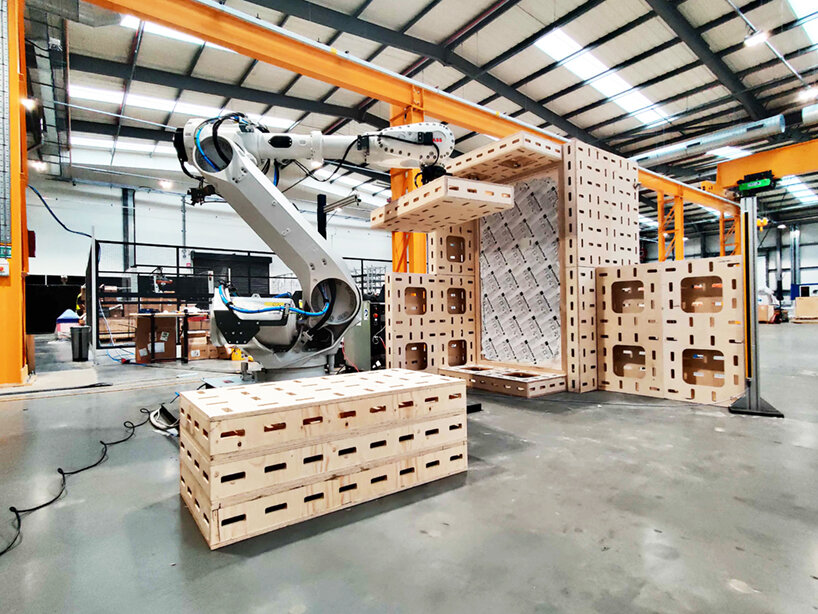
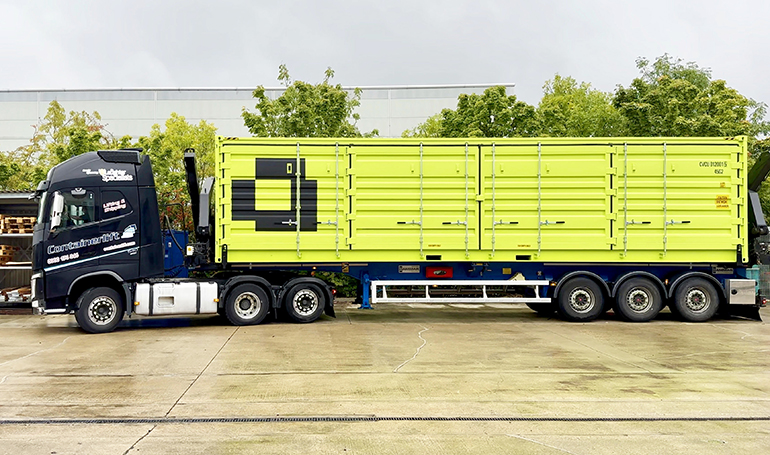
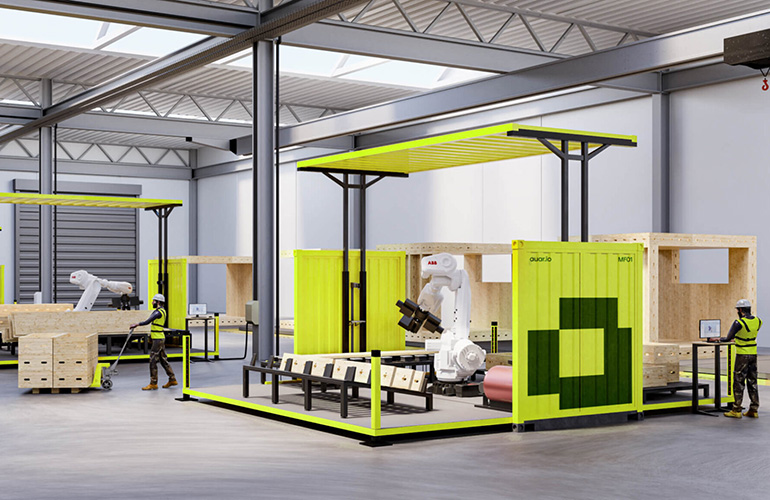
    Imagine a world where homes are built not by hammers and nails, but by robots in small, efficient micro-factories. This isn’t science fiction—it’s the reality being shaped by Automated Architecture (AUAR). Leveraging cutting-edge robotic technology, AUAR is pioneering a new approach to homebuilding that combines modular design with precision automation, creating an exciting frontier in construction innovation.

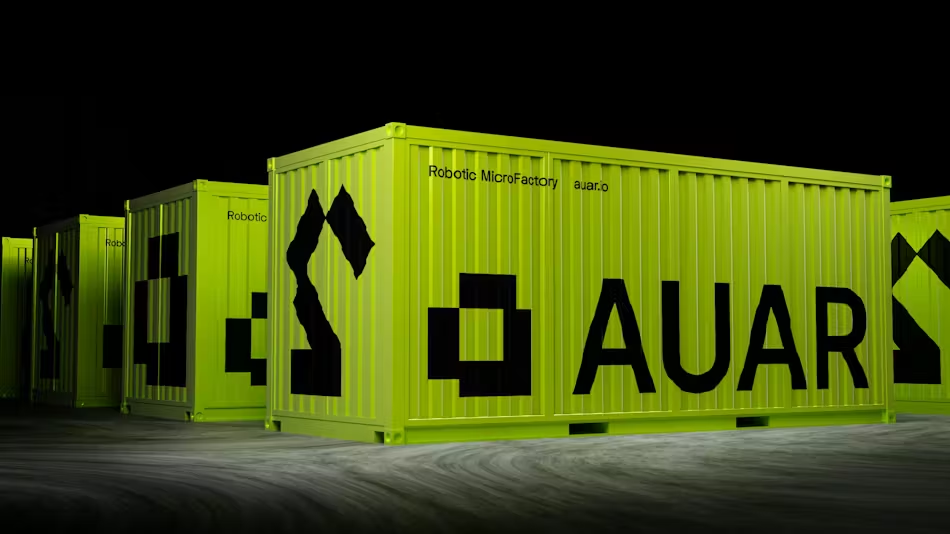
    AUAR’s robotic micro-factories come in a standard shipping container

    These robotic micro-factories enable homes to be assembled with unparalleled speed and accuracy, addressing labor shortages and reducing construction waste. From urban infill projects to custom housing solutions, AUAR’s approach promises to transform the way we think about building. By blending sustainability, flexibility, and technology, they’re not just constructing homes—they’re constructing the future.

    What sets AUAR apart is its focus on decentralizing construction, bringing production closer to the communities it serves. This localized approach allows for quicker adaptation to specific housing needs and environmental conditions, while also supporting local economies. By embedding modular design principles into their robotic processes, AUAR ensures that each home is both cost-effective and customizable, making high-quality housing more accessible than ever before.

    CLICK HERE to read the entire Building Design + Construction article

    Fear: The Silent Killer of Innovation in Construction

    For four decades, I’ve witnessed the lifecycle of businesses in the construction industry. I’ve seen ideas born at kitchen tables, fueled by a passion to build something better, only to watch those dreams unravel. The trajectory often follows a familiar pattern: financing sparks a startup, growth brings optimism, improvement fuels innovation, but then fear—unseen and insidious—sets in. It gnaws at the edges of progress, sapping energy and momentum until businesses falter and fall.

    Fear is the silent killer. It doesn’t announce itself. It whispers doubts, stirs hesitations, and thrives in the shadows of decision-making. It’s particularly destructive in industries like construction, where the stakes are high, margins are thin, and reputation often feels like everything. Fear doesn’t need to be loud; it only needs to be present.

    In the construction world, judgment can feel as solid as the materials we work with. From peers and competitors to clients and employees, the pressure to deliver excellence is constant. For innovators in offsite and modular construction, the fear of judgment can become paralyzing.

    What if your peers dismiss your idea as impractical? What if your investors lose confidence in your vision? What if your factory’s new robotic system underperforms, leaving you red-faced at the next industry conference? These questions breed an insidious form of self-doubt. The fear of judgment doesn’t just halt progress—it rewrites your narrative. Instead of being the bold leader who tried something new, you convince yourself you’re safer as the one who played it safe.

    Fear doesn’t destroy a business overnight. It’s more like water dripping on stone—slow, persistent, and ultimately destructive. It shows up at every stage of the business journey:

    • Startup: Fear of failure can stop entrepreneurs from taking the leap altogether.
    • Growth: Fear of overextension can hold companies back from scaling to their full potential.
    • Improvement: Fear of disruption can prevent factories from adopting new technologies or processes.
    • Stagnation: Fear of change can trap leaders in a loop of doing what’s “always worked,” even when it no longer does.

    The most tragic part? By the time the damage is visible, it’s often too late. Fear has already eroded the foundation.

    Great leaders in the construction industry understand that fear is inevitable, but it’s also conquerable. They don’t pretend it doesn’t exist—they face it head-on. Here’s how you can fight fear at every stage of your business:

    Recognize Fear for What It Is: Fear is not a sign of weakness; it’s a signal. It’s your mind telling you that you’re stepping into the unknown. Recognizing this can help you reframe fear as a companion to innovation, not an enemy of it.

    Build a Tribe of Support: Surround yourself with people who believe in your vision and aren’t afraid to challenge your doubts. Whether it’s a mentor, a business partner, or a trusted peer group, these relationships are your antidote to fear of judgment.

    Celebrate Courage, Not Just Results: In construction, success is often measured by the end product. But to combat fear, you need to celebrate the courage it takes to start, innovate, and adapt—even when the results aren’t immediate.

    Fail Forward: Every failure is a learning opportunity. Instead of fearing what might go wrong, focus on what you’ll gain from the experience.

    Stay True to Your Vision: Remember why you started. Your kitchen-table idea was born from passion and purpose. Fear can’t compete with a clear, unwavering vision.

      The construction industry is built on the courage of those who dared to imagine something better. Whether you’re pioneering offsite solutions, introducing modular innovations, or simply striving to be the best builder in your community, fear will always be part of the journey. The question is not whether you’ll face it—the question is whether you’ll let it stop you.

      So take a deep breath. Silence the voices of doubt. Trust in your vision and your ability to adapt. Fear may erode weak foundations, but courage builds stronger ones.

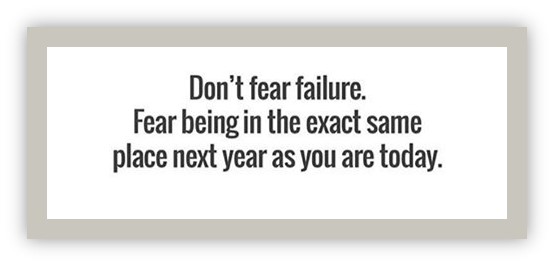
      The next time fear whispers in your ear, remember this: the only thing worse than being judged for trying is never trying at all.

      The Dumbest Things Factory Owners Have Said About Their Production Line Workers

      In the world of offsite construction and modular manufacturing, the production line is the heart of the operation. It hums with the energy of skilled workers, precise timing, and teamwork. Yet, in many factories, a dangerous gap persists between management and the people who physically build the product. Over the years, some of the most ill-advised comments from factory owners have trickled out, revealing an alarming disconnect. These misguided statements not only show a lack of appreciation for the workforce but also threaten the long-term success of the business. Let’s explore some of the most egregious examples.

      “They’re just labor; anyone can do this job.”

      This sweeping dismissal of production line workers undermines the specialized skills and precision many of them bring to the table. While the work may appear straightforward to outsiders, experienced employees possess a deep understanding of the processes and tools that keep the line running efficiently. Overlooking this expertise can lead to costly mistakes and delays when turnover inevitably happens.

      “If they don’t like it, they can leave—there are plenty more where they came from.”

      In an industry grappling with a skilled labor shortage, this comment is both tone-deaf and self-defeating. Replacing workers isn’t as easy as it sounds. Training new hires costs time and money, and frequent turnover drags down productivity. When workers feel replaceable, they’re less likely to invest themselves in the job—a recipe for poor morale and subpar work.

      “Robots will replace all of them soon anyway.”

      Automation is transforming manufacturing, but it’s not a magic wand that eliminates the need for human input. Even the most advanced systems require skilled workers to program, monitor, and maintain them. Besides, this comment reflects a fundamental misunderstanding of the current capabilities of technology and alienates workers who already fear being replaced.

      “They don’t care about the company; they’re only here for the paycheck.”

      It’s true that wages matter, but many production workers also take pride in their craft and want to feel valued. When owners dismiss their employees’ potential for loyalty or engagement, they miss an opportunity to build a stronger, more committed team. It’s a self-fulfilling prophecy: treat workers as if they don’t care, and they won’t.

      “Why should we listen to them? They’re not engineers.”

      Production line workers often spot inefficiencies or potential improvements that managers and engineers overlook. Ignoring their input stifles innovation and fosters resentment. After all, they’re the ones who interact with the product daily and understand the nitty-gritty details that can make or break a production cycle.

      “They’re lucky to have a job.”

      In today’s competitive job market, workers aren’t beholden to employers who fail to respect them. This antiquated mindset assumes workers have few other options, but the reality is quite different. Treating employees as if they owe their employer gratitude instead of receiving mutual respect is a fast track to high turnover.

      “We don’t need to train them; they’ll figure it out.”

      Cutting corners on training is not just a disservice to employees but a liability for the entire operation. Poorly trained workers are more likely to make mistakes, causing rework, delays, and safety hazards. Investing in proper training ensures smoother operations and fewer costly disruptions.

      “They should stop complaining—we didn’t have these luxuries back in my day.”

      This “back in my day” rhetoric does nothing to address modern workplace challenges. Workers today expect fair wages, safe working conditions, and opportunities for growth. Comparing their current needs to outdated standards only alienates employees and ignores the progress the industry has made.

      “We can’t afford to give them raises; the business needs to come first.”

      A business that neglects to fairly compensate its workforce is shooting itself in the foot. Competitive pay is essential for attracting and retaining top talent, and it’s a small price to pay compared to the costs of constant hiring and training due to turnover.

      “It’s not like they’re building rocket ships.”

      This flippant remark trivializes the hard work and skill required to produce high-quality products. Whether it’s assembling homes, components, or other goods, production workers play a critical role in delivering a final product that meets customer expectations.

      These statements aren’t just words—they reflect attitudes that can erode a factory’s foundation. Disrespecting workers leads to low morale, high turnover, and missed opportunities for innovation. Moreover, it damages a company’s reputation, making it harder to recruit skilled labor in an already competitive market.

      The most successful factories are those where management values and invests in their workforce. Workers who feel respected, heard, and fairly compensated are more likely to take pride in their work and go the extra mile. As the offsite construction industry continues to evolve, factory owners must recognize that their employees are their greatest asset—not just a cost to be minimized.

      The production line may not build rocket ships, but it does build homes, communities, and futures. It’s time for factory owners to shift their mindset, leaving these “dumb” comments behind and fostering a culture that values the contributions of every worker on the line.

      Building the Future: How Humanoid Robots Could Revolutionize Offsite Construction

      The era of humanoid robots has arrived, transforming what once seemed like a distant dream into a groundbreaking reality that’s reshaping industries—including offsite construction. These remarkable machines, designed to mimic human movement, expressions, and even problem-solving abilities, are poised to revolutionize how modular homes and prefabricated buildings are conceived, constructed, and delivered. Humanoid robots are not merely tools; they are collaborators, working alongside human teams to enhance efficiency, precision, and creativity in one of the most innovative construction sectors.

      The Albert Hubo Robot

      Imagine a modular construction factory where humanoid robots move seamlessly among workers, assembling components with unparalleled dexterity and consistency. Equipped with cutting-edge technologies like advanced AI, natural language processing, and adaptable mechanics, these robots can perform complex tasks, from handling delicate materials to inspecting completed modules for quality assurance. Their ability to learn and adapt on the job could address the industry’s labor shortages while streamlining production timelines and reducing errors, offering builders and developers a competitive edge in a demanding market.

      Agility Robotics

      Beyond their technical capabilities, humanoid robots offer a glimpse into the future of offsite construction—a future defined by collaboration between human ingenuity and robotic precision. Their introduction raises exciting possibilities for creating safer work environments, where robots take on repetitive or hazardous tasks, freeing human workers to focus on creative problem-solving and innovation. As the boundaries of robotics and construction continue to blur, the industry is presented with opportunities to rethink not just how buildings are made but also how the entire construction process can become more efficient, sustainable, and scalable.

      For the offsite construction industry, humanoid robots represent more than just technological progress—they are a symbol of what’s possible when advanced robotics meet a forward-thinking sector. Whether it’s assembling structural components, optimizing logistics, or ensuring quality at every step, these robots are setting the stage for a new era of construction. The humanoid revolution is here, and its impact on offsite construction is just beginning to take shape.

      Tesla (United States)
      Robot: Optimus
      Overview: Unveiled in 2021, Optimus is designed for general-purpose tasks, aiming to perform duties that are “dangerous, repetitive, and boring”. Tesla plans to commence low-volume production by 2025, with a target price between $20,000 and $30,000.

      Agility Robotics (United States)
      Robot: Digit
      Overview: Founded in 2015, Agility Robotics developed Digit, a bipedal humanoid robot designed for logistics and warehouse tasks. Digit has been deployed in facilities such as a Spanx warehouse and is being tested by companies like Amazon for distribution and fulfillment tasks.

      Figure AI (United States)
      Robots: Figure 01 and Figure 02
      Overview: Established in 2022, Figure AI focuses on creating AI-powered humanoid robots for manual labour. In 2024, the company secured $675 million in funding from investors including OpenAI, Microsoft, Nvidia, and Jeff Bezos, valuing the company at $2.6 billion. Figure 02 robots have been deployed in BMW’s manufacturing facilities for testing.

      Hanson Robotics (Hong Kong)
      Robots: Sophia, Albert Hubo, Bina48
      Overview: Hanson Robotics is renowned for developing human-like robots capable of human interaction and emotional intelligence. Sophia, one of its most famous robots, was activated in 2016 and has been granted citizenship in Saudi Arabia. Also behind the AiDa humanoid robot, which sold its painting for more than $1 million at Sotheby’s auction house recently.

      .

      UBTech Robotics (China)
      Robot: Walker S1
      Overview: UBTech has developed Walker S1, a humanoid robot designed for manual labour tasks in manufacturing settings. These robots have been deployed in BYD Auto’s factories to address labour shortages and enhance efficiency.

      1X (Norway)
      Robots: Eve and Neo Beta
      Overview: Founded in 2014, 1X develops humanoid robots emphasizing safety and affordability. EVE is designed for roles in security, healthcare, and other service-oriented industries, while Neo Beta is a humanoid robot for home use, currently being tested in domestic environments.

      Sanctuary AI (Canada)
      Robot: Phoenix
      Overview: Sanctuary AI focuses on creating humanoid robots with human-like intelligence to assist in various work environments, enhancing safety and efficiency. Phoenix is their general-purpose robot designed to perform a wide range of tasks across different industries.

      Fourier Intelligence (China)
      Technology of interest: Intelligent Rehabilitation Robots
      Overview: Fourier Intelligence specializes in developing intelligent humanoid robots for medical rehabilitation. Their products are deployed in over 2,000 clients across more than 40 countries, providing high-performance rehabilitation solutions.

      Boston Dynamics (United States)
      Robot: Atlas
      Overview: Boston Dynamics’ Atlas is a bipedal humanoid robot designed for search and rescue tasks. Unveiled in 2013, Atlas demonstrates advanced athletics and agility, exploring the potential of the humanoid form in dynamic environments.

      CLICK HERE to read the original Robotic and Automation News article