Some factory closings pass almost unnoticed. A few employees pack their tools, the lights go dark, and the industry moves on.
The closing of Harbinger Production’s Vallejo, California, factory deserves more than that.
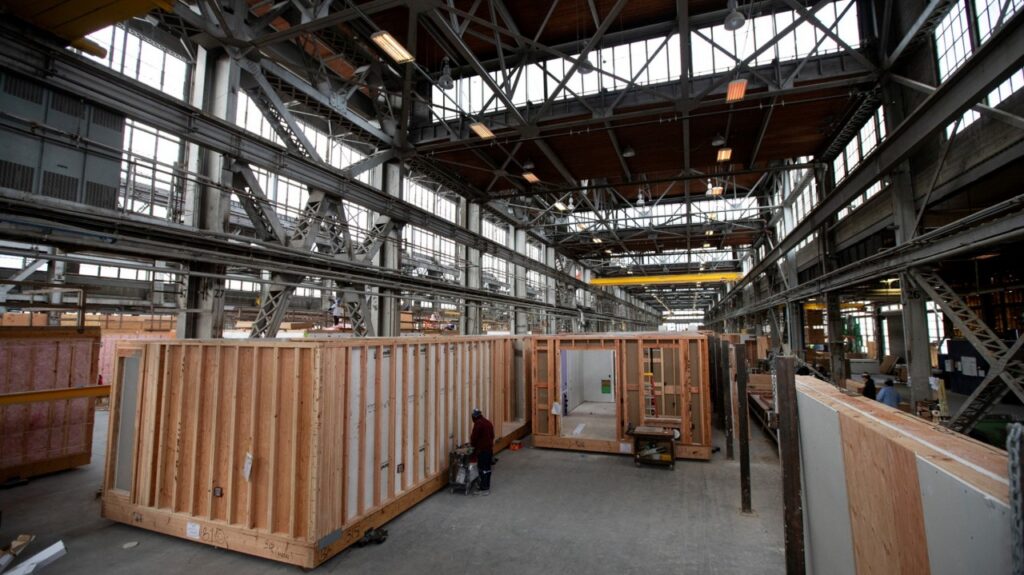
Many people first knew this operation as Factory_OS. It was not a small plant experimenting with a handful of boxes. It occupied approximately 250,000 square feet on Mare Island, employed hundreds of people, and produced thousands of modular units, many for affordable and supportive housing.
It had institutional investors, union labor, sophisticated equipment, and the attention of developers, public officials, and the construction industry. It demonstrated that volumetric modular construction could take on large urban housing projects in one of the most difficult and expensive building markets in the country.
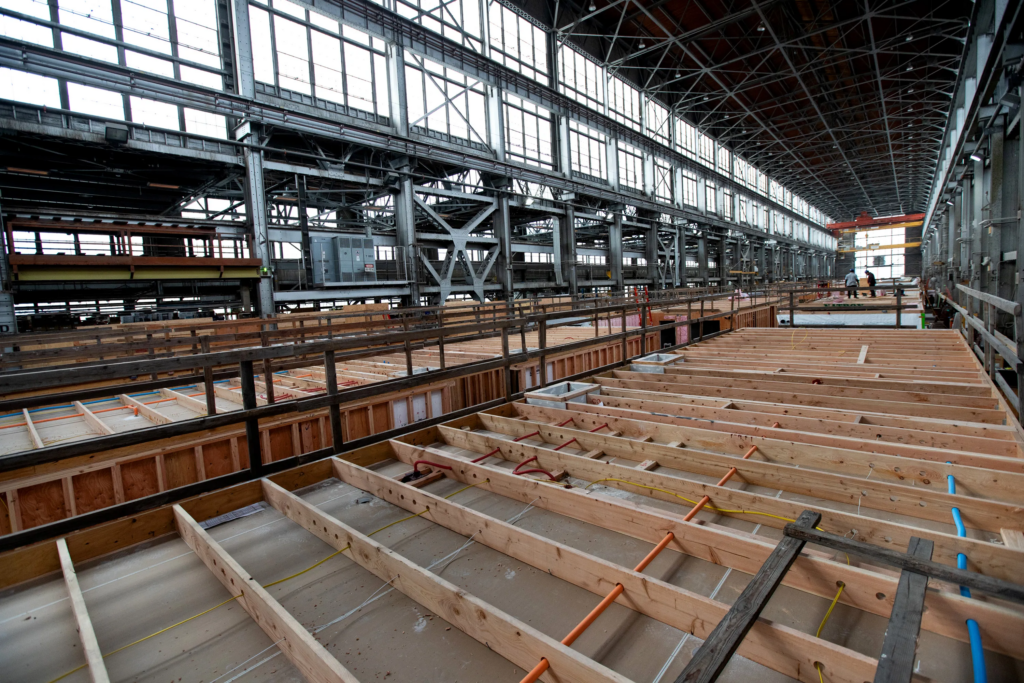
Now the uncertainty is over. Harbinger didn’t just reduce production or pause operations while waiting for another project. The factory closed, and it sold its remaining assets.
That makes this a farewell—not only to a company name, but to one of the modular industry’s most visible attempts to industrialize affordable multifamily housing in California.
From Factory_OS to Harbinger
Factory_OS entered the industry with an ambitious proposition: build multifamily housing in a controlled factory environment, use a trained union workforce, and help California deliver housing faster and more predictably.


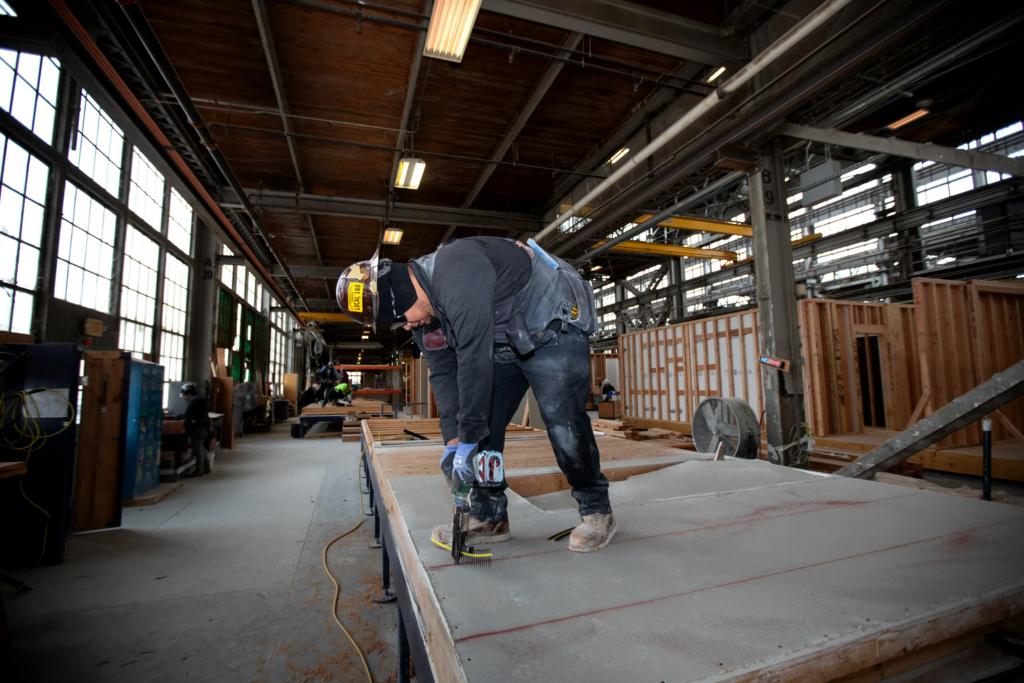
Its location on Mare Island carried a certain symbolism. A former naval shipyard had become home to a modern housing-production operation. Instead of building ships, workers assembled apartment modules that would travel to sites throughout the region.
The company attracted prominent financial and corporate supporters. It delivered real projects and real homes, including housing for people whom California’s conventional construction and development systems were struggling to serve. That distinction matters. Factory_OS was not simply a presentation, a rendering, or a startup waiting to manufacture its first building. It produced thousands of units and accumulated genuine experience in design coordination, procurement, production, transportation and site installation.
The company was later acquired and renamed Harbinger Production. A new name, new ownership and additional capital offered hope that the factory could stabilize its pipeline and continue operating.
But changing the sign outside a factory does not change its underlying economics.
The Warning Became a Closure
Earlier in 2026, Harbinger warned government officials that it might close the Vallejo operation and eliminate approximately 280 to 290 positions. The company cited the loss of capital funding and an insufficient pipeline of new business.
At the time, at least one possibility remained that another contract, investor, or restructuring could keep the factory alive. That possibility is now gone. Asset-sale documentation from Onyx Asset Advisors describes the event as a “complete facility closure” conducted through an assignment for the benefit of creditors. A bulk sale closed on June 17.
The disposition included more than $3.2 million in building-material inventory, measured at cost. It also included forklifts, pickup trucks, glazing robots, woodworking machinery, air compressors, power tools, and material-handling equipment.
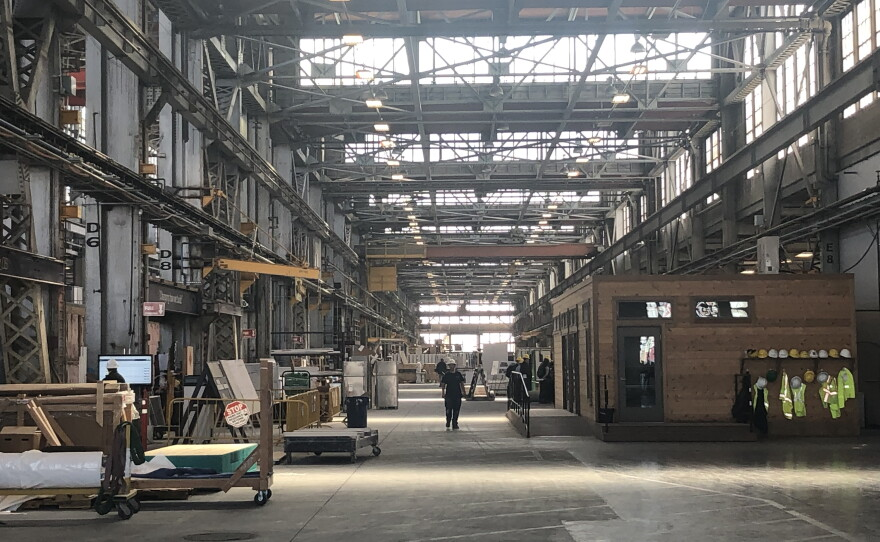
Those details provide a more final picture than a layoff notice ever could. The inventory that once represented future buildings became saleable material. The equipment that once represented production capacity became a collection of assets looking for new owners.
The Onyx asset-sale notice documents the closure and disposition.
This Was Not a Failure to Understand Modular Construction
It would be easy to dismiss Harbinger as another modular factory that failed. That description is too simple. The people working in Vallejo knew how to manufacture modules. They had proved it repeatedly. The factory had workers, equipment, engineering experience, and completed projects.
The problem was not whether it could build. The problem was whether enough financed, permitted, and production-ready projects would arrive at the factory in the right sequence to support its fixed costs. That is the question every modular company eventually faces.
A housing shortage is not a backlog. A developer’s letter of interest is not a purchase order. A proposed project is not factory work. Even a signed contract may not become production if financing, entitlements, site preparation, or public approvals fall behind.
Factories must pay employees, utilities, insurance, rent or debt service, maintenance and management salaries whether modules are moving down the line or not. A 250,000-square-foot facility consumes cash every day. Sophisticated equipment does the same if financing and depreciation continue while the machinery sits idle.
Harbinger operated in California, where the need for affordable housing is enormous. But enormous need did not produce a sufficiently dependable flow of orders.
That may be the most important sentence in this farewell.
The Industry’s Backlog Illusion
Offsite construction has spent years promoting the size of America’s housing shortage. Depending on which study is cited, the nation needs several million additional homes.
That figure may help explain why industrialized construction deserves attention. It is much less useful when deciding whether to hire another shift, lease another building, or invest in another production line.
A factory cannot manufacture a national shortage. It can manufacture only the projects that have completed design, financing, approvals, and site coordination.
Management must therefore separate its pipeline into honest categories. Which opportunities are merely being discussed? Which have preliminary designs? Which have financing commitments? Which have approved permits? Which have sites ready to receive modules? Which have deposits that protect the factory if the customer delays or cancels?
When all of those categories are called backlog, capacity decisions become dangerous.
Harbinger’s closure should encourage every factory manager and investor to examine the difference between announced projects and executable orders. The larger the factory, the more costly that difference becomes.
Could Harbinger Have Become Smaller?
One difficult question deserves to be asked: When should a large factory reduce capacity instead of continuing to finance it? There is no simple answer. Shrinking a plant can raise unit costs, disrupt the workforce, and reduce the ability to take on the large projects needed for recovery. Management may also believe the next major order is only weeks away.
But waiting for one enormous project can become its own business model—and a dangerous one. If that project is delayed, repriced, or canceled, the factory has little protection.
Smaller production cells, flexible staffing, multiple product types or a mix of housing and commercial work might reduce dependence on a single development pipeline. None of those approaches guarantees survival. Each brings complications in engineering, certification, training and sales.
Still, the industry must become more comfortable discussing right-sized factories. Bigger is not always more industrialized, and smaller is not automatically less efficient. The best capacity is the capacity a company can keep profitably occupied.
What Harbinger Leaves Behind
A company’s closure does not erase what its employees learned or what its buildings continue to provide.
Former Harbinger workers carry hard-earned knowledge into other factories, contractors and construction businesses. Developers who completed projects with Factory_OS better understand modular coordination. Architects and engineers learned where designs transferred successfully from office to factory—and where they did not.
The industry should preserve those lessons instead of allowing them to disappear with the company.
We should ask former employees what production systems worked, what caused rework, how design changes reached the line, where project schedules failed, and what management would do differently if it could start again.
That information may ultimately be more valuable than the machinery sold from the plant.
A Farewell With Respect
It is always easier to analyze a factory after the doors close. The decisions that once looked reasonable can suddenly appear obvious in hindsight. But people went to work at Factory_OS and Harbinger believing they were building something important. They manufactured homes for real families and contributed to projects intended to address some of California’s hardest housing problems.
They also helped prove that modular construction can deliver multifamily housing at meaningful scale. The fact that the company did not achieve a sustainable operating model does not erase those accomplishments.
The respectful response is not to pretend the closure did not happen. It is to study it honestly.
Gary’s Observation

I have watched enough modular factories open and close to know that the production line is rarely the entire story. Most factories can learn how to build a module. Far fewer learn how to keep engineering, financing, permitting, procurement, transportation, and site work moving in one dependable rhythm.
Harbinger had many of the things our industry says a factory needs: capital, a large plant, modern equipment, trained workers, experienced management and a market desperate for housing. What it lacked was a continuous supply of financed, production-ready projects sufficient to carry the operation.
Don’t treat that as a footnote. Treat it as a warning posted at the entrance of every offsite factory: housing need does not pay overhead. Only executable orders do.
Farewell to the Factory_OS and Harbinger teams. The factory is gone, but the homes you built, the people you housed, and the lessons you leave behind will remain part of this industry for years to come.