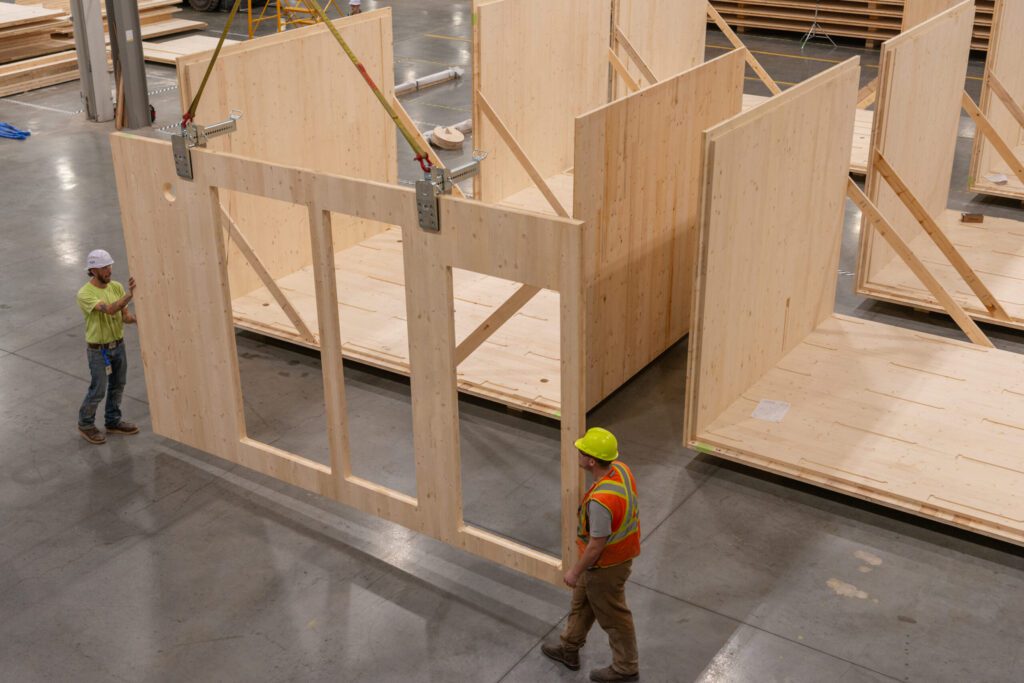
There was a time when modular meant one thing: a rectangular wood-framed box built in a factory. If you were lucky, it showed up on time. If you were even luckier, it didn’t crack in half when it was craned onto the foundation. The materials were familiar, the process was routine, and the formula—while effective—was rarely questioned. But that’s changing fast.
Offsite construction is no longer tied to a single material type. In fact, the innovators quietly rewriting the rulebook aren’t pushing for full CLT, all-steel, or concrete everything—they’re combining them. These hybrid systems are beginning to address some of the most significant challenges in modular and panelized construction. And surprisingly, the results don’t look like Frankenstein’s monster. They look like efficiency, speed, and profit.
The Death of “One-Size-Fits-All” Modularity
Ask any factory owner why they chose wood, steel, or concrete, and you’ll get a simple answer: that’s what we’ve always done. But as offsite builders move into new markets, new climate zones, and new types of housing (mid-rise apartments, ADUs, even schools), that old thinking just doesn’t hold up. What works in Arizona doesn’t always work in Vermont. What’s affordable in Detroit may be a disaster in San Francisco.
Instead of trying to make wood do what it wasn’t designed to do, smart builders are now combining materials like CLT (Cross-Laminated Timber) for shear strength, light-gauge steel for precise framing, and modular MEP pods for plug-and-play efficiency. It’s not about what you’re used to—it’s about what the building needs.
The Factory of the Future Isn’t Married to a Material


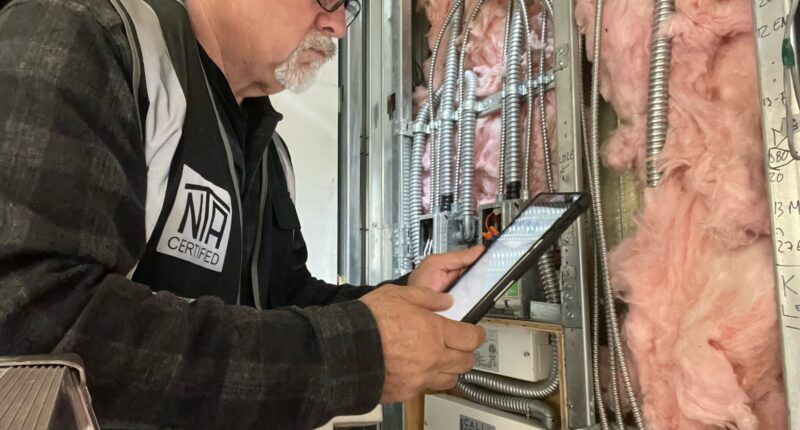
In hybrid systems, the factory line becomes more flexible. One part of the shop might be cutting CLT panels, another might be bending steel, while a third assembles fully wired MEP pods that can slide into a wall panel or volumetric module like a cartridge. This mix-and-match approach has two major benefits: it allows the factory to bid on a wider variety of projects, and it opens the door to optimizing cost and performance on every job.

Some factories are now building the bottom floor of a mid-rise in concrete, the middle floors in steel-framed modular boxes, and the top floor in lightweight timber to stay under height limits. It’s not magic—it’s logistics. And it’s made possible by digital coordination and better integration with the design team from day one.
The Hidden Advantage: Localized Code Compliance
One unexpected bonus of hybrid systems? They can make code compliance easier. Some cities are more accepting of certain materials than others. For instance, jurisdictions that are hesitant to approve fully steel modular frames may be fine with steel used for just the floor joists, if the walls are timber. And CLT is increasingly being written into fire and seismic codes where traditional framing struggles.
A hybrid approach gives builders the flexibility to meet local regulations without having to redesign the entire product line. That means fewer headaches, faster approvals, and a smoother path from permit to project closeout.
Will It Cost More? Maybe Not.
Some skeptics argue that hybrid systems must be more expensive—after all, you’re sourcing more materials, more connections, and more manufacturing methods. But the opposite is often true. By matching each material to its most efficient use case, many builders report lower total installed cost per square foot. And with labor being one of the most expensive and unpredictable parts of construction, anything that reduces on-site time is money in the bank.
The Modular Mutts Are Winning
Offsite is moving into a new era—one where dogma takes a backseat to practicality. The winners will be the ones who understand that modular isn’t about the material. It’s about the method. And if that method means using CLT, steel, wood, and MEP pods all in the same project, so be it.
Hybrid systems may not be the sexiest innovation. They’re not robots. They’re not 3D printers. But they are solving real problems. And in an industry starved for reliability and flexibility, that may be the most revolutionary thing of all.