Highlighting the thinkers and their ideas driving the evolution of Offsite Construction. 
Be inspired, be informed, be innovative!

What Really Makes Offsite Construction Work

Over the years, my partner Gary Fleisher and I have spent countless hours talking with people across the offsite construction industry—developers, manufacturers, builders, investors, engineers, and suppliers. One thing has become very clear in those conversations: modular construction generates a lot of interest, but it also generates a lot of misunderstanding.

Part of that is because offsite, especially modular construction, sits at the intersection of two very different worlds.

On one side is manufacturing. Factories must operate with discipline, efficiency, and continuous improvement in order to produce modules consistently and profitably.

On the other side is construction and development, where projects must be coordinated, sites prepared, trades scheduled, and buildings finished so they can ultimately receive a Certificate of Occupancy.

For modular manufacturing and construction to work well, both sides of that equation have to function properly.

Over the coming weeks here at Offsite Innovators, Gary and I will be exploring these two perspectives in a series of articles.

Gary will be focusing on the internal side of modular manufacturing—how factories operate, and the kinds of operational excellence points that can improve performance, efficiency, and profitability. Recently he attended a presentation that outlined twenty operational practices that, when implemented effectively, can add meaningful improvement to factory performance. Those ideas reminded him of many of the continuous improvement principles that have long been associated with thinkers such as W. Edwards Deming and other quality management pioneers.

In short, Gary will be examining what strong modular factories do well.

My role in the series will come from a different angle.

After more than forty years working in the modular industry—beginning in sales and eventually moving into plant management and operational leadership—I’ve spent a good deal of time inside modular factories and working with developers trying to bring modular projects to completion.

That experience has taught me something important: even the best factory cannot guarantee the success of a modular project if the overall process is not understood by everyone involved.

Developers evaluating modular construction often focus heavily on the factory itself—touring the plant, reviewing pricing, and evaluating production capacity. Those things matter, of course. But in my experience, successful projects depend just as much on understanding what happens outside the factory as what happens inside it.

In the articles I’ll be contributing to this series, I’ll focus on the practical realities developers should understand when considering modular construction. That includes how to evaluate a manufacturing partner, what operational signals can be observed during a factory visit, and perhaps most importantly, what responsibilities remain on the site once the modules leave the factory.

Modular manufacturing and on-site construction can be an extremely effective way to build when the entire system is understood and coordinated properly.  Occasionally the fit is not a good one making the use of Offsite not feasible. Either way the decision making process is critical.

But like any system, it works best when the people involved understand how the pieces fit together.

Our hope with this series is to explore both sides of that equation—how factories operate and how projects are completed—so that readers can gain a clearer picture of what truly makes Offsite/modular construction succeed.

We look forward to the conversation.

If you’d like to explore this further, connect with me today.

Bill Murray, Co-Founder of Offsite Innovators

Change Order Discipline

There’s an old joke in factory management that goes something like this:

“We didn’t lose money on that job… we just didn’t make what we thought we would.”

Translation? Change orders.

Not the official, signed, documented, properly priced change orders. Those are fine. Those are business. I’m talking about the quiet ones. The “no big deal” ones. The “while you’re at it” requests. The internal changes that somehow never quite make it back to the accounting department.

And in an offsite factory, those little favors eat profit faster than bad lumber pricing ever could.

It usually starts innocently.

A builder calls sales and says, “Hey, can we just move that window over about a foot?”

Sales, wanting to keep the relationship warm, says, “Sure, that shouldn’t be a problem.”

By the time that “no problem” hits engineering, redraws begin. Framing layouts shift. Sheathing changes. Maybe a header changes size. Maybe it affects siding layout. Maybe it impacts a cabinet run. Nobody sends an invoice for engineering time. Nobody tracks the production delay when the module has to pause while drawings are clarified.

But the clock keeps running.

Multiply that by a dozen “small” adjustments on a project, and suddenly the margin you carefully built into the job is leaking out like air from a poorly sealed duct chase.

Now let’s talk about the changes nobody admits are changes.

Production decides to “improve” something mid-stream.
A supervisor swaps materials because “we had it in stock.”
Someone upgrades a component to avoid an argument.

No paperwork. No cost tracking. No pricing adjustment.

It feels helpful. It feels efficient. It feels like good customer service.

It’s not.

It’s uncontrolled scope creep inside your own walls.

When lumber prices spike, everyone talks about it. It’s dramatic. It makes headlines. It’s easy to blame.

But in most factories I’ve walked through over the years, unmanaged change orders quietly cost more annually than lumber volatility.

Lumber might move 10% for a few months.

Undisciplined changes move your margin on every single house.

And because they’re scattered across engineering, purchasing, production, and field coordination, they’re hard to see. No one line item screams “We lost $180,000 here.”

It just shows up as, “We thought this job would do better.”

Change order discipline doesn’t mean telling builders “no” all the time.

It means:

Every change is documented.
Every change is costed.
Every change has a visible impact on schedule and production flow.

It also means sales and production are aligned before the promise is made—not after the drywall is hung.

Builders actually respect factories more when there’s clarity. When they understand that moving a window affects framing, sheathing, siding, trim, and sometimes transport. When you explain it professionally, most of them get it.

And the ones who don’t? They’re usually the ones costing you the most anyway.

If you’re looking for a full one percent added back to your bottom line, change order discipline is one of the fastest ways to find it.

No robotics required.
No capital raise needed.
No shiny software demo.

Just systems. Accountability. And the courage to stop giving away work because it feels polite in the moment.

In offsite construction, precision is our calling card. We talk about tolerances in sixteenths of an inch.

Maybe it’s time we applied that same precision to our margins.

Because in the end, the most expensive words in a factory aren’t “lumber went up.”

They’re “It’s just a small change.”

If you’d like to explore this possibilty for yourself, connect with me today.

Bill Murray, Co-Founder of Offsite Innovators

From Cool Innovation to Boring Execution: The New Reality in Offsite Construction

For the past decade, the offsite and modular construction industry has lived in what I like to call the “cool innovation phase.” If you attended any conference, walked any trade show floor, or listened to any pitch, you heard the same words repeated over and over: disruption, robotics, AI, digital twins, automation, carbon neutrality, mass timber, platform housing. It was exciting. It was inspiring. And in many cases, it was necessary.

But something is changing. Quietly. Subtly. And in my opinion, permanently.

The industry is getting tired of hype.

Developers, lenders, investors, and even factory owners are beginning to ask a very different set of questions. Not, “How innovative is this company?” but instead, “How reliable are they?” That shift may not sound dramatic, but it will determine who survives the next decade and who becomes another case study in PowerPoint history.

There was a time when simply being “innovative” could attract capital. A compelling vision, a sleek rendering, and a promise to transform housing were often enough to raise tens or even hundreds of millions of dollars. We’ve all seen those stories. Some of them ended well. Many did not.

The result is that investors and developers have become more cautious. They’ve been burned by delays, changing designs, and factories that never reached full production. Now they want proof, not promises. They want factories that can deliver on time, every time. They want predictable pricing. They want partners that will still be in business when the warranty period ends.

This is not a rejection of innovation. It’s a demand for execution.

If you ask developers today what keeps them awake at night, you won’t hear concerns about whether a wall panel was built by a robot or by a skilled worker. What they worry about is whether the panels will arrive when the crane is scheduled. They worry about whether the factory can maintain quality at scale. They worry about whether the production schedule will align with financing deadlines.

Predictability has become the new innovation.

Factories that understand this are investing less in flashy demonstrations and more in process control. They are tracking production metrics. They are refining workflows. They are standardizing designs. They are focusing on throughput, not just technology.

It’s not glamorous, but it works.

The volatility of the housing market has made stability more valuable than ever. Interest rates move. Projects stall. Funding disappears. A factory that relies on a handful of large projects can suddenly find itself with empty production lines.

Developers are now asking, “Who can weather a downturn?” They want partners with diversified pipelines, strong balance sheets, and disciplined management. They want companies that don’t change direction every six months.

In other words, they want boring.

Offsite construction was always supposed to be about repeatability. Yet much of the industry still operates in a project-based mindset. Every project is unique. Every design is customized. Every process is adjusted.

That approach undermines the very benefits offsite construction promises.

The shift now underway is toward product thinking. Platform housing. Standardized components. Repeatable designs. This is not about eliminating creativity. It’s about building systems that allow creativity to exist within a predictable framework.

The companies that master repeatability will scale. The rest will remain trapped in small-batch production.

There is also a growing focus on financial discipline. For years, many startups prioritized growth over profitability. That model is now under intense scrutiny.

Factory owners are asking tougher questions:

  • Where are our margins?
  • Which processes actually add value?
  • Which investments improve the bottom line?

Incremental improvement, not massive transformation, is becoming the dominant strategy. A one percent gain in productivity. A two percent reduction in waste. A three percent improvement in scheduling accuracy. These small gains compound into real profit.

It’s not exciting. But it is sustainable.

Here’s the truth that may make some people uncomfortable. The companies that win the next decade will not necessarily be the most innovative. They will be the most dependable.

They will:

  • Deliver on time.
  • Meet budgets.
  • Communicate clearly.
  • Maintain quality.
  • Build trust.

Innovation will still matter. But it will be judged by results, not headlines.

This shift mirrors what happened in other industries. Early innovators create awareness. Mature companies create stability. The offsite construction sector is entering that maturity phase.

For those willing to embrace this change, the opportunity is enormous. There is still massive demand for housing. There is still a shortage of skilled labor. There is still pressure for sustainability and efficiency. Offsite construction remains one of the most powerful tools available.

But the winners will not be the loudest voices. They will be the quiet ones, consistently delivering projects while others chase the next big idea.

The industry does not need fewer innovators. It needs more executors.

And that, perhaps, is the most exciting development of all.

If you’d like to explore this possibilty for yourself, connect with me today.

Bill Murray, Co-Founder of Offsite Innovators

You’ve Got to Kiss a Lot of Frogs at IBS Before Finding a Prince

Every year I walk into IBS with the same optimism. This is the year, I tell myself. This is the year I’m going to sit in sessions that change how I think about housing, construction, and business. This is the year I’ll hear something so practical and useful that I’ll be scribbling notes like a college freshman the night before finals.

And every year, by lunchtime on day one, I’m wondering if there’s a quiet hallway where I can sit and regroup.

Don’t get me wrong. IBS has some outstanding speakers. But, as my fairy godmother used to say, “You’ve got to kiss a lot of frogs before you find your prince.” And at IBS, there are frogs of every shape, size, and PowerPoint color palette.

Let’s start with the first group. These are the speakers who know their product or service inside and out. They’ve built it, tested it, refined it, and in many cases, they genuinely believe it will help the industry. The problem is that their 30-minute session is really just a disguised sales pitch.

You know the type. The talk starts with “industry challenges,” moves quickly into “unique solutions,” and ends with a QR code and a special IBS discount. Halfway through, you realize you’re not attending an educational session. You’ve just walked into a live commercial.

The audience politely nods. Some even take notes. But deep down, everyone knows what’s happening. The real question is not whether the product works. The real question is whether anyone in the room will actually remember the session after their next cup of coffee.

The second group of speakers is much more passionate. These folks care deeply about their topic. Zoning reform. Workforce development. Sustainability. Missing middle housing. Pick a subject, and there is someone who has devoted years of their life to it.

These sessions can be inspiring, but they often turn into something else entirely. The Q&A portion becomes a stage of its own. Some audience members genuinely want answers. Others seem determined to test whether the speaker knows as much as they claim. It becomes less about learning and more about intellectual arm wrestling.

You can almost hear the mental dialogue. “Let’s see if this expert can handle my question.” Meanwhile, the rest of the audience just wants to know how to build a house faster, cheaper, and without losing their sanity.

Then we arrive at my two favorite types of speakers. And when I say favorite, I mean the ones that make me quietly exit the room before anyone notices.

The first is the scholar. This person has devoted decades to research. They have charts, graphs, and percentages for everything. They can tell you that 37.2% of homeowners prefer something over something else. Why 37.2%? Who knows? But it sounds impressive, and nobody questions it.

The problem is that by slide number six, the audience has mentally checked out. The room is full of builders, developers, and factory owners who haven’t had their second cup of coffee. They didn’t come to IBS for a graduate-level seminar. They came for ideas they can use on Monday morning.

The scholar, however, is in full stride. More charts. More graphs. More percentages. The audience nods politely while secretly wondering if there’s a donut break coming soon.

The final group is the one that fascinates me the most. These speakers include notes and credits for their facts and figures at the bottom of every slide. The font is so small you would need a telescope to read it.

Honestly, they could be quoting MAD Magazine, and nobody in the room would know the difference.

There’s something oddly comforting about this. It reminds me that in every industry, we sometimes take ourselves a little too seriously.

Now, before anyone sends me angry emails, let me say this. There are truly great presentations at IBS. Sessions that are engaging, practical, and memorable. Speakers who tell stories, share real experiences, and admit their mistakes. Those are the sessions people remember. Those are the ones that actually change behavior.

The common thread among the best speakers is simple. They don’t try to impress. They try to help.

They speak like real people. They use examples instead of percentages. They tell stories instead of showing charts. They focus on what the audience needs, not what they want to sell or prove.

And when you find one of those sessions, it feels like striking gold.

So next year, when you attend IBS, go in with realistic expectations. You will hear some sales pitches. You will see some charts that make your head spin. You will sit through at least one session where you question your life choices.

But if you’re patient, and willing to kiss a few frogs, you might just find a prince.

And that one session could make the entire trip worthwhile.

.

With more than 10,000 published articles on modular and offsite construction, Gary Fleisher remains one of the most trusted voices in the industry.

.

CLICK HERE to read the latest edition

Contact Gary Fleisher

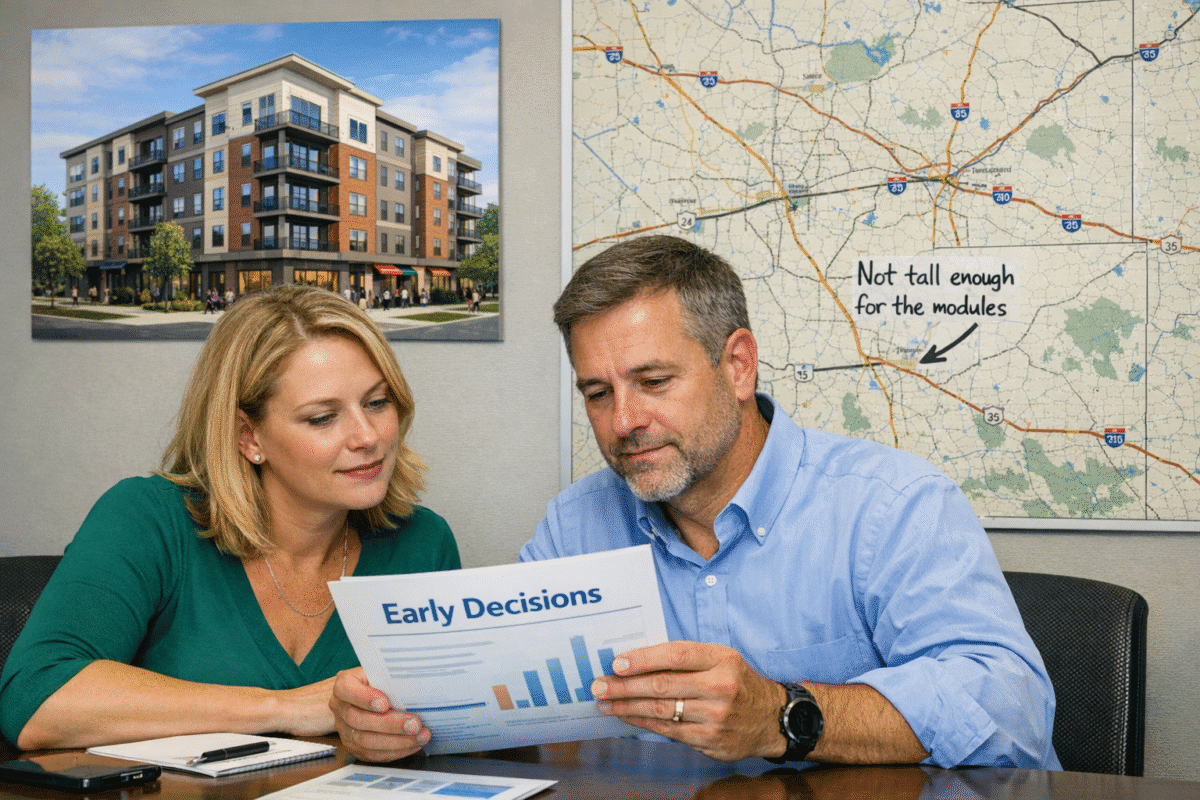
What Early Design Decisions in Offsite Construction Really Decide — and Why Many Teams Learn This Too Late

Once builders and developers decide to explore offsite construction, the conversation usually turns quickly to design.

How big can the modules be (or even how small)?
How many can we stack?
Can we push spans, heights, or layouts a bit further?

Those are fair questions. Necessary ones, even.

But after decades inside modular manufacturing and project execution, I’ve learned that size, weight, and dimensional limits are rarely just design questions. They are early signals of much larger consequences—many of which don’t become visible until commitments have already been made.

And that’s where trouble starts.

The Mistake Isn’t Asking About Size — It’s Assuming That’s the Whole Question

Builders naturally focus on what they can see: floor plans, elevations, room layouts.

What’s less visible is how those decisions ripple through an entire system.

A few extra feet of width.
A heavier floor assembly.
A taller module to accommodate mechanical runs.

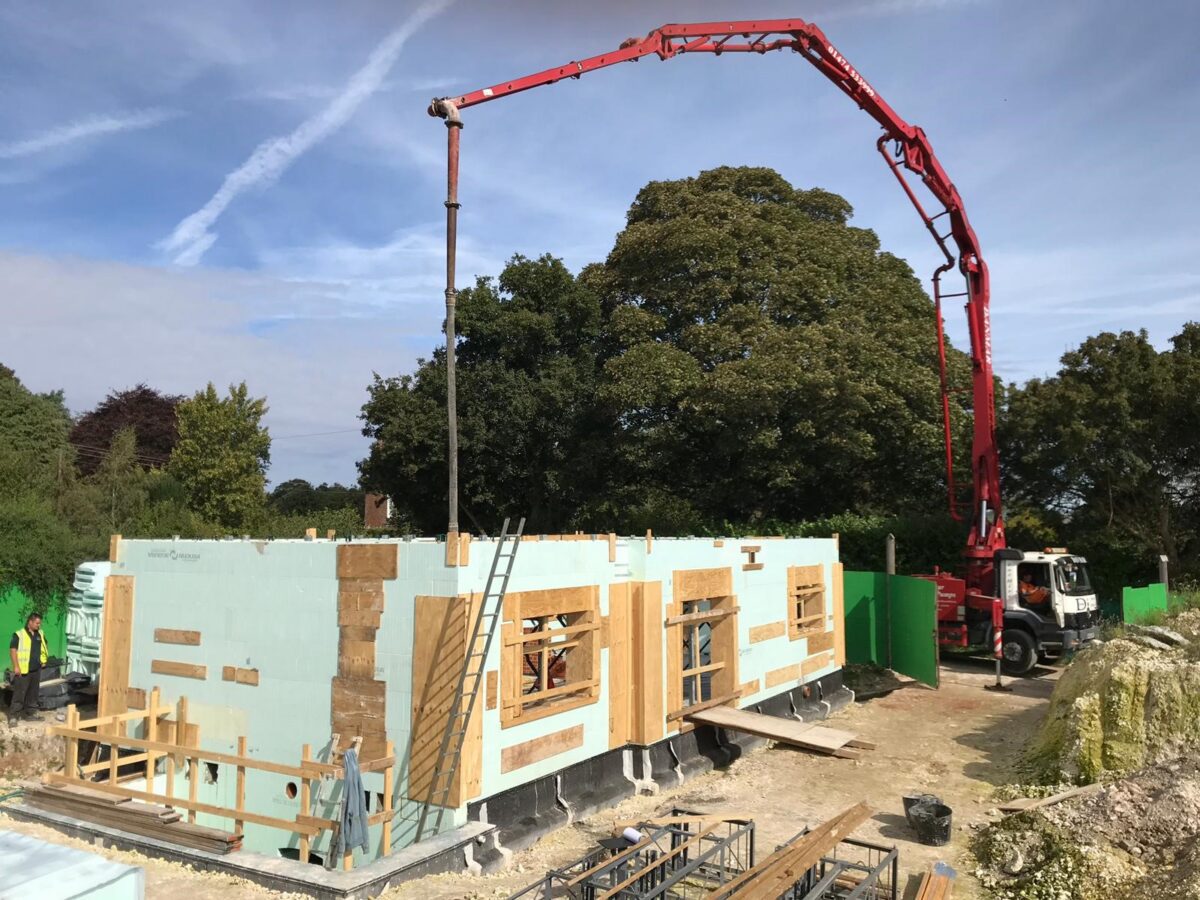
Each of those choices can quietly affect transportation costs, crane requirements, routing approvals, production speed, set sequencing, and even which factories are capable of producing the work in the first place.

The problem isn’t that builders ask about size and weight.

The problem is assuming those answers live in isolation.

They don’t.

Weight Is a Logistics Question Disguised as a Structural One

Weight often gets discussed in terms of structural adequacy—can the floor handle the load, can the framing support the span.

But weight also dictates:
• Transportation equipment
• Axle configurations which dictate the turning radius
• Permitting requirements
• Escort needs that contribute to transportation costs
• Crane size and pick radius
• Site access and staging limitations

Weight didn’t break the project.
Unanticipated consequences did. (Budgeting for a 100-ton crane, now I need a 150-ton crane)

Dimensions Set Boundaries Long Before the First Module Ships

Module width, length, and height are often treated as factory constraints.

In reality, they are project constraints.

They influence:
• How many units fit on a truck or can multiple loads be considered
• How many trips are required
• Whether over-height or over-width permits apply
• How modules navigate roads, bridges, and jobsite access
• How efficiently modules can be set and stitched together on-site

What many first-time offsite users don’t realize is that two factories with the same square footage can have very different dimensional capabilities—based on equipment, jigs, line layout, and historical product mix.

Assuming “modular is modular” at this stage is a costly oversimplification.

These Are Only Examples — Not the Full List by any means.  The list can be extensive.

It’s important to be clear: size, weight, and dimensions are only examples of the considerations that matter.

They are visible. Tangible. Easy to ask about.

But behind them sit dozens of interconnected factors: production flow, material handling, weather protection, storage methods, sequencing logic, set crew coordination and their scope of work plus tolerance management—just to name a few.

Builders new to offsite aren’t missing these questions because they’re careless.

They’re missing them because they’ve never had a reason to ask them before.

They don’t know what they don’t know.

And that’s entirely reasonable.

Experienced advisors don’t approach offsite decisions by running through checklists.

They approach them by asking:
What does this decision trigger next?

If a dimension changes, what breaks?
If weight increases, what becomes more expensive or even not possile?
If production slows, what backs up behind it?

That way of thinking doesn’t come from theory.
It comes from having seen where things go sideways.

The Real Risk Is Discovering Constraints After You’re Committed

Once design advances, deposits are placed, and schedules are communicated, flexibility narrows.

At that point, previously hidden constraints become fixed realities—and learning becomes managing consequences.

That doesn’t mean offsite isn’t viable.
It means early decisions matter more than many first-time users realize.

Offsite construction can deliver tremendous value when approached thoughtfully.

But thoughtful doesn’t mean optimistic.
It means informed.

Builders and developers don’t need to know everything about modular systems.
They just need to recognize when they’re entering territory where experience matters.

Because in offsite construction, the biggest surprises aren’t technical failures.

They’re the things no one thought to ask about—until it was too late.Coming Next:
Why logistics, setting, and financial sequencing—not factory price—often determine whether an offsite project succeeds or struggles.

If you’d like to explore this further, connect with me today.

Bill Murray, Co-Founder of Offsite Innovators

Why High-Performance Eco-Panels Are Changing the Panelized Conversation – with video

Panelized construction has matured beyond speed and labor savings. Today’s buyers—builders, developers, and increasingly regulators—are asking harder questions: How does it perform? How does it age? How does it behave in fire, moisture, and extreme climates?

That’s where the comparison between EPS-core panels and PUR-core Eco-Panels becomes more than a technical debate. It becomes a discussion about risk, predictability, and long-term building performance.

Panels may look similar from the outside, but what’s inside them tells a very different story.

Expanded Polystyrene (EPS) has been the dominant foam core in SIPs for decades—and for good reason. It’s lightweight, affordable, widely available, and well understood by code officials. EPS panels have helped thousands of builders improve energy performance compared to traditional framing, and in many markets they remain a solid step forward from site-built assemblies.

But EPS is still a compromise material.

Its R-value per inch is modest compared to newer foams, which means thicker panels are required to achieve higher performance targets. EPS is also more vulnerable to thermal degradation over time, moisture absorption at cut edges, and lower fire resistance without added protective layers. In short, EPS panels work—but they leave performance on the table.

As energy codes tighten and expectations rise, that gap matters.

Polyurethane (PUR) foam is where panelized construction crosses a threshold—from “better than average” to engineered performance.

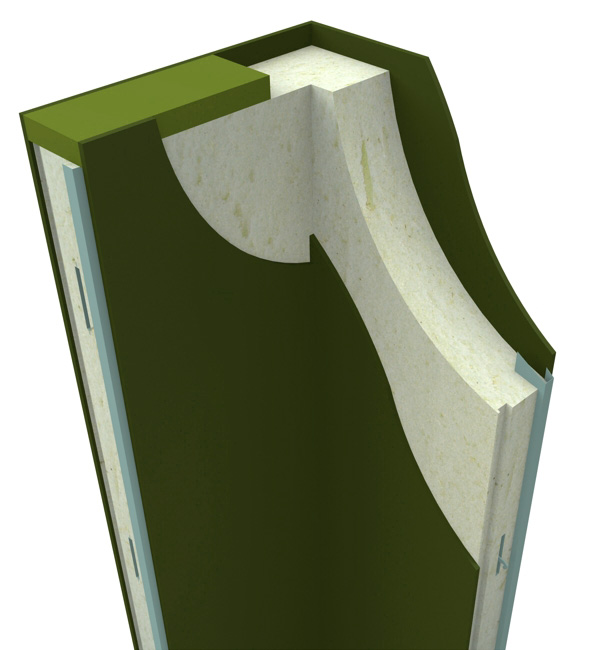
PUR panels from Eco-Panels deliver a significantly higher R-value per inch than EPS, allowing Eco-Panels to achieve superior thermal performance without increasing wall thickness. That alone has ripple effects: slimmer assemblies, more usable interior space, and easier detailing around windows, doors, and connections.

But insulation value is only part of the story.

PUR foam forms a denser, more uniform core with exceptional adhesion to panel skins. That improves structural behavior, reduces thermal bridging, and enhances air tightness across the entire assembly. In practical terms, it means fewer leaks, fewer surprises at blower door testing, and more consistent real-world energy performance.

Fire behavior is one of the most under-discussed differentiators between foam cores—and one of the most important.

PUR foam, especially when combined with non-combustible skins such as MgO, offers dramatically improved fire resistance compared to EPS. Flame spread is lower. Smoke development is reduced. Assemblies maintain integrity longer under fire exposure.

For multi-family, commercial, and urban infill projects—where fire ratings are no longer optional—this advantage alone can determine whether a system is approved or rejected.

EPS systems can meet fire requirements, but often only through additional layers, coatings, or assemblies that add cost, complexity, and installation risk. PUR-based Eco-Panels are engineered from the start to meet these demands as a system, not as an afterthought.

EPS can absorb moisture at exposed edges and penetrations, which can degrade thermal performance over time if detailing or site conditions are less than perfect. PUR foam, by contrast, has far lower water absorption and maintains its insulating properties even in challenging environments.

That matters for real buildings—not lab tests.

Eco-Panels using PUR are better suited for high-humidity regions, coastal zones, and climates where temperature swings and moisture exposure punish marginal assemblies. Over decades, that stability translates into fewer envelope failures, fewer remediation projects, and more predictable lifecycle costs.

EPS panels often rely on thickness, redundancy, or field-applied solutions to compensate for material limitations. PUR-based Eco-Panels rely on manufacturing precision instead.

Because PUR delivers higher performance in thinner, denser cores, factories can control tolerances more tightly, integrate layers more effectively, and reduce reliance on jobsite corrections. The result is a panel that behaves the same way on day 1,000 as it did on day one.

This is the quiet advantage manufacturers care about most: repeatability.

Choosing PUR-core Eco-Panels over EPS isn’t just about better insulation numbers. It’s about reducing uncertainty.

Higher thermal efficiency means smaller mechanical systems. Better fire resistance means fewer approval hurdles. Lower moisture sensitivity means fewer long-term failures. And tighter factory control means fewer site-level variables.

EPS panels helped the industry take its first step away from stick framing. PUR-based Eco-Panels represent the next step—where panelization isn’t just faster, but smarter, safer, and built for the regulatory and climate realities ahead.

In today’s construction environment, that difference isn’t academic.

It’s strategic.

Gary Fleisher—known throughout the industry as The Modcoach—has been immersed in offsite and modular construction for over three decades. Beyond writing, he advises companies across the offsite ecosystem, offering practical marketing insight and strategic guidance grounded in real-world factory, builder, and market experience.

Why the First Question in Modular Construction Isn’t About Price, Speed, or Design

For builders and developers exploring offsite construction—whether for single-family homes or multi-family projects—the first step often feels straightforward.

Call a modular manufacturer. Ask about pricing. Talk schedule. See what’s possible.

After more than four decades inside modular manufacturing and operations, I can tell you that this is where many projects quietly get off on the wrong foot.

Because the most important question doesn’t come up early enough.

It’s not about square footage.
It’s not about lead time.
And it’s not even about cost.

The first question should be:

Who is helping me evaluate this decision—and what real-world experience are they bringing to the table?

Modular construction isn’t a product you buy.
It’s a system you enter.

And systems have consequences.

One of the most common early assumptions builders make is that modular experience is transferable across project types.

It isn’t.

Single-family and multi-family modular construction may share vocabulary, but they operate under very different constraints. The moment repetition, stacking, fire separation, logistics sequencing, and site coordination enter the picture, the margin for error shrinks fast.

Lesson learned:
I’ve seen capable single-family factories accept multi-family work with the best intentions—only to discover midstream that their production rhythm, engineering assumptions, or scheduling logic simply didn’t translate. By the time that reality surfaced, redesign costs and schedule pressure were already locked in.

That’s not a failure of effort.
It’s a failure of early evaluation.

Early conversations almost always start with sales.

Salespeople are important. They open doors. They explain process. But they are rarely the people who feel the pain when assumptions break down on the production line.

That’s why one of the most overlooked questions is:

Lesson learned:
On more than one occasion, I’ve watched projects move forward based on well-meaning assurances, only to stall when operations leadership later flagged constraints that were always there—but never discussed. At that point, the question wasn’t what should we do, but how do we recover.

That distinction matters.

Most manufacturers will tell you they can customize finishes, layouts, and systems.

Often, they can.

What builders don’t always hear is how those changes ripple through a factory designed for repetition. A deviation that looks small on paper can disrupt workflow, reduce throughput, or create bottlenecks that affect other projects already in the queue.

Experienced advisors don’t ask can this be done?
They ask what does this change cost the system?

If that question isn’t asked early, the answer usually arrives later—in pricing adjustments, extended schedules, or uncomfortable trade-offs.

Many modular manufacturers balance repeat single-family customers with project-based work.

There’s nothing inherently wrong with that.

The risk comes when builders assume their project will be treated as a priority without understanding how production sequencing actually works. Design start dates, line start dates, and shipment dates are not the same thing—and confusion between them is a frequent source of frustration.

Experienced guidance helps translate those terms into reality before commitments are made.

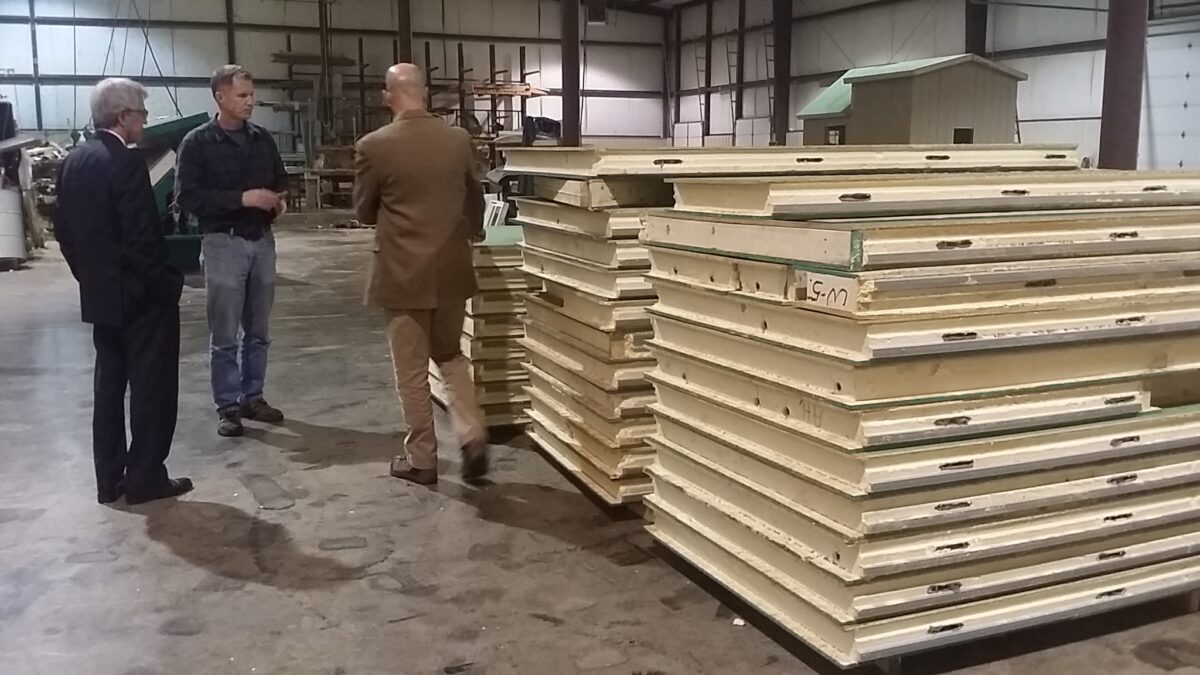
Factory tours are valuable. But they’re most valuable when they validate information you already understand.

When builders arrive without having vetted experience, capacity, design process, and scheduling logic in advance, the visit becomes a sales presentation rather than a due-diligence exercise.

Plant cleanliness, quality control procedures, line flow, storage practices—these details only matter when viewed through an informed lens.

That lens doesn’t come from optimism.
It comes from experience.

Builders sometimes worry about pushing too hard or asking questions that feel uncomfortable.

In practice, experienced manufacturers respect informed buyers.

The real cost lies in proceeding without clarity—because once design begins, deposits are placed, and schedules are announced, leverage shifts. What could have been evaluated calmly becomes something that must be managed under pressure.

And pressure is rarely where good decisions are made.

Up Next:
Why size, weight, and dimensional assumptions quietly determine transportation cost, crane time, site sequencing—and why many builders don’t discover this until it’s too late.  They many times just don’t know what they don’t know. 

If you’d like to explore this further, connect with me today.

Bill Murray, Co-Founder of Offsite Innovators

Why Builders Are Being Forced to Rethink the Building Envelope – A Conversation with Charles Leahy, Founder of Eco-Panels

Builders today are operating in a very different environment than they were even a few years ago. Labor volatility, tightening energy and fire codes, more frequent extreme weather events, and rising buyer expectations around comfort and efficiency have all converged into a new reality.

Increasingly, the building envelope is no longer just a design choice — it has become a business, risk, and execution decision.

In this builder-focused conversation, we spoke with Charles Leahy, founder of Eco-Panels, about what he is seeing in the field, where traditional construction methods are beginning to strain under new demands, and how next-generation envelope systems are being evaluated by builders who want more predictability, speed, and long-term performance.

A Builder’s Conversation with Eco-Panels

Written Interview with Charles Leahy, Founder – Eco-Panels. The expert on a critical aspect of Building Sciences—the building envelope.

From your perspective, what has changed most for builders over the past few years that has forced them to rethink the building envelope?

Charles Leahy, Founder – Eco-Panels;

The world is changing. The weather is changing. Energy prices are rising. And building codes are getting tighter, requiring higher structural requirements, greater insulation requirements, and now in many jurisdictions a blower door test before a home can pass local building code.

After a spate of devastating weather events in North Carolina in the mid-2000s, the section of building code related to shear walls more than doubled in size from prior editions. We are hearing from builders across the South that they are seeing greater pressure from states and local jurisdictions to build stronger homes. More aggressive fire code requirements are also being pushed down into residential construction in some states — something that, beyond a 15-minute thermal barrier, was traditionally limited to commercial or multifamily work.

State and county jurisdictions are reacting to what they are seeing as stronger weather events across the country — whether wind- or fire-related — and they are driving construction toward a higher standard.

When builders first look at higher-performance envelope systems, what do they typically assume will be the biggest challenge — and where do you see that assumption breaking down in practice?

Charles Leahy:

I believe the greatest hurdle in achieving a high-performance building envelope is addressing thermal bridging. Builders often ignore this defect of traditional construction unless they are required by local code to address it.

If a builder wants to reduce thermal bridging using traditional materials, they face significant additional labor and materials to wrap the entire wall system in exterior insulation, and then deal with the complexity of attaching siding. Most builders do not pursue this route.

If thermal bridging is ignored, the focus often shifts to tightening the building envelope to pass a blower door test. Once that happens, builders must also address ventilation and indoor air quality, which can become quite involved. HVAC systems must be properly sized rather than relying on traditional rules of thumb.

The lowest-hanging fruit is often fenestration — better-performing windows and doors — since they are installed regardless. But focusing only on fenestration does not make a home truly high performance. Builders need all four elements working together: reduced thermal bridging, a tight envelope, properly sized HVAC with controlled ventilation, and quality fenestration.

Just as important, high-performance wall systems must never allow conditions that lead to mold, rot, or mildew. We have seen many cases where well-intentioned designs created serious moisture problems because permeability and air gaps were not properly accounted for.

Much of the conversation around panels focuses on materials and performance numbers. In your experience, what do builders care about first once they’re actually building homes at scale?

Charles Leahy:

Speed of installation. That is where our product shines for builders.

With Eco-Panels, there is no nailing of multiple splines and far fewer fasteners at panel joints. Window and door openings are pre-framed at the factory rather than being cut and framed on the jobsite. Because our closed-cell polyurethane foam core panels deliver greater insulating efficiency than traditional SIPs, builders can also gain more usable square footage — sometimes the equivalent of an entire small room.

One point that often gets overlooked is that people do not live in a panel — they live in an assembly of panels. The strength and performance of the home depends on how those panels come together. Traditional spline-based systems introduce many opportunities for error. By reducing construction complexity, Eco-Panels allow even lower-skilled workers to more consistently build stronger, higher-performing envelopes.

Eco-Panels is often described as a “high-performance” solution. From a builder’s standpoint, what does that actually mean day-to-day on a jobsite?

Charles Leahy:

It means faster installation, fewer inspections, and getting to a dried-in structure much sooner.

From repeat builders, we often hear that they can save roughly a month on the construction schedule. We have also had DIY builders achieve a certificate of occupancy in as little as nine weeks. Speed of erection is not typically associated with high performance, but when builders can take advantage of it, it becomes a meaningful benefit.

You’ve worked with both professional builders and highly capable DIY customers. What lessons from those experiences are most relevant for builders who may be evaluating envelope systems for the first time?

Charles Leahy:

Plan ahead.

Builders often tell me after the fact how valuable it was to work through the details in advance rather than reacting to whatever their framers delivered on site. Too often, builders trust trades to follow drawings precisely, only to discover downstream issues — sometimes starting with foundations that are slightly out of tolerance and affect everything that follows.

Builders are often very good at managing chaos and steering projects back on course. But working through envelope decisions early tends to improve outcomes for everyone and can significantly speed the overall process, even though many builders are not used to doing so.

For builders who sense that labor, codes, and buyer expectations are moving faster than traditional construction methods, what advice would you offer as they evaluate next-generation envelope systems?

Charles Leahy:

Find a system that is complementary — and accretive — to your existing toolbelt. It should add value by allowing you to build faster and better, not simply introduce a new learning curve while still requiring heavy labor.

If eliminating thermal bridging is a goal, Eco-Panels accomplish that by removing vertical studs altogether. If skilled labor availability is a concern, Eco-Panels combine framing, insulation, and sheathing into a single step that can be executed with fewer, lower-skilled workers.

If meeting the latest energy codes is a challenge, builders should choose systems that are inherently code-forward, offering insulation levels well beyond minimum requirements. And for air sealing, panel systems with interleaved edges and embedded cam-locks — rather than splines — can deliver airtightness that is far ahead of traditional approaches.

When we hear of blower door results above 1.0 ACH50, we often wonder whether a window was left open or a vent fan was not sealed.

Bill Murray Offsite Innovators:

Indeed, the world is changing!  Offsite panel manufacturers like Charles Leahy at Eco-Panels are ahead of the curve.  Thanks to Charles for sharing his insights into a whole new concept in panelization as a viable offsite alternative for the homebuilding industry. 

If you’d like to explore this further, contact Bill today.

Bill Murray, Co-Founder of Offsite Innovators