
Highlighting the thinkers and their ideas driving the evolution of Offsite Construction. 
Be inspired, be informed, be innovative!

The Tools Have Changed. The Fundamentals Have Not

Recently, I read yet another article discussing AI, specifically Agentic AI. By the time I
finished reading it, I found myself feeling something I hadn’t experienced in quite a while:
Overwhelmed.

After more than 40 years of managing modular manufacturing operations, I started wondering
if I was getting left behind. Was my experience still relevant in a world of ERP systems, MES
platforms, AI forecasting, digital dashboards, and technologies that seem to evolve faster
than I can understand them?

I spent several days trying to learn more about Agentic AI. The harder I tried, the more
confused I became. Eventually, I stopped trying to understand every technical detail and
started asking a different question.

What if I was focusing on the wrong thing? Did I really need to understand all the nuances
or simply just be aware of technology as a tool?

That question led me back several decades to a time when another innovation was making
waves throughout manufacturing. It was called Total Quality Management, and at the time, it
felt every bit as revolutionary as AI feels today.

Many developers and entrepreneurs looking at offsite construction today are being
bombarded with technology. AI. Automation. Digital twins. Predictive analytics. Smart
factories, robotics, and the like, the latest and greatest.

The promise is always compelling. Better decisions. Better productivity. Better results.
The danger is assuming the tool is the solution.

I have watched several waves of innovation move through manufacturing over the years.
Some delivered enormous value. Others delivered far less than promised. The common
denominator was never the technology itself. The common denominator was how
effectively management used the technology as a tool with the end result being a better
managed team.

When I joined a larger multi-plant organization years ago, I was introduced to TQM. At first,

I didn’t understand much of it. The terminology was new. The processes were unfamiliar.
Frankly, it felt overwhelming.

Unlike AI, however, I didn’t have the option of ignoring it. TQM was expected it was literally
mandated. It became part of how we operated.

Over time, I discovered something important. TQM wasn’t magic. It wasn’t a silver bullet. It was a framework that forced us to focus on the basics.

Communication between departments improved. Data became more meaningful.

Accountability became clearer. Problems were measured rather than debated. Decisions
became less emotional and more fact-based. The tool mattered, but the discipline mattered
more. The culture it helped me create was one that developed a management team that
was truly engaged, not to mention a team of over 300 production employees that
became involved, not simply bystanders collecting a paycheck.

The longer I worked with TQM, the more I realized that most improvements came from
executing fundamentals better. The fundamentals like inventory accuracy, vendor
relationships, supervisor accountability/ training, communications, plant cleanliness, and
customer satisfaction remained at the forefront of a profitable enterprise.

None of those issues were new. TQM as a tool simply gave us a better way to address them.
The results were undeniable. Productivity improved. Warranty performance improved.
Employee turnover improved. Profitability improved. Our operation was eventually
recognized as one of the most improved in a large corporate organization.

The lesson wasn’t that TQM solved our problems. The lesson was that it helped us solve our
problems.

Today, I suspect AI will create opportunities we can barely imagine.

It will likely help engineering teams work faster. It may improve scheduling, forecasting,
purchasing decisions, and project management. Companies that learn to use these tools
effectively will almost certainly gain advantages.

AI cannot create accountability or build trust between departments. Importantly, it alone
cannot create a culture. It cannot develop leaders or make people care about quality—
These responsibilities remain with management.

For developers evaluating offsite opportunities, that distinction matters. A factory can have
every modern technology available and still struggle if leadership, culture, and operational
discipline are missing. This significant aspect of the feasibility aspect of determining if
offsite construction is for you is very often overlooked. Equally important, “Is this
manufacturer what I need to meet my needs”?

One of the advantages of experience is that you begin to recognize patterns.
Every generation believes it has found the breakthrough that will finally solve the industry’s
problems. Sometimes those breakthroughs are genuinely transformative, but the
organizations that benefit most are the ones that already have strong fundamentals in place.
Technology tends to amplify good management. It rarely replaces it.

Neither you nor I may ever fully understand every aspect of Agentic AI. That’s okay.

What I have come to understand is that my discomfort with the topic led me to a valuable
reminder. The tools have changed dramatically. The fundamentals have not.

For those evaluating factories, investing in offsite construction, or considering vertical
integration, that may be the most important lesson of all.

Before you ask what technology a factory is using, ask yourself a simpler question:
Are the fundamentals in place?

Because no innovation, no matter how impressive, can compensate for the absence of sound
management, accountability, communication, and execution.

What do you think? Are we sometimes too focused on the newest tools and not focused
enough on the fundamentals that determine whether those tools actually create value?

Bill Murray is a modular manufacturing veteran with more than 40 years of leadership
experience in offsite construction. Through Offsite Innovators, he advises developers,

entrepreneurs, and investors evaluating manufacturing opportunities, factory acquisitions,
and offsite business strategies.

If you’re evaluating an offsite manufacturing opportunity and would like an experienced
operator’s perspective, contact Offsite Innovators

How LGS Can Fail—and It’s Not the Steel


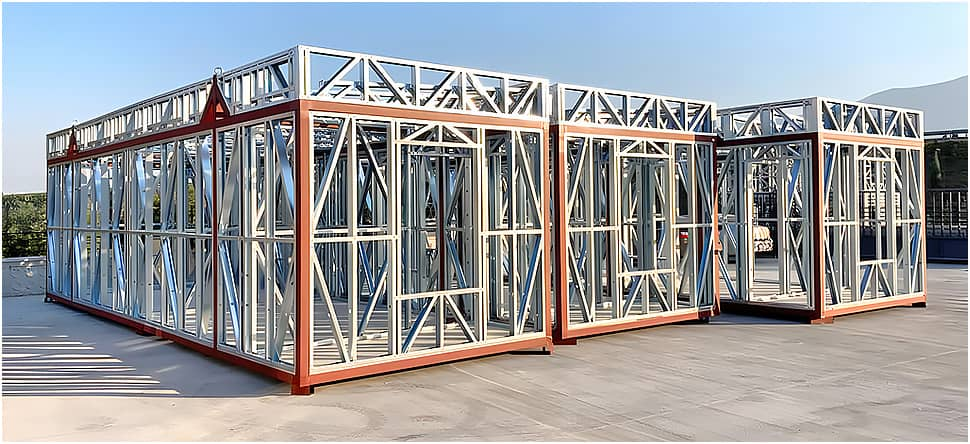
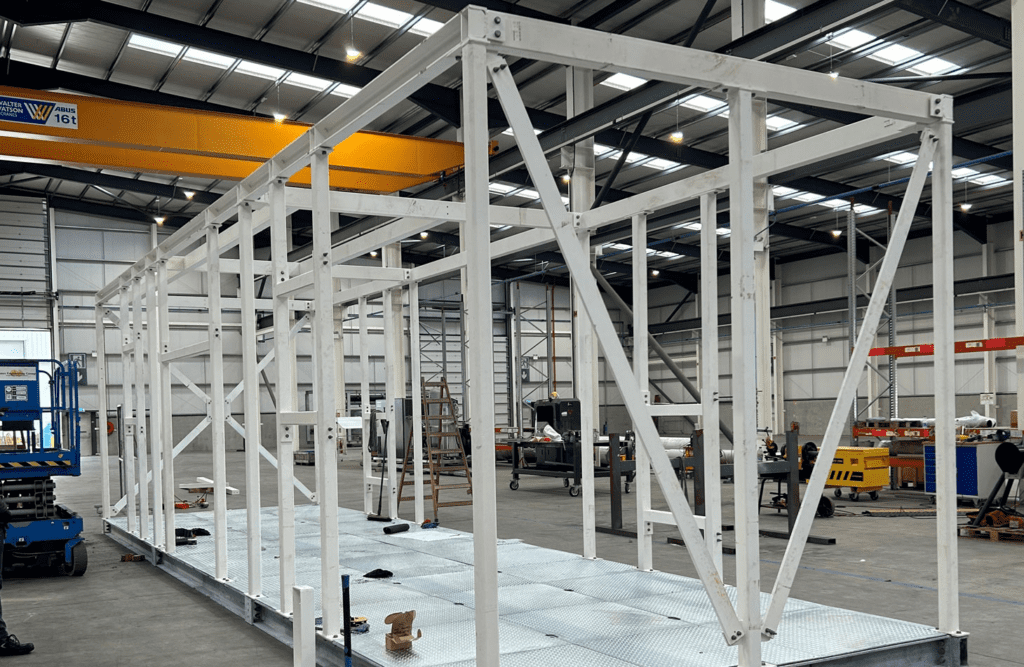
In my recent article on light gauge steel (LGS), I focused on the material itself—its precision, its promise, and why so many see it as a logical step forward for offsite construction.

And in a separate piece, I made a very different point: that culture—not equipment, not systems—is what ultimately determines whether an operation succeeds or struggles.

This article brings those two ideas together.

Because if you’re a developer or investor evaluating LGS, you’re not just choosing a material or a manufacturer.

You’re choosing the environment that has to execute it—day in and day out.

And LGS doesn’t just reward precision—it demands the kind of culture that can consistently deliver it.

At some point, every developer or investor evaluating LGS has to answer a fundamental question:

Are we selecting a product—or relying on an operation that has to execute it?

It sounds subtle, but it isn’t. If you get that wrong, the consequences don’t show up in theory—they show up in your schedule, your budget, and your confidence in the entire offsite approach.

And by the time they’re visible, they’re rarely small.

LGS is unforgiving—in a good way. It doesn’t twist like wood or allow for casual correction in the field. It requires discipline at every step, and when that discipline is present, the results can be exceptional.

But that same precision creates risk when the operation behind it is inconsistent.

From a developer’s perspective, that inconsistency shows up in very practical ways: components that don’t align as expected, field adjustments that were never part of the budget, and delays caused by issues that, in a well-run environment, simply shouldn’t occur. What was intended to reduce uncertainty can begin to introduce it.

Culture isn’t something you evaluate in a conference room or a presentation deck. It reveals itself the minute you park (or try to) at the front office and then on the plant floor.

When you walk a facility, the signals are there if you know what to look for. An organized, predictable environment tends to reflect disciplined execution, while clutter, hesitation, or visible rework often indicate the opposite. The difference is rarely cosmetic—it’s operational.

These observations are not subjective impressions. They are early indicators of whether your project will move through production smoothly or begin absorbing hidden costs that were never anticipated.

It’s easy to be impressed by systems—software platforms, automation, and detailed engineering processes. And to be clear, those things matter.

But they don’t guarantee performance.

Systems depend on consistency. If the underlying operation is uneven, the output will be as well—only faster and often at greater cost. Technology can support a disciplined operation, but it cannot create one.

That distinction is where many evaluations go wrong.

The operations that consistently succeed with LGS are not relying on the material to carry them. Their culture has built a disciplined environment around it.

From the outside, that discipline is visible. You’ll see consistency from station to station, minimal signs of rework or confusion, and a production line that moves with a steady, uninterrupted rhythm. Leadership presence is also telling—when it exists on the floor, not just in meetings, it tends to reinforce accountability throughout the system.

None of this is particularly flashy, but it is highly predictive.

Because what you’re really evaluating isn’t capability—it’s consistency.

This is where developers often get caught.

A facility tour goes well. The equipment is impressive. The presentation is polished. Everything appears to align with expectations.

But the most important question remains only partially answered: can this operation deliver consistently under real project conditions?

When the answer is no, the impact shows up quickly—schedule delays that ripple across the build, costs that emerge outside of original assumptions, and field fixes that gradually erode margin. Individually, these issues may seem manageable. Collectively, they change the outcome of the project.

And eventually, the conclusion becomes that offsite “didn’t work.”

In reality, the system didn’t fail.

The execution did.

If you’re considering LGS, you’re not just selecting a building method.

You’re selecting an operating environment, a level of discipline, and a culture that must support it.

So the real question isn’t whether LGS works. It’s whether the team behind it operates in a way that allows it to work consistently.

LGS offers real advantages—precision, strength, and repeatability.

But those advantages are only realized when the people and processes behind the system are aligned with its demands. Without that alignment, the same characteristics that make LGS attractive can quickly turn into sources of friction and cost.

Before you commit to a material or a manufacturing partner, ask yourself—are you confident in the consistency of the operation behind it?

Bill Murray

Contact Bill

Bill Murray has over 40 years of operational management experience in the Modular industry.  Bill began his Offsite career as a contractor/builder.  He then entered the manufacturing side quickly advancing through the sales ranks to become a General Manager/COO of multi plant operations.  Bill provides professional advisory service to owners, prospective owners and builder developers considering Offsite construction.  He has consulted throughout the U.S., and Mexico, as well as overseas assignments.

If you’re evaluating offsite construction—whether LGS, wood, or hybrid—and want a clear, experience-based perspective before making a commitment, reach out. A short conversation upfront can prevent costly assumptions later.