If you own a modular factory, you’re basically running a small city—except nobody listens, everything costs more than you expected, and the weather is never on your side. Most days you deal with a perfect storm of backorders, missing trim, angry developers, and one employee who always calls out on payday.
But the part factory owners dread the most?
Not OSHA.
Not drywall cracks.
Not even punch-list season.
It’s conversations.
Not the easy ones about paint colors or forklift upgrades.
I mean the real conversations—the ones everybody avoids until it’s either too late or too expensive to ignore.
After 20+ years in this industry, visiting factories big and small, family-run and VC-funded, I’ve discovered three conversations that every modular owner knows they need to have… yet hopes the universe will handle for them.
It won’t.
So let’s spell them out.



1. The Developer Conversation: “No.”
There is no word harder for a modular factory to say than no, especially when a developer is dangling a “100-unit project” like a shiny fishing lure. Developers are charming. They’re confident. Their PowerPoints sparkle. Their schedules are “aggressive but doable.” Their financing is “99% locked in.” Their drawings are “almost final except for a few details.”
And we fall for it—every time.
Factory owners nod politely, take the binder, promise to review it, and then lie awake at night wondering why the roof plan has four different pitches and no mechanical layout.
Here’s the truth nobody wants to say:
Most bad modular projects go bad on the front porch, not the factory floor.
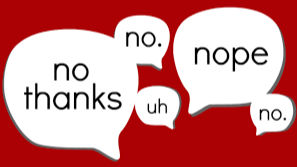
That first conversation should sound like this:
“Your timeline won’t work, your drawings are missing important details, your financing needs more proof than a handshake, and we are not gambling the factory just because you’re excited.”
But owners rarely say that. We say things like:
“We’ll take a closer look.”
Translated: “We haven’t learned our lesson yet.”
Saying no isn’t just self-protection. It’s a competitive advantage.
Good developers respect boundaries.
Bad developers disappear.
Either outcome is a win.
2. The GM Conversation: “Are we actually running this place correctly?”
This one is a little delicate.
General Managers are the heroic duct tape of modular factories. They fix everything, know everyone, and can tell you instantly which employee is about to quit. Many rose through the ranks, starting as carpenters or set crew warriors. These folks know the business the way a farmer knows his crops.
But the industry has changed faster than some GMs have.

Automation. AI scheduling. Digital twins. Lean manufacturing.
It’s not 2005 anymore, even though some factories still run like it is.
Every factory eventually needs to have the conversation:
“Look, we love you. You’ve been amazing. But if we’re going to survive the next five years, we need new systems, tighter processes, and a willingness to change. Can you lead that? Because if not… we need to bring someone in who can.”
That conversation terrifies owners because it feels personal—and because it might trigger the dreaded GM pout, which causes production delays of its own.
But here’s the hard fact:
A factory can outgrow a GM long before anyone says it out loud.
The best GMs adapt.
The worst ones blame labor, suppliers, and the moon’s gravitational pull.
If your factory’s biggest bottleneck has an office, a desk, and your old photo on the wall, it’s time for this conversation.
3. The Profitability Conversation: “This isn’t working—and hasn’t for years.”
Modular factories love volume. Big backlogs. Big shipments. Big headlines.
But here’s a secret few want to admit:
You can’t make up for unprofitable processes with more volume.
You only go broke faster.

Every factory has one or two skeletons in the profitability closet:
- A product line that hasn’t made money since flip phones
- A developer who gets “special pricing” nobody can explain
- A process so outdated that even OSHA says, “Really?”
- A service department that loses $300 on every callback
This conversation sounds like:
“We’re cutting this product line.”
“We’re raising prices.”
“We’re redesigning the workflow.”
“We’re letting go of that client.”
And the reaction is always the same:
“Are you sure? They bring us a lot of volume.”
Yes. They bring volume the way thunderstorms bring water—plenty of it, but it floods your basement.
Factories that survive long-term are brutally honest about what makes money and what doesn’t. They don’t prop up zombie products or zombie clients because “it would be awkward to change now.”
Awkward is fine.
Bankruptcy is worse.
So Why Do Owners Avoid These Conversations?
Because modular construction is personal.
It’s emotional.
Every decision touches people.
And owners are human—they want harmony on the floor, peace in the office, and a backlog that doesn’t look like a pending disaster.
But avoiding these conversations is like ignoring a leak in the roof:
It doesn’t stay small.
It spreads, rots, and multiplies.
The industry is full of examples where silence costs more than speaking up:
- Failed projects that should’ve been declined
- GMs who stayed five years too long
- Money-losing product lines protected by nostalgia
- Developers who drained factories dry
- Owners who realized the truth only after the lender pointed it out
Silence is expensive.
Delay is costly.
Avoidance is deadly.
My Final Thought: The Conversation You Avoid Today Becomes Tomorrow’s Crisis
But the surprising silver lining is this:
Once an owner finally has these conversations, the factory gets better immediately.
Lighter.
Clearer.
More focused.
More profitable.
Modular factories don’t crumble from one big mistake.
They crumble from a thousand small conversations that never happened.
So have them.
Say the uncomfortable thing.
Protect your factory.
And sleep better knowing you steered the ship instead of hoping the tide would fix itself.
Your employees will thank you.
Your balance sheet will thank you.
And one day, your banker might even smile at you again.
If you’d like to explore this further, connect with Bill today.

Bill Murray, Co-Founder of Offsite Innovators