
Highlighting the thinkers and their ideas driving the evolution of Offsite Construction. 
Be inspired, be informed, be innovative!

Why Quality Homes’ Customizable Bungalows Are Becoming Canada’s New “Forever Home” Standard

More Canadians are choosing to age in place rather than move into retirement facilities. Here’s how Quality Homes’ customizable modular bungalows — like the popular Riverstone — are redefining the forever home for retirees.
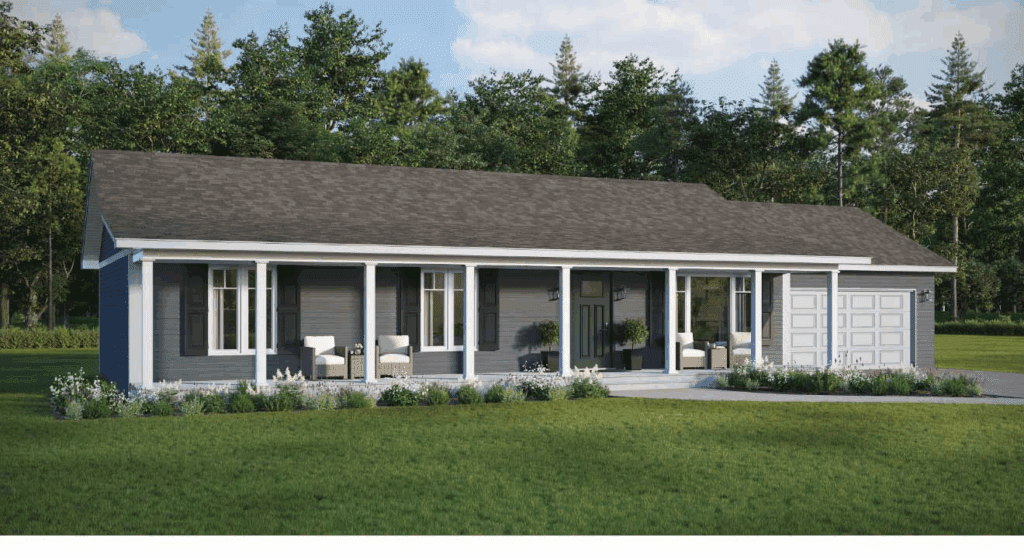
QUALITY HOMES RIVERSTONE DESIGN

For decades, retirement in North America followed a familiar script: sell the family home, move into a retirement community, and settle into a downsized life with more rules than rewards. But today a different trend is taking hold — one that puts independence, dignity, and comfort back in the hands of homeowners.

“It’s a forever home built on your terms — not someone else’s timeline.”

Why Aging in Place Is Surging

Walk into any Quality Homes model center and you’ll notice a shift: fewer young families browsing builds and more empty nesters, newly retired couples, and folks who’ve spent decades dreaming about their ideal final home.

They’re not running from age — they’re preparing for it.

Aging in place offers what retirement facilities often can’t:

  • Control over your routines, space, and lifestyle
  • Emotional comfort of staying near friends and community
  • Financial sanity compared to $6,000–$12,000 monthly retirement fees
  • A home that grows with your changing needs, not against them

At its heart, aging in place is about dignity, familiarity, and the freedom to stay yourself.

Why Bungalows Are the New Retirement Home

The resurgence of the Canadian bungalow is no accident — it’s practicality meeting comfort.

Quality Homes’ modular bungalows provide:

One-floor living that removes risk and hassle

No stairs. No compromises. Everything you need is always a safe, level step away.

Wide hallways, accessible bathrooms, and mobility-friendly layouts
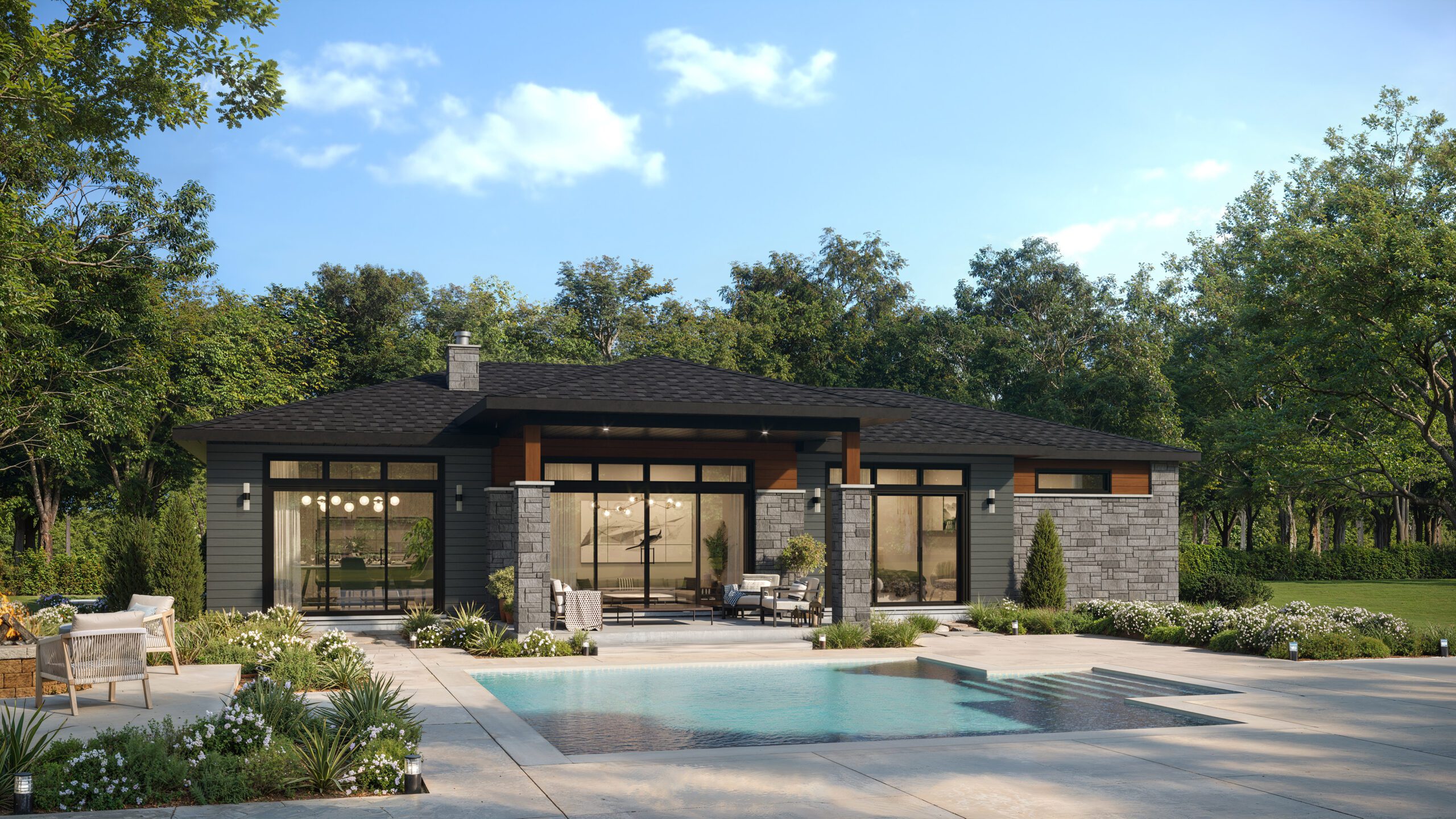
Quality Homes’ Whitestone Bungalow

These aren’t afterthoughts; they’re designed in from day one.

Future-ready options

Walk-in showers
Grab bars
Raised toilets
Accessible tubs
Main-floor laundry
Low-maintenance materials

Less space to maintain, more life to enjoy

Retirement should feel lighter — and so should your home.

The benefits of modular consistency and speed

Building indoors means fewer weather delays, fewer unknowns, and a clean, predictable build from layout to move-in.


“These aren’t old-fashioned bungalows. These are future-proof, modular-built sanctuaries intentionally shaped around comfort, and independence.”

Case Study: A Homeowners’ Forever Riverstone
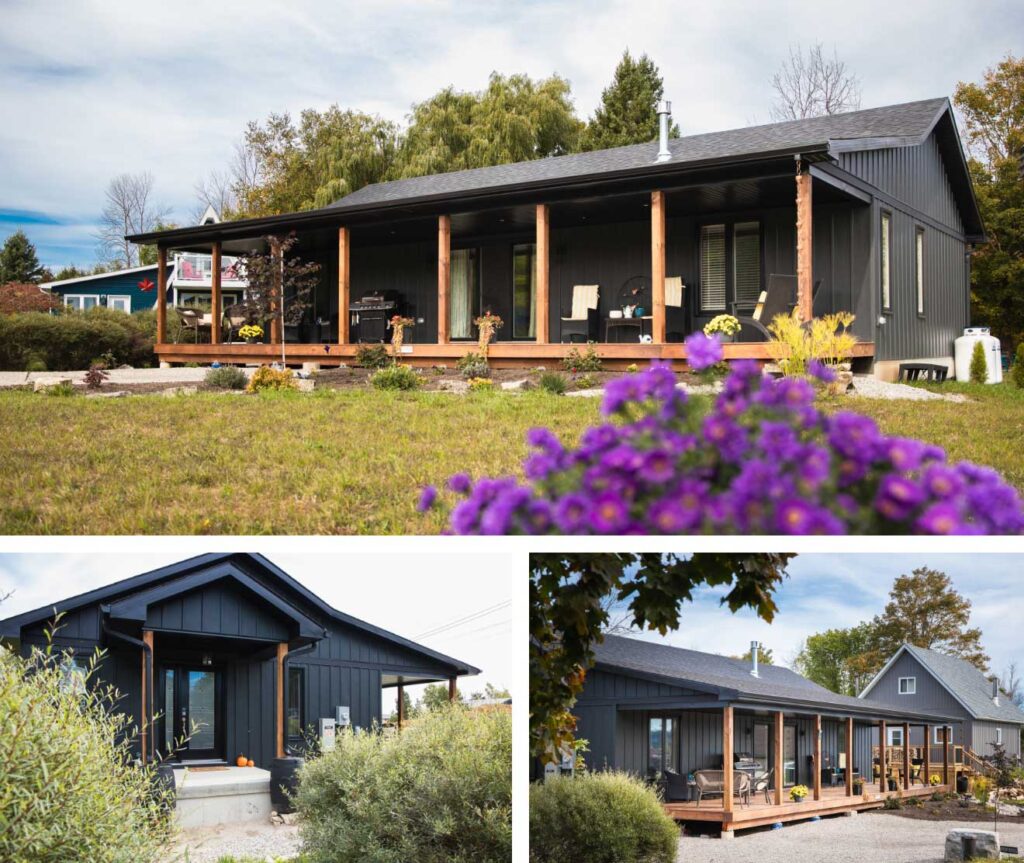
One of the most compelling examples of this trend comes from two homeowners who knew exactly what they wanted — and what they no longer needed.

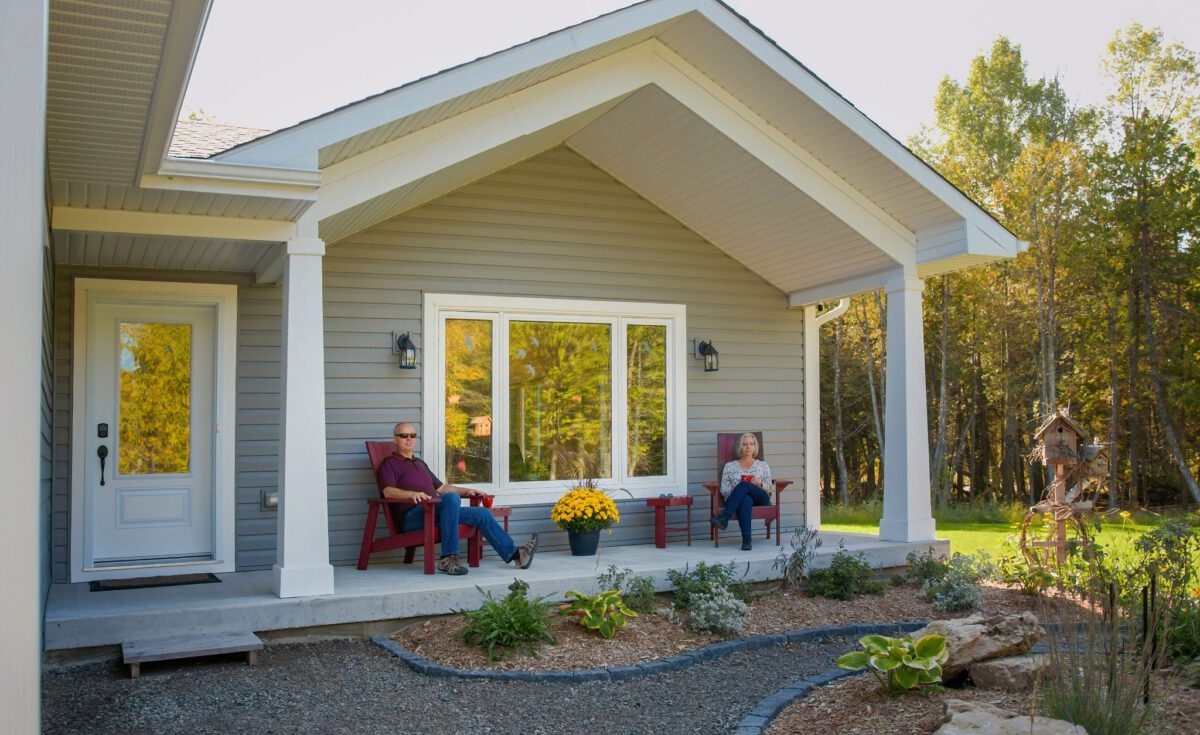
They chose the Riverstone, one of Quality Homes’ best-selling bungalow designs, and worked hand-in-hand with the design team to shape it around their future.
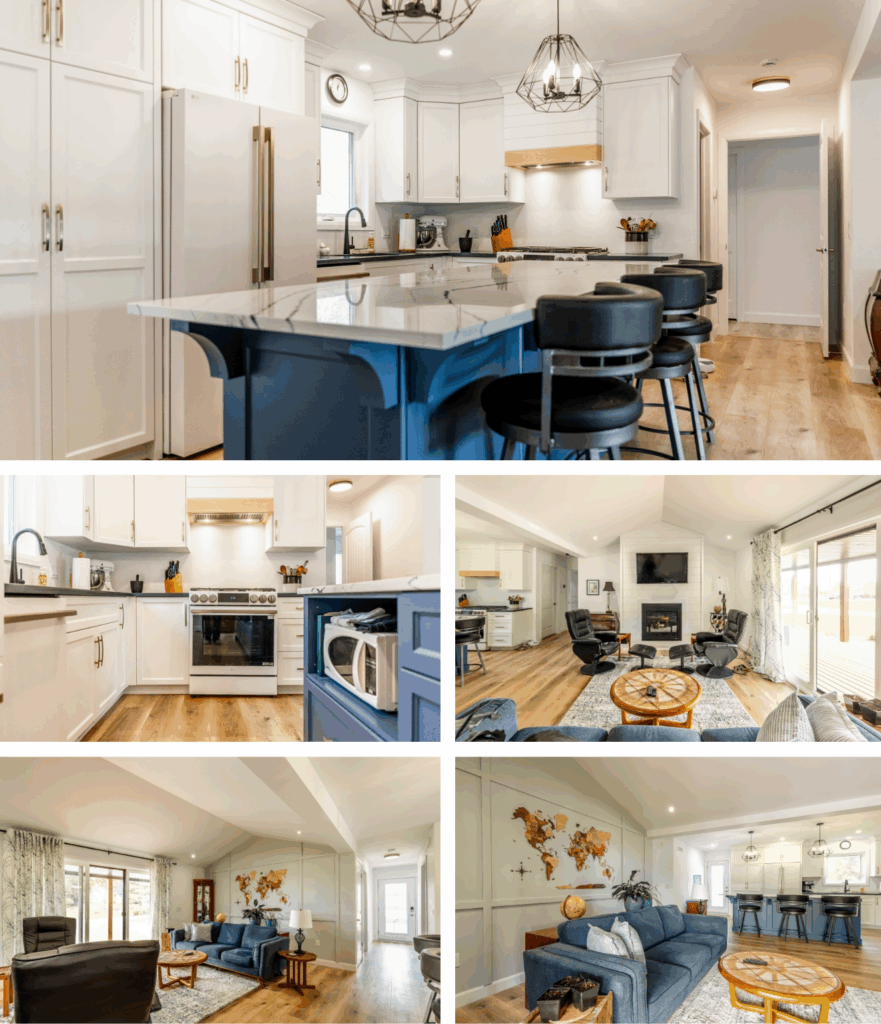
Their Customizations Included:

  • Bedrooms on opposite ends for privacy
  • A bright, open-concept kitchen/living space
  • Cathedral ceilings for airy volume
  • A generous covered porch
  • Built-in accessibility considerations for future needs

And thanks to modular efficiency, they were living in their new home in just five months — while stick-built projects in the same region faced months of delays.

“Better to plan our future on our terms, instead of waiting until our health forced an unplanned move.”

Their home wasn’t just built.
It was designed — thoughtfully, intentionally, beautifully — for every chapter ahead.

The Bigger Trend Behind the Story

The success of these bungalow models isn’t a fluke. It’s a demographic wave.

Baby Boomers and Gen-Xers are choosing:

  • Ownership over monthly fees
  • Privacy over communal living
  • Comfort over compromise
  • Homes that evolve with them, not ones they’ll need to leave

They want a house that never stops working for them.
A home that gives independence and identity.
A place worth waking up in — at 60, 70, 80, and beyond.

Quality Homes understands this better than most, and their bungalow lineup is proof.

Retirement Living Is Being Redefined — and Quality Homes Is Leading That Shift
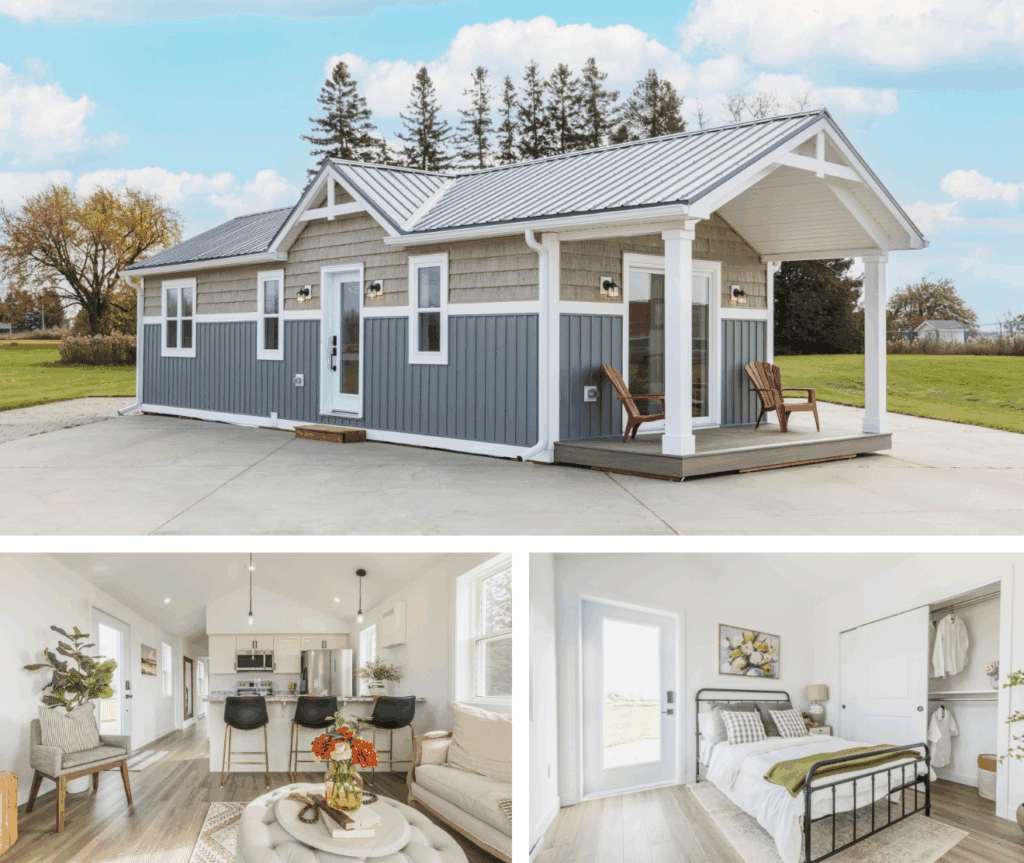
Quality Homes – The Laurel Suite 

If there’s one message every future retiree should hear, it’s this:

Your home does not have to define your age.
The right home can redefine your future.

  • Aging in place reduces financial pressure on retirees
  • Modular construction enables consistency and predictable timelines
  • Customizable bungalows solve long-term accessibility needs
  • Demand for senior-ready homes is becoming one of the fastest-growing segments in the offsite industry

With customizable modular bungalows designed for lifelong comfort, Quality Homes is offering homeowners the freedom to stay in control — and stay at home — for as long as they choose.

This isn’t just a trend.
It’s a new blueprint for retirement.
And Quality Homes is building it, one beautifully crafted bungalow at a time.

In the end, what Quality Homes delivers is far more than a beautifully crafted bungalow. They offer something deeper—the promise of a life lived on your own terms, surrounded by comfort, dignity, and the small everyday freedoms that matter more as the years pass.

Whether it’s a Riverstone design tailored for aging in place or a fully customized plan built for the next chapter, Quality Homes proves that the right home doesn’t just shelter you; it supports you, adapts to you, and grows with you. For countless homeowners, that is the true definition of security. And for anyone dreaming of a forever home that blends thoughtful design with lasting peace of mind, Quality Homes continues to stand exactly where they always have—at the intersection of craftsmanship, compassion, and a future you can feel good about.
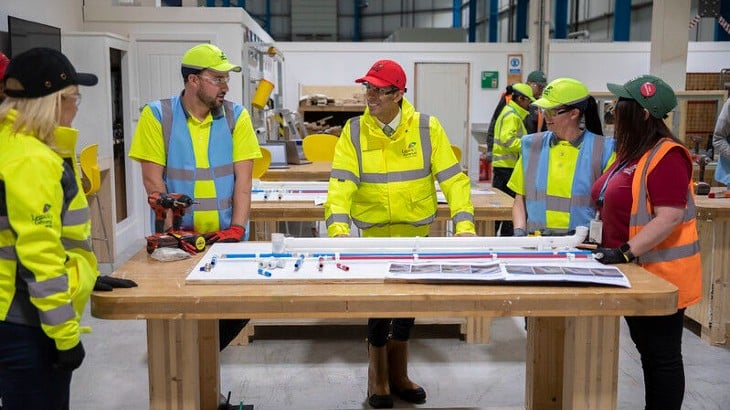

The Three Conversations Every Modular Owner Is Afraid to Have — But Must

If you own a modular factory, you’re basically running a small city—except nobody listens, everything costs more than you expected, and the weather is never on your side. Most days you deal with a perfect storm of backorders, missing trim, angry developers, and one employee who always calls out on payday.

But the part factory owners dread the most?
Not OSHA.
Not drywall cracks.
Not even punch-list season.

Not the easy ones about paint colors or forklift upgrades.
I mean the real conversations—the ones everybody avoids until it’s either too late or too expensive to ignore.

After 20+ years in this industry, visiting factories big and small, family-run and VC-funded, I’ve discovered three conversations that every modular owner knows they need to have… yet hopes the universe will handle for them.

It won’t.
So let’s spell them out.

There is no word harder for a modular factory to say than no, especially when a developer is dangling a “100-unit project” like a shiny fishing lure. Developers are charming. They’re confident. Their PowerPoints sparkle. Their schedules are “aggressive but doable.” Their financing is “99% locked in.” Their drawings are “almost final except for a few details.”

And we fall for it—every time.

Factory owners nod politely, take the binder, promise to review it, and then lie awake at night wondering why the roof plan has four different pitches and no mechanical layout.

Here’s the truth nobody wants to say:
Most bad modular projects go bad on the front porch, not the factory floor.

That first conversation should sound like this:

“Your timeline won’t work, your drawings are missing important details, your financing needs more proof than a handshake, and we are not gambling the factory just because you’re excited.”

But owners rarely say that. We say things like:
“We’ll take a closer look.”

Translated: “We haven’t learned our lesson yet.”

Saying no isn’t just self-protection. It’s a competitive advantage.
Good developers respect boundaries.
Bad developers disappear.

Either outcome is a win.

This one is a little delicate.

General Managers are the heroic duct tape of modular factories. They fix everything, know everyone, and can tell you instantly which employee is about to quit. Many rose through the ranks, starting as carpenters or set crew warriors. These folks know the business the way a farmer knows his crops.

But the industry has changed faster than some GMs have.

Automation. AI scheduling. Digital twins. Lean manufacturing.
It’s not 2005 anymore, even though some factories still run like it is.

Every factory eventually needs to have the conversation:

“Look, we love you. You’ve been amazing. But if we’re going to survive the next five years, we need new systems, tighter processes, and a willingness to change. Can you lead that? Because if not… we need to bring someone in who can.”

That conversation terrifies owners because it feels personal—and because it might trigger the dreaded GM pout, which causes production delays of its own.

But here’s the hard fact:
A factory can outgrow a GM long before anyone says it out loud.

The best GMs adapt.
The worst ones blame labor, suppliers, and the moon’s gravitational pull.

If your factory’s biggest bottleneck has an office, a desk, and your old photo on the wall, it’s time for this conversation.

Modular factories love volume. Big backlogs. Big shipments. Big headlines.

But here’s a secret few want to admit:

You can’t make up for unprofitable processes with more volume.
You only go broke faster.

Every factory has one or two skeletons in the profitability closet:

  • A product line that hasn’t made money since flip phones
  • A developer who gets “special pricing” nobody can explain
  • A process so outdated that even OSHA says, “Really?”
  • A service department that loses $300 on every callback

This conversation sounds like:

“We’re cutting this product line.”
“We’re raising prices.”
“We’re redesigning the workflow.”
“We’re letting go of that client.”

And the reaction is always the same:
“Are you sure? They bring us a lot of volume.”

Yes. They bring volume the way thunderstorms bring water—plenty of it, but it floods your basement.

Factories that survive long-term are brutally honest about what makes money and what doesn’t. They don’t prop up zombie products or zombie clients because “it would be awkward to change now.”

Awkward is fine.
Bankruptcy is worse.

Because modular construction is personal.
It’s emotional.
Every decision touches people.
And owners are human—they want harmony on the floor, peace in the office, and a backlog that doesn’t look like a pending disaster.

But avoiding these conversations is like ignoring a leak in the roof:
It doesn’t stay small.
It spreads, rots, and multiplies.

The industry is full of examples where silence costs more than speaking up:

  • Failed projects that should’ve been declined
  • GMs who stayed five years too long
  • Money-losing product lines protected by nostalgia
  • Developers who drained factories dry
  • Owners who realized the truth only after the lender pointed it out

Silence is expensive.
Delay is costly.
Avoidance is deadly.

But the surprising silver lining is this:

Once an owner finally has these conversations, the factory gets better immediately.
Lighter.
Clearer.
More focused.
More profitable.

Modular factories don’t crumble from one big mistake.
They crumble from a thousand small conversations that never happened.

So have them.
Say the uncomfortable thing.
Protect your factory.
And sleep better knowing you steered the ship instead of hoping the tide would fix itself.

Your employees will thank you.
Your balance sheet will thank you.
And one day, your banker might even smile at you again.

If you’d like to explore this further, connect with Bill today.

Bill Murray, Co-Founder of Offsite Innovators