Highlighting the thinkers and their ideas driving the evolution of Offsite Construction. 
Be inspired, be informed, be innovative!

Your Business May Be Ready to Sell. Are You?

Sometimes the idea of selling a business doesn’t begin with the owner at all. An M&A firm makes an unexpected call. A potential buyer expresses interest. A competitor sells. Suddenly, something that had always been somewhere off in the distance becomes a real possibility.

Often, though, that outside event simply brings to the surface thoughts that were already there. After years of running the same business, the owner is tired. Financial results may have slipped, problems that once would have been attacked aggressively aren’t getting the same attention, and the enthusiasm required to make another round of changes isn’t quite what it used to be.

That’s when the owner begins asking, “Maybe it’s time?” But considering a sale and being ready to sell are two very different things.

Before talking about valuation, potential buyers, multiples, or marketing the company, I think we need to have a more basic conversation. Why is the owner considering a transition in the first place?

There isn’t a wrong answer. Age, burnout, declining financial performance, family circumstances, the absence of a successor, or simply wanting to do something different can all be perfectly legitimate reasons. Sometimes an unsolicited inquiry is enough to cause an owner to seriously consider a possibility that had previously been little more than a passing thought.

What matters is understanding whether the owner genuinely wants to make a transition or is simply attracted to the idea of one. Until that distinction becomes reasonably clear, discussions about valuation and potential buyers may be getting well ahead of the most important decision.

For someone who has spent 20, 30, or 40 years building and running a company, selling isn’t simply a financial transaction. The business may determine where you go every morning, who you talk to every day, the problems you’re responsible for solving, and a significant part of how you define yourself.

Then there is the practical question: What comes next? Family financial responsibilities may remain, continuing income may be important, or the owner may simply have no interest in retiring. Even when the financial terms make sense, the owner still has to picture what life looks like after the transition is complete.

Those aren’t reasons not to sell. They are reasons to understand what you’re really deciding before beginning a process that becomes increasingly difficult to stop once advisors and prospective buyers become involved.

Throughout this series, we’ve looked at many of the things that can make an offsite manufacturing business more—or less—attractive to a prospective buyer. We’ve considered first impressions, owner dependency, management depth, financial information, customers, systems, costs, and the enterprise’s overall health.

A company can be well positioned in many of those areas and still have an owner who isn’t ready to sell. The opposite can also be true. An owner may be completely ready to move on, while the business itself needs considerable work before it can go to market.

Recognizing that difference early matters. If the owner isn’t emotionally prepared to make a transition, months of preparing information, talking with buyers, and negotiating terms may simply lead everyone back to the question that should have been answered at the beginning: Do I really want to sell?

Owners sometimes feel that once they’ve started exploring a sale, they’re somehow committed to following through. They’re not. A conversation about transition can result in the perfectly reasonable conclusion that now isn’t the time.

Discovering that early may be one of the most valuable outcomes of the process. It gives the owner an opportunity to address weaknesses in the business, strengthen management, improve financial performance, and think seriously about what the next chapter should look like. Six months or two years later, both the owner and the business may be better prepared.

Once an owner decides they genuinely want to pursue a transition, another basic question follows: What exactly do I have to sell?

A factory, equipment, backlog, and financial statements are part of the answer, but they don’t define the entire enterprise. Management depth, customer relationships, systems, culture, operational discipline, and the business’s ability to perform without constant owner involvement all influence what a prospective buyer is really considering.

Understanding those strengths and weaknesses before entering the market gives an owner something equally important: choices. Problems can be addressed before a buyer discovers them, expectations can become more realistic, and the owner can decide whether selling now—or improving the business first—is the better course.

Bill Murray, Advisor, [email protected]

Preparing a business for ownership transition takes work. Preparing the owner may be just as important.

Before asking what your company is worth, who might buy it, or how quickly a transaction could be completed, start with the questions that don’t require a spreadsheet: Why am I considering selling? Do I really want to do it? And what do I want life to look like afterward?

Then comes one final question: If the right buyer showed up tomorrow, are you actually prepared to say yes?

Thinking About the Future of Your Offsite Business?

You don’t have to decide today that you want to sell in order to begin thinking seriously about transition. Understanding where both you and your business stand before making that decision can create considerably more options later.

At Offsite Innovators, we work confidentially with owners who are considering what’s next—whether that means preparing for a sale, positioning the business for a future transition, or simply determining whether the time is right to begin the conversation. If you’re asking yourself some of these same questions, we’d welcome a confidential conversation.


What Could Possibly Go Wrong When Smart People Decide to Build a Modular Factory?

I’m still amazed by a group of highly intelligent people’s ability to collectively make an incredibly stupid decision.

Individually, these people may be successful entrepreneurs, engineers, architects, developers, attorneys, technology executives, or investors. They have impressive résumés, successful careers, and enough business experience to know that starting any manufacturing company requires customers, capital, management, research, and a solid plan.

Then somebody mentions affordable housing and modular construction, and much of that accumulated business wisdom seems to leave the room.

Someone says the country desperately needs more housing for people who can’t afford what is currently being built. Everyone agrees because it’s obviously true. Someone else mentions homelessness, workforce housing, teachers, nurses, first-time buyers, or families living near the poverty line, and soon the group is discussing how traditional construction simply isn’t producing enough affordable homes.

Then someone remembers that he knows someone who works at a modular factory. Maybe it’s a former employee, a cousin, a business associate, or the brother-in-law of someone he met at a conference. It really doesn’t matter because the word “factory” has entered the conversation.

Someone says, “Why don’t we build the homes in a factory?” Another person points out that factories can build things faster. Someone else says automation should make them cheaper. Another starts talking about robotics, and before anyone has bothered to ask what an affordable home actually needs to cost, the conversation has moved from discussing America’s housing shortage to planning a modular factory.

Ten minutes ago, they wanted to help people find affordable housing. Now they want to become manufacturers.

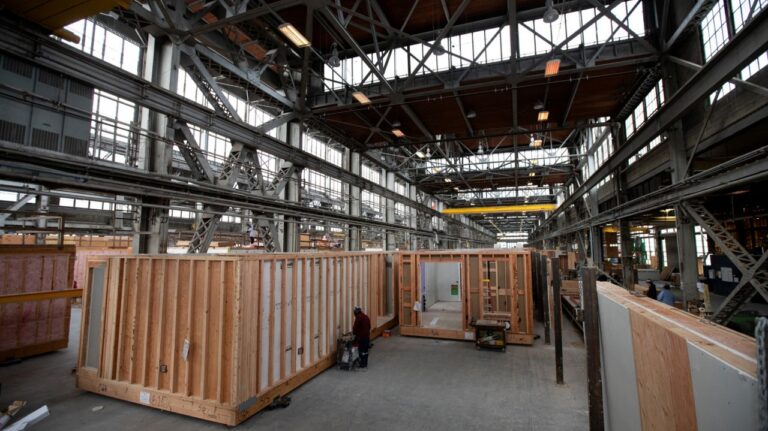
The excitement builds quickly because modular construction looks wonderfully logical from the outside. Put workers under a roof, bring materials to them instead of sending workers to job sites, use repetitive processes, install modern equipment, reduce weather delays, and send completed modules to waiting foundations. What could possibly go wrong?

Someone opens a laptop and finds a video showing modules gliding smoothly through a factory. Another person Googles industrial buildings. Someone begins estimating how many homes could be produced every week. Before long, six highly intelligent people who have never designed, engineered, permitted, financed, manufactured, transported, set, finished, warranted, or sold a modular home have mentally built a factory that can produce 1,000 affordable homes a year.

They haven’t identified enough customers to keep the factory busy. They haven’t secured land for those homes, investigated zoning, studied transportation distances, talked with local officials, priced foundations and utilities, found set crews, or determined who will provide construction financing. They also haven’t figured out what happens when completed modules are sitting in the factory yard because the jobsites aren’t ready.

Most importantly, nobody has asked the question that could ruin the entire meeting: Affordable to whom, and at what finished price?

Why spoil a perfectly good startup with details?

Once the imaginary factory is running beautifully inside everyone’s head, the group needs money. That means preparing a pitch deck explaining that America has a housing shortage, which somehow becomes the market research supporting the new factory.

The presentation will probably include photographs of housing problems, charts showing rising home prices, statistics about millions of missing homes, and attractive renderings of a futuristic modular factory that doesn’t exist. Somewhere in the presentation will be artificial intelligence, robotics, automation, sustainability, digital twins, advanced manufacturing, or preferably all of them.

By slide 17, homes are flying out the factory door. By slide 22, the company is profitable. By slide 28, the founders are discussing factories number two and three. There may even be a map showing future factories strategically located across the United States.

The only thing still missing is customers.

Fortunately, our group eventually finds another group of highly intelligent people called investors. The entrepreneurs believe the investors understand modular construction, while the investors assume the entrepreneurs do. Neither group wants to be the one asking the uncomfortable questions while everyone else talks about changing the world.

Now two groups of highly intelligent people who may know almost nothing about modular manufacturing are officially off to the races.

Eventually, somebody around the table says something genuinely intelligent: maybe we should talk with someone who actually knows the modular industry. That is an excellent idea, but it introduces another problem because consultants in our industry tend to come in three very different flavors.

The first type is the Enthusiastic Consultant. He loves the idea almost as much as the founders do. A new modular factory producing affordable housing with automation and innovative technology sounds exciting, and he immediately begins helping them figure out how to make it happen.

Instead of asking whether the factory should exist, he starts helping design it. He researches equipment, discusses production lines, recommends software, talks about factory layouts, and begins introducing suppliers. Pretty soon everyone is working extremely hard solving problems for a business nobody has proven should exist.

Then we have the second type, whom I’ll call the Cash Register Consultant. This consultant has enough industry experience to recognize exactly what’s happening. He knows the production estimates are optimistic, the startup schedule is fantasy, working capital is probably inadequate, and the sales forecast is mostly wishful thinking.

He also recognizes something else: these people have money.

So why interrupt them? He’ll write reports, attend meetings, recommend equipment, introduce vendors, develop schedules, and revise those schedules when they don’t work. When the original budget proves inadequate, he’ll help prepare another one. If the investors eventually start asking what happened to all their money, he may even recommend another study to determine why.

Some consultants help startups build successful factories. Others simply help startups spend their money more professionally.

The third consultant can become extremely annoying very quickly because instead of congratulating everyone on their brilliant idea, he starts asking questions. He wants to know exactly who the customer is, what that customer can afford, who owns the land, who will develop it, and what the completed home will cost after transportation, foundation, crane, installation, utilities, permits, site work, financing, sales costs, and builder margin are included.

He wants to know how many homes customers have actually committed to purchase and what happens if first-year production reaches only half the volume shown in the pitch deck. He asks about working capital, factory management, sales, warranty service, transportation, set crews, local zoning, engineering approvals, labor availability, material purchasing, and what happens when finished modules start accumulating in the yard.

Then he asks what may be the most irritating question of the entire meeting: Why do you need to build a factory at all?

Suddenly, the excitement level drops. The experienced consultant, invited for his or her superior industry knowledge, starts to sound negative. He doesn’t understand the vision. He’s thinking like the old modular industry. He isn’t entrepreneurial enough, and he clearly doesn’t understand how technology will change everything.

Or maybe he’s the first person in the room who is actually trying to save their money.

Entrepreneurs sometimes struggle to accept this. A good consultant isn’t hired to tell you how brilliant your idea is or how much the industry needs another innovative factory. Plenty of people are willing to provide encouragement for free.

An experienced consultant should be willing to tell you that your proposed factory is too large, your market is too small, your capital is inadequate, your timeline is unrealistic, your management team lacks manufacturing experience, or your customers don’t exist in sufficient numbers. More importantly, that consultant should be willing to tell you those things before you buy a building, order equipment, hire employees, and burn through millions of dollars.

He may suggest starting with 25 homes instead of building a factory capable of producing 1,000. He might recommend contracting production with an existing manufacturer, proving the market before buying a single saw, becoming a developer first and a manufacturer later, or partnering with a factory that already knows how to build what you’re trying to sell.

He might even study everything you’ve assembled, listen to the grand vision, review the projections, push the business plan back across the table, and politely say, “No, thanks.”

That could be the most valuable consulting advice the group ever receives.

None of this means these entrepreneurs or investors are actually stupid. Quite the opposite. The problem is that intelligence creates confidence, and success in one industry can convince people that it will automatically transfer to another. Sometimes it does, but modular construction has humbled plenty of smart, successful people who thought it would be easier than it turned out to be.

From the outside, modular construction appears deceptively simple. Put construction workers inside a building, establish an assembly line, buy better equipment, introduce automation, build homes faster than site builders, and attack the affordable housing shortage. It sounds so logical that the biggest mystery becomes why the existing modular industry hasn’t already done it.

The answer is that a modular factory isn’t simply a manufacturing operation. It sits in the middle of manufacturing, construction, transportation, real estate development, financing, zoning, building codes, engineering, labor, supply chains, sales, installation, warranty service, and local politics. Success doesn’t require making one of those systems work exceptionally well. It requires making them all work together at the same time.

That’s where highly intelligent people can become highly intelligent stupid people surprisingly quickly.

I love entrepreneurs and people willing to challenge an industry and try something new. Offsite construction desperately needs fresh ideas, new technology, new capital, better processes, and people willing to question why we’ve been doing certain things the same way for decades.

What the industry doesn’t need is another $30 million factory built around a PowerPoint presentation, a national housing-shortage statistic, and six smart people convincing one another that because affordable housing is desperately needed, buyers will automatically appear when the first module rolls out the door.

Before deciding to build a modular factory, find someone who knows enough about this industry to try to talk you out of it. Ask that person to attack your assumptions, your market, your numbers, your production estimates, your management plan, your working capital, and especially your definition of “affordable.” Don’t hire that person to validate your dream. Hire them to find out whether the dream has any chance of surviving reality.

If the idea survives that conversation, you may actually have something worth pursuing. And if the consultant looks across the table after hearing the entire plan and says, “No, thanks,” don’t immediately start searching for another consultant who will say yes.

You may have just received the best—and cheapest—advice of your entire startup.