An interesting thing happened to me recently while I was thinking about the podcasts I listen to every night.
I have several favorites, but they only release new episodes intermittently. Sometimes I find a new episode waiting for me; other times, I check and discover nothing has been posted. I never know when the next one will appear, and quite honestly, it drives me crazy.
That experience helped me understand something about my own publishing schedule.
I post at least two articles almost every day. Some people may wonder why I feel the need to publish that frequently, especially after writing more than 10,000 articles over the years. The answer is that I want my readers to know they can depend on me to provide something new.
They may not read every article, and I certainly do not expect every topic to interest every reader. But when they visit one of my blogs or look through their LinkedIn feed, I want them to know I will probably have something new for them.
My podcast frustration reminded me that consistency is not simply about producing content. It is about respecting the people who have made your work part of their routine.


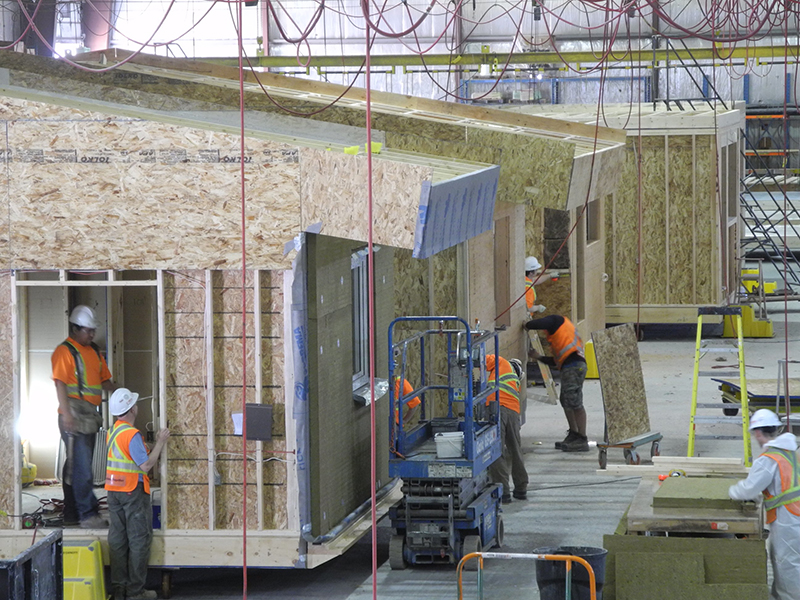
That led me to another question: Who should an offsite construction factory be consistent for?
The simple answer is everyone who depends on it.
Employees Need Consistency from Management
Factory employees need to know what management expects. They need dependable schedules, clear instructions, proper training, accurate information, and, most importantly, consistent pay.
One of the fastest ways to damage a workforce is to change priorities every few days. A factory may announce that quality is its highest priority on Monday, demand faster production on Tuesday, and then blame workers for defects on Friday.
Employees quickly recognize when management’s words and actions don’t match.
Consistency does not mean conditions never change. Production schedules shift, customers revise projects, materials arrive late, and unexpected problems occur. Employees understand that. What they need is honest communication about what changed, why it changed and what management expects them to do next.
Workers who trust management are far more likely to help the company through a difficult period. Workers who are constantly surprised, blamed, or left uninformed will eventually stop caring—or leave.
Builders and Developers Need Predictability
Builders and developers don’t buy modules simply because they like the idea of offsite construction. They use a factory because they believe it will make their projects more predictable.
They expect consistent pricing, engineering, production quality, scheduling, communication and delivery.
Unfortunately, some factories sell predictability but operate unpredictably. They promise production dates before engineering is complete, provide pricing that later changes substantially and tell customers that modules will arrive when the factory has not yet secured all the required materials.
Customers can usually tolerate an occasional problem. Construction is filled with unexpected conditions, and experienced builders understand that nothing goes perfectly.
What customers struggle to tolerate is never knowing what will happen next.
A developer should not have to call five times to learn whether a project has entered production. A builder should not discover at the last minute that the delivery date has moved by three weeks. A customer should not receive different answers depending on which factory employee answers the telephone.
Consistency gives customers the confidence to plan everything else around the factory.
Builders and Salespeople Need Consistent Answers
Builders, sales representatives, and business-development teams are often the first people to make promises on behalf of a factory. They need reliable information about what the company can build, what it should build, how much it will cost, and when it can be produced.
Problems begin when the factory has no consistent rules.
One salesperson may tell a customer that almost anything can be customized, while production management is trying to reduce variation. Another may promise a quick delivery because the sales team needs the order, even though the production schedule is already full.
That inconsistency creates bad contracts, unrealistic expectations and conflict between sales and operations.
A factory cannot build trust in the marketplace if its own people are giving different versions of the truth.
Suppliers and Subcontractors Also Depend on the Factory
Suppliers need accurate forecasts, dependable orders and timely payments. Transportation companies, set crews, crane operators and site contractors need reliable schedules and clear coordination.
When a factory repeatedly changes production dates, the effects travel far beyond its walls.
A delayed module may mean a crane sits idle, a set crew loses a day of work, a site contractor must reschedule labor and a developer begins paying carrying costs on a project that is not moving forward.
Factories sometimes consider these outside companies independent vendors. In reality, they are part of the factory’s delivery system. Their performance affects the customer’s opinion of the entire modular process.
If a factory wants dependable suppliers and subcontractors, it must also be dependable to them.
Inspectors and Code Officials Need Consistent Compliance
Offsite construction relies heavily on the confidence of inspectors, approval agencies and code officials. They need accurate drawings, complete documentation and consistent workmanship.
A factory that follows its approved processes only when an inspector is watching does not have a quality-control system. It has a performance prepared for inspection day.
The real test of consistency is whether the same standards are followed on every project, during every shift and at every production station.
Quality cannot depend on which supervisor is working, which customer is visiting or how urgently management wants a module moved off the line.
Lenders and Investors Need the Same Truth Management Sees
Lenders and investors need consistent and honest financial reporting. They need to understand the condition of the backlog, the profitability of contracts, the amount of working capital required and the risks facing the business.
A factory cannot show optimistic forecasts when it needs financing and then blame customers, suppliers or the economy when those forecasts fail.
Consistency in financial reporting does not mean every report must contain good news. It means the information must be dependable enough for people to make informed decisions.
Bad news delivered honestly can often be managed. Bad news hidden until it becomes a crisis usually can’t be managed.
The Market Needs to Know What the Factory Stands For
An offsite factory must also be consistent in the way it presents itself to the market.
Its website, sales materials, articles, advertising and presentations should clearly explain what it does well. If the company specializes in multifamily projects, its marketing should demonstrate that experience. If it serves builders through a dealer network, its website should make the process easy to understand.
A factory should not market itself as everything to everyone.
When the company’s marketing promises unlimited customization, exceptional speed, the lowest price, and the highest quality at the same time, customers will eventually discover that at least one of those promises is not true.
The strongest factories know what they are equipped to build profitably and consistently. They are also willing to say no to projects that do not fit their production system.
The Most Important Consistency Is Between Promises and Performance
After thinking about my frustration with those unpredictable podcasts, I realized that consistency is really another word for dependability.
People return to a podcast, blog or newsletter because they expect something worthwhile to be there. Builders and developers return to a factory for the same basic reason: They believe it will perform as promised.
A factory cannot advertise speed while repeatedly missing production dates. It cannot promote quality while workmanship varies from one module to another. It cannot promise customization while operating a system that requires standardization. It cannot call itself a partner while avoiding difficult conversations with its customers.
The greatest consistency must always be between what the factory says and what it actually does.
Gary’s Observation

My favorite podcasters probably do not realize that their irregular schedules frustrate loyal listeners like me. They may believe people will simply wait patiently for the next episode.
Some offsite factories may make the same assumption about their customers, employees, suppliers, and business partners. They believe everyone will tolerate another changed schedule, another unanswered question, or another promise that does not quite materialize.
Eventually, however, inconsistency becomes the company’s reputation.
I publish two or more articles a day because I want my readers to know they can depend on me. An offsite factory should want the same thing from everyone who relies on it.
Consistency does not mean never making a mistake. It means people know what to expect, get the truth when something changes, and can trust the factory to keep working to fulfill its promises.
In an industry built around the promise of greater predictability, consistency should not be considered a marketing advantage. It should be the foundation of the entire business.