
If you’ve been around the building industry for more than five minutes, you’ve heard the word modular. It’s the golden child of construction right now—hailed as the solution to housing shortages, rising labor costs, and the need for speed. But here’s the problem: too many companies are calling themselves modular builders when, in reality, they’re just one of many branches on the larger offsite construction tree.

The result? A confusing mess of definitions, inflated promises, and disappointed developers who expected Legos but ended up with a complicated jigsaw puzzle. It’s time we unpack what offsite construction really includes, why modular is just one piece, and why accuracy matters more than ever.
Modular Construction: The Real Deal
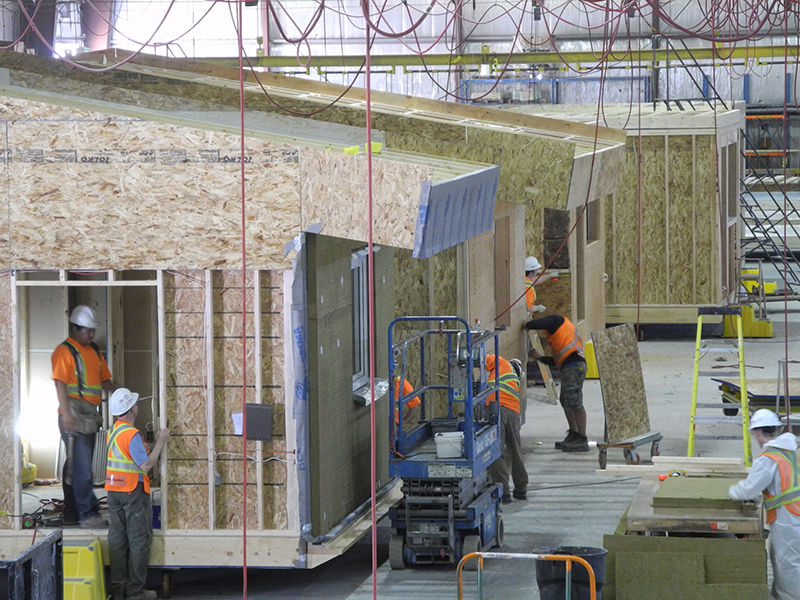
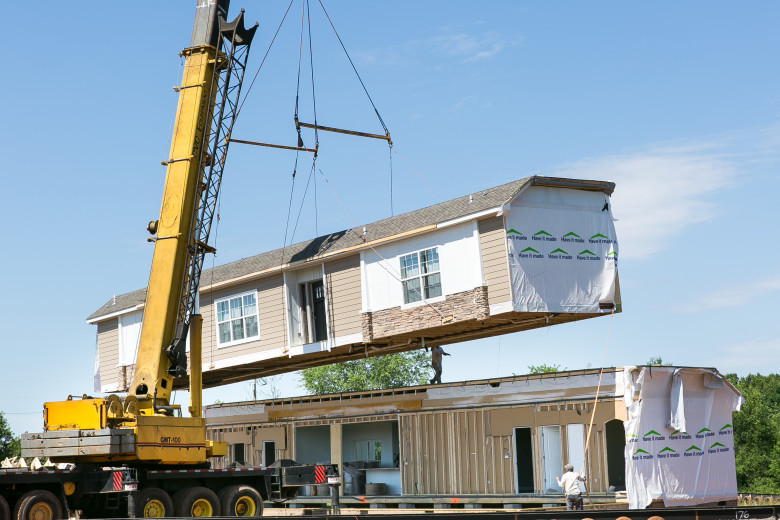
When we talk about true modular construction, we’re talking about volumetric building. Entire three-dimensional sections—modules—are fabricated in a factory, complete with walls, floors, ceilings, wiring, plumbing, even finishes. These modules roll out of the plant 70% to 90% complete, then get craned into place onsite and stitched together to form a full structure.


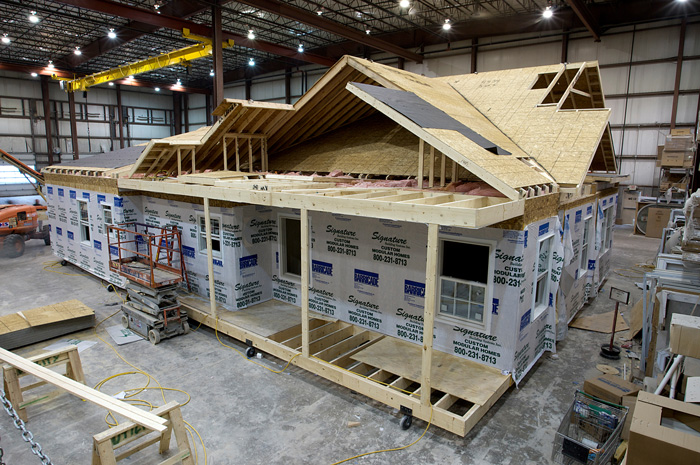
That’s modular. Hotels, multifamily housing, dormitories, schools, healthcare facilities, and single-family homes have all been built this way. The magic lies in the fact that site prep and module fabrication can happen at the same time. What used to take months or years on a muddy jobsite can now be compressed into weeks of installation.
It’s a proven system, backed by decades of real projects. But modular is just one branch of the offsite family tree.
The Many Faces of Offsite
The broader umbrella is called offsite construction. This includes everything built in a factory or controlled environment and then transported to the final site. And under that umbrella are many distinct methods, each with its strengths and weaknesses.
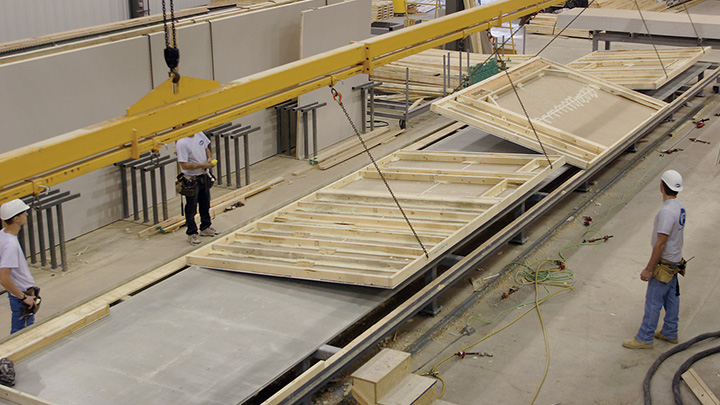
- Panelized Construction: Think of this as the IKEA version of homebuilding. Wall, floor, and roof panels are manufactured in a plant, then shipped flat to the jobsite for assembly. Faster than stick-built but still heavily reliant on onsite crews.
- Precast Concrete: Columns, beams, walls, and slabs are cast in factories for precision and durability, then assembled on-site. Perfect for stadiums, bridges, and commercial structures, but it’s not modular housing.
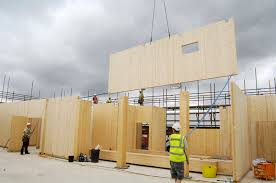
- Mass Timber and CLT: Cross-laminated timber panels are manufactured and then stacked like giant Jenga pieces onsite. Sustainable, attractive, and gaining popularity, but still a panel system, not modular.
- Steel Frame Systems: Light-gauge or heavy structural steel is pre-engineered and shipped for rapid framing. Invaluable for high-rises and warehouses. But again—structural system, not modular.
- Bathroom and Kitchen Pods: Entire bathrooms and kitchens arrive fully plumbed and finished, ready to drop into a larger structure. They save time and improve quality but are components, not buildings.
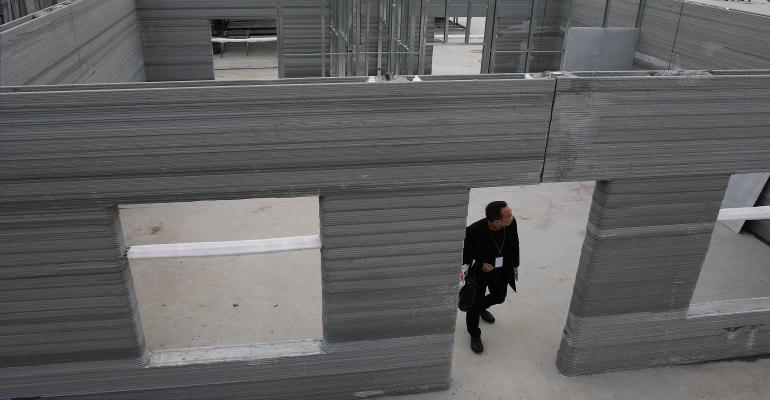
- 3D Printing: Layer by layer, walls and even entire houses are printed—sometimes onsite, sometimes in factories. Innovative? Absolutely. Modular? No.
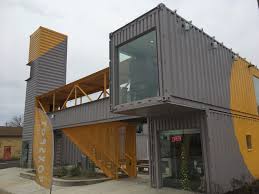
- Shipping Container Construction: Old cargo boxes reborn as housing or offices. A form of volumetric construction, yes, but not traditional modular.
- Manufactured Housing (HUD Code): Factory-built homes on steel chassis, governed by a federal code. Affordable and essential, but a completely different regulatory path than modular.
Each of these methods deserves recognition. They’re all legitimate parts of the offsite world. But when you start calling all of them modular, you’re not just oversimplifying—you’re misleading.
Why Everyone Wants the Modular Label
Here’s the uncomfortable truth: the word modular sells. It grabs headlines. It opens wallets. It reassures city councils, developers, and lenders that what they’re buying is part of a revolution in construction.
For startups chasing investor dollars, calling themselves modular feels like the fastest way to credibility. For marketing teams, it’s easier to slap the modular label on a process than to explain panelization, hybrid, or precast. Even well-meaning companies fall into the trap because modular has become shorthand for “modern, fast, affordable.”
The problem? When panelized factories start calling themselves modular factories, or when 3D printing startups claim to be the future of modular housing, confusion follows. Developers expecting complete volumetric modules are instead handed panels that require significant on-site labor. The timeline stretches. The budget swells. And the reputation of modular construction takes the hit, even though modular wasn’t really at fault.
Case in Point: The “Almost Modular” Projects
You don’t have to look far to find examples.
- Panelized Factories Branding as Modular: Several new North American plants have opened in the last three years, producing high-quality wall and roof panels. But their websites loudly proclaim “modular housing solutions,” even though what they’re shipping are flat-pack panels. To an uninformed buyer, it sounds like the same thing. It isn’t.
- 3D Printing Startups: Headlines tout “3D-printed modular homes” when, in reality, what’s printed are walls that still need roofs, floors, and interiors built on-site. That’s construction innovation, yes, but not modular.
- Pod Systems Marketed as Modular Buildings: Bathroom and kitchen pod makers often position themselves as modular builders. Pods are valuable pieces of the puzzle, but they don’t make a complete building.
Each example chips away at clarity. And each time a project disappoints because the buyer thought they were getting modular, it hurts the whole industry.
Why Accuracy Matters
Some might shrug and say, “So what? It’s all offsite anyway.” But accuracy matters for three big reasons:
- Credibility with Clients: Developers burned once by over-promising and under-delivering will hesitate to try offsite again. If they thought they were buying modular but got panelized, the entire offsite sector looks unreliable.
- Policy and Funding: Governments and municipalities are writing incentives and grants specifically for modular housing. If panelized or pod systems slip through under the same label, funding can be misapplied and true modular projects lose out.
- Industry Reputation: When “modular” is used as a catch-all, it dilutes the very thing that makes modular special: delivering nearly finished buildings from the factory floor to the foundation.
The Bigger Picture: Offsite as a Family
The industry doesn’t need to fight over labels. Every branch of offsite construction has a role to play in solving the housing crisis and modernizing how we build. Panelization is ideal for custom homes and light commercial work. Pods make perfect sense for repetitive hotel or hospital bathrooms. Precast shines in heavy infrastructure. Mass timber offers sustainability and beauty.
But modular is its own discipline—and it deserves to be recognized as such.
Think of offsite as a family. Modular is one of the children, but it’s not an only child. If we keep calling every cousin and neighbor “modular,” we lose the richness of the family tree.
My Call for Honesty
Here’s my suggestion to the industry: stop hiding behind buzzwords. If you build panels, call them panels. If you print houses, call them printed. If you make pods, call them pods. And if you’re truly modular, don’t be shy about it—but don’t let others misuse the name, either.
The housing crisis is too urgent, and the stakes are too high, to muddy the waters with sloppy definitions. Let’s celebrate every offsite method for what it is, not what it pretends to be.
Because when we call everything modular, nothing really is.


Reader interactions
One Reply to “Offsite Construction: Clearing the Fog Around Modular”
Hallo Gary,
What does “module” mean?
Here is a simple explanation of the term
The word module is used in many contexts, but most often has the meaning of “an independent part or unit of a larger system”. A module often acts as a building block, and can both stand alone or be part of other modules to form something more complex.
USE OF THE TERM IN DIFFERENT CONTEXTS
1. Education: A course or topic can be divided into modules, with each module covering a specific topic or phase of learning.
2. Technology: In software development, a program often consists of different modules that each have their own area of responsibility and collaborate on the whole.
3. Building and construction: A building can be assembled from ready-made modules, such as bathroom modules or kitchen modules.
4. Spaceflight: A space station can consist of various modules, such as a residential module, a laboratory module, or an energy module.
ADVANTAGES OF MODULES
1. Flexibility: Modular systems make it easy to replace, upgrade, or customize parts of a whole without having to change everything.
2. Reuse: A module can often be used in different contexts or projects.
3. Efficiency: You can develop, produce or learn one module at a time and put these together to get a finished solution.
In sum, “module” means an independent part of something larger, which can be combined with other such parts to form a whole. The term is often used to emphasize flexibility, reuse, and structure.
The word module can mean a little differently depending on the context, but in general it means a part, unit or building block in a larger system.
Some common meanings are:
General language: A module is an independent part of something bigger. For example, a module in a course syllabus can be a chapter or theme.
Architecture/Engineering: A module is a building part that can be put together with others (Like modules in a modular house.)
Programming: A module is a file or package of code that can be reused in other programs.
In mathematics: In number theory: “Modulo” is used for residual calculus.
In linear algebra, a module can be a generalization of vectors.
In space: A module is part of a spacecraft/command section or lunar module.
So, the use of the word module is a word that is used imprecisely in the construction industry. Much of what you write is based on sloppy wording.
We think of the word module within our building system as “a module” that can be connected according to the LEGO principle. We mark our individual modular units so that on the construction site you can mount 1 against 2 and 2 against 3 etc.
We deliver the different buildings like a puzzle. The small housings can be assembled with muscle power, while the larger ones require a crane.
There is also an important factor that is often overlooked, the weather during assembly. You cannot install three modules in rainy weather or snow, steel and water do not go together and industrial concrete today has huge problems with water penetrating the structure.
SO the choice of building material is absolutely crucial for the building’s operating costs after assembly and handover.
So a composite section module supplied by the wood, steel and concrete industry works with has consequential costs that are incurred already after 1 year.
In addition, a number of modules built in wood and steel have challenges such as rot, termites, rust, etc.
We don’t!
The article about Dr. Velma Trayha is fascinating and in line with our philosophy. We delivered 2000 construction units to Algeria when the major earthquake struck in 1980 when 5000 people lost their lives.
At that time, it was important that the building was delivered in modules that people could lift and assemble.
So the confusion about what a modular building is cannot be cleared up, because the money for marketing shuns no bounds, capitalism is not about anything other than the one who has the most money decides. Then it is up to “us poor” to sort out the truth about modular buildings.
Jan Holm Hansen
Founder of glassfibre reinforced polyester moduler for building.