If you spend any time reading construction news from England (and the rest of the UK), you can’t miss it: MMC — Modern Methods of Construction. It gets talked about like it’s the future of housebuilding. Faster delivery. Better quality. Less waste. Fewer skilled workers needed on site. More predictable costs. Lower carbon. The whole wish list.
Then you bring “MMC” up at an offsite conference in the U.S. and half the room leans in like you just said a new acronym… and the other half squints like you’re trying to sell them a software subscription.
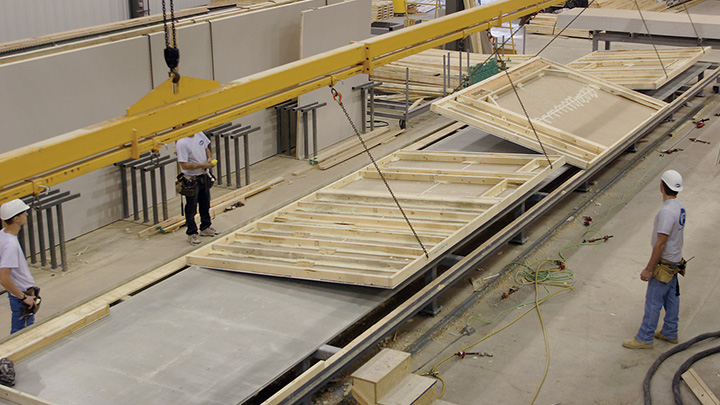
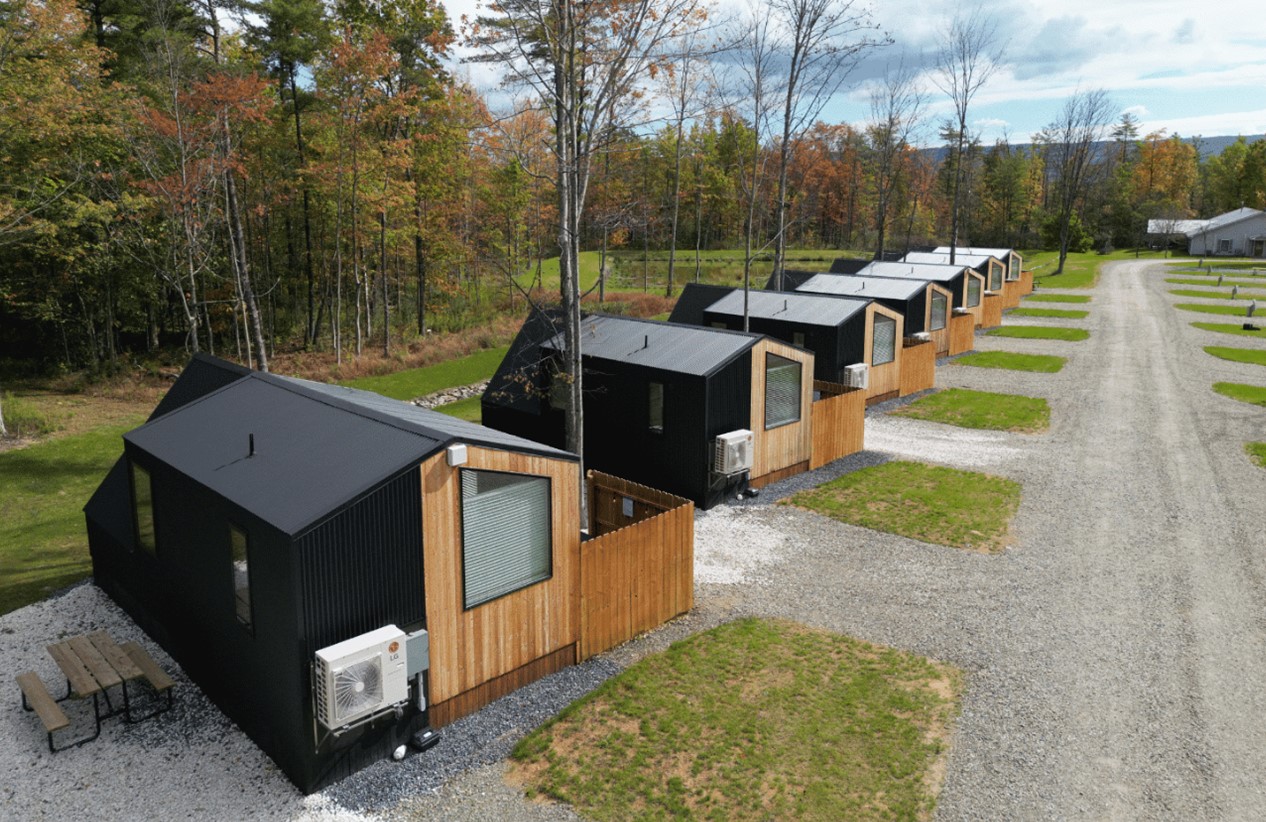
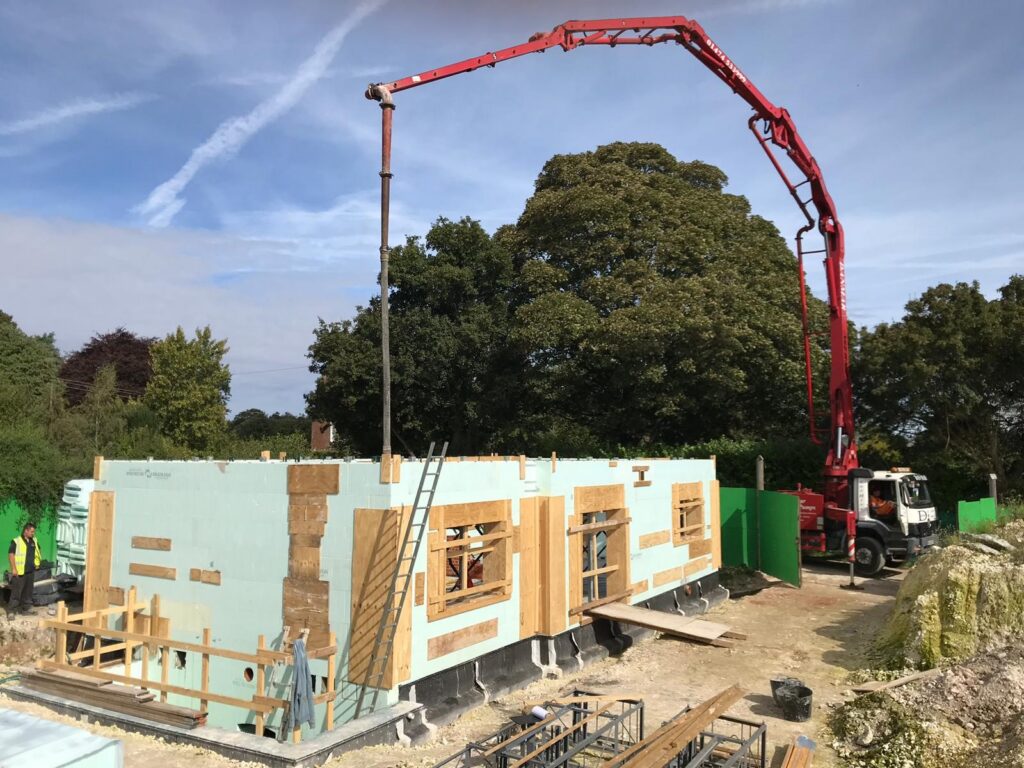
So let’s clear the fog: in the UK, MMC isn’t one single system. It’s an umbrella label—a government-backed way of classifying everything from volumetric modular to panelized, components, pods, additive manufacturing, and even “smarter” site processes that reduce labor.


Which means the honest answer to the “new bowl” question is:
MMC is both.
It can be genuinely new when it forces the industry to standardize, digitize, and industrialize how buildings are delivered.
But it can also be a rebrand when it’s used loosely to describe things the offsite world has been doing for decades.
What matters is how the British are trying to use MMC—and what they hope it will fix.
What MMC means in Britain (and why the government cares)
The UK government (and its housing agencies) pushed MMC because traditional site-built delivery hasn’t kept up with demand, cost pressures, labor constraints, and sustainability targets. MMC is positioned as a way to change the delivery model, not just the building product. The UK’s own MMC definition framework lays out categories ranging from 3D volumetric and 2D panel systems to sub-assemblies, additive manufacturing, and productivity improvements that reduce on-site labor.

That framework matters because it turns “MMC” into something measurable—and therefore something a funding agency can require, a developer can procure, and a lender/insurer can assess (at least in theory).
And in the UK, Homes England (a major public housing delivery agency) has explicitly stated it intends to support the growth of the MMC sector and incorporate MMC requirements into programs and contracts.
So in Britain, MMC isn’t just industry buzz. It’s been treated as a policy lever.
What the British hope MMC will actually deliver
Here’s what UK advocates want MMC to become—when you strip away the slogans.
1) Predictable delivery, not heroic problem-solving
The UK pitch is that housing shouldn’t be a custom prototype every time. MMC is supposed to move construction closer to manufacturing: repeatability, controlled conditions, tighter tolerances, fewer weather delays, fewer trades stacked on top of each other.
That’s why the UK conversation is tightly tied to DfMA (Design for Manufacture and Assembly)—designing buildings so they can be efficiently manufactured and assembled, not “value engineered” into submission later.
2) A response to labor shortages and shrinking trade pipelines
The UK has its own labor constraints, and like the U.S., it’s wrestling with an aging workforce and uneven training pipelines. MMC is expected to shift labor from scarce on-site trades to more stable factory roles—while also reducing the total labor intensity per home.
3) Quality, safety, and consistency—with proof
This is where the UK story gets more complicated.
Fire and performance concerns have been raised by safety stakeholders who argue that some MMC systems lack enough real-world testing history or clear guidance in existing regulations.
In response, the UK ecosystem has been moving toward clearer guidance and standardization—like BSI’s push to publish a residential MMC standard intended to create a more consistent best-practice framework across stakeholders.
4) Less waste, lower carbon, and better resource efficiency
A big part of the British MMC narrative is environmental: less material waste, better airtightness and thermal performance potential, and a clearer path to measuring embodied carbon.
Even recent professional commentary in the UK is highlighting research claims around modular reducing waste and material use versus traditional approaches (though results vary by project type and method).
5) A “platform” future: kit-of-parts thinking at national scale
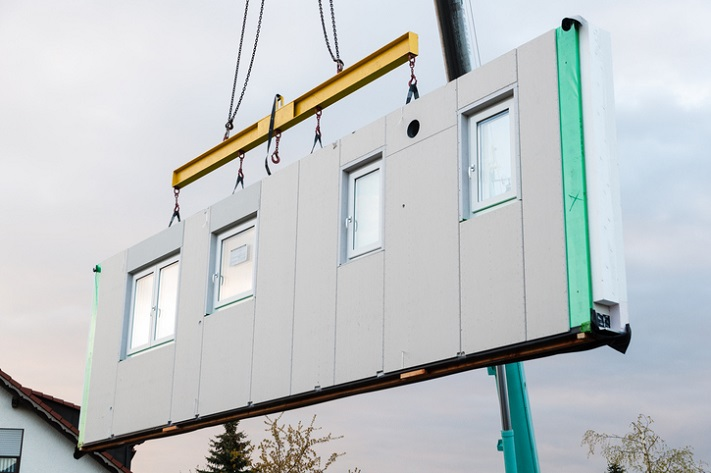
One of the most ambitious UK ideas is platform-based construction—sometimes described as a kit-of-parts approach where standardized, interoperable components can be configured into many building types.
The UK’s Construction Innovation Hub promoted a “product platform” concept tied to MMC and P-DfMA (Platform Design for Manufacture and Assembly). The promise is scale without monotony: repeatable components with flexible outcomes.
That’s the revolutionary version of MMC: not just “build it in a factory,” but standardize interfaces, digitize the component library, industrialize procurement, and make delivery repeatable.
The part of the UK MMC story Americans should pay attention to: measurement
The UK often talks about MMC alongside PMV — Pre-Manufactured Value, a way to express how much of a project’s value (cost) is created through pre-manufacturing/offsite processes.
That matters because it reflects a very British/European instinct:
“If we can’t define it, we can’t procure it.
If we can’t procure it, we can’t scale it.”
In the U.S., we tend to sort offsite into familiar buckets—modular, panelized, components—then argue about which is “real offsite.” The UK tried to bypass that debate with a classification system broad enough to include many methods, then measure them.
Is PMV perfect? No. Even advocates point out that PMV can miss whether a project actually hit schedule, budget, safety, or carbon targets.
But it’s still a real attempt to make offsite adoption trackable—and that’s part of why the UK talks about MMC so much.
The reality check: the UK has had MMC wins… and very public failures
This is the part that doesn’t always make it into the glossy brochures.
The UK has seen high-profile modular/manufactured housing business failures and factory closures in recent years, which sparked criticism that government approach and market demand signals weren’t coherent enough to sustain the sector at scale.
And that’s an important lesson for the U.S.:
You can’t scale factories on hope.
Factories scale on pipeline certainty, repeatable procurement, and financing/insurance confidence.
The UK’s House of Lords Built Environment discussions (summarized by the UK Parliament’s Lords Library) highlight that MMC policy has faced criticism and calls for a more coherent strategy.
So if someone tells you, “The UK is proving MMC works,” the smarter response is:
The UK is proving MMC needs an ecosystem—not just a factory.
Could MMC become a global standard in offsite construction?
Here’s the most practical way to look at it:
MMC probably won’t become the universal term…
Outside the UK, most markets already have established language: offsite construction, industrialized construction, prefabrication, DfMA, modular, panelized. “MMC” as a phrase is very UK-flavored.
…but parts of the UK MMC approach are exportable
What could spread globally isn’t the acronym—it’s the infrastructure behind it:
- A clear classification framework for offsite methods
- A push toward standards that help lenders, insurers, building control, and clients trust the product
- A procurement mindset that rewards repeatability and performance, not just lowest bid and reinvention
- Platform / kit-of-parts thinking tied to DfMA and digitized component catalogs
In other words: MMC as a system of organization—not as a single construction method.
So what should U.S. offsite people do with “MMC”?
If you’re a U.S. factory owner, builder, or developer and you hear MMC, don’t ask, “Should we do MMC?”
Ask these instead:
- Which MMC category are we actually talking about—volumetric, panelized, components, pods, assemblies, process innovation?
- Is there a pipeline big enough to justify industrialization?
- Are we designing for manufacture and assembly from day one—or trying to force a factory solution onto a site-built design?
- What proof will lenders/insurers/building officials need, and do we have it?
- Are we chasing a buzzword, or building a repeatable delivery system?
Because if you do it right, MMC isn’t a new bowl.
It’s a new kitchen.
CLICK HERE for a free one-hour advisory video call

Gary Fleisher—known throughout the industry as The Modcoach—has been immersed in offsite and modular construction for over three decades. Beyond writing, he advises companies across the offsite ecosystem, offering practical marketing insight and strategic guidance grounded in real-world factory, builder, and market experience.