
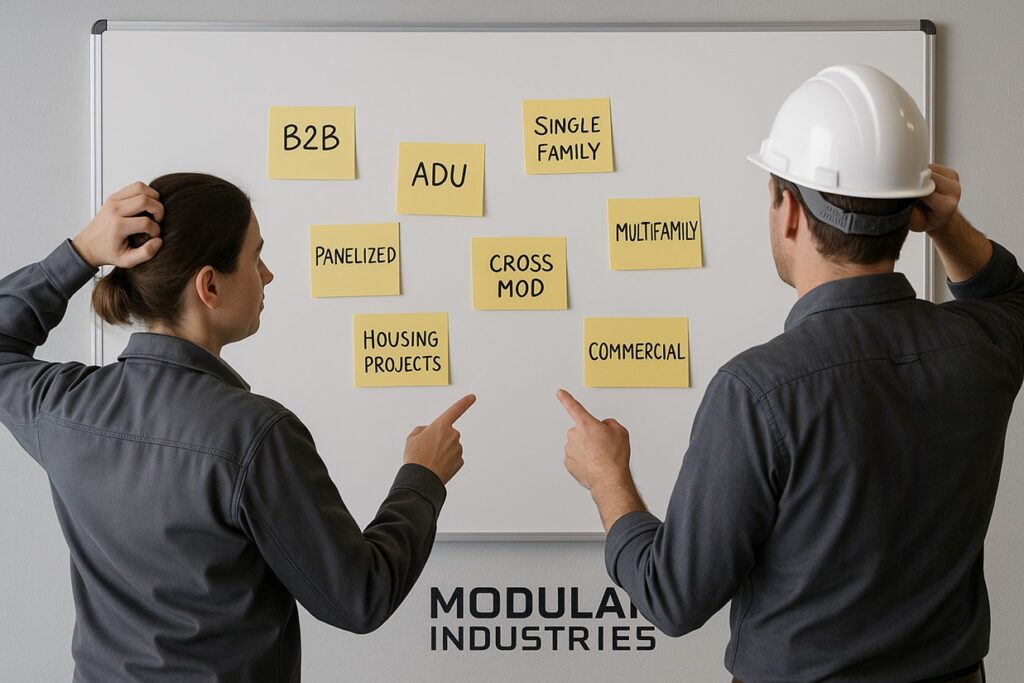
Enough negativity — this will probably be the last time I write about why factories fail. Not because the reasons have all been covered, but because I’ve spent enough time talking about the negative side of an industry I still believe has enormous promise.
That said, one more needs to be addressed, because it’s so common — and the most avoidable: building a factory before you’ve confirmed that anyone actually wants what you plan to produce.
Looking Back
In earlier articles, I talked about factories that launched without a clear understanding of their true costs — and how that single mistake can take down even a well-funded operation. I also touched on the lack of systems: how plants run on assumptions rather than data, how owners try to manage by memory, and how small errors multiply into major losses.


Both of those are killers. But even if you fix both — if you have accurate costing and strong systems — it won’t matter if you misread the market, or worse, never try to read it at all.
The Most Dangerous Assumption
Factories fail because they don’t know their market.
They assume there’s demand because someone said so — a developer, an investor, a local official. They assume they’ll be competitive because “nobody else is doing this here.” They assume the market will come to them once the first walls go up. The old “build it and they will come” routine.

That’s not a plan. That’s hope. And hope, as I’ve learned more than once, is not a market. As Coach Lou Holtz said, “Hope doesn’t win ball games.”
This applies to startups and established factories alike. Startups are often led by enthusiasm and a good concept. Existing factories get comfortable with “what’s worked before.” Both can miss what’s happening right in front of them: a market that’s shifted, a product that’s lost relevance, or a price point that no longer works.
What Market Analysis Shouldn’t Be
When people hear “market analysis,” they picture expensive reports, focus groups, or consultants producing thick binders of data that nobody reads twice. That’s not what I’m talking about.
I’m talking about common-sense due diligence — the kind that can be done with a phone, a truck, and a notebook. You don’t need a professional research firm to understand whether there’s real demand. You just need to ask the right questions of the right people — and listen to the answers without bias.
What Market Analysis Should Be
Here’s what a practical, no-nonsense approach to market validation looks like — the kind I recommend to every client before they start pouring concrete or signing equipment leases:
– Talk to realtors. Not corporate ones — local realtors who actually sell in the market. Ask what’s moving, what’s sitting, and what price points get traction.
– Visit sales lots or model centers. See what’s being offered and what’s collecting dust. Talk to sales staff — they’ll tell you what buyers are asking for that they don’t have.
– Ask developers and builders. Find out what they can’t get right now. Is it affordable units, higher-end finishes, or production capacity? What makes them hesitate about modular or offsite?
– Call local lenders and appraisers. Ask whether they’ll finance modular in the target market, and under what conditions. If the local bank won’t fund it, that’s a red flag that can’t be ignored.
– Talk to building inspectors and zoning staff. Ask what’s being submitted and what’s getting built. They’ll tell you what’s “hot” long before the market data catches up.
– Identify who’s actually writing the check. In some markets it’s the homeowner, in others the developer or the investor. Each sees value differently.
– Define your market. Is it urban infill, workforce housing, coastal rebuilds, resort cabins? Each requires a different factory setup, design approach, and pricing structure.
I was absolutely amazed — and frankly flabbergasted — when I arrived at a $60 million plant a few years ago and learned that they had absolutely no idea what they were going to offer to the marketplace, let alone what they were going to build. They had done zero analysis… none! An extreme example for sure, but similar stories are all too common.
The Cost of Skipping This Step
The factories that skip this step often don’t realize their mistake until production begins. They have staff, systems, and materials in place — but no buyers lined up. So they pivot, discount, or chase new product lines midstream. That’s when panic sets in.
Suddenly the factory’s biggest challenge isn’t production — it’s sales. And that’s the hardest problem to fix when you’ve already built the plant and burned through capital.
Due Diligence Is Not a Luxury
For startups especially, feasibility studies too often focus on building design, logistics, and capital costs. Those matter — but the real feasibility question is: Who’s your customer, what do they need, and how do you know?
A factory that doesn’t answer that before breaking ground is a factory gambling with investor money, employee livelihoods, and its own future.
Market due diligence isn’t about expensive analysis — it’s about discipline. It’s about asking enough questions, in enough places, until the answers start to align. And if they don’t align, maybe it’s not the right market — or not the right time.
Moving On
This will be the last piece I write on factory failures. I’ve said what I need to say. The purpose of these articles was never to criticize, but to help prevent avoidable mistakes — the kind that have closed too many good operations.
The future of this industry doesn’t depend on more factories — it depends on smarter ones. Those that know their costs, measure their performance, and most importantly, understand their market before they start building.
Because in this business — as in most — hope is not a market.
If you’d like to explore this further, connect with me today.
Bill Murray, Co-Founder of Offsite Innovators



Reader interactions
One Reply to “Hope Is Not a Market — The Last (and Most Avoidable) Reason Factories Fail”
Hope is not a market. Well said and so true. The best market information comes from YOU and YOUR team