

Highlighting the thinkers and their ideas driving the evolution of Offsite Construction. 
Be inspired, be informed, be innovative!

Innovations

Change Order Discipline

The Quiet Profit Killer Nobody Wants to Talk About There’s an old joke in factory management that goes something like this: “We didn’t lose money

Read More »

Rules or Results? The Building Code Debate Reshaping Construction

Building codes exist for one fundamental reason: to protect people and ensure that the buildings they live and work in are safe, durable, and perform as intended over time. These codes shape every aspect of construction, from structural integrity and fire protection to energy efficiency and indoor comfort. Compliance isn’t optional—it’s essential to occupant safety, long-term building performance, and legal approval.

At a high level, building codes fall into two primary categories: prescriptive codes and performance-based codes. Both approaches are widely used by builders, architects, and modular construction factories, often side by side, depending on local regulations and project complexity. Understanding the differences between these two systems—and when each makes sense—is critical for anyone involved in construction today.

Prescriptive building codes are rule-based. They provide detailed instructions that specify exactly how a building must be constructed. These codes spell out approved materials, dimensions, installation methods, and minimum requirements. For example, a prescriptive code might dictate insulation thickness, fire-resistance ratings for assemblies, or specific fastening schedules.

Compliance under a prescriptive system is straightforward: follow the rules as written, and the project meets code.

Advantages of Prescriptive Codes

Prescriptive codes offer clarity and predictability. Builders know exactly what is allowed, which reduces guesswork and can speed up permitting and inspections. Because requirements are clearly defined, there is little room for interpretation, minimizing disagreements between builders and inspectors.

These codes are also based on long-established construction practices. They have been tested over decades and are familiar to most builders, inspectors, and manufacturers. For smaller or less-experienced builders, this familiarity can reduce risk and simplify project execution.

Challenges of Prescriptive Codes

The biggest limitation of prescriptive codes is their rigidity. Builders must follow the rules precisely, even when alternative materials or methods could perform just as well—or better. This lack of flexibility can stifle innovation, particularly when new technologies or construction systems emerge faster than code updates.

Prescriptive codes can also be overly conservative. Requirements designed for extreme conditions may be applied universally, even in milder climates, driving up costs without delivering proportional benefits. As a result, builders may be forced to use materials or assemblies that exceed what the project actually needs.

Performance-based building codes take a fundamentally different approach. Instead of specifying how a building must be constructed, they define what the building must achieve. The focus is on outcomes—such as energy performance, structural capacity, fire safety, or moisture control—rather than prescribed methods.

Under this system, builders and designers are free to choose the materials, systems, and construction techniques they believe will meet or exceed the required performance targets.

Advantages of Performance-Based Codes

Flexibility is the defining strength of performance-based codes. Builders can use innovative materials, advanced systems, and nontraditional construction methods as long as they meet the stated performance criteria. This freedom often leads to more efficient designs, cost savings, and faster adoption of new technologies.

Performance-based codes also align well with sustainability goals. Because they emphasize outcomes like energy efficiency and environmental impact, they encourage creative solutions such as high-performance envelopes, renewable energy systems, and advanced insulation strategies.

Another benefit is adaptability. Performance-based approaches allow designers to tailor solutions to local conditions—whether that means seismic resilience, extreme weather resistance, or climate-specific energy strategies.

Challenges of Performance-Based Codes

With flexibility comes complexity. Demonstrating compliance often requires engineering analysis, modeling, testing, or third-party verification. These steps can add time, cost, and uncertainty to the approval process.

Performance-based codes also introduce subjectivity. Inspectors and authorities must evaluate whether a proposed solution truly meets performance objectives, which can lead to differing interpretations. This uncertainty can be frustrating, particularly in jurisdictions with limited experience reviewing alternative designs.

Finally, performance-based compliance demands a higher level of technical expertise. Builders and designers must understand building science, engineering principles, and system interactions. For smaller firms or those without in-house engineering support, this can be a significant hurdle.

Preferences between prescriptive and performance-based codes often depend on project scale, organizational experience, and regulatory environment.

Traditional builders—especially smaller operations—tend to favor prescriptive codes. The certainty and predictability reduce risk and simplify interactions with local inspectors. When margins are tight and resources limited, following a clear rulebook can be the safest path forward.

Modular construction factories, particularly those focused on innovation and efficiency, often prefer performance-based codes. These codes allow factories to optimize designs, integrate automation, and adopt advanced materials without being constrained by rigid specifications. A modular factory, for example, may achieve superior energy performance through system-level design rather than by strictly following prescribed insulation values or assembly details.

This flexibility can provide a competitive advantage, enabling factories to reduce waste, improve consistency, and deliver higher-performing buildings.

Many countries now use performance-based codes either fully or as part of hybrid systems that combine prescriptive and performance elements:

  • Australia incorporates performance-based provisions in its National Construction Code, particularly for fire safety and energy efficiency.
  • New Zealand allows performance-based design, with a strong emphasis on seismic resilience and sustainability.
  • The United Kingdom uses performance-based requirements in areas such as fire safety and energy performance.
  • Canada applies performance-based approaches in its National Building Code, especially for structural and fire design.
  • European Union countries, including Sweden and the Netherlands, rely heavily on performance-based standards to support sustainable construction.
  • The United States, while still largely prescriptive, is gradually expanding performance-based options, particularly in green building and resilience-focused projects.

As construction technologies, materials, and delivery methods continue to evolve, both prescriptive and performance-based codes will remain essential tools. Prescriptive codes provide stability and consistency, while performance-based codes create space for innovation and improvement.

The challenge—and opportunity—for builders and modular factories is knowing when to rely on proven rules and when to push boundaries responsibly. The future of construction will depend on striking the right balance between certainty and creativity.

If you’d like to explore this further, connect with me today.
Bill Murray, Co-Founder of Offsite Innovators
Why Visionaries Matter More in Offsite Than Almost Any Industry

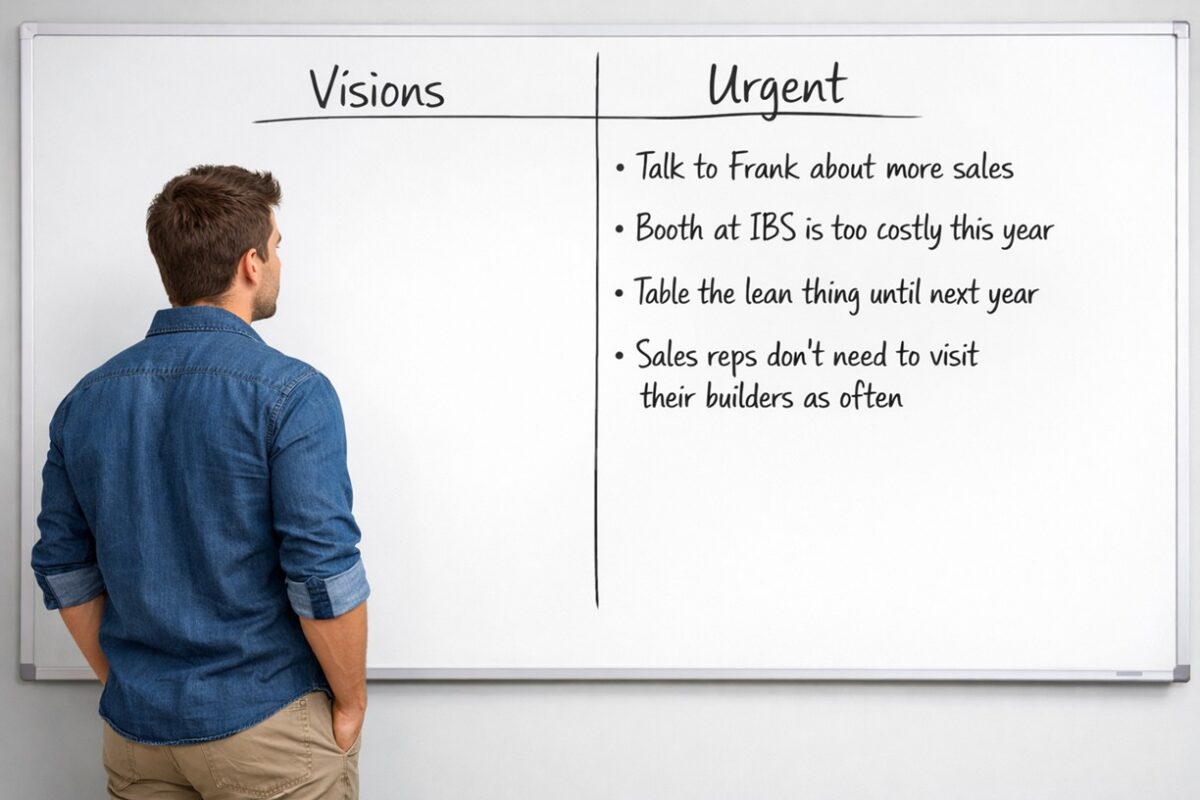
An offsite factory doesn’t simply manufacture buildings. It operates in a space where manufacturing discipline collides with construction realities, logistics constraints, regulatory oversight, and real estate economics. That intersection is messy, constantly shifting, and unforgiving. From day one, it demands someone who isn’t just running the business, but is continually questioning where the next failure point might appear. Visionaries in offsite are the ones who look beyond today’s production schedule and ask what will break tomorrow when volume increases, codes change, labor tightens, or customers expect something different. When that mindset disappears, the factory loses more than inspiration—it loses direction.

Most founders don’t abandon vision intentionally. It happens gradually. After years of pushing uphill, the factory reaches a point of stability. Orders are coming in, production feels predictable, and the chaos that once defined startup life begins to settle. That’s when the visionary often shifts into protection mode. Decisions that were once driven by possibility become shaped by caution. The question subtly changes from “What should we try next?” to “How do we avoid disrupting what finally works?” In offsite construction, that shift is risky. Stability is not the same as sustainability, and protecting the current model can quietly prevent the next necessary evolution.

The early warning signs are rarely financial. They show up in behavior. Middle managers stop offering ideas because they’ve learned those ideas won’t be welcomed. Strong performers begin to disengage or leave, not dramatically, but quietly. Innovation starts to feel like a threat instead of an opportunity, and competitors appear more confident, more curious, and more willing to experiment. The factory may still be producing homes, but it has stopped learning how to build the next version of itself.

Many founders believe that stepping away from vision is a sign of maturity, a way to professionalize the company. That only works if vision is intentionally handed off or built into the organization’s systems and culture. When no one is empowered to think ahead, challenge assumptions, or question sacred processes, a vacuum forms. The factory becomes extremely good at repeating what it already knows, even as the world around it changes.

Offsite factories rarely fail because of bad ideas. More often, they struggle because a once-successful idea is treated as untouchable. When the visionary becomes only “the boss,” the factory isn’t doomed—but it is exposed. The solution isn’t removing founders or forcing change for its own sake. It’s making sure that vision never leaves the room, even when the person who first carried it no longer does.

CLICK HERE for a free one-hour advisory video call

Gary Fleisher—known throughout the industry as The Modcoach—has been immersed in offsite and modular construction for over three decades. Beyond writing, he advises companies across the offsite ecosystem, offering practical marketing insight and strategic guidance grounded in real-world factory, builder, and market experience.

Great Idea. Wrong Assumption: You Don’t Have to Do This Solo

When we were kids, most of us had toys that didn’t come with instructions—or if they did, we ignored them. We just knew how they worked. A toy truck got pushed. A ball got thrown. A set of blocks became a tower, then a pile on the floor. Instinct took over, and learning happened through trial, error, and the occasional skinned knee.

As we grew older, something changed. The toys got more complicated. The stakes got higher. And we learned a quiet but important lesson: if you want to do something new—and do it right—you probably need to ask someone for help.

Somewhere along the way, many adults forgot that lesson.

Today, Bill Murray and I regularly meet people who are convinced they have the idea to fix homelessness, solve affordable housing, streamline production, or eliminate labor shortages. And to be fair, these ideas are usually thoughtful. They’ve been debated over coffee and whiteboards. A few trusted peers have weighed in. A business plan has been written. A pitch deck polished. The language is entrepreneurial, confident, and full of promise.

The belief is simple: If we think this through carefully enough, we can make it work on our own.

Sometimes that belief gives an idea just enough momentum to get off the ground. But more often than not, reality shows up uninvited—and when it does, it has a way of letting the air out of even the most enthusiastic balloon.

What’s usually missing isn’t passion, intelligence, or effort. What’s missing is perspective.

Homelessness, affordable housing, factory production, and labor challenges are not abstract problems. They are lived, daily realities shaped by regulations, human behavior, logistics, weather, financing, politics, and a thousand small details that never make it into a pitch deck. These are problems that don’t fully reveal themselves until you’ve stood on a jobsite, walked a factory floor, sat across from a frustrated inspector, or tried to hire skilled workers when everyone else is fishing in the same shallow pond.

That’s why every startup—especially those aiming to “fix” big, messy problems—needs advice from people who have actually been there. Not theorists. Not résumé consultants. And not professionals who have only studied the industry from a distance.

I’m talking about people with boots on the ground.

People who’ve made payroll when cash flow was tight. People who’ve watched a great idea fail because one small assumption was wrong. People who understand how decisions ripple through production schedules, labor morale, and long-term profitability.

Bringing in that kind of experience early doesn’t weaken an idea—it strengthens it. It can shorten timelines, expose blind spots, and save enormous amounts of money before it’s spent in the wrong places. More importantly, it can turn a well-intentioned concept into something that actually works in the real world.

There’s nothing wrong with believing in your idea. But believing you don’t need outside, experienced guidance is a gamble—and it’s usually an expensive one.

Sometimes, the smartest move isn’t building a better pitch deck. It’s having a conversation with someone who’s already walked the road you’re about to travel.

And that conversation might be the most valuable first step you take.

CLICK HERE for a free one-hour advisory video call

Gary Fleisher—known throughout the industry as The Modcoach—has been immersed in offsite and modular construction for over three decades. Beyond writing, he advises companies across the offsite ecosystem, offering practical marketing insight and strategic guidance grounded in real-world factory, builder, and market experience.

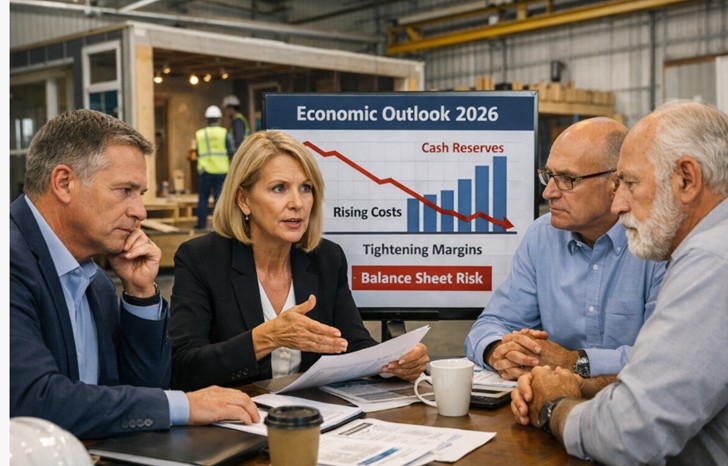
Navigating the 2026 Liquidity Squeeze: A CFO’s Reality Check for Offsite Construction

This is for CFOs and senior financial leaders inside offsite and modular construction companies who are already feeling cash tighten—and know 2026 will test their balance sheets.

The biggest financial risk heading into 2026 isn’t sales volume or factory efficiency. It’s liquidity. Specifically, the widening gap between when we’re forced to spend cash and when we’re allowed to recognize revenue. For offsite construction, that gap is becoming dangerous.

This isn’t a normal construction-cycle problem. It’s structural. And it’s getting worse.

Offsite factories carry heavy fixed costs every single day—rent, equipment, skilled labor—whether a module ships or not. That operating leverage works beautifully when projects flow smoothly. But when anything slows down, cash drains fast. In 2026, several forces are lining up to slow things down at the same time.

Why 2026 Is Different

First, tariffs are pushing CFOs into uncomfortable decisions. The possibility of sharp increases on steel, aluminum, and copper is forcing many of us to pre-position materials far earlier than we’d like. Buying inventory months—or years—ahead may protect margins, but it also locks up enormous amounts of working capital that used to stay liquid.

Second, the “factory gap” is widening. We pay for materials, labor, and overhead while modules are built, but revenue often isn’t released until delivery and set. Any site delay—permitting, labor shortages, inspections—extends that gap. The factory keeps burning cash while revenue sits frozen outside the gate.

Third, financing hasn’t caught up to how offsite actually works. Many lenders still struggle to understand factory work-in-progress. Assets that aren’t tied to land make them nervous. Even with potential rate adjustments ahead, access to flexible short-term credit remains tighter than most CFOs are comfortable admitting.

What the CFO Role Becomes in 2026

This is no longer just an accounting problem. In 2026, the CFO becomes a risk architect.

That means making deliberate decisions about how much inventory to hedge and when—not emotionally, not reactively, but based on disciplined modeling of cash exposure. It means restructuring contracts so payments better align with factory progress, not just jobsite milestones. It means spending more time educating lenders on how offsite manufacturing actually creates value—and insisting on partners who understand that reality.

It also means running hard scenarios in advance. What happens if a major project slips six months? What does that do to cash burn? Where are the pressure points—and how much warning do we really have?

The Real Test Ahead

The companies that struggle in 2026 won’t fail because they couldn’t build modules efficiently. They’ll fail because they ran out of cash between buying the steel and bolting the module.

Liquidity—not production—will decide who survives the squeeze.

So here’s the question every offsite CFO should be asking now:
Are we managing cash like an accounting function—or like a survival strategy?

If you’d like to explore this further, contact Bill today.

Bill Murray, Co-Founder of Offsite Innovators

The Hardest Part of Offsite Construction Is the Beginning—And Almost Nobody Talks About That

One of the most misunderstood things about offsite construction isn’t technology, automation, or even affordability. It’s just how brutally hard it is to get started on the right footing.

From the outside, startup factories look exciting. There’s usually a press release. A slick website. A few renderings that suggest a future filled with precision, efficiency, and disruption. LinkedIn lights up. Developers start calling. Builders want to know when production slots will open. For a brief moment, it feels like success has already arrived.

And then—quietly, and sometimes suddenly—it all starts to unravel.

Most startup factories need everything at once: investors, guidance, leadership, offsite experience, management experience, marketing savvy, operational discipline, and patience measured in years, not months. Miss one or two of those, and the whole structure starts to lean. Miss several, and gravity does the rest.

We’ve all watched it happen. A company gets enormous attention, garners industry praise, and is talked about as “the future.” Then six months later, they’re late. A year later, they’re struggling. Two years later, they’re gone—or worse, they’re still alive but limping, quietly burning cash and credibility.

Ask someone to name the single most important thing a startup needs, and most people can answer instantly. Leadership. Capital. Technology. Marketing. Operations. Pick your favorite.

But ask them to rank the next most important things, and suddenly the clarity disappears.

Do you know why?

Because startups don’t fail from one missing ingredient. They fail from misalignment—having some of the right pieces, but not in the right order, at the right time, with the right expectations.

It reminds me of the old story about the guy who jumped off the Empire State Building. As he passed each floor, witnesses heard him say, “So far, so good.” Technically true—until it wasn’t.

With that in mind, here’s my list of what every offsite startup needs in place before they begin to lose their way and falter. Not after. Not once the warning signs are obvious. Before gravity takes over.

And a warning up front: even if all of these are in place, none of them are permanent. They all require constant attention. Your Business Plan, Marketing Plan, and every other plan book you rely on must be living documents—or they’ll quietly turn into historical fiction.

Leadership is the starting line, not the finish line.

Offsite construction is not real estate. It’s not tech. It’s not traditional construction. It’s a demanding blend of manufacturing discipline, construction realities, logistics coordination, regulatory compliance, and cash management—all operating on thin margins and unforgiving schedules.

The most dangerous leadership teams aren’t incompetent. They’re confident for the wrong reasons.

Successful beginnings are led by people who understand that offsite construction punishes ego quickly. Leaders must know what they don’t know, recognize when experience is missing, and resist the temptation to lead with vision alone. Vision without operational grounding doesn’t inspire teams—it confuses them.

Good leadership in an offsite startup isn’t loud. It’s calm. It’s disciplined. And it’s willing to slow down when everyone else wants to speed up.

Most startup business plans are designed to raise money, not survive reality.

They assume learning curves will be short, labor will cooperate, suppliers will perform, codes will be predictable, and customers will be patient. None of those assumptions hold for long.

A real offsite business plan confronts uncomfortable truths early. It accounts for production delays, labor turnover, design revisions, state plan reviews that come back redlined—sometimes repeatedly—and the real cost of engineering rework that no one budgeted for.

If your plan only works when everything goes right, it isn’t a plan. It’s a story you tell yourself to feel better.

There’s a massive difference between having enough money and having the right money.

Offsite construction requires patient capital. Not “patient until the first delay” capital. Not “patient until the first missed projection” capital. Real patience—the kind that understands manufacturing maturity takes time and that early losses don’t automatically signal failure.

Bad money forces startups into bad decisions. It pressures leadership to scale too soon, sell the wrong projects, overpromise delivery, and chase volume before systems are ready.

The startups that survive aren’t always the best funded. They’re the ones whose investors understand what they signed up for.

One of the most common early mistakes is designing a factory for who you want to become, not who you are on day one.

Large buildings, complex automation, and ambitious throughput targets look impressive on paper. But until production is stable, quality is repeatable, and supervision systems actually work, scale becomes a liability.

Scaling chaos doesn’t fix it—it magnifies it.

Strong beginnings focus on rhythm before reach, consistency before capacity, and learning before expansion.

Smart people are everywhere in startups. Experienced operators are not.

Factories don’t run on ideas; they run on decisions made under pressure. Experienced operations managers have lived through bad weeks, missed shipments, quality escapes, and labor shortages. They know how to triage without panic and how to keep production moving when plans fall apart—because they always do.

Operations experience isn’t a résumé line item. It’s the difference between reacting and responding.

Early marketing should reflect who you are now—not who you hope to be next year.

When startups market future capability instead of present reality, they create expectations they can’t meet. That gap destroys trust faster than almost anything else.

The best early-stage marketing in offsite construction is conservative, specific, and honest. It attracts the right customers instead of too many customers. And it protects credibility while the factory finds its footing.

Customization is seductive—and deadly.

Every exception, every “just this once” request, erodes systems and margins. Without clear product boundaries, startups lose control before they realize it.

Successful beginnings define what they will build, what they won’t build, and why those lines matter. Discipline isn’t about saying no—it’s about saying yes to survival.

Most startups collect feedback. Few listen to it.

Production workers, installers, transport crews, and early customers see problems long before executives do. If leadership dismisses those signals—or worse, punishes the messengers—the startup blinds itself.

Bad news doesn’t cause failure. Ignoring it does.

Pausing is one of the hardest skills a startup can learn.

There are moments when slowing down to fix systems is the smartest move possible. Weak leadership sees pause as failure. Strong leadership sees it as protection.

Speed without control doesn’t create success—it accelerates mistakes.

Every plan expires.

Business plans, marketing plans, production plans—they all lose relevance the moment reality intervenes. The startups that survive revisit them constantly, adjust them honestly, and treat them as tools rather than trophies.

A plan that doesn’t evolve becomes a liability.

Most offsite startups don’t fail because they lacked vision. They fail because vision wasn’t matched with discipline, patience, and humility—right from the beginning.

Everything looks fine as you fall past each floor. The trick is recognizing when “so far, so good” is no longer good enough—and pulling back before gravity takes over.

That’s what strong beginnings are really about.

If you’d like to explore this further, connect with me today.

Bill Murray, Co-Founder of Offsite Innovators

Affordable Housing Isn’t an Offsite Problem—It’s a Direction Problem

Every few months, someone points a finger at the offsite construction industry and asks why we haven’t solved the affordable housing crisis yet.

It’s usually framed as disappointment. Sometimes as frustration. Occasionally as blame.

But it starts from a faulty assumption.

The offsite construction industry was never meant to decide what affordable housing should be. It was built to manufacture what others specify—efficiently, repeatably, and at scale.

And that distinction matters more than most people want to admit.

Offsite construction is almost entirely B2B, not B2C.

Factories don’t wake up in the morning and decide to solve housing policy. They respond to developers, builders, housing authorities, nonprofits, architects, and owners who come to them with drawings, specs, budgets, schedules, and constraints.

In other words:
Tell us what you want, and we’ll build it.

That’s not deflection. That’s how industrialized construction works.

Auto manufacturers don’t decide what regulations cars must meet. Appliance factories don’t invent energy codes. Aerospace suppliers don’t define airline routes. They manufacture to specifications created upstream by people with authority, funding, and regulatory power.

Offsite construction is no different.

Affordable Housing Is a Systems Problem—Not a Factory Problem

Affordable housing lives at the intersection of land cost, zoning, financing, political will, entitlement timelines, community resistance, and subsidy structures. None of those are controlled by factories.

Factories can:

  • Reduce labor variability
  • Improve quality consistency
  • Shorten build schedules
  • Deliver predictable costs

What they can’t do is:

  • Rezone land
  • Create tax credits
  • Change parking minimums
  • Eliminate design creep
  • Fix contradictory code interpretations
  • Decide what “affordable” means in a given city

When developers, housing agencies, or municipalities bring vague goals instead of hard specs, factories can’t manufacture clarity.

There’s a quiet truth most people outside the industry don’t see.

Factories are ready.

They’re ready to build:

  • Smaller units
  • Repetitive floor plans
  • Simplified assemblies
  • Lower-cost finishes
  • Performance-based designs
  • High-volume, low-margin projects

What they need is clear direction.

Affordable housing doesn’t fail because factories can’t build it. It fails because too many projects arrive with:

  • Custom designs pretending to be standardized
  • Budgets disconnected from scope
  • Political promises unsupported by funding
  • One-off pilots instead of scalable programs

Offsite thrives on repeatability. Affordable housing too often thrives on exceptions.

That’s the wrong question.

The better question is:
Why haven’t the people who control land, money, and approvals told offsite exactly what to build—at scale, for years at a time?

When that happens, factories respond.

They always have.

Until then, blaming offsite construction for not solving affordable housing is like blaming a printing press for not writing the book.

The press doesn’t create the story.

It just makes sure it can be printed—accurately, affordably, and over and over again—once someone finally decides what they want to say.

If you’d like to explore this further, connect with me today.

Bill Murray, Co-Founder of Offsite Innovators

The Cost of Holding On Too Tight—and the Opportunity Most Owners Miss

There comes a day in every business—usually much later than it should—when the thing that made you successful starts getting in your way.

You don’t wake up and announce it. There’s no calendar reminder that says “Congratulations, you’ve officially become the bottleneck.” It’s quieter than that. Projects slow down. Decisions pile up on your desk. Good people hesitate before answering questions they used to handle without thinking.

And if you’re honest with yourself, you feel it.

You’re more involved than ever, yet somehow less effective.

That’s often the moment an owner reaches out for advice.

And that’s where things get complicated.

Because seeking advice doesn’t automatically mean an owner is ready to change. For many micromanagers, it simply means they’re trying to fix the business without fixing themselves.

Micromanagement rarely starts as a flaw. It starts as competence.

Most owners built their companies by being hands-on, decisive, and personally accountable for outcomes. In the early days, control equals survival. No one knows the business better. No one cares more. And frankly, no one else can be trusted yet.

But as the business grows, that same instinct becomes a liability.

Control expands beyond a department or role and slowly creeps into everything—approvals, hiring, planning, customer communication, even how people phrase emails. The owner isn’t trying to suffocate the company. They’re trying to protect it.

Unfortunately, protection and progress are not the same thing.

When a micromanager seeks an advisor, the surface reason is almost always operational.

Productivity is slipping. Employees aren’t taking ownership. Managers aren’t managing. Plans aren’t sticking. The business feels reactive instead of intentional.

But beneath that request is a deeper question the owner may not even realize they’re asking:

“How do I get my business back under control?”

The irony is that too much control is often what caused the problem.

Here’s the uncomfortable truth: many micromanagers don’t want advice—they want confirmation.

They want the advisor to diagnose everyone else, tighten processes, enforce accountability, and validate the belief that the problem lies “out there.”

In these cases, advisors are treated like vendors. They’re asked for step-by-step instructions, reports, updates, and justification for every recommendation. Suggestions that require the owner to step back are resisted, delayed, or reframed beyond recognition.

The advisor becomes just another thing to manage.

This is the advisor trap: trying to help someone who believes the solution is more control, not better leadership.

Occasionally, something different happens.

The owner doesn’t just sense a problem—they feel it.

Good people have left. Growth has stalled. The business no longer scales with effort. Control isn’t delivering certainty anymore—it’s delivering exhaustion.

That’s when advice stops being threatening.

In these moments, the owner begins to ask different questions:

  • “Why am I involved in everything?”
  • “Why do decisions slow down when I touch them?”
  • “Why do people wait for me instead of thinking?”

The advisor is no longer there to fix the business. They’re there to reflect the system back to the person at the center of it.

And that’s when change becomes possible.

Most micromanagers don’t change overnight. They enter a long, uncomfortable middle ground.

They delegate tasks—but not authority.
They ask for autonomy—but reserve the right to override.
They say “I trust you”—then check constantly.

From the outside, it looks like progress. From the inside, it feels like surveillance.

This phase often lasts years, not months. It’s where businesses stall and cultures quietly erode. Employees learn to protect themselves. Managers stop thinking strategically. Innovation slows—not because people lack ideas, but because they’ve learned it’s safer not to use them.

The tragedy is that the owner believes they’re improving.

They are—but only halfway.

Micromanagement is rarely about power. It’s about identity.

For many owners, control is proof of value. It’s how they stayed relevant. It’s how they survived early chaos. Letting go feels like stepping into irrelevance—or worse, exposing weaknesses they’ve spent years compensating for.

That fear is real. But it’s also misplaced.

Great leadership isn’t about being needed everywhere. It’s about building something that functions without constant rescue.

Improving management skills doesn’t mean becoming passive. It means becoming precise.

Strong leaders control:

  • Vision
  • Standards
  • Outcomes
  • Accountability

They do not control:

  • Every method
  • Every decision
  • Every mistake

They shift from “How would I do this?” to “What result do I need, and who owns it?”

That shift is subtle—but it’s transformational.

The most encouraging truth about micromanagement is this: it’s learned behavior—and learned behaviors can be unlearned.

Some of the best leaders didn’t figure this out early. They figured it out late—after frustration, after burnout, after losing people they wish they’d kept.

What matters isn’t when the realization happens. It’s whether it’s acted on.

Improving management skills at 40, 60, or 70 isn’t a failure. It’s a sign of maturity. It’s an acknowledgment that leadership is not static—it evolves as the business evolves.

The best advisors don’t wrestle control away from micromanagers.

They make it unnecessary.

They show patterns instead of issuing commands. They connect behavior to outcomes. They help owners see that stepping back isn’t surrender—it’s strategy.

And when that insight lands, something powerful happens.

The business breathes again.
People step up.
The owner finally gets to lead instead of chase.

Micromanagement doesn’t mean you’re a bad leader.
It means you’re a leader who hasn’t updated your operating system.

And the good news?

It’s never too late to do that.

Not for the business.
Not for the people.
And certainly not for the person who built it.

If you’d like to explore this further, connect with me today.

Bill Murray, Co-Founder of Offsite Innovators

The Three Conversations Every Modular Owner Is Afraid to Have — But Must

If you own a modular factory, you’re basically running a small city—except nobody listens, everything costs more than you expected, and the weather is never on your side. Most days you deal with a perfect storm of backorders, missing trim, angry developers, and one employee who always calls out on payday.

But the part factory owners dread the most?
Not OSHA.
Not drywall cracks.
Not even punch-list season.

Not the easy ones about paint colors or forklift upgrades.
I mean the real conversations—the ones everybody avoids until it’s either too late or too expensive to ignore.

After 20+ years in this industry, visiting factories big and small, family-run and VC-funded, I’ve discovered three conversations that every modular owner knows they need to have… yet hopes the universe will handle for them.

It won’t.
So let’s spell them out.

There is no word harder for a modular factory to say than no, especially when a developer is dangling a “100-unit project” like a shiny fishing lure. Developers are charming. They’re confident. Their PowerPoints sparkle. Their schedules are “aggressive but doable.” Their financing is “99% locked in.” Their drawings are “almost final except for a few details.”

And we fall for it—every time.

Factory owners nod politely, take the binder, promise to review it, and then lie awake at night wondering why the roof plan has four different pitches and no mechanical layout.

Here’s the truth nobody wants to say:
Most bad modular projects go bad on the front porch, not the factory floor.

That first conversation should sound like this:

“Your timeline won’t work, your drawings are missing important details, your financing needs more proof than a handshake, and we are not gambling the factory just because you’re excited.”

But owners rarely say that. We say things like:
“We’ll take a closer look.”

Translated: “We haven’t learned our lesson yet.”

Saying no isn’t just self-protection. It’s a competitive advantage.
Good developers respect boundaries.
Bad developers disappear.

Either outcome is a win.

This one is a little delicate.

General Managers are the heroic duct tape of modular factories. They fix everything, know everyone, and can tell you instantly which employee is about to quit. Many rose through the ranks, starting as carpenters or set crew warriors. These folks know the business the way a farmer knows his crops.

But the industry has changed faster than some GMs have.

Automation. AI scheduling. Digital twins. Lean manufacturing.
It’s not 2005 anymore, even though some factories still run like it is.

Every factory eventually needs to have the conversation:

“Look, we love you. You’ve been amazing. But if we’re going to survive the next five years, we need new systems, tighter processes, and a willingness to change. Can you lead that? Because if not… we need to bring someone in who can.”

That conversation terrifies owners because it feels personal—and because it might trigger the dreaded GM pout, which causes production delays of its own.

But here’s the hard fact:
A factory can outgrow a GM long before anyone says it out loud.

The best GMs adapt.
The worst ones blame labor, suppliers, and the moon’s gravitational pull.

If your factory’s biggest bottleneck has an office, a desk, and your old photo on the wall, it’s time for this conversation.

Modular factories love volume. Big backlogs. Big shipments. Big headlines.

But here’s a secret few want to admit:

You can’t make up for unprofitable processes with more volume.
You only go broke faster.

Every factory has one or two skeletons in the profitability closet:

  • A product line that hasn’t made money since flip phones
  • A developer who gets “special pricing” nobody can explain
  • A process so outdated that even OSHA says, “Really?”
  • A service department that loses $300 on every callback

This conversation sounds like:

“We’re cutting this product line.”
“We’re raising prices.”
“We’re redesigning the workflow.”
“We’re letting go of that client.”

And the reaction is always the same:
“Are you sure? They bring us a lot of volume.”

Yes. They bring volume the way thunderstorms bring water—plenty of it, but it floods your basement.

Factories that survive long-term are brutally honest about what makes money and what doesn’t. They don’t prop up zombie products or zombie clients because “it would be awkward to change now.”

Awkward is fine.
Bankruptcy is worse.

Because modular construction is personal.
It’s emotional.
Every decision touches people.
And owners are human—they want harmony on the floor, peace in the office, and a backlog that doesn’t look like a pending disaster.

But avoiding these conversations is like ignoring a leak in the roof:
It doesn’t stay small.
It spreads, rots, and multiplies.

The industry is full of examples where silence costs more than speaking up:

  • Failed projects that should’ve been declined
  • GMs who stayed five years too long
  • Money-losing product lines protected by nostalgia
  • Developers who drained factories dry
  • Owners who realized the truth only after the lender pointed it out

Silence is expensive.
Delay is costly.
Avoidance is deadly.

But the surprising silver lining is this:

Once an owner finally has these conversations, the factory gets better immediately.
Lighter.
Clearer.
More focused.
More profitable.

Modular factories don’t crumble from one big mistake.
They crumble from a thousand small conversations that never happened.

So have them.
Say the uncomfortable thing.
Protect your factory.
And sleep better knowing you steered the ship instead of hoping the tide would fix itself.

Your employees will thank you.
Your balance sheet will thank you.
And one day, your banker might even smile at you again.

If you’d like to explore this further, connect with Bill today.

Bill Murray, Co-Founder of Offsite Innovators
What My Father Taught Me About the Offsite Industry

My father was a man of simple wisdom, the kind of person who could solve a business problem with a cup of coffee and a sentence that didn’t appear in any MBA textbook. Some fathers quote Churchill or Sun Tzu. Mine quoted wildlife.

He’d look at me over the dinner table, usually while slicing his meatloaf with the precision of a surgeon, and say:

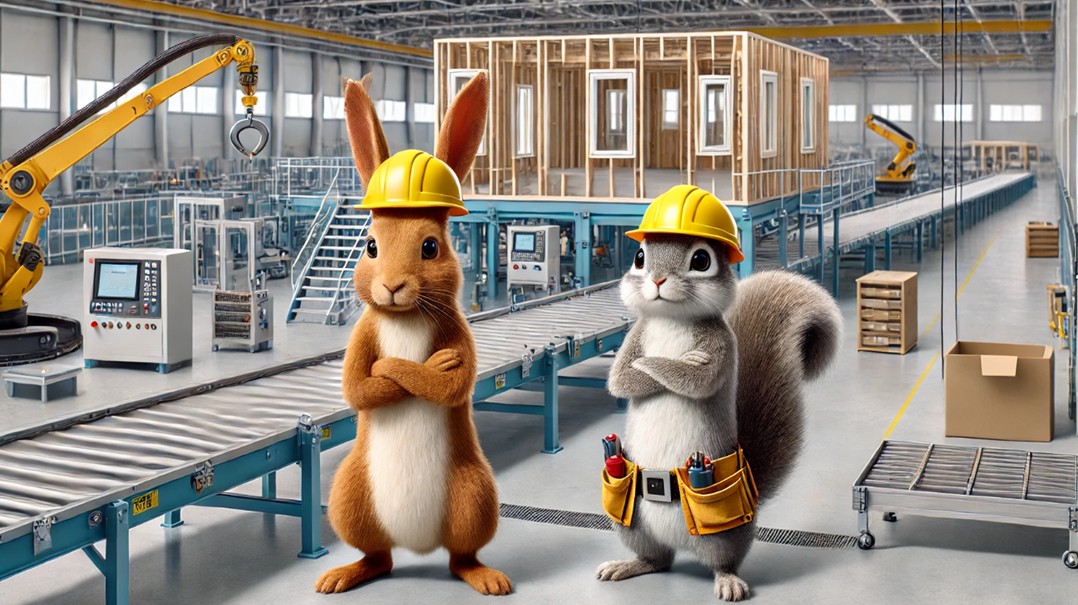
“Rabbits and squirrels will always be prey.”

Now, when you’re twelve years old, this sounds less like business advice and more like the opening line of a National Geographic documentary. But as the years passed — and as I spent decades watching modular factories rise, fall, reopen, rebrand, collapse again, and blame it on the weather — his line started to make perfect sense.

And eventually I realized he wasn’t talking about animals.

He was talking about factory owners, developers, general managers, and sales reps.

Which honestly explains a lot.

So, in honor of my father — and the entire offsite construction ecosystem that behaves exactly like a forest filled with caffeine-addicted woodland creatures — here is your field guide to survival.

Bring binoculars.

Ah yes, the rabbits — the most common species in the offsite forest. They hop into the industry full of optimism and high speed, certain they’ll revolutionize everything with their innovative floor plan, their “unique” marketing phrase, or their belief that builders love paying more for modules if you just explain it slowly.

Rabbits:

  • sign contracts before calculating costs
  • quote projects during full moons
  • panic whenever interest rates move
  • adopt new software every 90 days
  • make major decisions before breakfast

They don’t build reserves. They don’t build systems. They don’t build predictable quoting. They build excitement.

Rabbits are the folks who say, “We’re going to triple production this year” and then six months later whisper, “We’re taking a little break while we reorganize.”

Rabbits don’t die because the market kills them.
Rabbits die because they trip over their own enthusiasm.

I’ve met hundreds of them. I’ve eaten donuts in their conference rooms. They bounce around like they’re powered by solar panels and anxiety. They move fast but have no idea where they’re going.

Cute? Absolutely.
Predators? Not a chance.
Snack-sized? Definitely
.

Squirrels are more cautious than rabbits. They hide their acorns, protect their acorns, inventory their acorns, count their acorns every quarter, and then discuss at the annual meeting whether they might buy one more acorn if the economy stabilizes.

A squirrel factory:

  • hasn’t raised its base price since 2008
  • still uses the same employee handbook from 2005
  • thinks automation is “too risky”
  • believes growth is suspicious
  • views innovation the way a squirrel views a German Shepherd

Squirrels survive, but only because no one can find them long enough to kill them. They’ve mastered the art of being in business without standing out in business.

Squirrels attend conferences but sit in the back.
Squirrels listen to presentations about AI and robotics and mutter, “Not for us.”
Squirrels store cash but never deploy it.

They are competent. They are safe. They are consistent.

And Squirrels will absolutely be prey forever.

Now we’re finally getting somewhere.

Hawks are rare — which is why they thrive. They don’t try to build everything. They don’t chase every customer. They don’t reorganize their production line every Tuesday after watching a YouTube video about Toyota.

Hawks know who they are.

Maybe they’re the townhouse specialist.
Maybe they’re the ADU whisperer.
Maybe they’re the school-building savant.
Maybe they’ve mastered the art of building 14 different versions of the same 28×48 ranch without losing their mind.

Hawks fly higher than rabbits, meaning they can see trouble coming. They can also see opportunity forming before anyone else hears a rustle in the bushes.

Hawks do not panic.
Hawks do not hoard.
Hawks do not chase.

Hawks hunt.

Which means they are the natural predator of rabbits, squirrels, and — occasionally — undercapitalized bears.

If hawks are the specialists, wolves are the professional operators.

A wolf company doesn’t operate on hope, caffeine, or whatever inspirational quote was circulating on LinkedIn that week. Wolves operate on:

  • systems
  • training
  • leadership
  • process control
  • actual job costing
  • schedulers who enjoy color-coded spreadsheets

A wolf is a GM who knows exactly where every project stands, and when he doesn’t know, he actually asks — instead of hiding in his office until the crisis magically resolves itself.

I have walked into wolf factories. You can tell immediately.

No yelling.
No chaos.
No fires to put out.
No “Hank didn’t show up again, so we’re short.”

Wolves move in packs.
Sales, production, engineering, accounting, and leadership all move in the same direction.
You never see one wolf sprinting ahead while the rest claw at the ground trying to catch up.

The wolves are the ones who will quietly buy a struggling rabbit factory, keep the best employees, close the side door that’s been open since 2011, and turn the whole thing into a functional operation inside six months.

Wolves don’t brag.
They don’t make noise.
They don’t post in ALL CAPS on LinkedIn.

Wolves simply dominate.

Every few years, a massive new bear wanders into the modular forest wearing a hard hat, carrying a billion dollars, and announcing that they’re going to disrupt the entire industry by doing exactly what the industry has always done — but louder. Think Katerra, L&G, and Entekra.

Bears are impressive.
They attract headlines.
They attract investors.
They attract half the construction journalists on earth.

The problem is that bears also attract gravity.

And gravity has taken down more giant modular startups than any hawk or wolf ever has.

A bear can do enormous good.
A bear can also collapse in a spectacular pile of debt, ambition, and unused robotics.

The tricky part is that when a bear falls, it falls on everyone.

But that’s nature.
The woodland creatures scatter, and the survivors carry on with slightly more skepticism than before.

My father didn’t say his line as a threat. He said it as a reminder:

If you behave like prey, you will live like prey.
If you behave like a predator, you will survive.

And that’s the offsite industry in a nutshell.

Some factories run like twitchy rabbits.
Some operate like nervous, hoarding squirrels.
Some soar like hawks.
Some coordinate like wolves.
Some lumber in like bears who haven’t read the instruction manual.

And somehow, all of them show up at industry conferences, sit at round tables, and nod politely while speakers talk about “transformation,” “innovation,” and “scaling responsibly.”

I sometimes wish a hawk, a squirrel, and a wolf would all sit on a panel and just explain their business models in wildlife terms. It might be the most honest session we’d ever have.

After all these years, I can still hear my father’s voice whenever I talk to a factory, walk a production line, or get pulled into another discussion about why a startup needs $38 million before building its first prototype.

He’d say:

“Rabbits and squirrels will always be prey.”

He was right then.
He’s right now.
And if I had to guess, he’ll be right long after AI is managing factories, drones are delivering modules, and wolves are still shaking their heads at the rabbits who never learned.

The forest doesn’t lie. It just teaches.