
If we’ve built the tools, the plants, and the systems—now it’s time to build a movement.
Across every segment of offsite construction — modular, panelized, component, light-gauge steel, and even HUD-code manufactured housing — there’s a shared belief that we represent the future of building. The efficiency is proven. The quality is measurable. The labor and housing challenges we solve are real.
And yet, despite decades of innovation and investment, offsite methods still account for only a small fraction of new construction. In the U.S., modular homes represent roughly 4–6 percent of new residential construction. Commercial modular projects add another 5–8 percent of the total market. Even when we include panelized, componentized, and factory-assisted framing systems, the overall footprint remains modest — and has been for years.
Globally, markets like the U.K., Japan, and parts of Europe have done somewhat better, but even there, offsite rarely exceeds 10–12 percent of new construction activity. For an industry that has so clearly demonstrated its potential, the question is unavoidable: Why are we still stuck in single digits?
The Missed Momentum
Those of us who’ve worked in or around modular factories know how much progress has been made — smarter automation, better design integration, new digital tools, and greater interest from developers, architects, and builders. But progress isn’t the same as growth.
What we haven’t achieved is sustained market momentum. Too often, our conversations stay inside the factory walls. We talk to each other, but we’re not always connecting our collective experience, as active participants, into something that moves the whole industry forward.
When I think back on my own years in modular manufacturing, some of the most valuable professional moments came not from plant upgrades or sales wins, but from peer roundtables and shared best practices. The candor in those discussions — about what was working, what wasn’t, and where we could improve — was eye-opening. No one had all the answers, but together we found better ones. The most valuable collaborative efforts often came from informal group phone calls and/or small roundtable peer gatherings (and sometimes at the bar after a roundtable get together).
What’s Holding Us Back?
Part of the challenge is fragmentation. “Offsite” is an umbrella term, but inside it are many specialties, priorities, and languages — wood frame vs. steel, residential vs. commercial, panelized vs. volumetric. That diversity is healthy, but it also dilutes our collective message. When a builder or policymaker asks, “What is offsite construction, really?” they may get five different answers.
Another barrier is perception. Despite decades of success stories, the myths persist: offsite equals low-end housing, or modular can’t handle complex design. Those of us in the industry know better, but we don’t always speak with a unified voice to prove it.
And finally, there’s the matter of data — or lack thereof. Many sectors have detailed benchmarking, cost studies, and performance data. Offsite often doesn’t. We have countless anecdotes but too few comprehensive, comparable metrics. That makes it harder to attract investment, win over lenders, or reassure regulators.
What Would Growth Look Like?
Imagine what would happen if our share doubled — from 6 percent to 12 percent — across residential and commercial markets. That kind of shift would transform not just our factories, but the supply chain, workforce training, and perception of construction itself.
It would also take unprecedented cooperation: manufacturers sharing what works, developers bringing projects to the table early, design teams thinking modular from day one, lenders understanding factory-built value, and policymakers supporting modernized codes and financing.
The good news is that we already have the brainpower, experience, and technology. What’s missing is the collective energy to align those pieces.
An Invitation to the Conversation
At Offsite Innovators, we’ve always believed that ideas grow stronger when they’re shared. Maybe it’s time to revisit that spirit of open dialogue — the kind we used to find in roundtables, peer groups, or even the old factory tours where competitors swapped lessons over coffee.
So here’s the question I’d like to ask our readers:
What do you believe the offsite industry needs most to grow — awareness, collaboration, capital, or something else entirely?
There’s no wrong answer. Whether you’re a factory owner, developer, supplier, or designer, your insight matters. The industry can’t grow if its best ideas stay siloed.
If we want offsite to become more than a promising niche, we’ll need to approach growth the same way we approach innovation — together.
I encourage you to take 5 minutes and comment on this post. Answer the question—“What do you believe the offsite industry needs most to grow?” Collaboratively we can and will get this industry out of the rut we’ve been in far too long?
Our ultimate goal at Offsite Innovators is to grow our industry…we need your help.
If you’d like to explore this further, connect with me today.
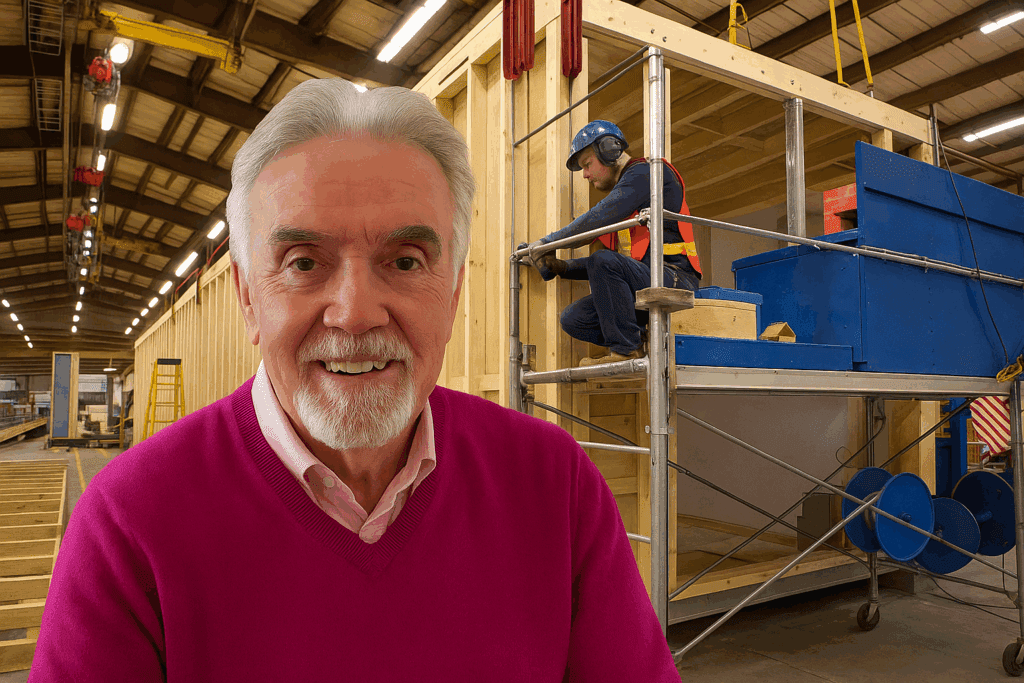
Bill Murray, Co-Founder of Offsite Innovators


Reader interactions
2 Replies to “Beyond the 6% Ceiling: How Offsite Can Finally Scale”
Great article Bill! The Industry has a problem sharing with their competitors. They believe they have figured it out and afraid that they might give their secrets away. I believe the industry will continue to grow .
Agreed it’s time for a change!