
A developer once came to me with what seemed like a straightforward assignment. He wanted to build a project using modular construction and needed help finding the right manufacturer.
I had spent most of my career in offsite manufacturing, so finding and evaluating manufacturers was familiar territory. I began the engagement assuming the developer understood more about offsite construction than he actually did. It turned out to be a classic case of putting the cart before the horse—and I had made the same mistake.
He knew he didn’t know everything about modular construction. What neither of us recognized at the outset was just how much he didn’t know—and how much of that needed to be understood before we ever started looking for a manufacturer.
As we got further into the project, questions began surfacing that should have been addressed much earlier. The local building requirements were particularly demanding, including materials and construction practices the manufacturers we approached didn’t commonly use. The regulatory process itself created another layer of complexity, and most manufacturers simply weren’t interested in taking it on.
After spending considerable time trying to make the pieces fit, I eventually gave the developer advice he didn’t particularly want to hear: I didn’t believe modular construction was the right solution for this project. He decided to continue pursuing it anyway. Many months later, ground still hasn’t been broken.
The experience reinforced something I’ve seen repeatedly during more than four decades in this industry. Developers sometimes begin their offsite journey by asking questions that should come much later. “Who can build this for me?” is one of them.


Offsite Is a Delivery Decision, Not a Purchasing Decision
One of the most persistent misconceptions about offsite construction is that moving work into a factory should automatically make a project less expensive. It may, but the mistake often happens when the factory’s price is viewed as the cost of the building.
It doesn’t. It represents the manufacturer’s scope of work, and what that scope includes can vary substantially from one manufacturer or system to another. Everything the factory doesn’t provide still has to happen somewhere—and somebody has to pay for it.
Transportation, setting, foundations, utility connections, site work, finish work and numerous other responsibilities may fall elsewhere. The dividing line between factory scope and field scope becomes enormously important, yet I’ve seen projects move surprisingly far down the road without everyone having the same understanding of where that line actually is.
A factory invoice that looks attractive can become considerably less attractive once you add the rest of the project.
The Building Has to Fit the Process
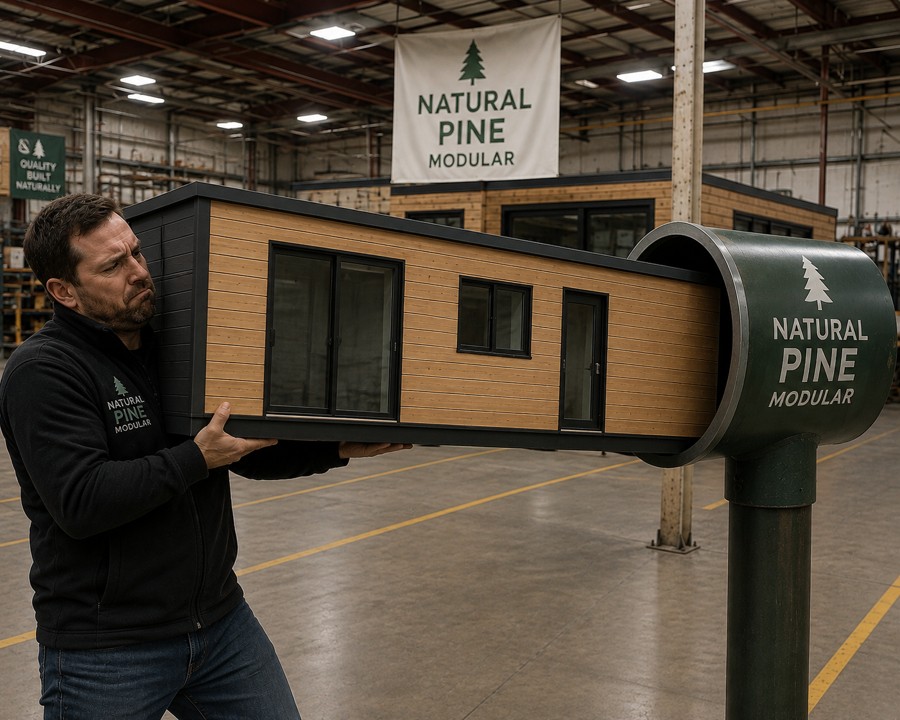
Another common mistake happens even earlier. A developer hires an architect, develops the project, and then decides to investigate whether the building can be manufactured offsite. They send the drawings to manufacturers, expecting someone to figure out how to build it.
Sometimes they can, but often changes are needed to accommodate the manufacturing process. By then, the architect and developer may already be invested in a design they don’t particularly want to change. Much of that friction is avoidable if you introduce manufacturing considerations earlier.
Manufacturing isn’t simply conventional construction performed underneath a roof. Every offsite system has parameters. Production equipment, material flow, engineering, transportation, module dimensions, panel sizes and plant capabilities all influence what can be efficiently manufactured.
Forcing a building designed without those considerations into a manufacturing process can quickly erode the efficiencies that attracted the developer to offsite construction in the first place.
That doesn’t mean the factory should design the building. It means manufacturing needs to become part of the conversation early enough to matter.
“Offsite” Doesn’t Describe a Building System
Another problem is how the industry talks about offsite construction. We frequently use offsite as though it describes a particular product. It doesn’t.
Volumetric modular, panelized construction, light-gauge steel systems, components and HUD-code construction can all involve manufacturing portions of a building away from the jobsite. Beyond that common characteristic, they can be very different animals.
Those differences affect design, engineering, transportation, erection, code compliance, financing, scheduling and the work that remains to be completed in the field. Understanding those differences matters before a developer commits to a particular approach.
The question therefore shouldn’t begin with, “Should we use offsite?” It should begin with the project itself.
What are we trying to build? Where are we building it? What does the jurisdiction require? What constraints does the design create? What portions of the work can realistically benefit from manufacturing, and what will still have to happen on site?
Only after understanding those issues does it make much sense to decide which offsite approach—if any—belongs in the conversation.
Sometimes the Right Answer Is No
THE FINAL QUESTION

Bill Murray, Advisor, [email protected]
People who make their living in an industry naturally tend to advocate for it. I’ve spent most of my working life in offsite construction, and I believe strongly in what manufacturing can bring to building. But that doesn’t mean every building should be manufactured.
A project can be too small, too geographically difficult, poorly suited to available manufacturing capacity or burdened by regulatory requirements that eliminate much of the expected advantage. A particular design may simply be a bad fit for the manufacturing systems available to the developer.
Recognizing that before committing substantial time and money isn’t a failure of offsite construction. It’s good development.
The best offsite projects I’ve encountered weren’t successful simply because somebody found a good factory. They worked because the design, manufacturing process, scope of work, site construction and project requirements were understood as parts of the same delivery system.
Before asking who should manufacture your building, ask the more important question: Does offsite really fit this project?