
Every month in the offsite construction world, I hear about another promising new idea. Someone has developed an app that will streamline scheduling, a machine that promises faster panel production, or a digital tool that claims to simplify design coordination between factories and builders.
The process almost always starts the same way. One person—or maybe two or three partners—becomes convinced they’ve discovered the next breakthrough. They sketch out the concept, begin building a prototype, test an early version of their software, or casually run the idea past a few friends.
Then comes the moment when they decide it’s ready for the market.
And that’s where things often begin to unravel.
Not because the idea is bad. In fact, many of these ideas are genuinely innovative. The problem is that between the original spark of inspiration and the launch of the business, too many critical questions were never asked—and even more were never answered.
That’s where bringing in an advisor early in the process can make the difference between becoming another forgotten startup and building something that actually survives in the real world.


Advisor vs. Consultant: A Difference Most Startups Miss
Many entrepreneurs assume they need a consultant. Consultants are typically hired to solve a specific problem. They arrive with a defined assignment—optimize a process, write a marketing plan, redesign a workflow—and when the job is done, they leave.
An advisor plays a very different role.
Advisors aren’t there to execute tasks. They’re there to challenge assumptions. They ask uncomfortable questions, connect dots the founders didn’t see, and help bridge the gap between what the startup team knows and what they don’t yet realize they need to know.
In many cases, the advisor’s most valuable contribution is a simple but brutally honest observation:
“Your idea, as you envision it today, either won’t sell right out of the box—or it won’t scale.”
That kind of feedback can save years of frustration and hundreds of thousands of dollars.
1. The Industry Reality Check
Offsite construction is a specialized industry with its own culture, production methods, regulatory hurdles, and financial pressures. Many startups underestimate how different it is from traditional tech or manufacturing ventures.
An advisor with real industry experience can quickly identify whether a new product or system actually fits the way factories operate. What looks brilliant on paper may be completely impractical on a production line that already runs on razor-thin margins and tight schedules.
2. The Market That Doesn’t Exist Yet
Many startups build solutions for a market that should exist—but doesn’t.
An advisor forces founders to answer tough questions:
Who will actually buy this?
Who controls the purchasing decision?
And how long will it take before the industry is ready to adopt it?
Those answers often reshape the entire go-to-market strategy.
3. The Scalability Illusion
A prototype that works in a lab or on a single job site doesn’t automatically translate into something that can be produced, sold, and supported at scale.
Advisors frequently spot scaling problems early. Maybe the system requires too much customization. Maybe it depends on skilled labor that’s already in short supply. Or maybe the economics only work at volumes the startup may never reach.
Better to discover those issues before the company invests heavily in the wrong direction.
4. The Missing Business Model
This is one of the most common gaps I see.
Many founders focus intensely on the product but spend very little time designing the business around it. Pricing, support, distribution, installation, training, warranties—these aren’t small details. They determine whether the idea becomes a viable company or just an interesting invention.
An experienced advisor helps fill in these blanks before they become expensive mistakes.
5. The Network Gap
In offsite construction, relationships matter. Factory owners, developers, engineers, lenders, and code officials all play a role in whether a new idea gains traction.
Advisors bring more than opinions—they bring networks. A well-placed introduction can open doors that might otherwise remain closed for years.
This is one reason why platforms like Offsite Innovators exist: to spotlight emerging technologies and connect innovators with the people who can help move their ideas forward.
6. The Hard Questions Nobody Wants to Ask
Startup teams are usually optimistic by nature. That optimism is necessary—but it can also blind founders to serious weaknesses in their plan.
An advisor’s job is to ask the questions others avoid:
What happens if adoption takes five years instead of two?
What if the first factory says no?
What if your competitors copy the idea faster than you expected?
These questions aren’t meant to discourage founders. They’re meant to strengthen the idea before the real world starts testing it.
The Value of Experience
The offsite construction industry is filled with innovators, and new ideas are essential if we want to build housing faster, smarter, and more affordably.
But ideas alone don’t build companies.
The startups that succeed are usually the ones that bring experienced voices into the room early—people who have already seen what works, what fails, and what pitfalls lie ahead.
Through our work and the conversations we feature on Offsite Innovators, we regularly meet entrepreneurs with exciting concepts. Some are already on the path to success. Others simply need guidance to close the gap between inspiration and execution.
In many cases, the difference between an idea becoming another also-ran or becoming a real industry breakthrough comes down to one simple decision:
Did they bring in the right advisor early enough?
The Modcoach Observation
Great ideas are common in offsite construction. What’s rare are founders who are willing to let someone challenge those ideas before they go to market. The smartest innovators I’ve met aren’t the ones who believe their idea is perfect—they’re the ones who invite experienced advisors to poke holes in it until it becomes strong enough to survive the real world.
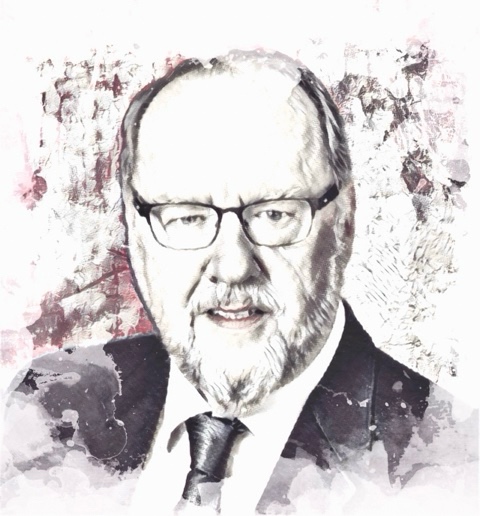
Gary Fleisher—known throughout the industry as The Modcoach—has been immersed in offsite and modular construction for over three decades. Beyond writing, he advises companies across the offsite ecosystem, offering practical marketing insight and strategic guidance grounded in real-world factory, builder, and market experience.