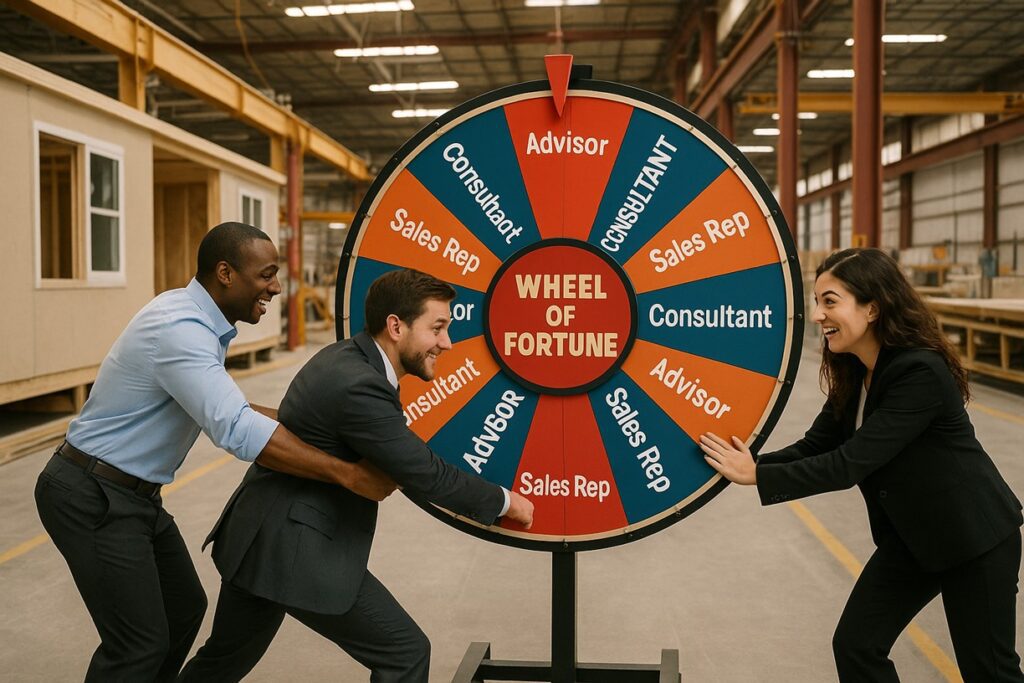
There’s a quiet epidemic spreading through the offsite construction industry — and it’s not supply chain issues, labor shortages, or the latest round of code changes. It’s role confusion. Everyone’s suddenly an “advisor,” a “consultant,” or a “partner.” But too often, they’re none of those things.
The result? Startups that stall, factories that overpay, and projects that go sideways because the people giving advice aren’t sure which hat they’re wearing — or worse, they’re wearing someone else’s entirely.
Let’s call it what it is: a warning sign.
The Sales Rep Who Thinks He’s a Consultant
This one’s the most common — and the most dangerous. A vendor rep shows up with “free consulting” and an eager smile. They promise to help “optimize your process,” “improve efficiency,” and “reduce cost.” Sounds great… until every path they draw somehow leads back to one place — their own product line.
If you’ve ever walked through a factory and noticed brand stickers plastered on everything from nailers to software dashboards, you’ve probably met this character. The problem isn’t that they’re selling — it’s that they’re pretending not to.
When a sales rep acts like a consultant, their advice isn’t about what you need. It’s about what they need to sell before the quarter ends. And that’s how a factory ends up with the wrong technology, wrong tools, and wrong expectations.



The Consultant Who Thinks He’s an Advisor
Consultants are problem-solvers. They’re supposed to fix what’s broken and then step back. But some can’t resist offering advice that stretches beyond their assignment. Suddenly, they’re not just recommending how to streamline a wall panel line — they’re redesigning your management structure and your investor pitch.
The danger here isn’t malice; it’s overreach. When a consultant crosses into strategic advising, they start making calls that belong to ownership. A consultant can tell you how to make your factory more efficient. Only an advisor — one with deep industry insight and no bias — should tell you whether to expand or partner.
Good consultants know when to stop. Great ones tell you when they’re not the right person for that next decision.
The Advisor Who Thinks He’s a Consultant
Advisors are supposed to see the big picture, not pick up the wrench. But occasionally, they slide into hands-on mode — dictating software choices, vendor deals, and even production scheduling. That’s when wisdom turns into interference.
A seasoned advisor can save a company years of mistakes, but when they start micromanaging, their credibility takes a hit. They stop being the calm voice of reason and become the backseat driver with too many opinions and too little accountability.
If an advisor says, “Trust me, I know which system to buy,” without data or testing — that’s your cue to tap the brakes.
When Everyone Pretends to Be Everyone
Now picture a startup offsite factory trying to scale up. They’ve got:
- A “consultant” selling software,
- A “sales rep” giving strategic guidance,
- And an “advisor” directing line operations.
No one’s clear who’s responsible for what. Decisions overlap, trust evaporates, and the owner ends up holding the bag for everyone’s best intentions.
This is how good ideas die and promising factories go broke. It’s not bad luck — it’s blurred boundaries.
An Industry Warning
If you’re running an offsite factory, a startup, or even just exploring automation, here’s the truth:
- A consultant gets paid for what they do.
- An advisor gets paid for what they know.
- A vendor sales rep gets paid for what they sell.
When those lines blur, the only one who loses is you.
Ask hard questions. Demand clarity. And never forget — real professionals know their lane and respect yours.
If you’d like to explore this further, connect with me today.
Bill Murray, Co-Founder of Offsite Innovators