In Albuquerque,New Mexico, a provocative new proposal is stirring up discussions about how cities can reclaim idle land and address housing shortages. Under the plan, modular housing units would be installed on vacant lots across the city—fast, affordable, and with less red tape. What if those modular units were made by a company that folds homes like origami, ships them in a box, and deploys them within hours?
That company is Boxabl—and it just might be the wild card that changes how we think about urban housing.
The Boxabl Promise: Homes That Ship Like Furniture
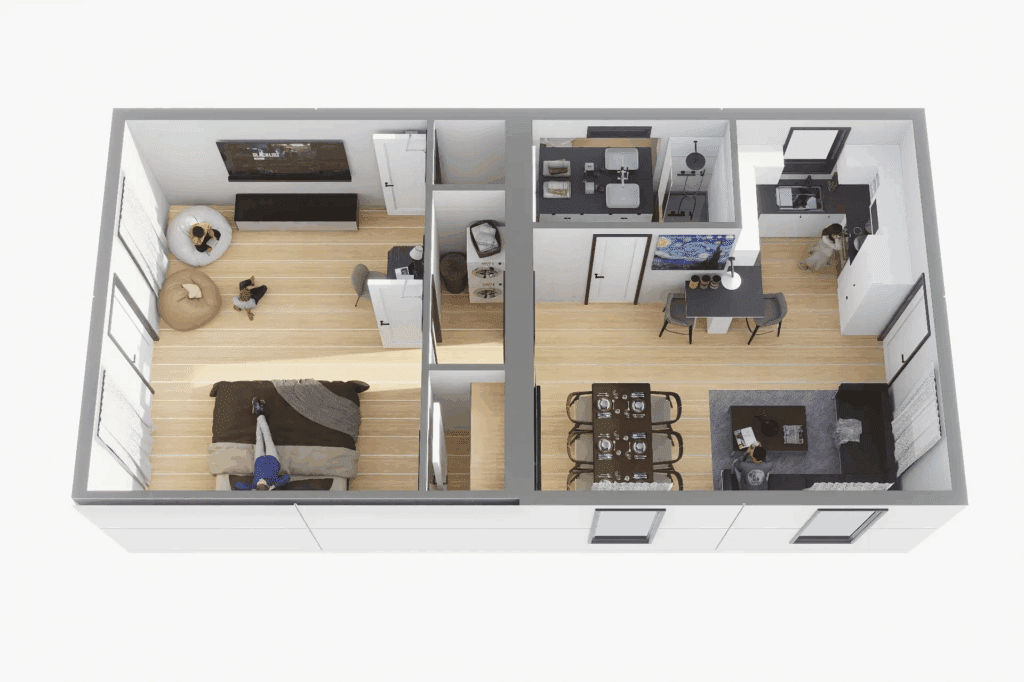
Boxabl began in 2017 with the audacious mission of making housing scalable, affordable, and simple. Its flagship product, the Casita, is a 361-square-foot studio home packed into a box that unfolds into a fully equipped living space. It comes with a kitchen, bathroom, HVAC, and appliances—ready for occupancy as soon as utility hookups are available.

The company’s defining innovation lies in its transport model. Each unit folds down to fit within the dimensions of a standard shipping load. That means fewer oversized deliveries, lower transport costs, and easier logistics compared to traditional modular construction. Once on site, the home can be unfolded and set up in less than an hour, eliminating many of the delays tied to on-site labor.
Beyond the single Casita, Boxabl envisions a system of stackable and connectable modules. These could be arranged to form multi-room homes, duplexes, townhouses, or even small apartment clusters. In essence, the company is not just selling a unit—it is selling a building system that can evolve with the needs of a homeowner or a city.
Regulatory progress has been uneven. While Boxabl has faced resistance in certain jurisdictions, it has achieved approvals in states including New Mexico and California. That’s significant because it means Boxabl’s product could more readily slide into municipal modular housing programs like the one Albuquerque is exploring.


On the financial front, Boxabl is positioning itself for rapid growth. The company announced in 2025 that it would go public via a $3.5 billion SPAC merger with FG Merger II Corp. This move, along with more than $230 million already raised, reflects the scale of its ambitions. Still, as with many disruptors, the road has not been smooth. Critics point to building code battles, zoning hurdles, and questions about whether the company can deliver on the hype at scale.
Albuquerque’s Modular Proposal: A Playground for Boxabl?
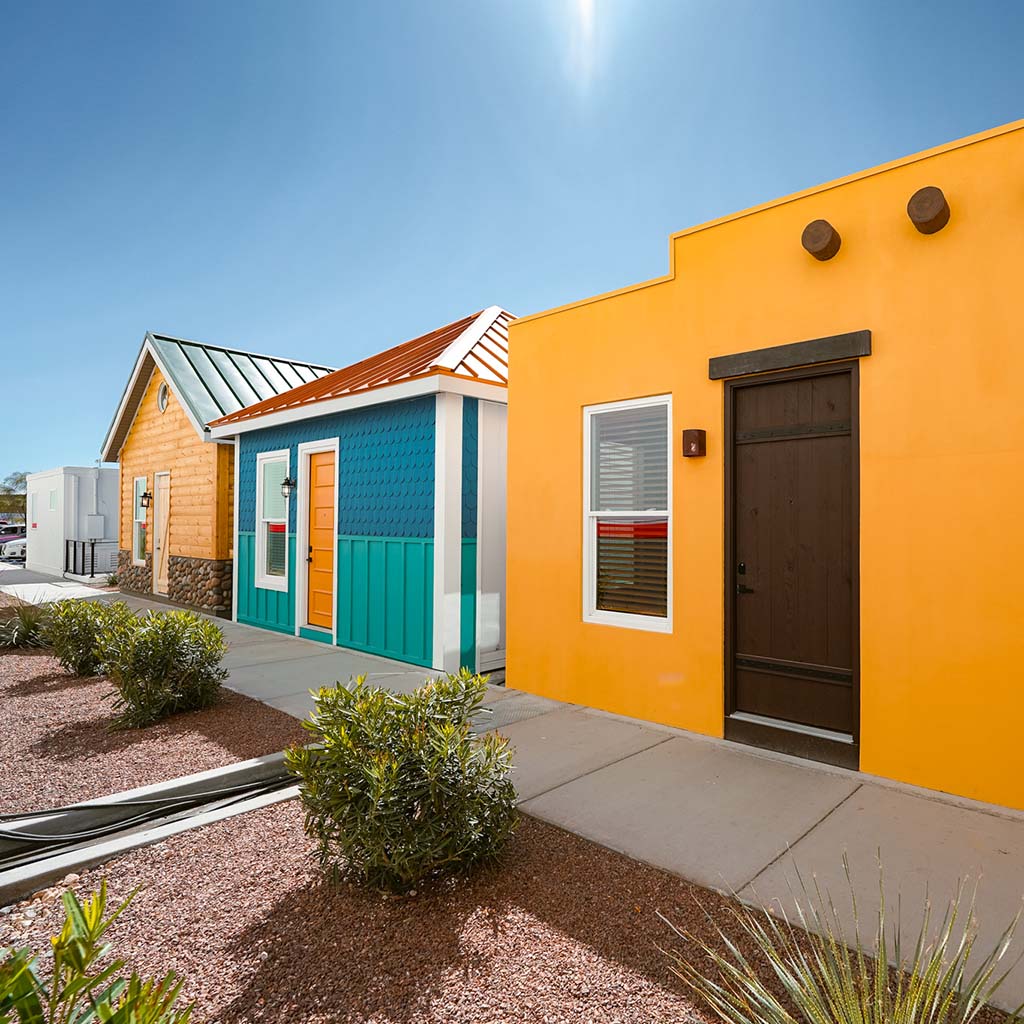
The proposal reported by KRQE suggests activating vacant lots throughout Albuquerque with modular housing. The plan emphasizes speed, affordability, and turning idle land into livable spaces.
The city’s Metropolitan Redevelopment Agency is working with the Piru Group on the proposal that would install a total of 42 modular housing units throughout vacant lots in the city. The group is calling these one-bedroom homes, ‘the future of housing.’
If Boxabl were to partner with the city, the potential impact could be dramatic. The company’s foldable units could reduce time-to-occupancy to a fraction of traditional construction. A home delivered in a box and unfolded on site could quickly provide relief in a city struggling with housing shortages.

Affordability is another advantage. By building in a controlled factory environment and cutting down transport and labor costs, Boxabl aims to make modular housing more cost-effective. This scalability could allow Albuquerque to roll out housing in increments, matching the pace of demand without requiring massive upfront investment.
Because Boxabl has already secured certification in New Mexico, regulatory approval may be less of a hurdle than for other modular providers. That could allow the city to move more quickly from concept to pilot program.
There are also design considerations. By stacking and connecting units, Boxabl offers flexibility beyond the single Casita. Albuquerque could experiment with different configurations—some resembling traditional neighborhoods, others creating denser urban clusters. The challenge will be integrating these modules into the existing urban fabric, ensuring that aesthetics, green space, and livability are not overlooked.
Finally, there’s the question of long-term durability. Factory-built homes often benefit from tighter quality control and predictable maintenance, but Boxabl’s unique folding design has not yet been proven at large scale over decades of use. Albuquerque would need to balance the immediate appeal of quick solutions with the responsibility of ensuring sustainable housing stock.
Beyond the Box: The Broader Implications
Boxabl’s model intersects with three major shifts in the construction world. First is the rise of factory-scale housing, which treats homes more like cars or electronics—products assembled in controlled conditions rather than crafted piece by piece on site. Second is transport-efficient modularity, where the folding design lowers logistical barriers that have long hampered modular expansion. Third is adaptable growth, where homes can expand by simply adding more modules, avoiding the waste and disruption of traditional additions or rebuilds.
These shifts are exciting, but they are not without friction. Building codes remain entrenched in traditional norms, often requiring extensive negotiation before a new modular system is approved. Even with factory-built efficiency, homes need roads, sewers, power lines, and inspections—site readiness can be a bigger bottleneck than the building itself. And while investors are flocking to Boxabl, there’s always the risk that hype gets ahead of delivery.
Yet, the urgency of the housing crisis means cities cannot afford to ignore bold approaches. With affordability slipping further out of reach for many families, with natural disasters displacing thousands, and with vacant land sitting unused in cities across the country, the need for solutions has never been greater. Boxabl is not a silver bullet, but it may be a crucial arrow in the quiver.
A Vision of Albuquerque’s Tomorrow, in Modules
Imagine walking through downtown Albuquerque a year from now. Three vacant lots that once sat empty now host compact neighborhoods of Boxabl Casitas. Some are stacked to create duplexes, others linked to form row-style homes. Shared courtyards give residents green space. Solar panels line rooftops. What once was a dead zone of urban land now pulses with life and community.
This vision is ambitious, but it is achievable if Albuquerque embraces modular innovation. By piloting a handful of Boxabl units, the city could become a national model for urban infill. If it succeeds, the experiment could inspire other municipalities to rethink how they use space, manage costs, and deliver housing at speed.
In an era where housing often feels like a locked box, Boxabl is daring to unfold the possibilities. And Albuquerque’s modular housing proposal might be the perfect place to test whether those possibilities can become reality.