
Offsite Construction’s “Fields of Dreams” – Part One – Vendors

Part One of Two: The Vendors Who Keep the Lights On
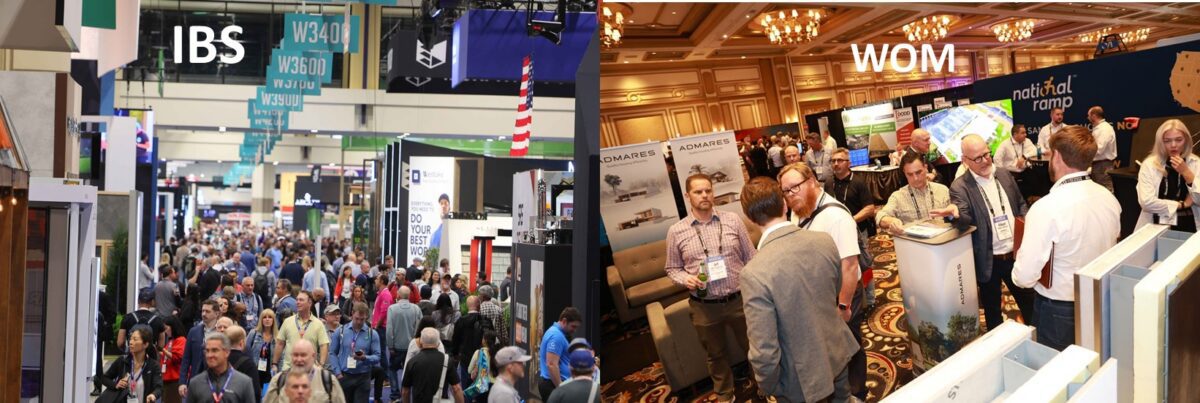
The biggest offsite construction conventions of 2026 are now behind us, and by most measures, both were huge successes. The International Builders’ Show in Orlando once again delivered what it always does—sheer scale, energy, and a level of sensory overload that makes you wonder if you accidentally wandered into a rock concert instead of a housing conference. Booths stretched as far as the eye could see, outdoor exhibits featured full-size homes, and the crowds at times felt more like a mosh pit than a professional gathering.
Then came World of Modular in Las Vegas, a completely different experience but no less important. At roughly one-tenth the size of IBS, yet open nearly as long, it offered something IBS simply can’t—time. Time to talk, time to listen, and time to actually connect. The crowd was smaller, but it was almost entirely made up of people who live and breathe modular construction. Intimate and enjoyable aren’t words often used to describe trade shows, but they fit here.
Behind the scenes, both events share one common reality. Attendees alone don’t pay the bills. They help, but the real financial backbone of these shows comes from the vendors. Booth space, sponsorships, logistics, shipping, staffing, travel—it all adds up fast. Hopefully, the larger crowds and increased vendor participation this year helped both events stay well into the black.
This is Part One of a two-part series looking at the lifeblood of these conventions: the vendors and the attendees. We’ll start with the vendors, because without them, there is no show.
The Price of Showing Up
Vendors don’t just “attend” these events—they invest in them. Heavily.
Prime booth space costs real money, and the larger the footprint, the steeper the price. Some companies go all in, building multi-booth displays with polished backdrops, slick marketing materials, and hands-on product demonstrations designed to stop traffic. Others take a more modest approach, but even the smallest booths represent a significant commitment.
And then there’s the human element. These booths are staffed by some of the best sales professionals in the offsite construction industry, along with company owners and upper management who step in between meetings, dinners, and networking events. It’s a mix of performance and endurance, and by the end of day one, most of them are already running on fumes.
The Art of the 30-Second Conversation
A typical booth might have two to four representatives, each tasked with engaging hundreds of people a day. At IBS, that number can easily push into the thousands. Every interaction becomes a rapid-fire exercise in judgment.
You greet, you pitch, you assess.
Is this person a serious prospect or just browsing? Is this a future customer, a competitor, or someone killing time between seminars? Within seconds, decisions are made, and conversations either deepen or politely end with a handshake.
Then comes the ritual that hasn’t changed in decades. Business cards are exchanged, promises are made to “stay in touch,” and both parties move on to the next interaction.
The Real Reason Vendors Keep Coming Back
Here’s where things take an interesting turn.
While new business is always welcome, it’s not the primary reason many established vendors return year after year. The real objective is visibility and reassurance. These companies are there to remind their existing customers—and the industry at large—that they are still standing, still innovating, and still worth doing business with.
In many ways, these shows are less about selling and more about reinforcing. It’s about staying relevant, maintaining relationships, and quietly signaling strength in an industry where perception often carries as much weight as performance.
Veteran sales reps know this instinctively. They’ve seen the same faces at multiple shows, learned who to spend time with, and developed a sixth sense for identifying opportunities. Not every handshake is equal, and not every conversation deserves follow-up.
The Stack of Business Cards
After the show ends, reality sets in.
Those neatly collected stacks of business cards—sometimes hundreds, sometimes thousands—get sorted. Sales managers and owners review them, and decisions are made about who gets a follow-up call and who doesn’t. It’s a process that hasn’t changed much in over 30 years, despite all the advances in technology.

And yes, most of those cards never lead anywhere.
That’s not a criticism—it’s just the math.
A Personal Lesson in Volume vs. Value
I learned this lesson the hard way years ago while representing Champion Homes at IBS in Las Vegas. We had a full modular home set up right on the exhibit floor, part of the Genesis line, and every attendee who walked through was encouraged to sit down at one of the tables assigned to reps like me.
On day one, I made my rounds with enthusiasm. By day three, I was running on autopilot.
I was told that around 50,000 people walked through that home. I don’t know if that number was accurate, but it felt like I spoke to most of them. By the end of the show, my briefcase was so full of business cards that I threw out my leftover sales materials just to make room.
Back at the office, the company hired an assistant to help me follow up with every single contact. It took nearly two weeks.
Out of all those conversations, I ended up with 12 interested builders. Eleven were in states we couldn’t serve. The one we could? He bought a couple of homes—and then went out of business later that winter.
That experience taught me something no seminar ever could. Volume doesn’t equal value, and activity doesn’t guarantee results.
The Fork in the Road
Every vendor leaves these shows facing the same fork in the road.
Do you chase every lead, hoping something sticks, or do you focus on the relationships you already have? Do you measure success by the number of conversations or by the quality of the connections?
There’s no perfect answer, but the most successful companies seem to understand one thing very clearly. These shows aren’t about what happens on the exhibit floor—they’re about what happens after.
And for many vendors, that’s where the real work begins.
Modcoach Observation

There’s an old line from the movie Field of Dreams: “If you build it, they will come.”
In the world of offsite construction conventions, we’ve proven that part. We build incredible shows, and the crowds do come.
What we haven’t figured out yet is what to do with all those people once they leave.