

When Developers and Builders Go Modular, the Learning Curve Is Steeper Than Expected


First in a series on improving the Bottom Line by 1% and more (For a list of all the articles, go to the end)
For many builders and developers, the idea of switching to modular construction sounds straightforward. After all, they already know how to build houses. How different could it be?
Quite a bit, as it turns out.
After working as a business development representative for several modular home factories before retiring, I discovered that one of the most time-consuming parts of my job wasn’t selling homes. It was explaining the modular process to builders who were new to it.
And if I skipped that “hand-holding” part of the process, chances were pretty good I’d never see that builder again.
The Hidden Complexity Behind a Modular Quote
When a builder receives a quote from a modular factory, it often looks deceptively simple. A price is listed for the modules, along with a few unfamiliar terms like FOB, transportation costs, and delivery schedules.
But that quote only tells part of the story.
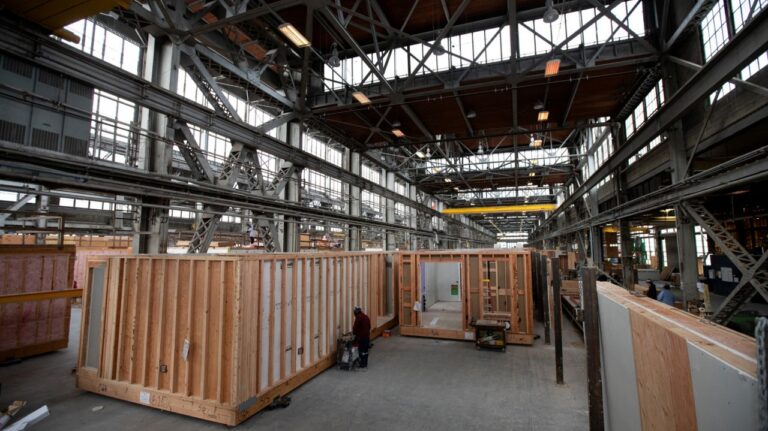
A modular home leaves the factory mostly complete, but several critical steps still happen at the job site. Transportation, crane service, setting the modules, utility hookups, and final mechanical work all need to be coordinated carefully. Unlike traditional stick-built construction, where the builder manages everything piece by piece on site, modular construction splits the work between the factory and the field.
If a new-to-modular builder doesn’t fully understand where that dividing line falls, mistakes get expensive very quickly.
I’ve seen builders dramatically overpay for crane services because they didn’t know how modular sets are scheduled. Others paid far too much for MEP (mechanical, electrical, and plumbing) work simply because they hired contractors unfamiliar with finishing modular homes.
A Different World Than Traditional Building Supplies
Earlier in my career, I managed one of the largest construction lumber and building supply yards in Pennsylvania. We sold everything a builder needed—paint, trusses, shingles, toilets, drywall, cement, cabinets, you name it.
The builders who walked through our doors didn’t need anyone to explain how to use those materials or how to price them. They knew their business.
But when I joined my first modular home company about thirteen years later, I realized something surprising.
There was almost no training available for builders transitioning into modular construction.
By the time I reached my third modular factory, the company had introduced a class for new builders entering the modular world. I thought that might finally reduce the amount of explaining I had to do.
It didn’t.
The class mainly covered topics that were important to the factory—things like payment schedules, warranty policies, what FOB meant, and what happened if completed modules sat in the yard longer than ten days.
What builders really needed to learn was something else entirely: how the whole modular process works from start to finish.
Developers Face an Even Steeper Curve
Builders at least have construction experience. Many developers, however, approach modular construction from a very different background.
Some have never swung a hammer or shingled a roof. Their expertise is financing, land development, and project planning.
When developers attempt their first modular housing or commercial project, the challenges multiply quickly.
Everything that confuses a builder—freight costs, crane coordination, set crews, finishing crews, and experienced MEP contractors—becomes even more complicated for a developer.
Without guidance, it’s easy for a project budget to spiral out of control before the first module ever leaves the factory.
Why the Industry Still Needs a Guidebook
Over the years, several builders have asked me to help them decode modular factory quotes, estimate freight and crane costs, locate experienced set crews, and find contractors familiar with modular finish work.
More than once I’ve thought someone should write a book explaining the entire modular process.
But the reality is that every state has different building codes, every local jurisdiction has its own rules, and no two modular factories structure their quotes the same way. Trying to create a universal guide might be nearly impossible.
Still, the need for that knowledge remains.
Where Offsite Innovators Comes In
That’s one of the reasons my business partner, Bill Murray, and I created Offsite Innovators.
Instead of leaving builders and developers to figure things out through costly trial and error, we help them understand the modular process before they make those expensive mistakes.
A conversation with Bill can clarify things like:
• How to read and understand a modular factory quote
• What FOB actually means in real-world terms
• How to estimate transportation and crane costs accurately
• How to locate experienced set and finish crews
• How to find MEP contractors who understand modular construction
• How to avoid the common mistakes that derail first modular projects
For builders and developers who want to step into modular construction, that kind of clarity can save months of frustration—and sometimes hundreds of thousands of dollars.
The Next Logical Step
Modular and offsite construction are quickly becoming essential tools for addressing housing shortages and improving construction efficiency. More builders and developers will eventually make the transition.
But understanding the process is critical.
The factories know how to build the modules. The builders know how to manage projects. Developers know how to assemble land and financing.
Bringing those worlds together successfully requires something else entirely—a clear understanding of how modular construction actually works.
And sometimes, all it takes to get there is a conversation with someone who has already walked that road.
With over 80 years of combined experience my partner Bill Murray and I can help. We have advised countless manufacturers on improving their bottom lines through proper identification of problem areas and implementing essential corrective systems and processes. If you are serious about continuous improvement reach out to us via email. We’ll schedule a brief phone call to explore the possibilities. Contact Gary at: [email protected], contact Bill at:[email protected] We’ll respond promptly and schedule a brief call.
Other articles in this series:
The Offsite Factory Warranty Loop That Never Closes
The Quiet Profit Killer: “When Factory Quality Slips Before It Ships”