Highlighting the thinkers and their ideas driving the evolution of Offsite Construction. 
Be inspired, be informed, be innovative!

Cavco Takes Away the Chassis—and Gives Factory-Built Housing Something to Think About

The Grande Arbor pairs a new construction approach with a floor plan built around the realities of families sharing a home.

I have spent enough years watching factory-built housing evolve to know that the most interesting changes aren’t always the ones you notice walking through the front door. Sometimes, the development worth paying attention to is underneath the house. In Cavco’s latest announcement, it is something that will no longer be there.

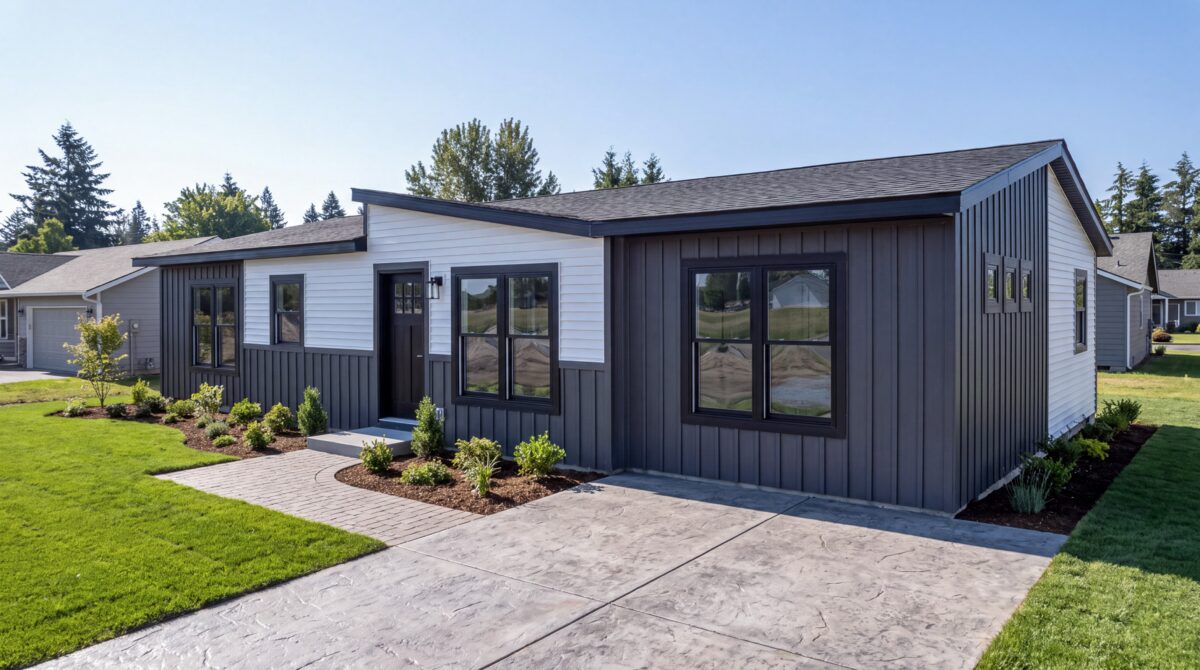
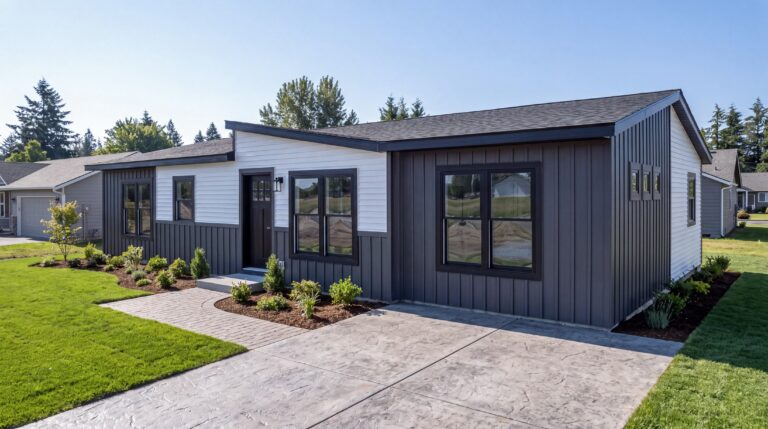
Cavco says it will debut the first HUD-code manufactured home constructed without a permanent steel chassis at the 2026 Innovative Housing Showcase, September 22–24 on the National Mall in Washington, D.C. Called the Grande Arbor, the home combines that construction change with two primary suites designed for multigenerational living. Cavco also describes it as its first HUD-approved frameless manufactured home in its company announcement.

That combination caught my attention. A different way to build the home is interesting to our industry, but a different way for a family to live comfortably together may be what gets a buyer to sit down and discuss purchasing one. The Grande Arbor brings both conversations into one home.For people outside our industry, a permanent steel chassis probably doesn’t come up very often around the dinner table. Buyers are more likely to ask what the home costs, how it looks on their property, and whether everyone will have enough room. Yet decisions made underneath the floor can influence the answers to several of those questions.

According to Cavco’s announcement, eliminating the permanent chassis allows a lower-profile installation and creates additional design flexibility. Think about the relationship between the front door, the yard, the sidewalk, and the neighboring houses. Those details help determine how naturally a new home fits into an established street, even when viewers know nothing about its construction.

I would expect builders considering infill lots and neighborhood developments to study that closely. A house can look attractive in a photograph and still require considerable work to fit a particular property. A lower installation profile offers another option to explore, although foundation design, grading, drainage, and site details still have to work together.

There is also a practical distinction worth keeping clear. “Frameless” refers to a home without the permanent steel chassis; the home still needs an engineered structural system. It also needs a workable way to get from the factory to its foundation. Those are precisely the details production managers, transporters, and installation crews will want to understand.

That is where my questions begin. How will the home be supported during transportation? What equipment and procedures will the installation require? How will the factory coordinate with the foundation contractor, and what will the complete installed package cost? The announcement introduces the product, but those answers will help determine how broadly the approach can be used.

I would be careful about assuming that removing a major component automatically produces an equivalent reduction in the buyer’s final bill. Costs have to be evaluated across the whole job, including production, transportation, foundation work, installation, and finishing. Anyone who has watched a seemingly inexpensive house become an expensive completed project understands why that distinction matters.

The commercial opportunity is nevertheless interesting. Cavco is describing a product that could give builders more flexibility in how they present and place manufactured housing. Whether that opportunity becomes a repeatable business will depend on the finished result, the delivery process, and the economics of each project.

Inside the Grande Arbor, the company is addressing another practical challenge: how to put more than one generation under the same roof without making everyone feel as though they are living in someone else’s space. Its double grande suite layout places primary suites at opposite ends of the house, with a shared kitchen, dining area, and living space between them.

I think that arrangement deserves as much attention as the missing chassis. There is a meaningful difference between offering an adult family member a spare bedroom and designing the house from the beginning to accommodate two adult households. Privacy becomes part of the plan, not something everyone tries to negotiate after moving day.

Consider parents sharing a home with an adult child, or a family welcoming an older parent. They may enjoy meals together and appreciate being close enough to help one another, while still wanting different bedtimes, different television programs, and a door they can close. A successful floor plan has to make room for those ordinary details.

Sharing a home also involves more than dividing expenses. It can mean coordinating work schedules, caregiving, visitors, storage, and daily routines. Two well-separated suites cannot resolve every family disagreement, but the arrangement can give people a better starting point than a floor plan that treats one household as permanent guests.

For builders and sales teams, that changes the conversation. Instead of simply counting bedrooms, they can ask how the buyers expect to use the house over time. Who needs privacy now? Who might join the household later? Which shared spaces will see the most activity? Those questions can reveal whether a home actually fits the family purchasing it.

Cavco will exhibit the Grande Arbor with UMH Properties, and its Rocky Mount, Virginia, team built the display home. That same operation also introduced the Anthem in 2023, which the announcement described as the first nationally available HUD-approved manufactured duplex. Together, the projects show the company exploring different ways to accommodate households through factory production.

For the broader offsite industry, I see a useful business question here: how quickly can a new product move from an impressive display to a dependable offering? A showcase home attracts attention, but the repeat orders depend on clear specifications, reliable delivery, capable installation partners, and a price buyers can understand.

The modular side of the industry will have reasons to watch, too. Builders compare available products against a project’s needs, and additional choices can change those comparisons. The practical discussion will center on design flexibility, site compatibility, schedules, and total cost—the same questions that eventually reach every factory’s sales desk.

What interests me most about the Grande Arbor is that Cavco has paired a construction development with a recognizable household need. The engineering gives the industry something to examine, while the floor plan gives families something they can picture themselves using. Both have to work for the product to find a lasting market.

I will be watching what happens after the National Mall display comes down. Show me the completed neighborhood installation, the builder’s experience, the total project cost, and the family settling into those two suites. That is where we will learn how much this new approach changes the everyday business of delivering a home.

The Daily Plan That Could Keep an Offsite Factory Out of Crisis

Waiting until the last minute to address an offsite construction company’s financial problems is nothing new.

Owners and boards often sit back and watch conditions deteriorate because they are unsure what to do. Orders decline, cash becomes tight, suppliers begin calling, and the backlog that once looked reassuring turns out to contain projects that are delayed, underpriced or unlikely to reach production.

Eventually, management is told that its remaining choices are bankruptcy, liquidation or selling the company for enough money to pay the bills.

By then, the company is no longer choosing its future. Its lenders, creditors, customers and circumstances are choosing it.

What would be new is for an offsite company to study the problems that typically destroy otherwise profitable businesses and create an action plan for each one before any of them occur.

This is more than traditional strategic planning. It is a practical resilience system that management can review in approximately 15 minutes each day. It identifies developing threats, assigns responsibility and specifies what actions will be taken when conditions cross predetermined thresholds.

No plan can make a company completely bulletproof. However, an offsite factory that sees trouble developing early and has already decided how to respond can become much harder to surprise, weaken or destroy.

Most business planning begins with an optimistic question: How can we grow?

A resilience plan begins with a less comfortable question: What could bring us down?

The owner, board, and senior managers should identify the events most likely to threaten the company. They should not limit the discussion to dramatic disasters. Offsite companies are often weakened by ordinary problems that accumulate quietly over several months.

Those problems might include:

  • A 20 or 30 percent decline in new orders
  • The loss of a major builder, dealer or developer
  • A customer postponing a large project
  • Interest rates remaining high longer than expected
  • A lender reducing or declining to renew a credit line
  • A critical supplier failing or demanding different payment terms
  • Material costs increasing after project prices have been established
  • Warranty claims or rework consuming production capacity
  • A shortage of working capital during a period of apparent profitability
  • The sudden departure of a general manager, production manager or lead engineer
  • A transportation, crane or set-crew failure
  • A code, inspection or certification problem
  • A cyberattack or extended software outage
  • An accident that interrupts production
  • Excessive dependence on one market, customer or product
  • A backlog filled with projects that are not ready to be produced

Management should then ask three questions about every threat:

  1. What would be the earliest indication that this is beginning?
  2. At what point would we be required to take action?
  3. What actions could we prepare now rather than invent during the crisis?

This exercise should include people from sales, estimating, engineering, purchasing, production, finance and service. A problem that appears manageable from the executive office may look very different to the department that would have to solve it.

Identifying risks is useful, but it does not become a plan until each risk has a trigger, an owner and a predetermined response.

Suppose the factory normally maintains a confirmed backlog equal to 16 weeks of production. Management might establish three levels:

  • Green: More than 14 weeks of production-ready backlog
  • Yellow: Between 10 and 14 weeks
  • Red: Fewer than 10 weeks

A yellow condition might trigger a review of every pending proposal, additional calls to builders and developers, tighter control of overtime, and a delay in nonessential purchases.

A red condition might trigger reduced production hours, renegotiation of delivery schedules, more aggressive sales activity, a temporary hiring freeze, and immediate discussions with the lender.

The important point is that these decisions are made before fear, pride and confusion enter the discussion.

The same approach applies to cash. If unrestricted cash and available credit fall below a specified number of weeks of operating expenses, the company begins its yellow-level actions. If liquidity falls further, the red-level plan begins automatically.

This prevents management from spending several valuable weeks debating whether the situation is serious enough to require action.

Offsite companies often place too much confidence in the total dollar value of their backlog. A $40 million backlog sounds impressive, but it may not produce $40 million of work.

Some projects may be waiting for permits, financing, site preparation, engineering decisions or customer deposits. Others may have been priced before material or labor costs increased. A project expected to begin next month may remain on the backlog report for a year.

The daily resilience plan should divide backlog into at least three categories:

  • Production-ready: Approved, financed, engineered, deposited and scheduled
  • Conditional: Likely to proceed but still missing one or more requirements
  • Speculative: Reserved capacity or anticipated work without sufficient commitment

Only the production-ready backlog should be used to determine how many weeks of work the factory can safely expect.

Management should also track backlog profitability. A factory can be busy and still lose money if the work was poorly estimated or includes obligations that were never included in the price.

A growing backlog is not necessarily a sign of strength. A growing backlog of underpriced, delayed or unbuildable projects can become a liability.

The owner and management team do not need to spend hours every day reviewing dozens of reports. They need one page containing the few measurements that reveal whether the company is moving toward or away from trouble.

That dashboard might include:

  • Unrestricted cash and available credit
  • Cash runway expressed in weeks
  • Accounts receivable over 30, 60 and 90 days
  • Production-ready backlog in weeks
  • New orders received during the past 30 and 90 days
  • Proposal-to-order conversion rate
  • Gross margin on work sold and work currently in production
  • Deposits collected compared with deposits required
  • Schedule adherence
  • Labor hours per module, section, panel or square foot
  • Rework and warranty costs
  • Material shortages affecting scheduled production
  • Customer concentration
  • Supplier concentration
  • Banking covenant status
  • Safety or quality events capable of stopping production

Not every metric needs the same intensity of review every day. Most should be updated automatically or by the responsible department. The daily management review should concentrate on exceptions—measurements that have moved from green to yellow or from yellow to red.

If everything is green, the meeting may take five minutes. If something turns yellow, the responsible manager explains the reason and confirms that the planned response has begun.

The purpose is not to create another reporting burden. It is to make developing trouble impossible to ignore.

The daily meeting should be short, disciplined and held at the same time.

Participants might include the owner or general manager and the leaders of finance, sales, production, purchasing, and engineering. Smaller companies may have one person covering several of those responsibilities.

The meeting should answer five questions:

  1. Did any metric change status?
  2. What caused the change?
  3. Has the predetermined action begun?
  4. Who is responsible for the next step?
  5. When will the result be reported?

This is not the place for a lengthy discussion about how to solve every problem. If a yellow or red condition requires more attention, the appropriate people meet separately.

The resilience review protects management time by separating awareness from problem-solving. Everyone sees the warning, responsibility is assigned, and the people directly involved handle the details.

The daily review provides early warning, but the larger system needs two additional levels.

Once a week, management should spend approximately 45 minutes examining trends. A metric may remain green while gradually moving in the wrong direction. New orders, margins or productivity might decline slightly for six consecutive weeks without crossing a formal warning threshold.

The weekly review asks whether the business direction is changing.

Once a month, the owner and senior team should examine one or two larger scenarios. What would happen if orders declined 25 percent? What if the company’s largest customer failed? What if lumber, steel or transportation costs increased sharply? What if the lender reduced the credit line?

Management should calculate the financial and operational effect and confirm whether the existing response plan remains realistic.

The board should review the complete resilience plan quarterly. At least once a year, it should conduct a tabletop exercise in which one serious scenario is treated as though it has actually happened.

Probably not at the beginning.

Resilience should not be assigned to a new employee whom everyone else can conveniently ignore. Finance already produces cash information. Sales knows what is happening with orders and proposals. Operations tracks labor, schedules and production. Purchasing understands supplier risk.

The first requirement is not another salary. It is a system that connects the information the company already has.

Designate one senior person as the resilience coordinator. In a smaller company, that might be the owner, controller or general manager. In a larger organization, it might be the chief financial officer, chief operating officer or a director of business planning.

The coordinator does not own every risk. The coordinator ensures the dashboard is current, warning thresholds are respected, action plans are maintained, and assigned people report their progress.

A dedicated risk or resilience manager may eventually be justified if the company operates multiple plants, has a complex debt structure or is involved in unusually large projects. Most independent offsite factories should first prove that the system works with their existing leadership team.

A resilience plan should not be viewed only as a defensive tool. Studying potential problems often reveals ways to make the company more profitable.

Examining supplier risk may uncover alternative materials, better purchasing arrangements or opportunities to share inventory with another factory. Studying customer concentration may encourage the company to enter a new market before its largest customer leaves.

Reviewing labor productivity may identify stations where small equipment investments could reduce overtime. Examining cash requirements may lead to better deposit schedules, progress billing or contract language.

A scenario involving reduced orders might reveal that the factory could profitably produce components, panels, bathroom pods or assemblies for other builders. A discussion about financing risk might introduce the company to investors, lenders or development partners it had never previously considered.

The purpose is not to frighten the organization by imagining everything that could go wrong. It is to remove the element of surprise and discover options while the company still has the time, cash and credibility to use them.

The Board Must Be Willing to Act

The best dashboard in the world will not help if the owner or board refuses to respond to it.

Some owners will explain away a yellow warning because they believe a large order is about to arrive. Others will continue spending because they do not want employees or competitors to suspect that the company is concerned. A board may postpone difficult action because no individual director wants to be blamed for making an unpopular decision.

That is why the board should approve warning thresholds and responses in advance.

When the company is healthy, management can calmly decide what will happen if cash, backlog, margins or productivity reach dangerous levels. When the trigger occurs, the discussion is no longer about whether somebody is overreacting. The company is carrying out a plan everyone previously accepted.

The system only works when yellow means action and red means immediate action.

Gary’s Observation

Offsite construction companies rarely collapse because one bad thing happens on a Tuesday morning. They usually decline gradually while everyone waits for sales to improve, financing to arrive, a delayed project to begin or the next big customer to save them.

By the time the owner admits that something must be done, many of the best options have disappeared.

The new idea is not another complicated strategic plan that sits in a binder until the annual board meeting. It is a living resilience plan: one page reviewed daily, a short list of meaningful metrics, warning levels you cannot ignore, and actions decided before the crisis begins.

It will not make an offsite company invincible. It will do something almost as valuable.

It will give the company time to act while it still has choices.