
Highlighting the thinkers and their ideas driving the evolution of Offsite Construction. 
Be inspired, be informed, be innovative!

How Innovative RFID Technology is Transforming Construction from the Factory Floor to the Finished Structure


In offsite construction construction, innovation is often measured by the ability to solve complex problems, enhance productivity, and reduce risk. Among the emerging technologies reshaping this industry, Radio Frequency Identification (RFID) is proving to be a game-changer, especially as it evolves beyond simple tracking to encompass real-time monitoring and proactive maintenance.

From skyscrapers in urban jungles to modular homes built in controlled factories, RFID is weaving a new layer of intelligence into the very fabric of construction. What started as a tool for managing inventory has grown into a sophisticated system that can track, monitor, and report on the health of critical components throughout the lifecycle of a building or infrastructure project. As RFID tags become smarter and more integrated with sensor networks, they are driving the construction industry toward a future where efficiency, precision, and proactive maintenance are the norm.

The Traditional Role of RFID in Construction: From Inventory to Precision Tracking

RFID technology’s early adoption in construction was straightforward: tagging materials and assets to keep track of them. In large projects where materials like steel beams, concrete panels, and prefabricated components are constantly on the move, RFID tags provided an effective way to automate inventory management. By embedding RFID chips in key materials, project managers could instantly know where everything was, whether it was in storage, in transit, or installed on-site. This visibility drastically reduced material loss, cut down delays, and allowed for more precise project planning.

For many companies, this level of tracking was a major leap forward. It enabled better coordination, reduced manual errors, and brought new efficiency to job sites where complex logistics often led to costly delays. However, the real breakthrough has come as RFID technology has evolved to do more than simply track materials—it now provides critical insights into their condition, enabling proactive decision-making that can prevent failures and optimize performance.

.

RFID Beyond Tracking: Integrating Sensors for Proactive Monitoring

As the construction industry grapples with ever-tighter timelines, stricter safety standards, and the need for more sustainable practices, RFID has found new applications in monitoring the health and performance of building components. Companies like Trimble, a leader in construction technology, have been at the forefront of this transformation, pioneering RFID solutions that go beyond logistics to encompass real-time data gathering and analytics.

For instance, consider a scenario in which structural steel beams are embedded with RFID tags equipped with strain sensors. These tags continuously measure stress and load as the building takes shape. Any deviation from expected patterns can trigger an alert, allowing engineers to address potential problems before they escalate into structural failures. This level of monitoring is especially valuable in high-rise buildings and large infrastructure projects, where even minor issues can lead to significant safety concerns if left unchecked.

The potential doesn’t stop at structural monitoring. In many commercial and residential buildings, RFID tags integrated with moisture sensors are being deployed to detect leaks early. Moisture infiltration—whether through faulty plumbing, roofing issues, or poor insulation—can lead to long-term damage that is both costly and difficult to repair. By embedding RFID tags in critical joints, pipes, and seals, companies can monitor moisture levels in real-time and automatically notify maintenance teams if a problem is detected.

InvenSense, a leader in sensor technology, is developing advanced RFID-enabled moisture detection systems that can be discreetly installed in walls, ceilings, and floors. These sensors detect even the slightest presence of moisture, sending alerts before visible damage occurs. For building owners and facility managers, this kind of early warning system translates into significant savings on repairs and extended building lifespans.

While the applications of RFID on construction sites are impressive, the real potential lies in how this technology can be applied at the factory level within the offsite construction industry. Offsite construction, which involves manufacturing components and modules in controlled factory environments before assembling them on-site, is perfectly suited to leverage RFID technology’s full range of capabilities. The controlled nature of factory production allows for greater precision and the integration of sophisticated monitoring systems.

In offsite factories, RFID can be embedded at the very start of the production process, tracking materials from when they enter the facility until they are delivered to the construction site. This visibility extends through every stage of production, ensuring that quality control is maintained and that any deviations from specifications are caught early.

Material Tracking and Inventory Management: In modular construction, where materials are pre-cut, assembled, and prepared for delivery in a factory setting, RFID tags can automate inventory management. As raw materials like lumber, insulation, and fasteners arrive at the factory, they are tagged with RFID chips. From that moment, every movement is tracked. This not only helps prevent shortages but also allows manufacturers to optimize their inventory levels, reducing waste and improving cost efficiency.

Quality Assurance and Production Monitoring: Quality is paramount in offsite construction, where even minor deviations can have significant impacts when components are assembled on-site. RFID tags embedded in critical components can carry information on batch numbers, production dates, and inspection results. As components move through the assembly line, RFID scanners verify that each piece meets the required specifications. If an issue is detected, it can be isolated and corrected before the module is shipped to the construction site. This real-time quality control ensures consistent output and reduces rework, ultimately leading to higher-quality buildings.

Optimized Assembly and Logistics: One of the key advantages of offsite construction is the ability to streamline logistics. RFID tags ensure that every component is correctly labeled and traceable, simplifying storage and delivery. When combined with project management software, RFID data can be used to coordinate just-in-time deliveries, reducing the need for on-site storage and minimizing delays during assembly. For large modular projects, this level of logistical coordination is critical to maintaining project timelines and budgets.

Smart Integration with BIM (Building Information Modeling): In cutting-edge offsite factories, RFID is being integrated with BIM systems to create digital twins of building components. As RFID tags with sensor data are embedded during the manufacturing process, they carry crucial information through the component’s lifecycle. When installed on-site, these RFID-enabled components can be scanned to update the BIM model, ensuring real-time accuracy of the building’s digital blueprint. This seamless integration enhances collaboration among teams and allows for better project management, from factory floor to final assembly.

Proactive Equipment Maintenance in Factories: RFID technology is not limited to tracking materials; it can also monitor the health of factory equipment. By embedding RFID tags with sensors in production machinery, manufacturers can detect signs of wear and tear before they lead to breakdowns. This proactive maintenance approach minimizes downtime and keeps factory operations running smoothly, ensuring consistent production output.

Structural Health Monitoring and Smart Infrastructure

RFID’s benefits extend well beyond traditional building projects. In large-scale infrastructure projects like bridges, tunnels, and highways, RFID technology plays a crucial role in Structural Health Monitoring (SHM). SHM involves embedding sensors in critical components to continuously assess their condition over time. For example, RFID tags with strain gauges embedded in bridge cables can track stress and vibration, providing engineers with data that highlights potential weaknesses long before they pose a risk.

Leading companies like Siemens have developed integrated systems that combine RFID with AI-driven analytics to monitor not only the structural health of bridges and tunnels but also environmental conditions like wind speed, temperature, and seismic activity. These smart infrastructure solutions are setting new standards in safety and reliability, enabling proactive maintenance strategies that extend the lifespan of critical assets.

Challenges and Opportunities in Scaling RFID Technology

Despite the transformative potential of RFID in construction, several challenges remain. The cost of integrating sensor-enabled RFID tags into every key component can be significant, particularly for smaller projects. Additionally, the rugged environments of both construction sites and offsite factories can sometimes interfere with wireless communication, though advances in low-power wide-area networks (LPWAN) and 5G are gradually overcoming these limitations.

Another key challenge is data management. With thousands of RFID tags generating data in real-time, construction managers need robust platforms to collect, analyze, and act on this information. Companies like Autodesk and Bentley Systems are leading the development of software solutions that integrate RFID data into BIM systems, making it easier for managers to visualize and make decisions based on accurate, up-to-date information.

Modcoach Note

The integration of RFID technology into both on-site and offsite construction is poised to revolutionize the industry. As these systems become more sophisticated, the construction process will shift from reactive problem-solving to proactive management. The ability to monitor the real-time health of materials and components, detect leaks, and anticipate failures will not only improve safety and efficiency but also reduce costs and environmental impact.

In a future where every critical component is tagged, tracked, and monitored, buildings and infrastructure projects will be smarter, more reliable, and more sustainable. RFID, once just a tool for tracking inventory, is now a cornerstone of innovation in construction, helping to build a world where every structure is as intelligent as the technology that created it.

As companies like Trimble, InvenSense, and Siemens continue to push the boundaries of RFID technology, we’re entering an era where data-driven decisions will define the success of every construction project, from the factory floor to the finished structure.

CLICK HERE if you would like to be interviewed about something innovative you have designed or are currently using.
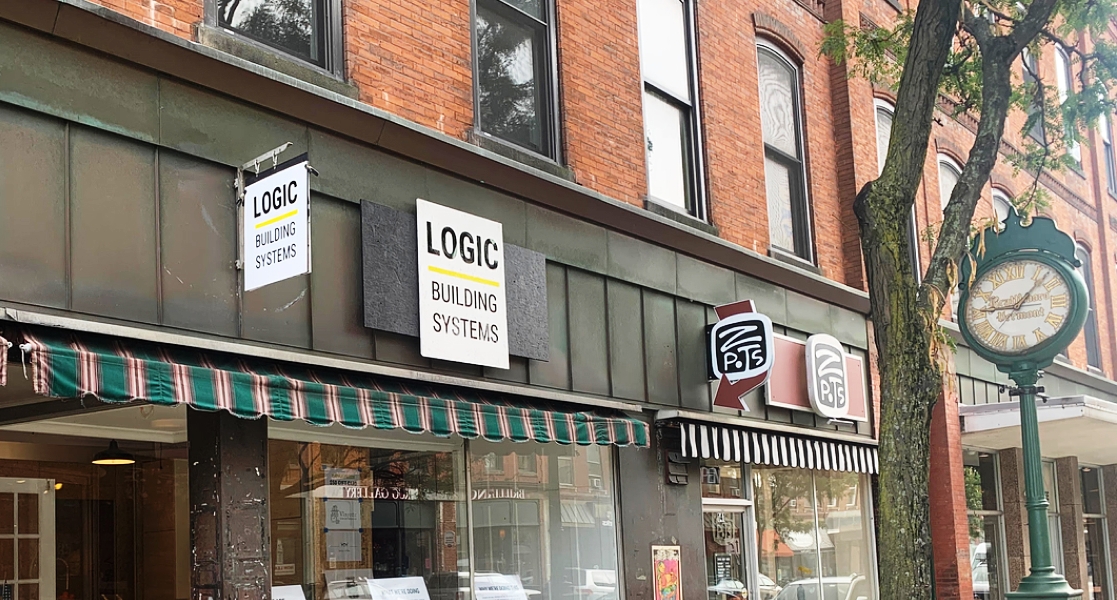
A Game-Changer in Offsite Construction: Exploring Logic Building Systems with Jason Van Nest

I traveled to beautiful New Hampshire in April to visit Jason Van Nest and his Logic Building Systems studio. I had a great conversation with Jason and learned why his new company could bring needed change to the offsite construction industry.

Jason Van Nest

When it comes to innovation in architectural design and offsite construction, few names stand out as prominently as Jason Van Nest. With a keen eye for blending cutting-edge technology with sustainable building practices, Jason has carved out a niche in the industry that’s both forward-thinking and deeply rooted in practical application. His work not only pushes the boundaries of what’s possible but also challenges conventional norms, making him a leading voice in the conversation about the future of construction.

In this interview, I delve into Jason’s innovative Logic Building Systems. From his early days of architectural exploration to his current role as a thought leader in offsite construction, Jason shares insights that are as inspiring as they are informative. Whether you’re a seasoned professional or new to the field, his perspective offers valuable takeaways for anyone interested in the evolving landscape of modern construction.

Jason Van Nest: Logic exists to commercialize years of research done at New York Tech’s Center for Offsite Construction.

I had been a consultant to the US modular industry for years, and seen smart friends and colleagues struggle to remain profitable using the techniques we call “Modular 1.0.” Unfortunately, our colleagues were forced to use a lot of “indoor construction” techniques to advance offsite construction, and the core benefits of manufacturing were still elusive.

Logic brings the practices of “Modular 2.0” to the US construction industry. We’re collaborating with the Center to introduce a standardized “coupler” that converts any dwelling unit into a home that can accept modular kitchens, bathrooms, and utility rooms. We are offer the industry’s first modules that plug-and-play with that coupler. Developers can buy a kitchen from a website, enjoy price transparency with an MSRP, and have tenants cooking dinner minutes after delivery! 

We know others will bring their own modules to interface with the standardized coupler – interoperability is the point! The US faces a worsening affordable housing crisis and evolving the industry to Modular 2.0 is how everyone can get more productive and build our way out of this challenge! 

.

Jason: In an industry where it takes an average of 23 subcontractors to deliver a home, the answer is always “collaboration.”

Here is a general industry and a company-specific challenge, there are many more we’re still working on!

The biggest general-industry challenge is the relative wariness toward offsite construction with the billion-dollar failures of Katerra, Veev, etc. Before 2021, more developers had the experimental stance of early adopters. Since then, everyone wants to be a second customer. Who can blame them?! 

Developers have grown more comfortable when they learn about Logic’s alliance-building stance — requiring us to partner, where these firms used to hire. We explain how developers can still tap all their same GCs and subs, not abandon whole project delivery models. Empowering all the customer’s own skills and relationships makes the difference.

A company-specific challenge was responding to customer’s request for price transparency. Developers are tired of bid surprises, change orders, and widening contingencies. We asked “Why cant we put an MSRP on our website, like car companies do?!” (By the way, today, every module now has one at the top of its project page.)

Again, the answer was collaboration. The products with an MSRP easily interface with other products. Early smartphones interface with power/data with a USB plug. US Toasters have a standard 3-prong cord. All today’s pod manufactures design this interface per project. We’re working with the Center to standardize an interface, which gives Logic the ability to skip most of the re-design, and offer unprecedented price transparency.

.

Jason: Logic’s core technology is working with people who are energetic, curious and engaged. Such smart people are always the engine that make innovation work, regardless of the industry.

I’m old enough to have put forward YCombinator and TechStars applications together for my teams’ software in the aughts. It look a lot of exploration to realize that software couldn’t cure the 100-year old means of production that hampers US construction.

I also hold US and international patents for construction assemblies. In design and construction, patents are easy to navigate around, and hard to enforce.

The key evolving our industry will be building company and customer relationships that make everyone more productive and profitable. 

That takes and open mind, energy to do exploratory work, and the willingness to keep showing up. 

Jason: Like good all startups, Logic started as a long feasibility study. 

It took 18 months of interviews, research, reading, and re-starts. It wasn’t enough to ask, “What is holding US offsite construction back?” We need to know the answer to, “How have other industries addressed these challenges?” to know if we were on to something.

The first Senior Research Fellows at the Center for Offsite Construction were naturally the folks who had been heavily engaged in the study. They helped found the Center, define its charter projects, and fund the open-source efforts.

In many ways, starting Logic was “step six” after all that other groundwork had matured. 

We’re finalizing Logic’s functional and manufacturing prototypes in Q3 and Q4 of 2024, simply to complete the go-to market strategy we mapped a year ago. We’re having advanced first-customer talks now. 

Logic’s goal is to drive down the cost of US affordable housing nationwide. 

In the short term, we are refining our supply chain, and module assembly processes, to quickly partner with other manufacturers and reach markets nationwide.

On the 5-10-year timescale, Logic will implement the entire scope and vision of the Center for Offsite Constructions “Modular 2.0” vision. We’ll offer interface products that empower builders with unimaginable interoperability. We’ll offer modular products that establish a new normal of price transparency. In doing so, we’ll help other modular companies offer whole product platforms, not just design services.

That effort lays the groundwork for Logic software to bring it all together. Designers will easily connect large-scale building products into a single site-specific building. Then order it with a fixed price, reliable timeline, reliable installers, and with the click of a button. 

We wake up every day to make this future happen ASAP. Anyone interested in joining the project should contact me at the Center or Logic. 

CLICK HERE if you would like to be interviewed about something innovative you have designed or are currently using.

The Future of Robotics – An Interview with the President of Framebotix

I am genuinely excited to have this opportunity to interview Yudhisthir Gauli, a true pioneer in the field of autonomous industrial robotics. His extensive experience, innovative mindset, and remarkable contributions to the manufacturing sector make him an inspiring figure. I look forward to learning more about his groundbreaking work at Framebotix.

Yudhisthir Gauli

Yudhisthir Gauli, the founder and President of Framebotix, is a visionary in the world of autonomous industrial robotics. With several decades of experience in manufacturing and a portfolio of multiple patents, Gauli is recognized as a trailblazer in transforming how modern factories operate. His career has been dedicated to pioneering advancements that integrate cutting-edge efficiency and innovative practices into the manufacturing process, fundamentally reshaping the industry.

As a full-blood robotic entrepreneur, Gauli’s contributions have had a profound impact on the evolution of autonomous industrial robotics. His work focuses on optimizing manufacturing environments, allowing factories to operate with unprecedented levels of precision, speed, and flexibility. By developing and implementing autonomous solutions, Gauli has enabled the manufacturing sector to leap forward, enhancing productivity while reducing costs and errors.

Under his leadership, Framebotix has become a leader in integrating robotics into manufacturing, helping companies around the world adopt state-of-the-art automated systems. Gauli’s journey, marked by his relentless pursuit of innovation, offers invaluable insights into the future of manufacturing and the role of robotics in driving the next generation of industrial efficiency.

Thanks, Yudhisthir, for talking with me about all innovative ways you are working on with robotics.

Yudhisthir Gauli, Founder/President: My journey at Framebotix as both CEO and CTO has been driven by a commitment to innovation and solving challenges in the offsite construction industry. Leveraging our decade-long experience in autonomous robots and factories, We have focused on revolutionizing home manufacturing to make custom homes both affordable and durable.

Our expertise in autonomous robotics supports various offsite applications, helping our customers achieve greater efficiency and precision. My vision has shaped Framebotix’s direction, driving us to create sustainable, high-quality manufacturing processes. By emphasizing natural materials and regional manufacturing, we’ve reduced costs, increased efficiency, and minimized environmental impact.

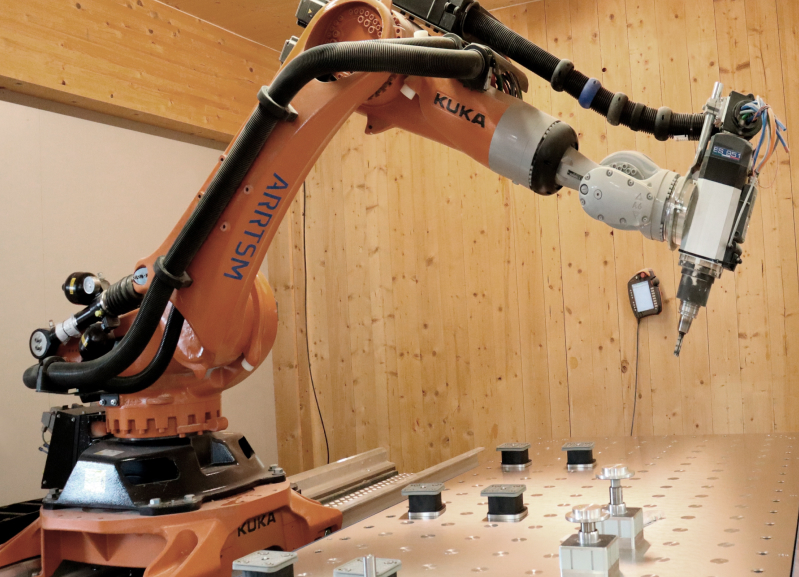
Yudhisthir: At Framebotix, we’re utilizing cutting-edge technologies that are revolutionizing offsite construction. Our AI-powered autonomous robots handle all machining, assembly, and handling applications, capable of operating 24/7 to reduce cycle times, lower costs, and ensure precise quality.

We also use a data-driven High-Performance Volumetric Manufacturing management system that optimizes manufacturing in real-time, minimizing downtime and ensuring every part meets exact specifications. Additionally, we incorporate advanced materials like cold-formed steel and sustainably sourced wood to create durable, eco-friendly components.

These innovations streamline manufacturing, boost efficiency, and enhance productivity, resulting in faster project turnarounds and superior quality outcomes for our clients.

Yudhisthir: At Framebotix, we’re excited to be developing our 8th generation autonomous robotic systems, which we plan to complete by the end of this year. These cutting-edge systems are designed to further enhance precision and adaptability in offsite construction, handling complex tasks like advanced machining, intricate assembly, and seamless material handling with even greater efficiency and accuracy.

One of the standout features of this new generation is the integration of AI-driven decision-making capabilities. This allows our robots to learn and adapt to various construction environments, optimizing processes in real-time and minimizing the need for manual intervention.

We believe these advancements will significantly transform the offsite construction landscape. By enabling greater customization and faster production times, our 8th generation robots will help construct high-quality, affordable homes more efficiently, while also reducing waste and environmental impact. This will move us closer to fully automated, smart construction sites, meeting the growing demand for sustainable housing.

Yudhisthir: I believe robotics and automation are set to revolutionize the offsite construction industry by dramatically improving efficiency, precision, and scalability. These technologies will streamline the entire construction process, from machining and assembly to material handling, allowing for faster production times and reduced costs. One of the most significant impacts will be the ability to produce custom homes at scale, something that has been challenging with traditional methods.

Specific challenges that robotics and automation will address most effectively include the skilled labor shortage, which has been a major bottleneck in the industry. With autonomous robots, we can maintain high productivity levels 24/7, reducing the reliance on manual labor and minimizing delays. Additionally, these technologies will greatly enhance quality control, ensuring that every component is manufactured to exact specifications, which reduces waste and rework.

Robotics and automation will also help tackle sustainability challenges by optimizing resource use and reducing carbon emissions through more efficient processes and the use of eco-friendly materials. In summary, these advancements will make offsite construction more efficient, cost-effective, and sustainable, ultimately transforming how we build homes and other structures.

Yudhisthir: Looking ahead, I see robotics igniting a revolution in offsite construction over the next decade. Rather than a gradual evolution, we are on the brink of a transformative leap where AI-driven robotic systems will redefine how we build. These robots won’t just be more autonomous—they will be capable of learning and adapting to diverse construction environments in real-time, bringing unprecedented levels of customization, speed, and precision to the industry.

This revolution will lead to fully automated, smart construction sites where robots handle nearly every aspect of the process—from design implementation to final assembly—with minimal human intervention. This shift will drastically reduce costs, enhance quality, and make sustainable practices the industry norm.

At Framebotix, we are positioning ourselves at the forefront of this revolution. Our development of 8th-generation autonomous robotic systems, set to be completed by the end of this year, is a prime example of how we’re leading the charge. These advanced systems are engineered to tackle complex tasks with even greater precision and efficiency, directly addressing critical challenges like labor shortages, cost control, and sustainability.

In addition, our forward-looking manufacturing technology, incorporating closed-loop systems and comprehensive traceability, will further revolutionize the industry. These innovations will ensure that every aspect of production is monitored, optimized, and documented, delivering unparalleled quality and accountability.

By staying ahead of technological advancements and maintaining a sharp focus on customer needs, Framebotix is poised to lead the next wave of innovation in offsite construction, helping to shape a bold and transformative future for the industry.

Contact Yudhisthir Gauli: [email protected]

Framebotix website: https://framebotix.com/

CLICK HERE if you would like to be interviewed about something innovative you have designed or are currently using.

Innovations in Turning Recycled Waste into Construction Boards 

Sweden’s Recoma Leads the Way

In the serene landscapes of Sweden, a quiet yet powerful revolution is brewing in the construction industry. As global concerns about sustainability and environmental impacts mount, a Swedish company named Recoma is pioneering an innovative solution: transforming recycled waste into robust construction boards. This breakthrough not only addresses the ever-growing waste crisis but also presents a sustainable alternative to traditional building materials. In this in-depth article, we will explore Recoma’s journey, the process of creating these eco-friendly boards, the numerous benefits they offer, and their broader implications for the future of construction.

The Problem with Traditional Building Materials

The construction industry has long relied on materials like concrete, steel, and timber, each carrying a significant environmental footprint. Concrete production alone accounts for around 8% of global CO2 emissions, while deforestation for timber depletes precious natural habitats. Additionally, the industry is notorious for generating vast amounts of waste. In the European Union, construction and demolition waste represents about 25-30% of all waste generated. These practices contribute to greenhouse gas emissions, resource depletion, and environmental degradation. Enter Recoma, with a vision to turn this paradigm on its head.

Recoma’s Genesis

Recoma’s story begins with a simple yet profound idea: what if we could take the waste plaguing our planet and transform it into something valuable? Founded in 2015, Recoma set out to create a sustainable product from materials that would otherwise be discarded. The founders, driven by a passion for environmental stewardship and innovation, embarked on a journey to develop construction boards from recycled waste. Their goal was to create a product that was not only environmentally friendly but also competitive in performance and cost.

Max Rosenberg, Founder and CEO

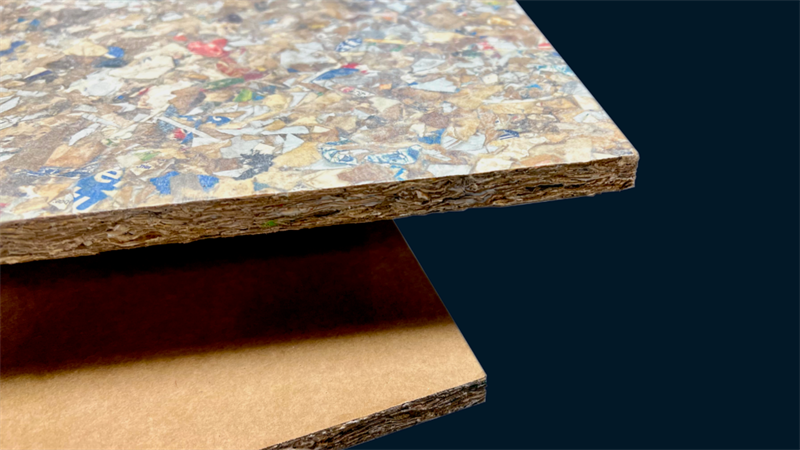
Recoma has perfected a method to convert recycled waste, particularly plastics and wood fibers, into high-quality construction boards. This process involves several meticulous steps:

Collection and Sorting: Recoma sources its raw materials from various waste streams, including post-consumer plastic waste and industrial wood residues. Partnerships with recycling centers, municipalities, and industries ensure a steady supply of quality waste. The materials are meticulously sorted to eliminate contaminants and ensure uniformity.

Shredding and Cleaning: The sorted waste undergoes shredding to break it down into smaller, manageable pieces. This is followed by an intensive cleaning process to remove any remaining impurities. This step is critical to ensure the final product’s integrity and performance.

Blending and Compression: The cleaned waste materials are blended in specific ratios to create a homogenous mixture. This mixture is then subjected to high pressure and temperature in a state-of-the-art press, where it is compressed into solid boards. This process not only binds the materials together but also enhances their strength and durability.

Finishing Touches: The freshly pressed boards are cut, sanded, and finished to meet specific requirements. They can be customized in terms of size, thickness, and surface texture, making them versatile for a wide range of construction applications.

.

Benefits of Recycled Construction Boards

The construction boards produced by Recoma offer a multitude of advantages over traditional materials:

Environmental Impact: By utilizing recycled waste, Recoma significantly reduces the volume of waste directed to landfills and incinerators. Moreover, the production process has a substantially lower carbon footprint compared to the manufacturing of traditional building materials.

Durability and Performance: Recoma’s boards are designed to withstand the rigors of construction. They exhibit excellent resistance to moisture, pests, and fire. Their robustness and performance in various environmental conditions make them suitable for both indoor and outdoor applications.

Cost-Effectiveness: The use of recycled materials can lower production costs, providing builders and developers with a cost-effective alternative without compromising quality or performance.

Aesthetic Flexibility: These boards can be produced in a variety of finishes and textures, offering architects and designers creative freedom in their projects. Whether it’s for sleek modern interiors or rugged outdoor structures, Recoma’s boards can be tailored to meet diverse aesthetic preferences.

.

Broader Implications for the Construction Industry

Recoma’s success is more than just a win for sustainability; it signals a transformative shift in the construction industry. Here are some broader implications of their pioneering work:

Reduction in Raw Material Consumption: As more companies adopt similar practices, the demand for virgin raw materials could decrease. This shift would alleviate the environmental impact associated with resource extraction and processing.

Waste Management Solutions: Recoma’s approach offers a practical and scalable solution to the global waste problem. By creating a viable market for recycled materials, they encourage better waste management practices across industries.

Policy and Regulation: Governments and regulatory bodies are taking notice of sustainable innovations like those of Recoma. Policies and incentives promoting the use of recycled materials in construction could become more prevalent, driving industry-wide adoption.

Market Dynamics: As awareness of the environmental and economic benefits of recycled materials grows, market demand is likely to shift. This change will encourage more companies to invest in sustainable technologies, fostering innovation and competition.

Challenges and Future Directions

Despite the promising advancements, Recoma faces several challenges. Ensuring a consistent supply of high-quality waste materials, maintaining cost competitiveness, and gaining market acceptance in an industry dominated by traditional materials are significant hurdles. However, Recoma remains optimistic. Ongoing research and development, coupled with increasing environmental consciousness, are expected to help overcome these challenges.

.

Recoma’s future plans include expanding their production capabilities and forging partnerships with construction companies and governments. By collaborating with key stakeholders, they aim to promote the widespread adoption of recycled construction materials. Their vision aligns with global efforts to create a circular economy, where waste is continually repurposed, reducing environmental impact and conserving resources.

Recoma’s journey from a bold idea to a leading innovator in sustainable construction is a testament to the potential of recycling in building a greener future. By turning recycled waste into high-quality construction boards, Recoma is not only reducing waste and conserving resources but also setting a new standard for sustainability in the construction industry. As the world grapples with environmental challenges, the lessons learned from Recoma’s success will be invaluable in shaping a more sustainable and environmentally friendly future. Through continued innovation and collaboration, the construction industry can build a legacy that future generations will be proud of—one recycled board at a time.

CLICK HERE if you would like to be interviewed about something innovative you have designed or are currently using.
New Website Showcases the Pioneers and Innovations Shaping Offsite Construction’s Future

The mother of innovation is often considered to be creativity. While necessity drives invention as a response to a specific need, innovation stems from the creative process of thinking beyond the current constraints and imagining new possibilities. Creativity allows for the development of novel ideas and approaches, leading to innovative solutions that can transform industries, markets, and society. Creativity fuels the exploration and experimentation necessary to bring innovative concepts to life.

Two seasoned professionals from the construction industry have unveiled a brand-new website dedicated to showcasing the trailblazers and groundbreaking advancements in offsite construction. This site will feature engaging interviews with key players and highlight remarkable achievements in innovative products and solutions. Additionally, they’ll explore what’s on the horizon for offsite construction and beyond, offering insights into potential game-changers for the industry.

.

Gary Fleisher, known as “The Modcoach,” is a prominent figure in the modular construction industry. He has an extensive background that spans multiple roles within the construction and housing sectors. Fleisher began his career as a realtor and later managed large lumber and building material yards, eventually becoming a sales manager for a major home builder. His experience includes working as a general contractor and a sales representative for modular and manufactured housing factories​.

.

Bill Murray is a seasoned sales and manufacturing executive in the Modular Home/Systems Built Industry. His extensive experience encompasses total Profit & Loss (P&L) responsibility, Sales Management, and Production Management for custom home and commercial structures. Additionally, he has provided professional consulting services to prospective owners, assisting with due diligence and navigating growth and expansion scenarios. His expertise makes him a valuable resource for companies looking to optimize their operations and achieve strategic goals within the modular construction sector.

So, if you’re passionate about the future of construction and eager to stay ahead of the curve, don’t miss out on this exciting new platform. Dive into a world of creativity, innovation, and industry insights by exploring the latest interviews, articles, and forecasts. Join Gary Fleisher and Bill Murray as they shine a spotlight on the visionaries and innovations that are transforming offsite construction. Click here to check out this valuable new site and be part of the conversation that’s shaping the future of the industry!

CLICK HERE if you would like to be interviewed about something innovative you have designed or are currently using.

Innovative Self-Repairing Concrete: Revolutionizing the Construction Industry

The construction industry is on the brink of a revolution with the advent of innovative self-repairing concrete. This groundbreaking technology promises to extend the lifespan of structures, reduce maintenance costs, and enhance sustainability in the built environment. In this blog post, we will explore the science behind self-repairing concrete, its potential applications, and the profound impact it could have on the future of construction.

Self-repairing concrete, also known as self-healing concrete, is engineered to automatically seal cracks and restore its original properties without human intervention. The key to this technology lies in the incorporation of special additives and materials within the concrete mix. These materials can include microcapsules containing healing agents, bacteria that produce limestone, or even shape-memory polymers. When a crack forms, it triggers the release of the healing agents from the microcapsules or activates the bacteria, which then precipitate calcium carbonate to fill the void. Alternatively, shape-memory polymers can close the crack by returning to their original shape when exposed to certain stimuli, such as heat or moisture.

The potential applications of self-repairing concrete are vast and varied. In the realm of infrastructure, bridges, roads, and tunnels are subject to constant stress and environmental factors, leading to cracks and deterioration over time. Self-repairing concrete can significantly extend the lifespan of these critical structures, ensuring safety and reducing the need for frequent repairs. For commercial and residential buildings, from high-rise buildings to residential homes, self-repairing concrete can enhance the durability and longevity of structures, providing homeowners and businesses with peace of mind and reducing maintenance costs. Harsh marine environments are particularly challenging for traditional concrete. Self-repairing concrete can help mitigate damage caused by saltwater and wave action, making it ideal for coastal infrastructure, ports, and offshore platforms. When it comes to historical preservation, restoring and preserving historical buildings often involves dealing with aged and cracked concrete. Self-repairing concrete can provide a modern solution to maintaining the structural integrity of these valuable cultural assets.

The introduction of self-repairing concrete is poised to transform the construction industry in several ways. By reducing the frequency and extent of repairs, self-repairing concrete can lead to substantial cost savings over the lifespan of a structure. This is particularly beneficial for large-scale infrastructure projects and public works. Self-repairing concrete contributes to sustainability by decreasing the need for new materials and reducing waste generated from repairs. This aligns with global efforts to promote environmentally friendly construction practices. Enhanced durability and reliability of structures mean fewer accidents and failures, ensuring the safety of occupants and users. This is crucial for critical infrastructure like bridges and tunnels. Embracing self-repairing concrete positions construction companies at the forefront of innovation, giving them a competitive edge in the market. It also attracts investment and talent interested in pioneering sustainable building solutions.

Basilisk Self-Healing Concrete, a company located in The Netherlands, is also pioneering a Self-Healing repair mortar and a Liquid repair system for existing buildings and structures.

While the potential of self-repairing concrete is immense, there are still challenges to overcome. These include refining the technology for large-scale production, ensuring consistent performance across different environmental conditions, and reducing costs to make it economically viable for widespread use. Future research and development will focus on improving the efficiency and reliability of self-healing mechanisms, exploring new materials and additives, and conducting long-term studies to validate the performance of self-repairing concrete in real-world applications.

Innovative self-repairing concrete represents a significant leap forward in construction technology. As research progresses and the technology becomes more accessible, we can expect to see a transformation in the way we build and maintain our infrastructure. This not only promises economic and environmental benefits but also paves the way for a more resilient and sustainable built environment. The future of construction is here, and it is self-repairing.

By embracing self-repairing concrete, the construction industry can ensure that the buildings and infrastructure of tomorrow are not only more durable and cost-effective but also more sustainable and reliable. It’s an exciting time for innovation, and self-repairing concrete is at the forefront of this transformation.