Walk into almost any offsite factory and ask who’s really in charge of operations, finance, or long-term strategy, and you’ll usually get a confident answer
For decades, the offsite construction industry has relied on people walking the line, checking work, and trusting experience to catch what matters. Most of the
If we’ve built the tools, the plants, and the systems—now it’s time to build a movement.
Across every segment of offsite construction — modular, panelized, component, light-gauge steel, and even HUD-code manufactured housing — there’s a shared belief that we represent the future of building. The efficiency is proven. The quality is measurable. The labor and housing challenges we solve are real.
And yet, despite decades of innovation and investment, offsite methods still account for only a small fraction of new construction. In the U.S., modular homes represent roughly 4–6 percent of new residential construction. Commercial modular projects add another 5–8 percent of the total market. Even when we include panelized, componentized, and factory-assisted framing systems, the overall footprint remains modest — and has been for years.
Globally, markets like the U.K., Japan, and parts of Europe have done somewhat better, but even there, offsite rarely exceeds 10–12 percent of new construction activity. For an industry that has so clearly demonstrated its potential, the question is unavoidable: Why are we still stuck in single digits?
The Missed Momentum
Those of us who’ve worked in or around modular factories know how much progress has been made — smarter automation, better design integration, new digital tools, and greater interest from developers, architects, and builders. But progress isn’t the same as growth.
What we haven’t achieved is sustained market momentum. Too often, our conversations stay inside the factory walls. We talk to each other, but we’re not always connecting our collective experience, as active participants, into something that moves the whole industry forward.
When I think back on my own years in modular manufacturing, some of the most valuable professional moments came not from plant upgrades or sales wins, but from peer roundtables and shared best practices. The candor in those discussions — about what was working, what wasn’t, and where we could improve — was eye-opening. No one had all the answers, but together we found better ones. The most valuable collaborative efforts often came from informal group phone calls and/or small roundtable peer gatherings (and sometimes at the bar after a roundtable get together).
What’s Holding Us Back?
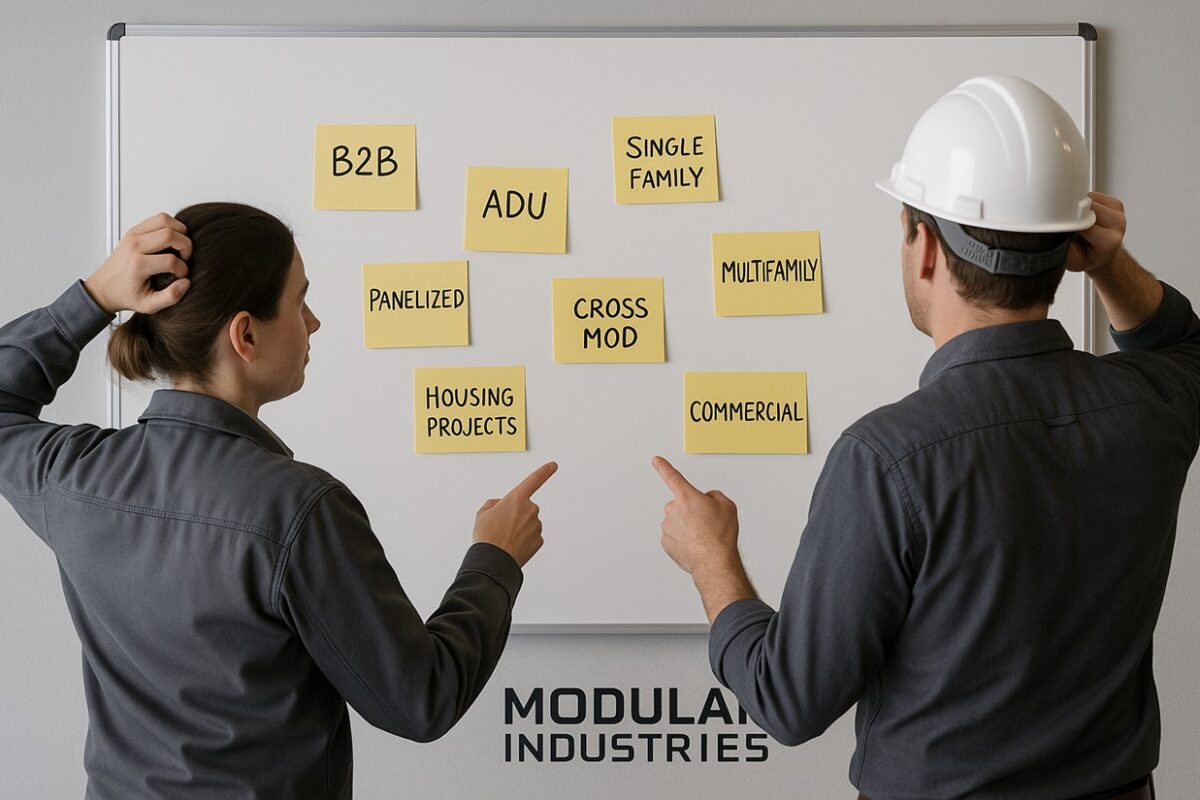
Part of the challenge is fragmentation. “Offsite” is an umbrella term, but inside it are many specialties, priorities, and languages — wood frame vs. steel, residential vs. commercial, panelized vs. volumetric. That diversity is healthy, but it also dilutes our collective message. When a builder or policymaker asks, “What is offsite construction, really?” they may get five different answers.
Another barrier is perception. Despite decades of success stories, the myths persist: offsite equals low-end housing, or modular can’t handle complex design. Those of us in the industry know better, but we don’t always speak with a unified voice to prove it.
And finally, there’s the matter of data — or lack thereof. Many sectors have detailed benchmarking, cost studies, and performance data. Offsite often doesn’t. We have countless anecdotes but too few comprehensive, comparable metrics. That makes it harder to attract investment, win over lenders, or reassure regulators.
What Would Growth Look Like?
Imagine what would happen if our share doubled — from 6 percent to 12 percent — across residential and commercial markets. That kind of shift would transform not just our factories, but the supply chain, workforce training, and perception of construction itself.
It would also take unprecedented cooperation: manufacturers sharing what works, developers bringing projects to the table early, design teams thinking modular from day one, lenders understanding factory-built value, and policymakers supporting modernized codes and financing.
The good news is that we already have the brainpower, experience, and technology. What’s missing is the collective energy to align those pieces.
An Invitation to the Conversation
At Offsite Innovators, we’ve always believed that ideas grow stronger when they’re shared. Maybe it’s time to revisit that spirit of open dialogue — the kind we used to find in roundtables, peer groups, or even the old factory tours where competitors swapped lessons over coffee.
So here’s the question I’d like to ask our readers:
What do you believe the offsite industry needs most to grow — awareness, collaboration, capital, or something else entirely?
There’s no wrong answer. Whether you’re a factory owner, developer, supplier, or designer, your insight matters. The industry can’t grow if its best ideas stay siloed.
If we want offsite to become more than a promising niche, we’ll need to approach growth the same way we approach innovation — together.
I encourage you to take 5 minutes and comment on this post. Answer the question—“What do you believe the offsite industry needs most to grow?” Collaboratively we can and will get this industry out of the rut we’ve been in far too long?
Our ultimate goal at Offsite Innovators is to grow our industry…we need your help.
Enough negativity — this will probably be the last time I write about why factories fail. Not because the reasons have all been covered, but because I’ve spent enough time talking about the negative side of an industry I still believe has enormous promise.
That said, one more needs to be addressed, because it’s so common — and the most avoidable: building a factory before you’ve confirmed that anyone actually wants what you plan to produce.
Looking Back
In earlier articles, I talked about factories that launched without a clear understanding of their true costs — and how that single mistake can take down even a well-funded operation. I also touched on the lack of systems: how plants run on assumptions rather than data, how owners try to manage by memory, and how small errors multiply into major losses.
Both of those are killers. But even if you fix both — if you have accurate costing and strong systems — it won’t matter if you misread the market, or worse, never try to read it at all.
The Most Dangerous Assumption
Factories fail because they don’t know their market.
They assume there’s demand because someone said so — a developer, an investor, a local official. They assume they’ll be competitive because “nobody else is doing this here.” They assume the market will come to them once the first walls go up. The old “build it and they will come” routine.
That’s not a plan. That’s hope. And hope, as I’ve learned more than once, is not a market. As Coach Lou Holtz said, “Hope doesn’t win ball games.”
This applies to startups and established factories alike. Startups are often led by enthusiasm and a good concept. Existing factories get comfortable with “what’s worked before.” Both can miss what’s happening right in front of them: a market that’s shifted, a product that’s lost relevance, or a price point that no longer works.
What Market Analysis Shouldn’t Be
When people hear “market analysis,” they picture expensive reports, focus groups, or consultants producing thick binders of data that nobody reads twice. That’s not what I’m talking about.
I’m talking about common-sense due diligence — the kind that can be done with a phone, a truck, and a notebook. You don’t need a professional research firm to understand whether there’s real demand. You just need to ask the right questions of the right people — and listen to the answers without bias.
What Market Analysis Should Be
Here’s what a practical, no-nonsense approach to market validation looks like — the kind I recommend to every client before they start pouring concrete or signing equipment leases:
– Talk to realtors. Not corporate ones — local realtors who actually sell in the market. Ask what’s moving, what’s sitting, and what price points get traction.
– Visit sales lots or model centers. See what’s being offered and what’s collecting dust. Talk to sales staff — they’ll tell you what buyers are asking for that they don’t have.
– Ask developers and builders. Find out what they can’t get right now. Is it affordable units, higher-end finishes, or production capacity? What makes them hesitate about modular or offsite?
– Call local lenders and appraisers. Ask whether they’ll finance modular in the target market, and under what conditions. If the local bank won’t fund it, that’s a red flag that can’t be ignored.
– Talk to building inspectors and zoning staff. Ask what’s being submitted and what’s getting built. They’ll tell you what’s “hot” long before the market data catches up.
– Identify who’s actually writing the check. In some markets it’s the homeowner, in others the developer or the investor. Each sees value differently.
– Define your market. Is it urban infill, workforce housing, coastal rebuilds, resort cabins? Each requires a different factory setup, design approach, and pricing structure.
I was absolutely amazed — and frankly flabbergasted — when I arrived at a $60 million plant a few years ago and learned that they had absolutely no idea what they were going to offer to the marketplace, let alone what they were going to build. They had done zero analysis… none! An extreme example for sure, but similar stories are all too common.
The Cost of Skipping This Step
The factories that skip this step often don’t realize their mistake until production begins. They have staff, systems, and materials in place — but no buyers lined up. So they pivot, discount, or chase new product lines midstream. That’s when panic sets in.
Suddenly the factory’s biggest challenge isn’t production — it’s sales. And that’s the hardest problem to fix when you’ve already built the plant and burned through capital.
Due Diligence Is Not a Luxury
For startups especially, feasibility studies too often focus on building design, logistics, and capital costs. Those matter — but the real feasibility question is: Who’s your customer, what do they need, and how do you know?
A factory that doesn’t answer that before breaking ground is a factory gambling with investor money, employee livelihoods, and its own future.
Market due diligence isn’t about expensive analysis — it’s about discipline. It’s about asking enough questions, in enough places, until the answers start to align. And if they don’t align, maybe it’s not the right market — or not the right time.
Moving On
This will be the last piece I write on factory failures. I’ve said what I need to say. The purpose of these articles was never to criticize, but to help prevent avoidable mistakes — the kind that have closed too many good operations.
The future of this industry doesn’t depend on more factories — it depends on smarter ones. Those that know their costs, measure their performance, and most importantly, understand their market before they start building.
Because in this business — as in most — hope is not a market.
In my last article, I wrapped up with a simple truth: factories don’t fail because they can’t build. They fail because they can’t see. Without systems that reveal the real numbers—the actual cost of what’s being built, when, and by whom—most plants are flying blind.
That problem doesn’t stop at costing. The absence of systems touches every corner of a factory floor—from scheduling and inventory to quality control and delivery. It’s a silent threat that often doesn’t show itself until the damage is done. By then, it’s too late to “tighten up the process.” The process was never really measured in the first place.
I’ve seen this pattern play out time and again. A startup offsite factory launches with enthusiasm, strong design talent, and a few key hires who “know production.” But there’s no defined structure—no consistent way to measure material flow, production rates, or true job costing. When the first large project hits, chaos follows. Units fall behind schedule, cost overruns appear, and management begins chasing symptoms instead of causes.
That’s when most realize they’ve built a factory without building the system to run it.
The good news? This doesn’t have to happen anymore.
Offsite and modular construction have reached a stage where data-driven systems are no longer “nice to have.” They’re essential. And that’s where companies like 4WardConsult.com are making a difference.
While I won’t dive into the technical details (my partner recently did a great job of that in his article on “ERP vs. MES — Why Offsite Factories Need Both to Win”), it’s worth emphasizing what that piece made clear: you can’t improve what you don’t measure.
4Ward has developed software designed specifically for offsite and modular factories—tools that don’t just track what’s happening but translate it into actionable information. When properly implemented, these systems bridge the gap between what management thinks is happening and what’s actually taking place on the floor.
It’s the difference between running your business based on memory and running it based on metrics.
Now, to be clear—this level of sophistication isn’t for everyone. Enterprise-grade MES and ERP platforms, like those from 4Ward, are an investment. They’re built with larger operations or those start-ups planning on controlled growth in mind. But that doesn’t mean smaller factories get a pass. The lesson applies across the board: whether your plant produces 20 modules a month or 200, you still need a system. It might be simpler, more manual, or tailored to your scale—but the discipline of tracking, measuring, and analyzing remains the same. Without it, you’re still flying blind, just on a smaller budget.
I’ve watched too many plants spend months trying to “get by” with spreadsheets or outdated ERP systems not designed for the modular world. It works—until it doesn’t. And when it doesn’t, the fallout is expensive. Missed deadlines, blown budgets, lost credibility with developers and GCs—it’s all avoidable if the factory invests early in the right systems.
That’s the lesson here: in this business, systems are not overhead. They’re infrastructure. Just like cranes, carriers, or production jigs, they are the framework that holds everything else in place.
If your factory is struggling to find the bottlenecks, to understand why profit margins don’t match your expectations, or to keep production schedules on track—don’t wait for the next crisis to expose the problem.
Start building visibility now.
And if you’re not sure where to begin, take a few minutes to learn what 4WardConsult.com offers. Their approach was designed around offsite realities—not retrofitted from some other industry. In my view, that alone sets them apart.
Because at the end of the day, what saves a factory isn’t luck, or even experience. It’s knowing—in real time—what’s really happening inside your walls.
I’ve been asked many times, “Why do some modular factories make it while others don’t?” There isn’t one single answer—there are patterns.
Over the next few articles, I’m taking a closer look at some of the most common causes I’ve seen firsthand, (both in my own company plus those of others witnessed through advisory assignments)—but, more importantly, the systems that separate the successes from the failures.
This first article tackles one of those quiet but costly causes: the absence of accurate, current costing and estimating systems. The effects often prove devastating.
The False Comfort of “We Know Our Costs”
In almost every struggling factory I’ve walked through, leadership believed they did know their costs. Spreadsheets existed. Estimating programs produced clean reports. Prices were set to be competitive. (In one case the sales price was actually set exclusively on the competition’s price! Think about that one.)
But when we dug in, two serious gaps appeared—both rooted in missing systems, not missing intelligence.
First, their estimating data wasn’t tied to current realities. Material pricing, labor rates, and production assumptions hadn’t been updated regularly—or at all. In a volatile environment like construction, that lag can be devastating. I’ve seen estimating models six months out of date that were already thousands of dollars off per module because of incremental cost increases that went unnoticed.
Second, very few factories “audit” their own results once the job is finished let alone during the manufacturing process. The actual material, labor, and overhead costs are rarely compared to the original estimate. That feedback loop—the one that validates or corrects assumptions—is often missing entirely.
So estimates remain unverified. They look professional and consistent, but they drift further from reality with every job. The plant keeps pricing future work on untested numbers, not realizing the gap between estimated and actual costs has widened to dangerous levels.
I’ve seen that gap quietly erase entire profit margins before anyone even noticed, or until it was history.
The System That Was Missing
When estimating and production operate in separate silos, numbers stop meaning anything. That’s the real issue I’ve seen over and over again—not that people don’t care about costs, but that they don’t have a system to keep those costs synchronized with reality.
A good system creates a closed loop between estimating, production, and feedback.
1. Estimating sets the baseline. Each bid starts with defined assumptions for material, labor, and overhead. 2. Production records the reality. As the job runs, actual costs are captured—not just material invoices, but man-hours, waste, and rework. 3. Feedback closes the loop. When the job finishes, someone compares what was expected to what actually happened—and documents the variance.
Without that loop, there’s no mechanism to catch drift. Estimators continue pricing work based on outdated standards; production teams fight fires without understanding the root cause; management thinks the margins look fine because no one has verified otherwise.
The good factories, after every project, the proper team members sat down with a one-page variance report—simple, color-coded, and brutally honest. If labor hours were exceeded, if material costs were exceeded, sometimes heated discussions took place. If framing costs dropped because of a process improvement, that update went straight into the estimating database. The excellent factories performed weekly and in one instance even daily assessments and variance reports.
There is excellent software out there to steer proper costing and auditing, but it is useless, as is often the case, if the culture doesn’t demand essential disciplines to allow the data to drive results.
The Cost of Not Knowing
When a factory doesn’t know its real costs, the damage builds slowly and quietly. Jobs that look profitable on paper often aren’t—but no one discovers that until the cash runs thin.
Without verified data, every project becomes a guess. Some hit the mark, some don’t, and over time the misses outweigh the wins. By the time a P&L exposes the truth, the company has already spent the profit it thought it earned.
I’ve seen plants lose margin one assumption at a time: a few underestimated labor hours here, a small material overage there, a little overtime that never made it back into the estimating model. Nothing catastrophic—just a slow erosion that no one measured.
And when leadership finally starts asking why the numbers don’t match, the answers are all symptoms: “materials went up,” “labor is short,” “sales discounted too deep.” The real problem isn’t the conditions—it’s the missing visibility.
Once you put a feedback system in place—tracking actuals, auditing assumptions, updating estimates—those excuses disappear. The numbers stop surprising you, because they finally mean something.
The Takeaway
Factories rarely fail from lack of effort or intelligence. They fail from lack of clarity—and in manufacturing, clarity comes from systems.
When you don’t have a structured way to capture and verify your true costs, every bid is a gamble. When you do, you gain control—not just of your numbers, but of your future.
At one point in my career, I became a GM for a factory that was part of a privately held corporation. The owners decided to offer for sale their entire company. They had hired a consultant to guide the sale process. One of the very first things he addressed was this: Prioritize all systems and processes. Show proof that they are in place and used. Document all systems and processes, reduce them to writing. It was the single biggest piece of advice we received. It made a lasting impression on me as a GM. It took us almost a year to get our act together. It paid big dividends. Ultimately sales, production, and finance finally start speaking the same language—one built on facts, not assumptions.
I’ve watched that shift happen firsthand. My team used this systems-based philosophy in a turnaround. Once real costing systems are in place, confidence replaces guesswork.
That’s when a company stops reacting and starts managing.
At Offsite Innovators, we welcome your thoughts and comments. We also welcome the opportunity to assist. Don’t hesitate to contact us at:
Everyone loves numbers. They’re clear, comforting, and easy to display in a meeting. Backlog, labor costs, and inventory utilization—these are the figures that fill spreadsheets and define progress reports. In my experience, they don’t tell the full story. Some of the most successful factories I’ve seen and managed weren’t the ones with the strongest numbers; they were the ones that measured what you can’t easily put on a chart. Measuring per se, is very often what so many simply view as of little to no consequence and not worth the effort. It’s part of that cultural aspect that separates winners from losers and defines the also-rans.
The Usual Metrics Every plant tracks the obvious: how many units are shipped, how many hours are logged, and how efficiently materials move through the process. Those metrics matter, but they’re lagging indicators. By the time a production number starts to slip, the underlying issue has already been at work for weeks—sometimes months.
When a factory begins to struggle, the problem usually doesn’t start with the output. It started earlier—with something that never made it into a spreadsheet.
The Hidden Indicators The factories that endure long-term pay attention to a different kind of data. They measure signals that are harder to quantify but far more predictive. More importantly, they take action based on what they are measuring. (Quality Improvement Process in action!)
How often do problems get surfaced instead of being buried? Do production meetings actually solve things, or just check a box? Is employee turnover stable, even considered, or quietly rising? Does information move freely between departments, or get stuck halfway up the org chart?
These are cultural and behavioral indicators, not production metrics. But they’re the ones that decide whether a factory bends or breaks when conditions change.
In one factory I managed, turnover was quietly eating away at both productivity and morale and consequently profits. We decided to treat it as seriously as any operational KPI. We started tracking it, not just as a percentage, but in dollars—how much it really cost to replace, retrain, and reintegrate each new hire. Its effects on quality and service costs. When the numbers became visible, it changed the conversation. We dug into root causes and often discovered the issue wasn’t pay—it was communications or lack therof. Supervisors weren’t giving feedback, and employees didn’t feel heard. Addressing that—training supervisors to lead better, creating real feedback loops, conducting proper exit interviews, among other corrective actions—cut turnover by almost half within a year. The savings realized, transferred to the bottom line.
That single metric, one that rarely shows up on a dashboard, did more to stabilize performance than any new piece of equipment or production system we installed.
Resilience by Design The strongest factories I’ve worked with aren’t perfect; they’re adaptable. They face the same challenges everyone else does—market swings, supply delays, labor gaps—but they react differently. They listen early, fix problems while they’re small, and empower the people closest to the work to speak up.
That’s what resilience looks like in practice. It’s not about avoiding problems—it’s about recognizing them early and responding before they multiply. Again, it’s all about the culture embedded in the entire company. That foundation is inherent in those companies that succeed.
The Bottom Line Numbers matter. But they only tell part of the story. The real indicators of a plant’s future are often invisible to the dashboard. They live in how people communicate, how leadership listens, and how quickly a team learns from its mistakes. Seems like a blinding flash of the obvious but taking care of our people remains tantamount to success! It’s part of that culture.
Those are just examples of the metrics that don’t show up on your reports—but they determine who’s still standing a few years from now. They reflect the culture.
At Offsite Innovators, we help companies identify these hidden indicators through experience-based analysis. Share your thoughts, pros, and cons. We’d love to hear from you.
Every homebuilder knows the importance of a solid foundation. You can have the best plans, the finest materials, and the most skilled trades—but if the foundation is weak, everything above the sill plate is at risk.
Factories are no different. Culture is the foundation. It doesn’t guarantee a flawless product or a smooth sailing every day, but without it, the chances of long-term success shrink dramatically. Over the years, I’ve walked into plants where the machinery was top shelf, there was over 200,000 square feet under roof and the numbers presented were optimistic. But what struck me more than the spreadsheets or production targets was the foundation—the culture I could sense in the people, both on the floor and in the office.
What You See and Hear on the Floor
The floor speaks volumes. Within a short period of time, you can sense the signals: – Workstations, breakrooms, or entire plants that are orderly—or in disarray. – Crews working together—or in isolation. Some hustling others waiting. – Supervisors guiding—or working online and simply pushing.
Factories also have a sound. Some hum with steady, focused energy. The steady rhythm of nail guns, and line roll announcements over the loudspeakers. Others echo with pleas for materials coming over the loudspeakers, finger-pointing shouting matches, or even silence that says more than words. These signals tell you whether the foundation is strong or cracking beneath the weight of poor communications and expectations.
On more than one occasion I walked into plants that had obvious signs of a suspicious culture that would not facilitate the production of superior products being offered to the marketplace. Check out the parking lot. Is it a mudhole? Is there ample space for all employees? Next look at the timekeeping system provided as employees clock in for the day. Is it manual and time consuming? Can one employee clock in for others? Is it digital and confidential? What is your very first impression as you step into the factory? Cleanliness isn’t only next to godliness it is essential and a precursor to a quality work environment and a quality product. I’ve seen both extremes and clean well-organized beats the alternative hands down. It’s amazing how many in upper management don’t grasp the importance or significance and its reflection of the culture of the company.
What You Notice in the Office
Culture isn’t confined to the production line. It shows up just as clearly in the office and among support staff: – Are people engaged and approachable, or distracted and going through the motions? – Do you see pride in their demeanor, or a sense of indifference? – Is the office clean and welcoming, or cluttered and neglected? – Are there visible signs of communication—like schedules, quality goals, or even simple signage—or is it vague and disorganized?
Even something as simple as a restroom or a break room tells a story. I’ve walked into plants where those spaces reflected respect for employees, and others where they revealed the opposite. These details matter, because they reflect the tone set at the top.
No receptionist, no one to welcome a visitor, you wait in a small confined “lobby” until someone shows up and asks how they can help? I’ve seen that, and it’s the first sign of a culture that that is oblivious to proper customer relations….uh oh!
People: The Only Renewable Asset
I’ve always believed that a company’s greatest—and really, its only renewable—asset is its people. You can finance equipment, upgrade facilities, and refine processes, but none of it works without a management team and workforce that knows they matter.
As a GM, I never had a reserved parking spot, because I didn’t want barriers—literal or symbolic—between myself, managers, and the people building the product. I’ve learned that your people don’t care what you know until they know that you care. When they feel that, something changes. The pride shows up on the line, in the office, and in the product itself.
That kind of culture doesn’t just happen. It must be set intentionally, from the top down and reinforced every day.
I’ve several times talked with the GM/Owner at a plant and heard him espouse his respect for his people. I had no reason to question that until I had a conversation with those in the trenches. In one instance, I was in the plant and noticed what appeared to be a heated discussion taking place near the tool room. I waited until the discussion ended, and at some point, was able to talk to one of the people I had seen being very animated (that’s putting it kindly). He was exasperated, as his crew (he was a supervisor) was at a standstill due to the hoist on the overhead crane being down and no replacement available. I was an observer, and he didn’t know me from Adam, but I was able to learn that he had reported the potential for this problem to occur to his boss, several times. I expressed my understanding and simply suggested that maybe he should talk to the GM. His reply (which I later found credible) was that he never see’s the GM, and if he did, he felt certain it wouldn’t really matter. Further observations gave some credence to the fact that the GM/Owner talked the right talk but didn’t actually walk the walk.
The Unspoken Conversations
Culture often reveals itself in subtle ways: – How a line lead speaks to a crew member. – How openly problems are acknowledged—or ignored. – Whether an office staffer greets a visitor with genuine interest or a perfunctory nod.
These moments, small as they seem, are cracks or reinforcements in the foundation.
Why It Matters
A solid foundation doesn’t guarantee a perfect house. Likewise, a healthy culture doesn’t guarantee every project will go smoothly. But without it, the risks compound. In modular construction—where timing, precision, and coordination matter more than in almost any other part of the industry—culture is the quiet but decisive force that shapes outcomes.
The Pattern That Repeats
Every plant I’ve visited has its own story. But whether it’s a startup, a turnaround, or a supplier under review, the signals are remarkably consistent. Pay attention to them, and you can see the trajectory before it’s obvious to anyone else. Ignore them, and you’re left surprised when the cracks widen.
The Bottom Line
Culture isn’t a buzzword. It’s the foundation that holds the factory—floor and office alike—together. And like a foundation in homebuilding, if it’s poorly set, everything above it becomes more fragile.
At Offsite Innovators, our advisory work is about spotting these patterns early and helping companies strengthen the foundation. If you’d like to explore what these signals might mean for your factory or if you’re thinking of using Offsite products for your next project, connect with us here: [link to questionnaire/contact form].
We very much welcome your comments. Share your thoughts……the industry needs that!
Over the years, and especially the last several years of active advisory work, I’ve consistently been asked the same question: What makes one modular factory thrive while another stumbles?
People generally expect the usual ubiquitous answers: poor planning, capitalization, sales and marketing, lack of backlog, poor quality, etc. And while those are important, they don’t tell the whole story or get to the root cause of a successful company. In my years as a GM on the floor, and later as an advisor, I’ve noticed something else—a pattern you won’t find in spreadsheets, business plans, or equipment lists. It’s harder to measure, but it shows up in every plant I’ve visited. And more often than not, it’s the pattern that determines where that factory is headed.
I’ve walked into plants with the latest machinery and ambitious schedules. On paper, everything looked strong. But within minutes on the floor, it was obvious whether the foundation was solid—or shaky. The way crews interacted, how leadership set the tone, the sounds of the plant, whether people believed in what they were building…these were signals you couldn’t miss.
As the oft used idiom states, “You can’t often see the forest for the trees.” Many in management or those vetting manufacturers are so consumed with being engrossed in the specifics that they don’t see or consider the foundational aspects of a thriving business. Those signals were manifested in varying ways, many of which weren’t so obvious to the un-informed or to those with self-imposed blinders.
This foundation is essential and applies equally to start-ups, turnarounds, or established manufacturers. New equipment and fresh capital only go so far if the ingrained behaviors on the floor tell a different story. Simple observations, short conversations with office staff, and those working on the line will reveal a company’s true foundation.
When developers/builders visit manufacturers to vet potential suppliers, I often tell them: don’t just look at the product, backlog or the marketing materials. Spend 30 minutes on the floor. What you’ll see and hopefully learn there will tell you far more about the factory’s future than any spreadsheet or fancy brochures. I provide a formal written list of what to look for or have in some instances, accompanied them on factory visits… It’s that important!
This pattern is captured in conventional parlance by the term “Culture”. This term seems to represent an aversion that many assume in not considering its importance or in even considering its ramifications. Culture isn’t about production numbers, slogans on the wall, or polished presentations. It’s about the underlying force that shapes day-to-day decisions and attitudes. It’s subtle, but it’s powerful. And once it takes hold—good or bad—it influences everything that follows.
Every plant has it. Some harness it, and grow stronger because of it. Others ignore it, and pay the price. Culture is what differentiates an organization and what often separates winners from loosers.
Factories don’t succeed or fail overnight. Their trajectory is set early, in ways that most people overlook. That’s why I believe paying attention to a company’s culture is essential in determining and understanding where a plant is presently and where they are headed.
I feel so strongly about this oft-overlooked aspect that I will be devoting several articles on this website to explain and expand upon its significance. No preaching, just practical experience-based observations.
At Offsite Innovators, my mission is to share what I’ve learned from years on the floor and years advising others—so that whether you’re starting up, turning around, or choosing a supplier, you can make informed decisions.
In modular and manufactured housing, staying compliant with an ever-growing list of codes, standards, and certifications isn’t just important—it’s essential. That’s where third-party inspection agencies like PFS TECO come in, ensuring quality and compliance at every step of the building process.
To gain a deeper understanding of what these inspections entail and how they impact the offsite construction industry, I sat down with Bob Gorleski, a nationally respected expert on building code compliance and inspection protocols.
Robert Gorleski
With over 35 years of experience and a résumé that spans nearly every major facet of code enforcement—plan review, QA, field inspections, and engineering—Bob is the guy you want in your corner when navigating the complexities of state, national, and industrialized building regulations. His unique perspective comes not only from his hands-on work, but also from his service with respected organizations such as the Manufactured Housing Institute, the Modular Building Institute, and the Wisconsin Housing Alliance.
Bill Murray, Co-Founder of Offsite Innovators: Would you please explain the role of PFS and third parties in offsite construction and manufacturing?
Bob Gorleski, Vice President of the Manufactured Structures Division at PFS TECO: PFS Corporation d.b.a. PFS TECO is a third-party agency providing independent oversight for off-site construction and manufacturing. Our responsibilities include plan review, quality assurance monitoring, and in-plant inspections to verify that production aligns with approved designs and complies with applicable codes. Since local jurisdictions don’t inspect work performed in a factory setting, PFS TECO ensures that units are built to code before they leave the plant. They manage label control and serve as the point of contact with state or federal regulators. Our role is essential to maintain accountability, ensuring code compliance, and supporting consistent quality in a production-driven environment.
Bill: From your perspective at PFS, how well do current building codes align with the realities of off-site construction?
Bob: From our perspective, current building codes were developed for site-built construction and often don’t translate well to the factory floor. They assume field inspections, on-site sequencing, and installation methods that don’t reflect how off-site construction operates. This creates gaps, forces workarounds, and adds unnecessary steps that disrupt production without improving outcomes. For example, codes often require inspections “before cover,” but in a factory, components like floor framing and mechanical runs are typically enclosed within hours, long before an inspector could review them under a traditional model. While HUD and some state modular programs have adapted portions of the code to fit the factory environment, there’s still a lack of consistency and clarity. We see a clear need for better alignment between code requirements and how work is actually performed in off-site manufacturing.
Bill: What sections of the IRC or IBC present the most common challenges to off-site manufacturers?
Bob: The most common challenges off-site manufacturers face with the IRC and IBC relate to code sections that assume on-site construction processes and inspections. These include structural framing and bracing requirements, fire separation and means of egress, installation and inspection of mechanical, plumbing, and electrical systems, and exterior weatherproofing details. Energy efficiency provisions often don’t fully account for factory-controlled installation methods. Because these codes are written with site-built construction in mind, off-site manufacturers frequently must find alternative compliance paths or rely on engineering approvals to meet the intent of the code without disrupting production.
Bill: In your experience, which tends to be more difficult for offsite construction—state-level codes or local jurisdictional enforcement?
Bob: In our experience, local Authority-Having-Jurisdiction (AHJ) enforcement presents more challenges for off-site construction than state-level codes. State programs are typically standardized and include provisions that recognize factory-built construction and third-party oversight. Local AHJs, however, may not be familiar with off-site processes or the scope of factory inspections, which can lead to inconsistent interpretations, redundant inspections, and added requirements at the job site. This disconnect often results in delays and frustration, despite the unit meeting state-approved design and inspection criteria. Aligning expectations between factory-built systems and local enforcement remains a key hurdle.
Bill: HUD code is often contrasted with modular programs. How do the two compare in terms of flexibility, cost, and permitting ease?
Bob: HUD Code and modular programs differ in key areas. HUD is federally preemptive, streamlining approval and limiting local interference—once labeled, a unit can be shipped and installed in any state without additional plan review. Modular programs follow state-adopted versions of the IRC or IBC, which means added complexity, varying requirements, and local Authority-Having-Jurisdiction involvement. Modular offers more design flexibility, including multi-story and custom layouts, but at a higher cost due to engineering, state reviews, and permitting fees. HUD, while more limited in design, benefits from standardized construction and lower regulatory and production costs.
Bill: Are code officials generally receptive to innovation (off-site), or is there still a mindset that favors traditional site-built construction?
Bob: Most code officials still lean toward traditional site-built construction. While exceptions exist, many remain unfamiliar with off-site processes and are skeptical of third-party inspections and factory-based compliance. As a result, local Authorities Having Jurisdiction often impose redundant inspections or apply site-built assumptions to factory-built units—even when those units have already been approved at the state level. The issue isn’t outright resistance to innovation but a lack of exposure to how off-site construction actually works. That said, the mindset is beginning to shift as more jurisdictions gain experience with modular and HUD Code homes, and as education efforts around offsite methods improve.
Bill: Can you recall a recent example where a code provision or inspector’s interpretation significantly impacted an off-site project?
Bob: A HUD Code home was installed on a permanent foundation in a state that typically sees manufactured homes placed on piers. The local inspector, unfamiliar with HUD’s guidelines for foundation systems, delayed the final inspection, questioning the anchoring method, even though it followed an approved engineered design. The confusion over HUD’s preemptive authority and foundation alternatives led to weeks of delay while documentation was resubmitted and the inspector was educated on the applicable standards.
Bill: Are there any coordinated national efforts or organizations working to make codes more compatible with off-site construction?
Bob: Several national organizations are actively working to improve how building codes address off-site construction. The Modular Building Institute (MBI) advocates modular construction by collaborating with the International Code Council (ICC) and educating code officials to remove unnecessary barriers in plan approvals and inspections. The Manufactured Housing Institute (MHI) represents HUD Code manufacturers. It works with HUD, state agencies, and lawmakers to update federal regulations and ensure local officials do not impose extra requirements that conflict with HUD’s federal authority. The ICC Off-Site and MBI also develop specific standards that reflect factory-built processes rather than traditional site-built assumptions. Together, these organizations are driving changes that better align codes, standards, and enforcement with the unique workflows and efficiencies of off-site construction.
Bill: What role is PFS playing—or could play—in shaping a more modern regulatory framework?
Bob: PFS TECO plays a key role in modernizing the regulatory framework for off-site construction. As an independent third-party inspection agency, we verify that factory-built units comply with code requirements before leaving the plant. This reduces the need for duplicated local inspections and increases AHJ confidence in off-site methods. We actively engage in code development and industry groups, providing practical insights from factory inspections to help shape regulations that align with off-site construction realities. PFS TECO supports streamlined, risk-based enforcement that promotes innovation without compromising safety or quality by connecting manufacturers, regulators, and local inspectors.
Bill: Do you think industry is making progress, or are we at risk of being left behind by overly rigid codes?
Bob: The industry is moving forward, but challenges persist. Awareness and acceptance of offsite construction are improving, driven by groups like MBI, MHI, and third-party agencies like PFS TECO. Still, many codes and local enforcement practices remain rooted in site-built assumptions that don’t fit factory-built methods. If regulatory updates don’t keep pace, offsite construction risks are being held back by codes that stifle innovation and efficiency. Ongoing education, advocacy, and collaboration are critical to maintain progress and prevent being left behind.
Bill: If you could change one aspect of the current code environment to accelerate offsite adoption, what would it be?
Bob: Consistent acceptance of third-party inspections and plan reviews is essential to eliminating redundant inspections and plan reviews, reducing delays, and accelerating off-site construction adoption.
Bill: What can builder developers do to effectively act as catalysts to promote code related changes necessary to accelerate the use of offsite construction?
Bob: Builder-developers can promote code changes by working with industry groups, sharing examples that show off-site construction works, talking directly with code officials, and pushing for rules that fit factory-built methods. Their experience and influence help drive practical updates that support faster, more efficient building.
Throughout our interview, Bob made one thing clear: third-party inspections aren’t a bureaucratic hurdle—they’re a safeguard. They help protect homeowners, support manufacturers, and maintain the integrity of the entire offsite construction industry. His passion for building better, safer, and more inclusive spaces (as seen in his work on modular classroom accessibility) is evident in every project he touches.
We’re grateful to Bob Gorleski for sharing his time, insight, and years of expertise. His commitment to regulatory clarity and code compliance continues to benefit not only the clients of PFS TECO but also the entire modular building community. For further information or questions, Bob can be reached directly at [email protected].
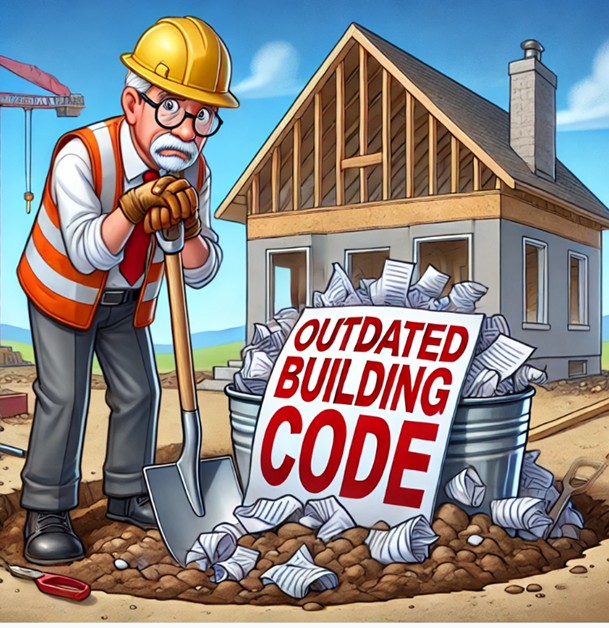
Unblocking the Blueprint: Zoning Reform and the Future of Affordable Housing. You can’t innovate your way into affordable housing if the rulebook won’t let you.
At Offsite Innovators, we feature breakthrough thinking in building. But innovation doesn’t just happen in factories—it happens in city halls too. Zoning reform might not sound exciting, but when cities like Austin and Dallas start scrapping outdated codes, they make room for the kind of housing innovation the country sorely needs.
If you work in housing—especially offsite construction—you know the roadblocks all too well: overly prescriptive zoning, building codes rooted in 20th-century assumptions, and neighborhood resistance to anything that doesn’t look like the house next door. The result? Fewer homes, longer build times, and higher prices. It’s a perfect storm that’s been quietly undermining affordability for decades.
But some cities are beginning to realize that if we want more housing, and especially more affordable housing, we have to fix the rulebook first.
When Good Intentions Go Bad
Zoning codes and building regulations were created to keep people safe, protect property values, and shape communities. And in many cases, they’ve done exactly that. But over time, they’ve also created unintended consequences.
Single-family zoning—the default in much of the country—limits most neighborhoods to just one house per lot. It sounds harmless, even quaint. But when land prices soar and construction costs rise, this low-density mandate becomes a luxury we can’t afford. Duplexes, triplexes, and other “missing middle” housing types are essentially banned in huge swaths of American cities.
Then there’s the complexity layered on by national standards like the International Building Code (IBC) and National Residential Code (NRC). While these standards serve critical safety functions, they can also stifle innovation, particularly in the modular and offsite sectors. Building a high-quality home in a factory is often more efficient and sustainable, but good luck if your local code official isn’t on board with that approach—or if the code itself doesn’t allow for it without time-consuming variances and appeals.
We’re not saying throw out the rulebook. But it’s long past time to revise it—and that’s exactly what Austin and Dallas are trying to do.
Austin’s Affordability Bet
Let’s start with Austin. In 2019, the city passed its“Affordability Unlocked” ordinance—a name that pretty much says it all. The idea was simple: if a developer includes enough affordable housing in their project, the city will waive or relax zoning requirements like minimum parking, height restrictions, and setbacks.
It worked.
Developers responded quickly, and projects that once would’ve been economically impossible started to pencil out. Hundreds of units have been approved under the program, many using modular or prefab construction to save time and cost.
And in late 2023, Austin took it a step further. The city council voted to allow up to three units on any residential lot, effectively eliminating single-family zoning altogether. This move, controversial in some circles, was aimed squarely at boosting density, especially in areas with good infrastructure and access to transit.
Is it perfect? No. But it’s bold. And it shows that a major U.S. city is willing to get serious about affordability by rethinking the rules—something many housing advocates have long called for.
Dallas Joins the Fray
Just a few hours north, Dallas is tackling the problem from a different angle. The city launched an affordable housing plan with an ambitious goal: 20,000 new or preserved affordable units in three years.
Rather than a one-size-fits-all approach, Dallas split its strategy across three key zones:
Stabilization Areas, where displacement is a concern and preservation is the focus
Redevelopment Areas, where large-scale infill can create mixed-income neighborhoods
Emerging Market Areas, where incentives can encourage development in underbuilt pockets
In all three cases, zoning flexibility is key. The city is exploring upzoning, reducing minimum lot sizes, and simplifying the permitting process—all critical steps for bringing in modular and innovative building methods.
Dallas is also working to align its local regulations with federal fair housing obligations, recognizing that outdated zoning has often reinforced patterns of racial and economic segregation.
The approach is methodical, but promising. It reflects a growing consensus that supply-side solutions matter—and that regulation needs to evolve with the times.
Why This Matters to Innovators
If you’re in the offsite construction world, this shift should have your full attention. We often talk about factory-built housing as a silver bullet for affordability, but the truth is: we can’t innovate our way out of the housing crisis without cooperation from city governments.
Factory efficiency means nothing if you can’t get zoning approval. Smart design and sustainable materials won’t matter if your units can’t pass code without a special exception. The best ideas stall out when the regulatory climate punishes anything that deviates from the norm.
Austin and Dallas are showing what it looks like when cities start to clear the runway for new housing solutions. And that creates real opportunity—for builders, developers, and the communities they serve.
Let’s Keep Pushing
Housing affordability is a complex challenge. But that doesn’t mean we have to accept gridlock. Reforming zoning and updating building codes isn’t easy, and it won’t solve everything overnight—but it’s a critical step toward allowing innovation to flourish.
The cities leading the way—Austin, Dallas, and a handful of others—are offering more than policy tweaks. They’re offering permission to rethink how we build and who we build for.
At Offsite Innovators, we’ll keep spotlighting the policies and practices that support smarter, faster, and more equitable ways to create housing. Because solving the affordability crisis isn’t just about cost. It’s about clearing the path for ideas that work.