
Your New Home Passed Its Inspection. But How Healthy Is It?

When you buy a new vehicle, it doesn’t stop monitoring itself after you drive it off the lot. Sensors track engine temperature, tire pressure, and a long list of conditions most of us don’t think about until a warning light appears. Your vehicle continues telling you something about its health for as long as you own it.
A new home usually gets a final inspection, a stack of paperwork, and a handshake. After that, we often wait for the homeowner to report that the upstairs bedrooms are uncomfortable, the electric bills seem high, or something smells damp near the back door. That is a rather expensive way to discover how a brand-new house actually performs.
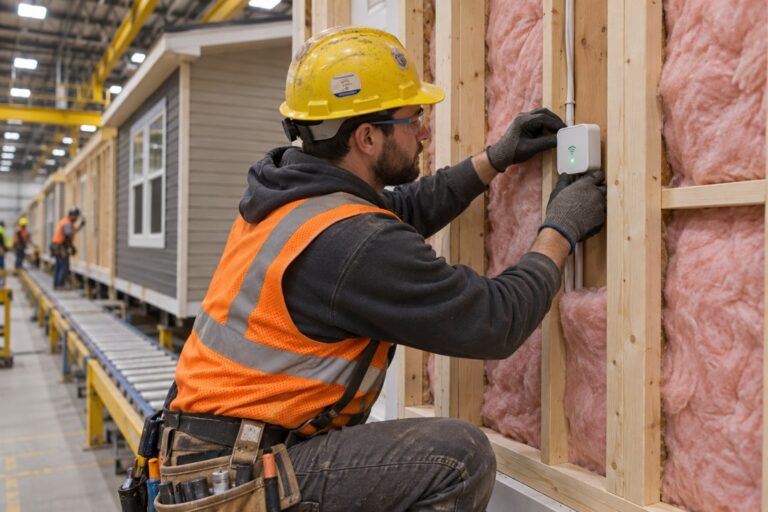
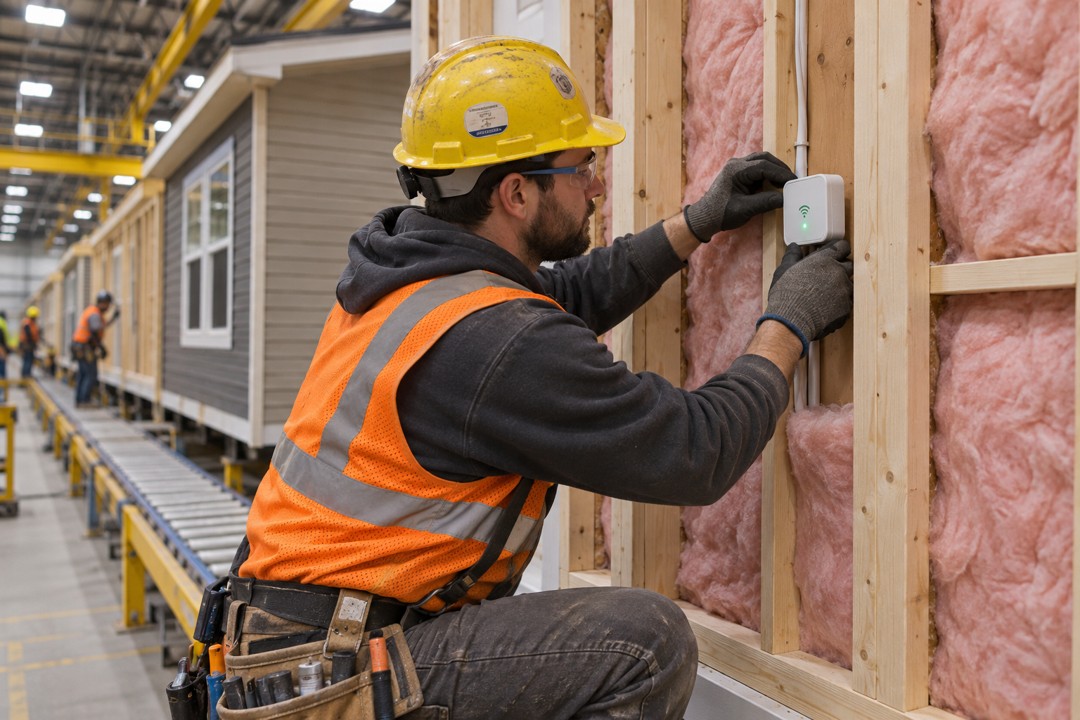
An emerging approach to home construction could change that relationship. Networks of small sensors, connected to remote analysis platforms, can give builders and homeowners an ongoing picture of a home’s operating health. The individual technologies already exist. The innovation is bringing those measurements together and using them long after the construction crew leaves.
Giving the House a Health Record
Think of this as a health record for the building. Temperature, humidity, energy consumption, moisture, and selected ventilation measurements can help reveal whether the home is functioning as intended—and where a closer look might be needed.
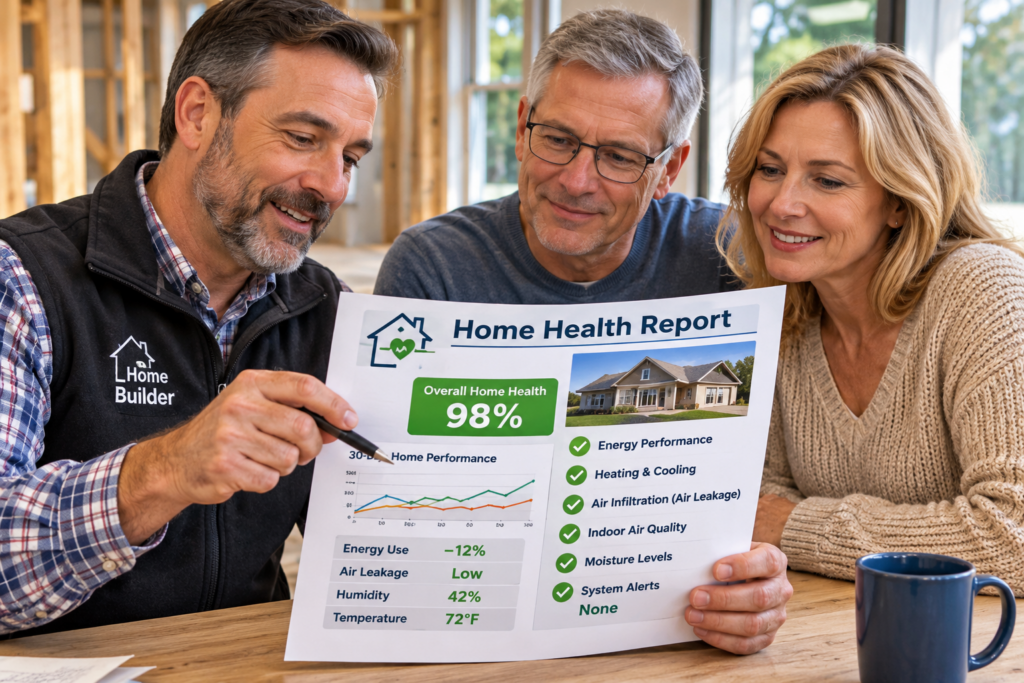
Companies such as OmniSense offer sensors that transmit building-condition measurements through an internet-connected gateway to a central database. Depending on the equipment installed, those measurements can include temperature, relative humidity, wood moisture, differential pressure, and energy use. Builders and building-performance professionals can review the information remotely instead of repeatedly visiting a home to collect readings.
Purrmetrix takes a related approach, combining temperature, humidity, and carbon dioxide monitoring with optional energy measurements. Its cloud-based tools can help calculate heat loss, estimate ventilation rates, and assess condensation risk. That information matters when the question is whether a home performs as well in daily use as it did on paper.
A key difference exists between installing a few connected gadgets and establishing a useful monitoring program. A thermostat may tell you the hallway temperature. A coordinated system can help an analyst investigate why the hallway is comfortable while a bedroom remains cold and the heating equipment keeps running.
The Problems That Don’t Show Up at the Walkthrough
A final walkthrough is a snapshot. The weather might be mild, nobody has taken a shower, and the kitchen hasn’t produced its first holiday dinner. The home has yet to experience the combination of occupancy, outdoor conditions, and equipment operation that will become normal once a family moves in.
Consider a hypothetical new home where a bedroom repeatedly becomes humid overnight. That reading alone doesn’t prove a construction defect. It could reflect how the room is occupied, how air moves through it, or how the ventilation system operates. But a recurring pattern gives someone a reason to investigate before the homeowner discovers condensation and begins wondering what is happening behind the furniture.
The same principle applies to energy use. A high utility bill tells you you spent money. Tracking heating and cooling electricity separately, alongside indoor and outdoor conditions, provides a better starting point for understanding why. It can help direct attention toward equipment operation, thermostat settings, or the building enclosure rather than leaving everyone guessing.
That is where this becomes interesting for builders. A complaint can become the beginning of a measured investigation instead of an argument over whether the homeowner expects too much.
Air Leakage Still Requires More Than a Sensor
One part of this story deserves some plain talk. No ordinary humidity sensor can tell a builder exactly how much air is leaking through the walls, and a carbon dioxide reading should not be mistaken for proof of poor air sealing.
A blower-door test remains an important way to establish a new home’s airtightness. It measures enclosure leakage under a controlled pressure difference, providing a baseline for the completed building. That test result is different from the amount of outside air entering the home under changing everyday conditions.
Ongoing monitoring adds another layer of information. Ventilation estimates may help describe air exchange, but interpreting them requires attention to open windows, exhaust fans, mechanical ventilation, and occupancy. The goal is to combine useful measurements with competent analysis. Otherwise, we have simply replaced an educated guess with a very impressive-looking dashboard.
A Feedback Loop the Industry Could Use
The larger opportunity reaches beyond an individual homeowner. With permission and consistent monitoring, a builder could study a group of completed homes and look for recurring patterns.
Does one house plan consistently have comfort problems in a particular room? Does a different insulation detail improve measured performance? Are ventilation systems operating as intended after people move in? Does a recurring moisture pattern deserve a change in construction practice?
A well-designed program could help answer these questions. They can also be difficult to resolve when the only information reaching the builder comes from warranty calls.
Of course, comparisons must be fair. A family that keeps its home at 75 degrees all winter will use energy differently from someone comfortable at 66. Home size, weather, occupancy, and equipment settings all matter. Comparing raw utility bills without that context could make a well-built home look inefficient and a poorly performing home look better than it is.
I would start with a manageable group of homes, clearly defined questions, and a building-performance professional who knows how to turn readings into findings. Collecting more data is easy to celebrate. Finding out which construction decision should change is where the value lies.
Someone Has to Respond
Every builder should also answer a practical question before offering this service: Who is watching, and what happens when something looks wrong?
A homeowner could reasonably assume that a monitoring system means someone will respond to an alert. The builder might assume the homeowner is responsible. The equipment provider might only be supplying the platform. They need to settle that misunderstanding before installing the first sensor.
Homeowners should know what is collected, who can see it, how long it is retained, and what support is included. Builders need clear responsibilities for reviewing unusual readings and deciding when an inspection is warranted. Monitoring creates an opportunity to improve service, but it needs a service plan behind it.
Gary’s Observation

I have spent enough years around construction to know that passing an inspection and performing well over time are two different accomplishments. We put tremendous effort into getting a home ready for occupancy, yet the information coming back afterward is often limited to whatever becomes uncomfortable, expensive, or impossible to ignore.
Giving a new home an ongoing health record could help close that gap. It won’t eliminate inspections, replace skilled tradespeople, or automatically diagnose every problem. What it can do is give those people better evidence and help builders learn from the homes they have already completed.
I would like to see more builders able to tell a buyer, “Here is how we will find out whether your home is performing the way we intended.” That is a promise worth developing—and a much more useful conversation than waiting for the first complaint.