



What Really Makes Offsite Construction Work


Over the years, my partner Gary Fleisher and I have spent countless hours talking with people across the offsite construction industry—developers, manufacturers, builders, investors, engineers, and suppliers. One thing has become very clear in those conversations: modular construction generates a lot of interest, but it also generates a lot of misunderstanding.
Part of that is because offsite, especially modular construction, sits at the intersection of two very different worlds.
On one side is manufacturing. Factories must operate with discipline, efficiency, and continuous improvement in order to produce modules consistently and profitably.
On the other side is construction and development, where projects must be coordinated, sites prepared, trades scheduled, and buildings finished so they can ultimately receive a Certificate of Occupancy.
For modular manufacturing and construction to work well, both sides of that equation have to function properly.
Over the coming weeks here at Offsite Innovators, Gary and I will be exploring these two perspectives in a series of articles.
Gary will be focusing on the internal side of modular manufacturing—how factories operate, and the kinds of operational excellence points that can improve performance, efficiency, and profitability. Recently he attended a presentation that outlined twenty operational practices that, when implemented effectively, can add meaningful improvement to factory performance. Those ideas reminded him of many of the continuous improvement principles that have long been associated with thinkers such as W. Edwards Deming and other quality management pioneers.
In short, Gary will be examining what strong modular factories do well.
My role in the series will come from a different angle.
After more than forty years working in the modular industry—beginning in sales and eventually moving into plant management and operational leadership—I’ve spent a good deal of time inside modular factories and working with developers trying to bring modular projects to completion.
That experience has taught me something important: even the best factory cannot guarantee the success of a modular project if the overall process is not understood by everyone involved.
Developers evaluating modular construction often focus heavily on the factory itself—touring the plant, reviewing pricing, and evaluating production capacity. Those things matter, of course. But in my experience, successful projects depend just as much on understanding what happens outside the factory as what happens inside it.
In the articles I’ll be contributing to this series, I’ll focus on the practical realities developers should understand when considering modular construction. That includes how to evaluate a manufacturing partner, what operational signals can be observed during a factory visit, and perhaps most importantly, what responsibilities remain on the site once the modules leave the factory.
Modular manufacturing and on-site construction can be an extremely effective way to build when the entire system is understood and coordinated properly. Occasionally the fit is not a good one making the use of Offsite not feasible. Either way the decision making process is critical.
But like any system, it works best when the people involved understand how the pieces fit together.
Our hope with this series is to explore both sides of that equation—how factories operate and how projects are completed—so that readers can gain a clearer picture of what truly makes Offsite/modular construction succeed.
We look forward to the conversation.
If you’d like to explore this further, connect with me today.
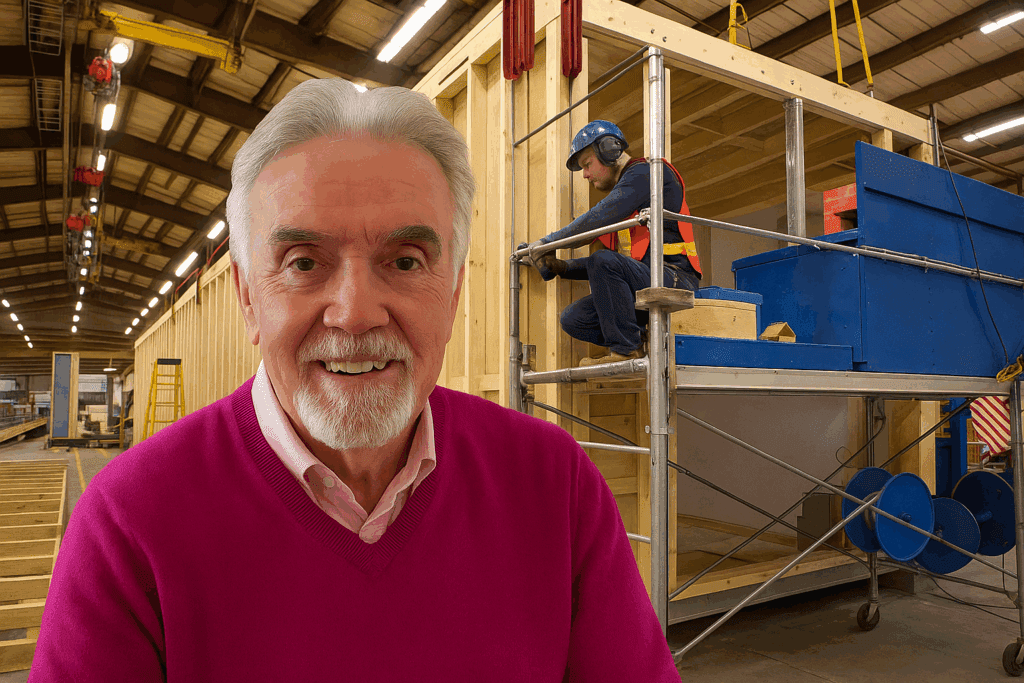
Bill Murray, Co-Founder of Offsite Innovators