


Navigating the 2026 Liquidity Squeeze: A CFO’s Reality Check for Offsite Construction

This is for CFOs and senior financial leaders inside offsite and modular construction companies who are already feeling cash tighten—and know 2026 will test their balance sheets.
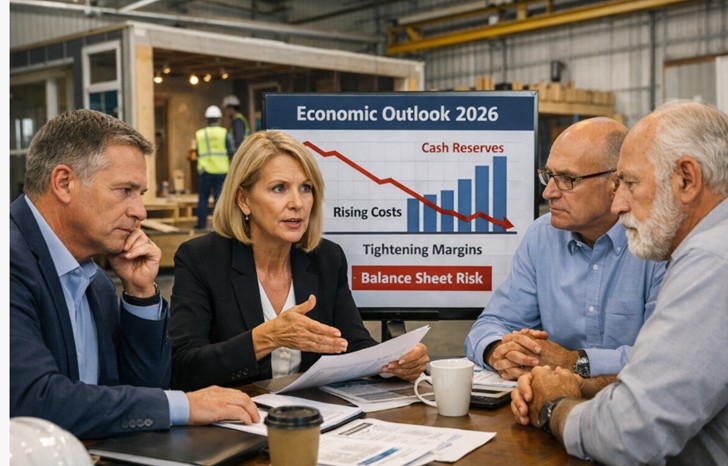
The biggest financial risk heading into 2026 isn’t sales volume or factory efficiency. It’s liquidity. Specifically, the widening gap between when we’re forced to spend cash and when we’re allowed to recognize revenue. For offsite construction, that gap is becoming dangerous.
This isn’t a normal construction-cycle problem. It’s structural. And it’s getting worse.
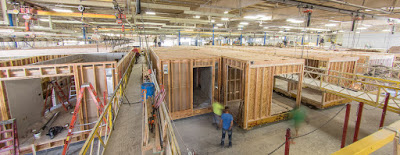
Offsite factories carry heavy fixed costs every single day—rent, equipment, skilled labor—whether a module ships or not. That operating leverage works beautifully when projects flow smoothly. But when anything slows down, cash drains fast. In 2026, several forces are lining up to slow things down at the same time.
Why 2026 Is Different
First, tariffs are pushing CFOs into uncomfortable decisions. The possibility of sharp increases on steel, aluminum, and copper is forcing many of us to pre-position materials far earlier than we’d like. Buying inventory months—or years—ahead may protect margins, but it also locks up enormous amounts of working capital that used to stay liquid.
Second, the “factory gap” is widening. We pay for materials, labor, and overhead while modules are built, but revenue often isn’t released until delivery and set. Any site delay—permitting, labor shortages, inspections—extends that gap. The factory keeps burning cash while revenue sits frozen outside the gate.
Third, financing hasn’t caught up to how offsite actually works. Many lenders still struggle to understand factory work-in-progress. Assets that aren’t tied to land make them nervous. Even with potential rate adjustments ahead, access to flexible short-term credit remains tighter than most CFOs are comfortable admitting.
What the CFO Role Becomes in 2026
This is no longer just an accounting problem. In 2026, the CFO becomes a risk architect.
That means making deliberate decisions about how much inventory to hedge and when—not emotionally, not reactively, but based on disciplined modeling of cash exposure. It means restructuring contracts so payments better align with factory progress, not just jobsite milestones. It means spending more time educating lenders on how offsite manufacturing actually creates value—and insisting on partners who understand that reality.
It also means running hard scenarios in advance. What happens if a major project slips six months? What does that do to cash burn? Where are the pressure points—and how much warning do we really have?
The Real Test Ahead
The companies that struggle in 2026 won’t fail because they couldn’t build modules efficiently. They’ll fail because they ran out of cash between buying the steel and bolting the module.
Liquidity—not production—will decide who survives the squeeze.
So here’s the question every offsite CFO should be asking now:
Are we managing cash like an accounting function—or like a survival strategy?
If you’d like to explore this further, contact Bill today.

Bill Murray, Co-Founder of Offsite Innovators