

The New Nerve Center of Offsite Construction

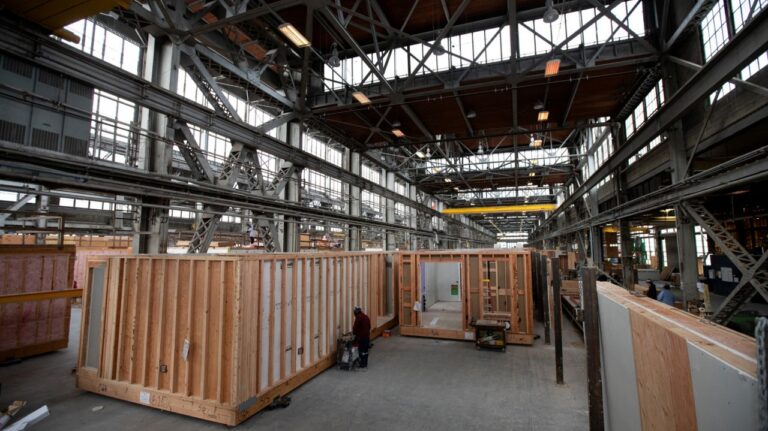
Walk into almost any offsite factory in 2025 and you’ll see the same thing: talented people doing their best inside production processes that haven’t changed much since the 1990s. Stations that depend on tribal knowledge. Material flow based on habit rather than data. Cycle times that vary day to day depending on who showed up, what’s missing, and whether the last station remembered to label the bundle.
But the quiet truth is this: offsite construction is standing at the front door of a technological shift that will change everything—from how factories plan their production lines to how they measure success. That shift is being driven by a three-part engine: robotics, automation, and digital-twin technology.
And unlike the last thirty years of software promises and “factory of the future” sales pitches, this time the technology has caught up to the ambition.
Robotics: The New Skilled Labor
There’s no denying the skilled-labor shortage. Even the best-run factories can’t hire fast enough, train consistently, or guarantee productivity from shift to shift. Robotics is stepping into that gap.
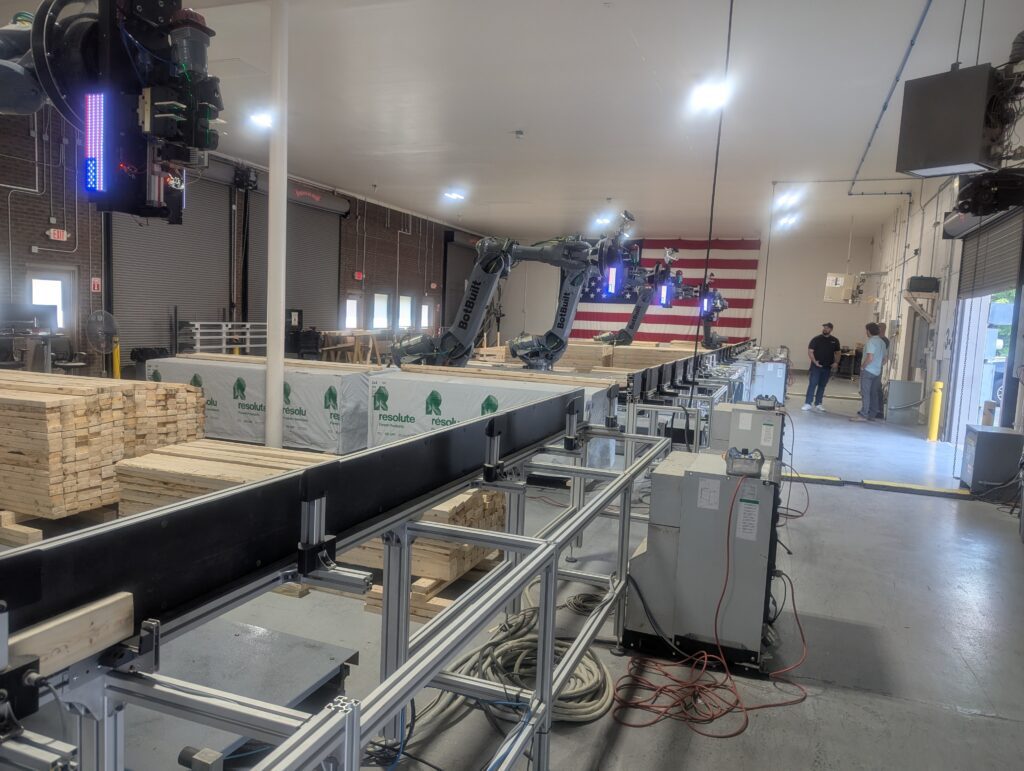
Robotic arms are fastening sheathing. Automated saws cut components to tolerances humans can’t match on their best day. Material-handling robots are moving panels, trusses, cassettes, and even volumetric modules with predictable timing and repeatable accuracy.
But what robotics really does is stabilize the factory environment. It lets companies plan production without worrying that three key people called out sick or left for a higher-paying job.
Robots won’t replace the workforce—they’ll rebalance it. Humans will do the thinking, adjusting, solving, and inspecting. Robots will handle the heavy lifting, the repetitive work, and the tasks where mistakes cost real money.
Automation: The Quiet Multiplier
If robotics is the muscle, automation is the nervous system.
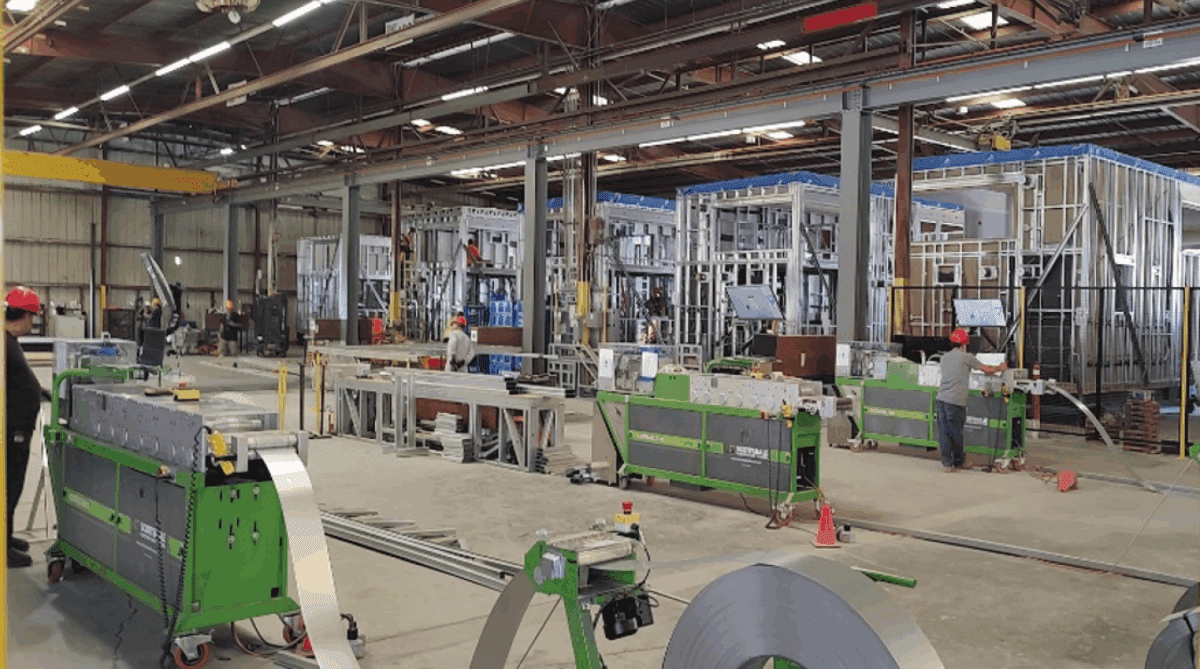
Automation links stations that were never connected. It eliminates downtime by forecasting it before it happens. It standardizes tasks across shifts. And it allows factories to operate at the speed of information rather than the speed of habit.
Automated fastening systems, integrated cutting centers, and smart conveying lines aren’t just shiny equipment—they’re the backbone of a predictable workflow. When everything talks to everything else, factories shift from “reactive” to “proactive.”
That single transition is worth millions in reduced rework, smoother inspections, faster throughput, and more accurate schedules for builders and developers—not to mention the sanity of the plant manager.

Digital Twins: The Brain Behind It All
Of all the innovations reshaping offsite construction, digital-twin modeling may be the most transformative.
A digital twin is a full virtual replica of the factory—its equipment, its workflow, its material movement, its cycle times, its delays, its inefficiencies, and even its failures. In other words, it’s a laboratory where factories can experiment without breaking anything, without shutting down a line, and without guessing.
Want to know how many robots to add? Modify the model.
Want to see how much downtime a redesigned workstation will eliminate? Run the simulation.
Want to test how a new product or module size will affect throughput? Let the twin predict the answer.
The digital twin becomes the management system—replacing gut instinct with real data and exposing inefficiencies before they become expensive problems.
Who Helps Factories Implement All This?
This is where knowledgeable partners matter.
Companies like 4Ward Solutions Group have stepped into the industry as advisors who understand both construction and manufacturing technology. They assist factories in:
- Integrating robotics and smart automation
- Designing production lines around efficiency instead of tradition
- Implementing digital-twin and virtual-modeling systems
- Training teams to operate in a data-driven environment
- Aligning operations, people, processes, and technology
The value of advisors like 4Ward isn’t simply in their technical ability—it’s in their understanding of how factories actually run. They know the constraints, the personalities, the budget pressures, and the cultural resistance that can sabotage good ideas.
They help factories make the leap without losing the rhythm of daily production.
Just my Thoughts
Robotics, automation, and digital-twin technology are no longer visionary concepts or futuristic sales slides. They are practical tools solving everyday problems—speed, labor, accuracy, predictability, and cost control. Factories that embrace them will outperform, out-deliver, and outlast those that keep waiting for the “right time.”
Because in this industry, the right time rarely arrives on its own.
You create it.
If you’d like to explore this further, connect with Bill today.
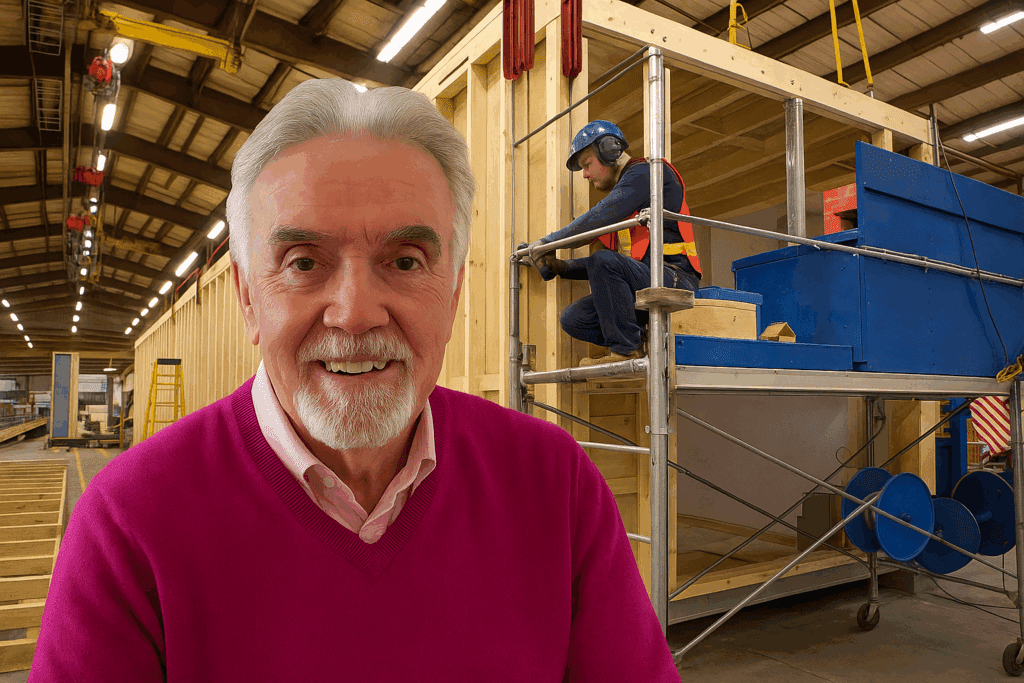
Bill Murray, Co-Founder of Offsite Innovators